
Key Takeaways
1. The Aftermath of Napoleon: A Fragile European Order
Altogether, in twenty-three years of more or less continuous warfare that had swept back and forth across Europe in the wake of the French Revolution, an estimated five million people had died; compared to Europe’s population as a whole, this was proportionately as many as, if not more than, those who died during the First World War.
War's devastating legacy. The Napoleonic Wars left Europe ravaged, with millions dead and economies shattered. Cities like Moscow and towns in Spain lay in ruins, and the widespread suffering was compounded by a global climatic calamity in 1816-1817, leading to famine, disease, and widespread unrest across the continent. This period underscored the fragility of life and the deep scars left by prolonged conflict.
Restoration and repression. The Congress of Vienna (1814-1815) aimed to restore monarchical legitimacy and prevent future revolutions, establishing the "Concert of Europe" for collective security. Key figures like Metternich sought to roll back the clock, but Napoleon's legacy of administrative reform, legal equality, and the idea of national sovereignty proved irreversible. The interventionist spirit of the Holy Alliance emerged, ready to suppress liberal movements.
Global shifts. The wars also reshaped global power dynamics, weakening old European empires in the Americas and paving the way for British naval and economic hegemony. While Europe consolidated its internal peace, its external reach expanded, setting the stage for a new era of global interaction and eventual domination, driven by a burgeoning sense of European superiority.
2. Early Liberalism and the Specter of Revolution (1815-1847)
The spectre of democracy raised by the French Revolution was as alarming to conservative British statesmen like Castlereagh as it was to the Prussian bureaucratic regime established after the cataclysmic defeat of the Prussian armies by Napoleon at the battles of Jena and Auerstedt or to the reactionary administration led by Metternich in Vienna.
Conservative reaction. Following Vienna, European monarchies, particularly in Central and Eastern Europe, implemented repressive measures to stifle liberal and nationalist aspirations. Censorship, secret police, and restrictions on assembly were common, exemplified by Metternich's Carlsbad Decrees in Germany and Tsar Nicholas I's autocratic rule in Russia. This era saw the suppression of early revolutionary attempts, often led by military officers and intellectuals.
Liberal stirrings. Despite repression, liberal ideas, inspired by the French Revolution's emphasis on constitutionalism, individual rights, and national self-determination, persisted. Secret societies like the Carbonari emerged, fostering transnational networks of revolutionaries. The 1820s witnessed revolts in Spain, Italy, and Russia (the Decembrists), which, though largely suppressed, demonstrated the enduring appeal of these ideals.
1830 Revolutions. A new wave of revolutions in 1830, starting in France with the overthrow of Charles X, spread to Belgium, leading to its independence, and sparked reforms in parts of Germany and Switzerland. These events, while often resulting in moderate constitutional monarchies rather than full democracies, showed that absolutism was increasingly untenable and that popular pressure could force change.
3. The European Spring of 1848: Hopes, Divisions, and Reaction
The 1848 Revolutions have often been dismissed in retrospect as half-hearted failures, but that is not how they seemed at the time.
Widespread upheaval. The "Springtime of Peoples" in 1848 saw revolutions erupt across Europe, from Paris to Vienna, Berlin, and Budapest, fueled by economic crisis, social discontent, and liberal-nationalist aspirations. Improved communications facilitated the rapid spread of revolutionary fervor, challenging existing monarchical and aristocratic orders.
Internal contradictions. The revolutions, however, quickly fractured due to deep divisions:
- Liberals vs. Democrats: Moderates sought constitutional monarchies and limited suffrage, while radicals demanded republics and universal male suffrage.
- Class conflict: The "June Days" in Paris, where the army brutally suppressed working-class uprisings, terrified the bourgeoisie and pushed liberals towards conservative forces.
- Nationalist clashes: In the Habsburg Empire, the aspirations of Hungarians, Czechs, Croats, and Serbs clashed, allowing the monarchy to exploit these divisions.
Conservative resurgence. The established powers, particularly the Habsburgs and Prussians, recovered their nerve. With military force and the support of fearful liberals, they systematically suppressed the revolutions. The intervention of Russia in Hungary was decisive, demonstrating the enduring power of the old order when united. The ultimate outcome was the defeat of democratic and radical movements, but the underlying pressures for change remained.
4. The Great Emancipation: Reshaping Rural Societies
It is better to abolish serfdom from above, than to wait until the serfs begin to liberate themselves from below.
End of serfdom. The 19th century witnessed the gradual abolition of serfdom across Europe, a process driven by peasant unrest, economic inefficiencies, and political calculations by states seeking to modernize and secure peasant loyalty. This monumental social reform, culminating in Russia in 1861, legally freed millions, granting them rights of movement, inheritance, and property.
Varied impact. The terms of emancipation varied widely, often involving complex redemption payments and land redistribution schemes. While some wealthier peasants benefited, many smaller farmers struggled with debt, leading to:
- Landlessness: A growing rural proletariat emerged, forced to work as farm laborers.
- Continued exploitation: In some areas, quasi-serfdom persisted through labor-based rents or restrictive contracts.
- Peasant revolts: Discontent over unfair terms fueled uprisings, notably in Russia (1905-07) and Romania (1907), often targeting landlords and tax records.
Agricultural modernization. Emancipation also spurred agricultural innovation, with the adoption of new crops (potatoes, maize), crop rotation, and fertilizers (guano, then chemical). Mechanization, though slow to reach small farms, increased productivity on larger estates, contributing to Europe's ability to feed its growing population despite Malthusian fears.
5. Industrial Revolutions: From British Dominance to German Ascent
What was momentous was not so much the organization of production into large factories where hundreds or even thousands of people laboured to make standardized products; these enterprises had existed already in the eighteenth century. The difference was that in those earlier ‘manufactories’ the workers had each been working essentially by hand, using their own muscle-power.
Britain's workshop. The first Industrial Revolution, centered in Britain, was driven by cotton textiles, coal, and iron, powered by steam. British industrial output and global trade dominance were unparalleled by mid-century, showcased at the 1851 Great Exhibition. This supremacy was built on technological innovation, access to raw materials (e.g., American cotton), and command of sea lanes.
Continental spread. Industrialization gradually spread to the Continent, often through the import of British technology, capital, and expertise. Regions like Belgium, northern France, and the German Ruhr became industrial hubs. Railways, initially financed by foreign capital, became a key driver, stimulating heavy industry and creating vast demand for iron, steel, and engineering.
Second Industrial Revolution. By the late 19th century, Germany emerged as a leader in the "second industrial revolution," excelling in new sectors like chemicals and electricity. German universities' focus on scientific research, combined with state support and cartelization, allowed it to surpass Britain in many areas. Italy and Scandinavia also leveraged hydroelectric power for rapid industrial growth, demonstrating diverse paths to modernization.
6. Urban Transformation: Building the Modern City
A good sewer, declared the art critic John Ruskin, was a far nobler and a far holier thing … than the most admired Madonna ever painted.
Rapid urbanization. The 19th century was an era of unprecedented urban growth, as millions migrated from rural areas to burgeoning industrial centers. Cities like London, Berlin, and Budapest expanded dramatically, leading to severe overcrowding, unsanitary conditions, and the proliferation of slums.
Public health revolution. Growing awareness of urban squalor and disease (cholera, typhus) spurred major public health initiatives. Figures like Edwin Chadwick advocated for improved sanitation, leading to:
- Water and sewage systems: Cities invested in clean water supplies and extensive sewer networks (e.g., Bazalgette's London sewers, Lindley's work across Europe).
- Housing reform: Efforts were made to build model dwellings and regulate housing conditions, though often struggling to keep pace with population influx.
- Street cleaning and lighting: Gas and later electric lighting transformed urban nights, while systematic waste removal tackled the pervasive filth.
Social geography and control. Urban renewal projects, like Haussmann's transformation of Paris, aimed to modernize cities, facilitate commerce, and enhance state control by creating broad boulevards that were harder to barricade. These changes, alongside the rise of professional police forces, reflected a broader bourgeois drive to impose order, respectability, and hygiene on the "dangerous classes" of the urban poor.
7. Conquering Nature: Technology, Time, and Disease
Time and space are all but annihilated. Years are converted into days, days into seconds, and miles have become mere fractions of an inch.
Taming the wild. Europeans increasingly sought to master their natural environment. Deforestation for agriculture and timber was widespread, leading to ecological concerns. Rivers were channeled, marshes drained, and dangerous animals like wolves hunted to near extinction, reflecting a shift from fearing nature to controlling it.
Shrinking space and time. Technological advancements dramatically reduced the perceived barriers of distance and time:
- Railways and steamships: Revolutionized transport, enabling faster movement of goods and people across continents.
- Telegraph and telephone: Accelerated communication, creating global networks and standardizing time zones (e.g., Greenwich Mean Time).
- Automobiles and bicycles: Introduced new forms of personal mobility, democratizing travel for some while creating new symbols of status for others.
Medical breakthroughs. The century saw significant advances in medicine, though often with delayed impact:
- Anaesthetics and antiseptics: Transformed surgery, reducing pain and infection (e.g., chloroform, Lister's methods).
- Bacteriology: Discoveries by Pasteur and Koch identified disease-causing microbes, leading to public health measures that virtually eliminated major epidemics like cholera and smallpox.
- Psychiatry: Emerged as a discipline, leading to the establishment of asylums and new theories of mental illness, though often reflecting social biases.
These efforts reflected a growing scientific optimism and a relentless pursuit of control over both the external world and the human body, fundamentally altering daily life and perceptions of existence.
8. The Gendering of Society: Women's Rights and Social Norms
Up to now, woman has counted for nothing in human society … The priest, the lawmaker, and the philosopher, have treated her as a true pariah.
Legal subjugation. Despite the Enlightenment's ideals, women in 19th-century Europe faced severe legal and social restrictions. The Napoleonic Code, widely adopted, treated married women as legal minors, denying them property rights, professional autonomy, and political participation. This legal framework reinforced traditional gender roles, confining women primarily to the domestic sphere.
Feminist awakening. Frustration with these limitations fueled the rise of feminist movements, particularly from the mid-century onwards. Figures like Fredrika Bremer and John Stuart Mill championed women's rights, advocating for:
- Educational access: Campaigns for women's entry into universities and professions.
- Property rights: Legal reforms granting married women control over their earnings and assets.
- Suffrage: The most prominent demand, with movements like the British suffragettes (Emmeline Pankhurst) employing increasingly militant tactics to gain the vote.
Resistance and progress. Feminism faced strong opposition from conservatives, who feared the disruption of traditional family structures, and even from some liberals and socialists, who prioritized other political goals. While progress was uneven and often slow (e.g., French women's suffrage delayed until after WWII), the movement succeeded in putting women's rights on the political agenda and laying crucial groundwork for future gains.
9. Faith, Doubt, and New Beliefs: Challenges to Traditional Religion
The Almighty seems to sustain me for some purpose of His own, deeply unworthy as I know myself to be. Glory be to his name.
Religious revival. The 19th century saw a resurgence of religious piety, often as a reaction against Enlightenment rationalism and revolutionary anticlericalism. Catholicism experienced Ultramontane movements, emphasizing papal authority and new devotions, while Protestantism saw "awakenings" stressing personal faith and moral reform. These movements often provided a framework for social activism and national identity.
Church-State conflicts. The rise of liberal nation-states led to intense conflicts with established churches, particularly the Catholic Church. Governments sought to assert state control over education, marriage, and clerical appointments, leading to:
- Disestablishment: Formal separation of church and state in countries like France (1905).
- Kulturkampf: Bismarck's "struggle of civilizations" against the Catholic Church in Germany.
- Secularization: Laws introducing civil marriage, non-denominational cemeteries, and state-controlled education.
Scientific challenges. Beyond state interference, scientific discoveries profoundly challenged traditional religious narratives. Geology (Lyell) questioned biblical chronology, while Darwin's theory of evolution (1859) undermined creationism. Figures like David Friedrich Strauss critically examined the historical Jesus, and philosophers like Nietzsche declared "God is dead," leading to a "disenchantment of the world" and the rise of secular materialism.
10. Democracy's Advance: Mass Politics and its Challenges
The great questions of the time will not be resolved by speeches and majority decisions – that was the great mistake of 1848 and 1849 – but by iron and blood.
Expanding franchise. The latter half of the 19th century witnessed a steady, though uneven, expansion of voting rights across Europe. Universal male suffrage was introduced in France (1848), Germany (1871), Austria (1907), and Italy (1912), transforming politics from elite affairs to mass participation. This was often a response to popular pressure, particularly from growing socialist movements.
Rise of mass parties. The expanded electorate led to the formation of modern political parties, organized to mobilize voters and compete for legislative power. Social Democratic parties, especially in Germany (SPD), became powerful forces, advocating for workers' rights and social reform, while Catholic parties (e.g., German Centre Party) emerged to defend religious interests.
Liberalism's decline. This shift to mass politics often came at the expense of traditional liberalism. Liberals, caught between conservative reaction and radical demands, struggled to maintain their dominance. In Britain, the Irish Question fractured the Liberal Party, while in Germany, Bismarck skillfully outmaneuvered liberals, demonstrating that power could be wielded through "iron and blood" rather than parliamentary consensus.
11. The New Imperialism: Global Domination and its Costs
Whatever happens, we have got / The Maxim gun, and they have not.
Renewed expansion. The late 19th century saw a dramatic "Scramble for Africa" and intensified European influence in Asia, driven by economic motives (raw materials, markets), national prestige, and strategic concerns. Explorers like Stanley and Livingstone paved the way, often with brutal methods, for formal colonial annexation.
Methods of control. European powers established vast empires through various means:
- Direct rule: Imposing metropolitan administration and laws (e.g., French Algeria, British India after 1857).
- Indirect rule: Collaborating with indigenous elites and maintaining local institutions (e.g., British princely states in India).
- Economic exploitation: Extracting resources and establishing monopolies (e.g., Leopold's Congo Free State).
Violence and resistance. The establishment and maintenance of empire were often marked by extreme violence, massacres, and atrocities (e.g., German South-West Africa, Belgian Congo). Indigenous populations resisted fiercely, leading to wars (e.g., Indian Mutiny, Anglo-Boer Wars, Ethiopian victory at Adowa) and the emergence of early nationalist movements, challenging European claims of a "civilizing mission."
12. The Balkan Tinderbox: Imperial Rivalries and the Road to War
Those who think themselves strong enough to support their aspirations by arms will be ready to rebel against the authority under which they believe they have been placed in violation of justice and of the principle of “nationality”. Those who cannot recur to force will have recourse to intrigue and conspiracy. Both processes have already begun.
Ottoman decay. The "Eastern Question" dominated European diplomacy as the Ottoman Empire, "the sick man of Europe," steadily declined. Its economic mismanagement and inability to suppress internal revolts, particularly in the Balkans, created a power vacuum that attracted the ambitions of the Great Powers.
Balkan nationalism. Christian populations in the Balkans, fueled by nascent nationalisms (Serbian, Bulgarian, Greek, Romanian) and often backed by Russia (Pan-Slavism), rose against Ottoman rule. Atrocities committed during suppression (e.g., Bulgarian Horrors) inflamed European public opinion and provided pretexts for intervention.
Great Power rivalry. The Russo-Turkish War (1877-78) and the subsequent Congress of Berlin (1878) redrew the map of the Balkans, creating new independent states but also establishing spheres of influence for Austria-Hungary and Russia. This intensified rivalries, as each Balkan nation harbored irredentist claims and sought support from competing Great Powers, turning the region into a volatile flashpoint for future conflict.
Review Summary
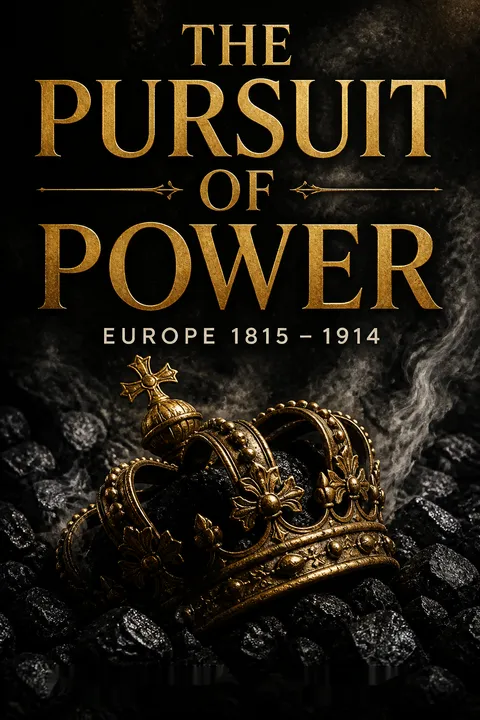
The Pursuit of Power receives praise for its comprehensive scope covering Europe from 1815-1914, examining political, social, economic, and cultural developments. Reviewers appreciate Evans's encyclopedic approach, engaging writing style, and ability to humanize history through individual biographies opening each chapter. The book's strengths include detailed coverage of lesser-known European regions and fascinating anecdotes. Critics note the overwhelming density of information, excessive facts and figures, and occasional loss of narrative flow. Some find it exhausting to read in large portions, while others criticize weak cultural analysis and perceived left-leaning bias. Most agree it's an impressive scholarly achievement despite varying accessibility.
People Also Read

Penguin History of Europe Series Series
About the Author

Download PDF
Download EPUB
.epub digital book format is ideal for reading ebooks on phones, tablets, and e-readers.








































