
Key Takeaways
1. Weimar's Economic Diplomacy: A Path Not Taken
This alternative to nationalist militancy also aimed to achieve a revision of the onerous terms of the Treaty of Versailles. But it aimed to do so not by gambling on military force. Instead, Weimar’s foreign policy prioritized the economy as the main field within which Germany could still exercise influence in the world.
Stresemann's vision. In the 1920s, Gustav Stresemann, Germany's Foreign Minister, pursued an "Atlanticist strategy" to restore Germany's standing. He believed that Germany's future lay in economic integration with the United States and closer ties with France, rather than military confrontation. This approach sought to revise the Treaty of Versailles through financial connections and trade, leveraging Germany's industrial strength.
American leverage. Stresemann and Reichsbank President Hjalmar Schacht aimed to make American financial interests a key force pushing for reparations revision. By borrowing heavily from the U.S., Germany created a situation where American banks had a vested interest in Germany's financial stability, thus indirectly pressuring Britain and France to ease reparations demands. This strategy appeared to be working, with the Dawes and Young Plans reducing Germany's immediate obligations.
The Depression's impact. The Great Depression, however, shattered this fragile equilibrium. The U.S. shifted to protectionism (Smoot-Hawley tariff) and then devalued the dollar, undermining Germany's export capacity and increasing its debt burden. This economic turmoil, coupled with Stresemann's untimely death and Schacht's defection to the nationalist right, discredited the Atlanticist strategy, opening the door for Hitler's more radical vision of unilateral action and territorial expansion.
2. Rearmament: The Unwavering Core of Nazi Economic Policy
The armaments programme of the Third Reich was the largest transfer of resources ever undertaken by a capitalist state in peacetime.
Initial priorities. From the moment Hitler took power, rearmament was the paramount economic objective, overshadowing civilian work creation programs. While the "Reinhardt programme" and autobahn construction were publicized, the majority of early government spending was secretly diverted to military build-up. By 1935, military spending accounted for nearly 10% of Germany's GDP, a figure unprecedented for a capitalist state in peacetime.
Resource reallocation. This massive military expansion was achieved through a drastic reallocation of national resources.
- Public spending: Civilian work creation was curtailed after 1933, and local government budgets were squeezed to fund national military priorities.
- Industrial focus: Heavy industry, particularly steel, chemicals, and aircraft manufacturing, received preferential treatment and massive investment.
- Foreign exchange: The "New Plan" prioritized imports of strategic raw materials for rearmament over consumer goods, leading to a "lopsided recovery."
Beyond economic rationale. Hitler's commitment to rearmament was not merely economic; it was deeply ideological. He viewed military strength as the only path to securing "Lebensraum" and countering perceived threats from global powers. This unwavering focus on military build-up, even at the expense of civilian consumption and financial stability, defined the Nazi economic system from its inception.
3. Autarky and Exploitation: Germany's Economic War Before the War
The aggression of Hitler’s regime can thus be rationalized as an intelligible response to the tensions stirred up by the uneven development of global capitalism, tensions that are of course still with us today.
Responding to global crisis. Faced with the collapse of international trade and finance in the 1930s, Germany, under Hjalmar Schacht's guidance, implemented a strategy of autarky and bilateral trade. This involved:
- Debt repudiation: Germany unilaterally suspended payments on its foreign debts, particularly to the U.S., to conserve foreign exchange.
- Import controls: A complex system of "surveillance agencies" and foreign exchange rationing was established to prioritize imports of strategic raw materials for rearmament.
- Export subsidies: German exporters were subsidized, often at the expense of foreign creditors, to maintain market access and earn hard currency.
Lopsided recovery. This system led to a "lopsided recovery" where heavy industry and sectors vital for rearmament boomed, while consumer goods industries, especially textiles, stagnated due to import restrictions. The regime also aggressively pursued economic dominance in Southeast Europe and Latin America, securing raw materials through coercive trade agreements. This pre-war economic strategy, while seemingly pragmatic, was a form of economic warfare, designed to make Germany self-sufficient for future military conflicts.
4. The Looming Shadow of American Industrial Power
In seeking to explain the urgency of Hitler’s aggression, historians have underestimated his acute awareness of the threat posed to Germany, along with the rest of the European powers, by the emergence of the United States as the dominant global superpower.
Hitler's strategic calculus. Hitler, as early as 1928, recognized the immense industrial potential of the United States and its growing global dominance. He viewed America's affluent consumer lifestyle and vast internal market as a model for German "Lebensraum" and a formidable long-term threat. This awareness fueled his conviction that Germany had a limited window to achieve its imperial ambitions before the U.S. became unassailable.
Anti-Semitic lens. This strategic concern was deeply intertwined with Hitler's anti-Semitic ideology. He increasingly viewed the U.S., particularly after Kristallnacht and President Roosevelt's condemnations, as the "headquarters of world Jewry," orchestrating a global conspiracy to encircle and destroy Nazi Germany. This paranoid interpretation intensified his belief in the inevitability of war with the Western powers.
Time is not on our side. The perceived threat of American industrial might, coupled with the accelerating global arms race, created a sense of urgency in Hitler's decision-making. He believed Germany had "nothing to gain by waiting," as the combined economic power of its enemies, especially with U.S. backing, would eventually become overwhelming. This conviction drove his aggressive timeline for war, even when Germany's own military preparations were incomplete.
5. Blitzkrieg: A Risky Improvisation, Not a Grand Strategy
The lightning victory in France thus emerged not as the logical endpoint of a carefully devised strategic synthesis, but as an inspired, high-risk improvisation, a ‘quick, military fix’ to the strategic dilemmas, which Hitler and the German military leadership had failed to resolve up to February 1940.
Unprepared for a long war. Despite years of rearmament, Germany entered World War II in 1939 ill-prepared for a prolonged conflict against Britain and France. Raw material shortages, particularly in steel and non-ferrous metals, severely hampered ammunition and tank production. The German military leadership, including General Thomas and Admiral Raeder, expressed deep pessimism about Germany's ability to win a protracted war.
The French gamble. The stunning victory in France in May 1940 was not the result of a pre-planned "Blitzkrieg" strategy based on overwhelming technological superiority. Instead, it was an audacious, high-risk improvisation, conceived by General Manstein and adopted by Hitler only months before the offensive. The plan relied on:
- Concentration of force: Massing tanks at a single, unexpected point (the Ardennes).
- Strategic deception: Feint attacks in the north to draw Allied forces away.
- Speed and maneuver: Overwhelming Allied command and control with rapid advances.
Illusory victory. While the victory was decisive, it came at a high cost to the Luftwaffe and relied on specific geographical conditions that were not repeatable. The myth of the Blitzkrieg, emphasizing German technological and moral superiority, served as powerful propaganda, but obscured the precariousness of Germany's strategic position and the haphazard nature of its military planning.
6. Barbarossa: A Grand Strategy of Racial and Economic Annihilation
The German invasion of the Soviet Union is far better understood as the last great land-grab in the long and bloody history of European colonialism.
Strategic imperative. Following the failure to defeat Britain in 1940 and the growing threat of U.S. intervention, Hitler viewed the conquest of the Soviet Union as essential to secure "Lebensraum" and the resources needed for a global war. This was not merely an ideological crusade but a calculated strategic move to consolidate Germany's position before the full weight of the Anglo-American alliance could be brought to bear.
Genocidal blueprint. The invasion of the Soviet Union was accompanied by an unprecedented program of mass murder and demographic engineering:
- The Hunger Plan: Agreed upon by the Wehrmacht and the Food Ministry, this plan aimed to starve tens of millions of Soviet urban dwellers to divert food to Germany.
- Generalplan Ost: Himmler's SS developed this long-term plan for the removal of 30-45 million Slavs and Jews, to be replaced by German colonists and exploited for labor.
- The Final Solution: The systematic extermination of European Jewry, initially focused on the Soviet Union and Poland, was intertwined with these broader colonial ambitions.
Economic exploitation. The goal was to transform the vast territories of the Soviet Union into a self-sufficient agricultural and industrial base for the German Empire. This involved seizing grain from the Ukraine, exploiting mineral resources, and using millions of Soviet citizens as slave labor. This "grand strategy of racial war" aimed to fundamentally alter the global balance of power by creating a continental empire rivaling the U.S.
7. The Moscow Debacle: Germany's Decisive Strategic Turning Point
In attacking the Soviet Union in June 1941, Hitler had gambled that the Wehrmacht could sustain a war on two fronts, so long as the Red Army could be destroyed by the end of the year. As was to become apparent by November 1941, this was to hope in vain.
Underestimating the enemy. The Barbarossa campaign, the largest military operation in history, was predicated on the assumption that the Red Army would collapse quickly, similar to France. However, the Germans severely underestimated Soviet resilience, manpower, and industrial capacity. Despite devastating initial losses, the Red Army absorbed the blows and continued to fight.
Logistical limits. The Wehrmacht's advance was hampered by severe logistical constraints, particularly beyond the Dnieper-Dvina line. The vast distances, poor infrastructure, and the onset of winter brought the German offensive to a halt just short of Moscow. The Red Army's counter-offensive in December 1941 inflicted heavy casualties and shattered the myth of German invincibility.
Global implications. The failure to defeat the Soviet Union in 1941 had catastrophic strategic consequences:
- Two-front war: Germany was now irrevocably committed to a prolonged war on the Eastern Front.
- U.S. entry: The Moscow debacle, combined with Japan's attack on Pearl Harbor, led to Hitler's declaration of war on the United States, creating a global coalition against Germany.
- Economic strain: The war of attrition in the East, coupled with the looming industrial might of the U.S., exposed Germany's fundamental resource limitations.
The winter of 1941-42 marked the decisive turning point of the war, sealing Germany's fate despite its initial triumphs.
8. Labor, Food, and Genocide: The Intertwined Logic of Destruction
In relation to the cardinal problem of manpower, it is hard to avoid the impression that the Third Reich faced an unresolvable contradiction between its genocidal racial ideology and the practical imperatives of production.
Manpower crisis. The immense casualties on the Eastern Front created a severe labor shortage in Germany. With native German manpower fully mobilized, the regime turned to forced labor from occupied Europe. Fritz Sauckel, as General Plenipotentiary for Labor Mobilization, oversaw the recruitment of nearly 8 million foreign workers, including millions from the Soviet Union and Poland.
Genocide and exploitation. This massive forced labor program existed in stark contradiction with the regime's genocidal policies.
- POW starvation: Millions of Soviet prisoners of war were deliberately starved to death, even as Germany desperately needed labor.
- Ostarbeiter mistreatment: Civilian "Eastern workers" faced brutal conditions, malnutrition, and high mortality rates, severely impacting their productivity.
- Holocaust's economic dimension: The extermination of European Jews, while ideologically driven, also involved "Selektion" for labor, with those deemed fit temporarily spared for exploitation in war industries or SS construction projects.
The Hunger Plan's legacy. The "Hunger Plan" of 1941, aiming to starve millions of Soviet citizens, continued to influence policy. Food scarcity in Germany and occupied Europe led to ruthless requisitioning and the deliberate deprivation of "undesirable" populations, particularly Jews, to secure supplies for Germans and essential workers. This complex interplay of ideological murder and pragmatic exploitation characterized the Nazi war economy.
9. Speer's "Armaments Miracle": Propaganda and Ruthless Mobilization
The dramatic statistics of production were intended to demonstrate to the German people that the war could still be won, by the efforts of the German worker united with the heroism of the soldiers on the front line.
Political function. Albert Speer's appointment as Armaments Minister in 1942, following the Moscow crisis, was a political act. His "armaments miracle" was as much a propaganda triumph as a production achievement, designed to restore morale and silence doubts about Germany's ability to win the war. Speer's narrative of efficiency and rationalization served to justify continued sacrifices and obscure the overwhelming material superiority of the Allies.
Real gains, real costs. While Speer's Ministry did achieve significant increases in armaments output, particularly in 1942-43 and again in early 1944, these were due to:
- Earlier investments: Coming online of factories and technologies initiated before Speer's tenure.
- Ruthless mobilization: Intensified exploitation of foreign labor, including concentration camp inmates, and extreme pressure on German workers.
- Prioritization: Drastic cuts to civilian consumption and non-essential industries, with resources redirected to armaments.
- Quality sacrifice: Mass production often came at the expense of technological advancement, leading to outdated weaponry.
Limits of the miracle. Speer's "miracle" was not limitless. It was constrained by fundamental resource shortages (coal, steel, oil) and the escalating Allied bombing campaign. The stagnation of armaments production in late 1943, following the "Battle of the Ruhr," demonstrated the vulnerability of Germany's industrial base to external attack.
10. Disintegration: The Inevitable Collapse of Hitler's War Economy
The German economy is threatening to fall into an anarchy, against which even an extended and improved system of economic controls [Wirtschaftslenkung] will struggle in vain.
Overwhelming odds. By 1944, Germany faced insurmountable material superiority from the Allies. The combined armaments output of Britain, the Soviet Union, and the United States vastly outstripped Germany's, by ratios of 3.7:1 for aircraft and 4:1 for tanks. This was the crushing material reality that German strategists had always feared.
Internal collapse. Despite Speer's efforts, the German war economy began to disintegrate from within:
- Inflation: Massive war spending, coupled with stagnant tax revenues and declining public confidence, led to rampant inflation and a breakdown of the monetary system.
- Resource depletion: Loss of key territories (Ukraine, Romania) cut off vital raw materials, while Allied bombing systematically destroyed Germany's transport infrastructure and synthetic fuel plants.
- Labor exhaustion: The brutal exploitation of foreign labor and the relentless demands on the German workforce reached unsustainable limits.
Apocalyptic end. The final months of the war saw a desperate, futile struggle. Speer's last-ditch efforts, including the V2 rocket program and the mass production of jet fighters, were too little, too late. The regime resorted to extreme coercion, with Speer and Himmler forming a brutal alliance to extract every last resource. Germany's cities were pulverized, its industry crippled, and its population decimated, fulfilling Hitler's own prophecy of national catastrophe.
Review Summary
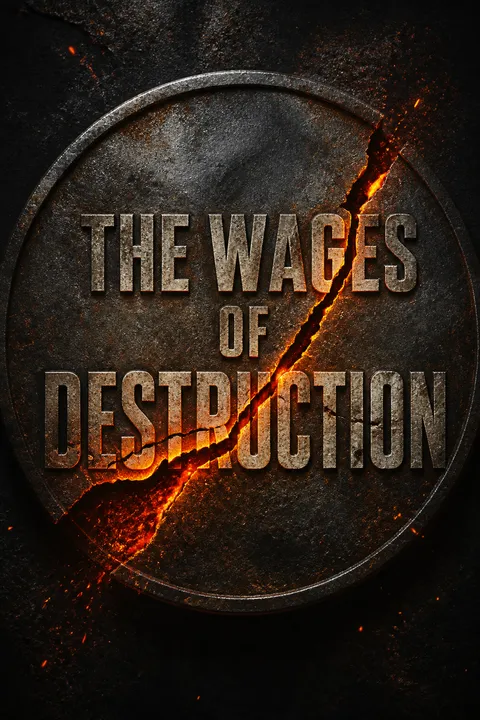
The Wages of Destruction by Adam Tooze examines Nazi Germany's economy through extensive data and statistical analysis. Readers praise Tooze's economic perspective, which challenges common myths: Germany was economically weaker than perceived, Albert Speer's "armaments miracle" was largely fabricated, and military decisions like invading Russia were driven by resource constraints rather than mere ideology. The book details how economic necessity shaped genocidal policies, particularly regarding food scarcity. While dense and technical, reviewers found it compelling, revealing how Germany's structural economic weaknesses made defeat inevitable despite temporary military successes.
People Also Read



About the Author
Other books by Adam Tooze

Download PDF
Download EPUB
.epub digital book format is ideal for reading ebooks on phones, tablets, and e-readers.








































