

Key Takeaways
Stop chasing positivity — wanting it only proves you lack it
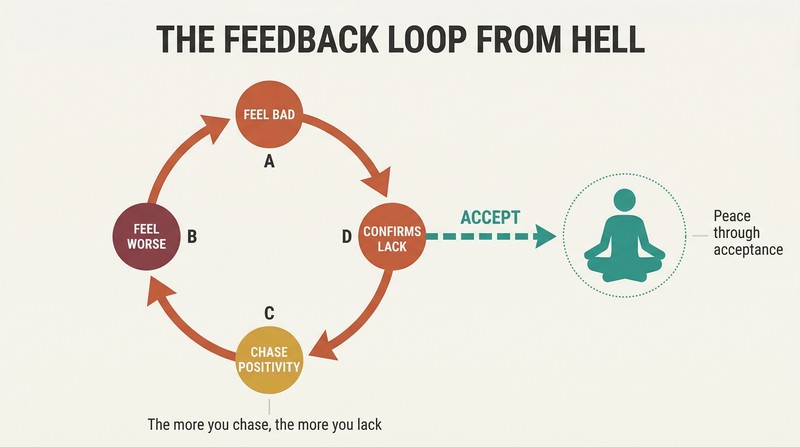
Manson opens with the Backwards Law. Coined by philosopher Alan Watts, it states that pursuing positive feelings makes you feel worse, because the pursuit reinforces that you lack what you're chasing. You repeat affirmations because you don't feel worthy. You visualize success because you feel like a failure. No truly happy person needs to stand in front of a mirror to convince herself she's happy.
This triggers what Manson calls the Feedback Loop from Hell — feeling bad about feeling bad, anxious about being anxious. Social media amplifies it: you compare your normal Tuesday to 350 curated highlight reels and conclude something's broken in you. Poet Charles Bukowski's tombstone reads "Don't try" — he succeeded not through striving but by honestly accepting who he was and writing about it. The solution isn't more positivity. It's accepting that some suffering is always inevitable.
Ask what pain you want — your chosen struggle defines your life
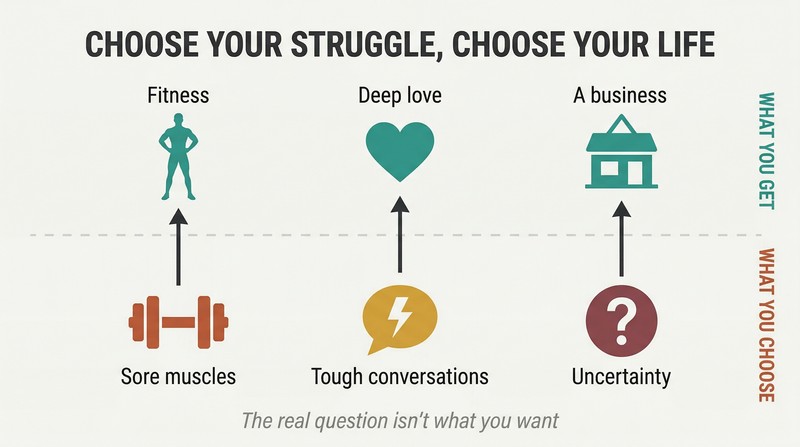
Everyone wants the reward; few want the process. Most people want the corner office but not the sixty-hour workweeks. They want great relationships but avoid tough conversations. Manson himself fantasized about being a rock star for half his life — imagined the screaming crowds — but never tolerated the broken strings, empty venues, and hauling forty pounds of gear without a car. He loved imagining the summit but hated the actual climb.
The real question isn't what pleasure you desire. It's what pain you're willing to sustain. People who enjoy the gym get chiseled abs. People who embrace the emotional turbulence of dating find deep love. People who tolerate the uncertainty of entrepreneurship build businesses. You don't get to skip the pain. You only get to choose which flavor of it is worth enduring.
Change your values and metrics before trying to change circumstances
Manson's Self-Awareness Onion has three layers: understanding your emotions, understanding why you have them, and — deepest and hardest — understanding the personal values that drive those feelings. Most self-help operates at the surface, making people feel good without excavating the underlying values causing the misery.
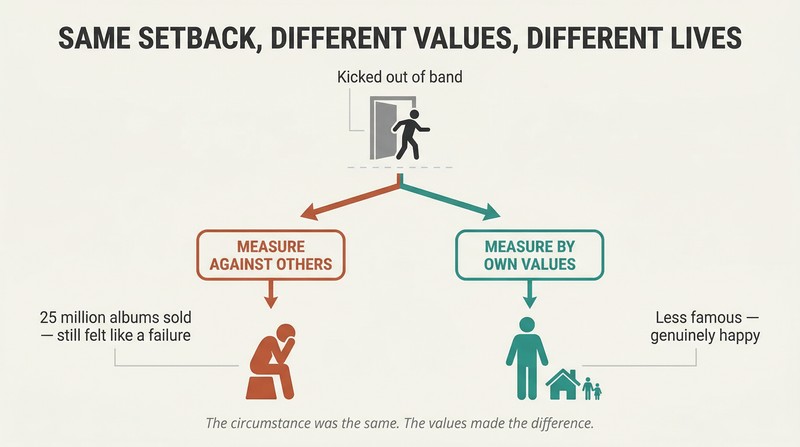
Same trauma, different metrics, wildly different lives. Guitarist Dave Mustaine was kicked out of his band and formed Megadeth, selling over 25 million albums — yet wept in interviews calling himself a failure, because he measured himself against Metallica (180 million albums). Pete Best was kicked out of the Beatles — arguably worse — but eventually found happiness by valuing family over fame. Good values are reality-based, socially constructive, and within your control. Bad values depend on external events and social comparison.
You're always responsible for your life, even when it's not your fault
William James nearly killed himself. Born into privilege but plagued by chronic illness and failure, the young man decided to spend one year believing he was 100% responsible for everything in his life. If nothing improved, he'd end it. That experiment became his "rebirth" — he went on to become the father of American psychology.
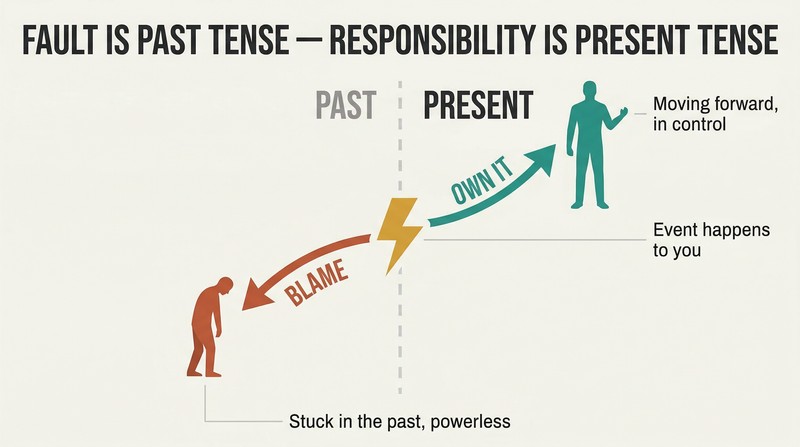
You don't control events; you control your response. A baby left on your doorstep isn't your fault, but it is your responsibility. Malala Yousafzai was shot in the face by the Taliban at fourteen for attending school; she chose to speak louder, won the Nobel Peace Prize, and became a best-selling author. Blaming others provides a temporary high but strips you of power. Owning the response — regardless of who caused the problem — is where growth begins.
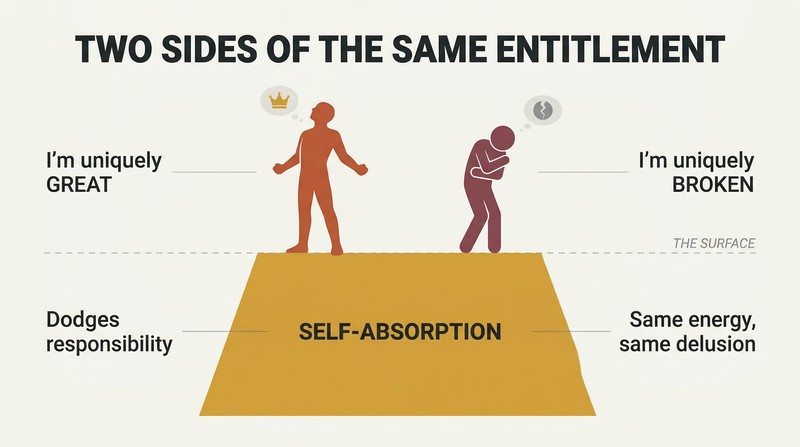
Feeling uniquely damaged is just as narcissistic as feeling uniquely great
Entitlement isn't just arrogance. Manson describes "Jimmy," a delusional entrepreneur who pitched billion-dollar ideas while living off relatives and smoking pot. That's the obvious narcissist. But there's a subtler version: people who perpetually feel inferior and uniquely broken. Both patterns dodge responsibility. Both are self-absorbed. People often flip between the two depending on the day.
The self-esteem movement backfired. Starting in the 1970s, schools handed out participation trophies, inflated grades, and told every kid they were special. A generation later, the data showed this produced entitlement, not excellence. People who become truly great at something do so because they understand they're not already great — their obsession with improvement, not self-congratulation, drives the growth.
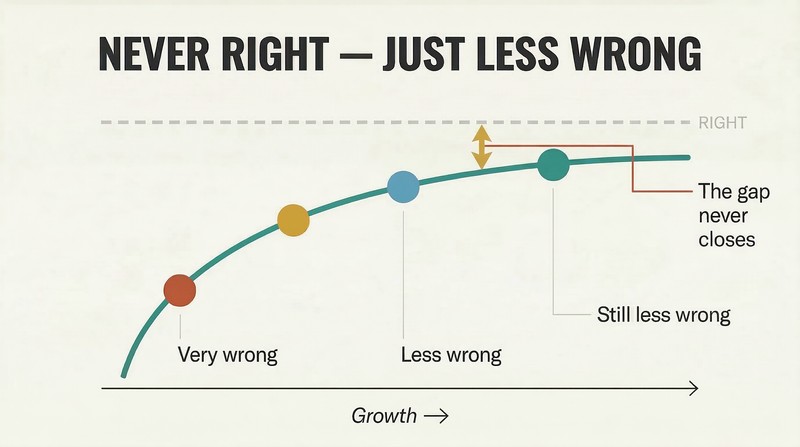
Get comfortable being wrong — growth means less wrong over time
We never go from wrong to right. We go from wrong to slightly less wrong. Five hundred years ago, doctors thought bloodletting cured disease. As a child, Manson thought "mediocre" was a vegetable. Our brains are meaning machines that invent patterns from noise — in one experiment, subjects developed elaborate button-pressing rituals to "earn" points that were actually awarded randomly.
Our memories are frighteningly unreliable. Journalist Meredith Maran, aided by suggestive therapy, accused her father of sexual abuse — then realized years later the memory was fabricated, devastating her family. Hundreds of similar false accusations emerged in the 1980s. The lesson: treat beliefs as hypotheses, not facts. Values are hypotheses, actions are experiments, emotions are data. Stay skeptical of your own certainty.
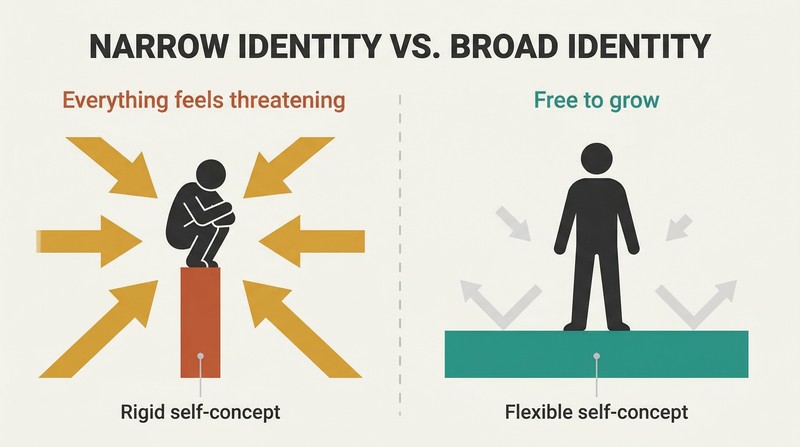
Whatever threatens your identity most, you'll avoid most
Manson calls this Manson's Law of Avoidance. It applies equally to success and failure. A friend wanted to sell art online for years — saved money, built websites, uploaded a portfolio — but never launched. Being "An Artist Nobody Likes" was scarier than remaining "An Artist Nobody's Heard Of." Another friend wanted to leave his party lifestyle but couldn't: giving up the Party Guy identity felt like psychological death.
The fix: define yourself in broad, mundane terms. Don't build your identity around brilliant artist, misunderstood genius, or hopeless victim — these narrow labels make everything feel threatening. Instead, measure yourself as a student, a partner, a friend, a creator. When you stop defending a rigid self-concept, you're finally free to grow past it.
Act first, then motivation follows — not the other way around
Manson calls this the "Do Something" Principle. Most people assume the chain runs: Inspiration → Motivation → Action. But it's actually an endless loop — action feeds inspiration, which fuels motivation, which drives more action. Start anywhere. Manson's high school math teacher, Mr. Packwood, had it right: if you're stuck on a problem, just start working on it, and the right ideas will show up.
What Manson calls VCR questions feel impossible from inside. A med student emails: "How do I drop out?" A shy guy asks: "How do I talk to her?" The action is obvious; the emotional pain surrounding it creates the illusion of complexity. A novelist who wrote over seventy books had one rule: two hundred crappy words per day. The crappy words triggered the good ones.
Healthy love means solving your own problems, not each other's
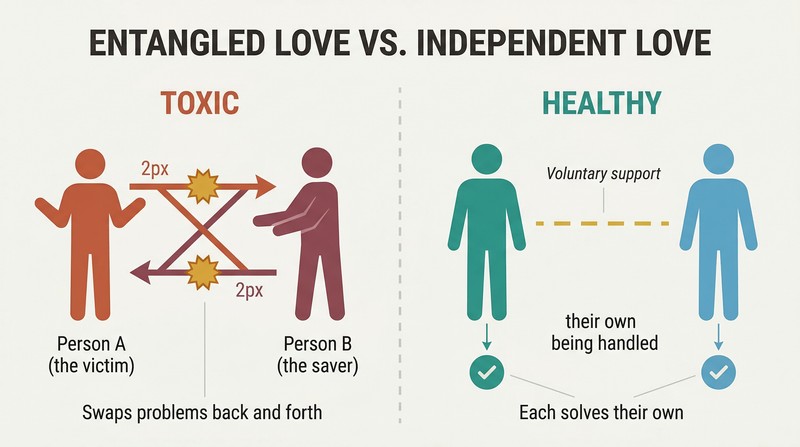
Toxic relationships have two default roles: the victim, who creates problems to get attention, and the saver, who fixes problems to feel needed. Both avoid responsibility. Both mistake emotional turbulence for passion. Shakespeare likely wrote Romeo and Juliet as satire — two teenagers kill themselves over a three-day crush — but our culture turned it into a romantic ideal.
Boundaries mean knowing whose problem is whose. Saying "You can't go out because I'll get jealous" dumps your emotional problem onto your partner. A healthy relationship involves two people who solve their own problems while supporting each other voluntarily — not out of obligation or guilt. If a refusal would shatter the relationship, it's built on conditions, not love.
Say no to almost everything so the right things can go deep
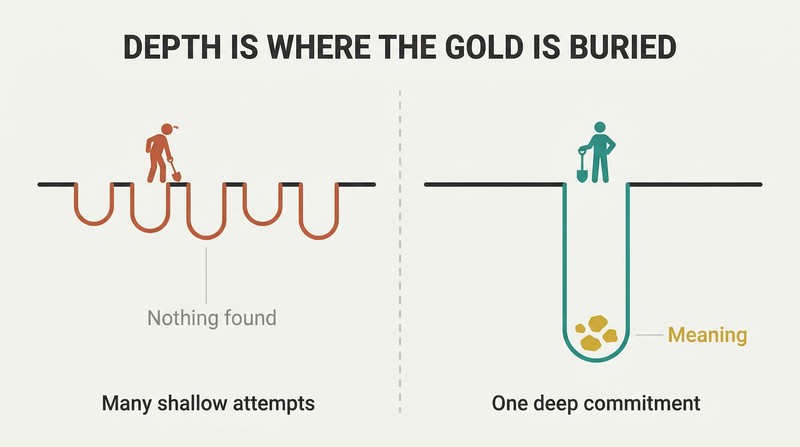
Breadth has diminishing returns. After visiting fifty-five countries over five years, Manson discovered each new destination added less meaning. Meanwhile, friends who'd committed to marriages, careers, and communities were building something lasting. The paradox of choice says more options make us less satisfied — choosing between two apartments feels confident; choosing among twenty-eight breeds years of doubt.
Rejection defines who you are. To value anything, you must reject its alternative. Manson eventually committed to one woman, one city, and writing full-time. He found more freedom through narrowing down than through keeping every option open. Some experiences only emerge after decades of investment in a single relationship, skill, or place. Depth is where the gold is buried, but you have to stay committed to dig it up.
Use death as a compass for what actually deserves your fucks
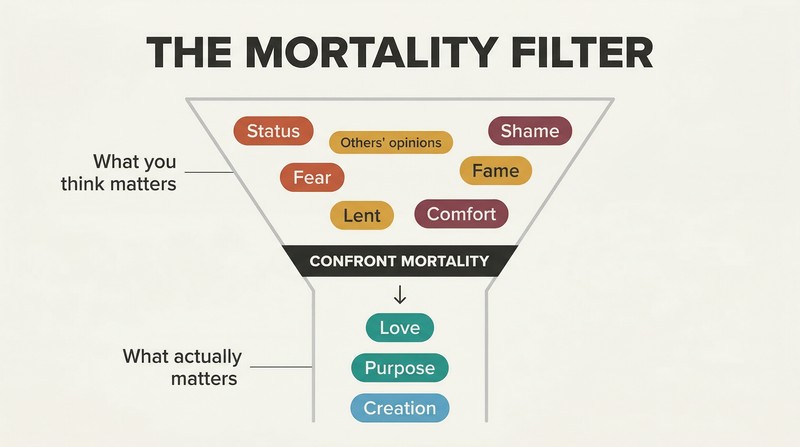
Manson's friend Josh drowned at a lake party when Manson was nineteen. The loss devastated him — but eventually rewired his life. He quit drugs, dropped out of music school, enrolled in college, started exercising, and read fifty nonfiction books in fifty days. Josh's death taught him: if nothing matters in the end, there's no reason to give in to fear or shame.
Ernest Becker's Pulitzer-winning Denial of Death argues all human values are immortality projects — attempts to make our conceptual selves outlive our physical selves. Religion, art, politics, even warfare spring from this unconscious drive. Becker concluded on his deathbed that the solution isn't better immortality projects but becoming comfortable with death itself. Confront mortality directly, and the superficial values dissolve. What remains is what truly matters.
Analysis
Manson's book occupies a peculiar niche in the self-help canon: it's a self-help book arguing that most self-help is harmful. The philosophical lineage is more legitimate than the profanity suggests — drawing on Stoicism, existentialism (Camus, Becker), and Buddhism to argue that avoidance of pain, not pain itself, is the root of modern psychological suffering.
The intellectual architecture is quietly sophisticated. The Backwards Law provides the epistemological foundation. Becker's death terror supplies existential depth. Between them, Manson constructs a practical ethical framework: choose values that are reality-based, internally controllable, and socially constructive. This maps neatly onto Acceptance and Commitment Therapy, which similarly emphasizes values-based living over symptom elimination — though Manson never cites the therapeutic literature explicitly.
Where Manson is most original is in diagnosing modern entitlement as a two-headed beast — grandiosity and chronic victimhood — fed by the same mechanism: avoidance of responsibility. This reframes the lazy 'millennials are entitled' complaint into something structurally insightful. Social media didn't create entitlement; it democratized the means of avoiding pain, making denial and blame more accessible and rewarding than ever.
The book's primary limitation is philosophical. Manson treats values as largely self-chosen, underplaying structural inequalities that constrain available choices. His poker metaphor — we all get dealt cards but the game lies in how we play — is motivating but flattens genuine asymmetries of power and access. The relentless emphasis on personal responsibility can shade into libertarian individualism that ignores systemic factors.
Still, as a counterweight to toxic positivity, the book works because it grants readers permission to stop performing happiness and start excavating their actual values. Its most durable contribution is the Self-Awareness Onion: the insistence that emotional awareness without examining the values underneath changes nothing. The five counterintuitive values Manson proposes — radical responsibility, uncertainty, failure, rejection, and mortality — form a coherent philosophy of selective engagement that is both ancient in its wisdom and urgently contemporary in its application.
Review Summary
Readers praise Manson's brutally honest and refreshing take on self-help, appreciating his ability to cut through the usual positivity-focused advice. Many found the book's counterintuitive approach eye-opening and life-changing. However, some critics found the excessive profanity distracting and the ideas unoriginal. Overall, the book's unconventional wisdom and straightforward delivery have made it a polarizing but impactful read for many seeking a different perspective on personal growth.
People Also Read




Glossary
The Backwards Law
Chasing good feelings backfiresA concept from philosopher Alan Watts that Manson uses as the book's philosophical foundation. It states that the more you pursue positive feelings, the less satisfied you become, because the pursuit itself reinforces that you lack what you're chasing. Conversely, accepting negative experience produces positive experience. Wanting to be rich makes you feel poor; accepting discomfort makes you resilient.
The Feedback Loop from Hell
Negative feelings about negative feelingsA psychological spiral in which negative emotions about negative emotions compound endlessly: anxiety about being anxious, guilt about feeling guilty, sadness about being sad. Manson argues modern social media amplifies this loop by making normal discomfort feel like personal failure compared to everyone else's curated highlight reels.
Disappointment Panda
Imaginary truth-telling superhero mascotManson's invented superhero who goes door-to-door telling people harsh truths they need to hear but don't want to accept—like 'making money won't make your kids love you.' Used as a recurring rhetorical device to deliver uncomfortable insights about suffering, problems, and human nature throughout the book.
The Self-Awareness Onion
Three layers of self-understandingManson's model for deepening self-awareness through three progressively harder layers. Layer 1: recognizing your emotions ('I feel angry'). Layer 2: understanding why you feel them ('because I feel disrespected'). Layer 3: identifying the underlying values and metrics driving those feelings ('because I measure my worth by others' approval'). Most people and most self-help never reach Layer 3.
Manson's Law of Avoidance
Identity threats trigger avoidance behaviorManson's principle stating: 'The more something threatens your identity, the more you will avoid it.' This applies equally to positive and negative outcomes—people avoid both success and failure when either threatens their self-concept. A would-be artist avoids launching work; a party animal avoids settling down. The more narrowly you define your identity, the more things feel threatening.
The "Do Something" Principle
Action creates motivation, not vice versaManson's reframing of the motivation chain. Rather than Inspiration → Motivation → Action (the conventional assumption), the chain is actually a loop: Action → Inspiration → Motivation → Action. Starting with even the smallest action—designing just a header, writing two hundred bad words—generates the emotional fuel to continue. Derived from his high school math teacher Mr. Packwood's advice to just start working when stuck.
VCR Questions
Emotionally complex but actually simpleManson's term for questions that seem impossibly complicated from the inside but are obviously simple from the outside—like older generations bewildered by a VCR. Examples: 'How do I drop out of med school?' or 'How do I ask her out?' The action itself is straightforward; it's the emotional pain surrounding it (breaking parents' hearts, risking rejection) that creates the illusion of complexity.
Immortality Projects
Legacies to outlive physical deathErnest Becker's concept, central to the book's final chapter. These are the values, legacies, and creations through which people attempt to extend their conceptual selves beyond physical death—putting names on buildings, raising children, creating art, building civilizations. Becker argued all human culture is driven by these projects, and that wars occur when one group's immortality projects clash with another's.
Victimhood Chic
Performing victimhood for social rewardManson's term for the cultural trend of publicly performing victimhood for attention and moral righteousness, amplified by social media's reward structure. Present on both the political left and right, it diverts attention from actual victims by flooding public discourse with manufactured outrage. Related to what media commentator Ryan Holiday calls 'outrage porn'—content designed to generate performative indignation rather than address real problems.
FAQ
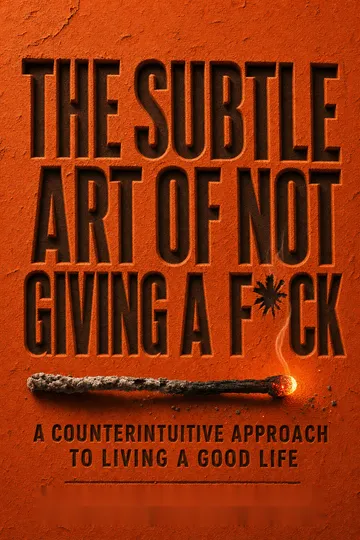
What's "The Subtle Art of Not Giving a F*ck" about?
- Core Message: The book by Mark Manson is about focusing on what truly matters in life by choosing what to care about and what to let go of.
- Counterintuitive Approach: It challenges the conventional self-help advice of always being positive and instead suggests embracing life's struggles and limitations.
- Philosophical Insights: Manson uses philosophical concepts to argue that accepting our limitations and failures can lead to a more meaningful and fulfilling life.
Why should I read "The Subtle Art of Not Giving a F*ck"?
- Practical Advice: The book offers practical advice on how to prioritize your values and focus on what truly matters.
- Relatable Examples: Manson uses relatable anecdotes and examples to illustrate his points, making complex ideas accessible.
- Refreshing Perspective: It provides a refreshing perspective on self-improvement by encouraging readers to embrace their flaws and limitations.
What are the key takeaways of "The Subtle Art of Not Giving a F*ck"?
- Choose Your F*cks Wisely: Focus on what truly matters and let go of the rest.
- Embrace Failure: Accept that failure is a part of life and use it as a tool for growth.
- Value-Based Living: Live according to your values, not societal expectations or superficial goals.
What is the "Feedback Loop from Hell" in "The Subtle Art of Not Giving a F*ck"?
- Cycle of Anxiety: It's a cycle where worrying about your problems leads to more anxiety, creating a loop of negative emotions.
- Self-Perpetuating: The loop perpetuates itself as worrying about being anxious makes you more anxious.
- Breaking the Loop: Manson suggests breaking the loop by accepting negative emotions and not giving a f*ck about them.
How does Mark Manson define "The Subtle Art of Not Giving a F*ck"?
- Selective Caring: It's about choosing what to care about and what to ignore, focusing only on what truly matters.
- Prioritization: It involves prioritizing your values and letting go of superficial concerns.
- Emotional Resilience: By not giving a f*ck about trivial matters, you build emotional resilience and focus on meaningful challenges.
What is the "Backwards Law" mentioned in "The Subtle Art of Not Giving a F*ck"?
- Paradoxical Insight: The Backwards Law suggests that the more you pursue feeling better all the time, the less satisfied you become.
- Acceptance of Negativity: Accepting negative experiences can lead to positive outcomes, as it reduces the pressure to always be happy.
- Philosophical Roots: The concept is rooted in philosophical ideas that emphasize the importance of embracing life's struggles.
What does Mark Manson mean by "You Are Not Special"?
- Challenging Entitlement: Manson argues against the cultural narrative that everyone is exceptional, which can lead to entitlement and unrealistic expectations.
- Embrace Mediocrity: Accepting that you are average in most things can lead to a more grounded and fulfilling life.
- Focus on Growth: By letting go of the need to be special, you can focus on personal growth and meaningful achievements.
How does "The Subtle Art of Not Giving a F*ck" address the concept of values?
- Importance of Values: Manson emphasizes that our values determine the quality of our lives and the nature of our problems.
- Good vs. Bad Values: Good values are reality-based, socially constructive, and controllable, while bad values are superstitious, socially destructive, and uncontrollable.
- Value-Based Decisions: Making decisions based on healthy values leads to better life outcomes and personal satisfaction.
What is the "Do Something" Principle in "The Subtle Art of Not Giving a F*ck"?
- Action Over Inaction: The principle suggests that action can lead to motivation and inspiration, rather than waiting for motivation to act.
- Breaking Procrastination: By doing something, even if small, you can break the cycle of procrastination and start making progress.
- Self-Generated Motivation: Taking action creates a feedback loop that generates its own motivation and inspiration.
What role does failure play in "The Subtle Art of Not Giving a F*ck"?
- Failure as a Teacher: Manson views failure as an essential part of growth and learning.
- Redefining Success: Success is not the absence of failure but the willingness to fail and learn from it.
- Embrace Discomfort: By embracing failure, you become more resilient and open to new opportunities.
How does Mark Manson suggest building trust in relationships?
- Honesty and Boundaries: Trust is built through honesty and setting clear boundaries in relationships.
- Conflict as Necessary: Conflict is necessary for trust, as it shows who is there for you unconditionally.
- Rebuilding Trust: When trust is broken, it can be rebuilt through admission of faults and consistent improved behavior.
What are the best quotes from "The Subtle Art of Not Giving a F*ck" and what do they mean?
- "The desire for more positive experience is itself a negative experience." This highlights the paradox that constantly seeking positivity can lead to dissatisfaction.
- "You are going to die one day." This serves as a reminder to focus on what truly matters and not get caught up in trivial concerns.
- "To not give a f*ck is to stare down life’s most terrifying and difficult challenges and still take action." It emphasizes the importance of courage and resilience in the face of adversity.
About the Author


Download PDF
Download EPUB
.epub digital book format is ideal for reading ebooks on phones, tablets, and e-readers.








































