

Key Takeaways
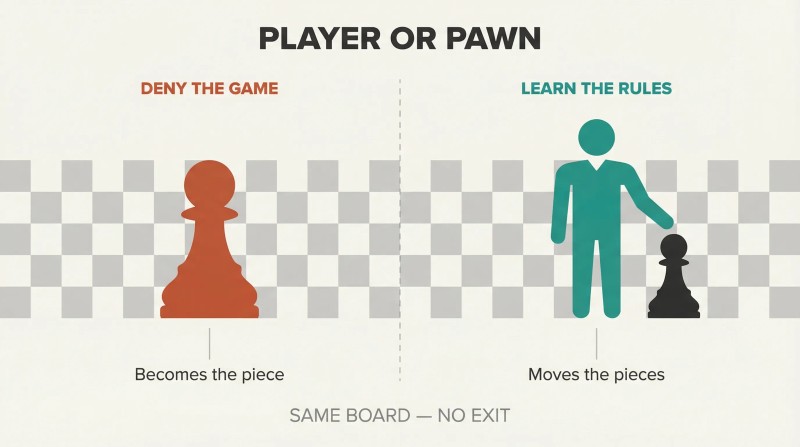
Power is an inescapable game — learn the rules or become a pawn
Greene's provocative opening argument: Everyone plays power games, including those who claim they don't. The person who advertises moral purity is deploying concealment. The radical egalitarian redistributes power on their own terms. Even feigning naivety is a calculated move — children manipulate adults from the cradle. Those who make a display of innocence, Greene insists, are often the least innocent of all.
The modern court mirrors the ancient one. Whether you work in a corporation, a startup, or a nonprofit, the dynamics of the Renaissance court are alive: scheming beneath civility, factions vying for the ruler's favor, the deadly cost of a political misstep. The only real choice is whether you navigate these currents consciously or get swept under by someone who does.
Control your emotions before someone weaponizes them against you
Anger is strategy's worst poison. When Napoleon discovered his minister Talleyrand had conspired against him, he erupted into a screaming tirade — "You are a coward, a man of no faith!" — while Talleyrand leaned calmly on the mantelpiece and smirked. Word of the emperor's meltdown spread through Europe. "This is the beginning of the end," Talleyrand later said. The man who terrified nations was undone by a single loss of composure.
Emotion clouds every calculation. Greene considers emotional mastery the foundational skill of power — more critical than any single tactic. Love blinds you to self-serving allies; anger hands your opponents a roadmap to your vulnerabilities. You cannot suppress emotions entirely, but you must never let them shape your strategy. The powerful respond deliberately; they never merely react.

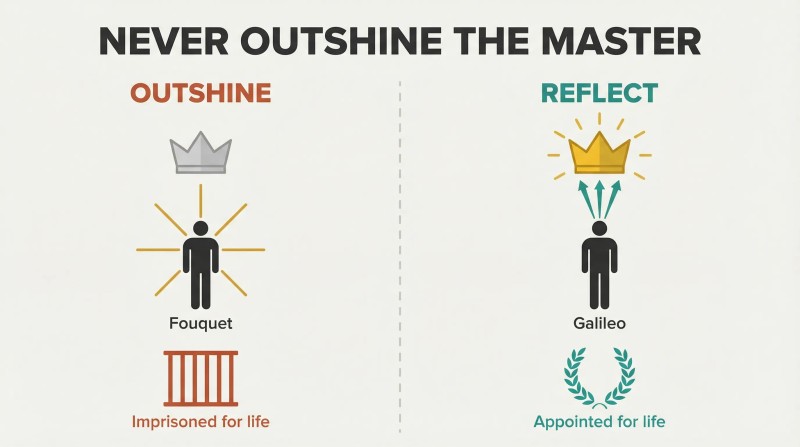
Let the master outshine you — their security is your ladder
Fouquet's fatal extravagance. In 1661, French finance minister Nicolas Fouquet threw the most spectacular party Europe had ever seen to honor King Louis XIV. Instead of feeling flattered, Louis saw each dazzling spectacle as proof that Fouquet was overshadowing him. The next day, Fouquet was arrested. He spent his last twenty years in solitary confinement.
Galileo took the opposite approach. When the astronomer discovered Jupiter's moons, he named them after the Medici family, framing the cosmic event as a reflection of their dynasty's greatness. The number of moons — four — conveniently matched the Medici sons. The gesture made his patrons glow with divine significance. Galileo received a lifetime salary and the title of court philosopher. He didn't outshine the master; he made the master outshine everyone else.
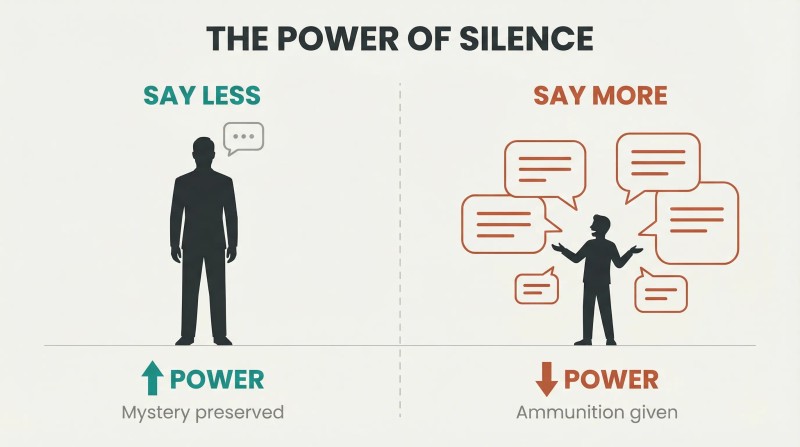
Say less than necessary — silence projects more power than eloquence
Louis XIV weaponized silence. The Sun King's most famous reply to any request was simply: "I shall see." Ministers would deliver lengthy presentations, and Louis would walk away without comment. No one could predict his decisions or manipulate his thinking. His silence forced others to reveal their own weaknesses as they nervously filled the void.
Coriolanus shows the cost of excess. This legendary Roman general had an awe-inspiring reputation — until he opened his mouth. Running for consul, he bragged, insulted citizens, and voiced every opinion. The mystery evaporated. The people who had once revered him turned hostile, and he was eventually banished. His case illustrates a universal truth: the more you say, the more common you appear, and the more ammunition you hand to your enemies.
Hide your real strategy behind the most ordinary exterior
The familiar is the perfect disguise. Con artist "Yellow Kid" Weil lured a Chicago millionaire into what appeared to be a routine real estate deal. While the mark's mind was occupied with mundane business details, Weil steered him into a completely different trap involving a fake boxing match. The man lost $35,000 because the bait looked so boringly legitimate he never suspected a con.
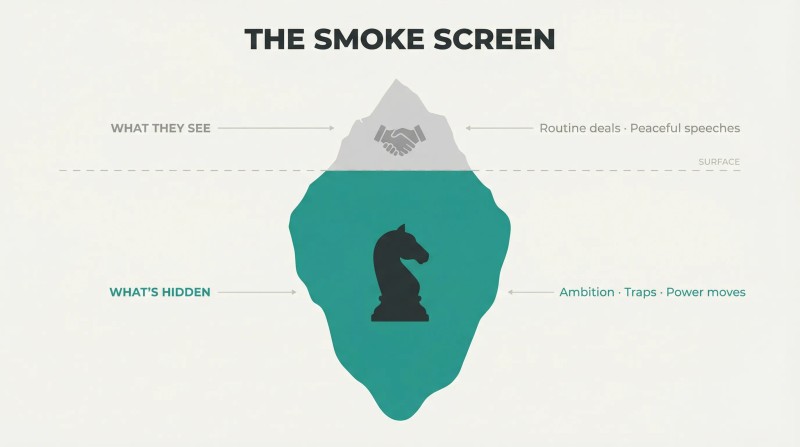
Bismarck concealed ambition behind pacifism. In 1850, the young Prussian deputy secretly yearned for war with Austria. Instead he gave a passionate speech against war, stunning everyone. The king rewarded his apparent peacefulness with a cabinet position — the exact foothold Bismarck needed to later wage the very wars he had publicly condemned. Greene calls this tactic the smoke screen: wrapping bold moves in the comfortable and familiar.
Former enemies make more loyal allies than old friends
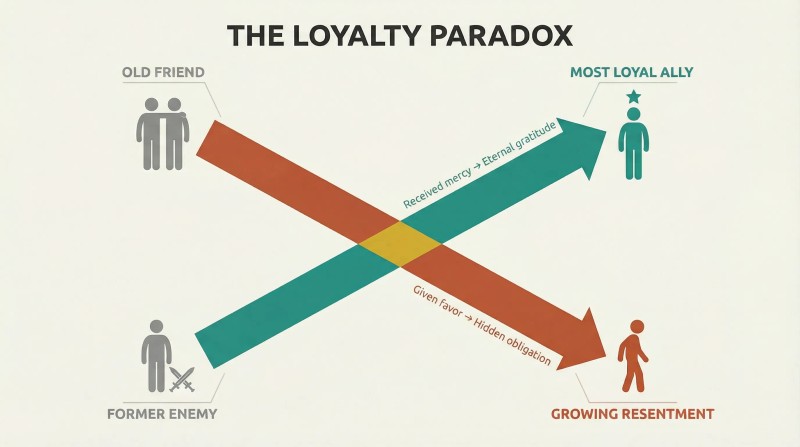
Emperor Sung turned wolves into lambs. In 10th-century China, Emperor Sung faced generals who might betray him at any moment. Instead of executing them, he offered lavish estates, beautiful companions, and comfortable retirement. He then converted defeated enemy kings into his most devoted supporters by showing unexpected mercy — they expected death and received generosity.
Friends make dangerous employees. Greene argues that hiring friends breeds resentment: They feel chosen for the relationship, not their merit, and the receipt of favors creates an oppressive sense of obligation. Meanwhile, a former enemy has everything to prove and nothing to take for granted. Talleyrand chose his bitterest rival, Fouché, as his partner in the conspiracy against Napoleon — knowing that mutual self-interest, unclouded by personal feeling, would prove unbreakable.
Demonstrate, never argue — actions bypass every defense
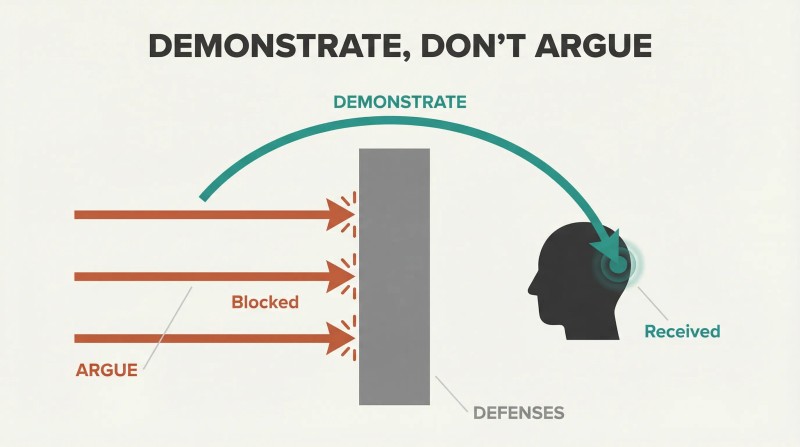
Michelangelo's silent victory. When Florence's mayor Soderini complained that David's nose was too large, Michelangelo didn't argue. He led Soderini up the scaffolding, pretended to chisel while secretly dropping pre-gathered marble dust from his hand, then stepped aside. "I like it better," said Soderini. The nose was untouched. Michelangelo changed the man's perspective — literally — without a single word of disagreement.
Khrushchev made a room feel Stalin's terror. When a heckler shouted "You were Stalin's colleague — why didn't you stop him?" Khrushchev barked: "Who said that?" Dead silence. After a long, tense pause, he said quietly: "Now you know why I didn't stop him." Instead of explaining fear, he made the audience experience it. No argument could have been half as persuasive.
Half your power comes from what you refuse to get dragged into
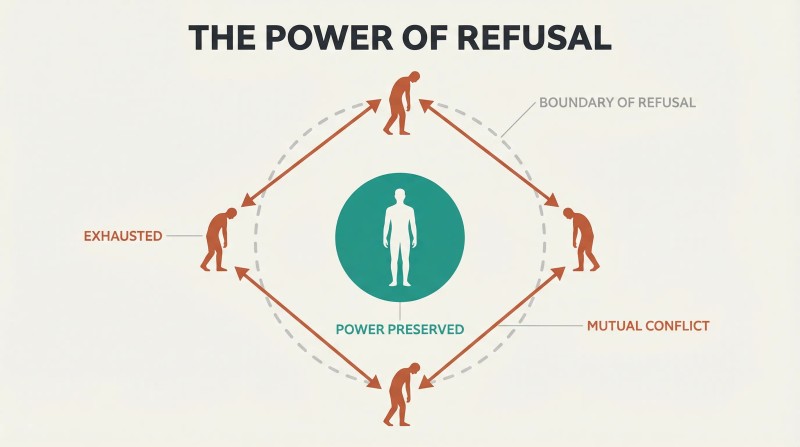
Every entanglement subtracts from your reserves. Greene argues that the powerful share a crucial discipline: judging every action by its full cost — in time, energy, dignity, and peace of mind. The fool rushes to take sides in every conflict. The master stands back, lets others exhaust themselves, and enters only when the advantage is clear. As Talleyrand proved through five French regimes, the one who holds back often inherits power from those who burned themselves out fighting.
Isabella d'Este preserved tiny Mantua for decades while Venice, Milan, Florence, and Rome fell to invasion or civil war. Her method: she refused to commit to any faction. She charmed French kings, befriended Cesare Borgia, and flattered popes — while allying permanently with none. By staying fluid and uncommitted, she watched stronger powers destroy each other while her small state thrived.
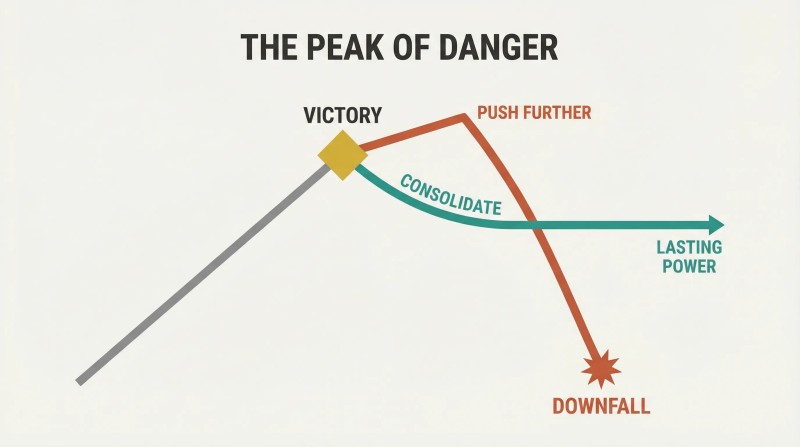
Victory is the moment of greatest danger — learn when to stop
Cyrus the Great's fatal overreach. The founder of the Persian Empire conquered everything from Lydia to Babylon with brilliant strategy. But after each victory he pushed further, drunk on success. When he attacked the Massagetai — a fierce tribal nation led by Queen Tomyris — she warned him to stop. He scoffed, tricked her army with wine and a feast, and captured her son, who killed himself in captivity. Tomyris then annihilated Cyrus's army and killed the emperor himself.
Madame de Pompadour lasted twenty years as Louis XV's official mistress — a record — because she never let triumph cloud her judgment. When age made her physical role difficult, she didn't panic or cling. She arranged young lovers for the king, knowing they could never rival her intellect and political skill. She consolidated rather than overreached, and died more powerful than ever.
Stay fluid — rigid systems always write their own obituaries
Sparta's rigid system destroyed itself. The Spartans built history's most fearsome army by eliminating everything that wasn't warfare: no arts, no commerce, no currency. For three hundred years the shell held. But after finally conquering Athens, Athenian money and culture seeped through the cracks. Spartan governors, trained for austerity, were seduced by corruption. Within decades the rigid empire collapsed — not from external attack, but from its own inability to adapt.
Mao's guerrilla strategy embodied formlessness. Modeled on the Chinese board game wei-chi (go), Mao dispersed his troops like mercury across Manchuria. The Nationalists captured cities — the obvious targets — only to find themselves surrounded and starved. Mao gave the enemy nothing solid to attack. The more they chased, the weaker they became. In power as in nature, what cannot be grasped cannot be destroyed.

Analysis
Robert Greene's The 48 Laws of Power holds a rare position in modern nonfiction: part history book, part strategy manual, part philosophical provocation. Drawing from three millennia of examples — Sun-tzu to Bismarck, Medici bankers to Mao's guerrillas — Greene distills what he sees as the unchanging mechanics of human power dynamics. The result is less a prescriptive playbook than a diagnostic toolkit for reading the hidden architecture beneath every social interaction.
What makes the book endure is its radical amorality. Unlike most self-help works, which start with ethics and work backward, Greene begins with raw observation. He asks not 'What should people do?' but 'What actually works?' This places him in the Machiavellian tradition, and like Machiavelli, he has been celebrated and condemned for articulating what most people practice in silence.
Greene's most subversive claim is his opening argument: that those who loudly reject power games are often the most skilled players. The person who advertises moral purity is deploying concealment; the radical egalitarian redistributes power on their own terms. This Nietzschean suspicion of virtue as a mask for will-to-power is the philosophical engine driving all 48 laws.
Critics rightly note that Greene assumes a largely zero-sum world. Not every interaction is a contest, and not every generous act conceals a blade. The framework works best not as a life philosophy but as a literacy course — teaching readers to decode situations the way a chess player reads a board. In an era of corporate politics, social media performance, and algorithmic influence, that literacy is arguably more relevant than when the book appeared in 1998.
The apparent contradictions between certain laws — 'Court Attention' versus 'Behave Like Others' — are not flaws but features. They reflect Greene's deeper thesis: context determines everything, and the truly powerful sense which principle each moment demands. The numbered format promises algorithmic certainty, but the actual message is its opposite: fluidity over formula, adaptability over dogma.
Review Summary
The 48 Laws of Power receives mixed reviews. Some praise it as an insightful guide to understanding human behavior and power dynamics, while others criticize it as promoting manipulative and unethical practices. Supporters find the historical anecdotes engaging and the laws applicable to various situations. Critics argue the book encourages selfishness and lacks moral grounding. Many readers appreciate the book's strategic advice but caution against taking it too literally. Some view it as a manual for success, while others see it as a cautionary tale about the dangers of unchecked ambition.
People Also Read


Glossary
Sprezzatura
Making difficulty appear effortlessA concept borrowed from Baldassare Castiglione's The Book of the Courtier and central to Law 30. It describes the capacity to make challenging actions seem uncontrived and natural. Greene argues that concealing the toil behind one's accomplishments is essential to projecting power, since visible effort raises questions about competence and invites imitation.
The Mirror Effect
Mirroring others to gain powerGreene's framework in Law 44 describing four tactical uses of psychological mirroring: the Neutralizing Effect (mimicking enemies to shield your strategy), the Narcissus Effect (reflecting a target's psyche to seduce them), the Moral Effect (teaching lessons by giving people a taste of their own behavior), and the Hallucinatory Effect (creating perfect copies of reality to deceive).
The Surrender Tactic
Using weakness as a weaponGreene's term in Law 22 for the strategy of yielding outwardly when you are weaker, rather than fighting for honor's sake. By surrendering, you buy time to recover, study the conqueror's weaknesses, and plan a counterattack — while depriving the opponent of the satisfaction of a fight. Bertolt Brecht's charming performance before the House Un-American Activities Committee exemplifies the tactic.
Cat's-paw
Others do your dirty workFrom Law 26, derived from the fable in which a monkey uses a cat's paw to pull chestnuts from fire. Greene uses it to describe any third party who unwittingly performs unpleasant or dangerous tasks on your behalf, shielding you from blame and keeping your hands clean. Cleopatra's use of Julius Caesar and Marc Antony to eliminate her royal siblings illustrates the concept.
The Strategy of the Crown
Act royal to be treated royallyGreene's concept from Law 34 for the psychological technique of radiating regal self-confidence regardless of your actual status. By setting a high price on yourself — as Christopher Columbus did when demanding the title Grand Admiral of the Oceanic Sea — you create a self-fulfilling prophecy. Others assume that someone who values themselves so highly must have reason to, and treat you accordingly.
Smoke Screen
Bland exterior disguising true intentionsGreene's tactical concept from Law 3 describing the use of a familiar, unremarkable exterior to hide strategic actions. Unlike active misdirection, the smoke screen works by lulling targets into comfort with the ordinary. A bland facial expression, a routine business deal, or a show of conformity can all serve as smoke screens behind which bold moves go undetected.
FAQ
What's "The 48 Laws of Power" about?
- Power dynamics: "The 48 Laws of Power" by Robert Greene explores the intricacies of power dynamics and strategies to gain and maintain power.
- Historical examples: The book uses historical examples to illustrate each law, providing a practical guide to understanding and applying power.
- Human nature: It delves into human nature, revealing how people can manipulate and influence others to achieve their goals.
Why should I read "The 48 Laws of Power"?
- Understanding power: The book offers insights into the nature of power and how it operates in various contexts, from personal relationships to professional environments.
- Strategic thinking: It encourages strategic thinking and helps readers develop skills to navigate complex social and political landscapes.
- Self-awareness: By understanding the laws, readers can become more self-aware and better equipped to protect themselves from manipulation.
What are the key takeaways of "The 48 Laws of Power"?
- Power is a game: Power is a social game that requires strategy, cunning, and the ability to read people and situations.
- Adaptability: The ability to adapt and change tactics is crucial for maintaining power and influence.
- Emotional control: Mastering one's emotions and understanding the emotions of others are essential for effective power play.
What are the best quotes from "The 48 Laws of Power" and what do they mean?
- "Never outshine the master": This quote emphasizes the importance of making those above you feel superior to avoid insecurity and retaliation.
- "Court attention at all cost": It highlights the necessity of standing out and being noticed to gain influence and power.
- "Win through your actions, never through argument": This advises demonstrating your point through actions rather than words, as actions are more convincing and less likely to provoke resistance.
How can I apply the laws from "The 48 Laws of Power" in my life?
- Assess your environment: Understand the power dynamics in your personal and professional life to identify opportunities and threats.
- Strategic relationships: Build alliances and relationships that can help you achieve your goals while being cautious of those who may undermine you.
- Emotional intelligence: Develop emotional intelligence to better understand and influence others, while maintaining control over your own emotions.
What is the significance of "Never outshine the master" in "The 48 Laws of Power"?
- Avoiding insecurity: This law advises against making superiors feel insecure by outshining them, as it can lead to resentment and retaliation.
- Subtle flattery: Instead, subtly flatter and support their ego to gain their favor and protection.
- Long-term strategy: By making superiors feel secure, you position yourself for long-term success and advancement.
How does "Court attention at all cost" work in "The 48 Laws of Power"?
- Visibility is power: This law emphasizes the importance of being visible and memorable to gain influence and power.
- Controversy and scandal: Sometimes, even negative attention can be beneficial, as it keeps you in the public eye and relevant.
- Adaptability: Continuously adapt your methods to maintain interest and avoid becoming predictable or boring.
What does "Win through your actions, never through argument" mean in "The 48 Laws of Power"?
- Actions speak louder: Demonstrating your point through actions is more effective than arguing, as it leaves no room for misinterpretation.
- Avoiding resistance: Arguments can provoke resistance and resentment, while actions can subtly persuade and influence.
- Symbolic gestures: Use symbolic gestures and demonstrations to convey your message powerfully and convincingly.
How does Robert Greene suggest using "The Surrender Tactic"?
- Strategic retreat: Greene advises using surrender as a strategic retreat to buy time and regroup when facing a stronger opponent.
- Avoiding direct conflict: By surrendering, you avoid direct conflict and the potential for greater losses.
- Long-term advantage: Surrender can be a tool to gain a long-term advantage by lulling the opponent into complacency.
What is the significance of "Conceal Your Intentions" in "The 48 Laws of Power"?
- Prevent sabotage: Keeping your plans and goals hidden can prevent others from sabotaging your efforts and give you a strategic advantage.
- Maintain mystery: Concealing intentions keeps others off-balance and unable to predict your moves.
- Strategic advantage: This approach allows you to maneuver without opposition, increasing your chances of success.
How does "The 48 Laws of Power" suggest dealing with enemies?
- Use enemies strategically: The book advises using enemies to your advantage, as they can be more loyal and useful than friends.
- Create dependence: Make others, including enemies, dependent on you to maintain control and influence.
- Neutralize threats: Identify and neutralize threats by understanding your enemies' weaknesses and exploiting them.
What role does deception play in "The 48 Laws of Power"?
- Strategic deception: Deception is a key strategy in gaining and maintaining power, as it allows you to manipulate situations to your advantage.
- Conceal intentions: Concealing your true intentions keeps others off-balance and unable to predict your moves.
- Controlled appearances: Manage your appearances and actions to create the desired perception and influence others effectively.
About the Author
Other books by Robert Greene



Download PDF
Download EPUB
.epub digital book format is ideal for reading ebooks on phones, tablets, and e-readers.








































