
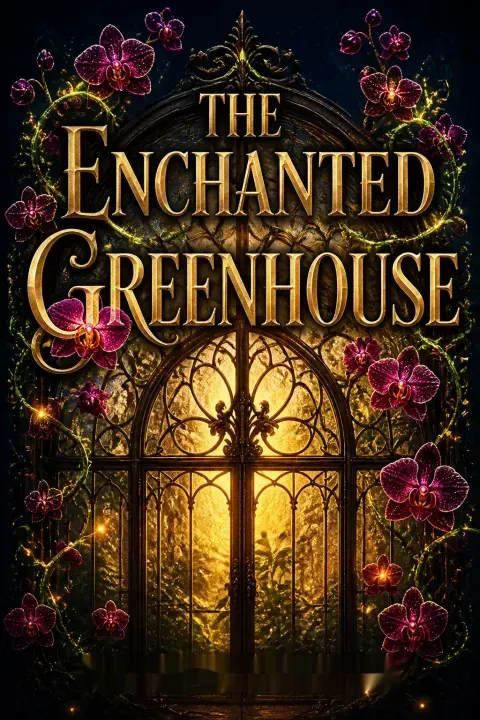


Plot Summary
Wooden, Aware, and Alone
Terlu Perna,1 Fourth Librarian of the Great Library of Alyssium, sits in a vast courtroom while the judge condemns her. She created Caz,13 a sentient spider plant, to ease her crushing loneliness in the empty stacks. The prosecutor demands an example; the head librarian Rijes Velk4 pleads for mercy, arguing no harm was done. The judge transforms her into a wooden statue as a warning to all.
A sorcerer casts the spell, and Terlu1 feels her blood slow, her flesh harden, her eyes freeze. She remains conscious, trapped in darkness and silence, dreaming of sunlight and voices. Years pass unmeasured. She is stored in a closet, then finally installed on her pedestal in the North Reading Room, grateful just to see faces again.
The punishment literalizes Terlu's pre-existing condition: she was already socially invisible in the library stacks, already frozen out of connection. The court's logic is imperial logic at its most brutal—the individual sacrificed for the appearance of order. Terlu's 'crime' of creating companionship for herself is fundamentally about reaching toward life; the empire's response entombs her in living death. This sets up the book's central tension between law-as-control and love-as-creation, and establishes why Terlu will risk everything again rather than remain isolated.
Flesh Again in Winter Woods
Terlu1 collapses into snow, suddenly flesh again, every nerve burning with sensation after years of nothing. She stumbles through pine forest toward a massive glass structure, breaks in, and finds warmth.
A winged cat named Emeral10 curls around her neck as she explores greenhouse after greenhouse of impossible wonders — rainbow butterflies, diamond dragonflies, singing flowers. In a rose-filled room, she finds a man pruning dead sprigs on his knees. She hugs him impulsively, starved for touch. He recoils.
His name is Yarrow Verdane,2 and he cast the spell to revive her because he believed she was a sorcerer sent to save his failing enchanted greenhouse. When she admits she is only a librarian, his face falls. He walks away, leaving her bewildered among the roses.
This section dramatizes the collision of two forms of isolation. Yarrow has been alone so long he does not know how to receive touch; Terlu has been deprived of sensation so long she cannot stop reaching for it. Yarrow's immediate disappointment and retreat establish his central wound: he has been let down by everyone he trusted for help, and he has learned to expect abandonment. Terlu's hug, though inappropriate, is the first act of bridge-building in a story about rebuilding connections—and his rejection of it foreshadows how much work lies ahead.
The Resurrection Rose Accuses
Yarrow2 shows Terlu1 the row of abandoned cottages and tells her to pick one. She explores a stone tower instead and finds a sorcerer's workroom, layered in dust and crammed with coded notebooks. On the desk sits a pot with a shriveled brown knot of leaves.
She waters it. The plant unfurls into a rose with deep purple petals, then speaks, demanding to see Laiken,9 the sorcerer who created her. Her name is Lotti,3 a resurrection rose who can survive dormancy for years. When Terlu1 explains Laiken9 is dead, Lotti3 wilts with grief.
Yarrow,2 having tracked Terlu1 down, is stunned by the talking plant. Terlu1 panics, remembering her own crime: creating sentient plants is illegal, and she has just been revived from a six-year punishment for exactly that.
Lotti functions as Terlu's mirror: both were left dormant by those who should have cared for them, both woke confused and alone. The legal irony is sharp—Terlu, punished for creating a sentient plant, now stumbles into reviving one by accident. Her panic reveals how deeply the punishment scarred her; she is not just afraid of the law but of her own impulses toward connection. Lotti's immediate demand to see Laiken, followed by grief, introduces the theme of creators who fail their creations.
Confession and a New Crime
Yarrow2 leads Terlu1 and Lotti3 to a greenhouse where dozens of potted plants sit silent and unmoving. Lotti3 screams at them to wake, but they do not respond. Yarrow2 explains these were once sentient like Lotti,3 but they fell silent decades ago. Terlu1 reads the letter from Rijes Velk4 that accompanied her statue and understands: she was sent here to wake them.
She confesses everything — creating Caz,13 the trial, the six-year punishment. To her surprise, Yarrow2 does not recoil. He points out there is no one on the island to report her. Lotti3 begs. Terlu1 agrees to find and cast the spell, even though every syllable will risk her freedom again. She will become the sorcerer they need, self-taught and terrified.
This is the point of no return. Terlu's confession is an act of radical trust after years of punishment for her supposed crime. Rijes's letter reframes her past not as criminal but as preparation—her 'crime' becomes her qualification. Yarrow's acceptance rather than judgment provides the first evidence that this community might be different from the empire that condemned her. The sleeping plants literalize the book's central question: is it better to be safe and asleep, or awake and at risk?
Codebook in the Dragon Maze
Terlu,1 Yarrow,2 and Lotti3 search Laiken's notebooks in his workroom. The spells are written in a cipher combining First Language with an unknown code. Terlu1 suspects Laiken9 created a codebook and, given his fascination with Ginian maze-builders, might have hidden it. Yarrow2 leads them to a greenhouse containing a massive maze of sunflowers that rearrange themselves, guarded by teacup-sized dragons who breathe candle-flames and attack intruders.
Using honeycomb as bribery, they enlist the dragons to guide them to the maze's heart. There, atop a hoard of glittering treasures — a ruby, a single glove, a heart-shaped stick — they find a slim green-leather codebook. The dragons accept chocolate in trade. Terlu1 can now translate the spells.
The maze sequence externalizes the intellectual puzzle Terlu has been solving internally. The tiny dragons—creatures that could be threats but become allies through offerings—model the book's philosophy of connection through generosity rather than control. The codebook hidden among random treasures suggests that what is most valuable is often buried among the mundane, and accessing it requires help from unexpected sources. The Ginian connection weaves in the theme of cultural resistance against empire.
The Plants Wake, Accusing Lotti
Terlu1 prepares ingredients to wake just one plant, the philodendron Dendy,5 but leaves extra supplies exposed. When she speaks the words, every dormant plant in the greenhouse wakes at once. A fireweed bursts into flame. A prickly pear sobs. An ivy12 slithers up pillars. And they are furious. They remember Lotti3 was present when Laiken9 cast the spell that forced them into enchanted sleep.
Lotti3 insists she does not remember, but Dendy5 gently explains she forgets each time she goes dormant — Laiken9 would stop watering her for weeks, and when she revived, her memory held gaps. The ivy Risa12 coils around her, calling her betrayer. As Yarrow2 panics, Terlu1 steps in, comforting each plant, telling them Laiken9 is dead and they are safe.
The chaotic awakening parallels the messiness of trauma recovery—healing does not happen neatly. The plants' anger at Lotti is misdirected (she was as much a victim as they were), but it is psychologically real: people lash out at available targets. Lotti's memory gaps are a brilliant metaphor for how trauma can fragment identity—she literally does not know what she did or did not do. Dendy's calm truth-telling models the patience required for reconciliation. The scene also shows Terlu finding her role: not just spell-caster but community-builder.
A Greenhouse Collapses Mid-Rescue
Without warning, a tropical greenhouse begins to die. The false sun at its peak gutters out; frost spiders across the glass; cracks splinter through panes. Yarrow2 grabs a shovel. Terlu1 rallies the sentient plants — Dendy,5 Risa,12 the fireweed Nif, the prickly pear Hosha — all of them, even tiny Lotti3 directing from the rafters.
They dig up plants and haul them to safety as the temperature plummets. But it is not enough. The cold spikes to deadly extremes while Dendy5 refuses to abandon a flowering bush. His leaves blacken with frostbite. Terlu1 carries his brittle body out just in time. Yarrow2 returns alone, having failed to save everything. By the stove, Dendy's5 remaining leaves finally stir. He survived. Much was lost.
This is the book's darkest turn—the point where effort and goodwill prove insufficient against systemic decay. Dendy's near-death crystallizes the stakes: these are lives, not just plants. His willingness to risk himself contrasts with Laiken's self-protective isolation. Yarrow's grim assessment afterward lands as grief and a veiled accusation, though he does not blame Terlu directly. The failure underscores the urgency: small, stubborn acts of care alone cannot overcome structural collapse. They need to find the source of the decay, not just treat symptoms.
Trapped in Their Own Spell
Working alone with Yarrow2 in a dead greenhouse, Terlu1 tests variations of Laiken's9 protective shield spell. Earlier attempts produced pleasant scent-bubbles. This time, she strengthens the formula. A shimmering dome rises from the ring of paste and seals them inside.
Yarrow2 discovers it is impenetrable. Worse, Terlu1 realizes her reinforced spell allows no air exchange. They are suffocating. She frantically reviews her notes while Yarrow2 tries to break through with clippers and brute force. Nothing works.
Then she remembers: destroying the spell ingredients should collapse the barrier. Yarrow2 sets fire to the paste circle. The bubble dissipates. Gasping, Terlu1 swears she will never cast again — but Yarrow2 tells her they will try again together, differently next time.
The trapped-in-their-own-creation moment is literally true and metaphorically rich: Terlu's fear of her own power nearly kills her and the man she is growing to love. Yarrow's response—immediate problem-solving rather than blame—models the partnership that counters her previous experiences of punishment for mistakes. His 'we' language marks a shift from their initial transaction. The near-death also functions as a crucible: surviving it together deepens their trust and proves that Terlu's fear of her magic is valid but manageable with support.
Refugees from a Fallen Empire
Weeks after Terlu1 sent the letter, Marin's8 silver-sailed boat returns to Belde's dock carrying not one gardener but Yarrow's2 entire extended family: his father Birch6 with his cane, his sister Rowan7 and her wife Ambrel, aunts, uncles, cousins, even a neighbor with a toddler. They unload furniture and crates. The empire has fallen — the emperor thrown from a window, the library burned, revolution consuming Alyssium.
They lost their florist shop, their homes, everything. Birch6 confesses he wanted to return sooner but feared Yarrow2 would refuse him. Yarrow,2 overwhelmed, retreats to his cottage and locks the door. Terlu1 becomes his go-between, delivering honey cakes in his place while his relatives begin restoring the abandoned cottages.
The family's return transforms the novel's dynamic from dyadic to communal. Yarrow's retreat is not just antisocial but self-protective—he has been abandoned too many times to trust this return. Birch's admission that he feared rejection inverts the power dynamic: the father who left now fears the son's judgment. The revolution in Alyssium, happening entirely off-page, dissolves the legal threat against Terlu while also forcing the family's return. The external world's collapse becomes the internal world's opportunity for rebuilding.
The Ghost's Skunk-Cabbage Answer
Another greenhouse fails — the singing one. Birch6 and Yarrow2 clash over the cause: Birch6 suspects a rival sorcerer, Yarrow2 insists on natural decay. Terlu,1 studying the crack patterns, notices they always start at ground level. She convinces Yarrow2 and Birch6 to consult Laiken's ghost, which haunts the upstairs bedroom as a lingering breeze.
Lotti3 acts as interpreter: yes smells like roses, no like skunk cabbage. Through careful yes-or-no questions, they learn the failures are caused by a spell Laiken cast before he died — an incomplete, malfunctioning spell he meant to disable. But he slipped on the stairs, broke his neck, and never stopped it. Every few months, it triggers again, destroying another greenhouse.
The ghost consultation is a literal conversation with the past—the only way to understand present destruction is to interrogate its origins. That the ghost can only communicate through smell and breeze is thematically perfect: trauma and legacy are often felt rather than articulated. The revelation that Laiken caused the destruction he feared completes his tragic arc: paranoia became self-fulfilling prophecy. His 'protection' became annihilation. The scene also forces Yarrow and Birch to cooperate, laying groundwork for their personal reconciliation.
A Childhood Cave, Remembered
While searching greenhouses for the spell ingredients, Birch6 keeps trying to apologize. Yarrow2 keeps walking away. Finally, Terlu1 confronts Birch6 about a story Yarrow2 told her: at age nine, his uncle Rorick blindfolded him and left him alone in the island's caves as a 'lesson in self-reliance.'
No one came for three days. Birch6 dismisses it as 'a rite of passage' and says Yarrow2 was 'fine.' Terlu1 points out Yarrow2 learned he could not trust the people who were supposed to love him.
Later, when Rowan7 finally confronts Yarrow2 about his years of silence, he surprises her by apologizing: he should have written back. She is stunned into speechlessness, then accepts. Terlu1 realizes the spell ingredients must be hidden in those same caves, beneath the greenhouses.
The cave story is the psychological key to Yarrow: his grunts, his self-sufficiency, his terror of his family's return all stem from that foundational abandonment. Birch's dismissal ('he was fine') shows how families normalize harm, while Terlu's reframing validates Yarrow's feelings. Yarrow's apology to Rowan—brief, unprompted, utterly sincere—shows how being truly seen by Terlu has given him the capacity to see others. The cave becomes the literal site of resolution, transforming a trauma-site into a place of triumph.
Dragon-Led into the Dark
Terlu1 recruits three tiny dragons from the sunflower maze with honey butter. She and Yarrow2 enter the caves beneath the island, spooling string behind them like Ginian maze-walkers. In the dark, Yarrow2 admits he has not returned since childhood. Terlu1 shares her own cave — the storage closet where she was left as a statue, forgotten.
The dragons lead them to an altar of stone deep underground: a turtle shell filled with hundreds of other shells, arranged in a perfect spiral. Laiken's spell ingredients, preserved for years. Yarrow2 stuffs dried grass between them and lights a fire. The shells burn to ash. When they emerge, lantern light bobs toward them — Birch,6 Rowan,7 and the others came searching, unwilling to leave them lost.
This is the book's emotional and plot climax in one. Terlu's parallel confession equalizes them—both know what it means to be left in the dark. The dragons, first introduced as whimsical set-dressing, become instrumental, proving that no connection is wasted. The image of shells burning underground carries ritual weight: a funeral pyre for Laiken's fear. The most powerful moment is the family appearing with lanterns. They came. This time, Yarrow was not left. The structural repair of the greenhouses and the emotional repair of the family complete simultaneously.
No Longer a Fugitive
Marin8 returns to Belde with one more passenger: Rijes Velk,4 the former head librarian. She wears no embroidered silks now, no ceremonial paint, just a tired older woman in a simple tunic. She is a refugee too. But she brings news: the new provisional government has struck down the imperial laws restricting magic. Terlu1 is no longer a criminal.
Rijes4 also explains how she saved Terlu1 — during the revolution's chaos, she arranged for the statue to be shipped to Belde, knowing Yarrow2 had appealed for a sorcerer and hoping Terlu's1 specific skills would help. The risk was enormous, but Rijes4 believed rejecting unjust laws was every person's duty. Terlu1 offers her a permanent home on the island, in Laiken's9 now-ghost-free tower.
Rijes's arrival completes the novel's thematic arc. The woman who defended Terlu at trial and lost now arrives to tell her the laws that condemned her no longer exist. But Rijes is not a savior figure—she is a fellow refugee, stripped of her institutional power, needing shelter herself. Her ethical stance (choosing justice over law) validates everything Terlu has done. The legal change, happening offstage, mirrors the book's cozy fantasy ethos: systemic change is possible, but it happens through the cumulative choices of individuals acting on conscience.
Winter Feast, Home at Last
On the Winter Solstice, the entire community gathers in the rose greenhouse: Yarrow's2 reconciled family, the sentient plants wearing crocheted eyes, new refugees, Rijes,4 Marin,8 even the tiny dragons. Tables overflow with dishes, including Yarrow's2 sugar glass roses symbolizing the healed cracks. Rowan7 plays flute; Ambrel dances. Terlu1 opens two gifts.
First, a letter from her family on Eano: they forgive her, they understand, and her sister is having a baby. Second, a new spellbook from Marin,8 authored by 'Kiela and Caz13 of Caltrey.' Her spider plant Caz13 survived the library fire, escaped, and now co-owns a jam shop and co-authors spellbooks. He is thriving. Terlu1 weeps. Yarrow2 holds her. She tells him she is home.
The solstice feast is the book's benediction—light in darkness, community against isolation, abundance after scarcity. The sugar glass roses are a small, perfect symbol: the cracks have been healed and transformed into sweetness. The two revelations resolve Terlu's deepest guilt: that she abandoned the beings she loved. They not only survived but flourished. Caz's co-authorship of a spellbook suggests that Terlu's 'crime' of creating him rippled outward into something genuinely good. The novel ends not with a wedding or dramatic resolution but with the quiet assertion that Terlu has found what she always sought: a place where she belongs, and a purpose she chose.
Analysis
The Enchanted Greenhouse builds its cozy fantasy architecture over a surprisingly sturdy psychological foundation. Every major character has been shaped by abandonment, and the novel's central argument is that the antidote to isolation is not mere proximity but deliberate, risky acts of reaching out. Terlu1 was literally turned into a disconnected object; Yarrow2 chose disconnection as a defense; the plants were forced into it; Laiken9 engineered it for everyone around him, believing he was keeping them safe. The book patiently demonstrates that safety purchased through isolation is a slow death — the plants' enchanted sleep is a mercy compared to Terlu's1 conscious statue-existence, but both are forms of not-living. The greenhouse itself is the story's governing metaphor: a marvel of curated environments that can only flourish when its barriers are permeable enough to let people in and out. Laiken's9 tragedy is that he sealed his creation so tightly it began destroying itself, a literal enactment of the way fear corrodes love from the inside. The revolution that topples the empire happens offstage, which is both a limitation of the cozy genre and a philosophical choice: systemic change matters, but it is the local, interpersonal, granular work of repairing relationships and healing glass cracks that makes life worth living. The novel argues that second chances are not just possible but essential, that mistakes do not define a person, and that home is not a place you find but a community you build — greenhouse by greenhouse, honey cake by honey cake.
Review Summary
The Enchanted Greenhouse is a cozy fantasy novel that has received mostly positive reviews. Readers praise its whimsical setting, endearing characters, and heartwarming story. The book follows Terlu, a librarian turned statue who awakens on a magical island with enchanted greenhouses. Many enjoyed the slow-burn romance, talking plants, and themes of healing and second chances. Some critics found it repetitive or too similar to the author's previous work. Overall, reviewers describe it as a comforting, magical read perfect for fans of low-stakes fantasy.
People Also Read
Characters
Terlu Perna
Self-taught sorcerer librarianA former Fourth Librarian of the Great Library of Alyssium, Terlu is lavender-skinned, plump, and disarming in the way of someone who smiles too much when nervous. She is a gifted linguist who can read six extinct languages, including First Language—the tongue of spellcraft. Her fatal flaw is her inability to tolerate solitude: she created a sentient spider plant named Caz13 simply to have a friend in the empty stacks, a decision that cost her six years as a living wooden statue. Beneath her cheerful exterior lies profound terror of being isolated again, coupled with an equally profound determination to connect. She craves purpose and belonging with an intensity that makes her both reckless and brave. Throughout the story, she evolves from someone who made one desperate, lonely choice into someone who deliberately builds community, risks her freedom for others, and learns to trust that she is wanted not just for her usefulness but for who she is.
Yarrow Verdane
Reclusive gardener of BeldeThe sole caretaker of the Enchanted Greenhouse, Yarrow is a man shaped by abandonment. He has golden skin, black hair streaked with gold, and green eyes that shift between guarded and achingly hopeful. He communicates in grunts, shrugs, and baked goods—his honey cakes are his primary love language. Left behind by his mother, his extended family, and eventually his sick father, he has learned to expect that everyone will leave. His devotion to the greenhouse is absolute, but it is also a coping mechanism: if he keeps the plants alive, he can justify his chosen solitude. He is an extraordinary cook and gardener, meticulous and gentle with living things, yet utterly unprepared for human emotional complexity. His arc moves from isolated self-sufficiency toward risking connection, first with Terlu1, then with his estranged family. His greatest fear—being abandoned again—becomes the very thing he must face to heal.
Lotti
Resurrection rose, Laiken's first creationA tiny sentient rose with purple petals and lacelike leaves, Lotti is bossy, dramatic, and desperate to matter. She can survive extreme dormancy, reviving with just water, but each time she goes dormant, she loses memories—a cruel feature that Laiken9 exploited to make her forget his cruelties. She refers to herself as 'she' and craves purpose beyond being decorative. Her deepest wounds are her love for a creator who failed her and the other plants' accusation that she helped Laiken9 betray them, which she cannot confirm or deny because of her memory gaps. Her arc moves from demanding to be taken seriously to proving her worth through action—directing rescues, interpreting the ghost, leading other plants. She is the story's emotional weathervane, swinging between grief, fury, and fierce loyalty.
Rijes Velk
Head librarian, secret rescuerThe head librarian of the Great Library of Alyssium, Rijes is an elegant older woman with onyx skin, silver-gray hair, and a moral compass that transcends the law. She defended Terlu1 in court, then—when that failed—orchestrated a clandestine rescue during the revolution, shipping Terlu's1 statue to Belde and arranging for her revival. She sacrificed her prestigious position and comfortable life for an obscure librarian she barely knew, simply because she believed the punishment was unjust. She speaks with measured precision and carries herself with the dignity of someone who has weighed her choices and made peace with them. Her arrival on Belde as a refugee herself is the story's final affirmation that doing the right thing matters more than institutional power.
Dendy
Philodendron, calm elder plantA sentient philodendron who speaks with slow, stretched vowels ('aaalll'), Dendy is the oldest of the sentient plants after Lotti3 and the most emotionally steady. He was Laiken's9 companion for decades before being put to sleep. Unlike the other plants, he retains his calm even when newly awakened and furious—he can hold anger without being consumed by it. He serves as mediator between Lotti3 and the other plants, truth-teller about Laiken's9 decline, and eventually Terlu's1 research partner. His willingness to nearly freeze to death saving a nonsentient plant in the dying greenhouse demonstrates a capacity for self-sacrifice that shames the humans around him.
Birch
Yarrow's estranged fatherYarrow's2 father, an aging gardener with bushy gray eyebrows, a cane, and the same green eyes as his son. He left Belde two years before the story when illness required specialist treatment in Alyssium, but his departure was also an abandonment: he wanted Yarrow2 to come with him, Yarrow2 refused, and they parted with bitter words. Birch's attempts at reconciliation are clumsy and self-focused—he wants forgiveness without fully understanding what he did wrong. His dismissal of Yarrow's2 childhood trauma (being left in caves as a 'rite of passage') reveals the emotional neglect that shaped his son. His arc involves learning to listen rather than explain, to apologize for what Yarrow2 actually suffered rather than what Birch thinks should have been suffered.
Rowan
Yarrow's sister, florist refugeeYarrow's2 younger sister, who inherited the same gold-and-black hair and the same stubbornness. She left Belde as a teen to pursue education in Alyssium, worked in her aunt's florist shop, and married Ambrel. She wrote Yarrow2 letter after letter for years; he never replied. Her anger at his silence masks deep hurt and longing for her brother. Unlike Birch6, she is willing to express her pain directly, which makes her the catalyst for Yarrow's2 first real apology. She is practical, energetic, and fiercely protective of the community she lost and now wants to rebuild. Her presence forces Yarrow2 out of his emotional hiding place in a way Birch's6 guilt cannot.
Marin
Silver-sailed supply runnerA cheerful, pragmatic sailor with silvery skin and black-and-white striped hair, Marin runs supplies to isolated islands. She was the one who transported Terlu's1 statue to Belde, knowing exactly what she was carrying and why—she does not blindly follow laws she considers unjust. Her sea serpent companion Perri trumpets alongside her boat. She serves as the link between Belde and the outside world, bringing news of the revolution, delivering letters, and eventually ferrying refugees and the head librarian4 herself. Her philosophy ('What's the point of sailing free if you won't choose what's right over what's easy?') sums up the book's moral center.
Laiken
Dead sorcerer, tragic creatorThe brilliant, paranoid sorcerer who built the Enchanted Greenhouse of Belde as a gift for his sick daughter Ria. After Ria ran away and died, his grief curdled into possessiveness and fear. He dismissed his gardeners, encoded his spells, put his sentient plants to sleep 'for their own good,' and ultimately cast a half-finished spell meant to seal the greenhouse away from the world after his death. That spell, left to malfunction, became the engine of destruction. His ghost lingers as a regretful breeze in his bedroom tower, communicating only through scents. He is what Terlu1 might become if she let fear dictate her choices.
Emeral
Winged companion catA gray-furred cat with emerald-green feathered wings, left behind accidentally when Yarrow's2 sister departed Belde. He is insistently affectionate, draping himself around Terlu's1 neck like a scarf, and utterly mercenary about food. He provides comfort through purring and serves as a living reminder that some beings choose to stay.
Ree
Seafaring wax myrtle bushA sentient wax myrtle who dreams of the ocean. As a halophyte, he is salt-tolerant, but more importantly he is brave—he volunteers to deliver Terlu's1 letter in person and becomes a deckhand on Marin's8 boat. His joy at finding his purpose echoes Terlu's1 own journey.
Risa
Ivy, betrayed sentient plantA sentient ivy (they/them) who coils and slithers like a snake. They were the most vocal in accusing Lotti3 of betrayal after the awakening, their anger raw and immediate. Over time, they become one of the most dedicated spell-casters helping to heal the cracked greenhouse glass, channeling their fury into constructive action.
Caz
Terlu's spider plant, lost and foundThe talking spider plant Terlu1 created, which led to her arrest. Caz was taken from her during the trial and presumed lost in the library fire. At the story's end, Terlu1 discovers he survived, escaped to the island of Caltrey, and became co-owner of a jam shop and co-author of a spellbook with a former librarian named Kiela. He is proof that Terlu's1 'crime' created something genuinely good.
Plot Devices
Laiken's Coded Notebooks
Spell repository in cipherThe late sorcerer's journals and loose papers, written in a personal cipher combining First Language with an invented code. They contain the spells that created and maintained the greenhouse, as well as the malfunctioning spell that is destroying it. Because Laiken9 grew increasingly paranoid, he encoded everything and burned the unencoded copies. Terlu's1 linguistic expertise is the only key to unlocking them—once she finds the codebook—making her uniquely qualified to save the greenhouse despite not being a formally trained sorcerer.
Codebook in the Maze
Cipher key, hidden treasureA slim green-leather book hidden in the heart of Laiken's9 sunflower maze, guarded by a colony of teacup-sized dragons who hoard shiny objects. The maze walls constantly rearrange themselves, making it unsolvable by ordinary means. The dragons can be bribed with honeycomb and chocolate to lead seekers through and to trade treasures. The codebook allows Terlu1 to translate Laiken's9 spells, making all her subsequent magical work possible. Its placement in a Ginian-inspired maze reinforces the theme of valuable knowledge hidden by those who feared its misuse.
The Malfunctioning Spell
Incomplete destruction spellLaiken's9 final, unfinished spell, designed to activate after his death and isolate the greenhouse from the rest of the world. He cast it as a test, intending to disable it immediately and recast the completed version later. But he died before stopping it, and the incomplete spell instead destabilizes the existing enchantments, triggering a cascading failure in a random greenhouse every few months. The spell's ingredients—a turtle shell filled with hundreds of other shells arranged in a spiral—were hidden in the caves beneath the island. Only by finding and burning them can the destruction be stopped.
Tiny Maze Dragons
Pollinators, guardians, alliesTeacup-sized dragons with jeweled scales and butterfly-like wings, created or attracted by Laiken's9 enchantments. They breathe candle-sized flames and live in the sunflower maze, where they pollinate the flowers and hoard treasures. They can be befriended with offerings of honey and chocolate. Three dragons accompany Terlu1 and Yarrow2 into the caves to find the shell ingredients, using their treasure-hunting instincts to locate the hidden altar. They represent the book's philosophy that even creatures designed for one purpose can choose to help in unexpected ways.
Laiken's Lingering Ghost
Spectral informant, stuck by regretA remnant of the sorcerer9 that haunts his bedroom in the stone tower, manifesting only as changes in breeze and scent. It retains no consciousness or awareness, only the emotional residue of Laiken's9 regrets. Lotti3 can interpret its responses to yes-or-no questions: a yes smells like roses, a no like skunk cabbage. The ghost confirms that the greenhouse failures are caused by Laiken's9 own spell and eventually, after learning the spell has been broken, dissipates—its lingering purpose fulfilled. It embodies the idea that some harms outlive their creators and require the living to set them right.
Spellshop Series
Download PDF
Download EPUB
.epub digital book format is ideal for reading ebooks on phones, tablets, and e-readers.








































