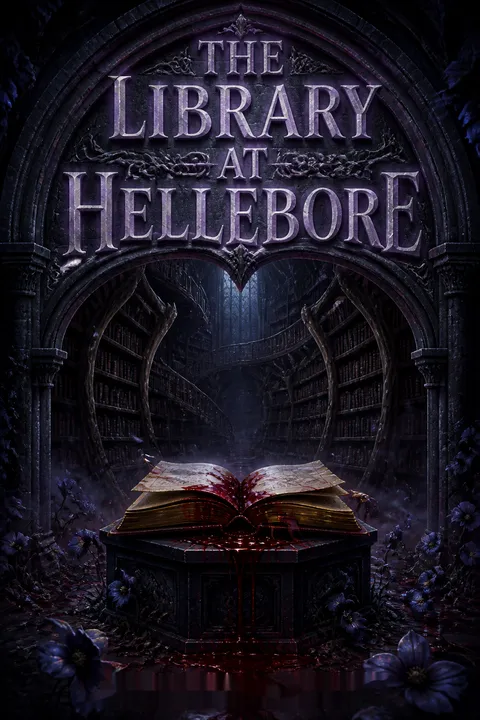

Plot Summary
Blood on the Dorm Floor
Alessa awakens in a dorm room drenched in gore, her roommate Johanna's body mutilated beyond recognition. This is not her first time waking to death, but the shock is sharpened by the recent, fragile bond she'd formed with Johanna. Rowan, Johanna's lover, enters, and the two exchange accusations and grief, their pain masked by sarcasm and venom. Stefania, Johanna's best friend, arrives and erupts into monstrous rage, her body transforming in grief. The headmaster interrupts, chillingly unconcerned, and insists the students prepare for a soiree, hinting at cannibalistic intentions. The students are forced into compliance, their agency stripped away by the school's supernatural authority. The scene is set: Hellebore is a place where death is routine, and survival is never guaranteed.
The Institute of Monsters
Alessa narrates the history of magic's return to the world and the bureaucratic response: the creation of schools like Hellebore for those with dangerous gifts. The students are not merely talented—they are potential world-enders, "Antichrists" and avatars of apocalypse. Some, like Sullivan, are bred for power; others, like Alessa, are victims of trauma whose abilities manifest violently. Hellebore is both sanctuary and prison, a place of forced redemption and hidden horrors. Alessa's own history of violence is revealed, shaped by abuse and a system that prefers containment to understanding. The school's true purpose is ambiguous: is it to save the world, or to feed on its most dangerous children?
Arrival and Initiation
Alessa's first days at Hellebore are marked by confusion and suspicion. She meets her roommate Johanna, whose eager friendliness clashes with Alessa's guarded hostility. The school is a labyrinth of strange architecture, carnivorous deer motifs, and unsettling staff. Portia, a mysterious teaching assistant, becomes a figure of fascination and distrust. The students are herded into an assembly, their phones confiscated, and are introduced to the headmaster, whose speech is a blend of hope and threat. The promise of redemption is laced with the threat of annihilation. Alessa senses the school's true nature: it is a place where monsters are made, not unmade.
The Soiree of Sacrifice
The soiree is revealed to be a ritualistic slaughter. The faculty, inhuman in form, devour Sullivan, the valedictorian, in front of the assembled students. The horror is both physical and existential: the adults are predators, the students prey. In the chaos, a handful of survivors barricade themselves in the library, the only place the faculty cannot breach. The library becomes both sanctuary and prison, its ancient magic holding back the faculty's hunger. The survivors—Alessa, Rowan, Portia, Minji, Adam, Gracelynn, Eoan, and Ford—are left to grapple with trauma, suspicion, and the knowledge that only one of them will be allowed to leave.
The Library's Hunger
Inside the library, the survivors confront the reality of their situation: the faculty want them dead, and the library itself is alive, hungry, and haunted by the monstrous Librarian. Prophecies and secrets are revealed—Ford, the haruspex, reads his own entrails and declares that "half live if Rowan dies." The group fractures under pressure, old grievances and new alliances surfacing. Portia's hunger grows, her body beginning to change. Eoan, the portal, reveals his role in feeding the school's monstrous appetites. The library is both a place of knowledge and a site of horror, its secrets as deadly as its protections.
The Prophecy of Survival
A note from the headmaster slides under the library door: only one survivor will be allowed to leave, and the rest must die within three days. The survivors are forced into a game of trust and betrayal, each weighing their own survival against the lives of the others. Adam, the Antichrist, revels in the chaos, pushing the group toward violence. Gracelynn, the empath, tries to hold the group together, but the pressure is too great. Alessa is accused of Johanna's murder, and the group's fragile unity shatters. The prophecy hangs over them all: survival will require sacrifice.
Alliances and Betrayals
As the days pass, alliances shift and betrayals multiply. Portia's transformation accelerates, her hunger for flesh overtaking her humanity. Eoan is sacrificed, his body split to feed Portia and the Librarian. Minji reveals her own monstrous nature, a hive mind in human form. Ford, the oracle, is tortured for answers. Gracelynn's power to command with their voice is both a blessing and a curse, unable to save those they love. Alessa and Rowan form a tenuous partnership, bound by mutual distrust and the knowledge that only one can survive. The group dwindles, each death a step closer to the end.
The Faculty's True Nature
Flashbacks and revelations expose the faculty's true nature: they are not human, but ancient predators who feed on the power and flesh of their students. The school is a machine for harvesting magic, its rituals designed to perpetuate their own existence. The Raw Mother, a godlike entity, offers Portia a twisted form of salvation. The headmaster's power is absolute, her control over time and space unbreakable. The students are not being saved—they are being consumed, their suffering and deaths the fuel for the faculty's immortality.
The Game of Last Ones
With the group reduced to a handful, the survivors are forced into direct confrontation. Adam's power grows as he absorbs the abilities and personalities of the dead. Portia, now fully transformed, is both ally and threat. Alessa, dying from Rowan's deathworker magic, must choose between her own survival and vengeance. The Librarian, desperate for death, bargains with the survivors, offering escape in exchange for sacrifice. The boundaries between friend and foe blur, each survivor haunted by guilt, trauma, and the knowledge that survival may not be worth the cost.
Portia's Transformation
Portia's metamorphosis into the Raw Mother's vessel is both horrifying and tragic. She is no longer fully human, her body a patchwork of chitin, eyes, and hunger. Her love for Alessa is twisted by the god within her, and her plea for connection is met with fear and pity. In the final confrontation, Portia and Adam destroy each other, their monstrous natures consuming them both. Alessa, left alone, reflects on the cost of survival and the impossibility of redemption in a world built on exploitation and pain.
The Wolf and the Hare
In a quiet, devastating interlude, Johanna confesses her history as a "Hare," prey to the Skinless Wolf, a god who feeds on girls like her. She asks Alessa to kill her, choosing death at a friend's hands over being devoured by the Wolf. Alessa grants her this mercy, and the Wolf's rage is impotent. The scene is a microcosm of the book's themes: agency in the face of annihilation, the refusal to be consumed on someone else's terms, and the bonds formed in shared suffering.
The Librarian's Bargain
The Librarian, a creature bound to the library and desperate for release, offers a bargain: if Rowan is sacrificed, half the survivors may live. Gracelynn's power is used to hold the Librarian at bay, but the cost is high. In a moment of tenderness and horror, Alessa kills Rowan, granting the Librarian the death it craves. The act is both mercy and murder, a final proof that survival at Hellebore requires the abandonment of innocence and the embrace of monstrosity.
Deathworker's Dilemma
Dying from the contagion of Rowan's deathworker magic, Alessa faces Adam in a last confrontation. She uses the law of contagion—her own death, passed through a kiss—to infect Adam, whose immortality cannot save him from this new, unstoppable decay. The faculty, drawn by the promise of a feast, are themselves consumed by the death Alessa has incubated within her. The school collapses, its cycle of predation finally broken by the very monsters it created.
The Raw Mother's Offer
Portia, now the vessel of the Raw Mother, offers Alessa a place in her sorority—a promise of safety through transformation and submission. Alessa refuses, choosing death and agency over assimilation. The Raw Mother's promise is revealed as another form of consumption, a perpetuation of the cycle of exploitation. Alessa's refusal is an act of defiance, a final assertion of self in a world that demands surrender.
The Final Confrontation
The last survivors—Alessa, Adam, and Portia—destroy each other in a final, apocalyptic confrontation. The faculty are consumed by the deathworker's magic, the school's ancient machinery ground to a halt. Alessa, mortally wounded, drags herself to the gates as Ministry agents arrive. She claims responsibility for the destruction, her survival both a victory and a curse. The cycle of predation is broken, but the cost is total.
The Collapse of Hellebore
With the faculty dead and the school in ruins, Alessa is left to reckon with the aftermath. The Ministry arrives, seeking answers and control, but Alessa's victory is pyrrhic. The world outside is unchanged, its hunger for power and control undiminished. Alessa's survival is both triumph and trauma, her memories haunted by the friends she lost and the monsters she became. The story ends not with redemption, but with a warning: the cycle will continue unless someone breaks it.
Aftermath and Reckoning
In the aftermath, Alessa dreams of her dead friends, haunted by guilt and grief. She writes a final letter to the reader, promising vengeance on those who perpetuate the cycle of exploitation. The story ends with a threat: the lessons of Hellebore will not be forgotten, and those who profit from suffering will one day be devoured by it. The emotional arc closes on a note of defiance, sorrow, and the hope that, in the end, monsters can choose what kind of monster they become.
Analysis
Cassandra Khaw's The Library at Hellebore is a searing, hallucinatory exploration of trauma, agency, and the monstrous systems that feed on the vulnerable. The novel uses the trappings of dark academia and body horror to interrogate the nature of institutional evil: Hellebore is both a literal and metaphorical machine for consuming the young, its rituals and rules designed to perpetuate suffering and exploitation. The characters are not heroes, but survivors—each marked by violence, guilt, and the desperate need for control in a world that denies them agency. The story's nonlinear structure and shifting perspectives mirror the psychological fragmentation of trauma, while the recurring motifs of prophecy, transformation, and contagion underscore the inescapability of systemic violence. Ultimately, the novel rejects the possibility of redemption within the system: survival requires the willingness to become monstrous, to weaponize one's own suffering against the oppressor. The final message is both bleak and defiant: in a world built on exploitation, the only true victory is to break the cycle, even if it means becoming what you most fear. The book is a warning and a lament, a testament to the resilience of those who refuse to be consumed.
Review Summary
The Library at Hellebore receives mixed reviews, with praise for its visceral body horror, dark academia setting, and lyrical prose. Many readers appreciate the gory scenes and unique concept. However, some find the writing style dense and confusing, with frequent time jumps and underdeveloped characters. The book is compared to works like A Deadly Education and The Atlas Six. While some readers love the atmospheric and unsettling narrative, others struggle with its pacing and clarity. Overall, it's a polarizing read that appeals to fans of experimental horror.
People Also Read



Characters
Alessa Li
Alessa is the protagonist, a young woman whose magical abilities manifested in response to abuse and trauma. She is fiercely independent, cynical, and slow to trust, her emotional armor forged by a lifetime of betrayal. Alessa's relationships are fraught: she resents Johanna's attempts at friendship, is wary of Portia's allure, and forms a complicated bond with Rowan, the deathworker. Her journey is one of reluctant leadership, forced to make impossible choices for survival. Psychologically, Alessa is marked by guilt, anger, and a desperate need for agency. Her arc is a descent into monstrosity, but also a refusal to be consumed on anyone else's terms. In the end, she is both destroyer and survivor, her victory as hollow as it is hard-won.
Rowan Gravesend
Rowan is a deathworker, his touch bringing decay and death. Outwardly irreverent and sarcastic, he uses humor to mask deep loneliness and self-loathing. His relationships are complex: he is Johanna's lover, Alessa's uneasy ally, and the object of Adam's envy. Rowan's power makes him both valuable and dangerous, and he is acutely aware of his own expendability. His willingness to sacrifice himself for Alessa is both an act of love and resignation. Psychologically, Rowan is driven by a longing for normalcy and connection, but is trapped by the inevitability of his own destructive nature. His death is both a mercy and a curse, the catalyst for the story's final unraveling.
Portia du Lac / Bella Khoury
Portia is a teaching assistant, enigmatic and alluring, whose past is shrouded in mystery. She is later revealed to be Bella Khoury, the artist who decorated Hellebore and became the vessel for the Raw Mother, a godlike entity. Portia's transformation is both physical and psychological: she becomes monstrous, her hunger for connection and flesh overtaking her humanity. Her relationship with Alessa is fraught with longing and fear, a dance of seduction and rejection. Psychologically, Portia is marked by loneliness, trauma, and a desperate need to belong. Her arc is a tragedy of assimilation, her individuality consumed by the god within her.
Adam Kingsley
Adam is the son of the Devil, bred for power and destruction. He is charming, beautiful, and utterly ruthless, his sense of entitlement matched only by his capacity for cruelty. Adam's relationships are transactional: he envies Sullivan, manipulates the survivors, and seeks to dominate Alessa. Psychologically, Adam is a solipsist, incapable of empathy, his identity built on the consumption of others. His arc is a study in the banality of evil: he is both victim and perpetrator, shaped by a system that values power above all else. His final defeat is a hollow victory, his legacy one of pain and ruin.
Johanna
Johanna is Alessa's roommate, a girl marked by codependency and a desperate need for approval. Her history as a "Hare," prey to the Skinless Wolf, shapes her every action. Johanna's kindness is both genuine and performative, a survival strategy in a world that punishes vulnerability. Her relationship with Alessa is fraught, oscillating between hope and disappointment. Psychologically, Johanna is haunted by trauma, her agency eroded by years of predation. Her final act—asking Alessa to kill her—is both a plea for mercy and a refusal to be consumed on someone else's terms.
Gracelynn Wilder
Gracelynn is a survivor whose power lies in their voice, able to command others with a word. They are gentle, compassionate, and determined to hold the group together, even as the situation deteriorates. Gracelynn's relationship with their spouse Kevin is a rare source of tenderness in the story. Psychologically, Gracelynn is marked by survivor's guilt and a desperate hope for redemption. Their arc is one of sacrifice: they give everything to save others, only to be destroyed by the very system they hoped to transcend.
Minji
Minji appears at first to be a model student, quiet and obedient, but is later revealed to be a hive mind, her body inhabited by a parasitic intelligence. She is both ally and threat, her motivations inscrutable. Minji's relationship with Ford is one of mutual exploitation, her true nature hidden beneath a veneer of normalcy. Psychologically, Minji is alien, her sense of self diffuse and collective. Her arc is a meditation on identity and assimilation, her survival dependent on the consumption of others.
Ford
Ford is a haruspex, able to read the future in his own entrails. He is both revered and reviled, his power making him indispensable and expendable. Ford's relationship with Minji is one of obsession and submission, his prophecies shaping the group's actions. Psychologically, Ford is marked by fatalism and self-loathing, his body both tool and prison. His arc is one of self-destruction, his death both inevitable and meaningless.
Eoan
Eoan is a portal, his body used to feed the school's monstrous appetites. He is gentle, melancholy, and deeply traumatized by his role. Eoan's attempts to protect the others are ultimately futile, his body and agency consumed by the needs of the school. Psychologically, Eoan is marked by guilt and resignation, his survival always at the expense of others. His arc is a tragedy of exploitation, his death a reminder of the system's cruelty.
The Headmaster
The headmaster is the embodiment of the school's predatory nature: charming, manipulative, and utterly inhuman. Her power is absolute, her control over time and space unbreakable. She views the students as resources, their suffering and deaths the fuel for her own immortality. Psychologically, the headmaster is a study in institutional evil: she is both product and perpetuator of a system built on exploitation. Her arc is one of unrepentant villainy, her defeat a momentary reprieve in an endless cycle.
Plot Devices
The School as Predatory System
The central plot device is the school itself: Hellebore is not merely a setting, but a living, predatory system designed to harvest the power and suffering of its students. The architecture, rituals, and faculty are all extensions of this hunger. The school's rules are arbitrary and mutable, its protections illusory. The students are both prisoners and sacrifices, their agency stripped away by forces beyond their comprehension. The school's collapse is both literal and symbolic: the destruction of a system built on exploitation.
Prophecy and Fatalism
Prophecy is woven throughout the narrative, shaping the characters' actions and the story's structure. Ford's haruspicy, the Librarian's bargains, and the headmaster's manipulations all serve to foreshadow the inevitable betrayals and deaths. The prophecies are both self-fulfilling and inescapable, reinforcing the story's themes of fatalism and the illusion of agency. The survivors are trapped not only by the school, but by the narratives imposed upon them.
Transformation and Assimilation
Transformation is a recurring motif: Portia's metamorphosis into the Raw Mother's vessel, Minji's hive mind, Alessa's descent into monstrosity. These changes are both sources of power and marks of trauma, blurring the line between victim and perpetrator. Assimilation is presented as a false salvation: to survive is to become what the system demands, to be consumed or to consume. The refusal to assimilate is an act of defiance, but also a guarantee of suffering.
The Law of Contagion
The law of contagion—"once in contact, always in contact"—is a key plot device, especially in the final confrontation. Alessa uses her own death, passed through a kiss, to infect Adam, whose immortality cannot save him from this new, unstoppable decay. Magic is not a gift, but a disease: survival requires the willingness to spread one's own suffering, to weaponize trauma against the system. The final victory is not redemption, but the assertion of agency in the face of annihilation.
Narrative Structure and Time
The narrative is nonlinear, interweaving past and present, memory and action. Flashbacks reveal the characters' histories and the school's secrets, while the present is marked by urgency and decay. The structure mirrors the characters' psychological states: trauma disrupts chronology, memory becomes both weapon and wound. The story's ending is both a return and a rupture, the cycle of predation broken but not erased.
Download PDF
Download EPUB
.epub digital book format is ideal for reading ebooks on phones, tablets, and e-readers.








































