
Plot Summary
Grasshoppers and Strangers Arrive
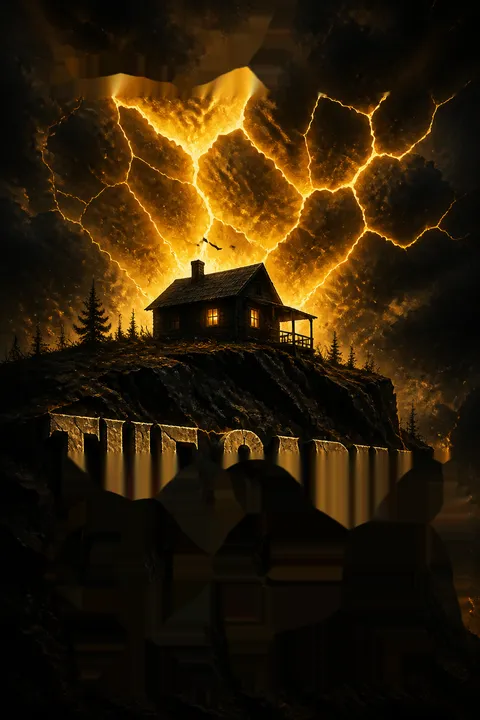
Wen, a bright and curious seven-year-old, spends a summer day catching grasshoppers outside her family's remote New Hampshire cabin. Her two dads, Andrew and Eric, relax on the deck, savoring the rare tranquility. Suddenly, a stranger named Leonard approaches Wen, exuding warmth and friendliness. Despite her instincts, Wen lets her guard down, and Leonard helps her catch grasshoppers. Soon, three more strangers—Sabrina, Adriane, and Redmond—arrive, each carrying bizarre, homemade weapons. Leonard's demeanor shifts as he warns Wen that her family will soon face terrible decisions. Wen flees inside, alerting her dads. The family's sense of safety evaporates as the strangers surround the cabin, setting the stage for a harrowing ordeal.
The Cabin Under Siege
Inside the cabin, Andrew and Eric scramble to secure doors and windows, trying to calm Wen and themselves. The strangers, led by Leonard, insist they must talk, claiming their mission is to "save the world." Their requests quickly turn to threats as they cut the phone line and disable cell service. The family's attempts to call for help fail. The strangers' weapons and cryptic language heighten the terror. Andrew bluffs about having a gun, but the intruders see through it. As the siege intensifies, the family's unity is tested, and the strangers' true intentions remain shrouded in mystery, amplifying the dread and confusion inside the isolated cabin.
The Impossible Choice
The strangers finally force their way inside, subduing Andrew and Eric and tying them to chairs. Wen is left unbound, traumatized but physically unharmed. Leonard and his group introduce themselves, each sharing personal details to appear relatable. Then, Leonard delivers their ultimatum: the family must willingly choose one of their own to die, and carry out the killing themselves, or the world will end in an apocalypse. The strangers claim to have been brought together by shared visions and insist they are not motivated by hate. The family is horrified, refusing to believe or comply, but the strangers insist the fate of humanity rests on their decision.
Rituals and Revelations
As the family resists, the strangers explain their visions in more detail. Each claims to have seen the end of the world—floods, plagues, darkness—unless a sacrifice is made. They describe being compelled by a higher power, possibly God, to carry out this mission. The group's unity is fragile, with Redmond's aggression and Adriane's anxiety threatening to unravel their resolve. The strangers' rituals become clear: if the family refuses to choose, the strangers must sacrifice one of their own in a gruesome, masked ceremony, each death supposedly triggering a new global catastrophe. The family's disbelief is met with the strangers' escalating desperation.
Sacrifice and Prophecy
Andrew and Eric steadfastly refuse to choose a sacrifice, clinging to their love for Wen and each other. The strangers, following their ritual, kill Redmond in front of the family, donning white masks and using their brutal weapons. Immediately after, Leonard turns on the TV, which shows news of devastating earthquakes and tsunamis—events the strangers claim to have foreseen. The family is shaken but remains skeptical, suspecting coincidence or manipulation. The strangers insist the disasters are proof, and warn that more will come if the family continues to refuse. The psychological torment deepens as reality and delusion blur.
The First Death
Redmond's death is both horrifying and surreal. The strangers perform the killing with a ritualistic detachment, masking Redmond's face and bludgeoning him to death. The family is forced to witness the violence, traumatizing Wen and pushing Andrew and Eric to the brink. The strangers drag Redmond's body outside, covering it with a blanket. The cabin is left bloodstained and haunted by the act. The family's hope for escape dims as the strangers' willingness to kill—even themselves—becomes undeniable. The psychological and emotional toll on the family intensifies, and the strangers' apocalyptic narrative gains a terrifying momentum.
The World Begins to End
After Redmond's death, the strangers insist on watching the news. The TV broadcasts real-time footage of catastrophic earthquakes and tsunamis devastating the Pacific coast, eerily matching the strangers' predictions. The family is rattled, struggling to rationalize what they see. Andrew suspects the strangers timed their actions to coincide with known disasters, but Eric begins to waver, haunted by the possibility that the strangers' visions are real. The tension between skepticism and belief fractures the family's unity. The strangers press their advantage, warning that more calamities—plagues, falling skies, darkness—will follow unless the family complies.
Dinner in the Dark
As night falls, the strangers allow the family a brief respite. Andrew and Eric are untied for dinner, but remain under close watch. Wen, traumatized, is forced to feed her dads. The group shares a tense meal, pretending at normalcy while violence and death linger in the air. The strangers clean the cabin, prepare beds, and try to maintain order, but the atmosphere is thick with dread. Andrew and Eric whisper plans for escape, but their options are limited. The night is cold and restless, filled with nightmares, whispered doubts, and the ever-present threat of renewed violence.
Night of Doubt
During the night, Andrew and Eric struggle with guilt, fear, and the loosening grip on reality. Wen wakes, seeking comfort and light, but finds only darkness and Leonard's cryptic reassurances. The family debates the strangers' motives—are they delusional cultists, or is something supernatural at work? Andrew's skepticism clashes with Eric's growing uncertainty. The strangers, too, are plagued by doubt and exhaustion. Attempts at escape are thwarted, and the family's hope dwindles. The night is a crucible of psychological horror, as each character confronts the limits of their faith, reason, and endurance.
The Second Demand
With morning comes a renewed demand: the family must choose a sacrifice, or another stranger will die and another disaster will strike. The strangers' unity frays as Adriane, next in line, panics and pleads for mercy. Andrew recognizes Redmond as his past attacker, deepening the personal stakes. The family's refusal leads to another ritual killing—Adriane's death is brutal and public. The news soon reports a deadly plague spreading worldwide, matching the strangers' next prophecy. The cycle of violence and disaster seems unstoppable, and the family's psychological defenses begin to crumble under the weight of guilt and fear.
Violence and Escape
In the chaos following Adriane's death, Andrew and Eric manage to free themselves. A violent struggle erupts as they attempt to escape, with Andrew retrieving his hidden gun from the SUV. Sabrina and Leonard try to stop them, leading to a bloody confrontation. Wen is caught in the crossfire as Andrew and Leonard wrestle for the gun. In the confusion, the gun discharges, and Wen is fatally shot. The family's worst nightmare is realized. Grief and horror overwhelm Andrew and Eric, while the remaining strangers are left shattered by the unintended consequence of their actions.
Wen's Fate
Wen's accidental death devastates Andrew and Eric, who cradle her body in shock and disbelief. Leonard, wracked with guilt, insists her death may not "count" as the required sacrifice, since it was not a willing choice. The strangers' apocalyptic logic becomes even more cruel and arbitrary. The family's grief is compounded by the possibility that Wen's death was meaningless in the eyes of the strangers' supposed higher power. The cabin, once a place of safety, is now a tomb of loss and shattered faith. The world outside continues to unravel, mirroring the family's internal collapse.
Grief and Blame
Andrew and Eric are paralyzed by grief, each blaming themselves and each other for Wen's death. Leonard, tied to a chair, pleads for understanding, insisting the ritual must continue. Sabrina, the last remaining stranger, is torn between her belief in the mission and her horror at what has transpired. The TV broadcasts news of a global pandemic, further fueling the sense of doom. The boundaries between reality and delusion blur as the survivors grapple with the possibility that their actions—or inactions—are truly shaping the fate of the world. The emotional devastation is total.
The Final Sacrifices
With only Leonard and Sabrina left, the ritual demands more blood. Sabrina, wracked with doubt and guilt, ultimately kills Leonard in a final, frenzied act. She then leads Andrew and Eric to the hidden truck keys, offering them a chance to escape. Overwhelmed by the weight of her actions and the apparent inevitability of the apocalypse, Sabrina puts on her ritual mask and kills herself. Each death is followed by new disasters on the news—planes falling from the sky, darkness descending. The world outside mirrors the devastation within, and the survivors are left utterly alone.
The World Collapses
As the last of the strangers die, the world seems to collapse in tandem. News reports detail catastrophic events—plagues, disasters, planes crashing, darkness spreading. Andrew and Eric, carrying Wen's body, are left to confront the possibility that the strangers' prophecies were real, or that they have been manipulated into believing so. The boundaries between coincidence, delusion, and supernatural intervention are irreparably blurred. The couple must decide whether to make the ultimate sacrifice or to reject the strangers' logic and live with the consequences. The world's fate hangs in the balance, as does their own.
The Last Walk
Andrew and Eric, shattered and exhausted, leave the cabin with Wen's body, guided by Sabrina's final directions to the truck keys. The world outside is dark, stormy, and ominous, echoing their internal despair. As they walk, they debate the reality of the apocalypse, the meaning of sacrifice, and the possibility of hope. Each step is a struggle against despair, guilt, and the seductive logic of the strangers' beliefs. The road ahead is uncertain, but they cling to each other and to the memory of their daughter, determined to go on despite the darkness.
Refusing the Apocalypse
At the edge of the woods, Andrew and Eric face the ultimate decision: should one of them die to "save the world," or should they refuse to play by the strangers' rules? Eric, holding a gun, contemplates suicide as the final sacrifice, but Andrew stops him. They realize that to comply would be to validate the strangers' violence and madness. Instead, they choose to reject the logic of sacrifice, to hold each other, and to carry Wen's memory forward. The world may end, or it may not—but they will not be complicit in its destruction.
We Will Go On
In the aftermath, Andrew and Eric walk away from the cabin, carrying Wen's body and the unbearable weight of loss. The world around them is battered by storms and darkness, but they refuse to surrender to despair or to the strangers' apocalyptic vision. They choose to go on, together, honoring Wen's life and their love. The future is uncertain, and the scars of trauma will never fully heal, but their refusal to sacrifice each other is an act of defiance and hope. In the end, they choose humanity over fear, and love over violence.
Analysis
Paul Tremblay's The Cabin at the End of the World is a masterful deconstruction of the home invasion thriller, transforming it into a meditation on faith, violence, and the human need for meaning in chaos. By placing a loving, nontraditional family at the center of an apocalyptic dilemma, Tremblay interrogates the logic of sacrifice and the seductive power of certainty. The novel's refusal to provide clear answers—are the strangers delusional, or is the apocalypse real?—forces readers to confront their own beliefs about fate, agency, and morality. The psychological horror is relentless, as love becomes both a weapon and a vulnerability. The story's ambiguity is its greatest strength, leaving us with the uncomfortable truth that sometimes there are no right choices, only the refusal to become complicit in violence. In the end, Tremblay suggests that the only way to resist the darkness—whether supernatural or human—is to choose love, even when hope seems impossible. The novel is a chilling, thought-provoking exploration of the limits of reason, the dangers of fanaticism, and the enduring power of human connection.
Review Summary
Reviews for The Cabin at the End of the World are sharply divided. Many praise its gripping premise, claustrophobic tension, and well-drawn characters—particularly the loving family at its center. Readers appreciate the ambiguity and sustained dread. However, common criticisms include repetitive dialogue, slow pacing, and an unsatisfying ending. Several reviewers felt the concept would have worked better as a novella or short story. The representation of a gay couple as protagonists was frequently highlighted as a refreshing and appreciated choice.
People Also Read



Characters
Wen
Wen is the adopted seven-year-old daughter of Andrew and Eric, born in China and brought to the U.S. after early medical struggles. Intelligent, observant, and fiercely independent, Wen is the emotional heart of the story. Her openness and trust are both her strength and vulnerability, as she is the first to encounter Leonard and the strangers. Wen's innocence is shattered by the violence that unfolds, but her courage and love for her dads remain constant. Her tragic death becomes the ultimate symbol of the senselessness of sacrifice and the devastating cost of fanaticism.
Andrew
Andrew is Wen's father and Eric's husband, a college professor with a traumatic past. He is fiercely protective, quick-witted, and deeply skeptical of the strangers' apocalyptic claims. Andrew's history of surviving a hate crime shapes his worldview, fueling both his vigilance and his distrust of outsiders. Throughout the ordeal, Andrew struggles with guilt, rage, and the burden of leadership. His refusal to accept the strangers' logic is both his strength and his torment, especially after Wen's death. Andrew's journey is one of resisting despair and choosing love over violence, even in the face of unimaginable loss.
Eric
Eric, Wen's other father, is a market analyst with a gentle, diplomatic nature. He is the emotional anchor of the family, often mediating between Andrew's skepticism and Wen's innocence. Eric's Catholic faith and tendency toward empathy make him more susceptible to the strangers' apocalyptic narrative, especially as disasters unfold. His struggle is internal—torn between rationality and belief, hope and despair. After Wen's death, Eric is nearly undone by grief and guilt, but ultimately chooses to reject the logic of sacrifice. His journey is one of reclaiming agency and refusing to let fear dictate his actions.
Leonard
Leonard is the de facto leader of the strangers, a physically imposing but emotionally vulnerable man. He is driven by a sense of mission, claiming to have received visions compelling him to force the family's impossible choice. Leonard's warmth and sincerity make him both sympathetic and terrifying. He is tormented by doubt and guilt, especially after Wen's death, which he sees as a personal failure. Leonard's need to believe in a higher purpose is both his motivation and his undoing, as he becomes trapped in the rituals and logic of sacrifice, unable to break free even as the world collapses.
Sabrina
Sabrina is a nurse from California, the most conflicted and compassionate of the strangers. She is wracked by guilt and doubt, questioning the morality of their mission even as she participates in the rituals. Sabrina's medical background and empathy make her the most likely to help the family, and she ultimately tries to aid Andrew and Eric's escape. Her final act—killing Leonard and then herself—reflects both her despair and her refusal to continue the cycle of violence. Sabrina embodies the struggle between belief and conscience, and her fate is a tragic testament to the corrosive power of fanaticism.
Adriane
Adriane is the youngest and most volatile of the strangers, a line cook from Washington, D.C. She is plagued by anxiety and fear, oscillating between pleading for mercy and lashing out in violence. Adriane's desperation to survive makes her both dangerous and pitiable. Her eventual death at Andrew's hands is a chaotic, tragic moment, underscoring the senselessness of the strangers' mission. Adriane's psychological unraveling mirrors the group's collective descent into madness, and her fate is a warning about the dangers of blind obedience and the human cost of apocalyptic thinking.
Redmond (Jeff O'Bannon)
Redmond, later revealed as Jeff O'Bannon, is the most openly hostile of the strangers. His violent past intersects with Andrew's, having once attacked him in a hate crime. Redmond's aggression and lack of remorse make him the least sympathetic, and his ritual killing is both a punishment and a catalyst for the group's unraveling. Redmond embodies the persistence of hate and the way personal trauma can resurface in unexpected, destructive ways. His presence forces Andrew to confront old wounds, and his death marks the point of no return for the group's apocalyptic ritual.
The Cabin
The cabin itself is a character—isolated, rustic, and initially a place of refuge. As the story unfolds, it becomes a crucible of fear, violence, and psychological torment. The cabin's transformation from sanctuary to prison mirrors the family's journey from safety to vulnerability. Its physical boundaries heighten the sense of claustrophobia and inevitability, while its destruction parallels the collapse of the characters' inner worlds. The cabin is both a literal and metaphorical "end of the world," a place where the boundaries between reality and delusion, love and violence, are tested to their limits.
The Apocalypse (as Concept)
The apocalypse in the novel is both a literal threat—disasters, plagues, darkness—and a psychological one. It represents the fear of loss, the seduction of certainty, and the human tendency to seek meaning in chaos. The strangers' belief in the apocalypse drives the narrative, but its reality remains ambiguous. Is it supernatural, or a projection of collective trauma and delusion? The apocalypse is a mirror for the characters' deepest fears and desires, forcing them to confront the limits of faith, reason, and love. Its ambiguity is the novel's central tension, leaving both characters and readers in a state of unresolved dread.
The Figure in Light
Throughout the ordeal, Eric glimpses a mysterious figure made of light, especially during moments of ritual violence. This presence is never fully explained—perhaps a hallucination, a manifestation of trauma, or a supernatural force. The figure's ambiguity heightens the novel's sense of unreality and existential terror. It represents the unknown, the possibility of meaning beyond human comprehension, and the seductive danger of believing in signs and omens. The figure in light is both a comfort and a threat, embodying the novel's central question: what do we choose to believe when faced with the end?
Plot Devices
The Home Invasion as Existential Test
The novel uses the home invasion trope not just for suspense, but as a vehicle for existential and moral testing. The isolated cabin, cut off from help, becomes a stage for the ultimate ethical dilemma: would you sacrifice a loved one to save the world? The invaders' escalating demands and rituals force the family to confront the limits of love, reason, and faith. The siege structure heightens claustrophobia and inevitability, while the shifting power dynamics and failed escape attempts keep tension high. The home invasion is both literal and symbolic—a test of the family's bonds and the human capacity for resistance.
Ritual Sacrifice and Apocalyptic Prophecy
The strangers' insistence on ritual—masks, weapons, timed killings—creates a sense of inevitability and horror. Each refusal by the family triggers a new ritual killing, supposedly unleashing a global disaster. The use of prophecy and "signs" (news broadcasts of disasters) blurs the line between coincidence and supernatural intervention. The rituals are both a psychological weapon and a narrative device, escalating stakes and forcing characters (and readers) to question what is real. The ambiguity of the prophecies—are they self-fulfilling, or truly supernatural?—is central to the novel's tension and its critique of apocalyptic thinking.
Unreliable Narration and Psychological Horror
The novel's close third-person narration, shifting perspectives, and focus on psychological states create an atmosphere of unreliability. Characters' perceptions are shaped by trauma, exhaustion, and fear, making it impossible to know what is real. The figure in light, the ambiguous disasters, and the strangers' sincerity all contribute to a sense of existential dread. The use of news broadcasts as "proof" of prophecy is a masterstroke of ambiguity—are the disasters real, or are the characters being manipulated? The psychological horror is as potent as the physical, making the reader complicit in the uncertainty.
Foreshadowing and Symbolism
From Wen's grasshopper jar (innocence trapped and doomed) to the recurring motifs of light, darkness, and masks, the novel is rich in foreshadowing and symbolism. The cabin's transformation, the strangers' clothing, and the ritual objects all serve as symbols of the characters' inner states and the story's larger themes. Foreshadowing is used to build dread—early warnings about bears, the lack of cell service, and the strangers' cryptic language all hint at the coming catastrophe. The use of children's TV shows and family rituals contrasts with the violence, underscoring the loss of innocence and the fragility of safety.
Moral Dilemma and Refusal
The central plot device is the impossible moral dilemma: sacrifice a loved one, or risk the end of the world. The strangers' escalating violence is designed to break the family's will, but Andrew and Eric's ultimate refusal to comply is an act of moral defiance. The novel subverts the expectation of a "heroic" sacrifice, instead suggesting that the refusal to participate in violence—even at the cost of everything—is the truest form of resistance. The ambiguity of the ending—does the world end, or not?—leaves the reader with the unsettling sense that some questions have no answers, and some choices must be made in the dark.
About the Author
Other books by Paul Tremblay


Download PDF
Download EPUB
.epub digital book format is ideal for reading ebooks on phones, tablets, and e-readers.








































