
Summary Unavailable
This book is not suitable for a summary (it may be a textbook, workbook, cookbook, reference book, or collection). However, you can still explore the FAQs, about author, and other metadata below!
Plot Summary
Haunted Lemonade and Lost Childhoods
A grown man, Paul, receives a box of childhood keepsakes from his mother, triggering a journey into memory. He recalls a pivotal summer in 1984, when he was a lonely, awkward boy desperate for connection. A lemonade stand run by his crush, Kelly, turns into a haunted house tour, filled with invented ghost stories and adolescent longing. The tour ends with a real scare—Kelly's grandfather, mistaken for a ghost, terrifies Paul, who flees in humiliation. In a moment of anger and shame, he steals Kelly's drawing of her personal ghost, a symbol of her inner fears. The memory lingers, shaping his sense of self and regret. Decades later, the drawing resurfaces, and Paul, now alone in his house, is haunted by the past and the possibility that the ghost is not just Kelly's, but his own.
Ghosts in the Corners
Silas, reeling from the sudden death of his husband David, navigates the rituals of mourning and the hollow spaces left behind. Family and friends offer comfort, but Silas is trapped in cycles of memory and guilt, replaying the moment he found David's body. The house, once a home, becomes a landscape of dread, every creak and shadow a possible haunting. Silas's grief is a ghost—sometimes seen, sometimes only felt in the periphery. He fears both the silence and the possibility of David's return, not as comfort, but as something uncanny. The story explores how loss transforms the familiar into the strange, and how the dead linger in the corners of our lives, shaping the living.
Possession, Obsession, and Media
A series of letters and blog posts dissect a notorious reality TV exorcism, "The Possession," and its aftermath. Fans and critics debate whether the show was exploitative fiction or a genuine supernatural event. The correspondence blurs the line between viewer and participant, suggesting that the act of watching may itself be a form of possession. The narrative spirals into paranoia: if the exorcism succeeded, did the demon escape into the audience? The story becomes a meditation on media, complicity, and the way horror infects culture—not just as entertainment, but as a viral force that seeps into the psyche, leaving viewers forever uncertain about what they've absorbed.
Monsters with Red Eyes
A bedtime story becomes a fable of cosmic horror. Merry, the youngest in her family, refuses to go to bed and runs into the night, drawing her sister Marjorie into a confrontation with the impossible. The mountains at the edge of their village reveal themselves as monsters with glowing red eyes. Merry is taken, and a week later, the monsters return, destroying the village. Merry rides atop one, transformed, her eyes now red as well. The story is a parable about childhood rebellion, the fear of abandonment, and the monstrousness that can grow from within, especially when the world refuses to listen to its most difficult children.
Blogging the Apocalypse
Becca, isolated in Brooklyn, documents the slow unraveling of society as a mysterious pandemic sweeps the globe. Her blog becomes a battleground of skepticism, grief, and conspiracy, as friends and trolls argue over the reality of the crisis. The world outside grows quieter, darker, and more dangerous. Deaths multiply, explanations falter, and the digital community becomes both lifeline and echo chamber. The story captures the loneliness of catastrophe, the unreliability of information, and the desperate need for connection—even as the world seems to be ending, not with a bang, but with a series of missed calls and unanswered posts.
Ants, Houses, and Other Invasions
A wordless comic pitch tells the story of a lone survivor in a post-apocalyptic desert, wandering among alien monoliths and ant colonies. He finds a community, but when giant ants attack, he does nothing to help. Instead, he is rewarded by the ants and returns to his family, complicit in the new order. The story is a meditation on survival, guilt, and the ease with which one can become part of a monstrous system simply by doing nothing. The absence of words underscores the universality of complicity and the horror of adaptation.
The Library's Impossible Neighbor
Brian, a human resources worker at a massive city library, discovers a strange, doorless building has appeared overnight next to the library. The city is slow to notice, but soon the "House of Windows" becomes an obsession. Officials cannot enter; the building grows, defying logic and measurement. As the city's anxiety mounts, the house expands, threatening to consume the library and the city itself. The story is a surreal allegory about the intrusion of the inexplicable into the everyday, the limits of understanding, and the fear that some mysteries are not meant to be solved, only survived.
Conversations in the Dark
A person awakens in darkness, with no memory of who they are. Guided by the disembodied voice of Dr. Anne Kuhn, they slowly recover language, movement, and fragments of their past. As their senses return, so do questions: Where are they? Why were they asleep so long? The truth emerges—after a global catastrophe, Anne has been cloning and re-educating her partner, trying to bring them back. Each iteration ends with the same plea: let me clone you again. Each time, the answer is no. The story is a meditation on love, loss, and the impossibility of truly resurrecting the past, no matter how advanced the technology or desperate the survivor.
The Large Man and the Swarm
Mr. C____, a "Problem Solver" in a Kafkaesque city, is tasked with investigating a series of murders committed by the mysterious Large Man. As he delves into data and conspiracy, he suspects the city's rats are orchestrating the crimes, using the Large Man as their agent. His investigation leads him into the city's underbelly, where he discovers the Large Man is a construct of rats—and within the rats, ants. The story ends with Mr. C____ himself becoming a vessel for the swarm, suggesting that the true horror is not the individual monster, but the collective, mindless force that can consume and remake anyone.
The Dead Thing in the Box
A teenage girl, Hanna, struggles to care for her younger brother Owen in a house ruined by neglect and addiction. Owen brings home a mysterious, foul-smelling box, refusing to reveal its contents. The box grows in size and menace, becoming a symbol of the family's unspoken traumas and the things they cannot face. One night, Hanna hears strange noises and finds the box has become enormous, swallowing Owen and threatening to consume her as well. The story is a raw, visceral allegory for the way family secrets and pain can grow until they are inescapable, devouring those who try to ignore them.
Letters, Lies, and Blue Vans
Howard Sturgis, a lonely math teacher, begins receiving cryptic letters from a mysterious corporation, CIRCE GROUP, thanking him for a package he never sent. The correspondence grows increasingly surreal, culminating in an invitation to visit their facility and see their miraculous blue van, supposedly powered by a mysterious "substance." Howard, unsure if he is being pranked or courted, ultimately refuses. The group visits his house anyway, leaving behind a box of the blue substance. Howard succumbs to its allure, applying it to himself and feeling himself transformed. The story is a darkly comic meditation on the desire for meaning, the seduction of conspiracy, and the dangers of wanting to be part of something larger—no matter the cost.
The End-of-the-World Party
Frances accompanies her younger partner Jacqui to a work party in a lavish, isolated house. The party's theme is the end of the world, and the atmosphere is both festive and ominous. Frances, feeling out of place, discovers a strange, organic object in a bedroom—a rotting, bleeding mass that no one else seems to notice. The party's host, Jeanne, is both welcoming and unsettling, blurring the line between hospitality and threat. As the night wears on, the sense of unease grows, suggesting that beneath the surface of civility and celebration lies something monstrous, waiting to be revealed.
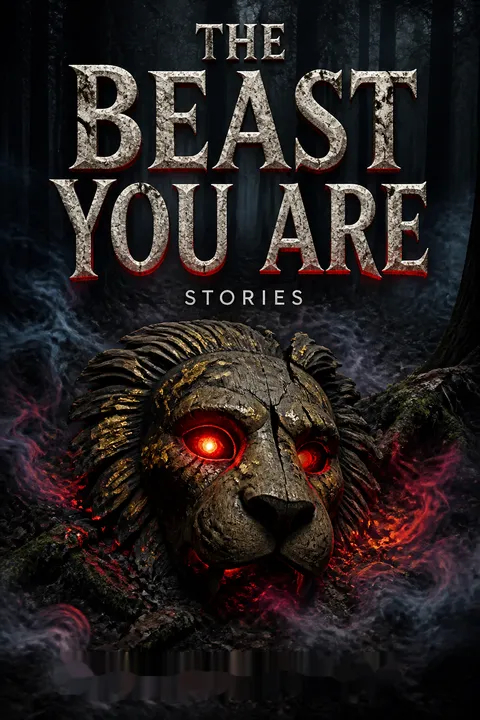
The Beast You Are: First Age
In the animal village of Bevaur, the end of each "Age" is marked by a ritual sacrifice to a monstrous being, Awn, that emerges from the Northwood. Three children are chosen by lottery to stand on a dais; one will be taken. Magg, a dog, and Mereth, a cat, survive, while Tol, a toad, is devoured. The event scars the survivors, binding them as "Frera"—sisters by fate, not blood. The village's relief is short-lived, as the cycle of sacrifice and survival becomes the foundation of their society, and the seeds of future rebellion and monstrosity are sown.
The Beast You Are: Second Age
Years pass, and Bevaur changes. The survivors of the First Age grow up, haunted by trauma and the knowledge that the cycle will repeat. Mereth becomes a killer, donning a lion mask and targeting the corrupt and complicit. Magg becomes a scholar, searching for a way to end the sacrifices. The village is plagued by the Butcher's murders, the rise of a cult, and the slow decay of hope. Attempts to fight the monster, Awn, end in tragedy. The story explores how violence begets violence, and how those who survive are often transformed into something monstrous themselves.
The Beast You Are: Third Age
As Bevaur enters its Third Age, the village is a shadow of its former self, ravaged by environmental collapse, political corruption, and the ever-present threat of Awn. Magg, now elderly and ill, volunteers to be sacrificed, hoping to poison the monster and end the cycle. Mereth, lost in dementia and regret, is haunted by the lion mask and her own legacy of violence. The ceremony unfolds with chaos and bloodshed, as the village tears itself apart. In the end, Magg is taken by Awn, and Mereth is chosen by the lion, becoming the next beast. The story closes with the sense that the cycle will continue, each generation birthing its own monsters.
Cycles, Sacrifice, and Survival
The novella's final movement reflects on the inevitability of cycles—of violence, sacrifice, and the desperate hope for change. Each Age ends with the promise of a new beginning, but the same patterns repeat: the village sacrifices its children, its elders, its outcasts, always hoping to appease the beast and secure a future. The survivors are marked, transformed, and often become the very thing they feared. The story suggests that true change is elusive, and that the beast is not just an external threat, but something born from within the community itself.
Becoming the Beast
In the aftermath, Mereth, now old and broken, is visited by the lion—her own monstrous legacy. She is offered a choice, but the story suggests that the choice is illusory; she is already becoming the next beast, destined to continue the cycle. The novella ends with the image of Mereth's transformation, the line between victim and monster forever blurred. The beast is not just a creature in the woods, but the sum of the village's fears, failures, and forgotten promises—a legacy passed down, Age after Age.
Analysis
Paul Tremblay's The Beast You Are is a masterful exploration of the ways horror permeates everyday life, not just as supernatural terror, but as the lingering effects of trauma, grief, and societal failure. The collection's stories, while diverse in form and subject, are united by a preoccupation with cycles—of memory, violence, and the desperate hope for change. Tremblay's monsters are never just creatures in the dark; they are the products of human (and animal) choices, the embodiment of secrets, regrets, and the things we refuse to confront. The novella at the heart of the book, with its anthropomorphic animals and ritual sacrifices, is both a fable and a warning: unless we break the cycles of complicity and violence, we are doomed to become the very beasts we fear. The collection's modern relevance is clear—whether in its commentary on media, conspiracy, or the failures of community, it asks us to consider what we inherit, what we pass on, and whether true transformation is possible. In the end, Tremblay suggests that the beast is not just out there, but within us all, waiting for its turn.
Last updated:
Report IssueReview Summary
People Also Read
Characters
Paul
Paul is a man defined by his childhood loneliness and the pivotal moment when he betrayed a friend out of shame. His adult life is shaped by the ghosts of the past—both literal and metaphorical. The rediscovery of a childhood drawing becomes a symbol of the self he cannot escape, and the ways in which we are all haunted by the versions of ourselves we try to leave behind. Paul's relationships are marked by distance and longing, and his story is a meditation on the persistence of memory and the impossibility of true closure.
Kelly
Kelly is Paul's childhood crush, a girl on the cusp of adolescence, both confident and vulnerable. Her haunted house tour is a performance—a way to control her fears by turning them into stories. The drawing she creates is both a manifestation of her nightmares and a piece of herself she shares with Paul. Kelly's later transformation into a punk outsider mirrors Paul's own sense of alienation, and her absence becomes a wound that never fully heals. She represents the parts of ourselves we lose, and the people we hurt in the process of growing up.
Silas
Silas is a man undone by the sudden death of his husband, David. His grief is raw, cyclical, and inescapable, manifesting as both memory and haunting. Silas's relationships—with family, friends, and himself—are strained by the weight of absence. He is caught between the need to remember and the fear of being forever trapped in the moment of loss. Silas's journey is one of learning to live with ghosts, and the realization that some hauntings are acts of love, not malice.
Mereth
Mereth, a cat from "The Beast You Are," is marked by trauma and the knowledge that survival often comes at a cost. As she grows, she becomes the Butcher, donning a lion mask and enacting vengeance on the corrupt. Her violence is both rebellion and perpetuation of the cycle she despises. In old age, she is haunted by memory and regret, her identity dissolving into the monstrous legacy she cannot escape. Mereth embodies the story's central question: do we become the monsters we fight, or were we always the beast?
Magg
Magg, a dog, is the other survivor of the First Age's sacrifice. Driven by guilt and a desperate hope for change, she dedicates her life to understanding the cycle of violence and finding a way to end it. Her journey is one of scholarship, activism, and ultimately self-sacrifice. Magg's attempts to poison Awn are both heroic and tragic, a final act of agency in a world that resists change. She represents the possibility of resistance, even in the face of overwhelming odds.
Tol
Tol, a toad, is the child chosen by Awn in the First Age. His death is the catalyst for the trauma and transformation of the survivors. Tol's innocence and resignation highlight the cruelty of the village's traditions, and his memory becomes a touchstone for those left behind. He is the embodiment of the cost of survival, and the way communities justify violence in the name of the greater good.
Anne Kuhn
Anne is the voice guiding the protagonist of "The Last Conversation." Driven by love and desperation, she repeatedly clones and re-educates her partner, unable to accept loss. Anne's actions raise questions about the ethics of memory, identity, and the limits of science. Her relationship with the protagonist is both tender and tragic, a testament to the human need for connection and the dangers of refusing to let go.
Mr. C____
Mr. C____ is a functionary in a city ruled by unseen forces. Tasked with solving a series of murders, he becomes obsessed with the idea that the city's rats—and the ants within them—are orchestrating a coup. His journey from rational investigator to vessel for the swarm is a parable about the dangers of bias, the seduction of conspiracy, and the loss of individuality in the face of collective horror.
Howard Sturgis
Howard is a retired math teacher whose life is upended by mysterious letters from a corporation that believes he possesses a miraculous substance. His longing for meaning and connection makes him vulnerable to the group's manipulations. Howard's eventual surrender to the blue substance is both a literal and metaphorical transformation, a surrender to the desire to be part of something larger, even if it means losing himself.
Hanna
Hanna is a teenage girl struggling to care for her younger brother in a house ruined by addiction and neglect. Her attempts to maintain order and protect Owen are undermined by the family's secrets, embodied in the mysterious, growing box. Hanna's story is one of resilience and despair, a testament to the ways trauma can consume those who try to ignore it, and the impossibility of escaping the legacy of pain.
Plot Devices
Cyclical Structure and Repetition
The collection is structured around cycles—of memory, trauma, and violence. Stories echo and refract each other, with motifs of haunted houses, monstrous transformations, and the inescapability of the past. The novella "The Beast You Are" is explicitly organized into Ages, each repeating the ritual of sacrifice and the birth of new monsters. This cyclical structure reinforces the theme that history is doomed to repeat itself unless the underlying causes are confronted.
Unreliable Narration and Fragmented Perspective
Many stories employ unreliable narrators—children, the grieving, the amnesiac, the obsessed—whose perceptions are shaped by fear, longing, or confusion. The use of blog posts, letters, and meta-commentary blurs the line between fiction and reality, inviting the reader to question what is true and what is constructed. This fragmentation mirrors the characters' struggles to make sense of their worlds, and the way trauma distorts memory.
Foreshadowing and Ominous Detail
Tremblay uses foreshadowing to build dread, seeding stories with details that only reveal their significance in retrospect. The haunted house tour, the mysterious drawing, the growing box, and the unexplained noises all serve as harbingers of the horror to come. The ordinary is made strange, and the strange is made ordinary, creating a sense of unease that permeates the collection.
Allegory and Social Critique
The stories use horror tropes—ghosts, monsters, possession—not just for scares, but as allegories for grief, addiction, complicity, and the cycles of violence that shape families and communities. The novella's animal society is a mirror for our own, with its rituals, scapegoats, and failures to change. The horror is not just external, but internal—a reflection of the beast within.
About the Author
Paul Tremblay is an acclaimed author known for his contributions to horror and crime fiction. He has received numerous awards, including the Bram Stoker and British Fantasy awards. Tremblay's works include bestsellers like "Horror Movie," "The Beast You Are," and "A Head Full of Ghosts." His novel "The Cabin at the End of the World" was adapted into the film "Knock at the Cabin." With a master's degree in mathematics, Tremblay's writing has appeared in prestigious publications and anthologies. He resides near Boston with his family and is represented by Stephen Barbara of InkWell Management.
Download PDF
Download EPUB
.epub digital book format is ideal for reading ebooks on phones, tablets, and e-readers.








































