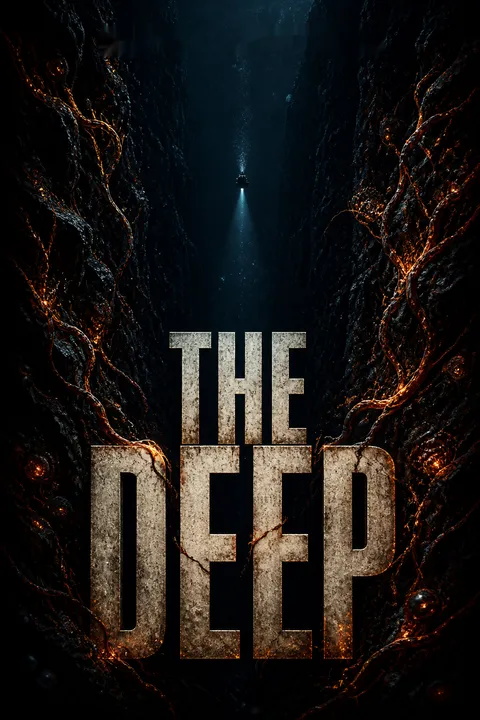

Plot Summary
The World Forgets Everything
Humanity faces a mysterious disease, the 'Gets, which begins with small lapses—misplaced objects, forgotten names—and ends with the body forgetting how to live. Luke Nelson, a veterinarian, witnesses the devastation firsthand: people wander, blank-eyed, covered in sores, their minds erased. The world's response is strangely orderly, as if the apocalypse is happening in slow motion. Children, like the girl with spots on her arms, are doomed to lose everything they know. The only hope lies in a scientific miracle: a substance called ambrosia, found deep in the Mariana Trench, which might cure the 'Gets. Luke is summoned to the Pacific, where his estranged brother, Clayton, leads the search for salvation at the bottom of the world.
Brothers Called to the Deep
Luke's journey to the Hesperus, the floating research station above the Trench, is haunted by memories of his troubled family—especially his monstrous mother and his brilliant, distant brother, Clayton. The world is unraveling, but the Nelson brothers are being drawn together by forces beyond their understanding. Luke is recruited not for his expertise, but because Clayton, isolated miles below the sea, has asked for him by name. The hope of humanity rests on the brothers' reunion, but their relationship is fraught with old wounds, jealousy, and secrets. As Luke boards the yacht, he senses that the real descent is not just into the ocean, but into the darkness of his own past.
Descent into Darkness
Luke and Lieutenant Commander Alice Sykes, a tough, scarred Navy pilot, board the Challenger submersible for the eight-mile drop to the Trieste, the undersea station. The descent is a journey through layers of darkness and pressure, punctuated by encounters with monstrous deep-sea life—viperfish, giant squid, swarms of bioluminescent plankton. The Challenger is battered and nearly destroyed, but the real threat is psychological: the deeper they go, the more memories and nightmares surface. Luke is plagued by dreams of his abusive mother and the loss of his son, Zachary. The sea becomes a metaphor for the mind's abyss, where trauma and guilt are never truly buried.
The Hesperus and the Hope
On the Hesperus, scientists and military personnel cling to the hope that Clayton's research will save the world. Dr. Felz, Clayton's resentful colleague, reveals the discovery of ambrosia—a substance that can heal any disease, even cancer, in lab animals. But the miracle is not understood: it is alien, uncategorizable, and seems to possess a will of its own. The surface team is fractured by fear, ambition, and the slow encroachment of the 'Gets. The only communication from below is a garbled message from Clayton: "Come home, Lucas. We need you." The line between scientific salvation and damnation blurs as the world waits for a cure that may be worse than the disease.
Childhood Shadows Resurface
As Luke prepares for the descent, memories of his childhood return with vivid intensity. His mother, Bethany, was a cruel, manipulative giant who dominated the family with violence and psychological games. Clayton, the prodigy, retreated into his basement lab, performing grotesque experiments on animals. Luke, the sensitive younger brother, became the Human Shield, trying to protect himself and others from harm. The trauma of their upbringing is mirrored in the darkness of the Trench: the deeper Luke goes, the more he is forced to confront the monsters of his past—both real and imagined. The loss of his son, Zachary, becomes the central wound that the abyss threatens to tear open.
The Trieste's Unnatural Welcome
The Trieste is a marvel of engineering, but its architecture is wrong—tubes and crawlspaces that feel alive, as if the station is a creature waiting to devour its guests. Luke and Al are greeted not by scientists, but by a terrified, half-mad dog. The station is cold, dark, and nearly abandoned. Dr. Toy, the last surviving scientist besides Clayton, is raving and violent. The crew is trapped by technical failures and the reappearance of a deadly current ring above. The sense of isolation is total: the only way out is through the mysteries of the station, and the only guide is Clayton, who is already succumbing to the darkness.
The Ambrosia's Secret
The true nature of ambrosia is revealed through experiments and Westlake's journal: it is not a simple cure, but a living, alien force that invades and transforms. Animals injected with ambrosia become unkillable, aggressive, and monstrous. The substance covers flesh in invisible threads, rooting into the body and mind. Westlake, driven mad by a growing hole in his lab wall, documents the transformation of bees into a new, predatory species. The ambrosia is a lure, a bait set by something ancient and cunning. The hope for salvation is replaced by the terror of infection—what comes from the deep is not meant for human healing.
Madness in the Depths
The Trieste becomes a labyrinth of nightmares. The crew is plagued by sleepwalking, hallucinations, and the resurfacing of childhood fears. Luke is haunted by visions of his lost son, the Fig Men from Zachary's closet, and the monstrous Tickle Trunk of his youth. The station's architecture shifts, trapping the survivors in loops of memory and terror. Dr. Toy is crushed by the station itself, his death orchestrated with sadistic precision. Al is consumed by the hive in Westlake's lab, her body and mind repurposed for the alien colony. The line between reality and delusion dissolves as the abyss claims each soul.
The Hive and the Hole
Behind the miracles and the madness is a sentient force—the Fig Men—ancient beings imprisoned in the deep. The holes that appear in the station's walls are doorways, not just to the sea, but to another realm. The ambrosia is their bait, and the Trieste is their trap. The survivors are studied, tormented, and ultimately harvested. The hive in Westlake's lab is a grotesque monument to their power: a city of monstrous bees, a queen birthed from human flesh, and a new generation of horrors. The Fig Men feed on memory, love, and suffering, and their game is only beginning.
The Collapse of Self
As the survivors are picked off, Luke's sense of self disintegrates. He is forced to relive every trauma: his mother's abuse, his brother's monstrous detachment, the loss of his son, and his own failures as a father and protector. The station manipulates his memories, offering visions of reunion and forgiveness that are always twisted into horror. The final gift of the Fig Men is the return of Zachary—not as a boy, but as a vessel for their infection. Luke's love becomes the key to his undoing: he invites the darkness in, surrendering his body and mind to the abyss.
The Fig Men's Game
In the final confrontation, the Fig Men appear in their true forms—pitiless, ageless, and endlessly curious. They explain that humanity was lured to the deep not for salvation, but for sport. Clayton was the key, but Luke is the vessel: his love, his pain, his memories are the perfect medium for their escape. The 'Gets, the ambrosia, the Trieste—all were pieces in a cosmic long con. The Fig Men offer Luke a choice, but it is an illusion: he will carry their gift to the surface, spreading their influence to the world above. The cycle of infection and forgetting will begin anew.
The Final Descent
As the Challenger rises, Luke is no longer himself. The infection has taken root; the memories that once defined him are now tools of the Fig Men. The surface is not salvation, but the next stage of the game. The world above, desperate for hope, will welcome the return of the Challenger—and with it, the darkness from below. The story ends not with victory or understanding, but with the door swinging shut on the last remnants of Luke's soul. The abyss has claimed another, and the cycle is ready to begin again.
The Gift and the Price
The ultimate lesson of the deep is that love, memory, and hope are double-edged: they make us human, but they also make us vulnerable. The Fig Men exploit these qualities, turning the search for a cure into a trap. The price of salvation is the loss of self, the surrender to forces beyond comprehension. The Challenger's ascent is not a return to light, but the spread of darkness. The surface world, waiting for a miracle, will receive only the infection of the abyss.
The Surface Is Not Salvation
The Challenger surfaces at the Hesperus, but what emerges is not Luke, not Al, not any human survivor. The vessel carries the infection, the gift of the Fig Men, to the world above. The cycle of forgetting and transformation will continue, as new victims are drawn to the deep. The hope that began the journey is revealed as a cruel joke: there is no cure, only the endless hunger of the abyss.
The Door Swings Shut
The story closes with the image of the Trieste waiting in the darkness, ready to lure new victims. The Fig Men are patient; their games are eternal. The Challenger's return is only the beginning of a new cycle. The world will forget, and remember, and forget again, as the deep reclaims everything. The door to the abyss swings shut, but it will open again for those who dare to seek salvation in the darkness.
The Challenger Rises
The Challenger's ascent is both an ending and a beginning. The infection will spread, the world will change, and the Fig Men will continue their games. The story is a warning: some doors should never be opened, some cures are worse than the disease, and the deepest wounds are the ones we carry within. The abyss is always waiting, and it never forgets.
The Cycle Begins Again
The final image is of the Trieste, silent and patient, as new explorers prepare to descend. The world above is desperate for hope, but the only thing waiting in the deep is the endless, hungry dark. The cycle of forgetting, searching, and being consumed will repeat, as it always has. The deep is not a place, but a state of being—a reminder that some mysteries are better left unsolved.
Analysis
Nick Cutter's The Deep is a masterful fusion of cosmic horror, psychological thriller, and family tragedy, using the descent into the Mariana Trench as both a literal and metaphorical journey into the darkest recesses of the human mind. The novel explores the limits of memory, the wounds of trauma, and the dangers of unchecked curiosity. At its core, the story is about the things we try to forget—abuse, loss, guilt—and the price we pay when we seek to erase or cure them without understanding their roots. The 'Gets is both a disease and a metaphor for the human condition: the slow erosion of self, the inevitability of loss, and the desperate hope for redemption. The Fig Men, as ancient tricksters, exploit our best qualities—love, hope, the drive to heal—turning them into vulnerabilities. The novel warns that some mysteries are better left unsolved, that the search for salvation can become a trap, and that the deepest wounds are the ones we carry within. In the end, The Deep is a meditation on the inescapability of the past, the hunger of the abyss, and the eternal return of the things we most fear to face.
Review Summary
The Deep receives polarizing reviews averaging 3.41 stars. Readers praise Nick Cutter's atmospheric horror, claustrophobic setting eight miles underwater, and disturbing psychological elements reminiscent of The Shining and The Thing. Many highlight the effective terror, body horror, and childhood flashbacks. Common criticisms include excessive animal cruelty, unlikeable characters (especially Clayton), too many borrowed concepts, meandering flashbacks disrupting pacing, and anticlimactic endings. The plague subplot ("the 'Gets") feels underexplored. Despite divisiveness, most acknowledge Cutter's skill in crafting visceral, nightmare-inducing horror that deeply unsettles readers.
People Also Read





Characters
Luke Nelson
Luke is the emotional core of the story—a veterinarian, a father, and a man defined by loss. His childhood was shaped by an abusive mother and a distant, genius brother. As an adult, he is marked by the disappearance of his son, Zachary, a wound that never heals. Luke's journey into the deep is both literal and psychological: he is forced to confront his traumas, his failures, and his desperate hope for redemption. His compassion makes him vulnerable to the abyss, and his love becomes the key that allows the Fig Men to escape. Luke's arc is a tragic descent from hope to annihilation, as he is consumed by the very forces he sought to resist.
Clayton Nelson
Clayton is Luke's older brother, a prodigy whose intellect is matched only by his emotional coldness. Scarred by their mother's abuse, Clayton retreats into science, performing increasingly grotesque experiments in search of understanding. He is the architect of the Trieste's mission, but his curiosity blinds him to the dangers of the deep. Clayton is both victim and accomplice: he is manipulated by the Fig Men, but also willingly participates in their games. His ultimate fate—consumed by the abyss, smiling as he is taken—is a testament to the dangers of knowledge without empathy.
Alice Sykes
Al is the Navy pilot who brings Luke to the Trieste. Scarred physically and emotionally, she is a survivor who tries to maintain order and hope in the face of chaos. Her camaraderie with Luke is a rare source of warmth in the story, but she too is undone by the abyss. Al's transformation into a hive queen, her body repurposed for the alien colony, is one of the novel's most horrifying images. She represents the limits of strength and the inevitability of being overwhelmed by forces beyond control.
Dr. Hugo Toy
Toy is the last scientist besides Clayton and Westlake on the Trieste. A chaos theorist, he is obsessed with patterns and the breakdown of order. Toy's descent into madness is both a symptom of the station's influence and a reflection of his own fears. His death—crushed by the station itself, orchestrated with sadistic precision—embodies the story's theme of being trapped in a game one cannot win. Toy's paranoia and violence are both warning signs and survival mechanisms, but ultimately, he is as powerless as the others.
Dr. Cooper Westlake
Westlake is the scientist whose journal reveals the true nature of the ambrosia and the holes. Initially rational and hopeful, he is seduced by the mysteries of the deep, becoming obsessed with the growing hole in his lab. Westlake's transformation—birthing monstrous bees, becoming the queen of a new hive—is a grotesque metaphor for the dangers of unchecked curiosity. His final words, calling for Luke and invoking the Fig Men, are a warning that goes unheeded.
Bethany Ronnicks (Luke's Mother)
Bethany is the shadow that looms over both brothers. Her cruelty, manipulation, and violence shape Luke's compassion and Clayton's detachment. She is both a literal and symbolic monster, appearing in hallucinations and as a manifestation of the abyss. Her legacy is the wound that drives the story, and her presence in the deep is a reminder that some traumas can never be escaped.
Zachary Nelson
Zachary's disappearance is the central tragedy of Luke's life. In the deep, Zachary returns as both a memory and a vessel for the Fig Men's infection. He is the embodiment of love's vulnerability: the thing most precious, and the thing most easily lost. Zachary's transformation into a monstrous gift is the final blow that breaks Luke's spirit.
Dr. Conrad Felz
Felz is Clayton's colleague on the Hesperus, representing the surface world's hope and fear. He is both envious of Clayton's genius and terrified of the unknown. Felz's role is to provide exposition and context, but he is ultimately as helpless as the others—unable to understand or control the forces at work.
Little Bee (LB)
LB is the chocolate Lab who greets Luke on the Trieste. She is a symbol of innocence and loyalty, providing comfort in the darkness. Her fate—consumed and transformed by the abyss—is a microcosm of the story's central horror: that even the purest beings are not safe from corruption.
The Fig Men
The true antagonists, the Fig Men are beings imprisoned in the deep, feeding on memory, love, and suffering. They are both scientists and sadists, orchestrating the events of the story as a cosmic game. Their motives are inscrutable, their power absolute. The Fig Men exploit humanity's best qualities—hope, love, curiosity—to engineer their own escape. They are the embodiment of the abyss: eternal, hungry, and indifferent to human suffering.
Plot Devices
The Disease of Forgetting
The 'Gets is both a literal disease and a symbol for the loss of self, memory, and meaning. It begins with small lapses and ends with total erasure. The disease drives the plot, motivating the search for a cure and the descent into the deep. It also serves as a metaphor for trauma, grief, and the human tendency to bury pain. The progression of the 'Gets mirrors the characters' psychological unraveling, blurring the line between physical and existential threat.
The Descent and the Abyss
The journey into the Mariana Trench is both a literal and symbolic descent into darkness. The deeper the characters go, the more they are forced to confront their own fears, memories, and traumas. The abyss becomes a mirror for the mind: a place where the boundaries of reality dissolve and the monsters within are made manifest. The descent structure allows for escalating tension, claustrophobia, and the gradual collapse of order.
The Ambrosia and the Holes
Ambrosia is the MacGuffin—a substance that promises salvation but delivers damnation. Its properties are never fully understood; it heals, transforms, and ultimately consumes. The holes that appear in the station's walls are both literal doorways and metaphors for the gaps in memory, the wounds of trauma, and the portals to other realms. The ambrosia and the holes are tools of the Fig Men, designed to lure, study, and harvest humanity.
Unreliable Reality and Dream-Pools
The station's influence causes sleepwalking, hallucinations, and the resurfacing of childhood fears. The narrative structure uses dream-pools—sequences where characters relive or are trapped in memories—to erode the distinction between past and present, real and imagined. This device heightens the sense of unreality and helplessness, making the horror both external and internal.
The Long Con and Cosmic Game
The Fig Men's ultimate revelation is that everything—the disease, the cure, the mission—was orchestrated as a game. The characters are pawns in a cosmic long con, their choices and sufferings engineered for the amusement and escape of their captors. This device reframes the entire narrative, turning hope into horror and agency into illusion. The story's structure, with its cycles of descent and return, reinforces the sense of eternal recurrence and inescapable fate.
Download PDF
Download EPUB
.epub digital book format is ideal for reading ebooks on phones, tablets, and e-readers.








































