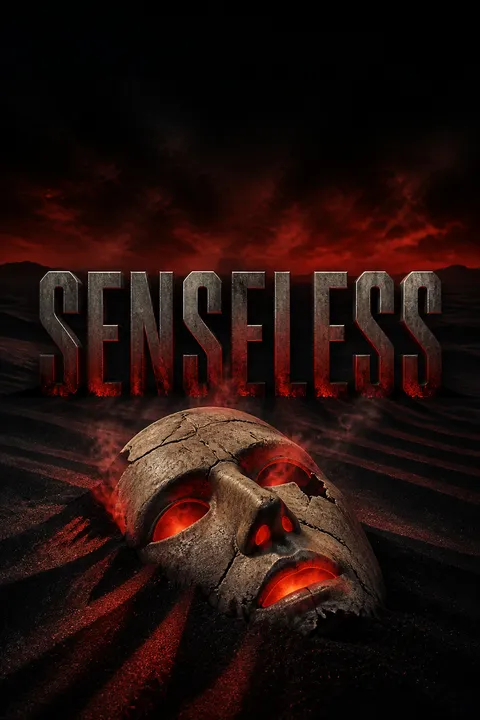

Plot Summary
Desert's Silent Witness
Detective Bill Renney is called to a sun-bleached stretch of the Los Angeles County line, where a young woman's corpse lies grotesquely mutilated—her eyes, nose, ears, tongue, and fingers removed with chilling precision. The desert, alive with flies and carrion birds, becomes a silent witness to horror. Renney, haunted by his own past and the recent loss of his wife, is immediately struck by the similarities to an unsolved murder from a year prior. The scene is both clinical and nightmarish, setting the tone for a case that will spiral into obsession, guilt, and the darkest corners of the human psyche. The desert's silence is heavy, pressing in on Renney as he realizes he's staring into the abyss—one that may be staring back.
Echoes of Old Wounds
The investigation reveals the victim as Gina Fortunado, a young teacher with a bright future. Her death mirrors the unsolved murder of Melissa Jean Andressen, whose mutilated body was found in the same desert a year earlier. Renney, still grieving his wife Linda, is drawn into the cyclical nature of violence and loss. The medical examiner notes both similarities and differences between the two cases, suggesting either a copycat or an evolving killer. The media seizes on the "High Desert Killer," fueling public fear and Renney's own sense of déjà vu. The past refuses to stay buried, and Renney is forced to confront the possibility that the killer he thought was gone may have never left.
The Dead Wives Club
Renney's investigation into Melissa Jean's murder had once led him to suspect her husband, Dr. Alan Andressen, a prominent psychiatrist. Their shared grief—Renney's for Linda, Alan's for Melissa Jean—creates a bond, but also a dangerous complicity. As Renney delves into the Andressens' lives, he uncovers secrets, alibis, and a web of suspicion that entangles both men. The case file becomes a talisman of guilt and regret, and the two men, both members of the "Dead Wives Club," find themselves drawn together by loss, suspicion, and the need for closure. Their alliance will have consequences neither can foresee.
Hollywood's Shattered Reflections
In the glittering world of Hollywood, Maureen Park, a novelist with a traumatic past, is engaged to film producer Greg Dawson. Their engagement party is a microcosm of Los Angeles: glamorous, superficial, and haunted by secrets. Greg's troubled son, Landon, returns unexpectedly, bringing chaos and unease. Maureen's compulsions and anxieties are heightened by Landon's presence, and the party's veneer of perfection cracks to reveal deep dysfunction. The Hollywood elite, with their own predatory instincts, circle like vultures, and Maureen senses she is being watched—by Landon, by the city, and by her own unresolved guilt.
The Prodigal Son Returns
Landon Dawson, Greg's estranged son, is a force of chaos—arrogant, manipulative, and possibly dangerous. His return from Europe is shrouded in lies, and his relationship with Maureen is immediately adversarial. Landon's friend Ross, nicknamed Uptown, confides in Maureen about a disturbing scrapbook filled with real crime scene photos of a mutilated woman. The revelation sets off a chain of paranoia, suspicion, and fear. Landon's presence in the house becomes increasingly menacing, and Maureen's sense of safety unravels as she realizes the darkness in Greg's family may be deeper than she imagined.
The Human Fly Emerges
Toby, a troubled young man with a history of mental illness and a toxic relationship with his mother (the "Spider"), drifts through Los Angeles as an outsider—a self-described "Human Fly." His life is a cycle of survival, humiliation, and longing for transformation. Toby becomes entangled with a mysterious woman who plays at being a vampire, drawing him into the city's nocturnal underworld. His obsession with metamorphosis, both literal and symbolic, mirrors the city's own capacity for reinvention and decay. Toby's journey is one of self-destruction and desperate hope for belonging, setting him on a collision course with violence.
Rituals in the High Desert
Driven by the vampire's stories, Toby embarks on a pilgrimage to a remote desert church, seeking to be "turned" and escape his own skin. He endures a hallucinatory ordeal of hunger, thirst, and visions—haunted by memories of abuse, his monstrous mother, and the specter of a childhood bully. The desert becomes a crucible, stripping Toby down to his rawest self. He performs a ritual of self-mutilation and sacrifice, hoping for salvation or annihilation. Instead, he returns to the city unchanged, but with a new, terrible purpose—his longing for transformation curdling into violence.
The Scrapbook of Nightmares
The scrapbook containing graphic photos of Melissa Jean's mutilated body becomes a cursed object, passing from Toby to Freyja (the "vampire"), then to Landon, and finally to Maureen. Each recipient is marked by its contents—obsession, fear, or the urge to manipulate. Landon uses the book to torment Maureen, blurring the line between reality and performance, guilt and innocence. The scrapbook is both evidence and symbol: a record of atrocity, a fetish for the clubgoers at Fist, and a weapon in the psychological warfare within Greg's fractured family. Its journey reveals the city's appetite for spectacle and the ease with which horror becomes entertainment.
The Monkey Unleashed
Tensions in the Dawson household reach a breaking point as Maureen confronts Greg about Landon's behavior and the scrapbook. Landon, feeling cornered and irrelevant, dons a grotesque monkey mask and unleashes a violent, destructive tantrum—attacking Greg, terrorizing Maureen, and shattering the illusion of family. The scene is both absurd and terrifying, a performance of rage that exposes the wounds beneath the surface. Maureen flees, traumatized, while Greg is left battered and finally forced to reckon with his son's pathology. The Monkey's rampage is the culmination of years of denial, resentment, and unspoken pain.
The Vampire's Gift
In a desperate bid for acceptance, Toby kidnaps Gina Fortunado and presents her as a "gift" to the vampire woman. The encounter is a grotesque inversion of intimacy—Toby's longing for transformation met with horror and rejection. The vampire, revealed as a damaged human rather than a supernatural being, recoils from Toby's violence. Left alone with his captive, Toby completes his ritual of mutilation, recreating the wounds from the scrapbook. The act is both homage and assertion of identity—a final, senseless attempt to become something other than himself. The city's darkness has claimed another victim.
Confessions and Confrontations
The police close in on the truth as Maureen brings the scrapbook to Renney, and Landon, Ross, Freyja, and Toby are all questioned. Each confession is a performance—self-serving, evasive, or delusional. Landon admits to psychological warfare but denies murder; Ross reveals Landon's manipulations; Freyja distances herself from Toby's madness; and Toby, in a fevered monologue, confesses to Gina's murder and the killing of his mother. The lines between victim and perpetrator, sanity and madness, blur. Renney, haunted by his own failures, must decide what justice means in a world where everyone wears a mask.
The Spider's Web Unraveled
In the aftermath of his crimes, Toby returns to the apartment he shared with his mother, now transformed into a nightmarish web. The Spider, both literal and symbolic, is finally confronted and killed—Toby strangling her with the phone cord in a moment of rage and liberation. The act is both patricide and exorcism, freeing Toby from the web of abuse but leaving him empty. His confession to the police is fragmented, haunted by hallucinations and the sense that he is still trapped in someone else's story. The web is unraveled, but the damage is done.
The Demeter's Cargo
The narrative draws together its threads: Renney confronts Alan about the stolen crime scene photos and the possibility of manipulation; Maureen flees Greg and Landon, seeking solace and meaning on the open road; and Toby, in custody, is haunted by visions of his childhood bully and the monstrous legacy of violence. The Demeter, the ship that brought Dracula to England, becomes a metaphor for the city itself—a vessel carrying monsters, secrets, and the dead. The cargo is unburdened, but the journey leaves scars on everyone it touches.
Mirrors and Altered Truths
Maureen, alone in a desert bar, encounters the enigmatic woman from her engagement party—a figure who may be real, imagined, or supernatural. Through their conversation, Maureen confronts her own guilt over her son's death and the ways she has used relationships to mask her pain. The altar mirror, a recurring symbol, becomes a portal to self-understanding and forgiveness. Maureen's story is not about the killer, but about survival, grief, and the possibility of moving forward. The city's violence is mirrored in personal trauma, and healing begins with the courage to face one's own reflection.
The End of Masks
The case is closed: Toby is arrested, Landon is exposed but not charged with murder, and Maureen chooses her own path. Renney, still haunted by guilt and loss, visits Alan one last time, confronting the ambiguity of justice and the limits of understanding. The city remains unchanged—its lights winking on in the darkness, its secrets intact. In the quiet of his home, Renney is visited by the memory of Linda, and for a moment, finds peace. The masks have fallen, but the scars remain. The story ends not with resolution, but with acceptance of the senselessness at the heart of things.
Analysis
Senseless is a masterful fusion of horror, noir, and psychological thriller, using the sun-bleached wasteland of Los Angeles as both setting and metaphor for the cycles of violence, trauma, and denial that haunt its characters. Ronald Malfi's narrative interrogates the nature of evil—not as an external force, but as something born of repetition, neglect, and the refusal to confront pain. The novel's structure, with its mirrored events, unreliable narrators, and shifting perspectives, reinforces the sense that time is a loop and that the past is never truly past. The central plot device—the scrapbook of mutilation—serves as both evidence and symbol, a fetish object that exposes the city's appetite for spectacle and the ease with which horror becomes entertainment. Characters are trapped in roles—detective, victim, perpetrator, survivor—unable to break free from the scripts written by family, society, or their own wounded psyches. The novel's ultimate message is one of acceptance: that meaning is elusive, justice imperfect, and healing possible only when we face our own reflections without flinching. Senseless is a dark, unflinching meditation on the ways we are shaped by what we cannot bear to see, and the courage required to live with the senselessness at the heart of things.
Review Summary
Senseless by Ronald Malfi receives mostly positive reviews, with readers praising its atmospheric writing, complex characters, and intertwining storylines. The novel blends elements of horror, thriller, and crime fiction, following three separate narratives that converge in unexpected ways. Many reviewers found the book unsettling and captivating, though some felt the ending was rushed or left too many unanswered questions. Overall, readers appreciate Malfi's ability to create tension and explore themes of grief, mental illness, and the supernatural.
People Also Read




Characters
Bill Renney
Bill Renney is a seasoned Los Angeles detective, defined by his recent widowhood and a deep sense of personal and professional failure. His relationship with his late wife Linda shapes his worldview, infusing his work with grief and a longing for meaning. Renney's investigation into the desert murders becomes a quest for redemption, but his empathy and guilt lead him into dangerous complicity with Dr. Alan Andressen. Renney's psychological arc is one of obsession, self-doubt, and eventual acceptance of the limits of justice. His connections to other characters—Alan, Maureen, Toby—are marked by a mix of paternal care, suspicion, and shared trauma. Renney's journey is ultimately about learning to live with the senselessness of loss.
Maureen Park
Maureen is a novelist haunted by the accidental death of her young son, a trauma she has never fully processed. Her engagement to Greg Dawson is both a bid for a new life and an escape from her past. Maureen's compulsive behaviors and anxieties are exacerbated by the dysfunction in Greg's family, especially the menacing presence of Landon. Her arc is one of gradual self-realization: through confrontation with Landon, the scrapbook, and her own memories, she comes to understand the necessity of facing pain rather than fleeing it. Maureen's relationships—with Greg, Landon, and the mysterious woman at the bar—are fraught with projection, guilt, and the search for genuine connection.
Landon Dawson
Landon is Greg's estranged son, a manipulative and deeply damaged young man whose actions oscillate between calculated cruelty and desperate bids for attention. His return to the family home is a catalyst for the novel's central conflicts. Landon's psychological makeup is shaped by neglect, privilege, and a sense of being perpetually cast as an "extra" in his father's life. He weaponizes the scrapbook to torment Maureen, blurring the line between performance and reality. Landon's violence is both literal and symbolic—a manifestation of generational trauma and the city's capacity for producing monsters. His arc is one of self-destruction and the perpetuation of familial cycles.
Greg Dawson
Greg is a successful Hollywood producer whose charm masks a history of failed relationships, emotional avoidance, and a refusal to confront the darkness in his own family. His engagement to Maureen is an attempt at reinvention, but his inability to deal with Landon's pathology and his own complicity in family dysfunction leads to disaster. Greg's relationships—with Maureen, Landon, and his ex-wives—are transactional and self-serving. He is both victim and perpetrator, caught in the city's web of ambition, denial, and violence. Greg's arc is one of belated reckoning, forced to confront the consequences of his choices.
Toby Kampen
Toby is a mentally ill young man, shaped by childhood abuse and a toxic relationship with his mother (the "Spider"). His self-concept as a "Human Fly" reflects his alienation and longing for metamorphosis. Toby's journey through the city's underbelly—his encounters with the vampire woman, his ritual in the desert, and his eventual descent into murder—are both literal and symbolic quests for identity. Toby's violence is a desperate attempt to assert agency and escape his own skin. His arc is one of tragic inevitability, as he becomes both victim and monster, unable to break free from the cycles of abuse and alienation.
Dr. Alan Andressen
Alan is a prominent psychiatrist whose wife's murder is the catalyst for the novel's central mystery. His relationship with Renney is marked by shared grief, mutual suspicion, and a dangerous complicity that leads to vigilante violence. Alan's psychological complexity lies in his ability to manipulate, his need for closure, and his own capacity for violence. He is both a victim and a perpetrator, haunted by guilt and the possibility that he has shaped the events more than he admits. Alan's arc is one of moral ambiguity, as he navigates the blurred lines between justice, revenge, and self-preservation.
Freyja ("the Vampire")
Freyja is a young woman who adopts the persona of a vampire in the city's club scene, drawing in outsiders like Toby. Her allure is both sexual and predatory, but ultimately she is revealed as a damaged human, not a supernatural being. Freyja's relationship with Toby is one of manipulation, curiosity, and eventual fear. She becomes the unwitting recipient of the scrapbook and a witness to Toby's violence. Freyja embodies the city's capacity for performance, reinvention, and the thin line between fantasy and horror.
Ross Kline ("Uptown")
Ross is Landon's friend, drawn into the Dawson family's dysfunction by proximity and dependence. His role is that of the outsider who sees the truth but is powerless to change it. Ross's confession to Maureen about the scrapbook is a catalyst for the unraveling of secrets. He is both complicit and victimized, caught between loyalty, fear, and the need to do the right thing. Ross's arc is one of reluctant courage, as he chooses to speak out despite the risks.
The Spider (Toby's Mother)
The Spider is both a literal character—Toby's abusive, mentally ill mother—and a symbol of the web of trauma that ensnares him. Her presence is suffocating, manipulative, and ultimately monstrous. The Spider's relationship with Toby is one of domination and dependency, shaping his self-concept and his capacity for violence. Her death at Toby's hands is both an act of liberation and a final, tragic entanglement in the cycle of abuse.
Puke-Breath Donald
Donald is Toby's childhood bully, appearing in hallucinations and memories as both tormentor and guide. He represents the internalized violence and self-loathing that drive Toby's actions. Donald's presence in Toby's visions is a reminder of the inescapability of the past and the ways in which trauma perpetuates itself. He is both a real figure and a psychological construct, embodying the novel's themes of repetition, transformation, and the blurred line between victim and perpetrator.
Plot Devices
Cyclical Time and Cosmic Echo
The novel's structure and themes are built around the idea that time is cyclical, and that patterns of violence, grief, and dysfunction repeat themselves across generations and individuals. This is articulated through Linda's theory of the "cosmic echo," Renney's recurring nightmares, and the literal repetition of the desert murders. The narrative uses flashbacks, mirrored events, and recurring symbols (the scrapbook, the altar mirror, the desert church) to reinforce the sense that characters are trapped in loops of their own making. Foreshadowing is achieved through dreams, hallucinations, and the doubling of characters and events, creating a sense of inevitability and fatalism.
The Scrapbook as Fetish and Evidence
The scrapbook containing crime scene photos is a central plot device, functioning as evidence, fetish, and psychological weapon. Its journey through the hands of Toby, Freyja, Landon, and Maureen mirrors the spread of trauma and the city's appetite for spectacle. The scrapbook is both a literal record of atrocity and a symbol of the ways in which horror is commodified, consumed, and repurposed. Its presence drives the plot, exposes secrets, and blurs the line between reality and performance.
Masks, Performance, and Identity
Characters in the novel are constantly performing—adopting masks, personas, and roles to survive or manipulate. The Hollywood setting amplifies this theme, as does the club scene with its vampires, Renfields, and ritualized violence. The motif of the mask is both literal (the monkey mask, the vampire fangs) and metaphorical (emotional avoidance, denial, self-delusion). The narrative structure uses shifting perspectives, unreliable narrators, and confessional monologues to explore the instability of identity and the difficulty of discerning truth.
Interrogation and Confession
The novel's climax is structured around a series of interrogations—police interviews with Landon, Ross, Freyja, and Toby. Each confession is a performance, shaped by self-interest, delusion, or fear. The use of transcripts, shifting points of view, and unreliable memories creates a sense of ambiguity and moral complexity. The confessions reveal as much about the characters' psyches as they do about the facts of the case, reinforcing the novel's themes of subjectivity, trauma, and the limits of justice.
Mirrors and Doubling
The altar mirror, recurring dreams, and the motif of doubling (characters seeing themselves in others, events repeating) are used to explore the ways in which trauma, guilt, and violence are reflected and refracted through the psyche. Mirrors are both portals to self-understanding and sources of horror, revealing truths that characters would rather avoid. The narrative structure uses these devices to blur the boundaries between past and present, self and other, reality and fantasy.
Download PDF
Download EPUB
.epub digital book format is ideal for reading ebooks on phones, tablets, and e-readers.








































