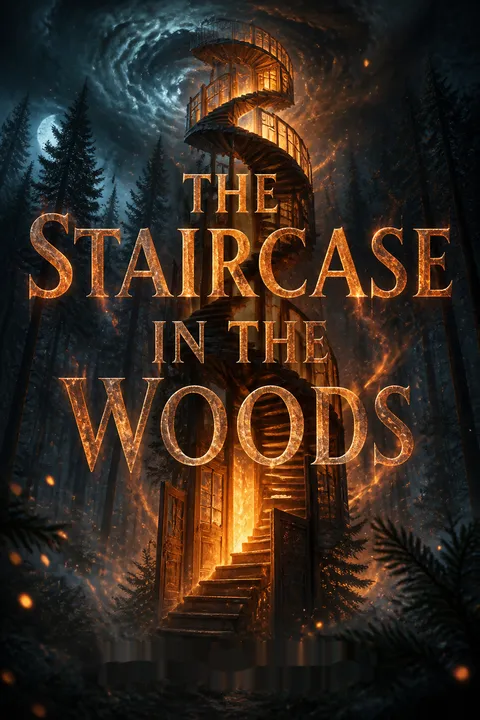

Plot Summary
The Email That Changed Everything
Owen's life is a mess of anxiety and isolation, haunted by dreams of a staircase in the woods and the memory of a lost friend, Matty. One morning, he receives a blunt, darkly humorous email from Nick, a member of their long-estranged high school friend group, announcing his terminal cancer and demanding a reunion. The email invokes "the Covenant," a pact they made as teens to always be there for each other. The message is a summons, a guilt trip, and a last chance for closure. Owen, Lore, and Hamish—each broken in their own ways—are compelled to answer, despite years of silence and unresolved pain. The call is not just about Nick's impending death, but about the unfinished business that has haunted them since the day Matty disappeared.
Broken Covenant, Broken Friends
The group's reunion is fraught with tension, resentment, and the ghosts of their teenage selves. Lore, now a successful but blocked game designer, and Hamish, a changed man with a family and conservative politics, clash over everything from identity to politics. Owen, still paralyzed by self-doubt, feels like an outsider in his own story. The Covenant, once a source of strength, now feels like a burden. Their conversations are laced with bitterness, jealousy, and the ache of things left unsaid. The absence of Matty, the group's golden boy, is a wound that never healed. As they travel together, old patterns reemerge, and the question of what really happened to Matty hangs over them like a curse.
Return to the Woods
Nick's plan is not a simple memorial. Instead, he lures the group to a remote forest, far from civilization, under the pretense of camping—just as they did the night Matty vanished. The woods are thick with memory and dread. The friends are forced to confront not only each other but the unresolved trauma of their youth. The forest becomes a liminal space, where time blurs and the past feels dangerously close. As they walk deeper, the air grows heavy, and the sense of being watched intensifies. The group's unity is fragile, and the old Covenant feels both like a lifeline and a trap.
The Staircase Appears
In a sunlit clearing, the friends find it: a staircase rising from the forest floor, leading nowhere. It is both familiar and wrong, echoing the one from their youth. The staircase is untouched by time or nature, radiating a sense of wrongness that chills them to the bone. Nick reveals his true purpose: to repair the error of the past, to face what they ran from, and to find Matty—if he can be found. The staircase is a portal, a test, and a reckoning. Each friend feels the pull of the unknown, the weight of guilt, and the possibility of redemption or destruction.
Matty's Vanishing
Flashbacks reveal the night that shattered them. As teens, the group found a similar staircase in the woods. Fueled by drugs, dares, and the pressure of the Covenant, Matty invoked their pact and climbed the steps. He vanished before their eyes, seemingly swallowed by the impossible. Panic, guilt, and fear drove the others to concoct a story for the police, hiding the truth even from themselves. The loss of Matty became the fault line that split their lives. Each has carried the secret, the shame, and the suspicion that they could have done more—or that they wanted him gone.
Haunted by the Past
The narrative weaves between past and present, showing how each friend's life was shaped by that night. Owen's compulsions and self-loathing, Lore's drive and isolation, Hamish's reinvention, and Nick's obsession all trace back to Matty's disappearance. The woods and the staircase become symbols of unresolved trauma, the place where their friendship died and their adult selves were born. The group's attempts to reconnect are haunted by the knowledge that they are not the people they once were—and that the past is not done with them.
The House of Pain
Climbing the staircase, the friends are transported into a shifting, impossible house—a patchwork of rooms from different eras, each marked by tragedy, violence, or despair. The house is alive, feeding on their pain, showing them visions of their worst memories and deepest fears. They encounter rooms that echo their own traumas: suicide, abuse, addiction, neglect. The house is a maze with no exit, a prison built from the collective suffering of countless lives. It wants something from them, and it will not let them go until it gets it.
Rooms of Ruin
Each room in the house is a test, a story, a wound. The friends are separated, forced to face their personal demons: Owen's self-harm and paternal hatred, Lore's loneliness and ambition, Hamish's self-destruction and guilt, Nick's abuse and rage. The house manifests their pain as physical threats—bloody ghosts, monstrous automatons, endless hallways. The only sanctuary is the crawlspace, a liminal zone between rooms where the house's influence is weaker. But even here, the pressure mounts. The house is not just a place; it is a parasite, seeking to hollow them out and fill them with itself.
The Crawlspace Sanctuary
In the crawlspace, the friends regroup and share what they have learned. They realize the house is a living entity, born from the trauma of its original owner—a WWII veteran who murdered his family and himself, cursing the house and all who enter it. The house collects pain, grows stronger with each victim, and sends its "infected" back into the world to spread more suffering. The only way to survive is together, to resist the urge to turn on each other, and to find the heart of the house. The Covenant, once broken, must be reforged if they are to have any hope of escape.
The House Wants In
The house's influence grows, exploiting every weakness. It tries to seduce each friend into isolation, self-harm, or violence. Nick, already infected from a previous encounter, becomes the house's agent, turning on the others. Owen nearly succumbs to his old compulsions, Lore is tempted to abandon the group, and Hamish is driven to the brink of suicide. Only by intervening for each other—by refusing to let anyone be alone—do they stave off the house's final victory. The struggle is not just against the house, but against the parts of themselves that want to give in.
Descent to the Heart
Realizing that the only way out is through, the friends break through the floor of the crawlspace and descend into the literal and figurative heart of the house. Pipes and wires become a makeshift ladder, leading them down into the void. The descent is terrifying, a test of trust and endurance. At the bottom, they find the original house—the Dreamboat—preserved at the center of the labyrinth. Here, the house's true nature is revealed, and the final confrontation awaits.
The Dreamboat's Secret
Inside the Dreamboat, the friends meet the house's host: a monstrous automaton made from the memories of the original murderer and his family. The house offers them a choice: leave and abandon Nick, or stay and try to save him. The friends refuse to leave anyone behind, invoking the Covenant one last time. The house unleashes its full power, showing them visions of their worst selves, their failures, and the pain they have caused. The only way to break the curse is to confront the truth, forgive themselves and each other, and refuse to let the house's hate define them.
The Host Revealed
The house, speaking through Nick and the automatons, reveals its purpose: to feed on pain, to grow by spreading suffering, to turn its victims into new sources of horror. It is a parasite born from war, trauma, and the dark side of home. The friends realize that the only way to defeat it is not through violence, but through memory, love, and the refusal to abandon each other. They tell stories, recall the best of their friendship, and remind Nick—and themselves—of who they really are. The house is weakened by their unity, their refusal to be defined by pain.
The Covenant Reforged
In a final act of defiance, the friends pull Nick back from the brink, exorcising the house's influence through the power of shared memory and forgiveness. They burn the Dreamboat, destroying the heart of the house. The exit appears, and they escape together, battered but alive. The Covenant, once broken, is reforged—not as a naive promise, but as a hard-won commitment to face the darkness together. The house is not truly gone, but its hold on them is broken—for now.
Escape and Aftermath
The friends emerge from the woods, changed forever. The staircase and the house are gone, but the trauma lingers. They return to their lives, haunted by nightmares and the knowledge that the house is still out there, waiting for new victims. They stay in touch, supporting each other as best they can. The Covenant is no longer a childish oath, but a lifeline. They know that healing is a process, not a destination, and that the past can never be fully escaped—but it can be faced, together.
The Search for Matty
Months later, the friends track down Matty, who survived the house but was changed by it. He lives alone, a shadow of his former self, possibly responsible for new horrors. The group confronts him, unsure if he can be saved or if the house's infection is permanent. The meeting is tense, uncertain, and unresolved. The story ends with the friends united, ready to face whatever comes next, bound by the Covenant and the hard lessons of their ordeal.
The House Never Leaves
Even after escape, the house haunts their dreams and their lives. The friends struggle with the knowledge that evil is not just a supernatural force, but something born from human pain, neglect, and cruelty. The house is a metaphor for the wounds we carry, the secrets we keep, and the ways we hurt each other. The only antidote is connection, honesty, and the willingness to get lost—and found—together.
The Necessity of Getting Lost
The story closes with a meditation on the value of being lost—of leaving the path, facing the unknown, and allowing oneself to be changed by the journey. The staircase in the woods is both a literal and figurative invitation to confront what we fear, to reckon with the past, and to find meaning in the darkness. The friends are not healed, but they are no longer alone. The Covenant endures, not as a promise of safety, but as a commitment to keep searching, together, for the way home.
Analysis
A modern horror fable about trauma, friendship, and the houses we build inside ourselvesThe Staircase in the Woods is a masterful meditation on the nature of pain, memory, and the bonds that both save and destroy us. Chuck Wendig uses the trappings of supernatural horror—a haunted house, a vanishing friend, a labyrinth of nightmares—to explore the very real ways in which trauma shapes our lives and relationships. The house is not just a monster, but a metaphor for the wounds we carry, the secrets we keep, and the ways we hurt each other and ourselves. The story's central insight is that healing is not about erasing the past, but about facing it together, refusing to let pain define us or drive us apart. The Covenant, once a naive promise, becomes a hard-won commitment to solidarity, honesty, and the messy work of forgiveness. The novel's structure—recursive, nonlinear, haunted by echoes—mirrors the experience of trauma and recovery. In the end, The Staircase in the Woods is a call to embrace uncertainty, to get lost, and to find meaning not in escape, but in the willingness to walk the dark together. It is a story for anyone who has ever been haunted by the past, and who hopes, against hope, that the way home is not a place, but a people.
Review Summary
People Also Read

Characters
Owen Zuikas
Owen is the emotional core of the story, a man paralyzed by obsessive-compulsive disorder, self-harm, and the belief that he is fundamentally broken. His relationship with his abusive father left deep scars, manifesting in compulsive behaviors and a sense of worthlessness. Owen's friendship with Lore was once a source of hope and creativity, but jealousy and abandonment poisoned it. He is both the most vulnerable and the most honest of the group, often serving as the conscience and the canary in the coal mine. Owen's journey is one of learning to forgive himself, to accept help, and to recognize that survival is not the same as living. His development is marked by moments of courage, self-revelation, and the painful process of letting others in.
Lauren "Lore" Banks
Lore is a successful game designer, fiercely intelligent and unapologetically herself. She is genderfluid, pansexual, and neurodivergent, embracing her identity with pride and defiance. Lore's creativity is both her gift and her shield, allowing her to compartmentalize pain and focus on problem-solving. Her relationship with Owen is complex—partnership, rivalry, and unresolved affection. Lore's greatest fear is vulnerability; she pushes people away to avoid being hurt, yet craves connection. The house forces her to confront her loneliness, her guilt over Matty, and the limits of self-reliance. Lore's arc is about learning that strength is not isolation, but the willingness to trust and be trusted.
Nick Lobell
Nick is the group's wild card—funny, caustic, and deeply damaged. His bravado masks a history of abuse and a desperate need for belonging. Nick's obsession with the Covenant and with finding Matty is both a coping mechanism and a cry for help. He is the first to be "infected" by the house, becoming its agent and nearly destroying his friends. Nick's journey is one of reckoning with his trauma, accepting responsibility for his actions, and allowing himself to be saved. His relationship with the others is fraught with resentment and love, especially with Owen, whom he alternately mocks and admires. Nick's redemption is hard-won, a testament to the power of memory, forgiveness, and solidarity.
Hamish Moore
Hamish is the most transformed by adulthood—a former stoner and gentle giant turned fitness-obsessed, conservative family man. His attempts to reinvent himself are both genuine and defensive, a way to escape the pain of the past. Hamish's guilt over Matty, his struggles with addiction, and his fear of being a bad father all haunt him. He is both the most practical and the most spiritually lost, oscillating between faith and despair. Hamish's arc is about confronting the truth of who he was, who he is, and who he wants to be. His relationship with the group is marked by both loyalty and distance, and his eventual willingness to be vulnerable is key to their survival.
Lauren "Marshie"
Marshie is a ghostly figure encountered in the house—a teenage girl who died by suicide after being bullied and rejected. She represents the countless victims whose pain fuels the house's power. Marshie's interactions with the group, especially Owen, force them to confront the reality of suffering that is not their own, and the ways in which cruelty and neglect can echo through generations. She is both a warning and a mirror, showing the friends what happens when pain is left unaddressed.
Matty Shiffman
Matty is the absent center of the story—the friend who vanished, the one everyone loved, the one whose loss broke the Covenant. In life, he was charismatic, talented, and driven, but also under immense pressure from his family and himself. His disappearance is both a literal mystery and a metaphor for the ways in which people can be lost to trauma, expectation, and the failures of friendship. When the group finally finds him, Matty is changed, possibly irredeemable, a warning of what happens when the house wins. His fate is a challenge to the others: will they abandon him again, or fight for him as they should have before?
Alfie Shawcatch
Alfie is the WWII veteran whose violence and pain birthed the house's curse. His story is one of war, PTSD, and the failure of the American dream. Alfie's actions—murdering his family and himself—set in motion the cycle of suffering that ensnares the friends. He is both a victim and a perpetrator, a symbol of how unaddressed trauma can poison everything it touches. The house, in many ways, is Alfie's legacy, a monument to the darkness that can grow in the heart of home.
The House
The house is the true antagonist—a sentient, ever-growing labyrinth that feeds on human suffering. It is both a physical place and a psychological force, capable of manifesting the worst fears, memories, and desires of its victims. The house is born from trauma, sustained by neglect, and spread by those it infects. It is a metaphor for generational pain, the way wounds are passed down and magnified. The house's goal is not just to trap, but to hollow out and possess, sending its victims back into the world as carriers of its curse.
The Covenant
The Covenant is both a literal pact and a metaphor for the ties that bind the friends. It is invoked in moments of crisis, used as a weapon, a shield, and a burden. The Covenant represents the best and worst of friendship—the promise to be there, the pain of betrayal, the possibility of redemption. Its breaking is the story's original sin; its reforging is the only hope for survival.
The Staircase
The staircase is the story's central image—a structure that appears where it shouldn't, leading nowhere and everywhere. It is the gateway to the house, the site of Matty's disappearance, and the embodiment of the unknown. The staircase is both a literal trap and a metaphor for the moments that change us forever, the choices we can't take back, and the paths we must walk to find ourselves.
Plot Devices
Shifting House as Living Labyrinth
The house is not just a setting but a character—an ever-changing labyrinth that reflects and amplifies the pain of its inhabitants. Its rooms are drawn from real tragedies, personal memories, and the collective suffering of its victims. The house's shifting nature creates a sense of disorientation, claustrophobia, and inevitability. It uses the friends' own fears and failures against them, forcing them to confront what they most want to avoid. The crawlspace serves as a liminal space, a place of relative safety and clarity, but even here the house's influence is felt. The structure of the house mirrors the structure of trauma: cyclical, recursive, inescapable until faced head-on.
The Covenant as Binding and Breaking
The Covenant is a classic Chekhov's gun—introduced early as a source of strength, later revealed as a source of pain, and ultimately the key to survival. Its invocation drives the plot, forcing the friends to act against their own interests, to confront their failures, and to choose between self-preservation and solidarity. The breaking of the Covenant is the story's original trauma; its reforging is the only way out. The Covenant is both a plot device and a thematic anchor, embodying the story's central questions about loyalty, forgiveness, and the possibility of healing.
Flashbacks and Nonlinear Memory
The narrative moves fluidly between past and present, using flashbacks to reveal the origins of the group's trauma, the dynamics of their friendship, and the events that led to Matty's disappearance. These memories are not just exposition, but active forces in the story—shaping the characters' choices, haunting their dreams, and manifesting in the house's rooms. The nonlinear structure creates a sense of inevitability, as if the past is always waiting to reclaim the present.
Possession and Infection
The house's primary weapon is possession—not just of bodies, but of minds, memories, and relationships. It seeks to hollow out its victims, to fill them with its own hate, and to send them back into the world as carriers of its curse. This device blurs the line between supernatural horror and psychological realism, making the threat both external and internal. The infection is spread by isolation, secrecy, and the refusal to confront pain—a metaphor for the ways trauma is passed down and magnified.
Game and Simulation Metaphor
Lore's background as a game designer, and Owen's obsession with games, infuse the narrative with the language and logic of puzzles, simulations, and rules. The house is understood as a game to be solved, a system to be hacked, a simulation to be escaped. This device allows for moments of meta-commentary, self-awareness, and dark humor, while also reinforcing the story's themes of agency, choice, and the limits of control. The game metaphor is both a coping mechanism and a trap—offering hope, but also the danger of treating real pain as something that can be "won."
Foreshadowing and Recursion
The story is rich with foreshadowing—dreams, warnings, repeated images (the staircase, the knife, the lighter, the crawlspace) that signal what is to come. The house itself is recursive, looping back on itself, forcing the characters to confront the same wounds again and again until they find a way to break the cycle. The ending is both an escape and a return, suggesting that the journey is never truly over, and that the only way out is through.
About the Author


Download PDF
Download EPUB
.epub digital book format is ideal for reading ebooks on phones, tablets, and e-readers.








































