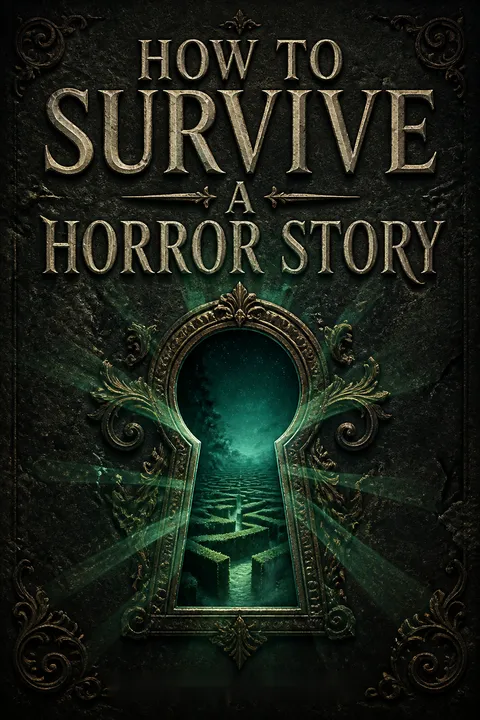

Plot Summary
The Manor Beckons
Melanie Brown, a quiet aspiring writer, arrives at the eerie Mortimer Queen Manor after receiving a cryptic letter: she's been named in the will of the world's most famous horror author. The manor looms with Gothic menace, its windows like eyes, its doors like teeth. Melanie is joined by a cast of strangers—authors, celebrities, and oddballs—each summoned for reasons unknown. The house's oppressive atmosphere and the guests' unease set the tone: this is no ordinary inheritance. As the group gathers, the sense of being watched grows, and the manor itself seems to pulse with anticipation, promising that the weekend will be anything but restful.
Strangers and Secrets
Inside, Melanie and the others—Scott, Buck, Crystal, Winnie, Chester, Petey—are greeted by the enigmatic Gia, the manor's keeper. Each guest is a horror writer or connected to Mortimer, but Melanie is the outsider. Social anxieties and egos clash as introductions reveal hidden rivalries and insecurities. The manor's decor—hundreds of ticking clocks, grotesque portraits, and secretive staff—adds to the unease. The guests quickly realize they know little about each other, and even less about why they've been chosen. The air is thick with suspicion, and the house's strange rules—no phones, no leaving—hint at a deeper, more sinister purpose.
The Will's Deadly Game
The group is summoned for the reading of Mortimer's will, expecting riches or mementos. Instead, Gia delivers a chilling message: Mortimer's true bequest is a game of survival. The manor is alive, hungry, and only those who solve its riddles and survive its rooms will escape. Each hour, a new challenge will claim a life if the group fails. Panic erupts, but the doors and windows are sealed. The guests are forced to play along, realizing that their pasts—and their secrets—are the keys to survival. The house is no longer just a setting, but a predator, and the guests its prey.
Dinner and Deceit
The first night's dinner is a tense affair, with accusations and old wounds surfacing. Petey is caught stealing, Crystal mourns Mortimer, and Scott's temper flares. The meal is laced with unease, and the manor's supernatural power becomes undeniable as objects move and rooms shift. The guests' facades begin to crack, revealing guilt, jealousy, and fear. The group's unity is fragile, and alliances form and break as they realize that only by working together—and confronting their own sins—can they hope to survive the night.
The First Sacrifice
The first riddle appears, cryptic and personal. As the group scrambles to solve it, time runs out. The manor's punishment is swift and brutal: Petey is consumed by supernatural flames, dragged screaming into the fireplace. The horror is real, and the survivors are left shaken and traumatized. The rules are clear—fail, and someone dies. The group's trust is shattered, and paranoia takes root. Each guest wonders: who will be next, and what secret will the manor demand they confess?
Riddles and Revelations
The survivors face a series of rooms, each with its own deadly puzzle. The manor's challenges are tailored to their personal histories—plagiarism, betrayal, violence, and more. As they navigate trapdoors, acid floods, and monstrous apparitions, the guests are forced to confront the worst parts of themselves and each other. Old grudges and hidden crimes are revealed, and the line between victim and perpetrator blurs. The house feeds on their confessions, growing stronger as their numbers dwindle.
Haunted by the Past
The manor's supernatural power manifests as the ghosts of the guests' victims—literal and metaphorical—appear to torment them. Chester is haunted by a girl he drove to suicide, Scott by a man he assaulted, Crystal by Mortimer's wife. The house becomes a hall of mirrors, reflecting their darkest deeds. The group's unity collapses as accusations fly and old wounds are reopened. The only way forward is through confession, but the price of honesty is steep.
The Maze of Guilt
The survivors enter a hedge maze, stalked by a monstrous deer and confronted by signs of their own moral failures. Buck, accused of blackmail, must face his own cowardice and ambition. The maze is both physical and psychological, forcing the group to choose between self-preservation and sacrifice. Winnie, desperate to atone for her own sins, makes a fatal choice. The maze spits out only those willing to face the truth about themselves, and the group is further reduced.
Betrayals Unveiled
As the group shrinks, betrayals come to light. Crystal's manipulations, Buck's blackmail, and Scott's violence are exposed. The manor's riddles become more pointed, demanding not just answers but confessions. The survivors turn on each other, desperate to shift blame and avoid the next sacrifice. The house's hunger is insatiable, and the guests realize that only by confronting their own monstrosity can they hope to escape. But for some, redemption is out of reach.
The Poisoned Truth
The penultimate room presents a literal poison pill: only by identifying the true killer among them can the survivors move on. Crystal's guilt over Mortimer's wife's death is revealed, and her attempt to manipulate the others backfires. Melanie, once the quiet observer, emerges as the group's moral center, refusing to let Crystal escape responsibility. The house punishes deception with violence, and the survivors are forced to choose between justice and survival.
The Last Room
Only Melanie and Buck remain, trapped in the attic with one last message from Mortimer: only one can leave. The house will not kill again, but it will not let both go free. The ultimate test is not of wits, but of will—who will sacrifice, and who will survive? Melanie, shaped by the horrors she's witnessed, makes her choice. The house's hunger is finally sated, but at a terrible cost.
The Final Choice
Melanie, now alone, faces the truth of her own complicity. She has become both victim and perpetrator, shaped by the manor's cruelty and Mortimer's manipulations. The house offers her a final bargain: inherit its legacy, or let it starve. Melanie chooses to survive, but the victory is hollow. The ghosts of the others linger, and the price of survival is a burden she will carry forever.
Monsters We Love
Melanie emerges from the manor changed, inheriting Mortimer's fortune and the house itself. The world hails her as a survivor and a literary prodigy, but she is haunted by the memories of those who died. The truth of what happened in the manor is buried, replaced by a carefully crafted narrative. Melanie's success is built on the bones of the others, and she must decide what kind of story she will tell the world—and herself.
The Survivor's Story
With Mortimer's resources and her own trauma as fuel, Melanie becomes a celebrated author. Her books are bestsellers, her fame assured. But the ghosts of the manor—literal and figurative—follow her. She is both celebrated and condemned, a monster and a victim. The line between truth and fiction blurs, and Melanie must confront the question: can she ever escape the house, or has it become a part of her?
The Price of Survival
Melanie's new life is shadowed by the cost of her survival. The world sees her as a hero, but she knows the truth: she survived by sacrificing others. The ghosts of Buck, Crystal, Scott, and the rest haunt her dreams and her writing. The manor's legacy is a curse as much as a gift, and Melanie must decide whether to use her power for good or become the next monster in its halls.
The House Remains
Though Melanie inherits the house, she refuses to live in it or let anyone else enter. The manor remains, a silent predator waiting for its next meal. Its secrets are safe—for now. But the story is not over. The house is patient, and its hunger is eternal. Melanie's victory is temporary, and the cycle of horror may begin again.
The Ghosts We Carry
Melanie's fame grows, but so does her guilt. The world celebrates her, but she is haunted by the memories of those who died in the manor. The ghosts of her fellow guests appear at her readings, a reminder that the past cannot be escaped. Melanie's story is one of survival, but also of complicity. The line between hero and monster is thin, and she walks it every day.
A New Story Begins
Melanie stands before a crowd, reading from her bestselling novel. The world sees her as a success, but she knows the truth: she survived by becoming what she feared. The ghosts of the manor watch from the shadows, and the house waits for its next chapter. Melanie's story is not one of triumph, but of transformation. The horror never ends—it only changes shape.
Analysis
Mallory Arnold's How to Survive a Horror Story is a meta-horror novel that interrogates the very nature of storytelling, guilt, and survival. By trapping a group of flawed, self-absorbed writers in a sentient manor that feeds on secrets, Arnold explores how the stories we tell—about ourselves and others—can both save and destroy us. The house is a living metaphor for the inescapability of the past and the corrosive power of guilt. Each character is forced to confront the worst parts of themselves, and survival comes at the cost of complicity and betrayal. The novel blurs the line between victim and perpetrator, suggesting that everyone is both monster and human. Melanie's journey from invisibility to notoriety is both empowering and tragic; her success is built on the bones of others, and the ghosts of the manor haunt her even in triumph. The book ultimately asks: what is the price of survival, and can we ever truly escape the stories that define us? In a world obsessed with fame, confession, and judgment, How to Survive a Horror Story is a chilling reminder that the real horror lies not in haunted houses, but in the secrets we carry—and the stories we choose to tell.
Review Summary
How to Survive a Horror Story receives mixed reviews, with an average rating of 3.63 out of 5. Readers praise its unique premise, engaging atmosphere, and clever twists. Many enjoy the locked-room mystery and horror elements, comparing it to games like Clue. However, some find the pacing slow and characters underdeveloped. The multiple POVs and complex plot garner both praise and criticism. While some reviewers find it predictable, others appreciate its originality and dark humor. Overall, it's seen as an entertaining debut with potential for improvement.
People Also Read


Characters
Melanie Brown
Melanie begins as a shy, self-doubting aspiring writer, overshadowed by her family and her own insecurities. Her outsider status among the guests makes her both vulnerable and perceptive. As the manor's horrors unfold, Melanie's empathy and intelligence become her greatest assets. She is forced to confront not only the sins of others but her own complicity in survival. The trauma and guilt she accumulates transform her, and by the end, she is both a victim and a perpetrator—haunted by the price of her survival, yet empowered to tell her own story. Her journey is one from invisibility to notoriety, but at a terrible personal cost.
Scott Clay
Scott is a bestselling horror writer, used to being the center of attention and admired for his talent and looks. Beneath his confidence lies deep insecurity, a volatile temper, and a desperate need for validation. His competitive nature and hidden violence are exposed as the manor's riddles force him to confront his past—particularly an act of brutality that derailed Mortimer's career. Scott's arc is a descent from charming leader to exposed perpetrator, and ultimately, a tragic victim of his own flaws. His relationship with Crystal and Melanie is fraught with both attraction and rivalry.
Buck Grimm
Buck is a former assistant to Mortimer, now a successful author in his own right. He is kind-hearted and loyal, but burdened by a history of alcoholism, self-doubt, and a desperate need for approval. Buck's Southern warmth masks a deep sense of inadequacy and a willingness to compromise his morals for success—most notably, blackmailing Mortimer. As the game progresses, Buck's protective instincts clash with his survival drive, and he is forced to reckon with the consequences of his ambition. His bond with Melanie is genuine, but ultimately, he too is revealed to be complicit in the house's cycle of harm.
Crystal Flowers
Crystal is a glamorous horror writer with a complicated relationship to Mortimer—his former lover and, ultimately, the accidental killer of his wife. She is both vulnerable and calculating, using her beauty and charm to manipulate others, but also genuinely wounded by her past. Crystal's arc is one of exposure: her secrets are dragged into the light, and her attempts to evade responsibility only hasten her downfall. Her dynamic with Melanie is complex, shifting from rivalry to reluctant alliance to betrayal.
Winnie Roach
Winnie is a flamboyant, sharp-tongued author and tabloid informant, obsessed with status and attention. Her penchant for exposing others' secrets is both her weapon and her undoing. Beneath her bravado lies deep insecurity and loneliness. Winnie's attempts to atone for her past—particularly her role in Mortimer's public disgrace—lead her to make a fatal sacrifice. She is both comic relief and a cautionary tale about the dangers of living for the approval of others.
Chester Plumage
Chester is a controversial author whose books inspire dangerous dares among his fans. He thrives on attention and chaos, but is haunted by the suicide of a young fan—a tragedy he refuses to fully acknowledge. Chester's bravado masks deep guilt and self-loathing. As the manor's riddles force him to confront his role in others' suffering, his defenses crumble, and he becomes both a victim and a symbol of the consequences of reckless influence.
Petey Marsh
Petey is a one-hit-wonder author, plagued by kleptomania and a desperate need for approval. His social awkwardness and guilt make him an easy target for the group's suspicion and the manor's wrath. Petey's theft of Mortimer's unpublished manuscript is the catalyst for his inclusion in the deadly game. His death is both a punishment and a release from a life defined by fear and shame.
Gia Falcone
Gia is the mysterious manager of Mortimer's estate, guiding the guests through the manor's horrors with a mix of politeness and menace. She is both servant and master, her true nature ambiguous—sometimes human, sometimes supernatural. Gia's role is to enforce Mortimer's will and the house's rules, but she also seems to take a personal interest in Melanie. She is the embodiment of the house's hunger and the story's moral ambiguity.
Mortimer Queen
Though dead before the story begins, Mortimer's presence is felt in every room and riddle. He is both a legendary author and a deeply flawed man—brilliant, cruel, and obsessed with justice as he defines it. Mortimer's will is a final act of authorship, using the manor to force his enemies to confront their sins. His legacy is both a curse and a gift, and his relationship with Melanie is the story's dark heart.
The Manor
The manor is more than a setting—it is a character in its own right. Alive, hungry, and cunning, it feeds on secrets, guilt, and fear. Its rooms are tailored to the guests' sins, and its power is both supernatural and psychological. The house is Mortimer's final story, a living metaphor for the inescapability of the past and the cost of survival.
Plot Devices
The Living House
The story's central device is the manor itself—a sentient, predatory house that enacts Mortimer's will. Each room is a puzzle, a trap, and a confession booth, forcing the characters to confront their own guilt. The house's supernatural power is never fully explained, heightening the sense of dread and uncertainty. Its hunger for secrets and suffering drives the plot, and its rules—riddles, time limits, punishments—structure the narrative as a deadly game.
Riddles and Confessions
Each room presents a riddle or challenge tailored to a guest's specific sin. Solving the riddle requires not just intelligence, but honesty—confession is the only path to survival. Wrong answers or evasion result in supernatural punishment. This device forces the characters to reveal their darkest secrets, and the group's unity is tested as alliances shift and betrayals are exposed.
Unreliable Narration and Revisionism
The narrative frequently questions the reliability of memory and confession. Mortimer's will, the house's riddles, and the guests' own stories are all subject to revision and reinterpretation. The line between victim and perpetrator blurs, and the story asks whether anyone's version of events can be trusted. This device heightens suspense and moral ambiguity, making the reader complicit in the act of judgment.
Foreshadowing and Symbolism
The manor's decor—hundreds of clocks, grotesque portraits, and hidden passageways—foreshadows the story's themes of time, guilt, and inescapability. Ghostly apparitions and supernatural punishments symbolize the characters' unresolved traumas. The house's hunger is a metaphor for the way secrets and guilt consume individuals and communities.
Nested Stories and Short Interludes
The narrative is interspersed with short stories and flashbacks that reveal the characters' pasts and the origins of their guilt. These interludes provide context for the manor's riddles and deepen the psychological complexity of the cast. They also serve as a commentary on the act of storytelling itself—who gets to tell the story, and at what cost.
Download PDF
Download EPUB
.epub digital book format is ideal for reading ebooks on phones, tablets, and e-readers.








































