
Plot Summary
Signs of Collapse
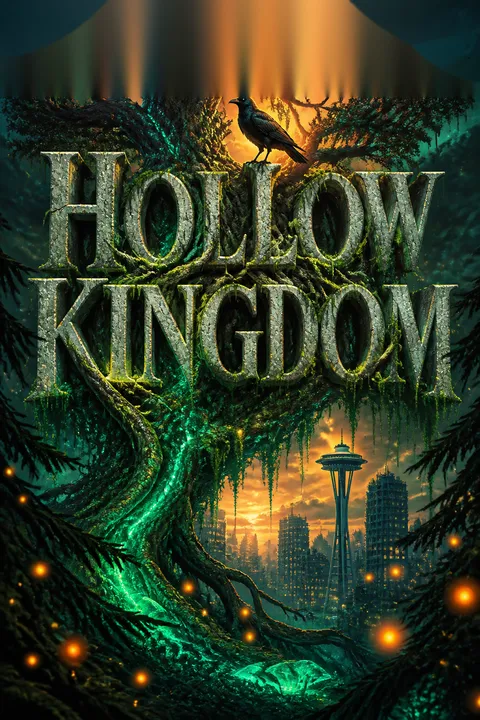
S.T., a domesticated crow living with his human Big Jim and the dog Dennis in Seattle, begins to notice strange changes. Big Jim's behavior deteriorates—he forgets things, becomes lethargic, and then, shockingly, his eyeball falls out. S.T. tries to care for him, but Big Jim withdraws, succumbing to a mysterious illness that leaves him hollow and unresponsive. The world outside grows eerily silent: no mail, no neighbors, no cars. S.T. tunes into Aura, the animal world's network, and senses a deep, unnatural quiet. The signs are everywhere, but S.T., loyal and naive, clings to hope that things will return to normal. The collapse of human society is slow, surreal, and deeply personal, seen through the eyes of a crow who loves his human family.
The Wait and the Guilt
Winnie the Poodle, left alone in a mansion, waits endlessly for her beloved human, the Walker, to return. Her days are filled with longing, guilt, and regret—she remembers her escapes, her impatience, and her unkindness to her brother Spark Pug. The house is empty, the world outside is silent, and Winnie is haunted by the feeling that she did something wrong. She waits, as she was trained to do, but the wait becomes unbearable. The sadness and guilt are suffocating, and as hope fades, Winnie prepares to say goodbye to the world she once knew, her story echoing the fate of countless domesticated animals left behind.
Eyeball, Aura, and Aftermath
With Big Jim lost to illness and Dennis depressed, S.T. takes on the role of caretaker. He braves the outside world, discovering the city is abandoned and nature is reclaiming the streets. Tuning into Aura, he finds silence—a sign of disaster. His reconnaissance leads him to a crashed bus and a church filled with death, and then to a Walgreens where he encounters humans transformed into mindless, violent creatures. The horror intensifies when he witnesses a neighbor, Nargatha, eating her own dog. S.T. realizes the sickness is everywhere, and the world he knew is gone. He returns home, desperate to save Dennis and Big Jim, but the old life is irretrievable.
Predators and New Orders
Genghis Cat, a self-important feline, observes the changes with predatory glee. With humans incapacitated, cats and other predators roam freely, hunting and claiming territory. Genghis leaves his home, pillages, and fathers kittens, reveling in the new order. Meanwhile, S.T. struggles to care for Dennis and Big Jim, but nothing works. The sadness is overwhelming, and Dennis succumbs to depression. S.T. tries everything—Cheetos, games, affection—to revive him. The world is now ruled by instinct, hunger, and survival, and the domesticated are left to fend for themselves or perish.
Project Happiness
S.T. launches "Project Happiness" to save Dennis from dying of grief. Through patience, treats, and play, he slowly brings Dennis back from the brink. The two form a deeper bond, relying on each other for comfort and survival. But Big Jim is lost, transformed into a hollow, dangerous shell. When S.T. tries to use Big Jim's phone to call for help, it triggers a violent attack. Forced to flee, S.T. and Dennis leave their home behind, stepping into a world that is wild, unpredictable, and terrifying. Their journey begins, driven by the hope of finding answers and allies.
Into the Unknown
S.T. and Dennis venture into the city, navigating streets overrun by nature and haunted by the hollowed humans. S.T. seeks information through Aura, learning of "The One Who Opens Doors" and rumors of surviving humans. They encounter dangers—predators, aggressive crows, and a grizzly bear—but also moments of beauty and camaraderie. The animal world is abuzz with news, warnings, and legends. S.T. realizes that survival now depends on listening, adapting, and forging new alliances. The search for Onida, a mysterious oracle, becomes their guiding purpose.
Messages from Afar
Across the world, animals sense disaster. In South Korea, birds and mammals flee a nuclear disaster. In Greenland, polar bears mourn lost cubs and shrinking ice. In Dubai, camels watch as sand reclaims the city. In Thailand, elephants break free and liberate other animals. These vignettes show the global scale of the collapse, the interconnectedness of all life, and the resilience of nature. The animal perspective reveals both the tragedy of human extinction and the hope of renewal.
The City Unravels
S.T. and Dennis travel through a city transformed. Iconic places—Gas Works Park, Pike Place Market, the Seattle Aquarium—are scenes of devastation, overrun by hollowed humans and wild animals. S.T. witnesses the horror of humans eating each other, animals escaping captivity, and nature reclaiming the urban landscape. The duo narrowly escapes danger, relying on wit and luck. The city is both familiar and alien, a testament to the fragility of civilization and the unstoppable force of nature.
The Oracle of the Deep
At the Seattle Aquarium, S.T. meets Onida, a giant Pacific octopus and the legendary oracle. Onida explains that humanity's downfall was inevitable—a result of their disconnection from nature, addiction to technology, and refusal to evolve. The sickness is global, and the extinction of humans is a natural correction. Onida urges S.T. to help the domesticated animals, the last legacy of humanity. The encounter is devastating but clarifying, giving S.T. a new sense of purpose: to save the domestics and honor the memory of the MoFos.
Leaving Home Behind
Armed with Onida's wisdom, S.T. resolves to rescue the abandoned pets and domesticated animals trapped in homes and shelters. He and Dennis become liberators, using their unique skills to break into houses and free the forgotten. Along the way, they encounter other survivors—crows, dogs, cats, and even an orangutan who can open doors. The mission is dangerous and heartbreaking, but it gives S.T. and Dennis a renewed sense of meaning. Their actions inspire other animals to join the cause, forming a new kind of community.
The World Without Humans
As S.T. and Dennis free more domestics, they witness the rise of new predators and hybrid creatures—rabid animals, monstrous weavers, and evolving hollows. The animal world is in flux, with alliances forming and wars brewing over territory. The domestics struggle to adapt, some thriving, others succumbing to despair or predation. S.T. learns that survival requires not just strength, but cooperation, ingenuity, and the willingness to change. The world is both more dangerous and more wondrous than ever before.
Seeking the Searched For
S.T. and Dennis, guided by Aura and the wisdom of the Mother Trees, seek out "The One Who Opens Doors"—a being rumored to have the power to free the trapped and lead the domestics. Along the way, they encounter a cast of animal allies and adversaries, each with their own agendas and philosophies. The journey is a test of faith, resilience, and identity, forcing S.T. to confront his own nature as a crow raised by humans. The search becomes a metaphor for finding purpose in a world without masters.
The One Who Opens Doors
The legend of The One Who Opens Doors is revealed to be an orangutan, a survivor with the intelligence and dexterity to free animals from human-made prisons. The orangutan and his kin become crucial allies, helping S.T. and the animal coalition rescue the domestics and defend against new threats. Their presence is a symbol of evolution, adaptability, and the blurring of boundaries between wild and tame. The alliance of crows, dogs, cats, and apes marks the beginning of a new order, one built on cooperation and shared survival.
The Domestics' Dilemma
S.T. and his allies face the heartbreaking reality that not all domestics can be saved. Some are too far gone, others trapped by insurmountable barriers. The animals must learn to use tools, break glass, and outwit predators. The code of murder—crow loyalty and collective action—becomes the guiding principle. The domestics who survive are those who adapt, form new packs, and embrace their wildness. The mission is both a tribute to the lost MoFos and a blueprint for the future.
The Mother Trees' Gift
The Mother Trees, ancient sentinels of the natural world, share their wisdom with S.T. and the animal coalition. Through Web, the underground network of roots and fungi, they teach the importance of connection, memory, and resilience. The trees remind the animals that life is a mosaic of pain and beauty, and that survival depends on embracing change and supporting one another. The gift of awareness transforms S.T., helping him accept his identity and role as a bridge between worlds.
The Zoo Unleashed
With the collapse of human control, zoo animals escape and establish new territories. Predators like tigers, wolves, and Komodo dragons vie for dominance, while domestics and their allies struggle to survive. The zoo becomes a microcosm of the new world order, where intelligence, adaptability, and alliances determine fate. S.T. and his coalition must navigate shifting loyalties, deadly threats, and the ever-present danger of extinction. The struggle for survival is both brutal and inspiring.
Evolution and Extinction
As the virus mutates, some humans evolve into monstrous hybrids—birdlike, spiderlike, or otherwise transformed. These new creatures threaten the balance of the animal world, forcing unprecedented cooperation among former enemies. The extinction of humanity is not the end, but a turning point in the story of life. S.T. witnesses the emergence of new forms, the persistence of old instincts, and the relentless drive to survive. The world is in the midst of a great transformation, and only the adaptable will endure.
The Black Tide
The journey takes a heavy toll on S.T. and his companions. They lose friends—Cinnamon, Dennis, and others—to disease, predation, and the chaos of the new world. Grief threatens to overwhelm them, but the code of murder and the memory of loved ones provide strength. S.T. learns that to survive is to carry the stories of the lost, to honor their memory by living fully. The Black Tide of despair is real, but it can be resisted through connection, purpose, and hope.
The Code of Murder
The crows' code of murder—unwavering loyalty to the group—becomes the foundation of the new society. S.T. is finally accepted as one of their own, and the alliance of birds, dogs, cats, and apes grows stronger. Together, they defend their territory, rescue the domestics, and confront new threats. The code is not just about survival, but about meaning, belonging, and the creation of a new kind of family. The animals learn that their greatest strength lies in unity and mutual support.
War for the Land
As the animal coalition grows, so do the challenges. Predators vie for dominance, hybrid monsters threaten all, and the struggle for territory becomes a war. S.T. and his allies must use all their ingenuity, courage, and cooperation to defend their home and ensure the survival of the domestics. The war is brutal, but it is also a crucible that forges new bonds and reveals the true potential of the animal world. The outcome will determine the shape of the new kingdom.
The Last Goodbye
The death of Dennis is a devastating blow to S.T. and the community. The animals gather to mourn, honoring Dennis with offerings and stories. The elephants, symbols of memory and endurance, help carry the weight of grief. S.T. reflects on the lessons of Big Jim, Dennis, and all the lost MoFos. The act of remembering becomes an act of resistance against oblivion. The legacy of love, loyalty, and hope endures, even as the world changes beyond recognition.
A New Beginning
In the aftermath of war and loss, S.T. and his allies build a new society. They rescue a human infant, Dee, and vow to protect and teach her. The animals embrace their roles as keepers of memory, guardians of the domestics, and stewards of the land. The story ends with a sense of renewal and possibility—a new chapter in the history of life on earth. S.T., once a crow caught between worlds, becomes The One Who Keeps, a symbol of adaptation, resilience, and the enduring power of connection.
Analysis
A modern fable of extinction, adaptation, and hopeHollow Kingdom is a darkly comic, deeply moving meditation on the end of human civilization and the resilience of the natural world. By telling the story through the eyes of a domesticated crow, the novel exposes the absurdities and wonders of human life, the dangers of disconnection, and the necessity of adaptation. The collapse of society is not just a tragedy, but an opportunity for renewal—a chance for animals (and by extension, all life) to reclaim agency, form new communities, and write new stories. The novel critiques humanity's addiction to technology, its arrogance, and its failure to heed the warnings of nature, but it also celebrates the creativity, love, and loyalty that define the best of the species. The code of murder—loyalty to the group—becomes a model for survival in a world without masters. Ultimately, Hollow Kingdom is a call to embrace change, honor the past, and find hope in connection, cooperation, and the enduring power of life. It is a story about what it means to be alive, to grieve, to adapt, and to keep the flame of memory burning in the darkness.
Review Summary
Hollow Kingdom receives generally positive reviews, averaging 3.83/5 stars. Readers frequently praise its unique premise, humor, and beautiful prose narrated by S.T., a foul-mouthed domesticated crow navigating a zombie apocalypse. Many highlight its emotional depth, originality, and love of nature. Common criticisms include pacing issues in the second half, repetitive plot points, juvenile humor, and an underwhelming explanation for the apocalypse (cell phones). Despite mixed opinions on structure, most readers find S.T. and Dennis's relationship compelling, and many recommend it as a refreshingly creative take on post-apocalyptic fiction.
People Also Read
Characters
S.T. (Shit Turd)
S.T. is a domesticated American crow raised by Big Jim, who taught him human ways and language. His identity is split—he loves humans (MoFos) and yearns to belong, but is rejected by wild crows for his closeness to people. S.T. is witty, irreverent, and deeply loyal, but also naive and prone to denial. His journey is one of self-discovery, as he learns to accept his crow nature while honoring his human upbringing. S.T. evolves from a caretaker and outsider to a leader and bridge between species, ultimately embracing his role as The One Who Keeps—the keeper of stories, hope, and the legacy of both humans and animals.
Dennis
Dennis is Big Jim's dog and S.T.'s closest companion. He is simple, affectionate, and deeply attached to his human and crow family. When Big Jim succumbs to the sickness, Dennis falls into depression, nearly dying of grief. S.T.'s efforts to revive him forge a powerful bond between them. Dennis is not clever, but his loyalty, courage, and resilience make him a hero in his own right. His journey ends in sacrifice, but his spirit lives on as a model of unconditional love and the enduring power of companionship.
Big Jim
Big Jim is S.T.'s human, a rough-edged, blue-collar man with a big heart and a troubled past. He raises S.T. as a surrogate child, teaching him language, humor, and the joys of human life. Big Jim's decline into sickness and eventual transformation into a hollow is both tragic and symbolic—the loss of humanity's best qualities. Through S.T.'s memories, Big Jim remains a guiding presence, embodying the values of loyalty, love, and the importance of chosen family. His absence is a wound that shapes S.T.'s journey.
Kraai
Kraai is the head of the college crows, a murder that initially ostracizes S.T. for his human ties. He is intelligent, diplomatic, and fiercely protective of his kind. Kraai's willingness to forgive and embrace S.T. marks a turning point in the story, as the code of murder—loyalty to the group—becomes the foundation of the new society. Kraai is both a rival and a mentor, challenging S.T. to accept his identity and rise to leadership. His vision and adaptability are crucial to the survival of the animal coalition.
Ghubari
Ghubari is a therapy bird with a vast vocabulary and deep understanding of both human and animal worlds. He survives the collapse by adapting and using his intelligence to help others. Ghubari is a confidant and advisor to S.T., offering perspective, comfort, and hard truths. His ability to mimic human voices and recall conversations makes him a living archive of the lost world. Ghubari's presence is a reminder of the power of language, memory, and the importance of bearing witness.
Pressa
Pressa is a female crow with a burn-scarred wing, known for her resilience and compassion. She tends to S.T.'s injuries and becomes a close ally, embodying the strength and adaptability of females in the animal world. Pressa is practical, nurturing, and unafraid to challenge S.T. or the group. Her journey is one of healing—both physical and emotional—and she represents the possibility of trust, forgiveness, and new beginnings in a world marked by loss.
Onida
Onida is a giant Pacific octopus who serves as the story's oracle, revealing the truth about humanity's extinction and the need for balance. She is ancient, enigmatic, and deeply connected to the rhythms of the natural world. Onida's perspective is both comforting and unsettling—she sees extinction as a natural correction, not a tragedy. Her guidance sets S.T. on his mission to save the domestics and accept his place in the new order. Onida embodies the themes of adaptation, interconnectedness, and the inevitability of change.
Genghis Cat
Genghis Cat is a tabby who revels in the collapse of human society, claiming territory, hunting, and fathering kittens. He is arrogant, cunning, and utterly self-sufficient, representing the wildness that emerges when domestication ends. Genghis is both comic relief and a reminder of the dangers that lurk in the new world. His relationship with the orangutans and other animals evolves from rivalry to grudging respect, illustrating the shifting dynamics of power and survival.
The One Who Opens Doors (Orangutan)
The orangutan, known as The One Who Opens Doors, is a survivor with the intelligence and dexterity to free animals from human-made prisons. He and his kin become crucial allies in the mission to rescue the domestics. The orangutan represents the blurring of boundaries between wild and tame, the power of evolution, and the importance of cooperation. His presence is a turning point, enabling the animal coalition to overcome obstacles and build a new society.
Cinnamon
Cinnamon is a Pomeranian rescued by S.T. and Dennis from a sealed house. She is traumatized but determined to survive, symbolizing the plight of countless domesticated animals left behind. Cinnamon's journey is brief but poignant—she finds freedom, forms bonds, and ultimately sacrifices herself to save others. Her story is a testament to the courage and adaptability of the smallest and most vulnerable.
Plot Devices
Animal Perspective and Anthropomorphism
The novel's primary device is its animal narrator—S.T.—whose unique perspective allows for both humor and pathos. Anthropomorphism is used to bridge the gap between animal and human experience, making the collapse of civilization both relatable and strange. The animal perspective exposes the absurdities, beauties, and tragedies of human life, while also highlighting the intelligence, agency, and emotional depth of non-human creatures.
Multiple Communication Networks (Aura, Echo, Web)
The story introduces Aura (the animal world's information network), Echo (the ocean's communication), and Web (the underground fungal network). These systems parallel the human Internet, offering a natural alternative to technological connectivity. They serve as narrative devices for spreading information, rumors, and warnings, and symbolize the interconnectedness of all life. The breakdown of human communication is contrasted with the resilience of nature's networks.
Apocalypse as Evolutionary Correction
The collapse of human society is framed not as a supernatural event, but as an evolutionary correction—a response to overreach, disconnection from nature, and addiction to technology. The sickness that hollows out humans is both literal and metaphorical, representing the dangers of isolation, consumption, and refusal to adapt. The rise of new species and hybrids underscores the theme of evolution, survival, and the inevitability of change.
Quest Structure and Hero's Journey
S.T.'s story follows the classic hero's journey: a call to adventure, trials and allies, encounters with oracles and mentors, moments of despair, and ultimate transformation. The quest to save the domestics becomes a metaphor for finding purpose, identity, and community in a world without masters. The journey is both external (rescuing animals, fighting predators) and internal (accepting one's nature, grieving loss, embracing change).
Symbolism of Domestication and Wildness
The novel explores the boundaries between domesticated and wild animals, using their struggles as a lens for examining identity, adaptation, and survival. Domestics must learn to embrace their wildness to survive, while wild animals must adapt to new challenges and alliances. The code of murder (crow loyalty) becomes a model for building a new society, blending the best of both worlds.
Foreshadowing and Interconnected Vignettes
Short chapters from the perspectives of animals around the world—polar bears, camels, elephants, cows—foreshadow the global scale of the collapse and the resilience of life. These vignettes reinforce the interconnectedness of all beings and the universality of loss, adaptation, and hope.
Download PDF
Download EPUB
.epub digital book format is ideal for reading ebooks on phones, tablets, and e-readers.








































