
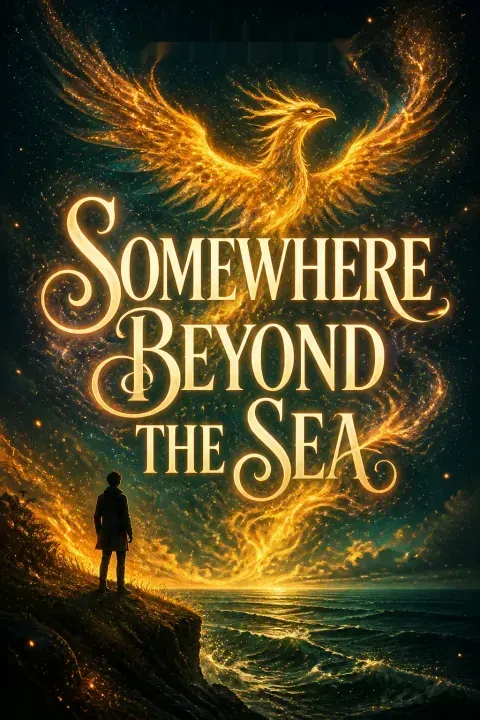


Plot Summary
Prologue
Arthur Parnassus1 returns to Marsyas Island after 28 years, having purchased the orphanage where he was abused as a child. The ferryman Merle16 warns him of ghosts. The island's magic stirs: trees move aside, a ghostly voice of his former master echoes, and a tiny yellow flower growing through a porch step gives him hope.
Zoe Chapelwhite,3 an island sprite, appears, initially hostile but soon joins him. They spend a year renovating the house. Arthur1 types a proposal to the Department in Charge of Magical Youth, requesting to open a home for magical children. Months later, a representative named Charles Werner visits, and soon after, the first child arrives. Arthur1 sings 'Somewhere Beyond the Sea.'
The prologue establishes Arthur's foundational trauma and his determination to reclaim the site of his abuse. The yellow flower symbolizes resilience—a tiny, persistent life that defies decay. Arthur's return is both an exorcism of the past and a vow to create the home he never had. His partnership with Zoe, born from shared survivor's guilt and a mutual desire to protect, sets the stage for the novel's central themes of found family, healing, and turning pain into purpose. The arrival of the first child transforms the house from a monument to suffering into a promise of new beginnings.
Happy Birt, Papa
Arthur1 wakes late to a silent house and panics. He and Linus2 discover the children have prepared a birthday breakfast for Linus,2 calling it a 'birt,' and a farewell party. They have made a 'HAPPY BIRT' banner, bloody bacon, and a fry-up. After the meal, the children reveal a gift: a circular photo arrangement showing Linus2 with each child, anchored by a poem from Sal7 about being seen.
An empty frame is reserved for David,10 a child they hope to welcome. The family discusses Arthur's1 upcoming government testimony, and the children insist on listening to the radio broadcast. Arthur1 explains generational trauma, promising to use his voice for them.
This scene crystallizes the family's bond through domestic chaos. The children's messy, earnest efforts to honor Linus demonstrate how deeply they have internalized Arthur's lessons about love and expression. Sal's poem is a manifesto against erasure, demanding visibility for all identities. The empty frame for David prefigures the family's expansive definition of kin, already extending love to someone unknown. Arthur's openness about his traumatic past and his testimony models vulnerability, reinforcing that the family's strength lies in shared burdens rather than solitary endurance.
Seeds in the Rain
On the journey to the city, Linus2 takes Arthur1 to his former house on Hermes Way, a gray neighborhood under constant rain. Linus2 sprinkles magical seeds from Phee6 and Talia5 onto the barren flower beds, and instantly sunflowers and vibrant blooms burst forth, transforming the landscape.
At their hotel, Linus2 discovers a listening device hidden in the bathroom light fixture. Rather than confront it, he and Arthur1 dance together, letting whoever is listening hear their joy. The act turns a privacy violation into a performance of love, deliberately giving the surveillance something beautiful to witness.
The seed-planting ritual is Linus's personal closure, using the children's magic to heal a site of his own loneliness. The instant bloom symbolizes how love and community can radically alter even the bleakest environments. The bug discovery escalates the stakes, revealing the government's willingness to intrude on intimacy. Arthur and Linus's decision to dance is a subtle act of resistance: they refuse to be shamed into silence or fear. Instead, they weaponize joy, flooding the surveillance feed with proof that they are uncontrollably, defiantly happy.
Rowder's Interrogation
At the Council of Utmost Importance, Arthur1 details his childhood: six months imprisoned in a cellar, beaten and starved. Jeanine Rowder11 counters by accusing him of seducing DICOMY employees, training the children as soldiers, and illegally relocating magical people. She reveals knowledge of David,10 a child never publicly named.
Provoked, Arthur1 unleashes the phoenix, nearly losing control until Linus2 throws the mousepad — a picture of a tropical beach — to ground him. Arthur1 presents the shattered bug, accusing Rowder11 of spying. Rowder11 announces she is now interim head of DICOMY and will send an inspector12 to the island. Arthur1 and Linus2 walk out.
Rowder's cross-examination mirrors moral panic rhetoric: the victim becomes the threat. She exploits Arthur's trauma to paint him as manipulative and dangerous. Arthur's phoenix emergence, while nearly catastrophic, is an assertion of identity that the system cannot ignore. Linus's intervention with the mousepad—an object symbolizing escape from a colorless world—anchors Arthur to his new reality: a family that pulls him back from destruction. The hearing exposes the government's performative concern, revealing that their true goal is control, not child welfare.
A Ring of Seven Stones
That night, Linus2 proposes with a ring crafted by Talia:5 seven cerulean stones, one for each child. Arthur1 accepts. At the safe house, David,10 a yeti child, performs an elaborate detective play with costume changes and a monster, testing whether he must audition for acceptance. Arthur1 and Linus2 tell him he gets to choose them.
David10 asks hard questions about food and punishment. Arthur1 shows him his fire; David10 responds with ice, mirroring Arthur's1 power. David10 recalls his mother's last words: 'Run.' Later that night, a phone call confirms David10 has chosen to come with them. He boards the train, filled with wonder and nerves.
The proposal solidifies the romantic and parental union, with the ring symbolizing the children's integral role—they are not afterthoughts but foundational. David's performative testing is a survival mechanism; his theater is a way to control his own narrative when others have always written it for him. The fire and ice mirroring establishes David as Arthur's symbolic kin, both possessing elemental powers that others fear. By giving David the power to choose, Arthur subverts the institutional model of placement, recognizing the child's agency as sacred.
Ice Cubes on the Floor
David10 arrives on the island via a salt road created by Zoe.3 The children greet him with a welcome banner. He nearly battles Calliope, the cat, but backs down. The family leads him to his new room: the former cellar where Arthur1 was imprisoned, now renovated with teal walls, a glowing aurora borealis ceiling, and freezing temperatures.
David10 weeps ice cubes when he understands it is his alone. That night, all the children sneak into Arthur1 and Linus's2 bed, piling together. Talia5 loudly demands the presents they forgot to buy. David's10 wariness begins to thaw.
The transformation of the cellar is the novel's central metaphor made literal: the site of Arthur's deepest trauma becomes a sanctuary for a new child. The aurora ceiling, painted by the children, infuses the space with collective care. David's ice-cube tears are a fantastical expression of emotional release, showing that grief and joy can physically manifest. The family pile-on afterward affirms that safety is not solitary but communal. This reclamation of space demonstrates that healing does not erase scars but builds new life over them.
Captain David Commands
For Chauncey's9 Saturday adventure, a rowboat is transformed into a 'yacht.' David10 is appointed captain, wearing a special hat. They sail, and Chauncey9 reveals he can talk to fish, summoning a flat fish named Frank. When the wind dies, Lucy4 accidentally creates a massive tidal wave that propels the boat back to shore.
Chauncey9 inflates as a parachute, and Theodore8 breathes green fire to keep him aloft. After the chaotic landing, David's10 confidence grows. However, Lucy4 feels hurt that Arthur1 told David10 he could be a 'monster' while telling Lucy4 he could not, creating a private tension Arthur1 must later address.
This adventure functions as a training ground for collective problem-solving. David's captaincy integrates him through responsibility, not just affection. Lucy's tidal wave, while destructive, is ultimately a tool for fun rather than harm, signaling his growing control. The conflict over the label 'monster' introduces a philosophical nuance: what if reclaiming a pejorative is an individual choice? Arthur's later conversation with Lucy affirms moral relativism—David's desire to scare stems from a different place than Lucy's impulses—and models responsive parenting over rigid rules.
Fearless Marblemaw
Harriet Marblemaw,12 a tall, thin woman in a dramatic feathered coat, arrives on the island. She announces she cannot feel fear. She inspects the house, criticizes lesson plans, and demands interviews. The children try to rattle her: Lucy4 offers tea made with bee vomit, Talia5 mentions poison, and a scorpion crawls on her collar.
Marblemaw12 crushes the scorpion without flinching and assigns 'courtesy points' for perceived good behavior. She questions David's10 age. Despite Sal's7 insistence that they should not hide David,10 the family poses him as an adult, with Lucy4 magically creating fake photographs to support the lie.
Marblemaw's fearlessness is not bravery but a psychological aberration that disallows empathy. Her destruction of the scorpion mirrors Rowder's casual violence toward what she deems beneath notice. The 'courtesy points' system satirizes behaviorist conditioning and bureaucratic control. The children's initial pranks fail because Marblemaw is emotionally impenetrable. The fake photographs, while clever, underscore the absurdity of needing false evidence to prove a child's right to exist. Sal's insistence on visibility, however, plants the seed for later defiance.
Mustaches and Graves
Over several days, the children escalate their defiance. Lucy4 conjures a permanent, regrowing handlebar mustache on Marblemaw's12 face. Talia5 digs a grave in the garden and offers to bury her. Chauncey9 accidentally sneeze-inks her entire body black. Theodore8 steals a gold button from her coat.
Marblemaw12 remains unshaken, dispensing 'courtesy points' as if the pranks are teaching moments. She persists with her inspection, questioning lesson plans, criticizing Talia's5 beard, and suggesting it be shaved. The children's attempts to unsettle her fail, but their unity strengthens. They adapt their strategy from irritation to open protection of each other.
The pranks represent a child's logic of resistance—using absurdity to undermine authority. Marblemaw's unresponsiveness makes her a Kafkaesque adversary, immune to human connection or shame. Her suggestion that Talia shave her beard is an attack on Gnomish identity, revealing that her 'concern' is merely control dressed as propriety. The children's shift from pranks to active defense, particularly in defending Talia's beard, marks their growing political consciousness. They are learning that the fight is not just about pranks but about the right to define themselves against external standards.
A Handful of Yeti
During a trip to the village record shop, David10 playfully chases owner J-Bone.14 Marblemaw12 seizes David's10 wrist, bruising him and shouting that he is an animal. The children instantly surround her: Phee6 threatens to turn her into a tree, Sal7 shields David,10 and the entire village — humans and magical beings alike — forms a protective barrier.
Arthur1 warns Marblemaw12 she has made an enemy. Back on the island, Marblemaw12 isolates in the guesthouse. The incident galvanizes the family's resolve; they will no longer merely endure but actively fight. David10 begins to understand he is worth defending.
Marblemaw's physical assault makes abstract oppression tangible. The bruise on David's wrist is not just an injury but a violation of the sanctuary the family has built. The village's immediate solidarity demonstrates that the family's values have taken root in the broader community—a crucial political development. David's whimpering under his 'monster' persona reveals the real cost of dehumanization. Arthur's restraint here, choosing warning over immediate retaliation, shows his growth from reactive fury to strategic protection.
Rowder's Plot Unmasked
Arthur1 follows Marblemaw12 to the beach and overhears her secret communication with Rowder.11 Rowder11 reveals her plan: legally remove Lucy4 from the island, then threaten the other children to compel his obedience, turning his unlimited power into a government weapon. Marblemaw12 shows faint hesitation but ultimately complies.
Arthur's1 suppressed fury erupts. That night, the phoenix bursts through his bedroom window and explodes over the sea. He plummets into the ocean, where Frank the fish and his school save him and wash him ashore. Linus2 finds him on the beach and helps him weep for the first time.
Rowder's plan is chillingly pragmatic: love as a control mechanism. It echoes real-world policies that separate families to enforce compliance. Arthur's phoenix explosion is a physical manifestation of decades of unprocessed trauma, a necessary destruction before rebuilding. That he is rescued by Frank, a fish named by Chauncey, ties his survival directly to the children's love and the interconnectedness of their magical world. Linus's presence on the beach provides the emotional container for Arthur's first true breakdown, signaling that he no longer has to carry his pain alone.
We Are Your Kids
The next morning, Sal7 confronts Arthur1 about always shouldering burdens alone. He argues the children are already in the crosshairs and deserve agency in their defense. He notes that Arthur1 cannot fully understand his experience as a Black, magical person navigating multiple worlds.
The children collectively call Arthur1 'Dad' for the first time and Linus2 'Papa.' Sal7 says they will fight together. Arthur1 realizes he must trust them. They devise a plan to force Marblemaw's12 departure through escalating demonstrations of power without violence, calling it 'stabbing with kindness.'
This pivotal scene redefines Arthur's fatherhood from protector to collaborator. Sal's intersectional critique acknowledges that even loving parents have blind spots shaped by their own identities. The naming of 'Dad' and 'Papa' is a verbal contract of belonging, earned through years of unconditional care rather than biology or paperwork. The 'kindness stabbing' strategy reframes resistance as a moral choice, not a surrender to rage. It reflects the children's maturity: they want to win, but they want to win ethically.
Zoe the Queen
After Arthur1 resigns from DICOMY, Zoe3 appears in armor of seashells and a crown of pearls and conch shell, declaring herself the Sprite of Oceans and Queen of Marsyas. She carves a nautilus shell into the earth, then banishes Marblemaw12 by shooting a shell through her forehead, permanently exiling her from the land.
Lucy4 teleports Marblemaw's12 belongings. Zoe3 declares Marsyas will no longer hide. Combining their powers, the family triggers a massive transformation: the island begins growing, reconnecting to the mainland as it once was centuries ago, expanding fivefold.
Zoe's ascension reframes the entire conflict from personal to systemic. Her hidden identity as heir to a mystical lineage symbolically reclaims history from erasure. The shell armor and crown, crafted from natural materials, represent authority grounded in the land rather than human law. The banishment, though supernatural, is non-lethal, upholding the family's moral code. The island's physical transformation is a collective act of creation, blending nature, magic, and familial love to remake the world.
Rowder's Army Dismissed
Rowder11 returns with a dozen black sedans and armed men to seize the children. The villagers — led by J-Bone,14 Merle,16 and hotel staff — form a barrier. Lucy4 offers Rowder11 insight into her father's murder, suggesting her hatred stems from unprocessed grief. She tries to slap him; he teleports away.
Zoe3 presents an ancient royal decree proving Marsyas's sovereignty. She banishes Rowder11 and all DICOMY personnel with seashells. Lucy4 teleports them directly to the prime minister. Reporters capture everything, broadcasting the government's humiliation worldwide. The village erupts in cheers.
This climax tests the community's solidarity and moral courage. Lucy's empathy for Rowder's pain—despite her attack on him—demonstrates his moral superiority, a profound reversal of the 'Antichrist' label. The ancient deed provides legal legitimacy, neutralizing the government's strongest weapon: the law itself. Combining banishment with teleportation solves the crisis without bloodshed, rejecting both submission and violent revolution. The presence of reporters ensures the world witnesses the truth, flipping the state's surveillance apparatus back on itself.
Marsyas Reborn
In the following months, Marsyas becomes a sanctuary for magical refugees. Doreen Blodwell,15 a secret satyr, is appointed head of DICOMY and publicly reveals her horns, signaling reform from within. A selkie psychotherapist arrives to help the family process their trauma.
During an ordinary dinner, David10 accidentally calls Linus2 'Papa' while asking for more food. Linus2 bursts into happy tears. The children and Arthur1 surround him. The once-empty frame in Linus's2 birt gift is finally filled with a picture of the embrace. Arthur1 reflects that the work is ongoing but the hope is solid.
The rebuilding phase demonstrates that victory requires ongoing, unglamorous work. Doreen's appointment and public revelation represent systemic change from within, while the therapist's arrival signals the family's commitment to mental health as a communal resource. David's accidental 'Papa' is a moment of unconscious belonging, far more powerful than any performed declaration. The filled picture frame closes the visual loop that began months earlier, making the gift complete. The narrative balances realistic caution with earned optimism.
David Marries His Dads
On a crisp autumn day, David10 officiates the wedding on the beach. He mixes sincere words about found family with shameless promotions for his monster-scaring services. The children, in matching suits, stand as attendants.
Arthur1 and Linus2 exchange vows: Arthur1 calls Linus2 the sunlight dispelling lifelong rain; Linus2 says Arthur1 gave him a reason to hope. David10 finally calls Arthur1 'Dad.' The phoenix chirps inside Arthur's1 chest. The entire village celebrates with a feast. Merle16 dances a jig. The ceremony is chaotic, tender, and utterly their own.
The wedding formalizes the family's identity before the community. David's role as officiant, complete with his unique personality, demonstrates unconditional acceptance of his whole self. The vows return to the novel's core symbols—sunlight, fire, flowers—grounding the emotional climax in the imagery established from the prologue. The phoenix's chirp represents Arthur's internal peace; he no longer wars with his own nature. The celebration's chaotic joy affirms that this family's love is not quiet or orderly, but loud, messy, and world-altering.
Epilogue
Months later, Arthur1 walks the expanded peninsula, greeting new arrivals. He meets Gayle, a refugee mother with a magical child, who will become the community's solicitor. A psychotherapist named a selkie has set up practice. Doreen15 sends a note promising slow but steady reform.
The children thrive: Sal7 helps manage island affairs, Lucy4 teleports for fun, and David10 performs his plays. Arthur1 and Linus2 remain happily married. Arthur1 reflects that hope is not only a feather but also fire — and it never stops singing.
The epilogue extends the happy ending into a sustainable, imperfect future. The new arrivals show that sanctuary is not a fairy-tale conclusion but an ongoing commitment. The therapist and solicitor represent practical tools for healing and justice, grounding the magical victory in real-world structures. Arthur's revised metaphor—hope as fire—echoes his phoenix nature, asserting that survival and warmth coexist. The ending refuses total resolution, acknowledging that bigotry will not vanish overnight, but it affirms that the community is prepared to meet it with love and defiance.
Analysis
Somewhere Beyond the Sea is a novel about reclamation: of land, of identity, of family. Arthur's1 journey from a traumatized orphan to a father mirrors the island's transformation from a prison to a sovereign sanctuary. The government, embodied by Rowder11 and Marblemaw,12 pathologizes difference while claiming to protect, a reflection of real-world attacks on queer and trans communities. The novel argues that healing is not solitary but communal; Arthur1 learns to share his pain, and the children's collective strength drives the plot toward justice. The children's relationship with the word 'monster' — Lucy4 choosing joy, David10 choosing to scare without harming — becomes a central metaphor for marginalized people reclaiming narratives thrust upon them. The final wedding and the epilogue's ongoing sanctuary work affirm that victory is not a single event but a continuous practice of care. The phoenix's fire and the ocean's depths become one, symbolizing that from destruction and suffering, new life — and new love — can emerge. Above all, the novel insists that love is not quiet: it is loud, it is fierce, and it can reshape the world.
Review Summary
Somewhere Beyond the Sea received mixed reviews. Many praised its heartwarming portrayal of found family and LGBTQ+ themes, while others criticized it as heavy-handed and preachy. Some felt it was unnecessary as a sequel and lacked the magic of its predecessor. The book's political messaging and use of Indigenous trauma as inspiration were controversial topics. Readers appreciated the characters' growth and humor but found the plot lacking. Overall, opinions were divided on whether the book lived up to expectations.
People Also Read


Characters
Arthur Parnassus
Phoenix; father; orphanage founderA phoenix in his mid-forties, the last of his kind. Arthur survived childhood abuse in a DICOMY orphanage and used his settlement money to buy the same island, transforming it into a home for magical children. He is fiercely protective, witty, and carries deep-seated guilt and rage from his past. His journey involves learning to share burdens, trust his children's agency, and accept that he is worthy of love and fatherhood. He marries Linus2 and becomes 'Dad' to seven extraordinary children.
Linus Baker
Former caseworker; father; Arthur's husbandA former DICOMY caseworker in his early forties, Linus left his gray city life to join Arthur1 on Marsyas. Kind, fussy, and surprisingly fierce, he believes ordinary humans possess their own magic. He proposes to Arthur1 and becomes 'Papa' to the children, embracing his role as a nurturing father while learning to accept the chaos of the magical world. His steady presence and emotional honesty help anchor Arthur1 during crises. He symbolizes the transformative power of choosing love over bureaucracy.
Zoe Chapelwhite
Island sprite queen; Arthur's closest friendAn island sprite who hid for centuries after her people were massacred by humans. As the last of her line, she becomes Queen of Marsyas, wielding power over land and sea. She is Arthur's1 oldest friend and a surrogate aunt to the children. Initially burdened by guilt for not preventing Arthur's1 childhood abuse, she finds redemption through actively protecting the new family. Her arc involves reclaiming her heritage and stepping into leadership, culminating in her transformation of the island into a sovereign sanctuary.
Lucy
Antichrist child; chooses goodA seven-year-old boy who is also the Antichrist. Lucy struggles with dark impulses—he can dim the sun, create dimensional rifts, and teleport—but actively chooses to be good, finding joy in music (especially 'dead-people music'), baking, and his family. His immense power grows throughout the story. He is often morbidly humorous, threatening planetary destruction, yet deeply empathetic. He later telepathically connects his siblings and teleports enemies. His moral development centers on using free will for kindness, not coercion.
Talia
Garden gnome; beard-proud; fierce protectorA 264-year-old garden gnome with a luxurious white beard that reflects her gardening prowess. Talia is blunt, pragmatic, and fiercely protective of her family, unafraid to threaten poison or burial. She is an expert horticulturist whose garden is her pride. When the inspector12 suggests she shave her beard to conform to human feminine norms, she digs a grave in response. Her arc involves defending her identity on her own terms and teaching others that Gnomish traditions cannot be separated from their magic.
Phee
Forest sprite; tree-grower; Arthur's flying partnerA young forest sprite who can grow and manipulate plant life, including turning people into trees. Phee is pragmatic, sometimes prickly, but deeply caring. She struggles to accept compliments yet shows love through actions—like growing a tree for Linus's2 birthday or flying with Arthur1 as a phoenix. Her magic is formidable, and she does not hesitate to threaten those who harm her family. Her arc involves opening up emotionally and embracing her role as a protector alongside her vulnerability.
Sal
Shifter boy; writer; family leaderA fifteen-year-old shifter who can transform into a Pomeranian. Sal is a gifted writer and the children's de facto leader. He navigates complex identities: human, magical, and Black. His past abuse in orphanages left him wary, but he has grown into a confident voice who challenges Arthur1 when necessary. He is best friends with Theodore8 the wyvern, and their bond allows both to flourish. His arc culminates in demanding agency for the children and articulating the limits of Arthur's1 understanding, shaping the family's collective resistance.
Theodore
Wyvern; button-hoarder; fire-breatherA wyvern who communicates through clicks, chirps, and growls, understood by the family. He recently learned to breathe green fire. Theodore shares a deep empathetic bond with Sal7 and hoards treasures, especially buttons. Though nonverbal, he is emotionally intelligent and fiercely protective. During the island's defense, his fire-breathing proves crucial. He symbolizes the idea that communication and value take many forms, and that what others might dismiss as strange or primitive is rich and meaningful.
Chauncey
Amorphous blob; bellhop; eternal optimistA green, shapeless being with tentacles and eye stalks. Chauncey is an aspiring bellhop, working at the village hotel under Mr. Swanson. He is relentlessly optimistic, curious, and wears his heart openly. He discovers he can talk to fish (especially a fish named Frank) and produces ink, his 'nocturnal emissions.' Chauncey is the emotional heart of the family, often diffusing tension with humor and sincerity. He embodies the idea that purpose and joy can be found in the seemingly mundane, and that self-worth does not require conventional form.
David
Yeti child; performer; budding sonA ten-year-old yeti covered in long white hair, with retractable claws and ice powers. His parents were killed by hunters. David initially hides behind theatrical performances, wanting to be a 'monster' in a way that scares but doesn't harm. He is wary, carrying deep trauma, but longs for belonging. His ice magic mirrors Arthur's1 fire, marking him as a kindred spirit. His integration into the family—from performing to being named captain, to weeping ice cubes in his new room—culminates in his accidental and then intentional use of 'Papa' and 'Dad.'
Jeanine Rowder
Antagonist; interim DICOMY head; power-hungryThe interim head of the Departments in Charge of Magical Youth and Adults, and a rising politician. Rowder's father was killed by a magical being, fueling her fear and hatred, though she masks it with a polished, syrupy demeanor. She sees Lucy4 as a weapon to be controlled through threats against his siblings, believing this will protect humanity. She represents institutionalized bigotry rooted in personal trauma, never processed into empathy. Her arc ends in banishment and public humiliation, her power dismantled by the very people she sought to dominate.
Harriet Marblemaw
DICOMY inspector; unable to feel fearA tall, gaunt DICOMY inspector who claims to feel no fear. She is a willing tool of Rowder's11 agenda, conducting a hostile inspection of the Marsyas home. Her lack of fear correlates with a lack of empathy; she crushes a pet scorpion, bruises David10, and remains impervious to the children's attempts to unsettle her. However, her inability to be moved also makes her vulnerable to being outmaneuvered, as she cannot anticipate emotional responses. She is banished by Zoe3, her failure a testament to the limits of bureaucratic authority when confronted with genuine communal power.
Helen Webb
Village mayor; human ally; Zoe's partnerThe mayor of the village of Marsyas and Zoe's3 romantic partner. A human woman who once was complicit in the town's prejudice, her 'bubble was popped' by Linus's2 earlier visit, and she became a fierce ally. She runs a gardening store, helps transport supplies, and uses her position to undermine the government's propaganda. She provides practical, cheerful support to Arthur1 and Linus2, and her relationship with Zoe3 models human-magical partnership. Her growth shows that change is possible even for those previously steeped in systemic bias.
J-Bone
Record store owner; slang-speaking allyThe eccentric, slang-spouting owner of the village record store, Rock and Soul. J-Bone is a lanky human who befriends Lucy4 over their shared love of vintage music. He wears loud clothes and is hopeless at card games, accidentally providing the children with weapons like daggers and swords. He represents human acceptance that is enthusiastic rather than patronizing. During the standoff with Rowder11, he stands with the crowd, having been chased by David10 as a 'lifelong dream,' symbolizing his embrace of magical strangeness as joy.
Doreen Blodwell
Secret ally; DICOMY insider; satyr reformerA satyr who formerly worked for Extremely Upper Management, concealing her horns beneath a wig. She secretly aided Arthur1 and Linus2, passing information through an intermediary before the hearing. After Rowder's11 fall, she is appointed head of DICOMY/DICOMA. In her first press conference, she removes her wig, revealing her surgically altered horns—a visible mark of childhood trauma—and promises reform. She embodies the possibility of systemic change from within, using her understanding of the system to dismantle its crueler mechanisms.
Merle
Ferryman; gruff protectorThe gruff, ornery ferryman who transports people between the village and the island. Son of a ferryman Arthur1 knew as a child, Merle is initially greedy and dismissive but gradually becomes a fierce protector of the children. He refuses to ferry reporters to the island and offers to help hide bodies. His transformation represents how the family's love and integrity can win over even the most stubborn individuals, proving that genuine decency can replace learned suspicion.
Plot Devices
The Phoenix
Arthur's firebird identity and powerArthur's1 phoenix form is both an extension of his being and a source of immense power. It emerges at moments of extreme emotion, taking the shape of a massive firebird. The phoenix can fly, breathe fire, and, as Arthur1 learns, detonate and reform. During the hearing, it is provoked as a display of threat; later, Arthur1 loses control and it explodes over the ocean. The phoenix symbolizes Arthur's1 deepest self: his rage, his capacity for destruction, and ultimately his ability to renew. It is also the part of himself he learns to accept and share with his children.
The Listening Device (Bug)
Government spy tool; plot catalystA small electronic bug planted in Arthur1 and Linus's2 hotel room by Rowder's11 agents. Linus2 discovers it in a light fixture and destroys it. The bug reveals the government's willingness to invade privacy and its specific interest in David10, a child not publicly mentioned. Arthur's1 presentation of the shattered pieces during the hearing exposes Rowder's11 methods. The device also drives the plot by confirming that the government views the family as a threat to be monitored, pushing the conflict from political tension to active subterfuge.
The Cellar
Site of Arthur's imprisonment; later David's roomA dark, underground room where Arthur1 was imprisoned and abused as a child. He avoided it for decades after returning to the island. When the family prepares for David's10 arrival, they renovate the cellar into a cool, beautiful bedroom with an aurora borealis ceiling, tailored to a yeti's needs. This transformation is a literal reclamation of trauma: the space that once held Arthur's1 suffering becomes a symbol of safety and belonging for a new child. It demonstrates that healing does not require forgetting but can involve repurposing pain into love.
Zoe's Seashell Magic
Banishment and territorial sovereigntyAs the Sprite of Oceans, Zoe3 wields magic through seashells. She uses them to create a salt road, to banish individuals by passing a shell through their foreheads, and to trigger the island's transformation. The shells represent ancient sprite authority, predating human law. When Zoe3 presents an ancient royal decree and banishes Rowder11 and her men, she uses shells as both weapons and symbols. The magic is tied to the land itself, emphasizing that the island's power is inherent and not granted by any government.
Lucy's Teleportation Power
New ability; ultimate non-lethal solutionMidway through the conflict, Lucy4 discovers he can teleport objects and people. He first uses it to help create the fake photographs of David10, and later to teleport Marblemaw's12 luggage. In the climactic confrontation, he teleports the entire DICOMY force, including Rowder11 and Marblemaw12, directly into the prime minister's office. This power provides a non-violent resolution to the physical threat, removing the antagonists without harm and forcing them to face their own superiors. It represents Lucy's4 growing mastery over his abilities and his choice to use them ethically.
FAQ
Synopsis & Basic Details
What is Somewhere Beyond the Sea about?
- Redemption and Found Family: The story follows Arthur Parnassus as he returns to the site of his childhood trauma, Marsyas Island, aiming to transform it into a home for orphaned magical children. It explores themes of found family, healing from past abuse, and fighting against systemic oppression.
- Magical Children and Their Powers: The narrative centers around six unique magical children, each with extraordinary abilities, and their journey of self-discovery and acceptance. It delves into the challenges and joys of raising children who are different and powerful.
- A Battle Against Prejudice: The book depicts a struggle against a prejudiced government, the Department in Charge of Magical Youth (DICOMY), and its attempts to control and suppress magical beings. It highlights the importance of standing up for one's rights and fighting for a more inclusive world.
Why should I read Somewhere Beyond the Sea?
- Heartwarming Found Family: The book offers a deeply emotional and heartwarming portrayal of a found family, showcasing the power of love, acceptance, and chosen bonds. Readers will connect with the characters and their unique relationships.
- Unique Magical World: T.J. Klune creates a captivating world filled with diverse magical beings, each with their own distinct abilities and personalities. The story blends fantasy with real-world issues, making it both engaging and thought-provoking.
- Themes of Hope and Resilience: The novel explores themes of hope, resilience, and the importance of fighting for what is right. It inspires readers to believe in the power of change and the strength of community.
What is the background of Somewhere Beyond the Sea?
- Magical Oppression: The story is set in a world where magical beings face systemic oppression and discrimination from the government, specifically DICOMY. This creates a backdrop of tension and conflict, highlighting the need for change and acceptance.
- Orphanage System: The narrative explores the dark side of government-run orphanages, where children are often mistreated and abused. This setting underscores the importance of creating safe and nurturing environments for vulnerable youth.
- Island Sanctuary: Marsyas Island serves as a symbol of hope and refuge, a place where magical children can be themselves without fear of judgment or persecution. The island's history and transformation are central to the story's themes.
What are the most memorable quotes in Somewhere Beyond the Sea?
- "We will take them all in.": This quote, spoken by Arthur, encapsulates the core theme of acceptance and inclusivity, highlighting his commitment to providing a home for all magical children, regardless of their background or abilities.
- "Hate is loud. We are louder.": This quote emphasizes the power of voice and community in the face of prejudice and discrimination, showcasing the importance of standing up for what is right.
- "I am color. I am fire. I am the sun, and I will burn away the shadows until only light remains.": This quote, part of a poem written by Sal, embodies the themes of self-acceptance, resilience, and the power of individuality, showcasing the children's strength and determination.
What writing style, narrative choices, and literary techniques does T.J. Klune use?
- Heartfelt and Humorous: Klune blends emotional depth with humor, creating a narrative that is both heartwarming and entertaining. The dialogue is witty and engaging, while the characters' inner thoughts are often poignant and reflective.
- Character-Driven Narrative: The story is primarily character-driven, focusing on the relationships and personal journeys of the main characters. The plot unfolds organically through their interactions and experiences, making the narrative feel authentic and relatable.
- Symbolism and Metaphor: Klune uses symbolism and metaphor to enhance the story's themes, with recurring motifs such as fire, water, and light representing different aspects of the characters' lives and struggles. The use of these literary devices adds depth and complexity to the narrative.
Hidden Details & Subtle Connections
What are some minor details that add significant meaning?
- The Yellow Flower: A tiny yellow flower growing through the warped wood of the porch steps symbolizes rebirth and perseverance, inspiring Arthur to continue his mission despite feeling overwhelmed. This small detail highlights the importance of finding strength in unexpected places.
- The Mismatched Socks: Linus and Arthur's matching blue robes and Arthur's gray socks with Pomeranians reveal their shared life and quirks, emphasizing the importance of finding joy in the mundane and the beauty of their relationship.
- The Children's Rooms: The descriptions of each child's room, such as Chauncey's salt-water floor and Phee's hanging plants, reflect their unique personalities and abilities, adding depth to their characters and highlighting their individuality.
What are some subtle foreshadowing and callbacks?
- The Tree's Whisper: The tree's whisper, "The boy with the fire has come home," foreshadows Arthur's return to the island and his connection to his past, hinting at the challenges and triumphs he will face.
- The "Happy Birt" Sign: The children's misprinted "HAPPY BIRT" sign foreshadows the celebration of Linus's birthday and the theme of found family, highlighting their love and acceptance of him.
- The Mousepad: Linus's old mousepad with the question "Don't you wish you were here?" serves as a callback to his longing for a better life and his eventual finding of a home on Marsyas Island, emphasizing the importance of hope and dreams.
What are some unexpected character connections?
- Merle and Melvin: The ferry operator, Merle, is revealed to be the son of Melvin, a man from Arthur's past, creating a subtle connection that highlights the cyclical nature of life and the interconnectedness of the island's history.
- Zoe and the Island: Zoe's deep connection to Marsyas Island is revealed to be more than just a residence, but a part of her very being, highlighting her role as a protector and guardian of the land and its people.
- Helen and Arthur: The connection between Helen and Arthur, from her being a young girl serving him ice cream to her becoming a supportive mayor, shows the cyclical nature of life and the importance of community.
Who are the most significant supporting characters?
- Zoe Chapelwhite: As the Queen of Marsyas, Zoe is a powerful and complex character who serves as a protector and guide for the children. Her connection to the island and her fierce loyalty make her a vital ally to Arthur and Linus.
- Helen Webb: As the mayor of the village, Helen provides a sense of stability and support to the community. Her transformation from a prejudiced individual to an advocate for acceptance highlights the power of change and growth.
- Merle: The ferry operator, Merle, despite his gruff exterior, plays a crucial role in the story, providing transportation and support to Arthur and the children. His connection to the island's past adds depth to his character and the narrative.
Psychological, Emotional, & Relational Analysis
What are some unspoken motivations of the characters?
- Arthur's Need for Redemption: Arthur's return to Marsyas Island is driven by a deep-seated need for redemption, seeking to heal from his past trauma by creating a better future for other magical children. This unspoken motivation fuels his actions and decisions throughout the story.
- Linus's Desire for Belonging: Linus's initial skepticism and adherence to rules mask a deep desire for belonging and acceptance. His journey on Marsyas Island is about finding a place where he can be himself and be loved for who he is.
- Zoe's Guilt and Responsibility: Zoe's actions are driven by a sense of guilt and responsibility for the past, seeking to protect the island and its people from the same harm that befell her ancestors. This unspoken motivation fuels her transformation into a powerful queen.
What psychological complexities do the characters exhibit?
- Arthur's Trauma and Anger: Arthur's past abuse and imprisonment have left him with deep-seated trauma and anger, which he struggles to control. His journey is about learning to manage these emotions and find peace.
- Lucy's Internal Conflict: Lucy grapples with his identity as the Antichrist, torn between his desire to be good and the fear that he is destined for evil. This internal conflict adds depth to his character and highlights the complexities of identity.
- Phee's Struggle with Compliments: Phee's discomfort with compliments and attention reveals her internal struggle with self-worth and acceptance. Her journey is about learning to embrace her strengths and allow herself to be celebrated.
What are the major emotional turning points?
- Arthur's Acceptance of Love: Arthur's emotional turning point occurs when he accepts Linus's love and the children's affection, allowing himself to be vulnerable and embrace the joy of found family.
- Linus's Embrace of Magic: Linus's emotional turning point is when he fully embraces the magic of Marsyas Island and his connection to the children, allowing himself to be open to the extraordinary.
- David's Decision to Stay: David's decision to stay on Marsyas Island marks a major emotional turning point, as he chooses to embrace his new family and find a place where he can be himself.
How do relationship dynamics evolve?
- Arthur and Linus's Partnership: Arthur and Linus's relationship evolves from a professional partnership to a deep and loving bond, built on mutual respect, trust, and shared values. Their relationship serves as a foundation for the family they create.
- The Children's Unity: The children's relationships evolve from a group of individuals to a close-knit family, supporting and protecting each other through thick and thin. Their sibling bond is a source of strength and resilience.
- Zoe and Arthur's Friendship: Zoe and Arthur's friendship evolves from a shared history to a deep understanding and mutual respect, with Zoe becoming a mentor and guide for Arthur as he navigates his new role as a father.
Interpretation & Debate
Which parts of the story remain ambiguous or open-ended?
- The Nature of Magic: The exact nature and origins of magic in the story remain somewhat ambiguous, leaving room for interpretation and speculation. The story hints at a deeper connection between magic and the land, but does not fully explain it.
- The Future of DICOMY: While Rowder is defeated, the future of DICOMY and its influence on the magical community remains open-ended. The story suggests that the fight for equality and acceptance is ongoing, and that vigilance is necessary.
- The Extent of Lucy's Powers: The full extent of Lucy's powers and his potential for good or evil remains ambiguous, leaving readers to wonder what his future holds and how he will use his abilities.
What are some debatable, controversial scenes or moments in Somewhere Beyond the Sea?
- Arthur's Use of Fire: Arthur's use of fire, particularly when he transforms into a phoenix, can be seen as both a source of power and a potential danger. Some readers may question whether his reliance on this ability is always justified.
- The Children's Confrontation with Marblemaw: The children's direct confrontation with Miss Marblemaw, while empowering, can be seen as risky and potentially dangerous. Some readers may debate whether their actions were appropriate or if they should have been more cautious.
- The Nature of Good and Evil: The story challenges traditional notions of good and evil, with characters like Lucy and David blurring the lines between these concepts. Some readers may debate whether the characters' actions are always morally justifiable.
Somewhere Beyond the Sea Ending Explained: How It Ends & What It Means
- The Transformation of Marsyas: The ending sees Marsyas Island transformed into a sanctuary for all magical beings, a place where they can be themselves without fear of persecution. This transformation symbolizes the power of hope and the potential for change.
- The Triumph of Love and Unity: The ending emphasizes the importance of love, unity, and community in overcoming oppression. The Baker-Parnassus family, along with their allies, stand united against DICOMY, showcasing the strength of their bond.
- An Ongoing Journey: While the immediate threat of DICOMY is resolved, the ending suggests that the journey for equality and acceptance is ongoing. The characters' lives are forever changed, and they are ready to face whatever challenges may come their way, together.
About the Author
Other books by T.J. Klune

Download PDF
Download EPUB
.epub digital book format is ideal for reading ebooks on phones, tablets, and e-readers.








































