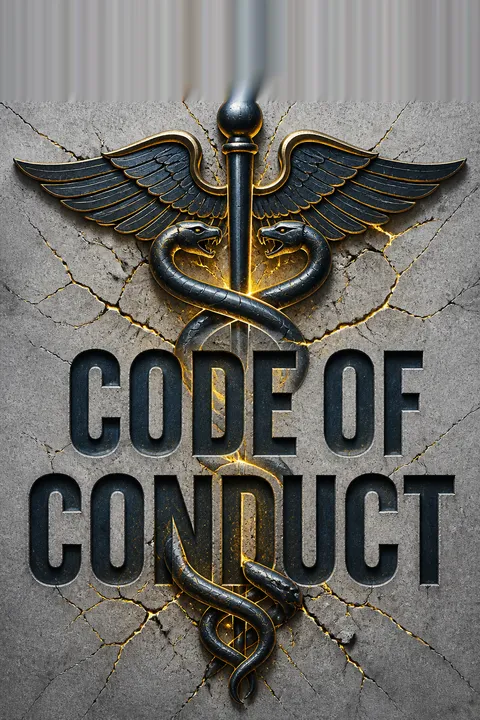

Plot Summary
Viral Panic Ignites Chaos
As the President is rushed to the hospital, rumors of a deadly virus sweep Washington, D.C., and the nation. Scot Harvath, a covert operative, races to get his partner Lara to safety before the city locks down. The streets are choked with fear and chaos as government agencies scramble to respond. Harvath's sense of duty compels him to stay behind, even as he lies to Lara about his own safety. The world teeters on the edge of collapse, with hospitals overwhelmed and essential services faltering. The only certainty is that those who are prepared might survive, but even they are not safe from the opportunists and predators who thrive in disaster. The stage is set for a crisis that will test the limits of loyalty, love, and the very fabric of society.
Congo Clinic Massacre
A week earlier, in the Congo, a small medical clinic is attacked by gunmen in biohazard suits. The shocking video of the massacre is sent to CARE International, whose director, Ben Beaman, is desperate for answers. With no help from the U.S. government, Beaman turns to the Carlton Group, a private intelligence firm, and insists that Scot Harvath lead the mission. Harvath, torn between personal commitments and professional duty, agrees to investigate. The clinic's destruction, the presence of a burn pit, and the attackers' strange precautions suggest something far more sinister than a simple rebel raid. The mission is urgent: the trail is growing cold, and the fate of the clinic's staff and patients remains unknown.
Assembling the Rescue Team
Harvath assembles a team of ex-SAS British contractors and Dr. Jessica Decker, a war correspondent turned physician with deep ties to the region. The team's cover is a humanitarian supply run, but tensions simmer beneath the surface. Decker's presence is both an asset and a complication, as her boldness and beauty unsettle the hardened operatives. The journey through Congo is fraught with danger—corrupt tollbooths, lawless roads, and the ever-present threat of violence. The team's cohesion is tested as they navigate both external threats and internal mistrust, all while racing toward the site of the massacre.
Jungle Ambush and Betrayal
The team is ambushed at a rebel "tollbooth" by men posing as Congolese soldiers. Decker's impulsive compassion leads her into the hands of the rebels, forcing Harvath and the SAS team to improvise a deadly rescue. The situation reveals that the attackers are not ordinary rebels but elite shock troops with a history of brutality. Harvath's true background as a SEAL is exposed, and the team must quickly adapt to survive. The jungle becomes a battleground of wits and violence, with every decision carrying life-or-death consequences. Trust is fragile, and the line between mission and survival blurs.
Decker's Reckless Compassion
Decker's insistence on helping a wounded rebel nearly costs her life and jeopardizes the entire team. Harvath is forced to take drastic action, using cunning and violence to rescue her from captivity. The operation exposes the team to further danger, as they realize the rebels are after more than money—they are protecting something, or someone, of great value. The psychological toll mounts as Decker and Harvath clash over ethics, responsibility, and the cost of doing what is necessary. The mission's stakes become personal, and the team's unity is tested to the breaking point.
Rebel Camp Rescue
Harvath infiltrates the rebel camp alone, using stealth and lethal force to eliminate threats and recover Decker. The camp's isolation ward reveals a dying rebel commander, possibly infected with a deadly disease. Decker's medical expertise is crucial, but the situation is dire—any misstep could unleash a contagion. The team's escape is a desperate, violent dash through the jungle, pursued by vengeful rebels. The experience leaves scars—physical and emotional—on everyone involved, and the true nature of the threat begins to emerge.
Burn Pit Horrors
The team discovers the burn pit near the clinic is a mass crematorium, engineered to incinerate bodies with terrifying efficiency. The scale of the atrocity is staggering—entire families, including children, have been erased. The evidence points to a deliberate, professional operation, not a random act of violence. Decker is shaken to her core, and Harvath is haunted by the implications. The mission shifts from rescue to investigation, as they realize they are dealing with a cover-up of a biological disaster. The emotional weight of the discovery deepens the team's resolve to uncover the truth.
Geneva's Web of Deceit
In Geneva, Pierre Damien, a powerful philanthropist and UN official, is introduced as a man of influence and secrets. His lover, Helena, is a Mossad asset embedded to uncover his true intentions. The narrative shifts to a world of espionage, seduction, and manipulation, where personal and political motives intertwine. Damien's charm masks a dangerous ideology, and Helena's loyalties are tested as she navigates her double life. The Mossad's interest in Damien signals that the conspiracy reaches far beyond Congo, implicating global institutions and power brokers.
Helena's Double Life
Helena's backstory is revealed—a survivor of sex trafficking, she was rescued and recruited by Mossad, becoming a skilled but damaged operative. Her relationship with her handler, Ben Mordechai, is complex, blending gratitude, resentment, and unspoken love. Helena's assignment with Damien is both a chance for redemption and a source of psychological torment. Her ability to manipulate and be manipulated becomes central to the unfolding plot, as she balances personal survival with national duty. The emotional cost of her double life is profound, and her actions will have far-reaching consequences.
Mossad's Broken Asset
Mordechai's efforts to control Helena and the operation unravel as her loyalties shift. The Mossad leadership debates how to motivate her, resorting to threats and promises involving her past tormentor. The psychological games intensify, revealing the moral ambiguities of intelligence work. Helena's trauma and desire for freedom collide with her sense of obligation, leading her to make choices that will impact the fate of nations. The Mossad's willingness to use and discard assets underscores the human cost of espionage.
The UN's Secret Conspiracy
A secret cabal within the United Nations, the Plenary Panel, is revealed to be orchestrating a plan to reduce the world's population through a weaponized virus. Their "Outcome Conference" manifesto outlines chilling goals: eugenics, global governance, and the dismantling of national sovereignty. Pierre Damien is at the center, using his influence and resources to manipulate international agencies and public health systems. The conspiracy is sophisticated, leveraging the Hajj pilgrimage as a vector and exploiting the trust placed in humanitarian organizations. The scale and ambition of the plot are unprecedented.
Weaponized Virus Unleashed
The virus, a weaponized African Hemorrhagic Fever, is released via Congolese pilgrims at the Hajj, ensuring rapid, global dissemination. The disease is engineered for airborne transmission and rapid lethality. As cases explode worldwide, panic and chaos follow. The only hope lies in understanding the vector and finding a cure, but the conspirators have ensured that only select populations—those who received a special flu vaccine—are immune. The world's infrastructure begins to collapse under the strain, and the true horror of the plan becomes clear.
Hajj: The Perfect Vector
The annual Hajj pilgrimage, with millions of attendees from around the world, becomes the perfect vehicle for spreading the virus. Pilgrims unknowingly carry the disease back to their home countries, igniting outbreaks on every continent. The Saudi authorities are powerless to contain the spread, and the global health system is quickly overwhelmed. The use of faith and tradition as a weapon is both diabolical and effective, ensuring that no nation is spared. The narrative underscores the vulnerability of interconnected societies to biological threats.
Immunity and Betrayal
It is revealed that only those who received a specific version of the flu vaccine—distributed in North America and Western Europe—are immune to the virus. The vaccine's distribution was manipulated by the conspirators, ensuring that the "right" people survive. Even world leaders and top officials are not spared, as they were given last year's vaccine for publicity. The betrayal is profound, as trust in institutions is shattered. The survivors must grapple with guilt, loss, and the knowledge that they were spared by design, not by chance.
Coup at the Core
As the virus devastates the population, a coup is orchestrated within the U.S. government. The Department of Homeland Security, guided by the Main Core database—a secret list of dissidents and "threats"—begins rounding up political opponents, judges, and outspoken citizens under the pretext of quarantine. The President and his successors fall ill, and power is seized by those complicit in the conspiracy. The machinery of government is turned against its own people, and the line between public health and political repression vanishes.
Main Core's Deadly List
The Main Core database, originally designed for national emergencies, is weaponized to detain and eliminate those deemed threats to the new order. Judges, legislators, and ordinary citizens are rounded up, marked with color-coded badges, and sent to "wellness centers" that are, in reality, internment camps. Harvath himself is targeted, forced to surrender and infiltrate the system to rescue Chief Justice Leascht. The chilling efficiency of the operation reveals how easily liberty can be extinguished when fear and bureaucracy align.
The President Falls Ill
The President succumbs to the virus, followed by the Vice President and other key leaders. The line of succession is decimated, and the nation teeters on the brink of anarchy. The acting President, a minor cabinet official, is manipulated by the conspirators. The public is kept in the dark, and the machinery of state is used to suppress dissent and maintain control. The fragility of democracy is laid bare, and the need for courageous action becomes urgent.
DHS Rounds Up Dissidents
DHS teams, armed and masked, sweep through neighborhoods, detaining those on the Main Core list. The process is clinical and impersonal—vital signs are checked, paperwork is processed, and gold stars are issued to mark the condemned. Harvath, now a target, allows himself to be captured to orchestrate a daring rescue of Leascht. The scenes evoke the darkest chapters of history, as neighbors disappear and the rule of law is suspended. The narrative explores the psychology of obedience and the ease with which ordinary people become instruments of oppression.
Harvath's Desperate Extraction
Harvath engineers a dramatic escape from the internment train, aided by sympathetic law enforcement and his own skills. The extraction of Leascht is a race against time, with DHS in pursuit and the city descending into chaos. The operation is a testament to ingenuity, courage, and the power of individual action in the face of overwhelming odds. The successful rescue becomes a symbol of resistance, and the hope for reclaiming the nation is rekindled.
The Devil's Confession
Harvath tracks Pierre Damien to his secret Bahamian island, eliminating his mercenaries and confronting him in a final showdown. Damien, unrepentant, confesses his crimes and justifies his vision of a new world order. Harvath records the confession, then executes Damien, ensuring that justice—however rough—is served. The confrontation is both personal and symbolic, pitting the ideals of individual liberty and responsibility against the cold logic of technocratic tyranny.
Aftermath and Reckoning
With the conspirators dead and the virus burning itself out, the world is left to count the cost. Billions are dead, societies are shattered, and survivors must grapple with guilt, grief, and the challenge of rebuilding. Harvath, haunted by his actions and losses, seeks solace with Lara and her family in Alaska. The narrative closes on a note of hard-won hope, as love and resilience offer a path forward. The lessons of the crisis linger, a warning and a call to vigilance.
Analysis
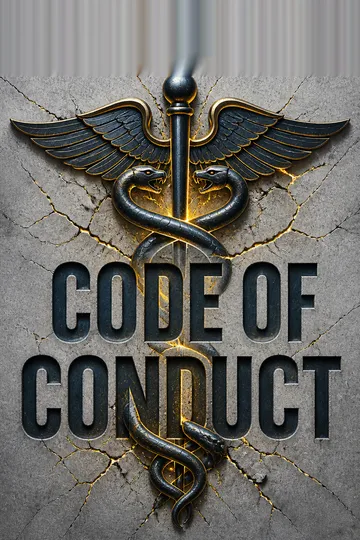
Brad Thor's Code of Conduct is a high-octane thriller that fuses the paranoia of pandemic fiction with the intricacies of modern espionage. At its core, the novel is a meditation on the fragility of civilization and the ease with which trust in institutions can be weaponized. The plot's plausibility is heightened by its use of real-world mechanisms—global health networks, bureaucratic databases, and the vulnerabilities of interconnected societies. The book's greatest strength lies in its psychological depth: characters are not mere action figures but are shaped by trauma, loyalty, and the constant negotiation between personal and collective codes of conduct. The narrative warns of the dangers of technocratic hubris, the seductive logic of "greater good" thinking, and the ever-present risk that the tools designed to protect us can be turned against us. Ultimately, Code of Conduct is both a cautionary tale and a testament to resilience—the idea that even in the darkest times, individual courage, love, and moral clarity can make a difference. The lessons are clear: vigilance is the price of liberty, and the true test of character comes not in moments of comfort, but in the crucible of crisis.
Review Summary
Code of Conduct by Brad Thor receives mixed reviews averaging 4.22 out of 5. Readers praise the fast-paced action and thrilling plot involving counter-terrorism operative Scot Harvath investigating a biological warfare conspiracy originating in Congo. Many appreciate the suspenseful, apocalyptic storyline and character development showing Harvath's compassionate side. However, critics note inconsistent writing, excessive political preaching, slow pacing in Africa sections, and underdeveloped supporting characters. Several readers found the conspiracy elements convoluted and the author's political views too intrusive. Despite criticisms, fans enjoyed the globe-spanning adventure and recommend it for action-thriller enthusiasts.
People Also Read

Characters
Scot Harvath
Scot Harvath is a former Navy SEAL turned covert operative, defined by his sense of duty, loyalty, and a deep-seated need to protect others—even at great personal cost. His relationships are strained by the demands of his work, particularly with Lara, whom he loves but repeatedly leaves behind. Harvath is resourceful, ruthless when necessary, and driven by a code that values the vulnerable. Throughout the crisis, he is forced to confront the limits of his own morality, the trauma of violence, and the burden of survival. His journey is one of sacrifice, self-discovery, and the search for redemption in a world gone mad.
Jessica Decker
Dr. Jessica Decker is a war correspondent turned physician, driven by compassion and a desire to make a difference. Her idealism often clashes with the harsh realities of conflict zones, leading to reckless decisions that endanger herself and others. Decker's relationship with Harvath is fraught with tension—admiration, attraction, and mutual frustration. She is both a liability and an asset, her medical expertise crucial but her worldview at odds with the violence around her. Decker's arc is one of disillusionment and growth, as she learns the cost of doing good in a world where evil is often pragmatic.
Pierre Damien
Pierre Damien is a wealthy philanthropist, UN official, and the architect of the global catastrophe. Driven by a belief in eugenics and the necessity of population control, he manipulates institutions and individuals with charm and intellect. Damien's vision is cold, rational, and utterly devoid of empathy—he sees himself as a savior, willing to commit mass murder for the "greater good." His relationships, particularly with Helena, are transactional, though he is capable of genuine affection. Damien embodies the dangers of technocratic hubris and the seductive appeal of utopian solutions.
Helena Pestova
Helena is a Mossad asset with a traumatic past as a sex trafficking victim. Rescued and remade by Ben Mordechai, she becomes a skilled operative, but her loyalty is always in question. Torn between her debt to Mordechai, her desire for autonomy, and her feelings for Damien, Helena is a study in psychological complexity. Her actions are driven by survival, revenge, and a longing for agency. Ultimately, she betrays both her handlers and her lover, seeking to escape the web of manipulation that has defined her life.
Ben Mordechai
Ben Mordechai is a Mossad officer, Helena's rescuer and handler, and a man marked by his own traumas. His relationship with Helena is paternal, romantic, and professional—a tangle of guilt, responsibility, and unspoken love. Mordechai is a pragmatist, willing to use any means to achieve his goals, but not without cost. His faith in Israel and his sense of duty are unwavering, but he is forced to confront the human consequences of his actions. Mordechai's arc is one of reckoning, as he seeks redemption for himself and those he has used.
Reed Carlton (The Old Man)
Reed Carlton is the founder of the Carlton Group, a legendary spymaster, and Harvath's mentor. He embodies old-school intelligence values—loyalty, honor, and a willingness to do what is necessary. Carlton is always several steps ahead, orchestrating events with a steady hand. His personal sacrifices, particularly for his ailing wife, reveal a deep humanity beneath the professional façade. Carlton's presence anchors the narrative, providing wisdom and perspective in times of crisis.
Nicholas (The Troll)
Nicholas is a brilliant hacker with primordial dwarfism, whose skills are indispensable to the Carlton Group. He is fiercely loyal to Harvath, protective of his own small circle, and driven by a need to prove his worth. Nicholas's technical genius is matched by his sense of humor and resilience in the face of prejudice. His role in uncovering the Main Core database and tracking the conspirators is pivotal. Nicholas's arc is one of acceptance and belonging, as he finds purpose and family among the operatives.
Lara
Lara is Harvath's partner, a source of emotional grounding and the embodiment of what he fights to protect. Her patience, intelligence, and strength are tested by Harvath's absences and the dangers he faces. Lara's journey is one of endurance and faith, as she supports Harvath from afar and ultimately welcomes him back from the abyss. She represents the possibility of healing and a future beyond violence.
Ben Beaman
Ben Beaman is the director of CARE International, whose insistence on uncovering the truth about the Congo massacre sets the plot in motion. He is driven by compassion and a sense of responsibility for his people. Beaman's willingness to pay any price for answers highlights the value of individual lives in a world of geopolitical games. His role is that of a catalyst and a reminder of the stakes beyond politics.
Sloane Ashby
Sloane Ashby is a former Army operative and key member of the Carlton Group. She is sharp, resourceful, and unflappable under pressure. Ashby's loyalty to Harvath and the team is unwavering, and her skills are essential in both combat and intelligence operations. She represents the new generation of warriors—capable, adaptable, and committed to the mission.
Plot Devices
Dual Timelines and Global Scope
The narrative structure alternates between the immediate crisis in Washington and the events leading up to it in Congo and Geneva. This dual timeline builds suspense and gradually reveals the scope of the conspiracy. The global settings—Africa, Europe, the U.S.—underscore the interconnectedness of modern threats and the ease with which chaos can spread.
Foreshadowing and Red Herrings
Early references to biohazard suits, burn pits, and missing bodies foreshadow the biological threat. Characters' ambiguous loyalties—especially Helena's—create tension and uncertainty. The use of the Hajj as a vector is subtly seeded, and the Main Core database is introduced as a bureaucratic tool before its true purpose is revealed.
The "Code of Conduct" Theme
The title's resonance is felt throughout, as characters grapple with ethical dilemmas—when to kill, whom to trust, and what lines can be crossed in the name of the greater good. The code of conduct is both personal and institutional, and its violation has dire consequences. The narrative interrogates the price of security, the dangers of technocratic arrogance, and the fragility of democratic norms.
Surveillance, Technology, and Bureaucracy
The plot hinges on the use and abuse of surveillance—drones, hacking, databases, and medical records. Technology is a double-edged sword, enabling both the exposure of conspiracies and the execution of mass repression. Bureaucratic inertia and ambition are shown to be as dangerous as any external enemy, with the Main Core list serving as a chilling symbol of state overreach.
Psychological Realism and Trauma
The story devotes significant attention to the psychological scars of its characters—Helena's trauma, Harvath's guilt, Mordechai's regrets. These inner battles mirror the external chaos, adding depth and emotional resonance. The narrative explores the limits of endurance, the search for meaning, and the possibility of redemption.
Scot Harvath Series









About the Author
Other books by Brad Thor

Download PDF
Download EPUB
.epub digital book format is ideal for reading ebooks on phones, tablets, and e-readers.








































