
Plot Summary
Storms and Second Chances
Fern, a rattkin bookseller, is violently rescued from a monstrous attack by the legendary elven warrior Astryx One-Ear. Shaken but alive, Fern continues her journey to Thune, where she hopes to start anew after selling her old bookshop. She clings to letters from friends—Viv, an orc who left adventuring for coffee and comfort, and Zelia, a wanderer who reminds her that life is a tangle, not a thread. Fern's journey is both literal and emotional: she's running from the emptiness of her old life, desperate for meaning, but terrified of what she'll find. The storm that nearly kills her is also the one that clears her path, forcing her to confront the possibility of change and the hope of second chances.
Old Friends, New Fears
Arriving in Thune, Fern is overwhelmed by the prospect of rekindling her friendship with Viv, now a successful coffee shop owner. The city is strange, the future uncertain, and Fern's self-doubt is palpable. Viv and her wife Tandri welcome Fern with warmth and humor, but Fern's fear of not fitting in, of not being enough, gnaws at her. The comfort of old rituals—cinnamon rolls, shared jokes, and the presence of Potroast, her loyal gryphet—offers solace. Yet, beneath the laughter, Fern's anxiety simmers. She's haunted by the question: can you ever truly go home again, or is every reunion a confrontation with the person you've become?
Building and Belonging
Fern throws herself into transforming her new, dilapidated bookshop with the help of Viv, Tandri, and Cal, a taciturn but kind hob carpenter. The physical labor is exhausting but healing, giving Fern a sense of purpose and distracting her from her inner turmoil. She forms unexpected bonds—Cal's silent support, Thimble's shy kindness, and the gentle rhythm of shared work. As the shop takes shape, so does Fern's sense of belonging. Yet, the fear of failure lingers, and the question of whether this new life can fill the void inside her remains unanswered. The act of building becomes both literal and metaphorical—a way to reconstruct herself.
Emptiness in Success
The grand opening of Thistleburr Booksellers is a triumph, drawing crowds and forging a synergy with Viv's coffee shop. Outwardly, Fern should be content—her dream realized, her friends supportive, her shop bustling. But the emptiness she hoped to escape has only deepened. Alone in the alley, Fern confides in Cal, admitting that success hasn't brought fulfillment. She's haunted by the suspicion that she's made a terrible mistake, that she's ungrateful and broken. Cal's advice is simple but profound: talk to Viv, be honest, and trust in the sturdiness of true friendship. Fern's journey turns inward, as she confronts the reality that running away doesn't always lead to peace.
Flight and Folly
In a haze of whiskey and self-doubt, Fern flees her responsibilities, intending to confess her feelings to Viv but instead stumbling into the back of Astryx's wagon. She awakens far from Thune, hungover and accompanied by Astryx and Zyll, a mysterious goblin bounty. Fern's flight becomes a literal journey into the unknown, her impulsive escape setting her on a path she never intended. The road is fraught with danger, confusion, and the constant threat of being lost—both physically and emotionally. Fern's letters to Viv, written but never sent, become a lifeline, a way to process her guilt and longing for home.
Strangers on the Road
Traveling with Astryx and Zyll, Fern is forced to confront her assumptions about heroism, morality, and herself. Astryx, far from the legend, is weary and pragmatic, her life a series of practical choices rather than grand gestures. Zyll, enigmatic and unpredictable, challenges Fern's understanding of loyalty and freedom. The trio faces dangers—hazferou, bounty hunters, and the relentless pull of the past. Fern's role shifts from passive observer to active participant, her resourcefulness and courage tested. The journey becomes a crucible, burning away illusions and forging new bonds in the heat of adversity.
Bounty and Betrayal
As they near Bycross, Fern and her companions are ambushed by Chak, a tapenti mage seeking Zyll's bounty. Astryx's legendary skill is on full display in a dazzling duel, but the encounter exposes the fragility of their situation. The group's dynamic is further complicated by the arrival of mercenaries, corrupt officials, and the ever-present threat of betrayal. Fern's quick thinking and growing confidence help them navigate these dangers, but trust is in short supply. The lines between friend and foe blur, and Fern must decide where her loyalties truly lie.
Goblin Games
Zyll's true nature and motives come into sharper focus as the group navigates Bycross and its intrigues. The goblin's cunning and unpredictability are both a liability and an asset, forcing Fern and Astryx to adapt. The discovery of talking swords—Nigel and Breadlee—adds a layer of absurdity and depth, their banter reflecting the story's themes of legacy and transformation. Fern's storytelling, both as a bookseller and as a participant in her own adventure, becomes a means of survival and connection. The power of narrative—who tells it, who owns it—emerges as a central motif.
Duel on the Bridge
A brutal confrontation on a snowbound bridge tests the limits of Fern's courage and Astryx's endurance. Tullah, a relentless orc bounty hunter, and her crew ambush the group, leading to a desperate battle. Fern's quick thinking and Breadlee's unexpected utility save Bucket, Astryx's horse, from certain death. Zyll's ingenuity collapses the bridge, buying their escape but leaving Astryx gravely wounded. The aftermath is a reckoning—Fern and Zyll must care for the injured elf, navigating blizzards and exhaustion to reach sanctuary. The cost of survival is high, and the scars—physical and emotional—run deep.
Survival and Surrender
The trio finds refuge in a Tarimite monastery, where Fern confronts her prejudices and learns the true nature of penance and faith. As Astryx recovers, Fern's letters to Viv become more introspective, grappling with guilt, purpose, and the meaning of friendship. The quiet days of healing are punctuated by new friendships, philosophical debates, and the ever-present question of what comes next. Zyll's bounty, Astryx's sense of duty, and Fern's longing for home converge, forcing each to confront what they owe to themselves and to each other.
Letters Never Sent
Fern's unsent letters to Viv accumulate, a testament to her inability to articulate her needs and regrets. The act of writing becomes both a comfort and a burden, a way to process her failures and hopes. As Astryx heals and the group prepares to move on, Fern is forced to reckon with the reality that some apologies can never be delivered, and some wounds never fully heal. The power of words—spoken, written, withheld—shapes the course of her journey, offering both solace and sorrow.
The Road Turns
The journey resumes, but the group's unity is fragile. Encounters with bards, bounty hunters, and old acquaintances test their resolve. Staysha, a duplicitous bard, betrays Fern and Zyll, leading to a violent confrontation and the shattering of trust. Astryx and Fern's relationship is strained by unspoken desires and conflicting principles. The road, once a symbol of possibility, becomes a place of reckoning. Choices must be made—about loyalty, love, and the willingness to let go.
Brigands and Breadknives
The final confrontation with Tullah and her crew is brutal and costly. Fern, wielding Breadlee, plays a decisive role in the outcome, but the victory is bittersweet. Zyll's true agency is revealed—she orchestrated her own bounty to escape Tullah's vengeance, using the system against itself. Astryx, wounded and weary, releases Zyll, honoring her autonomy. The group dissolves, each member changed by the journey. The legend of Astryx is both affirmed and humanized, and Fern's role as squire, friend, and storyteller is forever altered.
Endings and Beginnings
Fern returns to Thune, burdened by guilt but determined to make amends. Her reunion with Viv is raw and honest—letters are read, apologies given, and forgiveness offered. Fern confesses that the bookshop, once her dream, is no longer her path. She declines Astryx's offer to become her squire, choosing instead to seek her own way. The courage to say no, to disappoint others in order to be true to herself, is the hardest lesson of all. Fern's journey ends not with triumph, but with authenticity and hope.
Coming Home
Fern rebuilds her relationships—with Viv, Tandri, Cal, and Potroast—finding comfort in the sturdiness of true friendship. The bookshop is no longer hers, but she is welcomed home nonetheless. The pain of leaving, of changing, is acknowledged and accepted. Fern's story becomes one of community, resilience, and the ongoing search for meaning. The letters she wrote, once a burden, become the foundation for a new chapter—a story she can share, and a life she can claim as her own.
The Straight Road in the Dark
Fern's adventures become legend, her letters transformed into a book—The Straight Road in the Dark. She travels with Quillin, her new companion, exploring the Territory and writing new stories. The bracelet from Astryx remains, a symbol of connection and possibility. The lessons of the road—about friendship, forgiveness, and the courage to choose one's own path—echo forward. Fern's journey is unfinished, but she walks it with clarity, gratitude, and the knowledge that the road, however tangled, is hers to travel.
Analysis
Brigands & Breadknives is a masterful meditation on the messiness of change, the pain of disappointing others, and the courage required to claim one's own story. Travis Baldree subverts the cozy fantasy genre by refusing easy resolutions: success is hollow, heroism is lonely, and the hardest victories are those won over oneself. The novel's emotional core is Fern's journey from self-effacing bookseller to honest, if uncertain, seeker—a journey marked by unsent letters, failed apologies, and the eventual acceptance that saying no can be an act of love. The supporting cast—Astryx, Zyll, Viv, Cal, and even the talking swords—embody the novel's central tensions: tradition versus reinvention, duty versus desire, belonging versus autonomy. The plot's episodic structure, use of letters, and playful deconstruction of fantasy tropes invite readers to question the stories they tell about themselves and others. Ultimately, the book's lesson is that life is not a straight road, but a glorious tangle; that fulfillment is found not in running from emptiness, but in facing it with honesty, humor, and the willingness to begin again. In a world hungry for certainty, Brigands & Breadknives offers the radical hope that it is enough to be lost, to be found, and to keep walking—together or alone—into the unknown.
Review Summary
Brigands & Breadknives receives mostly positive reviews (4.21/5) as the third book in Travis Baldree's cozy fantasy series. Readers appreciate the focus on Fern, the rattkin bookseller experiencing a midlife crisis, and her unexpected adventure with a legendary elf warrior and chaotic goblin. Many praise the humor, character development, and audiobook narration. However, some fans miss the series' signature cozy, low-stakes formula, noting this installment is more action-focused with numerous fight scenes. Several reviewers recommend reading prior books first for context. Overall, it's considered an enjoyable, heartwarming read, though slightly less cozy than predecessors.
People Also Read

Characters
Fern Teverlin
Fern is a middle-aged rattkin bookseller whose life is defined by restlessness, self-doubt, and a longing for purpose. Her relationships—with Viv, Cal, and later Astryx and Zyll—reveal a deep capacity for loyalty, humor, and empathy, but also a crippling fear of disappointing others. Fern's psychological arc is one of self-discovery: she flees the emptiness of her old life, only to find that fulfillment cannot be found in running away or in the approval of others. Her journey is marked by letters never sent, apologies never spoken, and the eventual courage to say no—to choose her own path, even at the cost of comfort and belonging. Fern's development is subtle but profound: she learns that worth is not measured by usefulness, and that the hardest road is often the most honest.
Astryx One-Ear
Astryx is an eldest elf, famed as the Blademistress and Oathmaiden, whose reputation is both a shield and a prison. Scarred by centuries of violence and loss, she is pragmatic, stoic, and deeply principled—sometimes to a fault. Her relationship with Fern is transformative: Fern's vulnerability and honesty force Astryx to confront her own loneliness and the limitations of her code. Astryx's struggle is between duty and desire, tradition and change. She is both mentor and equal to Fern, and their dynamic is charged with mutual respect, frustration, and unspoken longing. Astryx's ultimate act—releasing Zyll, accepting Fern's refusal—marks her growth from legend to human being, capable of grace and humility.
Zyll
Zyll is a goblin with a coat of many pockets, a mouth full of teeth, and a mind full of secrets. She is both bounty and orchestrator, using the system to her advantage in a bid for freedom. Zyll's language is cryptic, her motives inscrutable, but her loyalty—once earned—is fierce. She challenges Fern and Astryx to question their assumptions about agency, captivity, and the nature of help. Zyll's presence destabilizes the group, but also catalyzes growth and change. Her departure is both a loss and a liberation, a reminder that not all stories end with neat resolutions.
Viv
Viv is Fern's oldest friend, an orc who traded adventuring for the comforts of coffee and community. She is warm, practical, and fiercely loyal, but also wounded by Fern's flight and silence. Viv's role is both anchor and mirror—she reflects Fern's fears and hopes, and her forgiveness is hard-won but genuine. Viv's relationship with Fern is a testament to the endurance of true friendship, and her presence bookends Fern's journey, offering both a home to return to and the freedom to leave again.
Cal
Cal is a hob carpenter whose gruff exterior hides a deep well of kindness and insight. He becomes a surrogate uncle to Fern, offering practical support and emotional grounding. Cal's wisdom is understated but profound—he encourages Fern to be honest, to trust in the sturdiness of real friendship, and to accept that some bridges must be crossed alone. His presence is a reminder that family can be chosen, and that the quiet work of building and mending is as important as any grand adventure.
Breadlee (Bradelys Tertius)
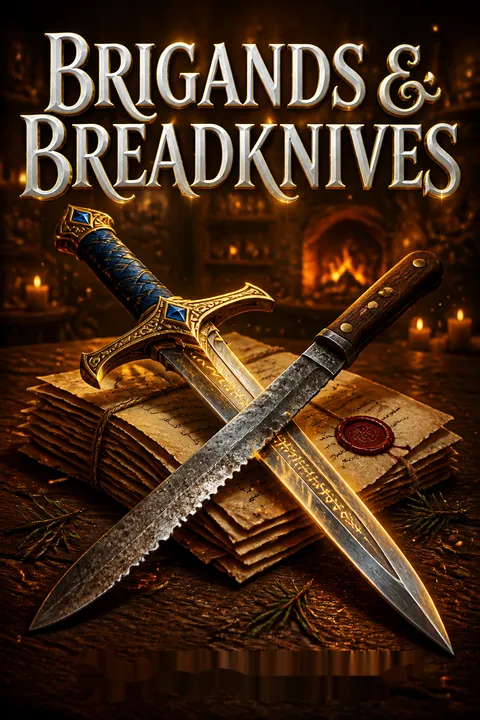
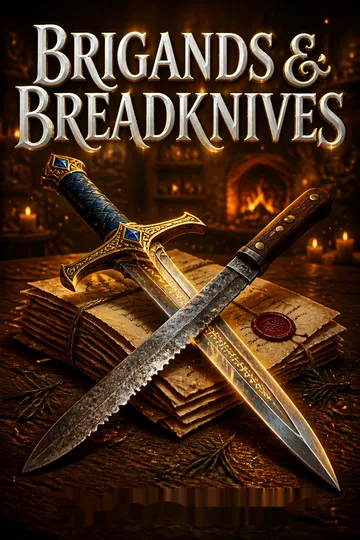
Breadlee is a sentient breadknife, once a mighty Elder Blade, now reduced to cutlery but still full of bluster and ambition. His banter with Nigel, Astryx's longsword, provides comic relief and commentary on legacy, purpose, and the absurdity of heroism. Breadlee's relationship with Fern is unexpectedly tender—he becomes both weapon and confidant, helping her find courage in moments of crisis. His arc mirrors Fern's: diminished, overlooked, but ultimately essential.
Nigel (Nigellus Primus)
Nigel is Astryx's talking sword, pompous and erudite, embodying the weight of history and expectation. He is both a source of wisdom and a symbol of the burdens Astryx carries. Nigel's interactions with Breadlee and Fern highlight the tension between legacy and reinvention, and his loyalty to Astryx is unwavering. He is a reminder that even legends need companionship and that tradition can be both a guide and a shackle.
Tullah
Tullah is an orc bounty hunter whose pursuit of Zyll is driven by personal loss and the destruction of her reputation. She is formidable, single-minded, and ultimately tragic—a mirror of what Fern and Astryx might become if consumed by duty and resentment. Tullah's death is a turning point, forcing Fern and Astryx to confront the cost of violence and the limits of justice.
Staysha (The Silver Sparrow)
Staysha is a bard whose charm masks duplicity and self-interest. Her presence in the group is destabilizing, her songs both a lure and a weapon. Staysha's betrayal of Fern and Zyll is a catalyst for crisis, exposing the dangers of narrative manipulation and the importance of discernment. She is a reminder that not all stories are told in good faith, and that the power of words can be wielded for harm as well as healing.
Quillin
Quillin is a charming, well-traveled rattkin whose flirtation with Fern offers the possibility of new beginnings. His own compromises and betrayals complicate their relationship, but his willingness to apologize and start anew mirrors Fern's journey. Quillin represents the hope of connection after loss, and the courage to risk vulnerability in the face of uncertainty.
Plot Devices
Letters as Emotional Mirror
The novel uses Fern's ongoing, unsent correspondence as both a narrative device and a psychological mirror. These letters allow the reader intimate access to Fern's fears, regrets, and hopes, while also highlighting her inability to communicate directly with those she loves. The act of writing becomes a form of self-therapy, confession, and, ultimately, transformation. The letters' evolution—from apology to acceptance—parallels Fern's growth, and their eventual delivery marks a turning point in her relationships.
Found Family and Chosen Community
The story foregrounds the theme of found family—friends, colleagues, and companions who become as important as blood relations. The process of building the bookshop, traveling together, and surviving hardship forges bonds that are tested and remade. The narrative structure mirrors this: periods of community and belonging are followed by rupture and isolation, only to be rebuilt in new forms. The cyclical nature of these relationships underscores the resilience of the human (and non-human) heart.
Subversion of Heroic Tropes
Astryx's legend is continually deconstructed—her heroism is revealed to be a product of endurance, compromise, and loneliness rather than grand destiny. The talking swords, the farcical duels, and the anticlimactic resolutions all serve to undermine traditional fantasy tropes. Zyll's self-orchestrated bounty, Staysha's manipulative storytelling, and Fern's refusal to become a squire all challenge the notion that stories must end with glory or fulfillment. The narrative structure is episodic, with each "adventure" exposing the gap between expectation and reality.
The Power and Danger of Storytelling
Storytelling is both salvation and peril in the novel. Fern's role as bookseller, scribe, and eventual author is contrasted with Staysha's manipulative bardic tales and Zyll's cryptic self-narration. The talking swords literalize the idea that stories have voices and agency. The plot repeatedly asks: who gets to tell the story, and what is at stake in its telling? The answer is both liberating and sobering—stories can heal, but they can also wound, and the truth is always more complicated than the legend.
Cyclical Structure and Thematic Echoes
The novel's structure is cyclical: Fern flees, journeys, returns, and must face the same questions she tried to escape. Each cycle—departure, adventure, homecoming—forces her to confront the same fears in new forms. The motif of the "straight road in the dark" recurs, symbolizing both the comfort of principle and the danger of rigidity. The ultimate lesson is that the road is never truly straight, and that the willingness to say no, to change, is the bravest act of all.
Legends & Lattes Series
Download PDF
Download EPUB
.epub digital book format is ideal for reading ebooks on phones, tablets, and e-readers.








































