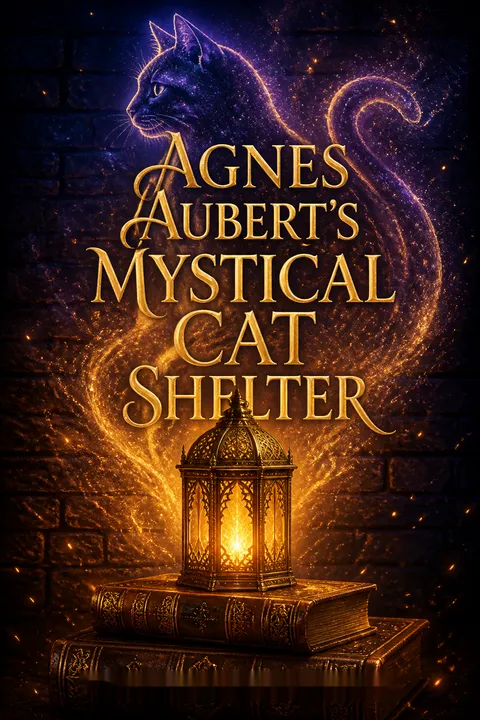

Plot Summary
Frost, Failure, and Felines
Agnes Aubert, a practical, kind-hearted woman in her thirties, struggles to find a new location for her cat shelter after her previous shop is destroyed in a magical duel. The city is cold, both literally and figuratively, and Agnes faces rejection after rejection from landlords who are either suspicious of her work or unwilling to house so many cats. Her resilience is tested, but her compassion for the city's stray cats keeps her moving forward, even as she battles exhaustion, poverty, and the lingering grief of her husband Robin's death. The chapter sets the tone of quiet perseverance and introduces the emotional stakes: the cats' survival and Agnes's need for belonging.
Shelter in Ruins
Returning to her damaged shelter, Agnes tends to her cats—each with their own quirks and personalities—while reflecting on the unfairness of a world where magicians wield unchecked power. The shelter is a haven for both cats and Agnes, but it is crumbling, open to the elements, and financially unsustainable. Agnes's sister Élise, ever the pragmatist, pushes her to lie to landlords to secure a new place, but Agnes's honesty and guilt make deception difficult. The chapter deepens the sense of loss and introduces the theme of ordinary people caught in the crossfire of magical conflicts.
The Impossible Shop
After another failed attempt to secure a new location, Agnes stumbles upon a shop on Rue des Hirondelles, rumored to be haunted or cursed. The shop's caretaker, Yannick, offers her a deal that seems too good to be true: low rent, ample space, and no questions asked. Despite her misgivings about the shop's odd atmosphere and Yannick's nervousness, Agnes's desperation and the needs of her cats push her to accept. The shop's history is murky, and Agnes senses that magic lingers in its walls, but she convinces herself that any shelter is better than none.
A Landlord's Secret
As Agnes moves in, she notices strange occurrences: the scent of baking with no baker, noises from the basement, and a parade of odd, well-dressed visitors who seem to come and go through a hidden trapdoor. The shop's true owner is never seen, and Yannick's explanations grow increasingly evasive. Agnes's curiosity is piqued, but her focus remains on the cats and the daily struggle to keep the shelter afloat. The chapter builds tension, hinting at the magical underworld operating beneath the city's surface and Agnes's unwitting involvement in it.
The Cat's Arrival
Agnes rescues two kittens from the street, further straining the shelter's resources. The cats, especially the enigmatic His Majesty and the hapless Banshee, become both her solace and her burden. The shelter's success in finding homes for cats is offset by the growing sense that something is not right in the shop. Agnes's interactions with the community—volunteers, donors, and her sister—highlight her isolation and the precariousness of her position. The cats' well-being becomes a metaphor for Agnes's own search for safety and purpose.
Haunted by Magic
The shop's magical nature becomes undeniable when Agnes witnesses a confrontation between two powerful magicians: Valérie, a charismatic and ruthless woman, and Havelock Renard, the infamous Witch King. Their battle nearly destroys the shelter, and Agnes is forced to confront the reality that her new home is a front for a magical workshop. The cats are caught in the chaos, and Agnes's anger at magicians is reignited. Yet, she also glimpses the vulnerability and complexity of Havelock, who is more than the villain of legend.
The Witch King Revealed
Agnes learns that Havelock has been hiding in the shop's basement, pursued by his sister Valérie and other enemies. He is brilliant, awkward, and deeply damaged by his past—especially his role in nearly ending the world three years prior. Agnes's initial fear and resentment give way to reluctant empathy as she sees his humanity beneath the magic. Their uneasy alliance is forged out of necessity: Valérie wants a legendary Artefact rumored to be in Havelock's possession, and Agnes's shelter is now the battleground.
A Dangerous Bargain
To protect the shelter and her cats, Agnes proposes a bargain: she will help Havelock search for the Artefact (Vortigern's book) in exchange for magical assistance. Havelock, allergic to cats and disdainful of sentimentality, is both exasperated and intrigued by Agnes's stubbornness. Together, they begin cataloguing the chaotic hoard of magical objects in the basement, their partnership marked by bickering, mutual respect, and a growing, unspoken attraction. The cats, especially Banshee, become unlikely mediators between them.
The Shelter Transposed
When Valérie attacks again, Havelock is forced to use powerful magic to relocate the entire shelter to another part of the city, saving Agnes and the cats but drawing the attention of the police and the magical community. The move is disorienting and dangerous, but it also brings new opportunities: the shelter's new location attracts wealthy donors and more adoptions. Agnes's organizational skills and Havelock's magic combine to create a thriving, if precarious, haven. Yet, the threat of discovery and destruction looms ever larger.
The Police and the Past
Detective Laurent Rouzet, a sympathetic but determined officer, investigates the shelter, suspecting its connection to Havelock and illegal magic. Agnes is caught between her loyalty to the cats, her growing feelings for Havelock, and her fear of the law. The past—both personal and magical—haunts every decision: Agnes's grief for Robin, Havelock's guilt over the apocalypse, and Valérie's obsession with rewriting history. The chapter explores the limits of trust, the burden of secrets, and the cost of survival in a world shaped by power.
The Mystery of Vortigern's Book
Agnes and Havelock, aided by Yannick and Élise, scour the workshop for Vortigern's legendary time-travel book, believed to be the key to Valérie's ambitions. Their search is both literal and metaphorical, forcing them to confront their own desires and regrets. The book's true location remains elusive, hidden by layers of magic and misdirection. Meanwhile, the shelter's success brings new challenges: rumors of enchanted cats, political scrutiny, and the ever-present danger of Valérie's return.
The Cat Enchantment Scheme
To boost adoptions and protect the shelter, Agnes convinces Havelock to enchant a few cats with harmless spells—cures for insomnia, luck, and happiness. The scheme is wildly successful, transforming the shelter's fortunes and public image. Yet, it also raises ethical questions about the use of magic and the nature of charity. Agnes's pragmatism and Havelock's creativity create a new model for coexistence between the magical and mundane, but the balance is fragile, threatened by envy, suspicion, and the unresolved quest for Vortigern's book.
The Battle for the Shelter
Valérie, desperate and dangerous, launches a full-scale attack on the shelter, using powerful Artefacts and her army of apprentices. The battle is chaotic and devastating, with the cats, volunteers, and even the building itself caught in the crossfire. Agnes's courage and quick thinking, combined with Havelock's magic, turn the tide, but not without loss: His Majesty, the shelter's most enigmatic cat, is taken by Valérie as a hostage. The aftermath leaves Agnes shaken, the shelter damaged, and the future uncertain.
Time's Doorway
In a desperate bid to save Havelock and the shelter, Agnes uses Vortigern's book—hidden in the enchanted oven all along—to travel back in time to the night of the apocalypse. Accompanied by Élise and a stray kitten, Agnes must navigate the dangers of a city on the brink of destruction, confront her own grief for Robin, and steal the one Artefact that can save them all: Vortigern's lantern. The journey is both a literal and emotional odyssey, forcing Agnes to reckon with loss, love, and the limits of her own power.
The Lantern's Secret
Agnes's encounter with a younger Havelock is fraught with tension and recognition—he mistakes her for Vortigern herself. She secures the lantern, witnessing firsthand the loneliness and vulnerability that shaped Havelock into the man he is. Returning to her own time, Agnes delivers the lantern to Havelock in the midst of battle. The lantern's magic strips Valérie and her apprentices of their power, ending the threat but leaving Havelock changed by the ordeal. The cost of victory is high, but the shelter—and its cats—are saved.
The Past Rewritten
With Valérie defeated and the shelter's reputation transformed, Agnes, Havelock, and their allies rebuild. The city rallies around the shelter, donations pour in, and the cats find homes in record numbers. Havelock, once feared and reviled, becomes a reluctant hero, though he retreats from the spotlight. Agnes's grief for Robin is tempered by new purpose and the possibility of love. The magical and mundane worlds find a fragile peace, united by the shared work of compassion and care.
The World Restored
The shelter thrives, expanding to new locations and inspiring similar efforts across the city. Agnes and Havelock's partnership deepens, marked by mutual respect, affection, and the occasional magical mishap. The cats—especially Banshee and Cataclysm—remain at the heart of their home, symbols of resilience and the power of small acts of kindness. The city, once divided by fear and suspicion, embraces its magical heritage, finding strength in community and the everyday miracles of love and care.
A New Home, A New Hope
Agnes, Havelock, and their found family look to the future with hope and determination. The attic of the shelter now opens onto Paris, a symbol of possibility and the magic of new beginnings. The lessons of the past—about power, forgiveness, and the importance of ordinary goodness—shape their path forward. The story ends with Agnes stepping into the unknown, ready to face whatever comes next, surrounded by cats, friends, and the promise of a world remade by love.
Analysis
A modern fairy tale of compassion, power, and the magic of the everydayAgnes Aubert's Mystical Cat Shelter is a story about the intersection of the ordinary and the extraordinary, where the care of stray cats becomes a metaphor for the work of healing a broken world. At its heart, the novel is a meditation on the uses and abuses of power—magical, political, and personal—and the ways in which small acts of kindness can ripple outward to create lasting change. Agnes's journey from grief and isolation to hope and community is mirrored by Havelock's transformation from feared outcast to reluctant hero, and by the shelter's evolution from precarious refuge to beacon of possibility. The novel interrogates the ethics of magic, the limits of forgiveness, and the necessity of trust, all while celebrating the messy, joyful work of building a home. In a world where the forces of destruction are often beyond our control, the story insists that love, organization, and a stubborn refusal to give up can be their own kind of magic.
Review Summary
Agnes Aubert's Mystical Cat Shelter receives overwhelmingly positive reviews (4.17/5) with readers praising its cozy, whimsical atmosphere and strong Howl's Moving Castle vibes. Reviewers adore the distinct cat personalities, particularly His Majesty and Banshee, and appreciate Agnes as a relatable, Type-A protagonist. The 1920s Montreal setting and romance with Havelock charm most readers, though some desire more romantic development and deeper worldbuilding. Critics note pacing issues and feel the romance lacks chemistry. Overall, it's celebrated as perfect cozy fantasy for cat lovers seeking comfort reads.
People Also Read





Characters
Agnes Aubert
Agnes is the heart of the story: a woman shaped by loss, resilience, and an unwavering commitment to the vulnerable. Her love for cats is both literal and symbolic—a stand against a world that too often overlooks the small and powerless. Agnes's relationships—with her late husband Robin, her sister Élise, and the enigmatic Havelock—reveal her capacity for empathy, honesty, and growth. She is deeply organized, prone to checklists and routines, but also capable of bold, even reckless, action when those she loves are threatened. Agnes's journey is one of healing: from grief and isolation to connection and hope, learning to trust herself and others, and discovering that ordinary kindness can change the world.
Havelock Renard
The infamous Witch King, Havelock is a study in contradictions: feared and reviled for his magical power, yet awkward, lonely, and deeply wounded by his past. His near-destruction of the world haunts him, as does his fraught relationship with his sister Valérie. Havelock's genius is matched by his disorganization and emotional ineptitude; he is allergic to cats, uncomfortable with praise, and more at home among Artefacts than people. Yet, through his partnership with Agnes, he learns to trust, to care, and to use his magic for good. Havelock's development is a slow unmasking, revealing the boy who loved stories and the man capable of both great harm and great healing.
Élise Aubert
Agnes's younger sister, Élise is her opposite in many ways: confident, charming, and unafraid to bend the truth for a good cause. She is Agnes's anchor and advocate, pushing her to take risks and defending her against all threats, magical or mundane. Élise's relationship with her husband Gabriel and her role as campaign manager reveal her political savvy and deep sense of responsibility. Beneath her brisk exterior lies a well of love and vulnerability, especially in her bond with Agnes. Élise's arc is one of learning to balance pragmatism with faith in others, and to trust that hope is not naivety.
Yannick Abrams
Havelock's apprentice and the shop's caretaker, Yannick is a young magician still learning the ropes—both magical and social. He is transparent in his emotions, loyal to Havelock, and increasingly drawn into Agnes's world. Yannick's backstory of rejection and hardship makes him sympathetic, and his growth is marked by increasing confidence and competence. He serves as a bridge between the magical and mundane, and his affection for both Havelock and the shelter's mission is genuine. Yannick's journey is one of finding belonging and purpose.
Valérie Renard
Havelock's twin sister and chief antagonist, Valérie is a force of nature: brilliant, ambitious, and consumed by her quest for power. Her relationship with Havelock is complex—part rivalry, part longing for lost closeness. Valérie's willingness to endanger others for her goals is balanced by flashes of vulnerability and the suggestion that she, too, is a victim of the Rivenwood's corrupting influence. Her arc is a cautionary tale about the dangers of unchecked ambition and the cost of losing oneself to magic.
His Majesty
The shelter's most enigmatic cat, His Majesty is both a literal and figurative force: untamable, cunning, and fiercely independent. He serves as a mirror for the story's themes of power, loyalty, and the limits of domestication. His eventual alliance with Valérie underscores the unpredictability of both cats and magic, and his absence leaves a palpable void in the shelter. His Majesty's presence is a reminder that not all can be saved or tamed, and that wildness has its own dignity.
Banshee
Banshee, the shelter's hapless tabby, is Agnes's constant companion and the only cat immune to His Majesty's bullying. Her voiceless yowls and penchant for danger make her both comic relief and a symbol of survival against the odds. Banshee's loyalty to Agnes and her unexpected moments of courage—especially in the final battle—highlight the story's belief in the value of the overlooked and underestimated.
Mina
A former foster child and petty thief, Mina comes to the shelter through community service and stays out of genuine affection. She is hardworking, intelligent, and increasingly trusted by Agnes and Élise. Mina's arc is one of redemption and self-discovery, as she finds purpose and belonging in the shelter's mission. Her success in managing the second shelter and securing donations reflects her growth and the story's faith in second chances.
Detective Laurent Rouzet
Laurent is the story's representative of law and order, but also of the complexities of power and trust. His investigation into the shelter and Havelock is driven by duty, but complicated by his feelings for Agnes and his own magical heritage. Laurent's arc is one of learning to balance suspicion with empathy, and to recognize the limits of authority in a world shaped by magic and moral ambiguity.
Robin
Agnes's late husband, Robin is present only in memory, but his influence shapes Agnes's actions and emotional journey. His warmth, humor, and partnership with Agnes are touchstones for her, and her grief is both a wound and a source of strength. Robin's memory is a reminder of the enduring power of love and the possibility of healing.
Plot Devices
The Magical Shop as Liminal Space
The shop on Rue des Hirondelles is more than a setting—it is a character in its own right, a place where the boundaries between the magical and mundane blur. Its shifting rooms, hidden trapdoors, and enchanted oven symbolize the story's themes of transformation, secrecy, and the coexistence of wonder and peril. The shop's ability to move through space (and, via the attic, even to Paris) reflects the instability and possibility of Agnes's world, and serves as the stage for both domestic drama and epic conflict.
Artefacts and Enchantment
The story's central plot device is the collection of magical Artefacts—objects imbued with spells, each with its own history and danger. The search for Vortigern's book drives the narrative, but the proliferation of lesser Artefacts creates a sense of both abundance and chaos. Magic is shown as neither inherently good nor evil, but shaped by the intentions and flaws of its users. The process of cataloguing and organizing the Artefacts mirrors Agnes's attempt to bring order to a disordered world, and the ethical dilemmas of using magic for charity, self-defense, or ambition are explored throughout.
Time Travel and the Power of Memory
The use of Vortigern's book to travel back to the night of the apocalypse is the story's most dramatic plot device, allowing Agnes to confront her grief, witness Havelock's vulnerability, and change the course of events. Time travel is treated with both awe and caution, emphasizing the dangers of rewriting history and the importance of accepting loss. The interplay between memory and magic—what can and cannot be changed—underscores the story's emotional stakes and its ultimate message of hope.
Foreshadowing and Narrative Structure
The novel employs a structure of gradual revelation, with hints and mysteries seeded early (the oven's enchantment, the true nature of the shop, the identity of the lantern thief) that pay off in later chapters. The use of parallel arcs—Agnes's personal healing, Havelock's redemption, the shelter's survival—creates a sense of unity and momentum. The emotional arc is carefully calibrated, moving from loss and fear to connection and renewal, with moments of humor and tenderness balancing the darker themes.
Emily Wilde Series


Download PDF
Download EPUB
.epub digital book format is ideal for reading ebooks on phones, tablets, and e-readers.








































