
Plot Summary
Shadows Over Isara
Isara, once a city of gods and abundance, is now fractured by civil war. The Lower City and the Citadel District stand on opposite banks of the river, each side blaming the other for famine, corruption, and the slow death of their home. The gods, once worshipped and feared, are silent. In this tense atmosphere, two young people—Luca, a Centurion marked by the gods, and Maris, a newly minted Magistrate—find themselves on opposite sides of a conflict that will determine the city's fate. The city's old order is crumbling, and the people are desperate for change, but every step toward revolution comes at a terrible cost.
The Marked and the Damned
Luca bears a visible mark—a faint golden halo—signaling he has been chosen by the gods, but the gift is as much a curse as a blessing. Maris, inheriting her mother's seat in the Forum after a suicide, is haunted by her family's legacy and the city's expectations. Both are trapped by roles they never wanted, forced to navigate a world where faith is weaponized and every act of mercy or rebellion is suspect. Their personal struggles mirror the city's: both are marked, both are damned, and both are searching for meaning in a world that seems to have lost it.
Seeds of Rebellion
The execution of the Philosopher Vitrasian, orchestrated by the Forum, becomes the spark that ignites open rebellion. Luca, unable to save his mentor, kills two legionnaires in a fit of grief and is marked by the gods in front of the entire city. The Lower City rises up, inspired by his act and the symbol of his mark, and the New Legion is born. Maris, now a Magistrate, is forced to choose between loyalty to her family and her growing doubts about the justice of the old order. The seeds of rebellion are sown in blood, and the city begins to unravel.
Lovers Across the River
Despite the river—and the war—between them, Luca and Maris are drawn together by a shared sense of loss and longing for something better. Their secret meetings, first as adversaries and then as lovers, become a fragile sanctuary. Each risks everything for the other, even as their positions in the conflict grow more precarious. Their love is both a rebellion and a curse, a hope for a new future and a reminder of all they stand to lose. The city's fate and their own are now inextricably linked.
The Philosopher's Death
The execution of Vitrasian is a turning point for Isara. Her death exposes the rot at the heart of the city's leadership and galvanizes the Lower City to open revolt. Luca's public act of vengeance and the appearance of his godsmark make him a symbol of hope and defiance. Maris, traumatized by the violence and her own complicity, begins to question everything she has been taught. The gods, silent for so long, seem to be moving again—but their will is as inscrutable as ever.
The Forum's Judgment
The Forum, once the seat of order, becomes a theater of fear and betrayal. Magistrates are hunted, executed, or driven to suicide. Maris, thrust into her mother's seat, must navigate deadly politics and the machinations of her uncle Nej, the Consul's scribe. The judgment stones, once symbols of justice, now turn for vengeance and survival. Luca, now a leader of the New Legion, struggles to control the violence he helped unleash. Both are forced to make impossible choices as the city's old order collapses.
Blood on the Bridge
The New Legion, desperate for justice and retribution, begins hanging Magistrates and their families from the city's bridges. The violence spirals out of control, and the line between justice and revenge blurs. Luca is haunted by the blood on his hands and the knowledge that he cannot protect everyone—not even Maris. Maris, watching the bodies of her peers and kin swing over the river, realizes that the city she hoped to save may already be lost. The bridge becomes a symbol of the city's descent into darkness.
The Novice and the Centurion
Flashbacks reveal the origins of Luca and Maris's convictions. Maris's years as a novice to the Priestess Ophelius taught her the power and danger of faith, while Luca's mentorship under Vitrasian instilled a belief in reason and justice. Both are shaped by their mentors' wisdom and failures, and both are forced to confront the limits of their ideals. As the war intensifies, they must decide what they are willing to sacrifice—and who they are willing to become.
The Gods' Gifts
The godsblood—magical essence stolen from Valshad generations ago—runs through the city's veins, granting power to those who possess it. The Priestess Ophelius, last keeper of the godsblood, is imprisoned and dying. Nej, revealed as a secret wielder of a divine gift, manipulates events from the shadows. Maris and Luca both receive gifts from the gods, but the meaning of these blessings is ambiguous. Are they chosen to save the city, or to witness its destruction?
The Consul's Last Gambit
As the New Legion prepares to storm the Citadel, the Consul makes a secret pact with Valshad, Isara's ancient enemy, offering the city's last magical resource in exchange for salvation. Nej, driven by ambition and a sense of destiny, orchestrates the final betrayal, sacrificing even his own family. Maris, realizing the depth of the treachery, must choose between complicity and resistance. The city's fate hangs on a knife's edge, and the gods' silence is deafening.
The Siege Begins
Valshad's army appears on the horizon, laying siege to Isara just as the New Legion takes the Citadel. The city, already gutted by civil war, is defenseless. The Consul and the Priestess are dead, the granaries burned, and the people are starving. The New Legion's victory is hollow, and the promise of a new order is quickly overshadowed by the threat of annihilation. Maris and Luca, separated by duty and betrayal, must decide whether to flee or to fight for what remains.
The Fall of the Magistrates
The New Legion purges the Citadel, executing the remaining Magistrates and their families in a frenzy of vengeance. Roskia, a brutal Centurion, seizes power and threatens to expose Luca's secret marriage to Maris. Vale, Luca's friend and commander, is forced to choose between justice and survival. Maris, stripped of her name and citizenship, is exiled from the city. The revolution, meant to bring freedom, has become a new tyranny.
The Lovers' Vow
In a secret ceremony, Luca and Maris take vows, binding their fates together. Their love, forged in the crucible of war, is both a defiance of the gods and a last hope for redemption. But the city's violence and the demands of leadership force them apart once more. Luca, unable to abandon his duty, sends Maris into exile for her own safety. Maris, heartbroken but resolute, leaves the city with Théo, Luca's loyal tribune.
The City Burns
As Valshad's siege tightens, Isara is consumed by fire and blood. The gods, invoked by both sides, remain silent or indifferent. The last of the godsblood is lost, and the city's magic dies with it. Maris, marked by a new divine gift, realizes that the cycle of violence and ambition is endless. The city's destruction is both a punishment and a liberation, a chance to begin again—or to vanish forever.
The Gates Open
The gates of Isara open for the last time, allowing the city's survivors to flee into the unknown. Maris, stripped of her name and home, joins the exiles. Luca, torn between love and duty, remains behind to face the consequences of his choices. Vale, now commander of a ruined city, must negotiate with Valshad and reckon with the cost of victory. The old Isara is gone, and what comes next is uncertain.
Exile and Betrayal
In exile, Maris mourns the loss of Luca and the city they both tried to save. Théo, her protector, chooses to follow her into the unknown, abandoning his own past. The exiles are recruited by Valshad, offered a chance to reclaim their city—but at a terrible price. Maris, now marked by the gods, must decide whether to accept her fate or to forge a new path. The story ends with a choice: to surrender to despair, or to answer the call of the gods one last time.
The Enemy at the Walls
As Valshad's banners rise over the hills, the exiles prepare to march on Isara. Maris, now a leader among the dispossessed, raises her hand to join the fight. The cycle of violence and ambition continues, but so does the hope for something better. The gods remain silent, but the story is not over. In the ashes of the fallen city, a new tale is waiting to be written.
Analysis
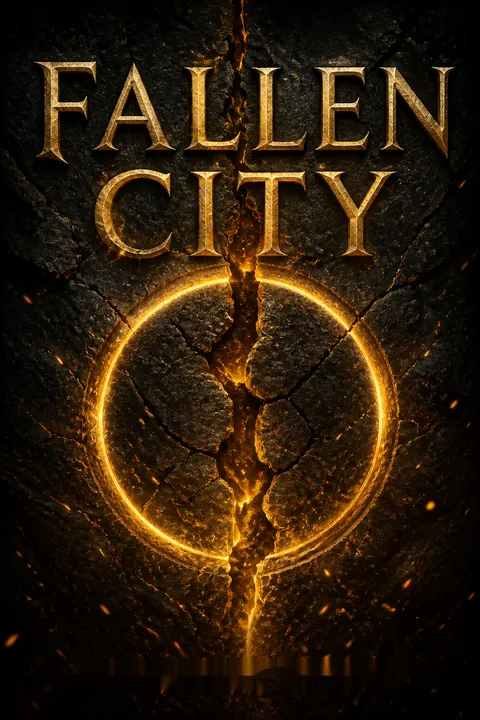
Fallen City is a sweeping, tragic meditation on the costs of revolution, the ambiguity of power, and the search for meaning in a world abandoned by its gods. Through the intertwined stories of Luca and Maris, Adrienne Young explores how love, faith, and ambition can both redeem and destroy. The novel's dual timeline structure and shifting perspectives invite the reader to question the nature of fate, justice, and agency. The gods' silence and the ambiguous nature of their gifts force the characters—and the reader—to confront the possibility that meaning must be forged in the crucible of suffering and choice. The city of Isara, with its crumbling walls and haunted river, becomes a symbol of all societies caught between the longing for renewal and the weight of history. In the end, Fallen City offers no easy answers, but it insists on the enduring power of hope, love, and the human capacity to begin again—even in the ashes of all that has been lost.
Review Summary
Fallen City by Adrienne Young receives mixed reviews, with a 3.78/5 rating. Readers praise the evocative Greco-Roman setting, political complexity, and beautiful prose, but many struggle with the non-linear dual timeline structure that switches between past and present POVs. Common complaints include confusion in early chapters, underdeveloped romance between protagonists Maris and Luca, and insufficient world-building regarding the magic system and gods. Some readers found the political intrigue compelling once they adjusted, while others remained lost throughout. The pacing polarizes readers—those who persevere often appreciate the layered plot, but many DNF due to difficulty connecting with characters and understanding the rebellion's stakes.
People Also Read
Characters
Luca Matius Casperia
Luca is the adopted heir of a powerful Magistrate, born in the Lower City but raised in the Citadel. Marked by a divine halo after avenging his mentor's death, he becomes the reluctant symbol of the New Legion's rebellion. Torn between his sense of justice, his love for Maris, and the violence he unleashes, Luca is haunted by guilt and the knowledge that every victory comes at a cost. His relationship with Maris is both his salvation and his undoing, forcing him to choose between love and duty. Over the course of the story, Luca transforms from an idealistic novice to a hardened leader, ultimately sacrificing his own happiness for the hope of a better future.
Maris Casperia
Maris inherits her mother's seat in the Forum after a suicide, burdened by family shame and the city's expectations. Trained as a novice to the Priestess, she is both deeply spiritual and deeply skeptical, questioning the justice of the gods and the legitimacy of power. Her love for Luca is a rebellion against everything she has been taught, and her journey is one of self-discovery and sacrifice. Maris is manipulated by her uncle Nej and forced to make impossible choices, but she ultimately claims agency by defying both the old order and the gods themselves. Marked by a new divine gift, she becomes a symbol of hope and resistance in exile.
Vale Saturian
Vale is the son of the Consul and Luca's closest friend. He becomes the commander of the New Legion, leading the rebellion with a mix of idealism and pragmatism. Vale is torn between his loyalty to Luca, his duty to the city, and the demands of leadership. He is forced to make brutal decisions, sacrificing his own happiness and innocence for the greater good. Vale's relationship with Luca is both brotherly and fraught, as each must confront the limits of their ideals and the cost of revolution.
Nej Casperia
Nej, Maris's uncle and the Consul's scribe, is a master of political intrigue. Secretly gifted by the gods, he manipulates events from the shadows, orchestrating betrayals and sacrifices—even of his own family—to achieve his vision of destiny. Nej's ambition is both his strength and his downfall, as he ultimately becomes a symbol of the city's corruption and the dangers of unchecked power.
Roskia
Roskia is a Centurion in the New Legion, rising from the Lower City to become a leader of the rebellion's most violent faction. He embodies the revolution's descent into bloodlust, orchestrating the execution of Magistrates and threatening to expose Luca's secrets. Roskia's charisma and brutality make him both a hero and a villain, and his actions force the other characters to confront the consequences of their choices.
Théo
Théo is Luca's tribune, a young man from the Lower City who becomes Maris's protector in exile. Quiet, competent, and fiercely loyal, Théo is shaped by loss and the violence of war. His devotion to Luca and Maris is unwavering, and his decision to follow Maris into exile is an act of both love and defiance. Théo represents the ordinary people caught in the crossfire of history, and his journey is one of survival and hope.
The Consul (Saturian)
The Consul is the city's highest authority, a man whose pride and desperation drive him to betray Isara to its ancient enemy, Valshad. He is both a symbol of the old order's corruption and a tragic figure undone by his own ambition. His secret pact with Valshad sets the stage for the city's destruction, and his death marks the end of an era.
Ophelius
Ophelius is the last living Priestess, imprisoned and dying as the city's magic fades. She is both a victim and a wielder of power, her prophecies and rituals shaping the destinies of Maris and Luca. Ophelius's death marks the end of the city's connection to the gods, and her legacy is one of both wisdom and warning.
Vitrasian
Vitrasian is Luca's mentor and the city's most brilliant thinker. Her execution by the Forum becomes the spark that ignites the rebellion, and her teachings shape the ideals of both Luca and Maris. Vitrasian's legacy is one of courage, sacrifice, and the enduring power of ideas.
Iola
Iola is Maris's childhood caretaker, a woman from the Lower City who provides love and guidance in a world of cruelty. Her presence is a reminder of the city's humanity and the cost of its divisions. Iola's choices and sacrifices echo through Maris's journey, grounding her in compassion and memory.
Plot Devices
Dual Timelines and Interwoven Narratives
The novel employs a dual timeline structure, alternating between "Now" and "Before" chapters to reveal the origins of the characters' convictions and the unfolding of the rebellion. This structure allows the reader to see how personal histories, traumas, and relationships shape the present crisis. The interwoven narratives of Luca and Maris create a sense of inevitability, as their choices echo and refract across time. The use of prophecy, foreshadowing, and recurring symbols (the river, the godsmark, the judgment stone) reinforces the theme of fate versus free will, while the shifting perspectives highlight the ambiguity of truth and justice.
Divine Intervention and Ambiguous Magic
The presence of godsblood and divine gifts blurs the line between magic and faith, blessing and curse. The gods' interventions are ambiguous, often bringing as much suffering as salvation. The magical elements—marks, prophecies, and rituals—serve as both plot devices and metaphors for power, destiny, and the limits of human agency. The ambiguity of the gods' will forces the characters to confront the possibility that meaning must be made, not received.
Political Intrigue and Betrayal
The novel is driven by political machinations, secret alliances, and betrayals. The Forum, the Consul, and the Magistrates are locked in a deadly game of power, with each move carrying unintended consequences. The use of coded messages, secret pacts, and shifting allegiances creates a sense of constant uncertainty and danger. The personal is always political, and every act of love or mercy is also an act of rebellion or complicity.
Love as Resistance and Sacrifice
The central love story between Luca and Maris is both a personal rebellion and a microcosm of the city's struggle. Their relationship is tested by war, betrayal, and the demands of leadership, but it endures as a source of hope and meaning. The motif of vows—both marital and political—underscores the theme of sacrifice, as both must give up everything for the possibility of a new beginning.
Cycles of Violence and Renewal
The novel is structured around cycles: of violence, betrayal, and attempted renewal. The fall of Isara mirrors the fall of Valshad, and the revolution becomes indistinguishable from the tyranny it replaces. Yet, in the ashes of destruction, the possibility of something new remains. The ending, with Maris raising her hand to join the exiles in reclaiming the city, suggests that history is not destiny, and that even in ruin, hope can be reborn.
About the Author

Download PDF
Download EPUB
.epub digital book format is ideal for reading ebooks on phones, tablets, and e-readers.








































