
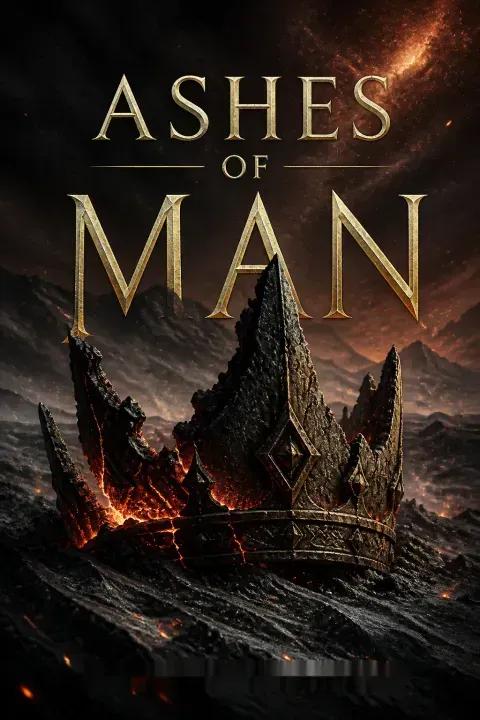


Plot Summary
Gibson's Secret Name
Hadrian1 builds a cairn for his beloved tutor Gibson10 on the island of Thessa, then visits Nov Belgaer athenaeum on Colchis to learn the old man's true identity.
The aging primate Arrian reluctantly discloses that Tor Gibson10 was Prince Philippe Bourbon,10 who led the failed Septembrine Revolt centuries ago, served his sentence on the prison planet Belusha, and ultimately embraced the scholiast order to live in anonymity. Hadrian1 reels: he himself ordered the death of Gibson10's son, Lord Augustin Bourbon, never knowing the connection. Gibson10 had known, and had forgiven him.
Arrian hands Hadrian1 a letter Gibson10 left behind, along with a replacement copy of a cherished book containing a fresh letter of introduction to the scholiasts. On the library steps, Hadrian1 weeps, understanding at last how completely Gibson10 had loved him as a son.
This revelation recontextualizes the entire mentor relationship. Gibson's forgiveness becomes a mirror for Hadrian's own struggles with guilt and self-recrimination. The scholiast order's practice of stripping away old names serves as a metaphor for Hadrian's own fractured identity: he is simultaneously Marlowe, Halfmortal, and murderer. The letter containing a new scholiast introduction symbolizes a path not taken, the quiet life of scholarship Hadrian might have lived had he never left his father's house.
Eleven Years Alone
Brought before Governor-General Velan Dorr on Colchis, Hadrian1 and Valka2 are interrogated about their decades-long absence. The governor demands Valka2's story. She explains how she, Pallino, Corvo, and Crim escaped Padmurak by stealing a Lothrian military freighter, only to find its cargo hold filled with thousands of frozen human bodies destined for Cielcin consumption.
They clamped the freighter to the hull of a Cielcin vessel and rode through warp for seven years to Dharan-Tun. On the worldship Eue, they infiltrated the captured Tamerlane, found the Ascalon intact, and waited years more in hiding.
When Hadrian1's signal finally reached them, Valka2 powered up the ship, Corvo seized the bridge weapons, and they extracted Hadrian1 during the Black Feast, losing Pallino, Crim, and Corvo in the escape.
Valka's narrative transforms her from Hadrian's companion into his savior. The eleven years she spent waiting, the horror of discovering the slave ship's cargo, and the tactical patience required to infiltrate a Cielcin worldship reveal a steel core beneath her scholarly exterior. Her story also establishes the profound moral calculus of survival: fifty could be saved from ninety thousand, and that was victory. This brutal arithmetic haunts everything that follows.
Ghost in the Ruins
After 107 years away, Hadrian1 and Valka2 return to Maddalo House on Nessus to find everything shrouded in dust and white sheets. Magnarch Venantian greets Hadrian1 with accusations of cowardice, but Imperial physicians begin the painful work of regenerating his lost fingers and reconstructing his shattered shoulder.
In a stunning turn, Lorian Aristedes4 is found alive: the messenger Dorayaica sent to announce Cielcin unification had been recovered and stored in fugue.
When Lorian4 visits, he strikes Hadrian1's healing shoulder in anguish, demanding to know why he alone was spared from among ninety thousand. They reconcile, and Lorian4 asks to rejoin Hadrian1's service. Meanwhile, Hadrian1 spars with young Commander Hector Oliva,12 discovering some of his old fighting instinct despite his diminished body.
The white-sheeted house externalizes Hadrian's psychological state: preserved but lifeless, awaiting a hand to pull the coverings away. Lorian's violence expresses survivor's guilt more eloquently than words, and Hadrian's acceptance of the blow signals his own understanding. Oliva functions as a mirror of younger Hadrian: cocky, xenophilic, eager for glory. Hadrian's warning to him about the cost of battle carries the weight of centuries.
Caesar's Hidden War
On Carteia, the Emperor3's chamberlain Nicephorus secretly conveys Hadrian1 to the bombed-out ruins of Rothsmoor, where William Caesar3 waits alone. The Emperor3 discloses that HAPSIS, a clandestine branch of Imperial intelligence, has catalogued multiple extinct galactic civilizations: the Vaiartu (whom the Cielcin call the Enar), the Monumentals (the Watchers), and the Firstborn (the Quiet's people).
He recounts the doomed Atropos expedition to Nairi, which discovered a Watcher's body entombed beneath a Vaiartu city. The entire crew committed suicide afterward.
William3 reveals that the God Emperor's own journal, the suppressed Acts of Will, describes the same Hidden One who speaks to Hadrian.1 The Emperor3 then orders Hadrian1 to hunt and kill a living Watcher alongside him when the time comes.
This scene reframes the entire conflict from a political war to a cosmic struggle. The Emperor's vulnerability in sharing forbidden knowledge transforms their relationship from ruler-and-subject to co-conspirators. His belief that Hadrian is a recurrence of the God Emperor's prophetic gift reveals both hope and desperation. The Atropos expedition's mass suicide foreshadows the psychological toll these revelations exact on those who encounter them.
The Knife in the Dark
Weeks after the secret meeting, a killer disguised as a legionnaire murders three of Hadrian1's guards and attacks his cabin. Hadrian1 wrestles the assassin on the ship's stairs, stabbing him, but the man escapes into the Carteian night. Blood analysis traces the attacker to Urslic tribesmen, pointing to a patron at court.
Hadrian1 suspects Prince Alexander,7 who had told him face to face that he wished Hadrian1 had stayed dead. Before any investigation can proceed, the Emperor3 summons Hadrian1 and assigns a new mission: infiltrate a MINOS stronghold on the nameless world DB-639D, where the Extrasolarian sorcerers are believed to be manufacturing chimeric soldiers. Hadrian1 will accompany Tribune Bassander Lin8's 409th Centaurine Legion.
The assassination attempt crystallizes the courtly knife-fight surrounding Hadrian. Alexander's motive is psychological: he fears Hadrian as a rival for the throne, a fear his mother the Empress has cultivated. The assignment to Ganelon serves multiple Imperial purposes: it removes Hadrian from the court's volatile politics, tests his continued usefulness, and addresses a genuine military threat. The Emperor plays chess with lives.
The Lords of MINOS
Hadrian1 leads a strike team onto Ganelon with Valka2 and Centurion Sharp11's Dragonslayers. The fortress proves to be a laboratory where MINOS has engineered LTH-81, a retrovirus that causes explosive, Mericanii-style cancers.
The virus is airborne and designed to incapacitate entire planetary populations before Cielcin invasion. Before the team can destroy the communications tower, golems and human guards surround them. Urbaine,6 Valka2's tormentor from Berenike, appears with overwhelming force.
He executes the captured soldiers point-blank and reveals that the Cielcin Prophet Dorayaica carries actual Watcher blood in its veins. MINOS plans to study this divine biology and claim godlike power for themselves. Hadrian1 and Valka2 are paraded to the command tower as prisoners.
The virus represents technological horror: Mericanii immortality techniques perverted into a weapon of genocide. Urbaine's reappearance makes the conflict intensely personal for Valka, whose neural damage from his previous attack still causes her left hand to seize. His revelation about Watcher blood confirms the Emperor's secret knowledge and raises the stakes from galactic war to ontological annihilation. The sorcerers' ambition to steal divinity echoes Prometheus and Paradise Lost.
The Sorcerer's Three Deaths
In the command tower, the Elect-Masters prepare to beam their minds offworld as the Imperial and Jaddian fleets unexpectedly arrive. Hadrian1 seizes a fallen sorcerer's pistol and shoots Urbaine6 through the head. He then duels the Nipponese magus Takeshi, killing him with a broken Cielcin sword.
But Urbaine6 has already transferred his consciousness into a nearby golem. The iron monster attacks Hadrian,1 vowing to deliver his corpse to Dorayaica.
Valka,2 fighting through the terror of Urbaine6's lingering influence in her neural lace, grabs the energy weapon and methodically destroys the golem with shot after shot until the gun runs dry. She screams in raw, primal victory. Sharp11's men and Jaddian boarders secure the tower, but Urbaine6's final fate remains uncertain.
Urbaine's survival as pure consciousness stripped of biology represents the ultimate Extrasolarian heresy: the self as transferable data. Valka's act of violence is cathartic but inconclusive. She can never know if he truly died or escaped. This uncertainty mirrors trauma itself: the abuser may be gone, but the neural pathways he carved remain. Her scream joins Hadrian's own unheard screams from Dharan-Tun, a duet of survival and its costs.
The Mask Removed
Aboard the Jaddian flagship Mnemon, Hadrian1 and Valka2 are brought before the Darkmoon Prince.5 The black-masked figure speaks with intimate familiarity, referencing Emesh and the highmatter sword he once gifted a young myrmidon.
He unclasps the porcelain mask, revealing Sir Olorin Milta,5 the Maeskolos swordmaster who saved Hadrian1's life decades ago and sponsored his doomed quest for Vorgossos. Olorin5 explains he traveled the Empire in disguise to witness the Cielcin threat firsthand, and what he saw convinced him to commit the full Jaddian armada of twenty thousand ships.
He tells Hadrian1 he believes God has sent him as humanity's champion. His concubine Kalima is the same woman who accompanied him on Emesh. Prince Kaim5 pledges his fleet to the war's end.
Olorin's revelation recontextualizes Hadrian's entire journey. The sword, the patronage, the pressure on Count Mataro to release Hadrian for his quest: all were the quiet manipulations of a prince who saw in a young gladiator something worth gambling on. Kaim's Zoroastrian faith provides a theological framework for Hadrian's abilities that the Chantry cannot. His belief that Hadrian is divinely sent both honors and burdens the exhausted knight.
A Father Besieged
At the fuel depot Fidchell, Prince Alexander7's lone destroyer intercepts the combined fleet. Haggard and sleepless, the young prince7 reports that the Cielcin ambushed the Emperor3's tour at Perfugium with seven worldships.
The Radiant Dawn was destroyed, the Martian fleet scattered, and Caesar3 is trapped in the colonial catacombs beneath Resonno with only six thousand defenders. Dorayaica's giant holograph appeared over the city demanding surrender. Alexander7 admits he did not know what to do and begs Hadrian1 for counsel.
Hadrian1 confronts him about the assassination attempt on Carteia; Alexander7 does not deny it. Hadrian1 swears to save the Emperor,3 but extracts a promise: if William3 lives, Hadrian1 wants his freedom from Imperial service.
Alexander embodies the tragedy of inherited power. Raised to fear rivals, he cannot trust the one man who might genuinely help him. His confession, however tacit, reveals the rot at the Empire's heart: the Emperor's own family plots against his servants. Hadrian's demand for freedom represents a profound shift. After centuries of service, he finally articulates what he wants: not power, not glory, but release.
Into the City of Ash
Hadrian,1 Valka,2 Lorian,4 Prince Kaim,5 and Sharp11's Dragonslayers drop through Perfugium's ash-choked atmosphere onto the ruined hippodrome. The city Resonno is a graveyard of shattered spires and blackened bone, snowed under gray ash.
They fight through Cielcin chimeras and swarms of nahute, the Jaddian swordmasters arriving just in time to destroy a spider-like war machine. Beneath the arena, they find the secret entrance to the colonial catacombs, where millions of sleeping colonists float endlessly in frosted fugue pods.
Hushansa attacks with multiple puppet bodies; a friendly grenade saves Hadrian1 but knocks him unconscious. He wakes in the Emperor3's command center, where William3 has directed a desperate defense for two years underground.
The ash-covered city externalizes Hadrian's psychological state: everything he has fought for lies in ruins. The juxtaposition of millions of peacefully sleeping colonists against the desperate defenders who will likely die to protect them creates an unbearable moral tension. The catacombs themselves, with their mile-deep spiral ramps and heat-dissipating architecture, represent the Empire's grand ambition and its vulnerability: all this engineering, and still the Cielcin dig.
The Duke's Unmaking
The vayadan-general Attavaisa9 hails the bunker, demanding surrender. When the Emperor3 refuses, Attavaisa9 displays Duke Gaspard Valavar, the duchess's husband. The man is naked, battered, and grotesquely swollen. The general draws a curved knife along Gaspard's distended abdomen, spilling a half-formed Cielcin infant onto the floor.
Both die on camera. Duchess Valavar collapses screaming. In the stunned aftermath, Valka2 pulls Hadrian1 into a corridor, gripping her phylactery pendant. She tells him she wants a child, their child, using the preserved blood they exchanged centuries ago. She is done waiting. Hadrian,1 weeping, agrees. They kiss as bombs shake the earth overhead.
Attavaisa's atrocity is calculated psychological warfare, designed to demonstrate that even the highest nobility become breeding stock under Cielcin dominion. The duchess's collapse mirrors Hadrian's own previous trauma: both have witnessed the unmaking of what they loved. Against this horror, Valka's request for a child becomes an act of radical hope, a refusal to let the enemy's cruelty foreclose the future. The phylactery, a symbol of her Tavrosi culture's compromise with Imperial tradition, now carries the weight of resurrection.
Epsilon Flight Destroyed
The evacuation of the colonial sleepers begins, wave after wave of transports rocketing from underground silos. Hadrian1 and Valka2 are separated by a tunnel collapse while escorting nobles to safety, communicating via comms. Valka2 boards transport E-17 with Centurion Sharp.11 From the command center, Hadrian1 watches the fourth wave launch.
A Cielcin force, concealed until the final moment, ambushes the defenseless transports. Ship after ship blinks red on the status board. Valka2's holograph image flickers: her lips begin to form a word, then the feed dies. Transport E-17 is gone, along with nearly every ship in the flight. Hadrian1 sinks to the floor, repeating a word too small for the catastrophe. Valka2 is dead.
The destruction of Epsilon Flight is structured as a cinematic cross-cut between rising hope and sudden annihilation. Valka's unfinished word, the swinging prayer beads in the cockpit, Hadrian's collapse: each detail compounds the horror. The randomness of her death, the fact that she was in that specific transport because of a cave-in's happenstance, underscores the fundamental injustice of war. Hadrian's power, his visions, his Quiet-given gifts cannot protect the one person who matters most.
Fury Beyond Time
Attavaisa9 hails the bunker again to gloat over the massacre. Hadrian,1 hollowed by grief, rises from the floor. As the Cielcin general9 mocks the dead, Hadrian's vision suddenly unlocks: he sees time splintering into infinite possible states, everything frozen between heartbeats. He focuses on the windows visible behind Attavaisa9 in the holograph and wills the glass to fail.
Hairline cracks propagate across the distant panes. The windows explode outward into vacuum. Attavaisa9 and its guards are torn from their feet and hurled into space, dying instantly. The holograph plate itself cracks. Hadrian1 screams, a sound of triumph and agony indistinguishable, as the lights above him burst. The power that abandoned him on Dharan-Tun has returned.
This moment represents both apotheosis and absolute failure. Hadrian's power, the Quiet's gift, was always strongest when he acted without calculation, when fury or love overrode his conscious mind. That it returns only after Valka's death suggests either that his grief unlocked something, or that the Quiet withheld it until this precise moment. The manner of Attavaisa's death, killed through a holograph across thousands of miles, demonstrates that Hadrian's ability transcends physical proximity: it operates on probability itself.
The Broken Nose
Aboard the Tempest after the rescue, the Emperor3 holds a public audience to honor Hadrian1's service. He offers to make Hadrian1 his adopted son and wed him to Princess Selene, framing it as the highest reward imaginable.
When Hadrian,1 consumed by grief, says nothing can replace what he lost, William3 dismisses Valka2 with the words she was only Tavrosi. Hadrian1's fist connects with the Imperial face, breaking his nose. Excubitors and Martians surround him with drawn highmatter.
Lorian4 steps into the chaos and talks Hadrian1 into dropping his weapon. The Emperor,3 bleeding and stunned, orders Hadrian1 taken to the brig. Prince Alexander7 presses for the prison planet Belusha. Hadrian1 is dragged away, a man condemned for striking the Sovereign of half a billion suns.
The Emperor's casual dismissal of Valka reveals the chasm between his understanding and Hadrian's reality. To William, Tavrosi means foreign, outside the palatine order, replaceable. To Hadrian, Valka was everything. The punch is not merely rage; it is Hadrian's final rejection of the Imperial system that demanded everything from him and would demand still more. Alexander's push for Belusha completes his arc from admirer to enemy, his fear of Hadrian now justified by an actual crime.
The Good Commander's Gambit
Lorian4 visits Hadrian1 in his cell, revealing he has orchestrated an escape with Bassander Lin8's covert assistance. Sharp11's Dragonslayers, disguised as ordinary legionnaires, extract Hadrian1 and seal him in a dead shuttle pod ejected silently from the Tempest. Hours later, Prince Kaim5's ship recovers the drifting pod.
Kaim5 discloses that Lorian4 intends to take full responsibility for the escape, knowing his status as an intus will earn him harsher punishment than any palatine. Kaim5 offers Hadrian1 permanent sanctuary on Jadd, where Imperial assassins and Chantry inquisitors cannot reach him. Standing before an open cargo bay overlooking the void, Hadrian1 clutches Valka2's phylactery and accepts. There is no path back. The exile begins.
Lorian's sacrifice reverses the dynamic of Eue: this time, he chooses to stay behind so Hadrian can escape. His use of himself as a scapegoat, gambling that his genetic status will protect him from execution, is the final expression of his loyalty. The open cargo bay framing the darkness of space becomes the visual correlative of Hadrian's future: empty, directionless, cold. Sanctuary is not salvation. It is merely the absence of immediate threat, the space in which grief must be endured.
Analysis
Ashes of Man is, above all, a study in cumulative loss and its psychological wages. Hadrian1 begins the novel already hollowed by the destruction of his Red Company, seeking solace in the grave of his mentor on a quiet backwater world. The narrative then systematically strips away every remaining source of meaning: the revelation that he unknowingly killed Gibson10's son compounds his guilt; the mission to Ganelon forces him back into the violence he dreads; and the siege of Perfugium takes Valka,2 the one person who made his centuries of suffering bearable. His final act, punching the Emperor,3 is not madness but the logical terminus of a man who has given everything and been told it was not enough.
The novel interrogates the nature of service. Hadrian1 swore an oath to the Emperor,3 and that oath has been used to justify sending him into hell repeatedly. The Emperor3's offer to make Hadrian1 his son reveals the transaction at the heart of Imperial loyalty: obedience in exchange for elevation. Hadrian1's refusal, his fist, is a rejection of the entire feudal logic that has consumed his life. He does not want to be the Emperor3's son. He wanted to be Valka2's husband, and the Empire forbade it.
Lorian Aristedes4 functions as Hadrian1's shadow and conscience. An intus, he understands exclusion from the palatine order in his bones. His decision to take the blame for Hadrian1's escape reverses their earlier dynamic: this time, Lorian4 chooses sacrifice, proving that devotion need not flow from oath but from love. Prince Kaim5's sanctuary represents an alternative to Imperial rule, a society where Hadrian1 might be valued for what he is rather than used for what he can do.
The cosmic revelations about Watchers and Firstborn reframe the galactic war as a skirmish in a longer, stranger conflict. But the novel wisely keeps its focus on the human cost. Attavaisa9's vivisection of Duke Gaspard, the execution of Sharp11's captured soldiers, the destruction of Epsilon Flight: each atrocity is rendered with unflinching clarity. The Quiet's power, when it finally returns, does not feel triumphant. It feels like too little, too late. The windows shatter, the general9 dies, but Valka2 is still gone. That is the novel's darkest and truest insight: not even the ability to choose among possible futures can undo the past.
Review Summary
Ashes of Man, the fifth book in The Sun Eater series, receives overwhelmingly positive reviews with a 4.49/5 rating. Readers praise Christopher Ruocchio's exceptional prose, emotional depth, and character development, particularly of protagonist Hadrian Marlowe at 384 years old. The book explores themes of trauma, grief, and recovery following the devastating events of Kingdoms of Death. While slower-paced initially, it builds to an explosive, emotionally devastating climax. Reviewers appreciate the expanded focus on supporting characters like Valka Onderra and Lorian Aristedes, calling it masterful science fiction despite being the weaker half of a split novel.
People Also Read
Characters
Hadrian Marlowe
Exhausted palatine knight and narratorThe Halfmortal, Sun Eater, hero of the Empire and destroyer of worlds. Nearly four centuries old, his body bears the scars of seven years of Cielcin torture: missing fingers regenerated, shoulder rebuilt, face raked by Dorayaica's claws. He carries a gift from a mysterious entity called the Quiet: the ability to perceive and choose among possible futures. But this power has abandoned him since his escape from the Cielcin, leaving him feeling hollow and broken. He loved three women: one he lost, one he betrayed, and Valka2, the Tavrosi xenologist who has been his companion for centuries. He serves the Emperor3 out of oath, not faith, and increasingly questions whether his service has cost more than it has saved.
Valka Onderra
Tavrosi xenologist and Hadrian's paramourA scholar from the Demarchy of Tavros with perfect memory and neural implants that let her interface with machines. Her left arm bears the fractal tattoo of her clan, and her left hand still spasms from the neural virus implanted by the sorcerer Urbaine6. She crossed the galaxy alone for eleven years to rescue Hadrian1 from the Cielcin. Proud, sharp-tongued, and unimpressed by Imperial hierarchy, she has always been Hadrian1's moral compass and anchor. For centuries she resisted the idea of children, a product of her Tavrosi upbringing where reproduction is a clan matter. Her relationship with Hadrian1 exists outside Imperial law: they cannot marry because he is palatine and she is not.
Emperor William XXIII
Ruler of the Sollan EmpireThe longest-reigning Emperor in history, having ruled for over a thousand years through careful use of cryonic fugue to stretch his lifespan. He carries the genetic heritage of the God Emperor who defeated the Mericanii machines. Secretly, he knows that the God Emperor was not divine but rather touched by the same Hidden One who speaks to Hadrian1. He has devoted his reign to the Cielcin war, refusing to rest until humanity is safe. His public persona is pharaonic calm; privately, he grieves for every world lost. He sees Hadrian1 as both his greatest asset and his most dangerous loose cannon, a sword without a handle.
Lorian Aristedes
Brilliant intus tactician, last Red Company survivorAn intus, a palatine bastard born outside Imperial genetic controls, whose body betrays him with chronic pain, dislocating joints, and brittle bones. Despite his physical limitations, he is one of the finest strategic minds in the Legions. Hadrian1 handpicked him to deliver Dorayaica's message to the Empire, sparing him from the Black Feast that consumed the Red Company. This survival haunts Lorian, who believes he should have died with the others. His loyalty to Hadrian1 is absolute, sharpened by self-loathing and laced with dark humor. He is the only person who consistently tells Hadrian1 hard truths.
Prince Kaim du Otranto
Jaddian prince disguised as a swordmasterAlso known as Sir Olorin Milta, the Maeskolos swordmaster who befriended a young Hadrian1 on Emesh. He traveled the Empire in disguise to assess the Cielcin threat personally, and what he saw convinced him to commit the full Jaddian armada to the war. He wears a porcelain mask in public, as is custom for Jaddian princes. Beneath it, he is a man of genuine faith who believes Hadrian1 is divinely sent. He balances piety with pragmatism: his harem is piously reduced to 125 concubines, and his sword arm has slain Cielcin princes. His friendship with Hadrian1 spans centuries and transcends political calculation.
Urbaine
MINOS Elect-Master, Valka's tormentorA senior sorcerer of the Extrasolarian order MINOS, his body modified to resemble a pale, hairless hybrid of human and Cielcin. He implanted a neural virus in Valka2's brain that nearly destroyed her, and for seven years oversaw Hadrian1's torture on Dharan-Tun. His consciousness can transfer between bodies and machines, making him effectively immortal. He serves Dorayaica not out of loyalty but because he believes the Prophet's Watcher blood holds the key to genuine divinity. Arrogant, theatrical, and casually cruel, he represents everything Hadrian1 and Valka2 despise about the Extrasolarian rejection of human limits.
Prince Alexander
Emperor's son, fearful rival to HadrianOne of the Emperor3's many children, and the one who once squired for Hadrian1 and worshipped him. That admiration curdled into fear and hatred after Hadrian1 publicly humiliated him. His mother, the Empress Agrippina, has cultivated his paranoia that Hadrian1 intends to seize the throne. He likely orchestrated the assassination attempt on Carteia. Yet when his father is trapped on Perfugium, he has no one else to turn to. He is young, insecure, and trapped between genuine filial love and the court's corrosive politics.
Bassander Lin
Steadfast tribune and old allyA Mandari officer who has served alongside Hadrian1 for centuries, present at his death and resurrection fighting Aranata Otiolo. His body was shattered by the vayadan Bahudde at Berenike, leaving him dependent on a cane and pain medication. Despite his physical limitations, he is utterly reliable, the kind of officer who executes orders precisely and never complains. His faith in Hadrian1 is quiet but unshakeable. He risks his career to assist Lorian4's jailbreak plan, demonstrating that his loyalty runs to the man, not just the rank.
Ugin Attavaisa
Cielcin vayadan, Prophet's generalFormerly an independent Cielcin prince, now one of Dorayaica's six White Hand generals after swearing fealty at the Aetavanni. Unlike older vayadan, Attavaisa has not been converted into a machine hybrid, remaining fully organic and unable to speak human languages. It commands the siege of Perfugium with calculated cruelty, using psychological warfare as readily as plasma bombardment. Its vivisection of Duke Gaspard demonstrates that Cielcin dominance extends to control over human reproduction itself.
Tor Gibson
Hadrian's deceased mentor, secret princeBorn Prince Philippe Bourbon, he led a failed revolt against his brother and was exiled to Belusha before embracing the scholiast order. As Tor Gibson, he became tutor to House Marlowe and the closest thing to a father Hadrian1 ever knew. He was returned to athenaeum after helping Hadrian1 escape his cold, cruel father. He spent his final years on Colchis, freezing himself for decades in a hidden medical pod just for the chance to see Hadrian1 again. His love for Hadrian1 was so complete that he forgave Hadrian1 for killing his biological son.
Quentin Sharp
Elite centurion, Dragonslayer commanderFirst Centurion of the 409th Legion's Ninth Special Detachment, nicknamed the Dragonslayers for their effectiveness against Cielcin chimeras. A bald, burn-scarred veteran who leads with gruff competence and dark humor. He and his men serve as Hadrian1's de facto personal guard through the Ganelon and Perfugium campaigns. His loyalty is professional, not personal: he follows orders, mourns his dead, and does the job. The repeated losses his unit suffers are the cost of being the tip of the spear.
Hector Oliva
Young knight, mirror of Hadrian's youthA Legion Intelligence officer assigned to escort Hadrian1 from Colchis to Nessus. He wears his hair in a long Cielcin-style braid, speaks the enemy's language, and brims with romantic eagerness for combat. Hadrian1 dislikes him immediately because Oliva reminds him painfully of his younger self: arrogant, xenophilic, and ignorant of war's true cost. A skilled archer and swordsman, he defeats Hadrian1 in their first sparring match. His fate will be written in other battles elsewhere.
Plot Devices
The Quiet's Vision
Probability manipulation across timeA gift from the entity called the Quiet, a being existing at the end of time. Hadrian1 can perceive all possible futures branching from any moment and, with sufficient focus, select the one he desires. This allowed him to survive otherwise fatal encounters, including catching a highmatter sword barehanded. After his torture on Dharan-Tun, the power abandoned him, leaving him feeling hollow and mortal. It returns only after Valka2's death, when grief and fury unlock what conscious effort could not. The vision works best when Hadrian1 acts without calculation, suggesting it operates through instinct rather than will.
LTH-81 Virus
Mericanii cancer plague as bioweaponA retrovirus engineered by MINOS to target gatekeeper genes and excite pituitary growth, causing explosive, tumorous cancers that transform human bodies into immobile masses of flesh. It is airborne and designed for planetary-scale deployment. The virus draws on ancient Mericanii life-extension technologies that kept humans alive as undying but helpless brains in jars. MINOS has been manufacturing and distributing LTH-81 to the Cielcin for decades, ensuring that even if one production site is destroyed, the weapon will still be deployed. The Chantry's expertise in biological containment may be humanity's only hope of developing countermeasures.
MINOS Consciousness Transfer
Mind uploading into new bodiesThe Elect-Masters of MINOS possess dual transmitters in their brains and chests that allow them to beam their consciousness to receivers offworld, where cloned bodies or mechanical hosts await. This makes them effectively immortal, capable of surviving bodily death. The technology requires a hardline connection or tight-beam transmission for large data volumes. It carries risks: duplication can produce divergent copies that become separate individuals, as happened to Kharn Sagara. The sorcerers' willingness to die and be reborn makes them nearly impossible to permanently destroy without first disabling their communication infrastructure.
The Phylacteries
Preserved blood for reproductionIn Tavrosi culture, phylacteries are crystal-preserved samples of blood used for reproduction. Valka2 gave Hadrian1 one containing her blood, and she wears one containing his, a compromise between her Demarchy upbringing (which forbids pairing) and Imperial custom. This exchange is technically illegal under Tavrosi law. The phylacteries represent the child they could never have under Imperial law, where a palatine cannot reproduce without High College approval. After centuries of resistance, Valka2 finally asks Hadrian1 to use them to conceive a child, making the request moments before her death.
Colonial Store Catacombs
Underground fugue storage and defense networkBeneath the city of Resonno on Perfugium lie miles of tunnels housing millions of frozen colonists awaiting transport to new worlds. The complex includes geothermal power, ray-shielded bunkers, and nearly a thousand hidden launch silos designed to fire transport ships into orbit. The architecture incorporates deliberate bottlenecks, blast-attenuating spiral ramps, and heat-dissipating corridor designs to contain launch accidents. During the siege, these features become both sanctuary and trap: the tunnels protect the Emperor3 but can be collapsed to slow the Cielcin advance, trading defenders' lives for time.
The Sun Eater Series

About the Author
Other books by Christopher Ruocchio


Download PDF
Download EPUB
.epub digital book format is ideal for reading ebooks on phones, tablets, and e-readers.








































