
Plot Summary
Blood and Ashes Dawn
On a battlefield soaked in blood and snow, fifteen-year-old Solomon Winett, the Blood General, surveys the cost of victory. Exhausted, hungry, and haunted by the weight of command, he receives word of a truce. Yet, even as peace is offered, Solomon's mind drifts to the Sunfire Palace and the forbidden Princess Devonry, the one he is sworn to protect but forbidden to love. The burdens of leadership and the ache of longing intertwine, setting the stage for a life defined by sacrifice, setting the stage for a life defined by sacrifice. In the shadow of war, Solomon's sense of self is shaped by duty, loss, and a love that must remain hidden, even as the world demands more of him than any boy should bear.
Chains of Duty and Desire
Haunted by memories of the Sunfire Palace, Solomon's devotion to Devonry is both his strength and his curse. The King's command to keep his distance from the Princess is a chain he cannot break, even as his heart rebels. The battlefield may be behind him, but the war within rages on. Solomon's sense of responsibility to his men and his country is matched only by his yearning for a life he cannot have. The tension between love and loyalty becomes the crucible in which his character is forged, setting him on a path where every victory is tinged with personal loss.
Childhood Bonds, Royal Walls
Seven-year-old Devonry, the Princess of Rozentine, finds comfort in her mother's arms and the simple joys of braiding hair. Her world is one of rules and expectations, but also of secret games with Solomon, her closest friend. The seeds of forbidden affection are sown early, as Devonry confides in her mother about the strange, electric happiness she feels around Solomon. Her mother's gentle wisdom hints at destinies entwined by ancient bloodlines, foreshadowing the trials and sacrifices to come. Even in childhood, Devonry's heart is marked by longing and the shadow of loss.
Exile and Hidden Flames
Years later, Devonry is no longer a sheltered Princess but a Queen in exile, hiding in brothels and back alleys with her loyal companions. The world has turned hostile: her father murdered, her throne usurped, and her people suffering under a mysterious plague. Solomon and Argyle risk everything to keep her safe, while Celine, her steadfast friend, battles illness. The group's journey is a test of endurance and trust, as they navigate a land ravaged by disease and betrayal. Devonry's power—her fire—grows, but so does the weight of her responsibilities and the cost of survival.
Plague at the Threshold
The plague sweeping Rozentine is more than a backdrop; it is a force that shapes every decision. As Solomon and Argyle race to find medicine, Devonry tends to her ailing friend and confronts the limits of her own power. The brothel becomes a sanctuary and a prison, a place where love and fear intermingle. The specter of death is ever-present, and the group's unity is tested by exhaustion, hunger, and the relentless pursuit of Nasir's forces. Yet, in the darkness, moments of tenderness and connection offer a fragile hope.
River of Secrets Shared
Seeking respite from the world's dangers, Solomon and Devonry steal away to a moonlit river. There, stripped of titles and burdens, they surrender to desire and the truth of their bond. Their union is both a rebellion and a promise—a defiance of the roles imposed upon them. In the water's embrace, they find solace and strength, even as the world conspires to tear them apart. The river becomes a crucible for their love, a place where secrets are shared and futures imagined, if only for a night.
Hunger, Hope, and Betrayal
The road to safety is long and fraught with peril. Hunger gnaws at body and spirit, and the threat of betrayal looms at every turn. The group's passage through mountain and forest is marked by moments of levity and despair, as old wounds are reopened and new alliances are forged. The specter of the plague follows them, a reminder that no place is truly safe. Yet, even as hope flickers, the bonds between Devonry, Solomon, Argyle, and Celine deepen, preparing them for the trials ahead.
Through Mountain Shadows
Reaching the sanctuary of Lord Frederic's estate, the group finds a brief respite and the promise of healing. Celine's recovery is a balm, and the gathering of allies from the great Houses of Rozentine signals a turning point. Yet, old grievances and new suspicions threaten unity. The legitimacy of the House of Ravens is debated, and the true nature of loyalty is tested. In the shadow of the mountains, secrets are revealed, and the foundations of a new order are laid.
Nightmares and New Resolve
Devonry's sleep is haunted by nightmares of blood and betrayal, visions that force her to confront the cost of survival. The memory of killing to protect her friends weighs heavily, challenging the pacifism her mother taught her. Argyle's counsel offers perspective: survival sometimes demands hard choices, and the past need not define the future. As dawn breaks, Devonry emerges with renewed resolve, ready to claim her destiny and the throne that is her birthright.
Allies Gather, Houses Divided
The great Houses of Rozentine assemble, each bringing their own agendas and wounds. The House of Ravens is legitimized, a symbol of change and inclusivity. Yet, trust is fragile, and the specter of betrayal lingers—especially from the House of Daemonium. Devonry's leadership is tested as she navigates the politics of power, forging alliances and demanding loyalty. The council becomes a crucible for the future of the kingdom, and the choices made here will shape the fate of all.
Ravens Rise, Oaths Forged
Argyle and Celine are named as the heads of the House of Ravens, a home for the outcast and the loyal. Their acceptance is both a personal triumph and a political statement, signaling a new era for Rozentine. Oaths are sworn, and the bonds of friendship are formalized into the fabric of the realm. Yet, the cost of leadership is high, and the weight of expectation presses down on all. In the quiet moments, love and vulnerability are shared, and the promise of a better future is kindled.
The Price of Power
As the group prepares to retake the Sunfire Palace, the true price of power becomes clear. Betrayal from within threatens everything, and the specter of Nasir's dark abilities looms. Solomon's willingness to sacrifice himself for Devonry is matched by her own determination to protect those she loves. The lines between duty and desire blur, and the choices made in the shadows will echo for generations. The cost of reclaiming the throne is measured in blood, trust, and the willingness to face the darkness within.
The Plague's True Face
The source of the plague is revealed to be Nasir, whose Awakened abilities—rooted in the Goddess Etia—allow him to spread despair and sickness. His need for Devonry's blood is not just political but existential; only her light can balance his darkness. The ancient feud between Aerea and Etia, sisters and goddesses, is played out through their mortal vessels. The battle for Rozentine becomes a battle for the soul of the world, as old wounds and divine grudges are brought to bear.
Return to Sunfire Palace
Devonry is captured and returned to the Sunfire Palace, now a gilded cage. Nasir's control is absolute, his madness deepening as the wedding approaches. Friends and allies are imprisoned or forced to watch as leverage. The palace, once a place of safety and joy, is now a stage for Nasir's final gambit. Devonry's strength is tested as she faces the man who was once her friend and now her tormentor, and the true nature of power and love is laid bare.
The Wedding of Shadows
Nasir's wedding to Devonry is a grotesque parody of love and tradition, a ceremony conducted under threat and shadow. Solomon, Argyle, and Celine are held as hostages, their lives hanging in the balance. The gods' ancient feud comes to a head, as Etia's pain and jealousy drive Nasir to madness. Devonry's refusal to submit becomes an act of defiance, and the chapel is transformed into a battlefield where the fate of the kingdom—and the world—will be decided.
Gods' Sorrow, Sisters' Wrath
The true nature of Nasir's madness is revealed: he is the vessel of Etia, the goddess of darkness, whose ancient sorrow and jealousy have poisoned generations. Through visions and memories, Devonry learns the cost of divine love and the pain of abandonment. The battle in the chapel is not just for Rozentine, but for the balance of light and dark, love and loss. The gods' sorrow is mirrored in the suffering of their mortal children, and the cycle of pain threatens to repeat—unless someone is willing to break it.
Phoenix Ascends, Darkness Falls
In a moment of ultimate crisis, Devonry's power awakens fully, transforming her into the Phoenix of Aerea. She confronts Nasir—now fully possessed by Etia—and, in a battle of fire and shadow, brings an end to his reign. The gods are reconciled, their ancient wounds acknowledged but not forgotten. The cost is high: blood, sorrow, and the loss of innocence. Yet, in the ashes of the old world, a new hope is born. Devonry claims her destiny, not as a victim, but as a Queen.
Aftermath and Awakening
The battle won, the survivors count the cost. Friends are lost, wounds—both physical and emotional—must be healed. Solomon's return from Blood Madness is a hard-fought victory, and the bonds of love are tested and renewed. The kingdom begins to heal, and the promise of a new era is made real through acts of mercy, justice, and forgiveness. Devonry and Solomon, united at last, look to the future with hope and determination.
The Crown and the Sword
Devonry is crowned Queen of Rozentine, with Solomon at her side as consort and soulmate. The Houses are united, the House of Ravens legitimized, and the wounds of the past begin to close. The people rejoice, and the promise of a better future is made tangible. In the quiet moments, love is celebrated, and the lessons of sacrifice, loyalty, and hope are woven into the fabric of the realm. The crown and the sword—Devonry and Solomon—stand together, ready to face whatever comes.
New Dawn, New Heir
Months later, Devonry gives birth to a son, Wolfe—a child of sun and blood, hope and renewal. The pain of the past is not forgotten, but it is transformed into strength and compassion. The kingdom enters a new era, guided by the wisdom of those who have suffered and survived. The cycle of love and loss, of gods and mortals, continues—but now, there is hope that the mistakes of the past will not be repeated. In the laughter of a child and the embrace of lovers, the promise of a brighter future is kept.
Analysis
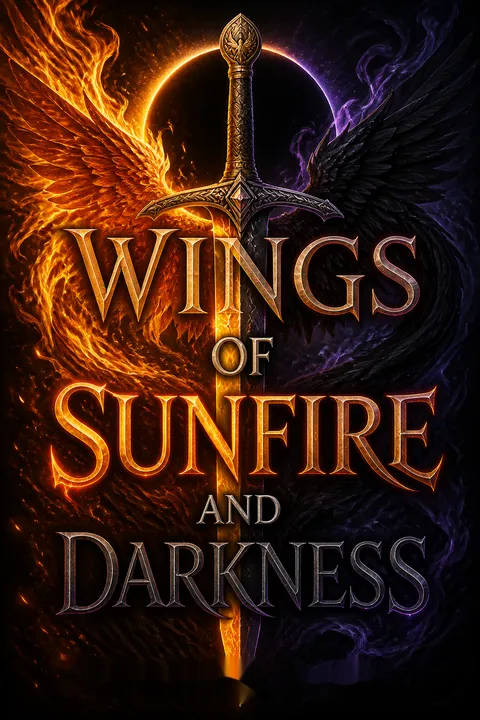
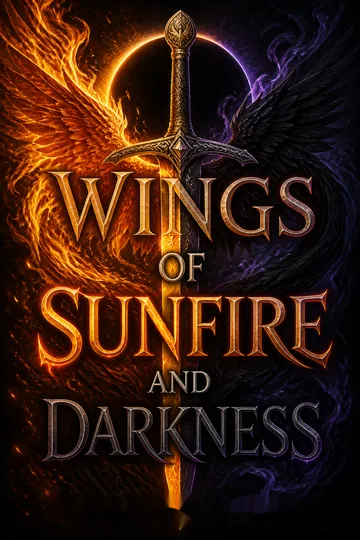
Wings of Sunfire and Darkness is a sweeping fantasy that explores the intersection of personal trauma, political upheaval, and the enduring power of love. At its heart, the novel is a meditation on the cost of survival and the possibility of healing—not just for individuals, but for entire societies. Through the intertwined journeys of Solomon and Devonry, the story interrogates the nature of duty, the burden of leadership, and the ways in which the past—both personal and ancestral—shapes the present. The use of divine reincarnation and shared dreams elevates the narrative, making the characters' struggles both intimate and epic. The plague serves as a powerful metaphor for despair and the consequences of unchecked power, while the legitimization of the House of Ravens signals a move toward inclusivity and justice. Ultimately, the novel argues that true leadership is forged in compassion, that love is both a source of strength and vulnerability, and that the mistakes of the past need not define the future. In a world scarred by loss, the promise of renewal—embodied in the birth of Wolfe—offers hope that, through courage, honesty, and unity, even the deepest wounds can be healed.
People Also Read




Characters
Solomon Winett
Solomon is the Blood General of Rozentine, a prodigy of war and a man forged by loss, duty, and forbidden love. His devotion to Devonry is the axis of his existence, shaping every choice he makes. Torn between the chains of loyalty to the crown and the yearning of his heart, Solomon's journey is one of sacrifice and self-discovery. His Awakened powers—rooted in the bloodline of Levim—make him both protector and potential monster, especially when driven to Blood Madness. Solomon's psychological complexity lies in his struggle to reconcile his violent nature with his deep need for connection and peace. His arc is one of learning to accept love, vulnerability, and the possibility of happiness, even as he faces the darkness within and without.
Devonry Estand
Devonry is the heart of Rozentine—a Princess turned Queen, forced to grow from innocence to wisdom through suffering and loss. Her journey is marked by the tension between the pacifism of her mother and the harsh realities of survival. Gifted with the power of fire, she is both a healer and a destroyer, a symbol of hope and a vessel for ancient pain. Devonry's psychological depth is revealed in her struggle with guilt, responsibility, and the fear of not being enough. Her love for Solomon is both a source of strength and vulnerability, and her ultimate awakening as the Phoenix of Aerea is a testament to her resilience and capacity for transformation. She embodies the lesson that true leadership is forged in compassion, sacrifice, and the willingness to face the darkness.
Nasir
Nasir is both villain and victim—a prince of Bartoli, illegitimate and unloved, whose Awakened powers are rooted in the goddess Etia's sorrow and jealousy. His need for Devonry's light is existential, a desperate attempt to balance the darkness within. Nasir's psychological complexity lies in his duality: he is both the architect of suffering and a pawn of divine pain. His madness is a mirror of Etia's, and his actions—however monstrous—are driven by a longing for love and belonging. Nasir's arc is a cautionary tale about the dangers of unchecked power, unhealed wounds, and the inability to let go of the past.
Argyle Toussaint
Argyle is the embodiment of the House of Ravens—a man shaped by rejection, hardship, and the need to find a place in the world. His friendship with Solomon and his growing love for Celine reveal a softer side beneath his caustic exterior. Argyle's psychological journey is one of learning to accept responsibility, trust, and the possibility of happiness. His arc from drunken wanderer to Lord of Ravens is a testament to the power of found family and the importance of giving the outcast a voice. Argyle's loyalty and courage are matched by his vulnerability, making him a vital anchor for the group.
Celine Dayon
Celine is a woman of quiet power—a seer whose visions are both a gift and a burden. Her loyalty to Devonry and her growing bond with Argyle ground her in the world, even as she struggles with the weight of foresight. Celine's psychological depth is revealed in her ability to endure suffering, offer comfort, and make hard choices. Her arc is one of learning to trust herself, accept love, and use her abilities for the greater good. Celine represents the strength found in gentleness and the courage required to face the unknown.
Lord Frederic
Frederic is the Lord of Caladrius, a healer and a warrior whose loyalty to Devonry is unwavering. His estate becomes a sanctuary for the exiles, and his wisdom and compassion are vital in forging alliances. Frederic's psychological complexity lies in his ability to balance duty and empathy, tradition and change. He is a symbol of the new order—one that values healing as much as strength, and unity over division.
Lenorn
Lenorn, a non-heir of the House of Daemonium, is a man caught between loyalty and conscience. His willingness to betray his House for the greater good is both a risk and a redemption. Lenorn's psychological journey is one of atonement, as he seeks to make amends for the sins of his bloodline. He represents the possibility of change, even for those born into darkness.
Sheza
Sheza, Devonry's childhood nursemaid, is a figure of comfort and wisdom. Her loyalty is unwavering, even when manipulated by Nasir's powers. Sheza's psychological depth is found in her quiet endurance and the sacrifices she makes for those she loves. She is a reminder of the cost of war on the innocent and the importance of holding onto hope.
Lord Ahren
Ahren, Solomon's uncle, is a man of few words and deep convictions. His knowledge of the ancient bond between Solomon and Devonry shapes the course of events, even as he struggles with the burdens of leadership and loss. Ahren's psychological complexity is revealed in his willingness to do what is necessary, even when it means keeping painful secrets.
Wolfe
Wolfe, the child of Solomon and Devonry, is the embodiment of hope and renewal. Born of two powerful bloodlines, his existence is a promise that the mistakes of the past need not be repeated. Wolfe's presence is a reminder that love, even in the aftermath of pain, can create something new and beautiful.
Plot Devices
Dual Narratives and Shared Dreams
The novel employs alternating points of view—primarily Solomon and Devonry—allowing readers to experience the story's emotional core from both sides of the forbidden bond. Their shared dreams serve as both a literal and symbolic connection, foreshadowing their destined union and the ancient ties between their souls. These dreams blur the line between reality and myth, revealing the influence of the gods and the cyclical nature of love and loss. The dual narrative structure deepens the psychological complexity, as each character's fears, desires, and growth are laid bare.
Divine Reincarnation and Ancestral Memory
The central plot device is the reincarnation of the goddesses Aerea and Etia (and their consorts) through Devonry, Solomon, and Nasir. The ancient feud between sisters is mirrored in the mortal realm, with the characters' struggles echoing divine pain and jealousy. Ancestral memory—accessed through dreams and visions—serves as both foreshadowing and explanation, tying personal trauma to cosmic conflict. This device elevates the stakes, making the battle for Rozentine a battle for the soul of the world.
The Plague as Metaphor and Threat
The mysterious plague ravaging Rozentine is both a literal threat and a metaphor for the spread of despair, manipulation, and the consequences of unchecked power. Its source—Nasir's Awakened abilities, rooted in Etia's darkness—links personal suffering to societal collapse. The cure is not just medical but spiritual: only by confronting the darkness within and reconciling ancient wounds can healing begin. The plague's resolution is tied to the defeat of Nasir/Etia, reinforcing the theme that true change requires both personal and collective transformation.
Political Intrigue and House Alliances
The struggle for the throne is not just a matter of force but of alliances, oaths, and the legitimization of the outcast. The formation of the House of Ravens and the debates among the great Houses reflect the challenges of building a new, more inclusive order. Political intrigue, betrayal, and the forging of new bonds are woven throughout, providing both tension and hope. The narrative structure—alternating between personal and political—mirrors the characters' journeys from isolation to unity.
Sacrifice, Guilt, and Redemption
Throughout the novel, characters are forced to make impossible choices—killing to protect, sacrificing love for duty, enduring guilt for the sake of others. These sacrifices are not glorified but interrogated, with the psychological cost explored in depth. Redemption is possible, but only through honesty, vulnerability, and the willingness to face the darkness within. The narrative uses foreshadowing (dreams, prophecies, ancestral warnings) to build tension, and the resolution is earned through acts of mercy, forgiveness, and the acceptance of imperfection.
Awakened Fates Series

Download PDF
Download EPUB
.epub digital book format is ideal for reading ebooks on phones, tablets, and e-readers.








































