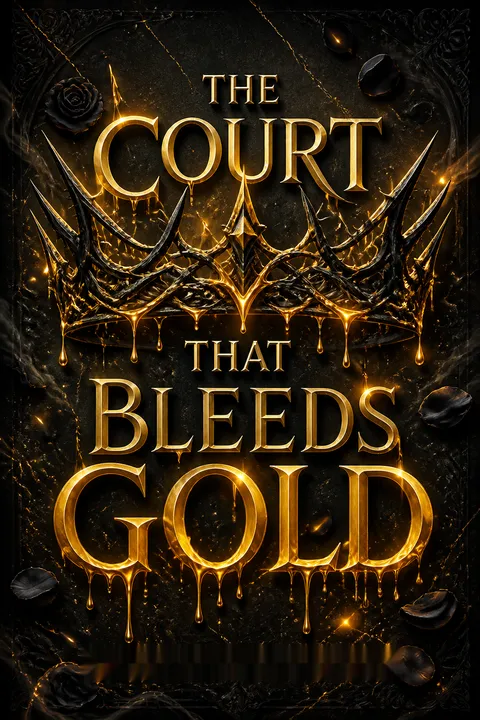

Plot Summary
1. Bargains and Blood at Market
Eleanor Thorn, a gifted metalsmith, navigates the treacherous fae market, trading her creations for rare materials. She witnesses the brutal consequences of fae bargains when a seamstress is aged to death for failing a deal, and the crowd's indifference chills her. The market's beauty is a mask for its cruelty, and Eleanor's compassion and curiosity set her apart. Her drive to help her struggling village and her father is matched only by her determination to avoid the fae's traps. But the day's violence foreshadows the dangers of a world where bargains are binding and mercy is rare.
2. The King's Cruelty Unveiled
Returning home, Eleanor's world is shadowed by poverty and the looming threat of King Albrecht, whose greed poisons the land and river. When her friend Thatch is caught poaching, Eleanor is dragged before the king, who delights in cruelty and spectacle. To save Thatch and herself, Eleanor claims she can make gold, gambling her life on a lie. The king's hunger for wealth is insatiable, and Eleanor's fate is sealed: she must spin gold or die. The court's decadence and the king's violence reveal the rot at the heart of Styrland, and Eleanor's only hope is to turn her desperate bluff into reality.
3. Gold, Lies, and Captivity
Given resources and a single chance, Eleanor miraculously succeeds in creating gold, stunning the court. But her triumph is her undoing: King Albrecht claims her as his bride, intent on exploiting her gift until she dies. Locked in a tower, forced to spin gold, Eleanor's ingenuity becomes her prison. She weaves not just gold, but a plan for escape, hiding tools in her wedding trousseau. The king's possessiveness is suffocating, and Eleanor's only way out is to risk everything on a dangerous, forbidden bargain.
4. The Impossible Alchemy
Eleanor's alchemical breakthrough is both miracle and curse. She is forced to create gold for the king, her every move watched. Her isolation grows, and the court's cruelty presses in. Yet, her mind never stops working—she dreams of using her gift to help her people, not enrich a tyrant. The gold she spins is a lifeline and a shackle, and as her wedding approaches, Eleanor's desperation mounts. Her only chance is to summon a fae dealmaker, risking a fate worse than death for a sliver of hope.
5. A Fateful Pact with Blackcoat
Cornered and hunted, Eleanor summons Ruskin Blackcoat, the infamous fae prince and dealmaker. He is terrifying, predatory, and immune to her gold. When she offers her alchemical skill, he sees her true value. Their bargain is struck: he will free her from the king in exchange for her help. But fae bargains are never simple, and Ruskin's motives are as shadowed as his monstrous form. Eleanor is whisked away, not to freedom, but to a new captivity in the heart of Faerie, where beauty and danger are inseparable.
6. Prisoner in the Fae Court
Eleanor awakens in the Seelie Court, a realm of breathtaking magic and hidden savagery. Ruskin, now revealed as the fae prince, is both captor and protector, demanding she reverse her alchemy and unmake gold. The court is a nest of intrigue, and Eleanor is both curiosity and threat. She finds unlikely allies among the fae and human servants, but trust is scarce. The rules of Faerie are alien, and every kindness is suspect. Eleanor's longing for home wars with her fascination for this world—and for the prince who holds her fate.
7. Enemies, Allies, and Fae Games
Navigating the Seelie Court, Eleanor faces the sadism of the High Fae, especially Galaphina, whose games nearly kill her. Only Ruskin's intervention saves her, but his protection is as dangerous as his wrath. Eleanor's defiance earns her enemies, but also respect from some, like the swordswoman Halima and the charming Destan. She learns the court's divisions—Seelie and Unseelie, High and Low Fae—and the precarious peace that holds them together. Every day is a test of wit and will, and Eleanor's survival depends on learning the rules of a game where the stakes are life, death, and the soul.
8. The Price of Defiance
Eleanor's refusal to submit leads to brutal consequences. She is humiliated and tortured at a fae party, her body and spirit tested. Yet, her resilience and sharp tongue win her unexpected allies. Ruskin's interest in her deepens, revealing glimpses of vulnerability beneath his monstrous mask. The court's politics swirl around her, and Eleanor senses that her role is more than that of a captive alchemist—she is a catalyst for change, and her defiance may be the key to survival, or the cause of her destruction.
9. The Wild Hunt Awakens
A series of animal attacks and a wounded fae lord signal that something is wrong in Faerie. The Wild Hunt, a deadly tradition, is revived to deal with the threat, but its return stirs old animosities and new dangers. Eleanor's experiments stall, and her search for answers leads her into the perilous Emerald Forest, where she faces both magical beasts and the truth about the fae's divided history. The court's fragile peace teeters, and Eleanor's place in this world grows ever more precarious.
10. Secrets, Power, and Desire
As Eleanor and Ruskin are drawn together by shared danger and mutual need, their relationship deepens into a volatile mix of attraction, trust, and suspicion. Ruskin's power is immense, but so are his secrets. Eleanor's own magic begins to awaken, tied to her alchemy and the gold that binds them both. Their desires threaten to consume them, even as the curse on the land grows stronger. The line between captor and captive blurs, and love becomes both weapon and weakness.
11. The Curse of Gold
Eleanor uncovers the truth: Faerie is being poisoned by gold, a curse spreading through plants, animals, and Ruskin himself. The source is a spell cast by Ruskin's banished sister, Cebba, who sought the throne and left a legacy of destruction. Ruskin's life is bound to the land, and as the curse advances, his strength wanes. Only Eleanor's unique magic offers hope, but the task is impossible—unless she can unravel the secrets of her own power and the true nature of the curse.
12. The Sister's Shadow
Cebba, disguised as a human servant, has been manipulating events from within the court. Her hatred for Ruskin and hunger for power drive her to ever more desperate measures. Eleanor's trust is shattered when she learns of betrayals close to home, and her own safety is threatened by assassination attempts and court intrigue. The lines between friend and foe blur, and Eleanor must decide who to trust as the noose tightens around her—and around Ruskin's heart.
13. Betrayal in the Court
Eleanor's closest confidante, Fiona, is unmasked as Cebba in disguise. Betrayed and captured, Eleanor endures torture as Cebba seeks Ruskin's true name—the key to ultimate power. The court is thrown into chaos, and Eleanor's faith in herself and others is tested to the breaking point. Her only hope is her own burgeoning magic, the power to shape and unmake gold, and the love that binds her to Ruskin, even as all seems lost.
14. The Labyrinth of Truth
Imprisoned in Cebba's labyrinth, Eleanor faces not just physical danger but the specters of her own fears and regrets. The maze conjures illusions of her family, her failures, and her deepest insecurities. Only by confronting these ghosts—and trusting in her own strength—can she escape. Ruskin, guided by their bond, finds her, and together they face Cebba in a final, desperate confrontation. The battle is brutal, and the cost is high.
15. Love's Unraveling Magic
In the aftermath of battle, Ruskin is dying, the curse consuming him. Eleanor's confession of love, freely given and without bargain, becomes the key that unravels the magic binding his heart. The curse is broken not by alchemy, but by the transformative power of love—an answer hidden in the riddle of fae magic. Ruskin is restored, and the kingdom is saved, but the wounds of betrayal and loss linger.
16. The Cost of Freedom
Eleanor learns that her mother once bargained with Ruskin, and that her own magic—and perhaps her mother's death—are tied to fae deals. The revelation shatters her trust in Ruskin, and she questions the foundation of their love. The cost of freedom is steep: to save herself, she must leave behind the man she loves and the world she has come to care for. The door to Styrland beckons, but the choice is agony.
17. The Heart that Changes
Eleanor's journey has changed her, awakening powers she never imagined and forging bonds that transcend bargains and blood. She has faced cruelty, betrayal, and the darkest parts of herself. Her love for Ruskin is real, but so is her need for agency and truth. The world she leaves behind is forever altered by her presence, and the world she returns to will never be the same. The heart that changes is not just Ruskin's, but Eleanor's own.
18. The Door Between Worlds
With the Monarch Gate open, Eleanor steps through, leaving Faerie and Ruskin behind. The journey has cost her dearly—her innocence, her trust, even a part of her body—but she has gained power, wisdom, and the knowledge that love, freely given, can change even the most cursed of hearts. The story ends with the door closing, but the future is unwritten, and the heart that bleeds gold may yet find its way home.
Analysis
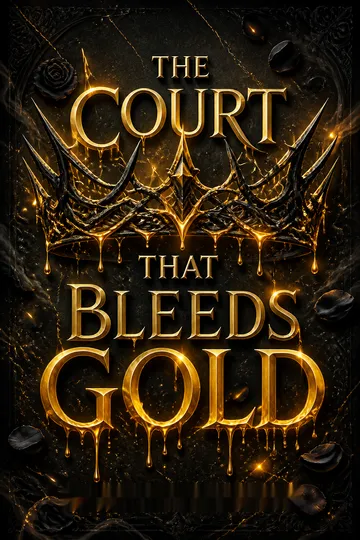
The Court that Bleeds Gold is a dark, romantic fantasy that interrogates the nature of power, trust, and transformation. At its heart, the novel is a meditation on the costs of survival in a world where every gift is a bargain and every act of love risks becoming a weapon. Through Eleanor's journey from desperate survivor to empowered agent of change, the story explores the tension between agency and fate, the allure and danger of power, and the redemptive potential of love freely given. The fae world is a mirror for human cruelty and longing, its beauty inseparable from its violence. The novel's central lesson is that true change—whether of a heart, a kingdom, or a self—cannot be forced or bargained for; it must be chosen, and it always comes at a cost. In the end, the story is a call to courage: to face the labyrinth, to name the truth, and to step through the door, even when the way back is uncertain.
Review Summary
The Court that Bleeds Gold receives mixed reviews averaging 3.88/5 stars. Positive reviewers praise the clever protagonist Eleanor, engaging enemies-to-lovers romance with Ruskin, and the Rumpelstiltskin/Beauty and the Beast retelling. Many commend the fast pacing, world-building, and plot twists, calling it comparable to ACOTAR. Critics cite lack of character development, rushed romance, derivative plotting, and excessive "telling" rather than "showing." Several note the relationship feels forced and question its "dark fantasy" label. Character descriptions are reportedly lacking. Most agree it's an impressive debut with entertaining side characters, though some find it too similar to existing romantasy books.
People Also Read
Characters
Eleanor Thorn
Eleanor is a fiercely intelligent, compassionate young woman whose talent for metallurgy and alchemy sets her apart in a world where poverty and cruelty are the norm. Driven by a desire to help her village and care for her grieving father, she is both practical and idealistic. Her curiosity and defiance lead her into danger, but also give her the resilience to survive the fae's brutal games. Eleanor's journey is one of self-discovery: she learns to wield not just her craft, but her own latent magic, and to navigate the treacherous politics of both human and fae courts. Her love for Ruskin is hard-won, forged in adversity, and her greatest strength is her refusal to surrender her agency—even when it means walking away from the man she loves.
Ruskin Blackcoat (Solskir)
Ruskin is the enigmatic, dangerous fae prince known as Blackcoat, infamous for his ruthless bargains and monstrous form. Half-Seelie, half-Unseelie, he is an outsider in his own court, wielding immense power but burdened by a curse that is killing him and poisoning his kingdom. His need for control masks deep wounds—betrayal by his family, the weight of leadership, and the fear of vulnerability. Ruskin's relationship with Eleanor is fraught with tension, attraction, and mutual suspicion, but her defiance and compassion draw out his hidden humanity. His arc is one of learning to trust, to let go of secrets, and to accept love as the true magic that can change his heart and his world.
Cebba Dawnsong (Fiona)
Cebba is Ruskin's ambitious, embittered half-sister, whose failed bid for the throne left her exiled and vengeful. Disguised as Fiona, she manipulates events from within the court, gaining Eleanor's trust only to betray her at the crucial moment. Cebba's intelligence and cruelty are matched by her sense of entitlement and her inability to understand loyalty or love. Her curse on Ruskin is both a bid for power and an act of spite, and her downfall comes from underestimating the strength of the bonds she seeks to break. Cebba embodies the dangers of unchecked ambition and the emptiness of power without connection.
Halima
Halima is Ruskin's formidable bodyguard, a warrior of mixed fae heritage who straddles the line between High and Low Fae. Her loyalty is unwavering, and her pragmatism is a counterpoint to the court's intrigue. Halima's own experience of prejudice and her commitment to peace make her a stabilizing force. She is both protector and moral compass, urging Ruskin and Eleanor to trust and work together. Her presence is a reminder that strength comes in many forms, and that loyalty, once earned, is a powerful shield.
Destan
Destan is a High Fae of wit, style, and surprising depth. His flamboyance and humor mask a keen intelligence and a deep loyalty to Ruskin. Destan's friendship with Eleanor is genuine, and his willingness to risk himself for her and for the court is a testament to his courage. He serves as a bridge between Eleanor and the fae world, offering guidance, levity, and, when needed, hard truths. Destan's near-death and recovery highlight the costs of fae politics and the value of chosen family.
King Albrecht
King Albrecht is the cruel, decadent ruler of Styrland, whose insatiable hunger for wealth and power devastates his kingdom. He is a mirror of fae cruelty, showing that monstrosity is not limited to the magical. Albrecht's exploitation of Eleanor and his subjects sets the stage for her journey, and his downfall is a reminder that tyranny breeds its own destruction.
Galaphina
Galaphina is a beautiful, sadistic fae noble who delights in the suffering of others. Her games with Eleanor and her ultimate execution by Ruskin reveal the court's capacity for both horror and justice. Galaphina embodies the dangers of unchecked privilege and the casual violence of the fae elite.
Isaac Thorn
Eleanor's father is a broken man, lost in grief after the death of his wife. His love for Eleanor is deep but muted by sorrow, and his inability to protect her is a source of pain for them both. Isaac represents the world Eleanor fights to save, and her longing for home is rooted in her love for him.
Thatch
Thatch is the village golden boy, handsome but shallow, whose self-interest and cowardice contrast sharply with Eleanor's strength. His betrayal and dependence on Eleanor's abilities highlight the limitations of those who seek easy answers and the dangers of relying on others for salvation.
Maidar
Maidar is a rare fae friend to Eleanor, a trader at the market who values fairness and knowledge over trickery. His guidance on the rules of magic and the dangers of bargains helps Eleanor navigate the fae world. Maidar's presence is a reminder that not all fae are enemies, and that wisdom can be found in unexpected places.
Plot Devices
Fae Bargains and Binding Magic
The central plot device is the fae bargain: every deal is binding, every word a potential trap. The inability of fae to lie is both a safeguard and a danger, as truth can be twisted and omissions weaponized. Eleanor's initial lie about making gold sets the story in motion, and every subsequent bargain—whether with the king, Ruskin, or Cebba—raises the stakes. The narrative structure is built on escalating deals, each with higher costs and deeper consequences. Foreshadowing is woven through the bargains, as promises made in desperation return to haunt the characters. The motif of gold—its creation, its curse, its unmaking—serves as both literal and symbolic thread, binding the fates of Eleanor, Ruskin, and the kingdom.
Enemies-to-Lovers and the Mask of Monstrosity
The story employs the classic enemies-to-lovers arc, with Eleanor and Ruskin's relationship evolving from fear and suspicion to trust and love. Their barbed exchanges and mutual challenges drive both character development and plot. The mask of monstrosity—Ruskin's shifting form, the court's cruelty, Eleanor's own capacity for violence—serves as a metaphor for the hidden wounds and desires that shape them. The gradual revelation of vulnerability beneath the mask is mirrored in the narrative's structure, as secrets are peeled away to reveal the heart beneath.
The Cursed Kingdom and the Riddle of Power
The curse on Faerie is both a plot engine and a metaphor for the costs of ambition, betrayal, and love. The spreading gold is a physical manifestation of the kingdom's wounds, and the riddle of how to unmake it is the story's central mystery. The answer—love freely given, not bargained for—is foreshadowed in the structure of fae magic and the loopholes in every deal. The labyrinth, both literal and figurative, is a recurring device: characters must navigate not just physical mazes, but the labyrinths of their own hearts and histories.
Betrayal, Identity, and the Door Between Worlds
The story is driven by betrayals—personal, political, magical. The revelation that Fiona is Cebba, that Eleanor's mother bargained with Ruskin, that love can be both weapon and salvation—each twist is seeded early and paid off with emotional and narrative weight. The motif of doors and thresholds—between worlds, between selves, between love and freedom—structures the story's climax and resolution. The final choice, to stay or to go, is both literal and symbolic, and the open door at the end is a promise of stories yet to come.
The Gold Weaver Series
About the Author
Download PDF
Download EPUB
.epub digital book format is ideal for reading ebooks on phones, tablets, and e-readers.








































