
Plot Summary
Funeral, Fractures, and Inheritance
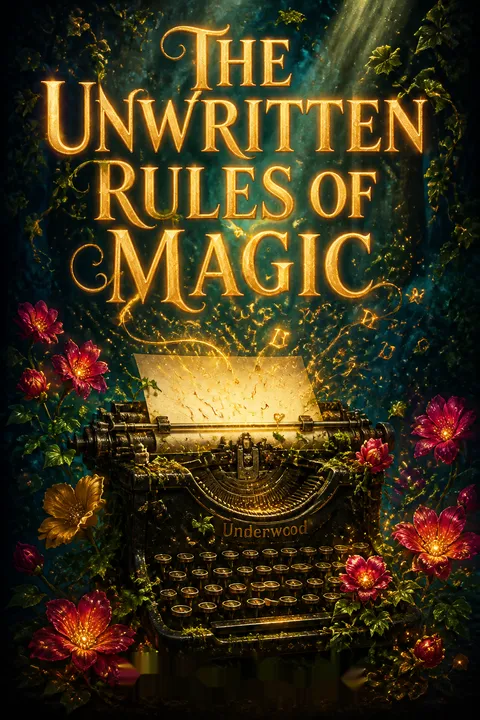
Emerson Clarke returns to her childhood home for her famous author father's funeral, joined by her teenage daughter Sadie and her mother Dorothy. The house is heavy with unresolved pain, old wounds, and the weight of her father's legacy. Emerson's relationship with her parents is complicated—her father was both her hero and her source of pain, while her mother's alcoholism and emotional distance have left scars. As Dorothy abruptly announces her intention to sell the family home, Emerson and Sadie are thrown into uncertainty. The family's grief is tangled with resentment, regret, and the looming question of what will become of their shared history. The stage is set for a reckoning with the past, as Emerson discovers her father's prized possession: a mysterious, locked 1935 Underwood typewriter.
The Typewriter's Secret Power
Alone in her father's office, Emerson is drawn to the Underwood typewriter, a relic her father guarded fiercely. After a failed search for the key, she picks the lock and claims the typewriter for herself, feeling both guilt and excitement. At home, she tests it by typing a letter to her deceased father, pouring out her grief and longing for connection. The next morning, she's startled to find her neglected garden in full bloom and her weight mysteriously reduced—two wishes she'd idly typed the night before. As she investigates further, she uncovers her father's cryptic notes and a journal entry revealing the typewriter's magical ability to grant wishes, always with an unexpected twist. The power is intoxicating, but the rules are unclear, and the cost is yet unknown.
Wishes and Consequences
Emerson experiments with the typewriter, making small wishes—delaying the sale of the house, attracting professional opportunities, and even scripting a romantic encounter. Each wish is granted, but never as expected: her mother's attempt to sell the house is thwarted by a legal technicality; Emerson is offered the chance to ghostwrite her father's unfinished novel, a daunting and ethically fraught task; and a "meet-cute" with a charming stranger is shadowed by the reappearance of her first love, Will. The typewriter's magic is seductive, but Emerson begins to sense its dangers. Her father's old journals, hidden in the house, hint at the mounting costs of using the typewriter—regret, memory loss, and the erosion of free will. The line between help and harm blurs as Emerson's wishes ripple through her family's lives.
Family Tensions Unveiled
As Emerson juggles her writing career, her mother's impulsive decisions, and Sadie's growing distance, the family's fragile peace unravels. Dorothy's drinking escalates, and her plans to move to Manhattan threaten to sever the last ties to their shared past. Sadie, grieving her grandfather and reeling from a breakup, becomes withdrawn and secretive. Emerson's attempts to control and protect those she loves—sometimes aided by the typewriter—backfire, deepening the rifts. The discovery of her father's journals reveals the extent to which he manipulated their lives, using the typewriter to shape outcomes for his own benefit. The family is forced to confront the legacy of secrets, betrayals, and the ways love can become entangled with control.
The Garden Blooms
The miraculous transformation of Emerson's garden becomes a symbol of the typewriter's power and the temptation to use magic to fix life's problems. Each wish brings a fleeting sense of control, but also unintended consequences—Emerson's mother's pride is wounded, her own guilt grows, and the family's autonomy is compromised. The garden's unnatural beauty is both a comfort and a warning, reminding Emerson that shortcuts to happiness come with hidden costs. As she faces mounting pressure from her job and her family, Emerson is forced to reckon with the ethics of using the typewriter and the dangers of rewriting reality to suit her desires.
The Past Repeats
Through her father's journals and her own memories, Emerson uncovers the cyclical nature of her family's struggles. Her father's use of the typewriter to advance his career and manipulate relationships mirrors Emerson's own attempts to control outcomes. The journals reveal that the typewriter's magic is not limitless—it cannot cure disease, change the past, or force genuine emotional change. Worse, it extracts a price: memory loss, regret, and the perpetuation of dysfunction. Emerson sees how her parents' choices shaped her own, and how her efforts to protect Sadie risk repeating the same mistakes. The realization that magic cannot heal what is broken at the root becomes increasingly clear.
Unraveling Parental Mysteries
Emerson's search for answers leads her to hidden safes, cryptic to-do lists, and conversations with her mother that peel back layers of family history. She learns of her father's infidelities, her mother's thwarted ambitions, and the ways both parents sacrificed and failed each other. The discovery of her father's journals—detailing decades of wishes, regrets, and the slow onset of Alzheimer's—forces Emerson to confront the reality that her father's success and their family's pain were intertwined with the typewriter's magic. The journals also reveal that the typewriter's previous owner suffered a similar fate, suggesting a curse rather than a blessing. Emerson is left to grapple with the question of agency, responsibility, and forgiveness.
The Price of Control
As Emerson's mother spirals into addiction and Sadie's behavior grows more erratic, Emerson's reliance on the typewriter reaches a breaking point. A wish for her mother to enter rehab results in a car accident and DUI arrest—no one is hurt, but the consequences are severe. Emerson is wracked with guilt, realizing that her attempts to control and "fix" her family have only deepened their suffering. The typewriter's magic, once a source of hope, is now a burden. Emerson must decide whether to keep using it, risking further harm, or to let go and face life's uncertainties without a safety net. The cost of control is revealed to be too high, and the path to healing lies elsewhere.
Love, Loss, and Longing
Emerson's romantic life is as tangled as her family's. The typewriter brings new possibilities—a flirtation with Sawyer, a reunion with Will—but neither relationship offers easy answers. Will's interest is transactional, tied to his work as an appraiser, while Sawyer's genuine kindness is shadowed by Emerson's fear of manipulation and her own unresolved grief. The longing for connection, both romantic and familial, is complicated by the knowledge that magic cannot guarantee happiness or erase pain. Emerson learns that love requires vulnerability, honesty, and the willingness to accept imperfection. The journey toward intimacy is fraught with risk, but also the promise of real growth.
Breaking and Mending Bonds
Dorothy's journey through rehab is marked by setbacks, including a painful relapse. Emerson, forced to confront her own role in her mother's struggles, chooses compassion over judgment. The family's healing is slow and uncertain, built on small acts of honesty, forgiveness, and mutual support. Sadie's secret—an unplanned pregnancy and abortion—comes to light in a moment of crisis. Emerson resists the urge to use the typewriter to erase her daughter's pain, recognizing that true healing comes from facing reality together. The bonds between mother, daughter, and granddaughter are tested, but ultimately strengthened by their willingness to be vulnerable and present for each other.
Relapse and Redemption
The family's progress is threatened by Dorothy's relapse and the temptation to return to old patterns. Emerson's decision to destroy the typewriter, with her mother's help, marks a turning point—a rejection of magical solutions in favor of hard-won growth. The act is both cathartic and sobering, acknowledging the damage done and the need to move forward without shortcuts. Dorothy's continued efforts at sobriety, Sadie's gradual healing, and Emerson's commitment to her own writing signal a new chapter. The family is far from perfect, but they are learning to accept themselves and each other, flaws and all.
Letting Go, Moving Forward
With the sale of the family home, the donation of her father's papers, and the destruction of the typewriter, Emerson and her family let go of the past. The process is bittersweet, filled with nostalgia and grief, but also relief and hope. Emerson quits her ghostwriting job to pursue her own novel, supported by her mother and daughter. Dorothy finds purpose in community work, and Sadie begins to reclaim her sense of self. The family's future is uncertain, but they are learning to trust in their resilience and in the magic of ordinary life. The unwritten rules of magic, it turns out, are the same as those of love: there are no guarantees, only the courage to keep going.
The Unwritten Rules
In the aftermath of their trials, Emerson reflects on the true nature of magic—not as a means of control, but as the capacity to endure, adapt, and find meaning in imperfection. Her father's journals, once a source of pain, become a testament to the complexity of love and the dangers of seeking easy answers. Emerson's journey is one of relinquishing control, embracing vulnerability, and accepting that life's messiness is what makes it beautiful. The family's story is not one of fairy-tale endings, but of ongoing growth, forgiveness, and the quiet magic of being present for each other. The unwritten rules are simple: let go, love deeply, and trust that you can handle whatever comes next.
Analysis
Harper Ross's The Unwritten Rules of Magic is a moving, psychologically astute exploration of family, grief, and the seductive dangers of control. At its heart is the question: What would you change if you could, and at what cost? The magical typewriter is both a literal and metaphorical device, embodying the human longing to rewrite the past and guarantee happiness. Yet the novel's wisdom lies in its recognition that true healing comes not from erasing pain, but from facing it together. Through Emerson's journey, Ross interrogates the ethics of intervention, the legacy of generational trauma, and the necessity of relinquishing control. The story's emotional arc is one of reckoning, forgiveness, and the embrace of life's messiness. The ultimate lesson is that magic—like love—cannot protect us from suffering, but it can teach us to endure, adapt, and find meaning in imperfection. In a world obsessed with certainty and self-optimization, The Unwritten Rules of Magic is a timely reminder that the greatest magic is the courage to be present, vulnerable, and human.
Review Summary
The Unwritten Rules of Magic receives mixed reviews averaging 3.64/5 stars. Readers praise the creative magical typewriter premise and emotional family dynamics exploring three generations of women dealing with grief, alcoholism, and strained relationships. Many found the first half engaging but felt the magic diminished in the second half, replaced by heavy real-life issues. Common criticisms include the slow pacing, unlikeable protagonist Emerson, predictable plot, and controversial hot-button topics that felt preachy. Some readers struggled with how controlling Emerson was toward her daughter. Despite these issues, most appreciated the thoughtful themes about letting go of control and found it worthwhile for magical realism fans.
People Also Read









Characters
Emerson Clarke
Emerson is the protagonist, a ghostwriter and single mother struggling to navigate grief, family dysfunction, and her own sense of inadequacy. Her relationship with her father is fraught—he was both her idol and her tormentor, his love conditional and his criticism wounding. Emerson's mother, Dorothy, is emotionally distant and alcoholic, leaving Emerson to play the role of peacekeeper and caretaker. Emerson's desire for control leads her to use the magical typewriter, but each wish brings unintended consequences and deepens her guilt. Her psychological journey is one of learning to relinquish control, accept imperfection, and trust in her own resilience. Through painful self-examination, she breaks the cycle of manipulation and finds the courage to pursue her own dreams and repair her relationships.
Dorothy Clarke
Dorothy is Emerson's mother, a once-vibrant librarian whose spirit has been eroded by her husband's dominance and her own unfulfilled ambitions. Her alcoholism is both a symptom and a cause of the family's dysfunction, and her impulsive decisions—selling the house, moving to Manhattan—reflect a desperate need for change. Dorothy's relationship with Emerson is strained, marked by mutual disappointment and unspoken love. Her journey through rehab is marked by setbacks, but also moments of honesty and growth. Ultimately, Dorothy finds redemption in vulnerability, community, and the willingness to start over. Her arc is a testament to the possibility of change, even late in life.
Sadie Clarke
Sadie is Emerson's teenage daughter, caught between the legacy of her family's pain and her own coming-of-age struggles. She is intelligent, compassionate, and idealistic, but also deeply affected by her grandfather's death, her parents' emotional distance, and a traumatic breakup. Sadie's secret—an unplanned pregnancy and abortion—becomes a crucible for her relationship with Emerson. Her withdrawal and rebellion are cries for help, and her eventual confession is a turning point for the family. Sadie's arc is one of learning to trust, accept support, and forgive herself. She represents both the cost of generational trauma and the hope for healing.
Jefferson Clarke
Jefferson is Emerson's late father, a celebrated fantasy author whose charm and creativity mask deep insecurities and a need for control. His discovery of the magical typewriter becomes both his blessing and his curse, enabling his success but also fueling his narcissism and emotional distance. Jefferson's journals reveal a man tormented by regret, memory loss, and the knowledge that his attempts to shape his family's fate have caused harm. His arc, told through flashbacks and journals, is a cautionary tale about the dangers of unchecked ambition and the illusion of control. In death, he becomes a catalyst for his family's reckoning and growth.
The Underwood Typewriter
The 1935 Underwood typewriter is both a character and a symbol—a vessel for wishes, a source of temptation, and a mirror for the user's desires and fears. Its magic is alluring but unpredictable, granting wishes with a twist and extracting a hidden price. The typewriter's history, revealed through Jefferson's journals, is one of repeated cycles of hope, regret, and loss. It represents the human longing for control and the dangers of trying to rewrite reality. Its eventual destruction marks the family's commitment to facing life on its own terms.
Will Barnes
Will is Emerson's high school boyfriend, whose reappearance coincides with her wish for romance. Their reunion is bittersweet, revealing the gap between memory and reality. Will's interest is transactional, tied to his work as an appraiser, and his emotional distance forces Emerson to confront her own longing for the past. He serves as a reminder that not all wishes are worth pursuing and that true connection requires honesty and mutual respect.
Sawyer Rhodes
Sawyer is the charming, kind-hearted stranger Emerson meets after wishing for a "Mr. Right." Unlike Will, Sawyer is present, supportive, and emotionally available. His philosophy of resilience and acceptance challenges Emerson's need for control and helps her embrace uncertainty. Their relationship develops slowly, grounded in honesty and mutual respect. Sawyer represents the possibility of new beginnings and the magic of ordinary life.
Mel
Mel is Emerson's best friend, a lawyer whose candor and humor provide both support and challenge. She is a witness to the Clarke family's dysfunction and a sounding board for Emerson's doubts and fears. Mel's own stable family life offers a contrast to Emerson's chaos, and her interventions—legal and emotional—are crucial to the family's survival. She embodies the importance of chosen family and the power of friendship.
The Welles Family
The Welles family, particularly Michael and his late father Richard, are the previous owners of the typewriter. Their history, uncovered through research and conversation, reveals that the typewriter's magic is not unique to the Clarkes. Richard's early success and subsequent decline into Alzheimer's mirror Jefferson's fate, suggesting that the typewriter is less a blessing than a curse. Their story serves as a warning about the dangers of seeking shortcuts to happiness.
Rachel Moon
Rachel is the bestselling author for whom Emerson ghostwrites. Her relentless demands and lack of empathy highlight the compromises Emerson has made in her career. Rachel's focus on productivity and profit stands in contrast to Emerson's longing for creative fulfillment. The decision to quit ghostwriting and pursue her own novel is a key moment in Emerson's journey toward self-actualization.
Plot Devices
The Magical Typewriter
The Underwood typewriter is the central plot device, granting wishes with unpredictable consequences. Its magic is both a blessing and a curse, offering the illusion of control while extracting a hidden price—memory loss, regret, and the perpetuation of dysfunction. The typewriter's rules are unwritten, its power seductive but ultimately corrosive. It serves as a metaphor for the human desire to rewrite reality and the dangers of seeking easy answers. The narrative structure alternates between present-day events, flashbacks, and excerpts from Jefferson's journals, gradually revealing the typewriter's history and the cost of its use.
Intergenerational Trauma
The novel explores the ways in which pain, secrets, and coping mechanisms are passed down through generations. Emerson's struggles mirror those of her parents, and her attempts to protect Sadie risk repeating the same mistakes. The family's journey is one of breaking cycles, confronting the past, and forging new paths. Foreshadowing is used throughout—Emerson's early wishes echo her father's, and the consequences of each wish ripple through the family's lives.
The Ethics of Control
A central theme is the tension between wanting to help and the dangers of imposing one's will on others. The typewriter's magic literalizes this dilemma, forcing Emerson to confront the consequences of her actions. The novel interrogates the ethics of intervention, the importance of agency, and the necessity of accepting uncertainty. The narrative structure allows for multiple perspectives, including Emerson's, Dorothy's, Sadie's, and Jefferson's, deepening the exploration of motive and responsibility.
The Power of Storytelling
Storytelling is both a source of comfort and a means of avoidance. Emerson's career as a ghostwriter, her father's legacy as a novelist, and the family's reliance on stories to make sense of their pain all underscore the double-edged nature of narrative. The novel itself is structured as a story within a story, with journals, letters, and meta-commentary on the act of writing. The ultimate lesson is that stories can heal, but only when they are honest and allow for imperfection.
Download PDF
Download EPUB
.epub digital book format is ideal for reading ebooks on phones, tablets, and e-readers.








































