
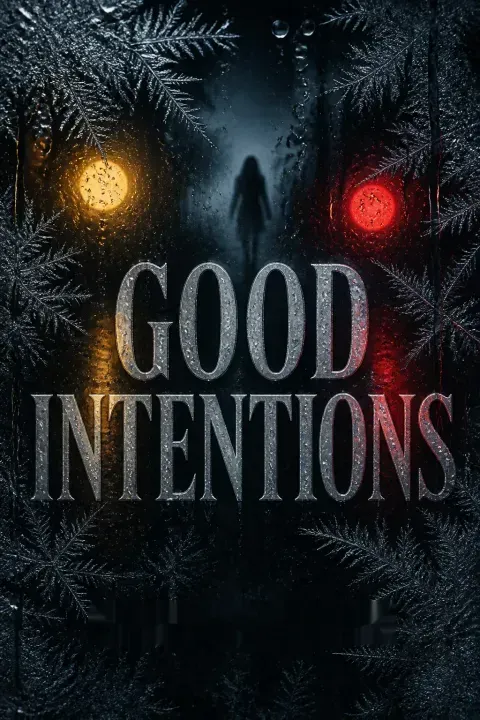


Plot Summary
Prologue
Cady1 sits in her cold, dark car outside a modest brick bungalow, watching the blue television light pulse from the back window. She addresses her dead twin sister Dana,2 explaining that everyone says this has to stop. Her therapist10 suggested she start talking to Dana,2 telling her all the things she cannot or will not tell him.
Cady1 has promised herself this is her last visit to watch the woman inside,3 the one she once considered a friend. But it is not what she will do next that matters, she insists. It is what has already been done. She cannot tell Dana2 anything without telling her everything, starting from the beginning.
This prologue establishes Cady as a profoundly unreliable narrator speaking to a dead woman. The intimate address to Dana reveals both grief and guilt: Cady seeks absolution from the one person who can never grant it. The framing device of watching a house, promising to stop but unable to, introduces the central pathology of the novel: Cady's compulsive need to control and surveil, driven by an unconfessed crime. The distinction between what she will do and what she has already done signals that the story's true horror lies in the past, not the present. This is a confession disguised as a conversation, and the reader is positioned as a witness to Cady's self-excavation.
Five Missed Calls
On Valentine's Day, Cady McKenna1 finishes a walkthrough for a wealthy client's lavish sweet sixteen party when she notices five missed calls from Sean,6 her twin sister Dana's husband.6 Something primal tells her this is catastrophe. Sean6's voice confirms it: Dana2 has been in a car accident. She is alive but critical.
Cady1 races to her Range Rover, fumbling with the GPS, desperate to reach Rush Hospital in Oak Park. She calls her husband Matt4 repeatedly, but he never answers. The forty-five-minute drive becomes a gauntlet of panic, guilt, and the deafening replay of her last conversation with Dana,2 which ended in bitter argument about Dana2's pregnancy.
This opening crisis establishes the novel's dual engines: external catastrophe and internal fracture. Cady's inability to reach Matt on the most desperate day of her life plants the first seed of marital distrust that will metastasize throughout the story. The detail that Cady was at work planning a celebration while her sister died creates an ironic counterpoint: her professional life is built on engineered joy, while her personal life is being obliterated. The missed calls from Sean, not Dana's husband directly, hint at the complicated family dynamics already in place.
The Left Turn
Navigating side streets to avoid rush hour, Cady1 makes a left turn while simultaneously trying to reach Matt4 by phone. A violent bang slams into the passenger side of her Range Rover. She checks her mirrors but sees nothing behind her, convincing herself she imagined the impact.
Her mind is consumed with reaching Dana,2 with the angry words they exchanged, with the prenatal vitamins she threw at her bathroom mirror weeks earlier after her own miscarriage. She continues driving toward the hospital, never stopping, never looking back properly. The navigation voice instructs her to proceed to the route, and she obeys.
This is the novel's hidden turning point, presented through a deliberately obscured lens. Cady's narration treats the bang as a peripheral detail, a phantom noise, which mirrors how guilt operates: the mind edits out what it cannot bear to hold. That she checks her mirrors and sees nothing suggests either genuine confusion or willful blindness. The juxtaposition of her physical collision with Christopher and her emotional collision with Dana's death creates a causal knot: one tragedy literally propels her toward another, and her response to both is denial.
Two Deaths, One Room
At the hospital, Sean6 delivers the news: Dana2 did not survive. They wait in a small private room for Cady1's parents. Sean6 reveals Dana2 was ten weeks pregnant, a secret they had not yet shared. Overwhelmed, Cady1 wanders to the main waiting room, where she watches a frantic mother named Morgan3 beg a nurse for news about her twelve-year-old son Christopher,12 who fell off his bike.
When the doctor arrives, Morgan3 collapses with a scream so raw it will never leave Cady1's ears. Cady1 also notices a man in a green Patagonia jacket5 watching her with unnerving intensity, his eyes seeming to know something.
This scene introduces the novel's core structural irony: Cady's twin sister and Morgan's son die on the same day, in the same hospital, and Cady is responsible for one of those deaths. The green-eyed man functions as an externalized conscience, his knowing gaze penetrating Cady's carefully maintained facade. Morgan's primal scream becomes an auditory haunting that will echo through the entire novel, a sound Cady cannot escape because it belongs to her victim's mother. The waiting room becomes a crucible where grief, guilt, and obsession are forged together.
White Roses, Yellow Roses
At the funeral home, Sean6 chooses white roses for Dana2 and ten yellow stems for the unborn baby, one for each week of its life. Days later at the burial, Cady1 feels disconnected from the rituals until she spots the green-eyed man5 again. He stands fifty yards away, holding cheap drugstore flowers, watching her.
After the service, Cady1 rushes to where he stood and finds his bouquet placed on a grave marker dated 1889. Matt4 dismisses her alarm as grief-fueled paranoia, but Cady1 knows the man5 is stalking her. She also lies to Matt4 about deliberately crashing her car into their mailbox, claiming it was an accident.
The flower motif operates on multiple levels: the roses signify what was lost (Dana and the baby), while the drugstore flowers signify Cady's hidden crime. Cady's lie about the mailbox is a small rehearsal for her larger deceptions. The gravestone from 1889 confirms that the green-eyed man's presence is intentional and directed at Cady, not coincidental. Matt's dismissal of her concerns establishes him as someone who consistently minimizes Cady's perceptions, a dynamic that will prove both justified (she is paranoid) and tragically insufficient (she is also guilty).
Finding Morgan Hess
Unable to stop thinking about Morgan,3 Cady1 returns to the hospital with flowers for the boy12's family. She tells the nurse Miriam that Morgan3 is an old high school acquaintance, exploiting sympathy to extract Morgan3's real last name (Hess, not Keller).
At home, Cady1 immerses herself in online research, piecing together fragments of Morgan3's life: her accounting job, her modest brick bungalow, her divorce, her dead son. She memorizes the Google Street View of Morgan3's neighborhood, clicking through block after block until she feels she has driven the route. When Matt4 enters her office, she quickly closes her browser tabs.
Cady's manipulation of Miriam demonstrates how grief can weaponize empathy. Under the guise of shared loss, Cady deploys the very social skills that made her a successful event planner to construct an elaborate deception. Her obsessive online research mirrors her earlier behavior tracking Matt in college, establishing a pattern: when Cady feels she is losing someone, she surveils them. The closing of browser tabs signals that she knows her actions are wrong, yet this knowledge does not deter her. Shame and compulsion coexist without resolution.
Parked Outside Her Life
On her first visit to Morgan3's street, Cady1 catalogues every detail: the Christmas wreath still hanging in February, the glow-in-the-dark stickers on a window, a headless snowman in the yard, the peeling paint on the garage door. She imagines Morgan3's interior life, decorating the bungalow in her mind with sheer curtains and evergreens.
After nearly an entire day of waiting, Morgan3 finally emerges to retrieve her mail. From a distance, Cady1 can barely make out her face. She rationalizes the surveillance as harmless curiosity, memory of watching boys' houses after breakups with Dana.2
Cady transforms Morgan's home into a narrative, imagining the hands that placed stickers and the feet that made footprints. This act of narrative construction is both empathetic and appropriative: she is writing herself into Morgan's story while erasing the actual woman's autonomy. The comparison to teenage behavior is a self-deception, minimizing the predation. The detail that Cady stays for hours, ignoring calls from work and Matt, reveals that watching Morgan has already replaced her previous life as her primary occupation. The watching is not about Morgan; it is about filling the void Dana left.
The Grief Group Lie
Cady1 follows Morgan3 to a Wednesday night parent bereavement group at a local high school. Moira,7 the sturdy, plainspoken leader, welcomes her as the final new member allowed. When it is Cady1's turn to introduce herself, she improvises a staggering lie: she lost not only her twin sister Dana2 but also a baby girl, ten weeks old, also named Dana.2
The other grieving parents accept this double tragedy without question. Cady1 watches Morgan3 across the circle, studying the pink rims of her eyes, the way her ear pokes through her straight blonde hair, and feels a pull she cannot name.
The lie about the baby is Cady's point of no return. She has now constructed an entire false identity within the one space where absolute honesty is the only requirement. The appropriation of Dana's name for her fictional child reveals how seamlessly Cady conflates her real grief with manufactured tragedy. Moira's 'no new members after tonight' rule creates artificial urgency that Cady exploits. Across the circle, Cady studies Morgan not as a fellow griever but as an object of fascination, cataloguing physical details with the same obsessive attention she brought to the house on Google Street View.
The Miscarriage Confession
During a Sunday coffee date at Cuppa's, Morgan3 opens a box of cupcakes on what would have been Christopher12's thirteenth birthday. She confesses her guilt: she still has not killed herself, even though she always believed she would die if anything happened to her son. She is still kicking, and the shame of survival consumes her.
Moved, and slightly drunk, Cady1 tells Morgan3 the partial truth: there never was a baby Dana.2 She invented the dead child to join the group. She did, however, suffer a real miscarriage of an IVF pregnancy, an embryo she had already named and loved and imagined a future for. Morgan,3 surprisingly, understands.
This moment represents the closest Cady comes to authentic connection. Morgan's raw confession about suicidal guilt creates a mirror: both women are alive when they believe they should not be. But Cady's selective honesty is calculated. She offers the smaller, more forgivable lie to conceal the larger, unforgivable one. Morgan's acceptance validates Cady's self-narrative as fundamentally well-intentioned. The cupcake ritual, macabre and tender, becomes their communion: two women eating the dead child's birthday cake together, finding strange joy in shared devastation.
The Green-Eyed Killer
The family decides not to pursue a civil suit against William Fahey,5 the other driver. Cady1 is outvoted and furious. Later, at Dana2's birthday lunch, her parents reveal they met with William5 and forgave him. Cady1 receives his contact information from her mother.
When she searches his name online, his face appears: he is the green-eyed man5 from the hospital waiting room and the cemetery. William Fahey,5 who killed her sister, has been following her. Cady1 drives to his house, approaches his son Billy under the pretense of searching for a lost dog, and walks with the boy toward a park before his mother intervenes.
The revelation that William is both killer and stalker collapses two separate sources of Cady's paranoia into one. But it also raises a disturbing question: what does William know, or suspect, about Cady? His watching suggests a guilt that mirrors her own. Cady's decision to lure Billy away from his home is the first concrete evidence that her obsession has crossed into dangerous territory. The line between fantasy and action blurs as she considers, then rejects, the possibility of kidnapping. She stops not because it is wrong, but because she is caught.
Ben from the Internet
On Morgan3's behalf, Cady1 builds a profile on a dating app, carefully curating answers about hobbies, values, and relationship goals. She crops Christopher12 out of Morgan3's only usable photos. Soon she is messaging a tech project manager named Ben,9 who is shy, funny, and still recovering from his own losses.
The conversation grows flirtatious; Ben9 suggests meeting in person. Cady,1 pretending to be Morgan,3 agrees. She plans to reveal the setup at group the following Wednesday, certain that Morgan3 will be grateful for the push back into the world. The messages with Ben9 become a secret second life, a romance she is orchestrating and experiencing vicariously.
The dating profile is Cady's most audacious violation of Morgan's autonomy. She is not merely watching now; she is authoring Morgan's future. The cropping of Christopher from the photos literalizes Cady's desire to erase the boy from existence, to give Morgan a life without the grief that binds them. Her vicarious experience of the romance with Ben reveals the deep loneliness at the core of her obsession: Cady has lost her sister, her baby, her business, and increasingly her husband. She is filling every void with Morgan, absorbing her friend's identity like a surrogate self.
A Purse Too Far
Cady1 hosts Morgan3 for a makeover night while Matt4 is out. After styling Morgan3's hair and makeup to look strikingly like herself, Cady1 presents an orange Hermès bag, chosen because orange was Christopher12's favorite color. Morgan3 recoils. The gift is too expensive, too intimate, too much.
When Cady1 finally reveals the dating profile and Ben9's existence during group the following week, Morgan3's shock curdles into fury. She screams at Cady1 in the parking lot, accusing her of stalking, of cutting Christopher12 out of photographs, of impersonating her. Morgan3 tells Cady1 to stay away from her and from group. She is done.
The makeover scene is the novel's most psychologically charged sequence. By making Morgan look like herself, Cady is attempting a literal transformation: Morgan as replacement for the twin she lost. The orange bag, meant as a tribute to Christopher, becomes instead a grotesque reminder that Cady knows far too much about Morgan's private grief. Morgan's final explosion is the first time someone fully names what Cady has been doing. The friendship shatters not because Morgan discovers one betrayal but because she suddenly sees the entire architecture of lies and surveillance that Cady has built around her.
Matt Walks Out
Morgan3 contacts Matt4 to warn him about his wife's behavior. Matt4 confronts Cady:1 he knows about the stalking, the dating profile, the fake dead baby Dana.2 Cady1 fires back with her own discoveries: Matt4 secretly invested in a fraudulent real estate deal with a now-missing former colleague, Alan Prescott, and he has been hiding the financial fallout for months.
Their argument escalates into a brutal inventory of mutual betrayals. Matt4 admits he knew about their dog Champ's death (hit by a car the night Cady1 left him outside) and hid it to protect her. He moves out, telling Cady1 he cannot do this anymore. Eventually LLC, now without staff or clients, is effectively dead.
The dissolution of Cady's marriage reveals the collateral damage of her obsession. Both spouses have been keeping catastrophic secrets, each convinced they were protecting the other. Matt's financial crimes mirror Cady's emotional ones: both are driven by the belief that the ends justify the means, that hiding the truth is an act of love. The revelation about Champ adds another layer to Cady's guilt: her dog died because she was watching Morgan instead of caring for him. The symmetry is brutal: on the day Cady killed a child, she also neglected her dog to death.
Dinner with the Enemy
Months after separating, Cady1 agrees to a coffee date with Matt4 to discuss reconciliation. The meeting goes surprisingly well until Matt4's phone buzzes and he flinches at the caller ID. Later, using the location sharing she secretly enabled on his phone, Cady1 tracks Matt4 to a candlelit Italian restaurant in Riverside.
Parked outside is Morgan3's red Honda. Cady1 bursts in to find them together at an intimate table. Matt4 claims he was only trying to protect Cady1 by managing Morgan,3 but Cady1 sees the betrayal for what it is. Morgan3 flees while Matt4 physically blocks Cady1 from following. He demands to know what else she has done, sensing her guilt.
This confrontation crystallizes Cady's worst fear: that her attempts to control Morgan have driven her into Matt's arms. The romantic restaurant setting suggests an emotional intimacy that may or may not be physical, but either way represents a profound betrayal of Cady's obsessive world. Matt's question about what else she has done is the novel's central dramatic irony: he senses the presence of a larger, darker secret but cannot name it. Cady's location tracking of Matt's phone reveals that she has learned nothing, that her surveillance compulsion has simply transferred to a new target.
A Memorial and an Embryo
Cady1's mother asks her to plan a memorial for Dana2 and the baby, insisting it should be a celebration, not a funeral. Cady1 transforms a gallery space into a timeline of Dana2's life, complete with corn dog hors d'oeuvres and a playlist of her favorite songs.
She also, without Matt4's knowledge or consent, forges his signature on IVF consent forms and undergoes an embryo transfer using their remaining frozen embryos. She tells the clinic Matt4 had a work emergency. On the day of the memorial, she presents Matt4 with paperwork for a new nonprofit venture called Grand Gestures, hoping the gesture will bring him home.
The parallel narratives of the memorial and the IVF illustrate Cady's two modes of coping: public performance and private manipulation. The memorial is genuinely restorative, channeling her event planning skills toward meaning rather than materialism. The embryo transfer, however, is an act of profound violation: she is attempting to create a child to anchor a marriage she has already destroyed. The naming of her nonprofit after Matt's college grand gesture reveals her desperate belief that the right symbolic act can undo the real damage she has caused. She still believes in the power of intention over consequence.
The Truth About Christopher
Sitting once more in her car outside Morgan3's house, Cady1 tells Dana2 what really happened on Valentine's Day. While making that left turn, distracted by the GPS and her desperate calls to Matt,4 she slammed into Christopher12 on his bike. She saw him lying in the road, saw an old woman with a small dog rush to help, saw the boy12's arm move.
Then she drove away. She told herself she had to reach Dana,2 that someone was already helping, that the boy12 was not wearing a helmet, that she had not really hit him because he hit her. All the watching, the friendship, the lies: they were never about Morgan.3 They were about the boy12 Cady1 left in the road.
The final confession reframes the entire novel as a guilt narrative masked as a grief narrative. Every act of surveillance, every attempt at friendship with Morgan, was Cady's attempt to monitor the damage she caused without ever acknowledging her responsibility. The litany of rationalizations she offers reveals the machinery of self-exculpation: she was in a hurry, someone else was there, the boy was not wearing a helmet. But the confession to dead Dana is a confession to no one. Cady remains trapped in the car outside Morgan's house, unable to stop watching, unable to tell the truth to anyone who could actually hear it.
Epilogue
After the memorial, Cady1 returns to her vigil outside Morgan3's house. She admits to Dana2 that she knows she will be back, that she cannot stop. She believes Morgan3 still needs her, and what kind of person would abandon her now? She wishes she could go back and do everything differently, but it is too late.
The snow is still dirty, the azaleas still bare, the television still flickering inside. Cady1 sits in her new Camry, the replacement for the Range Rover she traded in after the accident, and watches. She has good intentions. She always has good intentions. That is what she tells herself, and what she tells Dana,2 who can never answer back.
The epilogue's power lies in its complete absence of redemption. Cady has confessed, but only to a dead woman who cannot absolve her. She has replaced her car but not her compulsion. The good intentions she clings to are revealed as the ultimate self-deception, the story she tells herself to survive the knowledge of what she has done. The novel ends not with punishment or healing but with stasis: Cady frozen outside Morgan's house, forever watching, forever guilty, forever alone. The blue television light that opened the novel still flickers at the end, a heartbeat for a life that cannot move forward.
Analysis
Good Intentions is a study in the architecture of self-deception, built around the terrifying premise that the worst monsters are the ones who believe they are good people having a bad year. Cady McKenna1's narration to her dead twin sister Dana2 is a confession that can never be received, an apology addressed to a void. The novel's structural brilliance lies in its delayed revelation: for hundreds of pages, the reader experiences Cady1 as a grieving woman whose coping mechanisms have spiraled out of control, only to discover in the final chapter that her grief has always been secondary to her guilt. She is not mourning her sister's death; she is surveilling her own crime scene.
The psychological depth of the novel emerges from its refusal to let Cady1 off the hook while simultaneously making her pathology legible. Her obsessive need to control the people she loves, established through flashbacks to her college years tracking Matt4's social media and her lifelong entanglement with Dana,2 is both a character flaw and a survival strategy. Cady1's identity as an identical twin means she has never experienced selfhood as singular; she exists only in relation to others. When Dana2 dies, Cady1 loses not just her sister2 but her mirror, her other half, her only proof that she is real. The obsession with Morgan3 is an attempt to recreate that fused identity, to find another woman whose grief can hold hers.
The novel also functions as a ruthless critique of the stories we tell ourselves about our own goodness. Cady1's mantra, repeated throughout, is that her intentions were always pure. She wanted to help Morgan.3 She wanted to protect her marriage. She wanted to be a mother. The gap between intention and consequence is where the horror lives. Cady1 is not a sociopath; she feels everything too intensely. Her tragedy is that intensity without boundaries is indistinguishable from violence.
Ultimately, Good Intentions asks whether some acts are beyond forgiveness, not because of what was done but because of what was never confessed. Cady1 ends the novel exactly where she began: in her car outside Morgan3's house, watching the blue television light, talking to a sister2 who cannot hear her. She has told the truth, but only to the dead. The living remain in the dark, and Cady1 remains frozen in the amber of her own good intentions, incapable of the one act that might set her free: telling someone who could actually hold her accountable.
Review Summary
Good Intentions by Marisa Walz follows Cady, a luxury event planner whose identical twin Dana dies in a car accident. Instead of mourning normally, Cady fixates on Morgan, a grieving mother she briefly meets at the hospital. Reviews praise Walz's debut as a gripping psychological thriller with an unreliable narrator, exploring grief, obsession, and moral ambiguity. Readers found Cady compelling yet disturbing—a narcissistic character whose "good intentions" justify increasingly unhinged behavior. While some noted slow pacing and excessive internal monologue, most appreciated the atmospheric tension and shocking ending. The book resonates as an unsettling exploration of loss.
People Also Read









Characters
Cady McKenna
Obsessive protagonist, hit-and-run driverA luxury event planner in her early thirties, Cady is an identical twin whose identity has always been defined by her relationship to her sister Dana2. She built a successful business (Eventually LLC) and married her high school sweetheart Matt4, but underneath her polished exterior operates a profound fear of abandonment. Cady experiences love as total fusion or total loss, with no middle ground. When she cannot control the people she loves, she surveils them: tracking Matt4's social media in college, obsessively monitoring Dana2's relationships, and ultimately stalking Morgan3 after the accident. She is capable of genuine warmth, creativity, and fierce loyalty, but these qualities are inseparable from her pathology. Her greatest vulnerability is also her greatest danger: she believes so completely in her own good intentions that she cannot see the destruction she causes.
Dana Stoll
Dead twin sister, moral compassA high school guidance counselor who died at age thirty-two, pregnant with her first child. Dana was the gentler twin, the careful one, drawn to helping professions where she could nurture others. She spent her life trying to individuate from Cady1 while preserving their bond, a negotiation that grew increasingly fraught as Cady1's possessiveness intensified. The novel is structured as Cady1's confession to Dana, making her simultaneously absent and omnipresent. Her death on Valentine's Day, in a car accident caused by a distracted driver named William Fahey5, is the tragedy that catalyzes everything else. But Dana is more than a victim: her final argument with Cady1, about the pregnancy that broke their childhood pact, haunts the narrative as unfinished business that can never be resolved.
Morgan Hess
Bereaved mother, stalked strangerAn accounting analyst and divorced mother in her forties, Morgan lost her twelve-year-old son Christopher12 on Valentine's Day when he crashed his bike. Her grief is raw, honest, and laced with guilt over the angry words she spoke to him that morning. She becomes the unwitting object of Cady1's obsession, first as a surveillance target, then as a friend cultivated under false pretenses. Morgan's vulnerability makes her susceptible to Cady1's intensity, but she also possesses a core of self-protective instinct that ultimately leads her to break away. Her favorite color becomes orange after Christopher12's death, and she notices it everywhere, a small act of keeping her son alive through attention.
Matt McKenna
Estranged husband, financial schemerA successful commercial real estate developer who married Cady1 after transferring colleges to be with her. Matt has always been Cady1's anchor, the person who could tell the twins apart, who loved Cady1's intensity even when it frightened him. But after Dana2's death, he watches his wife1 unravel and responds with a combination of caretaking and avoidance that ultimately fails both of them. He is hiding his own catastrophic mistakes: a fraudulent real estate deal that could result in criminal charges. His secret meetings with Morgan3, initially protective, become a betrayal that shatters what remains of the marriage. Matt is neither villain nor hero but a man out of his depth, making progressively worse decisions while trying to hold everything together.
William Fahey
The other driver, guilt-stricken stalkerA systems engineer and father of three who looked down at his phone while driving and caused the accident that killed Dana2 and her unborn child. Consumed by guilt, he begins following Cady1, appearing at the hospital, the funeral, and outside her office. His stalking mirrors Cady1's own: both are driven by an unbearable need to witness the aftermath of their actions. William represents the possibility of accountability that Cady1 refuses. He apologizes, accepts punishment, and seeks forgiveness from the family. His presence throughout the novel is an accusation that Cady1 cannot face, because recognizing his guilt would require her to acknowledge her own.
Sean Stoll
Dana's widower, family peacemakerDana2's husband of several years, an only child who never quite understood the twin bond and resented Cady1's suffocating presence in their marriage. After Dana2's death, he navigates grief with quiet dignity, choosing forgiveness over litigation against William5. His relationship with Cady1 is tense but functional, held together by shared love for Dana2. He participates in planning the memorial and eventually offers Cady1 an unexpected grace, acknowledging that Dana2 never doubted her sister's love, even during their final estrangement.
Moira
Bereavement group leaderThe sturdy, plainspoken leader of the parent bereavement group who lost her own adult son to a heroin overdose twenty-two years earlier. Moira rejects therapeutic jargon in favor of blunt honesty, encouraging members to use words like dead and death rather than euphemisms. She wears Reeboks and band T-shirts, squats on metal chairs, and treats grief like a peanut butter cup: there is no wrong way to eat it. When she discovers Cady1's lies, she responds with compassion rather than condemnation, focusing on intentions rather than violations. She becomes the closest thing to a true friend Cady1 has, driving her home after the embryo transfer.
Jamie
Overworked assistant, collateral damageCady1's young, eager assistant at Eventually LLC who is thrust into running the company when Cady1 stops showing up. She handles impossible demands with grace until finally quitting after Cady1 accuses her of inappropriate communication with Matt4. Her departure marks the official death of Eventually.
Ben
Unwitting dating app suitorA shy, kind tech project manager who believes he is messaging Morgan3 on a dating app. He is recovering from his own losses, including the death of his father and a broken engagement. When Cady1 (as Morgan3) cancels their first date, he accepts the rejection with gentleness and thanks her for being a good friend to Morgan3.
Gene Callahan
Cady's therapist, confession catalystA grief therapist with heavy-lidded eyes and JCPenney catalog style who suggests Cady1 start talking to Dana2 as a way to process what she cannot say aloud. It is his suggestion that creates the novel's narrative frame, transforming Cady1's internal monologue into a confession addressed to her dead sister2.
Nora Donnelly
Wealthy client, reluctant mentorCady1's most demanding and highest-paying client, who launched Eventually into the luxury market by insisting Cady1 charge more. She teaches Cady1 that among the wealthy, discounts are gauche. At the black-and-white ball, she reminds Cady1 that difficult years can become difficult lives without deadlines.
Christopher Hess
The dead boy, the hidden truthMorgan3's twelve-year-old son who died on Valentine's Day. He loved orange, forgot his bike helmet, and heard his mother3's angry words about responsibility as the last thing she ever said to him. His death is the novel's central secret: Cady1 hit him with her car and fled the scene.
Plot Devices
The Hit-and-Run
Concealed original sin driving all actionThe novel's central plot device is the accident that Cady1 causes and flees. While racing to the hospital after learning Dana2 is dying, Cady1 makes a left turn and strikes Christopher Hess12 on his bicycle. She hears the bang, briefly sees the aftermath in her rearview mirror, and drives away. This single act generates every subsequent event: her obsession with Morgan3, her lies to the grief group, her fabrication of a dead baby Dana2, her destruction of her marriage and business. The hit-and-run functions as a narrative black hole, invisible at the story's center but warping everything around it. The revelation is withheld until the final chapter, retroactively transforming the novel from a story about grief into a story about guilt.
The Bereavement Group
False community enabling obsessionMoira7's closed parent bereavement group at Morton West High School provides the institutional structure that enables Cady1 to insinuate herself into Morgan3's life. The group's rules (no new members after session two, confidentiality, no judgments) create a contained world where Cady1 can perform grief while studying Morgan3 up close. The weekly Wednesday sessions become the axis around which Cady1's life revolves, the one place where she can be near Morgan3 without the barrier of car windows and parked surveillance. The group also functions as a moral test: surrounded by parents who have genuinely lost children, Cady1's fabricated story becomes increasingly untenable.
The Dating App Profile
Escalating violation of Morgan's identityCady1 creates a dating profile for Morgan3 on a popular app without her knowledge or consent. She curates Morgan3's preferences, crops Christopher12 out of photographs, and begins messaging potential suitors while pretending to be Morgan3's friend. The profile leads to Ben9, a genuine romantic possibility that Cady1 simultaneously offers and withholds from Morgan3. The dating app becomes the instrument of Cady1's most egregious boundary violation, the act that finally causes Morgan3 to see the full extent of Cady1's manipulation and end their friendship. It also functions as a dark mirror of Cady1's own loneliness and longing for connection.
The IVF Embryos
Desperate attempt to rebuild destroyed lifeBefore the events of the novel, Cady1 and Matt4 underwent IVF treatment, resulting in one failed pregnancy and several remaining frozen embryos. These embryos represent Cady1's last hope for the family she imagined. Throughout the novel, she secretly continues taking prenatal vitamins, and by the end, she forges Matt4's consent to implant two embryos without his knowledge. The IVF plotline functions as a physical manifestation of Cady1's refusal to accept loss: she will create new life to replace what she has destroyed, regardless of the ethical cost. The embryos are also the one thing she never shared with Morgan3, the secret she kept entirely for herself.
The Green Jacket and Yellow Flowers
Externalized guilt pursuing the protagonistWilliam Fahey5, wearing a green Patagonia jacket, appears three times: watching Cady1 in the hospital waiting room, leaving yellow drugstore flowers at Dana2's funeral, and approaching Cady1's office before fleeing. The green jacket becomes a visual motif of accusation. The yellow flowers, first placed on a random 1889 grave at the cemetery, later appear on Dana2's grave, confirming William5's deliberate pursuit. William5's behavior mirrors Cady1's own stalking of Morgan3, creating a parallel structure of guilt-driven surveillance. His eventual apology at Dana2's memorial offers Cady1 a model of accountability that she cannot accept because her crime remains hidden.
Download PDF
Download EPUB
.epub digital book format is ideal for reading ebooks on phones, tablets, and e-readers.








































