


Plot Summary
Prologue
Mannheim, 1946. A woman pounds on a convent door at dawn, her hollow cheeks streaked with dried tears. She clutches a boy whose sweater is a size too small. Her father has threatened to sell the child to a traveling human zoo for twenty-five deutsche marks, and her new job as a live-in housekeeper forbids children.
Sister Proba takes the boy — the twenty-second mixed-race child at the orphanage, all born from liaisons between American G.I.s and German women during the occupation. When she lays him on an empty cot, he wails for his mother. The cry spreads until every motherless child in the dormitory is calling out into the dark.
The Letter Ma Deary Hid
On a Maryland farm in 1965, fifteen-year-old Sophia Clark1 rises before dawn to feed five hundred chickens and milk cows before walking three miles to her all-Negro school. Ma Deary,9 her adoptive mother, works night shifts and contributes nothing but contempt.
Months earlier, a counselor named Mrs. Brown14 arranged for Sophia1 to take a placement test for the elite West Oak Forest Academy. Mrs. Brown14 now reveals Sophia1 passed and was accepted on full scholarship — but the letters were mailed over the summer, and Ma Deary9 hid them in a junk drawer.
When Sophia1 confronts her, Ma Deary9 dismisses the whole idea. A farm girl has no business at a fancy white school. Sophia's1 only ally is her older brother Walter,5 who tells her to be ready at first light.
Walter Steals the Rambler
Walter5 pushes Ma Deary's9 Rambler in neutral through the grass so the engine won't wake the house. At first light, he drives Sophia1 across the state to West Oak Forest Academy, where Thunderbirds and Jaguars line the roundabout.
Sophia1 has forged Ma Deary's9 signature on the enrollment papers and carries a battered train case filled with hand-me-down clothes. At the admissions desk, a receptionist eyes her coldly. A student named Patty15 refuses to show her to the dormitory, claiming her parents forbid her from speaking to Negro students.
Walter5 can't walk her in — not in his oil-stained overalls — so he pushes open the passenger door and presses a dollar bill into her hand. Sophia1 is on her own, one of only five Black students on a campus of hundreds.
Ozzie Crosses the Atlantic
In 1948 Philadelphia, nineteen-year-old Ozzie Philips2 volunteers for the army to make something of his life. His girlfriend Rita6 sets him free the night before he ships out, warning that men leave and don't come back.
On the transport ship, Negro soldiers are crammed into a converted mess hall while whites get proper berths. Army nurse Clara Thompson tends Ozzie2 through brutal seasickness with raw ginger and kindness. At Kitzingen, he aces his aptitude test with a perfect score but gets assigned to vehicle maintenance instead of the Intelligence unit he craves.
First Sergeant Petty calls him boy and punishes him for minor infractions. Ozzie2 promised his mother13 he would stay away from liquor, but loneliness and racial humiliation gnaw steadily at his resolve.
Ethel's Vision at Lourdes
Ethel Gathers,3 a journalist and devout Catholic stationed with her officer husband Bert12 in Mannheim, rides a train to the Sanctuary of Our Lady of Lourdes clutching a doctor's letter that confirms she cannot bear children. She drops the diagnosis into a prayer box and presses her hands against the grotto's stone.
A staticky warmth pulses through her belly and a raspy voice tells her she has much to offer others. Ethel3 staggers into the daylight, dazed and trembling. She collects holy water to sprinkle on her stomach each night. But the voice has planted a different seed entirely — one that will redirect her from seeking motherhood through conception to finding it through a calling she has not yet imagined.
First Negro Girls at Forest
Sophia's1 new roommate, Willa Pride,7 is polished, wealthy, and raised on the campus of Howard University — everything Sophia1 is not. Willa7 informs her they are the first Negro girls to attend West Oak Forest.
The boys arrived a year earlier and have already endured being spat on and cornered by football players. Sophia1 joins the basketball team after Coach Fletcher, a kind British instructor, recognizes her farm-built strength. Patty,15 her chief tormentor, mocks Sophia's1 donated oxfords and calls her an animal.
But the lunch lady, Miz Peaches, feeds her generously, and the librarian offers a private study room as refuge. At the Old South Ball, boys in Confederate uniforms taunt Sophia1 and her date with Aunt Jemima slurs as they enter the dance.
Katja Born, Ozzie Torn Away
At the Federal Eagle Club in Mannheim, Ozzie2 falls for Jelka,4 a German waitress with saucer-shaped eyes. Their affair turns serious when Jelka4 announces she is pregnant. In September 1949, Ozzie2 meets his newborn daughter, Katja,1 whose pale skin carries the unmistakable Philips family nose.
He proposes, but Jelka4 breaks down — she is already married to Gottfried, a violent man held as a Soviet prisoner who could return any day. Weeks later, Ozzie2 is promoted to corporal and immediately transferred to Auerbach with thirty minutes' notice. He cannot reach Jelka;4 he doesn't even know her street address. Letters and money sent to the bar go unanswered. Katja1 is fifteen months old the last time he sees her face.
The Brown Fairy of Mannheim
Lost on the streets of Mannheim after fleeing a wives' tea in tears, Ethel3 follows two nuns and a line of brown-skinned children to St. Hildegard's orphanage. Sister Ursula10 unlocks the gate to a courtyard full of mixed-race children abandoned by their American fathers and German mothers. A three-year-old named Anke crawls into Ethel's3 lap and calls her Mummy.
Ethel3 returns every day — braiding hair, playing games, teaching English. She and Bert12 adopt Anke, then a boy named Franz, then two siblings. Ethel3 rallies army wives, petitions German courts, and writes how-to-adopt columns for the Baltimore Afro-American. She dubs her mission the Brown Baby Plan. The German press names her the Brown Fairy.
Seven Children, One Airport
After a fire damages St. Hildegard's kitchen and burns two children, Ethel3 secures passage from Scandinavian Airlines and flies seven orphans from Frankfurt to New York's Idlewild Airport in August 1952. Reporters ambush her on the tarmac with microphones and flash photography.
The children scream. At the Immigration desk, a clerk drops the file folders, scattering photographs and birth certificates across the counter. Before Ethel3 can verify that each child is matched correctly, a woman from Child Services takes over and waiting parents seize their children.
Among them is a woman named Mrs. Clark, who collects a boy and a girl. Ethel3 has a bad feeling but is pulled back to the cameras before she can intervene. The Clark children disappear into a Maryland farmhouse under borrowed names.
The Boy Who Spoke German
Sophia1 collides with Max McBay8 in the Forest cafeteria and feels an instant, unexplainable pull. He is one of the five Black students — handsome, confident, born in Germany and adopted by an American family. During a basketball scrimmage, Max8 knocks Sophia1 down and instinctively apologizes in German. The words wash over her like a buried memory surfacing.
At the Old South Ball, they sit together on a bench watching a bonfire. Max8 confesses he hates fire and was burned in an orphanage. He rolls up his sleeve to show a blistered scar. Sophia1 lifts her skirt to reveal a matching burn on her thigh, and German words pour from her mouth before she can stop them. Auf Wiedersehen. As if some dormant part of her has been waiting to speak.
Ozzie's Spiral and Salvation
Back in Philadelphia, Ozzie2 marries Rita6 and takes a warehouse job for seventy-five cents an hour — far below what his military record merits. Rita6 wins a full scholarship to Penn Law, and among her bosses' elegant friends, Ozzie2 feels like a fraud.
He hides whiskey bottles, misses rent payments, and tanks their mortgage appointment at the bank. When Rita6 reveals she is pregnant, she warns him to sober up or lose them both. The night their son Maceo is born, Ozzie2 meets Joe in the hospital waiting room — a recovered alcoholic who asks plainly whether he wants to live or die.
Joe leads him to his first recovery meeting in the hospital basement. One year sober, Ozzie2 confesses to Rita6 that he has a daughter in Germany. She promises to help find her.
Microfilm at Howard
Over Thanksgiving break, Sophia1 stays with Willa's7 family in Washington, D.C. At the Howard University library, she asks an archivist named Dorothy Porter Wesley for anything about Negro children adopted from Germany.
The archivist leads her to a basement room with a microfilm machine and scrolls through reels until headlines appear: Ebony reporting on ten thousand brown orphans, Jet covering their arrival in America. The articles center on one woman — Ethel Gathers3 — who built an adoption pipeline from German orphanages to American families.
Sophia1 copies every article and tucks them into her satchel without telling Willa.7 She now has a name, a mission, and a dwindling supply of dimes. Back at Forest, she begins calling every Gathers in the D.C. white pages.
The Wrong Photograph
Sophia1 spends her last ten cents on a pay phone and finally reaches Ethel Gathers.3 The next day she shows up uninvited at Ethel's3 D.C. home. Ethel3 reluctantly lets her in and pulls the Clark adoption file from a cabinet.
But when Sophia1 examines the photograph clipped to the medical form, it is not her face — the girl has a birthmark and different hair. Sophia's1 heart plummets. Then Ethel3 spreads four girls' files across the desk. In one labeled Durchdenwald, a three-by-five photo stares back: a toddler with red hair, wearing a white bow and holding a stuffed bear.
Sophia1 recognizes herself instantly. Her birth name is Katja Durchdenwald.1 Her birthday is September fifth, not March. Everything she believed was scrambled at an airport thirteen years ago.
The House in Williamsburg
Ethel3 drives Sophia1 to Williamsburg, Virginia, where the last known address for her birth mother4 leads to an impressive Tudor-style house. A woman answers — not Jelka,4 but her younger sister Jutta,11 who recognizes Sophia's1 red hair and pulls her inside. Upstairs in the guest bedroom, Jutta11 delivers the blow: Jelka4 took her own life in September 1964, overdosing on pills prescribed for her depression.
The week of Katja's1 birthday was always Jelka's4 hardest time of year. She never stopped grieving the daughter she gave up to protect from a violent husband. Before Sophia1 leaves, Jutta11 hands her a tin canister with a German cottage painted on the front — something Jelka4 saved for the child she feared she would never see again.
What Jelka Saved
Back at Forest, Sophia1 asks Max8 to pray with her before she opens the canister. Inside: a black-and-white Polaroid of Jelka4 sitting beside a Negro man in uniform, a baby in her arms. A gold heart locket holds a miniature snapshot of toddler Katja1 with bright curls. A plastic bag contains a lock of baby hair, soft as down.
Beneath everything lies a fat envelope stuffed with handwritten letters and two-dollar bills — money Ozzie2 had been mailing for years to the Federal Eagle Club, which Jelka4 never spent and never answered, too ashamed to face the man she believed she had failed. The return address is penned in neat script: Osbourne Philips,2 Ringgold Street, Philadelphia. Sophia1 now knows her father's2 name and exactly where to find him.
Kitten Comes Home
Jutta11 drives Sophia1 to Ringgold Street in South Philadelphia. Ozzie's2 mother Nettie13 has already welcomed them inside when Ozzie2 walks through the front door. He sees Jutta11 first and nearly mistakes her for Jelka4 — the resemblance is that strong.
Then he spots the long-legged redhead descending the stairs. She has his mother's13 face, Jelka's4 smile, and the Philips family nose. She introduces herself as Sophia1 but tells him her real name is Katja.1 Ozzie2 pulls her into his arms and weeps openly — the first tears he has allowed himself since childhood.
He tells her he placed classified ads in German newspapers for years, searching. She shows him the Polaroid from the tin. He promises that from this day forward, he will never again be absent from her life.
Sophia Becomes Katja
By 1968, Sophia1 has graduated from West Oak Forest Academy with Willa,7 Max,8 Louis, and Claude beside her. Rita,6 now a practicing attorney, petitioned wealthy donors and helped Sophia1 secure a full scholarship to the University of Pennsylvania. Walter5 writes to say Ma Deary9 has been secretly bragging about her to coworkers, and Mrs. Brown's14 old school held a car wash to fund her college books.
On the night before commencement, Sophia1 and Max8 sit on their bench behind the Magnolia Clubhouse watching the moon. She tells him she has made a decision. Going forward, she will be known only as Katja1 — her birthright, fought for and reclaimed. It is not a farewell to who she was but a declaration of who she has always been.
Epilogue
In Arlington, Virginia, 1968, the Gathers family assembles as Ethel3 and Bert12 receive the Papal Humanitarian Award from Pope Paul VI for placing over five hundred mixed-race children with American families. A reporter asks what it means to be called a Keeper of Lost Children.
Ethel3 fingers the rosary beads in her pocket and remembers the voice at Lourdes that once told her she had much to offer others. She looks over her eight children — soldiers, scholars, teenagers standing at attention — and gives the simplest answer she can. Those beautiful children in the orphanages demanded that something be done to improve their circumstance. So she did it.
Analysis
The novel interrogates what it means to belong — to a family, a nation, an identity — when every institution designed to provide belonging has instead manufactured erasure. Sophia's1 quest is not merely personal; it exposes the systemic architecture that separated her from her parents. The U.S. military denied interracial marriages, transferred soldiers without notice, and segregated the very men it asked to serve. Germany ostracized the mothers. American adoption agencies rushed children across oceans with insufficient documentation. And on the home front, the families who received these children sometimes treated them as labor rather than love.
Johnson structures the novel as three convergent timelines not just for dramatic effect but to demonstrate how a single child is shaped by forces she cannot see — an infertile woman's faith, a soldier's broken promise about drinking, a clerk's fumbled paperwork. Sophia1 believes her search is personal, but what she uncovers is institutional: the Brown Baby Plan, for all its heroism, was a workaround for systemic failure. Ethel Gathers3 did not create an adoption agency because the system worked; she created one because it didn't.
The novel also performs a sophisticated examination of Black masculinity through Ozzie,2 whose trajectory from eager volunteer to absent father refuses both victimhood and villainy. His loss of Katja1 results not from moral failing but from military bureaucracy, yet the shame he carries manifests as alcoholism that nearly destroys his second family. His sobriety becomes the novel's quiet thesis: healing requires naming what was taken from you.
Sophia's1 final act — reclaiming the name Katja1 — rejects the notion that survival requires assimilation into someone else's story. She does not abandon Sophia; she integrates her. Identity, the novel argues, is not bestowed by parents or governments. It is something you fight your way back to, one dime at a time.
Review Summary
Keeper of Lost Children by Sadeqa Johnson receives overwhelmingly positive reviews (4.51/5 stars), with readers praising its exploration of post-WWII "Brown Babies"—mixed-race children born to Black American servicemen and German mothers. The novel follows three interconnected perspectives: Ethel Gathers, who leads adoption efforts; Ozzie Phillips, a Black soldier in Germany; and Sophia Clark, a 1965 boarding school student discovering her identity. Reviewers commend Johnson's character development, emotional depth, and illumination of little-known history. Minor critiques include occasional pacing issues and a slightly rushed ending, but most consider it exceptional historical fiction and a standout 2026 release.
People Also Read










Characters
Sophia Clark / Katja Durchdenwald
Farm girl seeking her identityBorn in Mannheim, Germany, to a Black American soldier and a German woman, Sophia was brought to America as part of the Brown Baby Plan and raised on a hardscrabble Maryland farm under an adoptive mother9 who never embraced her. She is driven by a bone-deep feeling that she doesn't belong — a suspicion sharpened by recurring nightmares of fire, her unexplained red hair, and the absence of family photographs or affection. Resourceful and quietly fierce, she forges documents, steals opportunities, and tracks down strangers with dimes from a pay phone. Her core wound is erasure: her name, birthday, heritage, and identity were taken before she could speak. Her arc is the slow, determined reclamation of everything that was stolen.
Ozzie (Osbourne) Philips
Soldier haunted by lost fatherhoodA young Black man from South Philadelphia who volunteers for the army in 1948 seeking purpose and dignity. Ozzie is intelligent — he aces his aptitude test with a perfect score — but the military and American society repeatedly shunt him into roles beneath his ability. In Germany, he finds unexpected tenderness with a German woman4 and transcendent love in fatherhood, making him desperate to protect what he has built. His deepest psychological wound is abandonment, rooted in his own absent father, Big Otis, and the terror of repeating that pattern. Impulsive and fiercely loyal, Ozzie is a man perpetually at war with himself — his temper, his thirst, his shame — and the institutions that exploit his vulnerability.
Ethel Gathers
Adoption champion and journalistA journalist, devout Catholic, and army wife whose inability to bear children sends her into a spiritual crisis that ultimately redirects her purpose. Ethel operates on faith and persistence in equal measure — willing to petition courts, rally strangers, and cross oceans for children she has never met. She is motivated by a mystical experience she interprets as divine instruction to serve others. Beneath her composed exterior lies a woman terrified of her own inadequacy. Her psychological signature is guilt married to action: she doesn't merely regret her mistakes, she mobilizes to correct them. Ethel embodies the conviction that purpose found through suffering is more durable than purpose inherited.
Jelka
Ozzie's German lover and motherA young German woman scarred by wartime losses — two dead brothers, a mentally damaged father, a violent arranged husband. She falls in love with Ozzie2 at the Federal Eagle Club in Mannheim and bears his daughter Katja1, but her marital status and her husband's imminent return force impossible choices. Jelka's defining trait is a love so fierce and protective it drives her toward sacrifice.
Walter
Sophia's devoted older brotherSophia's1 older brother, adopted alongside her from Germany. Quiet, steady, and devoted, Walter is the only source of warmth in Sophia's1 farm life. He pushes Ma Deary's9 car in neutral at dawn, keeps secrets, and serves as Sophia's1 moral compass. Where Sophia1 burns with restless need for answers, Walter embodies patient acceptance — though he carries knowledge of his own that he has chosen to bury.
Rita
Ozzie's ambitious wifeOzzie's2 first love and eventual wife, a Southern-born woman driven by the murder of her uncle Maceo to pursue law. Ambitious, sharp-tongued, and fiercely independent, she gives Ozzie2 both ultimatums and lifelines. She tolerates no excuses but loves with a tenacity that matches her courtroom instincts. Rita's strength lies in her refusal to accept less than what is owed — from banks, from institutions, and from the man she married.
Willa Pride
Sophia's polished roommateSophia's1 wealthy, polished roommate at Forest and her first real friend. Willa is the only child of a Howard University archivist and a prominent D.C. family, raised among chauffeured cars and designer labels. Her confidence and generosity give Sophia1 a model to emulate, even as their vastly different backgrounds create friction and misunderstanding. Willa's loyalty ultimately proves deeper than any romantic rivalry.
Max McBay
German-born boy, Sophia's anchorA fellow Black student at Forest, born in a German orphanage and adopted by an American family. Athletic, charming, and quietly vulnerable about his origins, Max becomes Sophia's1 romantic interest and her partner in uncovering the past. His instinctive use of German during a basketball scrimmage is the spark that ignites Sophia's1 investigation into her own history. He guards her secrets as fiercely as his own.
Ma Deary
Sophia's cold adoptive motherSophia's1 adoptive mother, a night-shift nurse who treats her children more like farmhands than family. Rendered infertile by a childhood fever, she adopted the Brown Babies after seeing an ad in the Afro-American newspaper. She hides Sophia's1 scholarship letter, withholds all information about her origins, and uses emotional deprivation and punishing labor as instruments of control. Her rare moments of vulnerability are buried beneath decades of hardness.
Sister Ursula
Head nun of the orphanageThe tall, blue-eyed head nun at St. Hildegard's orphanage in Mannheim who welcomes Ethel3 and facilitates the adoptions. She serves as Ethel's3 spiritual and logistical partner in caring for the abandoned mixed-race children.
Jutta
Jelka's younger sisterJelka's4 younger sister who immigrated to America and becomes the living link between Sophia1 and her mother's4 memory. She delivers devastating news and a treasured tin canister, then drives Sophia1 to Philadelphia.
Bert Gathers
Ethel's supportive army husbandEthel's3 officer husband who embraces every child she brings home without complaint, builds tree swings on request, and provides steady emotional grounding for her ambitious mission across two continents.
Nettie
Ozzie's fierce, diminutive motherOzzie's2 mother, barely five feet tall with a voice that booms. She warns him about liquor and white women before he ships out. She is the first to welcome Sophia1 into the Philips family home.
Mrs. Brown
School counselor who opens doorsSophia's1 counselor at Brooks High School who arranges the West Oak Forest scholarship, provides a gift bag of essentials, and serves as Sophia's1 first advocate outside the family.
Patty
Sophia's racist tormentor at ForestA white student at Forest whose racism escalates from verbal taunts to a locker-room assault where she auctions Sophia's1 body and strips her clothing, emboldened by institutional indifference.
Plot Devices
The Tin Canister
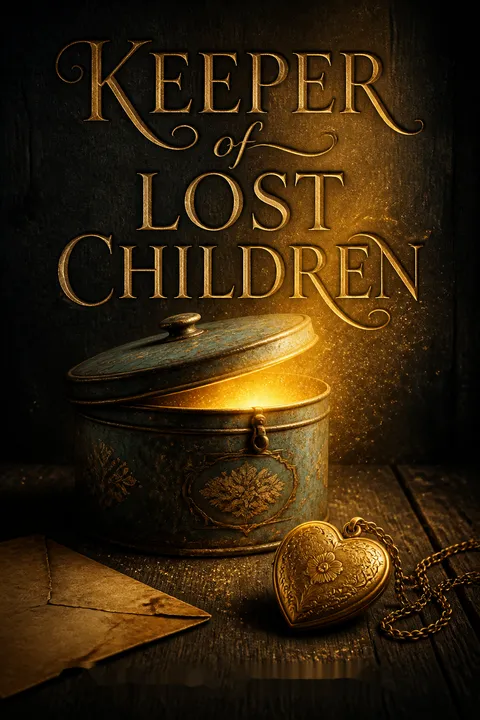
Final clue to Sophia's fatherA small canister with a German cottage painted on the lid, purchased by Ozzie2 and Jelka4 from a street vendor in Mannheim. Jelka4 saved it for the daughter she feared she would never see again. Inside: a family Polaroid of Ozzie2 in uniform beside Jelka4 and baby Katja1; a gold heart locket containing a miniature snapshot; a plastic bag with a lock of baby hair; and a stack of handwritten letters from Ozzie2 accompanied by two-dollar bills he mailed monthly to the Federal Eagle Club. Jelka4 never opened the letters or spent the money, too ashamed to face the man whose child she gave away. The return address — Ringgold Street, Philadelphia — becomes Sophia's1 final clue to locating her father2.
Brown Baby Plan Articles
Connects Sophia to Ethel GathersNewspaper and magazine stories from the Baltimore Afro-American, Jet, Ebony, and the Pittsburgh Courier documenting Ethel Gathers's3 campaign to move mixed-race orphans from German institutions to American families. Sophia1 discovers these articles on microfilm in the basement of Howard University's library, guided by archivist Dorothy Porter Wesley. The headlines provide the first evidence that Sophia's1 experience might not be unique — that hundreds of children like her were transported across the Atlantic during the 1950s. More critically, the articles name the woman at the center of the operation. Armed with Ethel's3 name, Sophia1 tears pages from the D.C. white pages and begins a dime-by-dime telephone campaign from a dormitory pay phone to find her.
Fire at St. Hildegard's
Shared trauma linking past to presentA kitchen fire at St. Hildegard's orphanage in Mannheim that damages the building's roof and electrical systems, hospitalizing a nun and burning two children. The fire displaces twenty-six children, forcing Ethel3 to accelerate her adoption timeline and add extra children to the already-planned Scandinavian Airlines flight to America. Decades later, the fire manifests as Sophia's1 recurring nightmare — flames lapping at her arms, children at a kitchen table, black skirts swirling — and as the burn scar on the back of her thigh. When Max8 reveals his own burn mark from an orphanage fire, the shared physical evidence becomes the first concrete link between their childhoods and the catalyst for Sophia's1 investigation into whether she, too, was a Brown Baby.
The Grotto at Lourdes
Ethel's spiritual redirectionThe cave inside the Sanctuary of Our Lady of Lourdes where St. Bernadette reportedly experienced visions of the Virgin Mary. Ethel3 visits during a pilgrimage organized for army wives stationed in Mannheim. As she touches the smooth stone, warmth flows through her belly and a raspy voice tells her she has much to offer others. The experience transforms her understanding of her infertility — from curse to redirection. Rather than seeking a miracle pregnancy, Ethel3 channels her maternal energy outward, eventually founding a one-woman adoption agency that places hundreds of children. The voice at Lourdes becomes her spiritual compass, invoked during every moment of doubt and hardship in the decades that follow.
Airport Identity Mix-Up
Scrambles Sophia's entire identityAt New York's Idlewild Airport in August 1952, Ethel3 arrives with seven German orphans and is immediately swarmed by reporters with microphones and flash cameras. While she gives interviews, an Immigration clerk fumbles the adoption files, dropping them to the floor. A Child Services worker takes over the distribution of children to waiting families. In the confusion, photographs separate from paperwork and children are matched imprecisely. A woman named Mrs. Clark collects two children who grow up as Walter5 and Sophia Clark1 on a Maryland farm. Sophia1 spends sixteen years celebrating the wrong birthday under the wrong name, unaware that her true identity — Katja Durchdenwald1, born September fifth — was scattered across a government counter thousands of miles from home.
Download PDF
Download EPUB
.epub digital book format is ideal for reading ebooks on phones, tablets, and e-readers.








































