
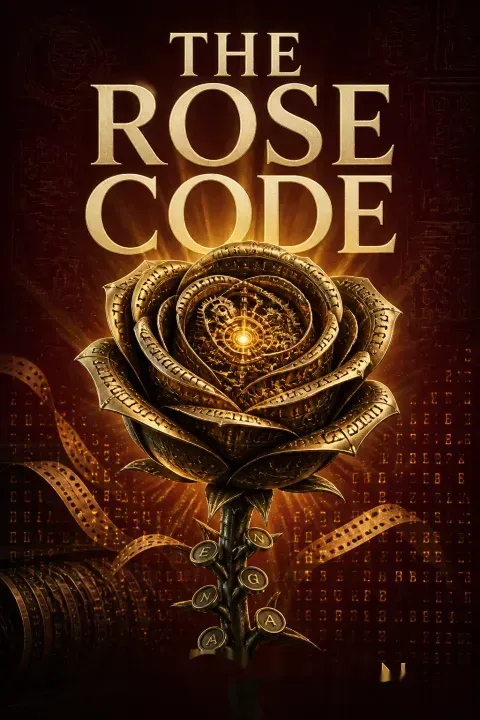


Plot Summary
Prologue
Osla Kendall1 stands in her Knightsbridge flat, surrounded by gowns for the upcoming royal wedding of Princess Elizabeth to Prince Philip (her own former boyfriend),8 when a smudged envelope arrives. Inside is a cipher message on paper torn from a Clockwell Sanitarium pad.
Osla1 recognizes the handwriting of Beth Finch,3 her estranged friend from Bletchley Park. Using the Vigenère cipher and the key word LASSIES (from an old nonsense verse by their deceased boss Dilly Knox7 ), Osla1 decodes a desperate plea: Beth3 claims she was wrongly imprisoned, that a traitor operated at Bletchley Park during the war, and that Osla1 and their former friend Mab2 owe her their help.
Osla1 telephones Mab2 in Yorkshire. Mab2 slams down the receiver. Inside the asylum, a gaunt woman3 prays her two former friends will believe her before it is too late.
The cipher arriving by post functions as a literal key turning in a long-sealed lock. Osla's immediate ability to crack it, even years removed from codebreaking, demonstrates how deeply the Bletchley years marked them. The chapter establishes the central tensions: the lingering weight of the Official Secrets Act, the unresolved guilt between the three women, and the fundamental question of whether Beth is mad or truthful. Beth's perspective inside Clockwell (where everything runs backward and no one believes her) inverts the codebreaking metaphor: where once she understood the machine, now she is trapped within a system designed to dismiss everything she says.
Signed Under Treason's Penalty
In 1940, Osla Kendall1 (a Canadian heiress who built Hurricanes to prove she was not just a silly deb) and Mab Churt2 (a tall East End girl who taught herself elocution from library books) meet on a train to Bletchley.
They are escorted to a Victorian mansion surrounded by prefabricated huts, where Commander Denniston explains they will be working in the most secret place in Britain. Signing the Official Secrets Act, they learn that treason is punishable by firing squad. Osla1 is assigned to Hut 4 translating German naval decrypts.
Mab2 operates Typex machines in Hut 6. Their billet-mate is Beth Finch,3 a colorless 24-year-old bullied by her domineering mother. Osla,1 noticing Beth3's crossword prowess, recommends her to the eccentric Dilly Knox,7 who recruits Beth3 for his elite codebreaking Cottage section.
This section establishes Bletchley Park as a great leveler: a deb, a shopgirl, and a spinster all arrive at the same gate, forced to confront the same terrifying oath. The novel immediately inverts expectations by making the meekest character (Beth) into the most naturally gifted codebreaker. Dilly Knox's unorthodox methods (gin, poetry, lateral thinking) and his preference for female recruits create a rare space where women's intellectual talents are genuinely valued. Osla's decision to meddle in Beth's life is both an act of generosity and a form of control, foreshadowing the dynamics that will later fracture them.
The Cottage Fillies' Triumph
After weeks of flailing at the rods and cribs, Beth3 has her breakthrough. Working Italian naval Enigma through the night, she discovers that a lazy operator sent a dummy message consisting entirely of the letter L, providing her the longest possible crib. She cracks the message wide open.
Dilly Knox7 takes her to his home at Courns Wood for breakfast and gin, telling her she has the gift. When a crisis erupts in March 1941, Beth3 and Dilly7's all-female team work three days straight to decrypt Italian battle orders for Cape Matapan. Beth,3 rain-soaked and exhausted, personally delivers the decrypts to the Admiralty teleprinter.
The resulting British victory destroys the Italian navy's threat in the Mediterranean. Admiral Cunningham visits Bletchley Park to thank them. Beth3 finds a stray schnauzer on the way home and, for the first time, defies her mother, keeping the dog.
Beth's Matapan triumph is the moment she fully inhabits her own mind. From a woman told her entire life that she was stupid, she becomes someone who can hold crucial military intelligence in her hands. The detail of her defying her mother to keep the dog (Boots) is a symbolic claiming of self. Dilly's mentorship provides the first genuine validation Beth has ever received, and his poem commemorating each of his Fillies transforms their work from anonymous labor into something celebrated. The scene also establishes Beth's relationship with her work as an almost spiritual calling, one that will later become her lifeline in the asylum.
Bach and the Married Man
Harry Zarb,5 a Hut 8 codebreaker of Maltese-Arab-Egyptian descent, asks Beth3 to dance at a crowded Bedford ball so they can whisper codebreaking techniques without being overheard. Their intellectual connection is instant and electric.
Harry5's wife Sheila, a pragmatic barmaid he married after she became pregnant, later tells Beth3 she has her blessing: their marriage exists for their polio-stricken son Christopher, and Sheila has a lover of her own. Beth,3 who never wanted a conventional domestic life, begins a secret affair with Harry.5
They meet in Cambridge at a music shop where Harry5 once worked, making love between Bach partitas. At Bletchley, they steal frantic moments in the air-raid shelter. Beth3 finds, for the first time, a relationship built on shared intellectual passion rather than obligation or domestic expectation.
The affair between Beth and Harry is built not on romance-novel tropes but on the specific thrill of two brilliant minds recognizing each other. Harry's observation that Beth does not know what to do with love because it doesn't come in five-letter clusters captures her fundamental emotional challenge: patterns are easy, people are not. The triangular arrangement, with Sheila's explicit consent, is presented without moral judgment, reflecting the war's disruption of conventional domesticity. Beth's refusal to want marriage or children is treated as a valid life choice, not a deficiency, and Harry respects it entirely.
The Wall That Fell
Beth,3 rushing through German air force intercepts in November 1942, cracks a message about a major Luftwaffe raid planned for Coventry. She knows Osla1 and Mab2 are heading there with Mab2's husband Francis Gray6 and her young sister Lucy. Beth3 makes a choice: her oath to secrecy comes first.
She files the decrypt and says nothing. In Coventry that night, an air-raid siren sends the group running for shelter. In the chaos, Osla1 briefly loses her grip on Lucy, who runs back for her new riding boots. Francis6 chases after her. A bombed-out wall collapses, killing them both.
Mab,2 digging through rubble with her bare hands, finds only a tiny riding boot. At the funeral, she spits on Osla1 for letting go of Lucy. Later, fellow codebreaker Peggy Rock9 reveals Beth3 knew about the raid. Mab2 strikes Beth3 across the face. Their friendship shatters.
The Coventry sequence is the novel's moral center and its tragedy. Beth's decision is the logical endpoint of the Official Secrets Act: if the oath means anything, it must be upheld even when it costs your friends' lives. Yet the narrative refuses to exonerate her, showing that rigid adherence to rules can be its own form of cruelty. Mab's rage splinters in two directions (at Osla for the mistake, at Beth for the choice), and the reader is left to weigh whether either blame is entirely fair. The deaths of Francis and Lucy are rendered with brutal economy: one moment of ordinary panic, one wrong direction, one collapsing wall, and a world ends.
Dilly's Final Puzzle
After Dilly Knox7 dies of lymphatic cancer in early 1943, Beth3 retrieves a folder of his unfinished work from his home. It contains a cipher she calls Rose: Soviet traffic on a captured German Enigma machine. Working on it sporadically for over a year, Beth3 finally cracks one message on June 5, 1944, typing it through a Typex machine.
The decrypted text, in English, thanks 'your source inside ISK' for information and promises 'the usual compensation.' Someone in Dilly7's own section has been selling Bletchley Park intelligence.
Beth3 tries to reach Commander Travis immediately, but with the Normandy invasion hours away, she cannot get a hearing. She hides the Rose file in Dilly7's wall safe at Courns Wood, swallowing the key for safekeeping. When she returns to her billet, Mab2 confronts her about Coventry. Their friendship shatters just as the invasion begins.
The discovery of the traitor occurs at the worst possible moment: the Allied liberation of Europe is launching, and Beth's revelation cannot compete for attention. The cipher itself, a 'rose' that furls inward protectively, becomes a metaphor for the secret that will consume Beth's life. Her decision to hide the file rather than leave it at BP is both prudent (given the traitor is in her section) and tragically isolating: she is now the sole person who knows, carrying a secret that makes her a target. The swallowed key is an act of desperate faith that someone will eventually come for the truth.
Alice Locked in Clockwell
Someone has been busy while Beth3 tried to report her discovery. When she arrives at BP's gates on June 6, 1944, just as the Normandy invasion begins, MI-5 agents revoke her pass.
They present testimony from her mother, from her section colleagues, and from Osla1 and Mab2 (who, still raw from Coventry, confirmed Beth3's one previous security breach) that she is unstable and a risk. Beth3 is driven to Clockwell Sanitarium in Yorkshire. On the way, the driver (bribed by the traitor4) offers her a deal: reveal where she hid the decrypts and she will be freed.
Beth3 refuses, having swallowed the safe key. She is admitted as Alice Liddell, drugged, and locked in the women's ward. Her dog Boots is left wandering the road outside BP's gates. The Normandy landings proceed without her.
Beth's institutionalization represents the dark side of the very secrecy that protected Britain's war effort. The system that enabled codebreaking also enabled the silencing of an innocent woman: her colleagues' testimony (given in ignorance) and her mother's lifelong resentment become weapons in the hands of the real traitor. Beth swallowing the key is a visceral act of defiance and trust, a bet that someone will eventually come for the truth even if she must wait years inside the clock. The asylum's alias for her (Alice Liddell, Lewis Carroll's inspiration for Alice in Wonderland) is bitterly appropriate: she has fallen through the looking glass into a world where nothing makes sense.
Bettys Tearoom Ultimatum
November 1947. Osla1 travels from London to York to confront Mab,2 who has built a new life as Mrs. Sharpe, mother of twins, wife to an Australian engineer named Mike.10 At Bettys tearoom, they trade barbed remarks about the royal wedding (Philip8 is marrying Princess Elizabeth in days) and their failed friendship.
Osla1 argues that Beth3 might be sane and telling the truth; Mab2 insists she is mad. But when Osla1 calls her a coward, Mab2's competitive pride engages. She agrees to accompany Osla1 to Clockwell.
On the drive through the Yorkshire moors, they snipe about past wounds but also reveal the hollowness of their current lives: Osla1 is engaged to Giles Talbot4 but does not love him; Mab2 has walled off her emotions from Mike,10 who knows she is hiding something. The journey forces them into reluctant honesty.
The Bettys scene is a portrait of buried emotion surfacing under pressure. Mab's fury at Osla for letting go of Lucy's hand has festered for years, but it masks a deeper guilt about her own choices (why did she bring Lucy to Coventry?). Their verbal sparring is both armor and probe, each woman using barbs to test whether the other can still be trusted. The mention of Giles as Osla's fiancé plants the first seed of the revelation to come, and the reader, who knows from Beth's perspective that the traitor is still at large, feels the dramatic irony with increasing dread.
Don't Let Them Cut
Posing as Beth3's married sisters, Osla1 and Mab2 enter Clockwell and find a gaunt, twitchy woman with chopped hair and bitten nails. But Beth3's mind is intact. In the prison's rose garden, she tells them everything: Giles Talbot4 was the traitor, selling information to the Soviets and later to whoever would pay.
He reported Osla1 for the Hut 4 file incident years ago to divert suspicion from himself. He used a drunken Mab2 to access mansion files by copying her keys. He manipulated Peggy Rock9 into revealing Beth3's Coventry secret to turn Mab2 against her.
And now, with a lobotomy scheduled for the day after the royal wedding, Giles4 has visited Beth3 threateningly: give him the Rose decrypts or be reduced to a vegetable. Osla,1 stunned, realizes her own fiancé4 is a spy who would have a woman's brain surgically destroyed to protect himself.
The revelation that Giles is the traitor reframes the entire narrative retrospectively. Every charming moment, every friendly gesture, every Mad Hatters gathering becomes sinister in memory. Osla's engagement ring is transformed from a symbol of security to a brand of complicity. Beth's gaunt appearance is the physical evidence of what the state, enabled by Giles, has done to her. The asylum garden, with its dying roses, becomes the setting for truth-telling after years of enforced silence. The lobotomy threat adds a ticking clock to the moral imperative: the women must act before surgery reduces Beth to an infantile state.
Three Keys, One Gate
Beth3 has spent 3.5 years memorizing the asylum's routines. Osla1 fakes an epileptic fit in the garden, drawing the attention of every doctor, nurse, and orderly. Mab2 slips into the unlocked gardening shed and steals the keys to the perimeter access doors.
When the commotion subsides, they press the keys into Beth3's palm. That evening, Beth3 slips out of the common room and into the corridor. A lecherous orderly (the same one she once serviced in a linen closet to learn what a lobotomy was) tries to stop her. She bites into his cheek, knocks him unconscious, and unlocks the outer gate.
She flees down a dark road to where Mab2's Bentley waits. They drive through the night to Courns Wood, Dilly7's old home. Beth3 retrieves the Rose file from the wall safe. But the single decrypted message does not name Giles4 explicitly. They need more evidence.
The escape sequence is a heist movie compressed into a few pages, but it is also a reclamation of agency. Beth, who spent years as a passive victim of orderlies and injections, uses violence to free herself. Her biting the orderly, tasting his blood, is both shocking and cathartic after years of being groped and silenced. The safe key, hidden inside her body for years, emerges as a symbol of everything she preserved against the asylum's attempt to erase her. The women's flight to Courns Wood is a return to the site of Beth's greatest triumphs, and Dilly's ghost seems to hover approvingly over their mission.
Job's Up
Beth3 needs more evidence, and fast. Osla1 and Mab2 send out calls to trusted BP veterans: Harry Zarb,5 Alan Turing, Peggy Rock,9 Asa Briggs, Valerie Glassborow Middleton, and others. They convene in a repair lab on the outskirts of London, where Peggy9 has secured a bombe machine and an Enigma on loan from a secret GCHQ bunker.
Mab2 operates the bombe while her husband Mike10 arrives unexpectedly (it turns out he was a BP bombe engineer at an outstation, a secret he kept even from her). Over three sleepless days, Beth3 struggles, fearing the asylum has permanently damaged her gift.
After making love with Harry5 in a supply closet, she finds her rhythm again. The bombe stops. The drums freeze. The decrypted Rose messages explicitly name Giles Talbot4 and detail his espionage activities and payments.
The reunion of the codebreakers is the novel's emotional high point. It demonstrates that the community forged at Bletchley Park was not merely circumstantial: these people will drop everything and risk their careers for one of their own. Mike's revelation that he, too, worked at BP (a secret he and Mab kept from each other for years) underscores how thoroughly secrecy shaped their lives. The bombe machine, which Mab once hated, becomes an instrument of justice. Beth's fear that she has been permanently diminished by the asylum is proven wrong when she falls back into the spiral of the code and the crack comes.
Lunch with the Traitor
An invitation arrives: Osla1 and Giles4 are to lunch with Princess Elizabeth and Princess Margaret at Buckingham Palace, a PR move to quash tabloid gossip about Osla1 and Philip8's wartime romance.
Osla1 must sit beside her traitorous fiancé,4 making small talk about June weddings, while knowing he would have Beth3 lobotomized. After the lunch, Philip8 arranges a private moment. They acknowledge their ended romance with mutual respect: Osla1 tells him she will be fine, and he gives her his private telephone number.
She returns to Giles4 and picks a quarrel about his tipping off the scandal rags to avoid his suspicion. The plan is set: Osla1 will invite Giles4 to her flat on the wedding morning, where Harry5 and Mike10 will detain him until MI-5 can act.
The palace lunch is a masterclass in dramatic irony: Osla performing pleasantries while mentally cataloging Giles's crimes. The scene with Philip provides closure for the novel's central romance, not through melodrama but through mutual recognition that they have both moved on. Osla's acceptance of Philip's marriage to the future queen signals her own maturation: she no longer needs a prince to feel worthy. The emerald engagement ring (which Osla dislikes because green stones remind her of the Café de Paris bombing) becomes a symbol of everything false in her relationship with Giles.
Cornered at Victoria
On November 20, 1947, the royal wedding day, Giles4 sees a newspaper notice: Beth Finch3 has escaped Clockwell. He abandons his plan to meet Osla1 and bolts for Victoria Station. When he does not appear at her flat, Osla,1 Mab,2 Beth,3 Harry,5 and Mike10 race through crowds of wedding revelers toward the station.
Beth3 spots Giles4 on the platform. Osla1 snatches a book from a bystander and hurls it, knocking him off balance. Mab2 seizes his elbow. Beth3 tackles him to the ground, screaming as the wedding broadcast blares from a ticket-booth radio.
The police arrest everyone. In the holding cell, Osla1 uses Philip8's private number to summon MI-5. Agents arrive, review the Rose file, and take custody of Giles.4 Beth3 tells the weeping Giles4 that whatever happens to him, it will not be enough.
The Victoria Station climax is both a thriller set-piece and an emotional catharsis. Beth physically bringing Giles to the ground reverses the power dynamic: the woman he imprisoned and threatened with brain surgery now has him pinned. The royal wedding broadcast playing in the background provides ironic counterpoint: one union is celebrated while another partnership (Osla and Giles's false engagement) is destroyed. Beth's refusal to offer Giles comfort or forgiveness is portrayed as morally correct, not cold. Justice, the novel suggests, does not require the victim's absolution, and some betrayals are beyond the reach of apology.
English Lassies, Rustling
Weeks later, in December 1947, Osla,1 Mab,2 and Beth3 meet at the now-quiet Bletchley Park. Giles4 has been transferred to a secure facility, his treason fully investigated. Beth3 has been officially exonerated. She is living in Cambridge, working at a music shop, seeing Harry5 regularly.
Osla1 has broken her engagement, kept the emerald (she pawns it to help Beth3 ), and met a charming Rifle Brigade major named John Cornwell (her Café de Paris rescuer, whose letters finally caught up with her). Mab2 has begun telling Mike10 about Francis6 and the war.
Standing before the mansion gates, the three women recite Dilly7's old nonsense poem: 'These have knelled your fall and ruin, but your ears were far away / English lassies rustling papers through the sodden Bletchley day.' Their friendship, tested and broken, has mended into something scarred but whole.
The final scene at Bletchley Park is a ritual of closure and continuance. The poem they recite was written by Dilly as a joke, but it becomes a kind of sacred text, binding them to their shared past. Each woman has found a different path forward: Beth in her unconventional partnership with Harry, Osla in her reclaimed independence and potential romance with Cornwell, Mab in her halting emotional availability to Mike. The war's secrets are no longer cages but foundations. The novel ends not with the women forgetting what happened, but with their choosing to remember together, on the ground where their stories began.
Epilogue
June 2014. The Duchess of Cambridge formally reopens Bletchley Park after extensive restoration. Her grandmother, Valerie Glassborow Middleton, was a wartime employee of Hut 16.
Ninety-six-year-old Mab Sharpe (formerly Churt, formerly Gray),2 unbent and still near six feet tall, demonstrates a reconstructed bombe machine for the duchess, teaching her to decode a Morse message. A newspaper account notes that Osla Kendall (Lady Cornwell, the celebrated satirist and Tatler columnist)1 died in 1974, but her memoir Bletchley Bletherings was published posthumously.
Beth Finch,3 still alive at 98, attends the ceremony in a rose-pink cardigan but politely refuses to discuss her war work, citing her oath. The article concludes that some codes will never be broken, and some stories will never be told.
The epilogue grounds the fictional characters in a real historical event, bridging the gap between 1947 and the present. Beth's continued refusal to discuss her work, even after the Official Secrets Act's expiration, is both a testament to her lifelong integrity and a final act of control: she chooses which secrets to keep and which to release. Mab's presence as a bombe demonstrator transforms her wartime resentment of the machines into a legacy. Osla's posthumous memoir is the ultimate fulfillment of her desire to be taken seriously as a writer. The three women, in their different ways, found peace with their pasts. The final line (some codes will never be broken) echoes the novel's central theme: not all mysteries are meant to be solved, and some silences are chosen, not imposed.
Analysis
The Rose Code examines the intersection of secrecy, duty, and female friendship against the backdrop of a war that demanded silence as the price of victory. Through three women from vastly different backgrounds, Kate Quinn argues that the Official Secrets Act, while necessary for wartime security, also functioned as a tool of institutional control that could be weaponized against individuals. Beth3's institutionalization is not merely the work of a single traitor4 but the logical endpoint of a system that prioritized silence over justice: her colleagues' testimony, her mother's resentment, and the government's need to contain potential leaks all aligned to destroy her.
The novel interrogates women's ambition in a world that consistently underestimates them. Osla,1 dismissed as a silly deb despite her linguistic skills; Mab,2 forced to conceal her intelligence behind a husband-hunting persona; Beth,3 told her entire life she was stupid only to discover she is a genius: all three must fight against a society that has no category for women like them. Bletchley Park, for all its flaws, offered a temporary space where women's minds were genuinely valued, and the novel mourns the closing of that space after the war, when women were expected to retreat into domesticity and silence.
The traitor plot adds moral complexity by giving Giles4 a coherent (if ultimately self-serving) ideology: he genuinely believed Britain was failing its Soviet allies by hoarding intelligence. The novel allows him that argument even as it condemns his willingness to sacrifice an innocent woman to protect himself.
Above all, The Rose Code is about the families we create when biological families fail us. The Mad Hatters, assembled from oddballs and eccentrics, become a tribe bound by shared secrets and shared purpose. When Beth3 needs them, they return without hesitation, proving that the oaths they swore were not just to country but to each other. The final image of the three women reciting Dilly7's poem at the Bletchley gates is a declaration that their war, and their friendship, mattered even if the world would never know.
Review Summary
The Rose Code is a captivating historical fiction novel set during World War II at Bletchley Park. It follows three women—Osla, Mab, and Beth—as they work as codebreakers and navigate friendship, romance, and betrayal. The dual timeline structure, moving between 1940 and 1947, adds depth to the story. Readers praise Quinn's meticulous research, compelling characters, and engaging plot. While some found the book lengthy, most consider it a page-turner with a satisfying blend of history, mystery, and drama. The novel's exploration of women's roles during wartime resonated strongly with many readers.
People Also Read







Characters
Osla Kendall
Translator and Tatler columnistCanadian-born heiress, fluent in German and French, who finagles her way back to England at the outbreak of war rather than sit it out in Montreal. Works as a translator in Bletchley Park's Hut 4 after briefly building Hurricanes. Writes the anonymous gossip sheet Bletchley Bletherings, keeping up morale with humor. Her wartime boyfriend is Prince Philip of Greece8, and later she becomes engaged to Giles Talbot4. Hides profound loneliness behind a sparkling, irreverent exterior. Repeatedly dismissed by male authority figures as a silly deb, she craves to be taken seriously and to belong somewhere. Eventually finds her voice as a celebrated satirist and columnist.
Mab Churt (later Gray, then Sharpe)
Bombe operator and social climberTall, fierce East End girl who remakes herself from Mabel into Queen Mab. Works on Typex and bombe machines at BP. Her driving motivation is security and upward mobility, rooted in a traumatic past: her younger sister Lucy is actually her daughter, born when she was seventeen after being assaulted by a Cambridge student and his friends. Marries war poet Francis Gray6, finding unexpected love, then later weds Australian engineer Mike Sharpe10. Emotionally guarded and quick to anger, she finds it easier to nurse grudges than to grieve openly. Her arc involves learning to let people in after catastrophic loss.
Beth Finch
Brilliant cryptanalyst, asylum survivorShy middle-class woman who spent her first 24 years being told by her domineering mother that she was slow-witted and useless. Recruited by Dilly Knox7 after her crossword-solving talent is noticed. Discovers she is a genius cryptanalyst, responsible for cracking the Italian naval Enigma before Matapan and the Abwehr Spy Enigma. Socially awkward but intellectually fearless, she lives for the spiraling patterns of code. Begins an affair with married colleague Harry Zarb5 with his wife's consent. Makes a fateful choice to uphold her oath over warning friends about an air raid. Framed by a traitor4 and institutionalized for 3.5 years, she survives through sheer iron will.
Giles Talbot
Charming codebreaker and gossipRed-haired, universally liked BP codebreaker with an Oxbridge drawl and a talent for making everyone feel like his confidant. Works in Hut 6 and later in Dilly Knox7's ISK section. A fixture at the Mad Hatters literary society, known for his dreadful ceremonial top hat and his pack of French Gitanes cigarettes. Engaged to Osla1 after the war. Beneath his witty, self-deprecating exterior runs a deep ideological conviction that Britain failed its allies by not sharing enough intelligence, and a willingness to act on that conviction regardless of the consequences.
Harry Zarb
Married codebreaker and Beth's loverMassive, brilliant Hut 8 codebreaker of Maltese-Arab-Egyptian descent. Married to Sheila, father to a polio-stricken son named Christopher. Faces constant racism and shaming from strangers who assume his absence of uniform means cowardice. Struggles with guilt over being kept from the front lines, eventually joining the Fleet Air Arm. Falls in love with Beth Finch3's mind during the Matapan crisis, and she with his. Their relationship is intellectual as much as physical, conducted in music shops and air-raid shelters. Kind, patient, and fiercely protective of those he loves.
Francis Gray
War poet and Foreign Office officialQuiet, stocky man who enlisted at sixteen in the last months of WWI and came home hollowed out by trench warfare. Published a slim, searing volume of verse called Mired that captured the horror of the trenches. Works in the Foreign Office during WWII, liaising with Bletchley Park. Communicates far more deeply in his letters to Mab2 than he ever does in speech. Carries a lifelong memory of a girl trying on hats in a Paris shop in 1918, a moment of beauty that kept him alive during the war. Marries Mab2 after a brief courtship, offering her a devotion she never expected to find.
Dilly Knox
Eccentric genius codebreakerBrilliant classicist and cryptographer who has worked in codebreaking since WWI. Only recruits women for his team (Dilly's Fillies), believing them less prone to ego and more willing to think laterally. Mentors Beth3 with unorthodox methods involving gin, poetry, and Alice in Wonderland logic. Dying of lymphatic cancer throughout the war, he works from his home library at Courns Wood until the end. His final, unfinished project is the Rose cipher that will expose the traitor4.
Prince Philip of Greece
Royal naval officer and Osla's loveRoyal Greek prince serving in the Royal Navy during WWII and Osla1's wartime boyfriend. Witty, restless, sharp-tongued but tender beneath the bravado. Grew up without a stable home after his mother was institutionalized and his family scattered. Searching for the belonging he never had as a child. His destiny ultimately pulls him toward Princess Elizabeth and a future as consort to the queen, a path Osla1 comes to accept with hard-won grace.
Peggy Rock
Senior Knox section codebreakerOlder, competent, and respected member of Dilly Knox7's team. One of the Fillies who helped train Beth3. Suffered a breakdown from overwork in 1942. Her well-intentioned revelation to Mab2 about the Coventry decrypt becomes a tool used by the real traitor4 to fracture the friendship between the three women. Later helps assemble the team to crack the Rose cipher and clear Beth3's name, making amends for her unwitting role in the tragedy.
Mike Sharpe
Mab's second husband, ex-RAF engineerLaconic Australian ex-RAF pilot invalided out after being shot down over Kent. Became a bombe machine engineer at a BP outstation (a secret he kept even from Mab2). Marries Mab2 after the war, giving her the twins she desperately wanted. Steady, perceptive, and patient, he pushes Mab2 to open up emotionally, knowing she is hiding deep grief behind her polished facade. His own BP service is one of the novel's many ironic secrets.
Plot Devices
The Enigma Machine
German encryption device cracked at BPThe portable cipher machine used by all German military branches to encrypt radio traffic. Features three (later four) rotors and a plugboard, creating over 150 million million million possible settings that change daily at midnight. The Polish cryptanalysts first broke Enigma in the 1930s, passing their methods to the British. At BP, codebreakers like Beth3 use cribs (known phrases), rods, and lateral thinking to find the daily keys. The German military never suspected their unbreakable machine had been compromised. A captured Enigma also features in the Rose cipher plot: the Soviets experimented with captured machines, and the intercepted traffic was flagged by Dilly Knox7 as anomalous, setting Beth3 on the path to discovering the traitor4.
The Official Secrets Act
Binding oath of lifelong silenceThe document signed by every Bletchley Park employee, making disclosure of any information about their work punishable by execution for treason. Workers are forbidden to tell family, friends, or colleagues in other huts what they do. This oath creates the central moral conflicts of the novel: Beth3's decision not to warn her friends about the Coventry raid is driven by her rigid adherence to it. The secrecy also enables the traitor4 to operate undetected and allows Beth3's wrongful institutionalization to go unquestioned. After the war, the oath continues to shape the characters' lives, preventing them from sharing their experiences with spouses or receiving recognition, while also binding them together as a secret community.
The Bombe Machine
Electro-mechanical Enigma crackerMassive bronze-colored cabinets designed by Alan Turing to speed up Enigma decryption. The machines contain rows of rotating drums that cycle through thousands of possible wheel settings far faster than humans could. Operators like Mab2 plug up the back according to menus prepared by cryptanalysts, set the drums spinning, and wait for a stop indicating a possible correct setting. The bombes are deafening, finicky, and physically exhausting to maintain. Mab2 operates one named Agnus Dei and hates every minute, yet her skill proves crucial when the team reconvenes in 1947 to crack the Rose messages on a borrowed bombe, with her husband Mike10 repairing the machine.
The Vigenère Cipher
Code system linking past and presentA historic hand cipher that Beth3 teaches Osla1 and Mab2 during the war as a practice exercise, using the key word LASSIES from Dilly7's poem. The three women later use the Vigenère cipher to leave each other notes that their nosy landlady cannot read, creating a private language. In 1947, Beth3 uses this same cipher to send her desperate messages from Clockwell Sanitarium, knowing that only Osla1 and Mab2 would recognize the key and be able to decode her plea. The cipher thus becomes a thread connecting their wartime friendship to the present crisis, and its successful decoding by Osla1 in the prologue signals that the old bonds are not entirely broken.
The Rose File
Hidden Soviet intercepts proving treasonA folder of encrypted Soviet traffic intercepted by British Y-stations, using a captured German Enigma machine. Identified as unusual by Dilly Knox7, who worked on it at home until his death. Beth3 retrieves the file and eventually cracks one message, discovering that someone inside Dilly7's own ISK section is selling intelligence. She hides the file in Dilly7's wall safe at Courns Wood, swallowing the key. The file remains hidden for 3.5 years while Beth3 is institutionalized. When she recovers it, the single cracked message does not name the traitor4 explicitly, requiring the reassembled BP team to crack additional messages on a borrowed bombe machine. The decrypted Rose messages ultimately provide the evidence needed to convict the real traitor4.
FAQ
Synopsis & Basic Details
What is The Rose Code about?
- WWII codebreakers' intertwined lives: The Rose Code follows three women—Osla, Mab, and Beth—who work as codebreakers at Bletchley Park during World War II. Their lives become deeply intertwined as they navigate the challenges of their secret work and personal relationships.
- Post-war mystery and betrayal: Years after the war, a mysterious coded message draws the women back together, forcing them to confront past betrayals and a hidden enemy. The story shifts between their wartime experiences and their post-war quest for truth.
- Friendship, love, and sacrifice: The novel explores themes of friendship, love, and sacrifice as the women grapple with the emotional toll of their work and the secrets they must keep. It highlights the strength and resilience of women during wartime.
Why should I read The Rose Code?
- Intriguing historical setting: The novel offers a fascinating glimpse into the top-secret world of Bletchley Park, where codebreakers worked tirelessly to decipher German communications. It brings to life a little-known aspect of World War II.
- Compelling female characters: The story features three strong, complex female characters with distinct personalities and motivations. Their journeys of self-discovery and resilience are both inspiring and emotionally engaging.
- Blend of genres: The Rose Code seamlessly blends historical fiction, mystery, and romance, creating a captivating and suspenseful narrative. It keeps readers guessing while exploring the emotional depths of its characters.
What is the background of The Rose Code?
- World War II setting: The novel is set against the backdrop of World War II, specifically focusing on the codebreaking efforts at Bletchley Park. It highlights the crucial role of cryptography in the Allied victory.
- Bletchley Park's secrecy: The story emphasizes the intense secrecy surrounding Bletchley Park and the challenges faced by its workers in keeping their work hidden from the outside world. It explores the impact of this secrecy on their personal lives.
- Technological and historical context: The novel incorporates details about the Enigma machine, Typex machines, and other codebreaking technologies of the time. It also touches on the social and political climate of wartime Britain.
What are the most memorable quotes in The Rose Code?
- "Not if you're inside the clock.": This quote, repeated throughout the book, symbolizes the characters' unique perspectives and the way they see the world differently from those on the outside. It highlights the hidden nature of their work and their lives.
- "You're very ill behaved for a prince. A positive menace.": This quote, spoken by Osla to Philip, captures the playful and rebellious nature of their relationship. It also hints at the unconventional path they both choose in life.
- "If your country is in danger and you're of age to stand and defend it, you do so.": This quote, spoken by Osla, encapsulates her strong sense of duty and patriotism. It reflects the sacrifices made by many during the war.
What writing style, narrative choices, and literary techniques does Kate Quinn use?
- Dual timelines: Quinn employs a dual timeline structure, alternating between the women's wartime experiences and their post-war quest for truth. This technique builds suspense and reveals the long-lasting impact of their wartime secrets.
- Multiple perspectives: The story is told from the perspectives of Osla, Mab, and Beth, allowing readers to experience the events from different viewpoints. This enhances the complexity of the characters and their relationships.
- Vivid historical detail: Quinn's writing is rich in historical detail, bringing the world of Bletchley Park and wartime Britain to life. She seamlessly integrates historical facts with fictional elements, creating an immersive reading experience.
Hidden Details & Subtle Connections
What are some minor details that add significant meaning?
- The recurring mention of "The Holly and the Ivy": This Christmas carol appears at various points in the story, often in moments of change or transition. It serves as a subtle reminder of the passage of time and the cyclical nature of life.
- The use of code names: The characters' code names, such as "Queen Mab" and "Ozma of Oz," reflect their personalities and aspirations. They also highlight the importance of identity and self-discovery in the novel.
- The descriptions of clothing: The characters' clothing choices often symbolize their inner states and social positions. For example, Mab's practical dresses contrast with Osla's fashionable gowns, reflecting their different backgrounds and priorities.
What are some subtle foreshadowing and callbacks?
- The mention of Clockwell Sanitarium: The asylum is mentioned early in the story, foreshadowing Beth's eventual confinement there. This detail creates a sense of unease and hints at the dark secrets that will be revealed later.
- The recurring image of a clock: The image of a clock, and the idea of being "inside the clock," foreshadows the characters' feeling of being trapped by time and circumstance. It also symbolizes the cyclical nature of their lives and the secrets they must keep.
- The use of literary allusions: The characters' references to books and poems, such as Rebecca and Through the Looking-Glass, foreshadow their personal journeys and the themes of the novel. They also highlight the importance of literature in their lives.
What are some unexpected character connections?
- Lord Mountbatten's connection to both Osla and Philip: This connection highlights the interconnectedness of the characters' lives and the small world of the British elite. It also adds a layer of complexity to Osla's relationship with Philip.
- Giles Talbot's connection to the Finch family: Giles's familiarity with the Finch family, particularly Beth, adds a layer of unease and foreshadows his betrayal. It also highlights the hidden connections between seemingly disparate characters.
- Harry Zarb's connection to the Finch family: Harry's connection to the Finch family through his son's illness and his shared interest in crosswords with Beth, creates a bond that transcends their different backgrounds. It also highlights the importance of shared experiences in forming relationships.
Who are the most significant supporting characters?
- Dilly Knox: As Beth's mentor, Dilly plays a crucial role in her development as a codebreaker. His eccentric personality and brilliant mind make him a memorable and influential figure in the story.
- Peggy Rock: As a fellow codebreaker and friend, Peggy provides support and guidance to Beth. Her intelligence and experience make her a valuable ally in the fight against the Axis powers.
- Mrs. Knox: Dilly's wife, Olive, provides a sense of warmth and stability to the story. Her quiet strength and understanding make her a comforting presence for the characters.
Psychological, Emotional, & Relational Analysis
What are some unspoken motivations of the characters?
- Osla's need for validation: Beneath her confident exterior, Osla is driven by a need to prove her worth beyond her socialite status. Her desire to contribute to the war effort stems from a deep-seated need for validation.
- Mab's fear of vulnerability: Mab's tough exterior and ambition mask a deep-seated fear of vulnerability. Her desire for control and success stems from her past traumas and her need to protect herself.
- Beth's desire for belonging: Beth's shyness and awkwardness mask a deep longing for connection and belonging. Her passion for codebreaking stems from a desire to find her place in the world and to be valued for her unique abilities.
What psychological complexities do the characters exhibit?
- Osla's internal conflict: Osla struggles with the conflict between her desire for independence and her longing for love and connection. She grapples with the expectations placed on her as a debutante and her desire to forge her own path.
- Mab's emotional repression: Mab's emotional repression stems from her past traumas and her fear of vulnerability. She struggles to express her emotions and to trust others, often resorting to sarcasm and cynicism.
- Beth's social anxiety: Beth's social anxiety and self-doubt stem from her perceived lack of intelligence and her awkwardness in social situations. She struggles to connect with others and to assert herself, often relying on her codebreaking skills as a form of escape.
What are the major emotional turning points?
- Osla's experience at the Café de Paris: The bombing forces Osla to confront her mortality and the superficiality of her past life. It marks a turning point in her journey of self-discovery and her commitment to the war effort.
- Mab's loss in Coventry: The Coventry Raid and the death of her husband and daughter shatters Mab's world, leaving her consumed by grief and guilt. It forces her to confront her past and to reevaluate her priorities.
- Beth's escape from the asylum: Beth's escape from the asylum marks a turning point in her journey of self-discovery and resilience. It empowers her to take control of her life and to seek justice for the wrongs she has suffered.
How do relationship dynamics evolve?
- Osla and Mab's friendship: Their friendship is tested by their different backgrounds and personalities, but their shared experiences and mutual respect ultimately strengthen their bond. They learn to accept each other's flaws and to support each other through difficult times.
- Beth and Harry's connection: Their connection is based on mutual respect and intellectual camaraderie. They find solace in each other's company, sharing a passion for codebreaking and a deep understanding of each other's minds.
- Osla and Philip's romance: Their romance is marked by passion and intensity, but also by the challenges of their different social positions and the demands of war. They struggle to balance their personal desires with their responsibilities, ultimately leading to their separation.
Interpretation & Debate
Which parts of the story remain ambiguous or open-ended?
- The true extent of Giles's betrayal: While Giles is revealed as the traitor, the full scope of his espionage activities and his motivations remain somewhat ambiguous. The novel leaves it up to the reader to decide whether he was a true believer or simply a self-serving opportunist.
- The long-term impact of the war on the characters: The novel ends with the characters embarking on new paths, but it leaves the reader to imagine the long-term impact of their wartime experiences. It raises questions about the lasting effects of trauma and the challenges of rebuilding a life after war.
- The nature of truth and deception: The novel explores the complexities of truth and deception, blurring the lines between right and wrong. It raises questions about the nature of loyalty and the sacrifices made in the name of duty.
What are some debatable, controversial scenes or moments in The Rose Code?
- Beth's decision not to warn Mab and Osla about the Coventry Raid: This decision raises questions about the nature of loyalty and the sacrifices made in the name of duty. It forces readers to consider the ethical implications of prioritizing one's oath over the safety of loved ones.
- Sheila Zarb's acceptance of Harry's affair: Sheila's acceptance of Harry's relationship with Beth challenges traditional notions of marriage and fidelity. It raises questions about the complexities of love and relationships in wartime.
- The portrayal of the British government: The novel portrays the British government as both heroic and flawed, highlighting the challenges of leadership during wartime. It raises questions about the balance between security and individual rights.
The Rose Code Ending Explained: How It Ends & What It Means
- Giles's exposure and capture: The novel concludes with Giles's exposure as the traitor and his capture by MI-5. This provides a sense of closure to the main plotline, but it also raises questions about the long-term consequences of his actions.
- The women's separate paths: The women go their separate ways, each embarking on a new path. This ending highlights the importance of individual agency and the challenges of rebuilding a life after war.
- The enduring power of friendship: Despite the challenges they face, the women's friendship endures, providing a sense of hope and resilience. The ending emphasizes the importance of human connection in the face of adversity.
About the Author
Other books by Kate Quinn




Download PDF
Download EPUB
.epub digital book format is ideal for reading ebooks on phones, tablets, and e-readers.








































