


Plot Summary
Prologue
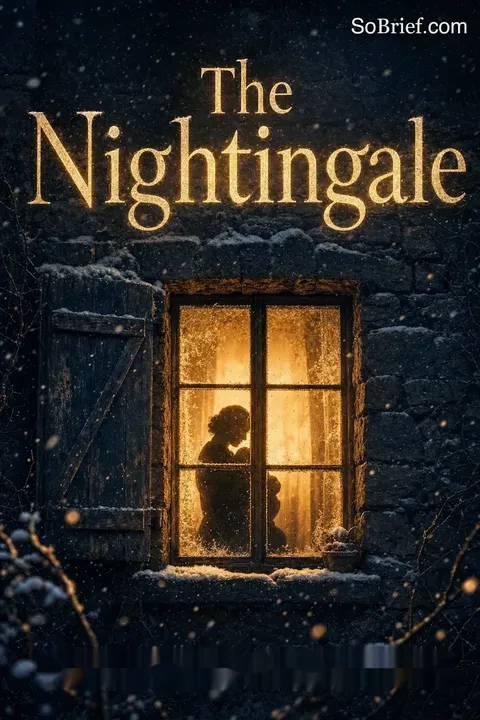
In 1995, on the Oregon coast, an elderly woman climbs into her attic and opens a steamer trunk she hasn't touched in thirty years. Beneath baby shoes and crayon drawings, she finds a wartime identity card bearing the photograph of a young woman named Juliette Gervaise. Her hands shake.
Her son Julien15 finds her crying among the cobwebs and asks who Juliette Gervaise is. She cannot answer — not yet. But the card has broken something loose inside her, and the memories she spent a lifetime burying begin their slow, irresistible ascent. She wants, at last, to be known.
Antoine Leaves Le Jardin
In the Loire Valley summer of 1939, Vianne Mauriac1 tends her stone farmhouse Le Jardin with husband Antoine3 and daughter Sophie.8 Their mother died when Vianne1 was fourteen and Isabelle2 four; their father,4 broken by the Great War, abandoned both girls to a stern caretaker.
Vianne1 survived by marrying Antoine3 young. Now he is mobilized — he hides money in the mattress, promises to return, and walks through iron gates into a military camp. Hundreds of miles away, eighteen-year-old Isabelle2 is expelled from yet another finishing school.
Her father4 reluctantly allows her back to his Paris apartment, where she dreams of heroism and reads about nurse Edith Cavell. When the Germans advance on Paris, he forces Isabelle2 onto a refugee convoy heading south — toward a sister she hasn't seen in years.
Fire on the Road South
Separated from her traveling companions when their car runs out of petrol, Isabelle2 joins millions of refugees walking south through blistering heat. In a forest at nightfall, she meets Gaëtan Dubois7 — a sharp-faced communist recently released from prison, roasting a stolen rabbit over a fire.
He feeds her, shares wine, and treats her as an equal. They walk together for days, holding hands. Near Tours, German planes strafe the refugee column — Gaëtan7 throws himself over Isabelle2 as machine guns tear lines through the grass and a church explodes around them.
He promises to take her to fight. But when Isabelle2 collapses at Le Jardin's back door, she wakes to find him gone. A note pinned to her bloodied dress reads that she is not ready. First love and first abandonment arrive in a single stroke.
Beck Billets at Le Jardin
Pétain announces France's surrender. Isabelle2 is enraged; Vianne1 believes the old marshal is saving lives. De Gaulle broadcasts from London that the flame of resistance must not die, and Isabelle2 hears a call to arms her sister cannot fathom.
Their split crystallizes — Vianne1 the rule-follower, Isabelle2 the rebel. Days later, German soldiers march into Carriveau and raise a swastika over the town hall. Captain Wolfgang Beck5 — polite, dimpled, homesick for his wife and children — arrives at Le Jardin with a requisition order for the downstairs bedroom.
Isabelle2 seizes kitchen shears and hacks off her blond hair in front of him, declaring that beauty must be forbidden under occupation. Vianne1 is terrified. The tension between compliance and defiance now has a uniform and a bed beneath their roof.
Chalk on a Nazi Poster
Trapped in Carriveau without a travel pass, Isabelle2 finds a piece of chalk and scrawls a V-for-victory over an anti-Jewish propaganda poster. A burly man named Didier catches her wrist and drags her not to the Gestapo but to a hidden room, where Henri Navarre10 — a communist who runs the local hotel — and others are printing tracts supporting de Gaulle.
They need a distributor the Germans would never suspect. A pretty young girl fits perfectly. Isabelle2 accepts instantly. Every Friday before dawn she slips from Le Jardin, tucks tracts into letterboxes across the countryside, then queues innocently for morning rations.
She steals a bicycle from under a German soldier's nose to speed her rounds. Her secret resistance has begun — small, dangerous, and entirely her own.
The List Vianne Wrote
Beck5 asks Vianne1 for the names of Jewish, communist, and Freemason teachers at her school. Merely clerical, he assures her. In exchange, he offers to mail postcards to Antoine's3 prison camp — a lifeline she desperately wants. Vianne1 hesitates, then writes the names.
She includes Rachel de Champlain,6 her best friend, the Jewish teacher who lives next door. Weeks later, the Gestapo and French police dismiss every person on that list. Vianne1 is gutted with shame. She visits Beck's5 office to protest, but he is powerless — the order came from above.
Isabelle2 catches her leaving Nazi headquarters and is furious. Vianne1 confesses to Rachel,6 who absorbs the blow with weary grace: everyone already knew. But she warns Vianne1 that kindness from the enemy always carries a price.
Juliette Gervaise Is Born
Isabelle2 obtains a travel pass from Beck5 through a lie and returns to Paris, delivering a secret letter for Henri's10 network. She is drawn deeper into the organized resistance led by Monsieur Lévy, a professor, and a stern woman called Anouk.11
They give her false identity papers: she is now Juliette Gervaise, a student from Nice. She reopens her father's4 shuttered bookshop as a front, flirting with German customers by day and running courier missions by night.
When she hides a downed RAF pilot in the secret room behind her childhood armoire, her father4 discovers the evidence — and reveals his own astonishing secret. He has been forging papers for the resistance all along. He created the Juliette identity himself. For the first time, father and daughter stand on the same side.
Over the Pyrenees on Foot
In October 1941, Isabelle2 proposes what no one has managed: a route to walk downed Allied airmen from Paris over the Pyrenees into Spain. She travels to the Basque foothills and finds her mother's old friend Micheline Babineau,12 who secures a mountain guide named Eduardo.
The crossing is punishing — freezing rain, switchback trails in total darkness, blisters that turn feet to open wounds. Isabelle2 cajoles exhausted pilots upward through snow, past the tree line, into air so cold her scarf freezes solid against her face.
At the border, they cross a rope bridge swaying above a roaring gorge, timed between Spanish searchlight sweeps. Four days after departure, they reach the British consulate in San Sebastián. The Nightingale escape route — named for Isabelle's2 surname, Rossignol — is officially born.
Beck Whispers a Warning
By summer 1942, Jews must wear yellow stars. Rachel6 stitches the ragged cloth onto her clothes and tries to explain the humiliation to her daughter Sarah.14 Beck5 rides to Le Jardin and tells Vianne1 quietly that Rachel6 should not be home the following morning.
The warning is unmistakable: a roundup is planned. Vianne1 hides Rachel6 and her children in the barn cellar for an agonizing day. But the SS shifts the timetable without Beck's5 knowledge. By afternoon, everything appears normal, and Vianne1 lets Rachel6 leave the hiding place.
Hours later, a French policeman arrives at Rachel's6 door. The fragile window of safety has already closed. Beck5 risked his career to give them a head start, and the machinery of deportation swallowed that gift whole.
A Mother at the Cattle Cars
Before the roundup, Vianne1 attempts to lead Rachel6 and her children across the border to the Free Zone under cover of darkness. Near the checkpoint, sentries open fire on the refugees. Eleven-year-old Sarah14 is struck in the chest. Rachel6 cradles her daughter in the woods, telling the dying girl they made it across. There is no time to grieve — dogs are barking, searchlights sweeping.
Vianne1 buries Sarah14 beside the white crosses of her own lost babies. The next day, French police seize Rachel6 and force her onto a cattle car. In the chaos at the station, Rachel6 pushes three-year-old Ari into Vianne's1 arms with a single command: save him. The car door clangs shut. Rachel6 raises a bloody hand in farewell and is swallowed by the dark interior.
The Shovel and the Gun
A downed American fighter crashes near Le Jardin. Isabelle2 hides the injured pilot in the barn cellar — her sister's property, with a German officer living in the house. Vianne1 is furious and orders Isabelle2 never to return.
But Beck,5 desperate after failing to locate the missing airman, searches the barn and finds the trapdoor. He draws his weapon and opens the hatch. Vianne1 grabs a shovel and swings it into the back of his skull. From below, Isabelle2 fires the shotgun. Beck5 crumples, bleeding from both wounds — but his own pistol catches Isabelle2 below the collarbone.
Gaëtan7 and Henri10 arrive at a prearranged rendezvous, bury the bodies, and load the wounded Isabelle2 into a coffin on a mule-drawn wagon. Vianne1 accompanies them to the border, then walks home alone to face whatever comes.
Nineteen Children in Hiding
With Beck5 gone, an SS Sturmbannführer named Von Richter9 claims Le Jardin — cruel, suspicious, nothing like his predecessor. Vianne1 has already renamed Rachel's6 son Ari as Daniel, using false papers Beck5 provided before his death. Now she goes further.
She approaches Mother Superior Marie-Therese13 and proposes hiding Jewish children at the convent orphanage under forged Christian identities. Henri's10 network supplies blank documents; Vianne1 teaches herself forgery by candlelight, practicing in the margins of her family Bible.
She visits terrified mothers and asks them to surrender their children to save them. Each child receives a new name, a baptismal certificate, and a cover story. She creates coded lists splitting real and false identities across separate hiding places. Over the months that follow, she saves nineteen.
What Von Richter Takes
Von Richter9 grows suspicious and threatens to interrogate Vianne's1 children. When she begs him not to hurt them, he recognizes leverage. He presses her about Daniel — Rachel's6 son, hidden behind false papers — noting the boy looks nothing like Antoine.3 An implicit bargain forms: she gives him what he wants, and Daniel stays. She walks into the bedroom ahead of him.
She removes her own clothes so he won't tear them — she has no others. Afterward, she scrubs herself raw at the pump, but the violations return whenever he does. Sophie8 hears, understands, and says nothing. Mother and daughter carry the weight in a silence that is itself a form of survival, each protecting the other from the words that would make it unbearably real.
The Poet at the Firing Squad
Isabelle2 is arrested at Micheline Babineau's12 cottage and imprisoned. The Gestapo tortures her for two days — beatings, cigarette burns, confinement in a sealed refrigerator — demanding the Nightingale's identity. She gives nothing but her cover name.
Then her father4 walks into the interrogation room, unbruised. He announces that he is the Nightingale. Isabelle2 screams the truth, but the officer laughs — no girl could be the infamous operative. Through the bars of her cell window, Isabelle2 watches her father4 stand before a firing squad in the sunlit square.
He finds her eyes across the distance and mouths three words. The shots crack. The man who spent a lifetime unable to say he loved his daughters speaks the only language left to him. Isabelle2 is deported east.
Eighty Pounds at Ravensbrück
Isabelle2 is transported by cattle car to Ravensbrück, the Nazi concentration camp for women. Micheline Babineau12 — arrested alongside her — remains her one constant. Inside, Isabelle2 is harnessed with eleven other women to a steel roller and forced to drag it through frozen ground to build roads while guards warm themselves at bonfires.
Her body wastes to perhaps eighty pounds, crawling with lice, teeth and fingernails gone. She contracts pneumonia and typhus but keeps moving — one step, then another. She whispers to herself to remember she is human.
When Anouk11 appears behind chain-link at a neighboring camp, she warns that the Nazis are killing prisoners to erase evidence. Isabelle2 survives a forced march through snow to a second camp. American trucks finally roll through the gates. She is skeletal, feverish, barely conscious.
The Homecoming Lie
The Germans retreat from Carriveau. Von Richter9 departs, calling Vianne1 his French whore. She collapses at the gate. Weeks later she realizes she is pregnant — and it cannot be Antoine's3 child.
When Antoine3 escapes his prison camp and limps home, gray-haired at thirty-five with a badly reset arm, their reunion is tender and frightened in equal measure. Both are changed past recognition. He hunches over his plate; she flinches at his touch. She cannot tell him what Von Richter9 did — cannot watch suspicion replace love in her husband's eyes.
She says the baby was conceived on his first night home. He accepts it as a miracle. Sophie8 watches her mother choose this lie and asks how long they must pretend. The fault line beneath their rebuilt family is set.
Enough for a Life
At Paris's Hôtel Lutetia, Vianne1 searches among returning camp survivors. She learns Rachel6 and Marc are both dead. There is no record of Isabelle.2 She delivers her list of nineteen hidden children to a relief organization — then men arrive at Le Jardin for Ari. His mother's6 cousin in America wants him. Vianne1 carries the five-year-old to the car and tells him to trust Maman.
He presses his palms to the glass, screaming. Weeks later, Isabelle2 arrives: bald, skeletal, burning with fever. The sisters reconcile at last — apologies exchanged, love spoken plainly. Gaëtan7 appears, thin and scarred, and tells Isabelle2 he loved her from the first. She whispers that her life was enough. She closes her eyes. She does not open them again.
Epilogue
Fifty years after the war's end, Vianne1 flies to Paris for a reunion honoring the Nightingale escape route. Her son Julien15 — named for the father who gave his life4 — accompanies her, bewildered by a history she never shared. At the podium, Vianne1 speaks of Isabelle:2 a woman of impossible courage who died knowing her life was enough.
The audience rises — families of the hundred and seventeen airmen saved, generations that exist because of one girl and her father and their friends. Afterward, Gaëtan7 approaches, white-haired and stooped. He introduces his daughter, named Isabelle.
Then Ari de Champlain6 appears, a grown man carrying the framed photograph Vianne1 tucked into his rucksack decades ago. He never forgot her. On the balcony overlooking Notre Dame, Julien15 asks what she did in the war. She answers simply: she survived. Then she begins, at last, to tell him the truth.
Analysis
The Nightingale examines how two women — formed by identical abandonment but opposite temperaments — discover their capacity for resistance under occupation. Kristin Hannah structures this not as a simple heroism narrative but as a study in the varieties of courage: Isabelle's2 is visible, kinetic, and ultimately celebrated; Vianne's1 is domestic, invisible, and just as dangerous. The novel's deepest insight is that history remembers dramatic resisters — the escape routes, the sabotage — while erasing women who forged papers at kitchen tables and hid children under the noses of their rapists.
The sisters' estrangement mirrors France's own fractured response to occupation. Vianne's1 initial compliance echoes the Vichy position — accommodation as survival — while Isabelle2 embodies the Gaullist imperative to resist at any cost. Neither stance is presented as categorically correct. Vianne's1 compliance leads to complicity through the list of names, yet her later resistance carries risks Isabelle2 never confronts: she must deceive a man sleeping in her house, protect a child whose identity could unravel at a single question, and endure sexual violence as a transaction for another person's survival. Her courage is not the absence of fear but the daily algebra of deciding which terrors she can absorb.
The framing device — an old woman whose identity is withheld until the final pages — encodes the novel's central argument about whose stories get told. Vianne1 buried her history for fifty years, not because it lacked significance, but because the culture offered no framework for it. Men tell stories, she observes at the reunion; women get on with it. The revelation that the narrator is the ordinary sister, not the celebrated one, reframes the entire novel as a quiet woman's claim to her own extraordinary war. The Nightingale ultimately argues that the most important question is not whether you would die for a cause but whether you could survive the daily compromises that living demands — and still recognize yourself when the light returns.
Review Summary
The Nightingale received widespread acclaim for its powerful portrayal of two sisters during WWII in France. Readers praised the emotional depth, historical details, and compelling characters. Many found it heartbreaking yet inspiring, with strong themes of love, sacrifice, and resilience. Some criticized historical inaccuracies and clichéd elements, while others felt the writing was melodramatic. Despite mixed opinions, most readers were deeply moved by the story, considering it a must-read in historical fiction.
People Also Read








Characters
Vianne Mauriac
Cautious mother, quiet resistorThe older Rossignol sister, a schoolteacher and devoted mother at the Loire Valley farmhouse Le Jardin. Orphaned by her mother's death at fourteen and abandoned by her father4, she found safety in Antoine's3 love and married young. She is defined by her hunger for security—she follows rules, avoids confrontation, and believes keeping her head down will protect her family. Her psychological architecture rests on the trauma of early loss: she clings to what she has because she knows how quickly everything disappears. The war forces her into choices that shatter her self-image as an ordinary woman. Her relationship with Isabelle2 is the novel's central tension—two responses to the same childhood wound, one inward, one outward, both ultimately heroic.
Isabelle Rossignol
The NightingaleThe younger Rossignol sister, four when her mother died and her father4 sent her away. Expelled from every school she attended, she carries rejection like an engine—converting abandonment into defiance, loneliness into action. Physically beautiful and emotionally reckless, she craves love but has learned to expect its withdrawal. Where Vianne1 folds inward, Isabelle detonates outward. Her need to matter—to be seen, needed, indispensable—drives her toward the French Resistance with the same intensity she once brought to running away from boarding schools. She idolizes Edith Cavell and dreams of heroism before understanding its cost. Her relationship with Gaëtan7 reveals the vulnerability beneath her bravado: she is terrified of being left behind again.
Antoine Mauriac
Vianne's imprisoned husbandVianne's1 husband, a postman turned soldier. Antoine was her anchor from age fourteen—first love, first stability, her definition of home. A gentle, practical man who builds furniture and makes daisy crowns, he represents the ordinary life that war dismantles. His mobilization leaves Vianne1 alone; his capture as a prisoner of war stretches absence into years. The question of who he will be when he returns—and whether the marriage can survive what both endured—haunts the novel's second half.
Julien Rossignol
Broken father, failed poetThe sisters' father, a bookshop owner and self-published poet in Paris. Shattered by the Great War, he retreated into alcohol after his wife's death and abandoned his young daughters to a stern caretaker. He cannot express love in any language his children understand. The sisters call him Papa, though the word carries more grief than affection. Beneath the neglect lies the guilt of a man who knows exactly what he destroyed but not how to repair it.
Captain Wolfgang Beck
Conflicted Wehrmacht captainA Wehrmacht officer billeted at Le Jardin. Polite, cultured, and genuinely homesick for his wife and children in Germany, Beck represents the moral complexity of the occupation—an enemy who shows kindness, a soldier who follows orders he questions. His dimpled smile and small courtesies—chopping wood, mailing care packages—create an intimacy with Vianne1 that is more dangerous than any hostility could be.
Rachel de Champlain
Vianne's Jewish best friendVianne's1 best friend and neighbor, a tall, outspoken Jewish teacher inseparable from Vianne1 since girlhood. Rachel's strength is her honesty—she names what others avoid. Mother to Sarah14 and baby Ari, she faces the escalating persecution of French Jews with a dignity that barely conceals her terror. Her friendship with Vianne1 functions as the novel's moral compass, testing how far loyalty extends when the stakes become lethal.
Gaëtan Dubois
Isabelle's elusive first loveA young communist and former prisoner whom Isabelle2 meets during the exodus from Paris. Sharp-featured and wary, he recognizes Isabelle's2 courage before she does. He loves her but refuses to say so, believing that declarations in wartime are promises that cannot be kept. His reluctance is born not of indifference but of a poverty that taught him everything precious can be confiscated. He shadows her through the war, appearing and disappearing like a current running beneath the story's surface.
Sophie Mauriac
Vianne's war-aged daughterVianne1 and Antoine's3 daughter, eight when the war begins. Sophie grows from a cheerful child into a solemn, perceptive teenager who understands far more than her mother wishes. Her attachment to her stuffed bear Bébé charts her diminishing innocence. She becomes her mother's confidante and co-conspirator, carrying knowledge no child should possess—and refusing to pretend the world is safer than she knows it to be.
Von Richter
Sadistic SS officerAn SS Sturmbannführer who replaces Beck5 at Le Jardin. Where Beck5 was courteous and conflicted, Von Richter is predatory and petty—a small man inflated by uniform and authority. He dumps food to prove his dominance, confiscates every comfort, and savors the power differential between occupier and occupied. His cruelty is not strategic but recreational, fueled by the frustrations of a losing war.
Henri Navarre
Carriveau resistance leaderA communist hotel owner in Carriveau who leads the local resistance cell. He recruits Isabelle2 to distribute anti-German tracts and becomes a key link in the Nightingale network, sheltering airmen in his hotel rooms above the Nazi-filled lobby.
Anouk
Paris resistance operativeA stern, black-clad Parisian who serves as Isabelle's2 contact and mentor in the resistance network. Beneath her dour exterior lies deep grief and iron commitment to France's liberation. She becomes Isabelle's2 closest friend in the shadow war.
Micheline Babineau
Basque mountain allyIsabelle's2 mother's old friend, living in the Pyrenees foothills. Tough, cigarette-smoking, and dressed in men's clothes, she provides the safe house and mountain guide that make the Nightingale escape route possible. She becomes Isabelle's2 steadfast companion through the war's worst chapter.
Mother Superior Marie-Therese
Convent leader, Vianne's partnerThe head of the local convent and Vianne's1 longtime spiritual advisor. She agrees to shelter Jewish children disguised as orphans, becoming Vianne's1 essential partner in a covert operation that risks both their lives.
Sarah de Champlain
Sophie's best friendRachel's6 eleven-year-old daughter, Sophie's8 inseparable companion. Bright and loyal, she embodies the innocence that the occupation systematically destroys—forced to wear a yellow star at school and explain a shame that is not hers.
Julien (Vianne's son)
Narrator's adult son, 1995Vianne's1 son in the 1995 framing narrative. A surgeon who accompanies his mother to Paris, unaware of the war story she has never shared. His questions open the door to truths buried for fifty years.
Plot Devices
The Apple Tree of Remembrances
Tracks loss through the warWhen Antoine3 leaves for war, Vianne1 ties a strand of burgundy yarn to a branch of the apple tree in her front yard. Over the years, she adds scraps of fabric—lace, ribbon, checked cotton—for each person the war takes from her. The tree gradually dies, its fruit turning bitter, its branches blackening while the colored strips multiply and weather. It becomes a private memorial visible only to Vianne1, a gravestone made of thread and bark. By the war's end, the dead tree with its fluttering remnants stands as a visual chronicle of everything endured—each strip a name, a grief, a prayer that outlasted the person it commemorates.
The Juliette Gervaise Identity
Isabelle's transformation vesselThe false identity papers that allow Isabelle2 to move through occupied France as Juliette Gervaise, a student from Nice. The name becomes more than a cover—it represents her evolution from reckless girl to purposeful operative. Under this alias she runs the bookshop, delivers courier packages, and leads airmen across the Pyrenees. The identity is both shield and cage: she cannot be Isabelle2 anywhere, cannot visit her sister, cannot sleep in the same bed twice. The name appears on the novel's opening page, when the old woman finds the wartime carte d'identité in her trunk, framing the entire narrative as a recovered secret whose meaning only unfolds across fifty years of silence.
The Barn Cellar at Le Jardin
Recurring refuge and battlegroundEarly in the occupation, Isabelle2 prepares a cellar beneath the barn floor—hidden under the family's old Renault—as an emergency shelter, stocking it with food, blankets, medical supplies, and a shotgun. The space is used repeatedly at escalating stakes: first to hide family valuables, then to conceal people in mortal danger. Each time someone descends that ladder, the consequences grow more severe. What begins as a precaution becomes the novel's most dangerous stage—a cramped, dark space where the sisters' parallel wars converge and the cost of resistance is paid in blood and bone.
The Nightingale Escape Route
Central resistance operationNamed for Isabelle's2 surname—Rossignol means nightingale in French—the escape route smuggles downed Allied airmen from Paris across occupied France and over the Pyrenees into Spain, where they reach the British consulate. The operation involves a network of safe houses, forged papers, Basque mountain guides, and constant risk of infiltration by German agents posing as airmen. Funded by British intelligence, the route represents Isabelle's2 answer to the question of what one person can do against an occupying army. Each crossing—twenty-seven in total—is a gamble against weather, patrols, informants, and her own exhaustion, saving a hundred and seventeen men over the course of the war.
Papa's Letter to His Daughters
Posthumous reconciliationBefore undertaking a dangerous journey, Julien4 writes a letter addressed to both Vianne1 and Isabelle2. In it, he acknowledges his failures as a father—the drinking, the distance, the abandonment—and asks forgiveness. He recalls the moment young Isabelle2 arrived at the Paris train station radiating need, and how he turned away. The letter serves as the emotional bridge the three Rossignols could never build face to face. It transforms Julien4 from the absent, broken father of the sisters' childhood into a man who finally found the words he had been searching for since his wife died. It is meant to be read by both daughters together—a last act of fatherhood.
FAQ
Synopsis & Basic Details
What is The Nightingale about?
- Sisters' wartime survival: The Nightingale tells the story of two sisters, Viann and Isabelle, in Nazi-occupied France during World War II, exploring their different paths of resistance and survival.
- Courage and sacrifice: It focuses on their individual acts of bravery, the sacrifices they make, and the moral dilemmas they face as they navigate the horrors of war.
- Love and loss: The novel also examines the impact of war on relationships, highlighting themes of love, loss, and the enduring strength of family bonds amidst chaos.
Why should I read The Nightingale?
- Compelling historical fiction: The Nightingale offers a deeply moving and immersive experience of World War II through the eyes of ordinary women, bringing a fresh perspective to the historical narrative.
- Emotional depth and resonance: The novel explores complex themes of courage, resilience, and the human spirit, evoking powerful emotions and leaving a lasting impact on the reader.
- Strong female characters: It features two strong, well-developed female protagonists whose contrasting personalities and approaches to resistance provide a rich and engaging narrative.
What is the background of The Nightingale?
- World War II France: The novel is set in France during the Nazi occupation, depicting the daily struggles, fear, and resistance of the French people under German rule.
- Historical accuracy: It incorporates real historical events and details, such as the German occupation, the French Resistance, and the persecution of Jews, adding authenticity and emotional weight to the story.
- Focus on women's experiences: The narrative highlights the often-overlooked experiences of women during wartime, showcasing their courage, resourcefulness, and vital contributions to the resistance.
What are the most memorable quotes in The Nightingale?
- "In love, we find out who we want to be; in war, we find out who we are.": This quote encapsulates the transformative power of both love and war, highlighting how these experiences reveal the true nature of individuals.
- "If I have learned anything in this long life of mine, it is this: in love we find out who we want to be; in war we find out who we are.": This quote speaks to the core theme of self-discovery amidst conflict and the profound impact of war on personal identity.
- "There is a difference between surviving and living.": This quote underscores the novel's exploration of the human desire for more than just survival, emphasizing the importance of hope, purpose, and connection even in the darkest times.
What writing style, narrative choices, and literary techniques does Kristin Hannah use?
- Dual narrative perspective: Hannah employs a dual narrative, alternating between Viann and Isabelle's perspectives, which allows for a comprehensive exploration of their contrasting experiences and viewpoints.
- Emotional and evocative prose: Her writing style is characterized by its emotional depth and vivid descriptions, immersing the reader in the characters' experiences and the historical setting.
- Foreshadowing and symbolism: Hannah uses foreshadowing and symbolism, such as the nightingale motif, to enhance the narrative's thematic richness and create a sense of anticipation and deeper meaning.
Hidden Details & Subtle Connections
What are some minor details that add significant meaning?
- Viann's garden: The initial description of Viann's peaceful garden contrasts sharply with the later devastation of war, symbolizing the loss of innocence and the disruption of normalcy.
- Isabelle's red scarf: The red scarf Isabelle wears becomes a symbol of her defiance and courage, a small act of rebellion against the oppressive Nazi regime.
- The children's drawings: The drawings the Jewish children make while hiding in Viann's home serve as a poignant reminder of their innocence and the human cost of war.
What are some subtle foreshadowing and callbacks?
- Julien's past trauma: Julien's initial aloofness and emotional distance foreshadow his past experiences in World War I, which explain his inability to connect with his daughters.
- Isabelle's rebellious nature: Isabelle's early acts of defiance, such as her impulsive behavior in Paris, foreshadow her later involvement in the French Resistance.
- The recurring image of birds: The recurring image of birds, particularly the nightingale, foreshadows Isabelle's alias and her role in helping downed Allied pilots escape.
What are some unexpected character connections?
- Viann and Captain Beck: The complex relationship between Viann and Captain Beck, a German officer, challenges the reader's perception of the enemy and highlights the moral ambiguities of war.
- Isabelle and Gaëtan: The intense and passionate relationship between Isabelle and Gaëtan, a fellow resistance fighter, reveals the personal stakes involved in the fight for freedom.
- The Jewish children and Viann: Viann's transformation from a cautious woman to a protector of Jewish children demonstrates the power of empathy and the human capacity for change.
Who are the most significant supporting characters?
- Gaëtan: Gaëtan's unwavering commitment to the resistance and his love for Isabelle highlight the personal sacrifices made by those who fought against oppression.
- Captain Beck: Captain Beck's internal conflict and unexpected acts of kindness challenge the reader's perception of the enemy and add complexity to the narrative.
- Rachel: Rachel, the Jewish girl Viann hides, represents the innocent victims of the war and serves as a constant reminder of the human cost of Nazi atrocities.
Psychological, Emotional, & Relational Analysis
What are some unspoken motivations of the characters?
- Viann's need for control: Viann's initial desire to maintain normalcy and avoid conflict stems from a deep-seated need for control in a world that is rapidly changing and becoming increasingly chaotic.
- Isabelle's desire for purpose: Isabelle's rebellious nature and her involvement in the resistance are driven by a desire to find purpose and meaning in a world that seems to offer none.
- Captain Beck's internal conflict: Captain Beck's kindness towards Viann and her family is motivated by an internal conflict between his duty as a soldier and his own moral compass.
What psychological complexities do the characters exhibit?
- Viann's moral dilemmas: Viann grapples with the psychological toll of making difficult choices, such as collaborating with the enemy to protect her family, which leads to internal conflict and guilt.
- Isabelle's trauma: Isabelle's experiences in the resistance and her capture by the Gestapo leave her with deep psychological scars, highlighting the long-lasting impact of war on mental health.
- Julien's PTSD: Julien's emotional distance and inability to connect with his daughters are indicative of the psychological trauma he suffered during World War I, which continues to affect him.
What are the major emotional turning points?
- Antoine's departure: Antoine's conscription and departure for war mark a significant emotional turning point for Viann, forcing her to confront her fears and take on new responsibilities.
- Isabelle's capture: Isabelle's capture and torture by the Gestapo represent a major emotional turning point, highlighting the brutality of war and the sacrifices made by resistance fighters.
- Viann's decision to hide Jewish children: Viann's decision to hide Jewish children in her home marks a significant emotional turning point, transforming her from a cautious woman to a courageous protector.
How do relationship dynamics evolve?
- Sisters' bond strengthens: Despite their initial differences, Viann and Isabelle's relationship evolves from one of tension to one of deep love and mutual respect as they face the challenges of war together.
- Viann and Beck's complex connection: The relationship between Viann and Captain Beck evolves from one of animosity to one of unexpected understanding and even a form of connection, blurring the lines between enemy and friend.
- Julien's reconciliation: Julien's eventual reconciliation with his daughters, particularly Isabelle, highlights the power of forgiveness and the importance of family bonds.
Interpretation & Debate
Which parts of the story remain ambiguous or open-ended?
- Captain Beck's fate: The novel leaves Captain Beck's fate ambiguous, leaving the reader to wonder about his ultimate destiny and the consequences of his actions.
- The long-term impact of trauma: The long-term psychological impact of the war on Viann and Isabelle is left somewhat open-ended, suggesting that the scars of war may never fully heal.
- The nature of collaboration: The novel raises questions about the nature of collaboration and the moral complexities of making difficult choices in times of war, leaving room for interpretation and debate.
What are some debatable, controversial scenes or moments in The Nightingale?
- Viann's initial collaboration: Viann's initial decision to collaborate with the German occupiers to protect her family is a controversial moment, raising questions about the limits of survival and the nature of resistance.
- Isabelle's recklessness: Isabelle's impulsive and sometimes reckless actions in the resistance are debatable, highlighting the tension between bravery and the need for caution.
- The portrayal of Captain Beck: The portrayal of Captain Beck as a complex and even sympathetic character is controversial, challenging the reader's perception of the enemy and raising questions about the nature of good and evil.
The Nightingale Ending Explained: How It Ends & What It Means
- Sisters' survival and reunion: The ending sees Viann and Isabelle surviving the war and reuniting, highlighting the enduring strength of their bond and the resilience of the human spirit.
- Hope for the future: Despite the trauma they have endured, the ending offers a sense of hope for the future, suggesting that even in the aftermath of war, new beginnings are possible.
- Legacy of courage: The ending emphasizes the legacy of courage and sacrifice left by Viann and Isabelle, inspiring readers to reflect on the importance of resistance and the power of individual action in the face of oppression.
About the Author
Other books by Kristin Hannah








Download PDF
Download EPUB
.epub digital book format is ideal for reading ebooks on phones, tablets, and e-readers.








































