
Plot Summary
Lake Shadows and Secrets
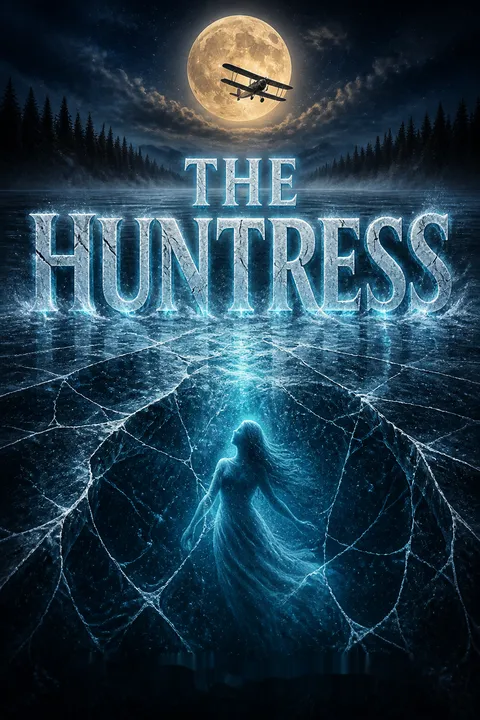
In the aftermath of World War II, three women stand on the shores of different lakes, each haunted by the past. In Austria, a woman known as die Jägerin—the Huntress—hides from justice, her hands stained with wartime crimes. In Boston, young photographer Jordan McBride welcomes a new stepmother, Anneliese, whose elegance and mystery both comfort and unsettle her. In Siberia, Nina Markova, born of violence and survival, dreams of escaping her brutal father and the icy grip of Lake Baikal. Each woman's life is shaped by water, memory, and the shadows of war, setting the stage for a collision of destinies. The lakes reflect not only the world's beauty but also its capacity for cruelty, and the secrets submerged beneath their surfaces will ripple outward, drawing hunter and hunted together.
Hunters Become the Hunted
Haunted by the murder of his brother, war correspondent Ian Graham dedicates his postwar life to tracking down Nazi war criminals who have slipped through the cracks of justice. With his sharp-witted partner Tony Rodomovsky, Ian scours Europe, driven by a personal vendetta against the elusive Huntress, whose crimes include the cold-blooded murder of children and Allied soldiers. Their investigation leads them from the ruins of Europe to the bureaucratic labyrinths of postwar justice, where the world's appetite for vengeance is waning. Yet for Ian, the hunt is personal, and every small fish caught is a step closer to the woman who turned the hunter into prey. As the lines between justice and obsession blur, the hunters themselves become marked by the darkness they pursue.
Born of Ice and Fury
Raised on the edge of Lake Baikal by a violent, paranoid father, Nina Markova learns to fight, hunt, and trust no one. Her only fear is drowning, a terror born when her father tries to kill her in the icy lake. Determined to escape, Nina seizes her chance when a pilot's emergency landing reveals the sky as her path to freedom. She flees to Irkutsk, joins an air club, and discovers her calling as a pilot. The war's outbreak offers her a new identity as a Night Witch, one of the Soviet Union's legendary female bomber pilots. Nina's resilience, forged in Siberian cold and familial madness, will become both her shield and her curse as she is drawn into the war's deadliest games.
New Family, Old Fears
In postwar Boston, Jordan McBride's life is upended when her widowed father falls for Anneliese Weber, a refined Austrian émigré with a silent daughter, Ruth. Anneliese's grace and support seem to heal old wounds, but Jordan's photographer's eye catches glimpses of something unsettling beneath the surface. A photograph reveals a flash of cruelty in Anneliese's expression, and small inconsistencies in her story begin to gnaw at Jordan's trust. As the family blends, Jordan's longing for independence and her father's happiness war with a growing sense of unease. The past, it seems, is not so easily left behind, and the new family's foundation is built on secrets as deep as the lakes that haunt them.
The Nazi Hunter's Oath
Ian and Tony's pursuit of the Huntress leads them to a crucial witness: Nina, now living in England under a new identity. Their shared history—Nina's survival of the Huntress's violence and Ian's debt to her for his brother's final moments—binds them in a marriage of convenience and a partnership of necessity. As they follow cold trails from Austria to Poland, and finally to America, the team's dynamic is shaped by trauma, guilt, and the need for justice. Each member is haunted by what they have lost and what they have done, and the hunt for the Huntress becomes a crucible that will test their loyalties, their ethics, and their very sense of self.
Night Witches Take Flight
Nina finds her place among the Night Witches, the all-female Soviet bomber regiment terrorizing German lines. Through grueling training, camaraderie, and relentless missions, she forges bonds with her fellow pilots—especially Yelena, her pilot and lover. Together, they endure the misogyny of their own side, the dangers of night bombing, and the psychological toll of war. The Night Witches' legend grows, but so does the cost: friends are lost, nerves fray, and the line between hunter and hunted blurs. For Nina, the sky is both sanctuary and battlefield, and the sisterhood she finds is as fierce as the enemies she faces.
Portraits and Deceptions
As Jordan hones her craft as a photographer, her camera becomes both shield and weapon. She documents her family's new life, capturing moments of joy and unease. Anneliese's aversion to being photographed, her evasions about the past, and the mysterious Iron Cross hidden among her wedding flowers deepen Jordan's suspicions. Meanwhile, Jordan's own coming-of-age—her romance with Garrett, her dreams of independence—intertwines with her quest for truth. The camera's eye, unblinking and impartial, becomes the means by which Jordan will ultimately unmask the lies at the heart of her family.
The Web Tightens
As Ian, Tony, and Nina close in on the Huntress's trail, their investigation uncovers a network of forgers, collaborators, and refugees hiding in plain sight. In Boston, Anneliese's careful façade begins to crack under the pressure of Jordan's questions and the hunters' approach. The team's pursuit is hampered by bureaucracy, false leads, and the Huntress's own cunning. But secrets cannot remain buried forever. The past seeps into the present, and the web of lies tightens around both hunter and hunted. The stage is set for a reckoning that will demand the truth, no matter the cost.
Love, Loss, and Lies
The emotional stakes rise as the characters confront their deepest fears and desires. Nina's love for Yelena is lost to the war and betrayal, leaving her wary of new attachments. Jordan's relationship with Garrett falters as her ambitions and suspicions grow. Tony and Ian's partnership is strained by ethical dilemmas and personal demons. The Huntress's crimes are revealed not only as acts of evil but as choices made in the name of survival, love, and self-preservation. Each character must decide what they are willing to sacrifice for justice, for love, and for the hope of redemption.
The Rusalka's Curse
The truth of Lake Rusalka is finally revealed: Nina's failed attempt to save Sebastian Graham, Ian's brother, from the Huntress's bullet; the razor's scar left on the Huntress's neck; the trauma that binds hunter and hunted. The rusalka—the vengeful water spirit—becomes both symbol and reality as Nina, haunted by guilt and fear, becomes the Huntress's living nightmare. The curse of the lake, of memory, and of violence cannot be escaped; it must be faced. The final pieces fall into place, and the Huntress's carefully constructed life begins to unravel.
Unmasking the Huntress
Armed with evidence and determination, Jordan confronts Anneliese in a tense, psychological duel. The confrontation in the darkroom is a battle of wits, love, and survival, as Jordan uses her knowledge and her camera to force the Huntress into the open. The lines between victim and perpetrator blur, and the cost of truth becomes painfully clear. In the end, it is not violence but exposure—the unflinching gaze of the lens and the courage to speak—that brings the Huntress to justice. The family's wounds are laid bare, and the path to healing can finally begin.
The Final Confrontation
The hunters and the Huntress meet for the last time on the shores of Selkie Lake. Ruth's rescue, the team's unity, and Nina's transformation into the living rusalka force Anneliese to face her greatest fear. The confrontation is both physical and psychological, a reckoning with the past and a choice for the future. Anneliese is given a choice: face trial for her crimes or escape into oblivion. In the end, she is captured not by violence but by the weight of her own guilt and the relentless pursuit of those she wronged. Justice is served, but not without cost.
Justice and Aftermath
Anneliese is extradited to Austria to stand trial for her war crimes, her fate sealed by the testimony and determination of those she harmed. Jordan, Tony, Ian, and Nina grapple with the aftermath: grief, relief, and the challenge of rebuilding. Ruth must find her place in a world forever changed. The team's bonds endure, forged in the crucible of the hunt. As the world moves on, the lessons of the past linger: the necessity of memory, the danger of forgetting, and the hope that justice, though slow, can prevail. The lakes are still, but their shadows remain.
Analysis
The Huntressis a masterful exploration of the lingering shadows of war, the complexity of justice, and the resilience of the human spirit. Through its interwoven narratives, the novel interrogates the nature of evil—not as a monstrous aberration, but as a series of choices made by ordinary people in extraordinary circumstances. The story refuses easy answers: love and hate, guilt and innocence, vengeance and mercy are all shown to be deeply entangled. The lakes that frame the novel are both literal and symbolic, representing the depths of memory, the danger of forgetting, and the possibility of redemption. The rusalka motif underscores the idea that the past cannot be drowned; it will always rise to the surface. The novel's modern resonance lies in its insistence on the necessity of memory and accountability. In a world eager to move on from atrocity, The Huntress
reminds us that justice is not only about punishment, but about bearing witness, telling the truth, and refusing to let the dead be forgotten. The lessons are clear: evil flourishes in silence, and the only antidote is the courage to see, to speak, and to remember.
Review Summary
The Huntress receives an overall rating of 4.3/5, with most readers praising its compelling multi-POV storytelling, rich historical detail, and memorable characters—particularly Nina Markova, the fierce Soviet Night Witch pilot. Many consider it superior to Quinn's previous work, The Alice Network. Readers consistently highlight the atmospheric tension, strong female characters, and fascinating historical research. Critical reviews cite excessive length, predictable plotting, and occasionally stilted dialogue as weaknesses. Nearly all reviewers, regardless of rating, single out Nina as the novel's standout character.
People Also Read








Characters
Jordan McBride
Jordan is a young, ambitious photographer whose keen eye and restless spirit set her apart in postwar Boston. The loss of her mother and the arrival of her enigmatic stepmother, Anneliese, awaken both longing and suspicion. Jordan's journey is one of self-discovery, as she navigates love, grief, and the burden of truth. Her camera becomes her voice and her shield, allowing her to see what others miss and to capture the hidden realities beneath the surface. Jordan's psychological arc is defined by her struggle to reconcile love and betrayal, innocence and experience, and her ultimate courage in confronting evil within her own family. Her relationships—with her father, Ruth, Garrett, Tony, and Anneliese—are marked by loyalty, doubt, and the painful necessity of growing up.
Ian Graham
Ian is a British war correspondent turned Nazi hunter, driven by the unresolved murder of his younger brother, Sebastian. His relentless pursuit of war criminals is both a quest for justice and a means of coping with guilt and loss. Ian's partnership with Tony and his complex marriage to Nina reveal his capacity for loyalty, restraint, and deep empathy. He is tormented by nightmares and the ethical dilemmas of vengeance versus justice, often walking the line between control and rage. Ian's development is shaped by his willingness to confront his own darkness, to trust others, and to find meaning in the struggle for accountability in a world eager to forget.
Nina Markova
Nina is forged in the crucible of Siberian brutality, war, and betrayal. Her fearlessness and ferocity make her both a formidable pilot and a haunted soul. As a Night Witch, she finds sisterhood and love, only to lose it to the war's violence and the Soviet state's paranoia. Nina's relationship with Yelena is a rare source of tenderness, while her marriage to Ian is a partnership of necessity, guilt, and eventual trust. She is marked by guilt over Sebastian's death and the loss of her regiment, and her psychological journey is one of learning to forgive herself, to accept love, and to channel her rage into justice. Nina's transformation into the Huntress's living nightmare is both literal and symbolic, as she becomes the rusalka who brings the past to account.
Anneliese Weber / Lorelei Vogt / Anna McBride
Anneliese is a master of reinvention, moving from SS officer's mistress to American housewife, from predator to prey. Her crimes—murdering children, prisoners, and rivals—are committed under the guise of necessity, survival, and even mercy. She is both monstrous and pitiable, capable of genuine affection for Ruth and Jordan, yet ultimately ruled by self-preservation and a chilling amorality. Anneliese's psychological complexity lies in her ability to compartmentalize, to justify, and to manipulate. Her greatest fear is exposure, embodied by Nina and the rusalka nightmare that haunts her. In the end, she is undone not by violence but by the relentless pursuit of truth and the weight of her own guilt.
Tony Rodomovsky
Tony is Ian's partner and the team's heart, a polyglot with a gift for connection and a deep sense of justice. His background as a Polish-American with Jewish roots gives him personal stakes in the hunt for Nazi criminals. Tony's charm and humor mask a core of empathy and resilience, and his relationship with Jordan is marked by mutual respect, playfulness, and the hope of healing. He is the team's mediator, often navigating the gray areas between vengeance and mercy, and his development is shaped by his desire to do more than just hunt—to remember, to document, and to build a better future.
Ruth Weber / McBride
Ruth is the silent, traumatized child at the heart of the story, her identity stolen along with her mother's life. Raised by her mother's murderer, Ruth's journey is one of gradual healing, aided by music, love, and the eventual revelation of the truth. She embodies the cost of war's violence on the most vulnerable, and her relationship with Jordan is a source of hope and redemption. Ruth's psychological arc is one of reclaiming agency, memory, and the possibility of a future untainted by the sins of the past.
Yelena Vetsina
Yelena is Nina's pilot, lover, and the embodiment of everything Nina yearns for: grace, courage, and belonging. Their relationship is a rare oasis of tenderness in a brutal world, but it is ultimately doomed by war, ideology, and the impossibility of escape. Yelena's choice to remain loyal to her country and her regiment, even at the cost of love, haunts Nina and shapes her fear of attachment. Yelena represents both the best and the most painful parts of Nina's past.
Sebastian Graham
Sebastian is Ian's younger brother, a gentle soul whose trust and idealism lead to his death at the Huntress's hands. His murder is the wound that drives Ian's quest for justice and binds the team together. Through Nina's memories, Sebastian is revealed as both vulnerable and brave, a symbol of all that is lost in war. His presence lingers as a reminder of what is at stake and what must be avenged.
Daniel McBride
Jordan's father is the anchor of her world, a man whose warmth and decency are both a comfort and a constraint. His marriage to Anneliese brings hope and healing, but also opens the door to betrayal and tragedy. Daniel's death—possibly at Anneliese's hands—is the catalyst for Jordan's transformation from daughter to detective, and his memory shapes her choices long after he is gone.
Mr. Kolb
Kolb is the nervous, alcoholic German clerk whose skills in forgery and restoration make him both useful and dangerous. His complicity in helping war criminals escape justice is driven by fear, greed, and the desire to survive. Kolb's interactions with Anneliese and the team reveal the moral ambiguities of the postwar world, where victims and perpetrators often change places, and the line between guilt and innocence is blurred.
Plot Devices
Interwoven Timelines and Perspectives
The novel employs a braided narrative, alternating between Jordan, Ian, and Nina, and moving fluidly across time and geography. This structure allows the reader to experience the story from multiple angles—hunter and hunted, past and present, innocence and guilt. The shifting perspectives create suspense, deepen character development, and gradually reveal the connections between seemingly disparate lives. The use of foreshadowing, flashbacks, and parallel motifs (especially the lakes and the rusalka legend) binds the narrative together, building toward the inevitable collision of fates.
The Rusalka Motif
The rusalka—a Slavic water spirit, both alluring and deadly—serves as a central symbol throughout the novel. It represents the inescapable pull of the past, the danger lurking beneath beauty, and the transformation of victim into avenger. For Nina, the rusalka is both a source of fear and a source of power; for Anneliese, it is the embodiment of her guilt and her greatest terror. The motif recurs in dreams, in the lakes that frame the story, and in the final confrontation, where Nina becomes the living rusalka who brings the Huntress to justice.
The Camera's Eye
Jordan's camera is more than a tool; it is a plot device that exposes hidden realities, preserves memory, and ultimately unmasks the Huntress. The act of photographing becomes an act of courage and defiance, a way to bear witness and to force the world to see what it would rather ignore. The camera's impartial gaze is contrasted with the characters' subjective experiences, raising questions about the nature of truth, evidence, and justice.
The Hunt and the Hunted
The central plot device is the pursuit of the Huntress, but the novel continually blurs the lines between hunter and hunted. Ian's obsession with justice threatens to consume him; Nina's transformation from prey to predator is both empowering and dangerous; Anneliese's flight is both a crime and a survival strategy. The hunt becomes a metaphor for trauma, vengeance, and the search for meaning in a world shattered by violence. The narrative structure uses suspense, red herrings, and reversals to keep the reader—and the characters—off balance until the very end.
About the Author
Other books by Kate Quinn



Download PDF
Download EPUB
.epub digital book format is ideal for reading ebooks on phones, tablets, and e-readers.








































