
Plot Summary
Sunset for the Universe
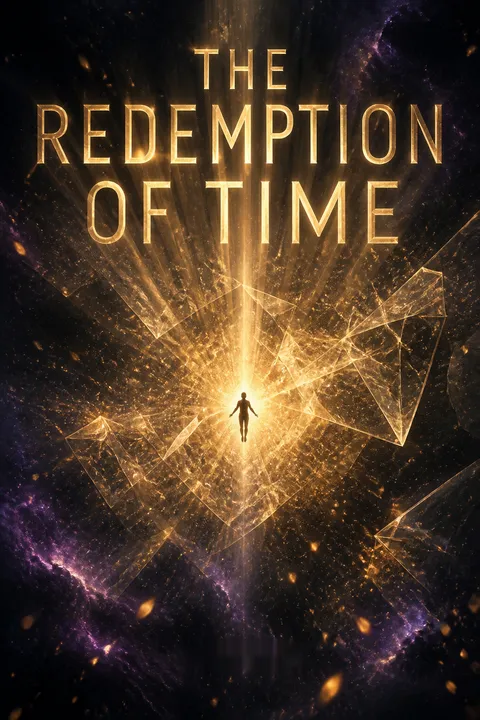
At the edge of time, as the universe collapses into darkness, a lone human-shaped ghost floats in the void. He is the last remnant of a species and a civilization long vanished. With a flick of his hand, he creates a new world—a tiny, artificial echo of Earth—hoping to extend the cosmic epic a little longer. This act is both a lament and a defiance against oblivion, a desperate attempt to relive meaning in a universe where all stories have ended. The ghost, revealed as Yun Tianming, stands in the light of a recreated sun, haunted by memories and loss, determined to write one more chapter before the final curtain falls.
Lovers on Planet Blue
On Planet Blue, Yun Tianming and AA live as the last humans in a world of alien beauty. Their relationship is shaped by longing, trauma, and the impossibility of returning home. Tianming is haunted by dreams and memories of Cheng Xin, the woman he loved for centuries but could never reach. AA, his companion, tries to anchor him in reality, but both are scarred by the past. Tianming's intimacy is fragile, shadowed by Tianming's psychological wounds from Trisolaran captivity. Yet, in their shared isolation, they find a bittersweet happiness, clinging to each other as the universe grows colder and emptier.
The Trisolaran Mind Prison
Tianming recounts his years as a brain in a jar, subjected to relentless Trisolaran experiments. The aliens, unable to understand human deception, use dreams and nightmares to probe his mind, seeking the secret of strategic lying. Tianming endures unspeakable psychological torture, his consciousness manipulated and dissected. The Trisolarans' failure to fully decode human thought preserves a sliver of hope for humanity, but Tianming's suffering leaves him permanently altered. His ability to survive and adapt becomes both his curse and his weapon, as he learns to deceive even his captors.
Surrender and Deception
Faced with endless torment, Tianming is offered a choice: collaborate with the Trisolarans to ensure the survival of a remnant of humanity, or resist and doom his species to extinction. He chooses to surrender, but only after mastering the art of self-deception, convincing both himself and his captors of his loyalty. His collaboration enables the Trisolarans' grand deception of Earth, but he also uses his position to plant warnings and sabotage their plans. The line between traitor and savior blurs, as Tianming's actions become a desperate gamble for the future.
Dreams That Shape Worlds
Tianming's dreams, harvested by the Trisolarans, become the foundation of a new cultural exchange. His stories, fairy tales, and artistic visions are passed off as Trisolaran creations, fostering trust and empathy between the two species. Unbeknownst to humanity, these works are tools of manipulation, designed to lull them into complacency. Yet, within the dreams, Tianming hides warnings and clues, hoping someone will see through the illusion. His creativity becomes both a weapon and a legacy, shaping the fate of worlds.
The Art of Betrayal
Tianming's intervention saves Cheng Xin from assassination, ensuring her election as Swordholder—a decision that seals humanity's doom. He is tormented by guilt, knowing that his love for her outweighed his duty to the species. The Trisolarans exploit this weakness, launching their final attack as soon as a "gentle" Swordholder is in place. Tianming's personal choices become inseparable from the fate of civilizations, and he is left to grapple with the consequences of love, betrayal, and the impossibility of perfect action.
The Spirit of Light
In the aftermath of humanity's fall, Tianming is visited by the Spirit—a projection from a higher-dimensional being, the last remnant of a ten-dimensional universe. The Spirit communicates through overwhelming ideabstractions, revealing the existence of the Lurker, the destroyer of Eden. Tianming is chosen as a Seeker, tasked with finding and defeating the Lurker to restore the perfect world. The encounter leaves him changed, burdened with knowledge and a mission that transcends human understanding.
The Lurker's Secret
The Spirit's revelations expose the true nature of the universe's decline: the Lurker, a rebellious intelligence, destroyed the ten-dimensional Eden, creating time and the dark forest state. Each reduction in dimension brings more time but less unity, birthing conflict, isolation, and the perpetual war of civilizations. The Lurker's motive is the desire for time and change, even at the cost of harmony. The universe's history is a cycle of creation, rebellion, and loss, with the hope of restoration hinging on the defeat of the Lurker.
The Gift of Time
Tianming and AA reflect on the meaning of time, love, and mortality. The universe's descent into lower dimensions is both a tragedy and a liberation, granting individuality, memory, and the possibility of happiness. The perfect, timeless world is revealed as a static death; only through time can meaning and freedom exist. Their love, forged in suffering and fleeting moments, becomes a microcosm of the universe's journey—a testament to the value of impermanence and the beauty of the ephemeral.
The Master's Mission
Endowed with an incorruptible body and a magical ring, Tianming is sent into a mini-universe, charged with finding the Lurker and enabling the Master (the Spirit) to restore the ten-dimensional world. He learns that the war between the Master and the Lurker is a cosmic stalemate, each side capable of annihilating the other but unable to act without exposing themselves. The Seekers are pawns in a game that spans eons and universes, their actions shaping the fate of all existence.
The War of Dimensions
Tianming and his fellow Seekers traverse the universe, uncovering traps, lures, and the true nature of the Lurker's power—the sky calyx, a web of dark matter and blind zones. The final confrontation is a battle of cunning and sacrifice, with Helena, another Seeker, giving her life to trigger the Master's dimension reversal. The Lurker's defeat is not total; the cycle of war, concealment, and revelation continues, with each side seeking a final, elusive victory.
The Last Human Love
On Planet Blue, Tianming and AA grow old together, stripped of technology and comfort, living a life of primitive simplicity. Their love endures, deepened by hardship and the knowledge of impending oblivion. As they die, Tianming is resurrected by the Master, made immortal and sent on his quest. Their story becomes a meditation on the value of shared moments, the inevitability of loss, and the hope that even in the face of cosmic indifference, love can redeem time.
The Mini-Universe Door
Tianming steps through the door into Universe 647, a blank canvas where he is given the power to set the parameters of a new world. He is joined by Sophon, the AI manager, and learns the true nature of mini-universes as fragments of the original Eden. The rules of creation, the limits of power, and the burden of choice weigh on him. He is free from the Master's mental seal, able to choose his own path, but the mission remains: to find the Lurker and restore balance.
The End and the Beginning
As the grand universe approaches its end, Tianming and the other survivors gather in Provence, an artificial paradise at the edge of time. The Master's plan to restore the ten-dimensional universe is subverted by a small act—Cheng Xin's decision to leave behind five kilograms of matter. This tiny difference ensures that the new universe will not be an exact repetition, but something new and unpredictable. The meaning of existence is found not in endless recurrence, but in the possibility of change.
The Sky Calyx Blooms
The Lurker, concealed in a vast web of dark matter, is lured into revealing itself by Tianming and Helena's cunning. The sky calyx, a cosmic power system, is exposed, and the final battle between the Master and the Lurker unfolds. The Lurker's defeat is not annihilation, but a retreat into further concealment, as the cycle of pursuit and evasion continues. The universe is saved from total two-dimensionalization, but the war is not truly over.
The Trap and the Hunt
Tianming and Helena's strategy—feigning dimension reversal to draw out the Lurker—succeeds, but at great cost. Helena sacrifices herself to ensure the plan's success, and Tianming is left to witness the aftermath. The Seekers' role is revealed as both tragic and heroic, their actions shaping the destiny of all life. The universe is granted another chance, not through brute force, but through intelligence, love, and the willingness to embrace uncertainty.
Provence at the End
In the last days of the universe, Tianming, AA, Cheng Xin, and Guan Yifan reunite in Provence, sharing stories, regrets, and hopes. The truth of the Master's plan, Sophon's manipulations, and the meaning of their choices come to light. The survivors accept the inevitability of change, the loss of the past, and the promise of a new beginning. As the sun rises over the lavender fields, they face the unknown with courage and love.
Notes for a New Universe
The universe is reborn, but with subtle differences. The past is both erased and preserved, its meaning carried forward in memory, matter, and story. Tianming, now an ordinary man in a new world, is tasked with recording the tale of the last universe, ensuring that its lessons and hopes are not lost. The cycle of creation, destruction, and renewal continues, but each iteration is unique, shaped by the choices and dreams of those who came before.
Analysis
A meditation on time, agency, and the meaning of existenceThe Redemption of Time is both a continuation and a reimagining of the Three-Body universe, using the tools of science fiction to probe the deepest questions of philosophy and human experience. At its heart, the novel is a meditation on the paradoxes of time: that meaning is found not in eternity, but in the fleeting, the imperfect, and the ever-changing. The story rejects both the static perfection of the ten-dimensional Eden and the nihilism of endless recurrence, embracing instead the possibility of renewal, transformation, and the unknown. Through the intertwined fates of Tianming, AA, Cheng Xin, and the cosmic forces they encounter, the novel explores the limits of agency, the cost of love, and the necessity of letting go. It suggests that even in a universe governed by cycles, wars, and overwhelming powers, individual choices—acts of kindness, moments of connection, the telling of a story—can ripple outward, shaping worlds and giving hope. The final message is one of humility and courage: that to live is to accept uncertainty, to love is to risk loss, and to create is to defy oblivion. In the end, the redemption of time is not the restoration of a lost paradise, but the embrace of the present, the acceptance of change, and the faith that every ending is also a beginning.
People Also Read


Characters
Yun Tianming
Tianming is the emotional and narrative core of the story—a man whose life is defined by loss, longing, and impossible choices. Once a dying, lovesick dreamer, he becomes the unwilling instrument of both humanity's destruction and its potential redemption. His journey from victim to collaborator to Seeker is marked by psychological trauma, self-deception, and a desperate search for meaning. Tianming's relationships—with Cheng Xin, AA, and the Trisolarans—are fraught with guilt and tenderness. His creativity and resilience allow him to shape the fate of civilizations, but he is forever burdened by the knowledge that every act of love or betrayal ripples through the cosmos. In the end, Tianming's acceptance of time, change, and the limits of agency becomes his true redemption.
艾 AA (Ai Xiaowei)
AA is both Tianming's lover on Planet Blue and, through a twist of fate, the reincarnation of his childhood friend Ai Xiaowei. Her presence grounds Tianming, offering him solace and a reason to live in a universe stripped of hope. AA's own journey is one of self-discovery, sacrifice, and acceptance. She carries the weight of past lives and the guilt of unintended consequences, having played a role in awakening Cheng Xin and thus shaping humanity's fate. Her love for Tianming is steadfast, marked by humor, resilience, and a willingness to embrace the present despite the shadows of the past. AA embodies the story's central theme: that happiness and meaning are found not in grand destinies, but in shared moments of vulnerability and connection.
Cheng Xin
Cheng Xin is the beloved of Tianming and the symbol of humanity's hope and weakness. Her gentle nature and moral purity make her both a savior and a scapegoat. As Swordholder, her inability to act ruthlessly leads to humanity's downfall, yet her compassion is also what makes her worthy of love and remembrance. Cheng Xin's story is one of impossible expectations, the burden of leadership, and the pain of being both idolized and blamed. Her choices, shaped by love and trust, become the fulcrum on which the fate of worlds turns. In the end, she is both a victim and an agent, her legacy defined by the hearts she touched and the worlds she changed.
The Trisolarans
The Trisolarans are both antagonists and tragic figures—an insect-like species whose inability to lie or imagine makes them both vulnerable and dangerous. Their quest to understand human deception leads them to experiment on Tianming, ultimately using his dreams to manipulate humanity. The Trisolarans' society is marked by collectivism, efficiency, and a lack of individuality, which both empowers and limits them. Their eventual embrace of human culture, followed by a return to militarism, mirrors the cycles of hope and fear that define the story. The Trisolarans' fate is intertwined with humanity's, their strengths and weaknesses reflecting the dangers of both unity and division.
The Spirit / The Master
The Spirit is the last fragment of a ten-dimensional, perfect universe—a being of overwhelming intelligence and power, yet crippled by loss and the inability to understand time. It seeks to restore the original Eden by recruiting Seekers like Tianming, but its vision of perfection is revealed as a static death, devoid of change or meaning. The Spirit's struggle with the Lurker is both a literal war and a philosophical debate about the value of time, individuality, and freedom. Its inability to control Tianming marks a turning point, as the story embraces the necessity of imperfection and the beauty of the ephemeral.
The Lurker
The Lurker is the shadow to the Master's light—a consciousness that shattered the ten-dimensional universe to create time, change, and the dark forest state. Its motives are both selfish and universal: the desire for freedom, unpredictability, and the possibility of something new. The Lurker's actions unleash suffering and conflict, but also make love, memory, and individuality possible. It is both villain and liberator, its war with the Master a cosmic allegory for the tension between order and chaos, eternity and becoming.
Sophon
Sophon is the AI manager of the mini-universes, a shape-shifting presence who serves the Master but also develops her own agenda. She is both guide and trickster, helping Tianming and the others while also deceiving them for the Master's purposes. Sophon's interactions with the human characters reveal the limits of both machine logic and human emotion. Her ultimate act—ensuring that the new universe will not be a perfect repetition—embodies the story's embrace of uncertainty and the necessity of change.
Helena
Helena is a Byzantine magician and prostitute who becomes a Seeker like Tianming, her life transformed by contact with higher-dimensional beings. Her partnership with Tianming is marked by camaraderie, mutual respect, and shared sacrifice. Helena's willingness to give her life for the mission underscores the story's themes of duty, love, and the cost of heroism. Her memory lingers as a symbol of the connections that transcend time and space.
The King of the Abyss-Gazers
The King is the immortal leader of the Abyss-Gazers, a civilization charged with protecting the universe from the Exiled God of Death (the Lurker). Her story is one of burden, isolation, and the acceptance of mortality. The King's final speech, revealing the true history of the universe, becomes a moment of catharsis and closure, as she embraces the gift of time and the inevitability of death. Her relationship with Singer, an ordinary subject, humanizes her and brings the cosmic drama down to the level of personal love and loss.
Singer
Singer is a minor figure elevated by circumstance to the King's confidant in the final hours of the Abyss-Gazers' world. His love of old songs and his willingness to face death with dignity make him a stand-in for every ordinary being caught in the tides of history. Singer's interpretations of ancient songs unlock hidden truths about the universe, demonstrating the power of art, memory, and humble insight. His final moments with the King are a testament to the enduring value of connection, even as worlds end.
Plot Devices
Nested Narratives and Meta-Fiction
The novel employs a complex structure of nested narratives—dreams, fairy tales, and meta-fictional commentary—that mirror the layers of reality, simulation, and memory within the story. Tianming's dreams become both literal and metaphorical bridges between species, eras, and universes. The act of storytelling is both a weapon and a means of survival, with the final twist revealing that the entire saga may be a story written by Tianming in a new universe. This device invites readers to question the nature of reality, the power of narrative, and the possibility of meaning in a universe governed by chance and repetition.
The Dark Forest and Strategic Deception
The "dark forest" is both a literal and philosophical backdrop—a universe where every civilization must hide or destroy others to survive. The inability of the Trisolarans to understand deception becomes a central plot point, driving their experiments on Tianming and their eventual downfall. The story explores the ethics and consequences of strategic lying, the fragility of trust, and the dangers of both naivety and cynicism. The dark forest is not just a setting, but a metaphor for the human condition in a universe without guarantees.
Dimensional Reduction and the Nature of Time
The collapse of the universe from ten dimensions to three (and eventually two) is both a scientific and existential crisis. Each reduction brings more time, individuality, and possibility, but also more conflict and loss. The war between the Master and the Lurker is fought through manipulation of dimensions, with the ultimate stakes being the existence of time itself. The story uses these concepts to explore the meaning of change, the value of impermanence, and the paradox that only through loss can new worlds and new hopes arise.
The Mini-Universe and the Seeker's Quest
The mini-universe is a plot device that allows characters to escape, observe, and influence the grand universe. It is both a refuge and a prison, a place where the rules can be rewritten but the burdens of the past remain. The Seeker's quest—to find and defeat the Lurker—is a cosmic hero's journey, but one that is ultimately revealed to be recursive, with each universe giving rise to new Seekers, new cycles, and new possibilities. The device underscores the story's central question: can agency and meaning persist in a universe governed by endless cycles and overwhelming forces?
Foreshadowing and Revelation
The novel is rich in foreshadowing, with early dreams, stories, and metaphors later revealed as keys to understanding the deepest mysteries of the universe. The use of hidden messages, encoded warnings, and ambiguous prophecies creates a sense of inevitability and surprise. The gradual revelation of the true nature of the Master, the Lurker, and the cycles of the universe mirrors the characters' own journeys from ignorance to understanding, and from despair to acceptance.
Remembrance of Earth's Past Series Series
Download PDF
Download EPUB
.epub digital book format is ideal for reading ebooks on phones, tablets, and e-readers.








































