


Plot Summary
Murder on the Exercise Grounds
In 1967 Beijing, a mass struggle session at Tsinghua University targets the physicist Ye Zhetai.7 He wears a heavy steel hat and refuses to denounce Einstein or renounce relativity. Four teenage girls in military uniforms flog him with copper-buckled belts until he collapses, his blood pooling on the stage.
His wife Shao Lin, seeking to survive, joins the denunciation. Their daughter Ye Wenjie,1 held back by two janitors, screams and struggles as the crowd cheers slogans.
Afterward, she places her father's7 pipe in his cold hand. Later, she finds her mentor Professor Ruan dead from sleeping pills, wearing high heels and lipstick as a final act of dignity. The world becomes a Geiger counter reading zero: Ye's1 capacity for trust is obliterated.
This brutal opening establishes the novel's central trauma: the destruction of reason and human decency by ideological possession. Ye Zhetai's death is a ritual sacrifice to revolutionary purity, where the teenage girls are not individual moral agents but vessels of collective madness. His intellectual stubbornness, normally a virtue, becomes a death sentence. Ye Wenjie's forced passivity is the wound that never heals; she learns that the crowd will not save you, that reason is flimsy, and that humanity is a tide of irrational violence. The subsequent suicide of Professor Ruan, who dresses up for death, suggests that the only escape from madness is a disciplined, aesthetic exit. This moment plants the seed for Ye's future conviction that humanity cannot save itself.
The Poison of Silent Spring
Two years later, Ye Wenjie1 works in the Greater Khingan Mountains felling ancient larch trees for the Production and Construction Corps. Reporter Bai Mulin15 shares her disquiet and lends her a contraband copy of Silent Spring.
The book crystallizes a terrible analogy: just as pesticides destroy ecosystems, human cruelty destroys civilization. Ye1 concludes that moral awakening can only come from a force outside the human race. When Bai15 writes a protest letter to Beijing and Ye1 copies it, the letter is intercepted.
To save himself, Bai15 accuses Ye.1 She is imprisoned, tortured by a military judge who demands she sign a false testimony against her dead father.7 Ye1 refuses and nearly freezes to death. Her life is saved when a helicopter flies her to a secret military base called Red Coast.
Silent Spring functions as the novel's philosophical key. It provides a framework that equates the Cultural Revolution's violence with ecological catastrophe, both symptoms of an irredeemable human nature. Ye's deduction that 'the relationship between humanity and evil is similar to the relationship between the ocean and an iceberg' becomes her permanent mental architecture. Bai Mulin's cowardice reinforces the lesson that no personal bond can withstand ideological pressure; she will never trust a human ally again. Her near-death and sudden rescue by the military create a vertigo of fate, as if her life has been temporarily spared for a darker purpose. The helicopter ride to Radar Peak is a symbolic ascent into isolation where her betrayal will ferment.
The Sun as Superantenna
At Red Coast Base, a huge SETI project disguised as a microwave weapon, Ye1 becomes an indispensable technician. While studying solar interference, she notices that Jupiter's radio outbursts reach Earth and are echoed 16 minutes and 42 seconds later from the sun.
She theorizes that boundary layers in the sun's radiation zone act as energy mirrors, reflecting and amplifying incoming radio waves a hundred-millionfold. To test her hypothesis, during a routine maintenance window in 1971, she secretly aims the 25-megawatt transmitter at the setting sun, blasting a signal into space.
The immediate result is only silence, but the amplified message tears across the cosmos at light speed. Four years later, it will reach the nearest star system, Alpha Centauri. Ye's1 act is quiet and methodical, hidden behind a mundane repair.
The sun-as-amplifier is a brilliant extrapolation of plasma physics that simultaneously functions as a poetic symbol. The same star that sustains Earthly life becomes the instrument of its potential doom. Ye's experiment is not ideological yet; it is driven by scientific curiosity and a desire to impose meaning on her gray, prisoner-like existence. The scene also showcases the absurdity of the Cultural Revolution's political paranoia: the base officials panic over the 'political symbolism' of aiming a beam at the red sun, yet miss the actual epochal act taking place under their noses. The transmission is a gunshot in a silent forest, and Ye is the solitary hunter who has fired it without understanding what she has targeted.
Warning Then Invasion Invitation
Eight years later, in 1979, Ye1 intercepts a transmission from Alpha Centauri. The Translating computer gives the message a perfect intelligibility score: it uses the same self-interpreting code Red Coast had broadcast. The alien warns, three times, 'Do not answer,' explaining that any response will allow Trisolaris to locate Earth and invade.
Ye,1 however, believes that only an advanced external power can reform humanity's incurable malignancy. Before dawn, she walks to the transmission control room, aims the antenna at the rising sun, and sends a reply: 'Come here!
I will help you conquer this world.' Shortly afterward, she faints and learns she is pregnant. To protect her secret, she later cuts the rope on which her husband Yang Weining5 and Commissar Lei8 are descending a cliff, killing both men and making the deaths look like accidents.
This is the novel's moral abyss. The anonymous Trisolaran pacifist demonstrates a profound altruism that Ye has concluded humans are incapable of; the warning is a self-sacrificial act of cosmic mercy. Ye's reply is omnicidal despair masquerading as idealism. Her judgment of the entire human species and her assumption of the right to pass sentence mark her as a mirror of the Red Guards: they killed a man for ideological purity, and she now sentences a whole world. The murders she commits to cover her tracks reveal that her 'higher cause' has already stripped her of any remaining moral instinct. The unborn child, Yang Dong, will become an innocent casualty of decisions made before her birth.
Physics Has Never Existed
Decades later, nanomaterials researcher Wang Miao2 is summoned to a joint military-police command center. General Chang Weisi14 and abrasive detective Shi Qiang3 inform him that a wave of suicides has struck the world's top physicists.
Among the dead is Yang Dong,6 a brilliant young string theorist and Ye Wenjie's1 daughter, whom Wang2 had admired from a distance at a particle accelerator site. Her suicide note, written on birch bark, reads: 'All the evidence points to a single conclusion: Physics has never existed.'
Theoretical physicist Ding Yi12 explains the cause: the newest high-energy accelerators produce contradictory results each time an experiment is repeated, as if the laws of physics vary capriciously. Wang2 is asked to infiltrate a controversial academic group called the Frontiers of Science, which may be connected.
The scientific apocalypse is framed as a psychological epidemic. When the constancy of physical law dissolves, so does the epistemological foundation of human understanding. Yang Dong's suicide embodies the vulnerability of the pure theoretician: her world was an aesthetic cathedral of elegant formulas, and when they proved hollow, she had no emotional architecture to support her. Her birch-bark note, with its childhood spelling, collapses the distance between infantile wonder and adult despair. The scene also introduces the tension between applied scientists like Wang (who build things) and theoreticians (who live in abstraction), a spectrum of resilience that the novel will test. Shi Qiang's abrasive pragmatism is a first, unwelcome hint of a different way to survive the revelation.
The Countdown in His Vision
Wang's2 personal nightmare begins when he develops a roll of film and discovers every photograph overlaid with numbers counting down. The phenomenon occurs regardless of camera or film type, but only on pictures he takes himself; his wife's snapshots are clean.
Soon the countdown appears directly in his visual field, hovering like a glowing implant no matter where he looks. Doctors find nothing wrong. When Wang2 contacts Shen Yufei,9 a Frontiers of Science member, she cryptically tells him to halt his nanomaterial research. Desperate, he orders his lab's main reaction chamber shut down.
The instant the system powers off, the countdown freezes and vanishes. The experience leaves him shaken, aware that an unseen, incomprehensible agency is targeting him. He begins playing a mysterious virtual reality game called Three Body, searching for clues.
The countdown is a technological ghost story, a personal haunting implemented through physics rather than the supernatural. Its selective appearance proves that the enemy can identify Wang individually and manipulate his sensory reality with surgical precision. By linking the phenomenon's cessation to his research halt, the enemy engages in a Pavlovian conditioning at a cosmic scale. Wang's compliance, though pragmatic, illustrates the vulnerability of even a rational mind when confronted with the inexplicable. His turn to the Three Body game is a search for a narrative framework to contain the chaos, a pattern-seeking behavior that echoes the game's own theme: the desperate need to find order in an unpredictable universe.
The Chaos of Three Suns
Wang2 enters the Three Body game via a haptic feedback suit and finds himself in a world of alternating Stable and Chaotic Eras caused by three suns whose gravitational dance yields no predictable pattern. He follows King Wen of Zhou on a pilgrimage to a tyrant's court, witnessing the inhabitants' ability to dehydrate into leathery husks to survive the deadly climates.
King Wen attempts to forecast the suns' motion using hexagrams, but a miscalculation results in a frozen apocalypse that destroys the civilization. Wang2 realizes the game is a layered education: it compresses the entire history of Trisolaris into human cultural references, showing how civilization is perpetually reborn and annihilated.
The key to winning, he understands, is solving the three-body problem itself, finding a mathematical model that can predict the suns' behavior and save the aliens from extinction.
The Three Body game is a masterwork of disguised exposition and psychological filtering. By draping alien history in familiar human eras, it seduces players into empathizing with Trisolaris as a kind of tragic reflection of Earth's own fragility. The dehydration motif is a powerful metaphor for civilizations that can never fully commit to growth because they must always prepare for the next catastrophe. The game's recursive annihilation of civilizations mirrors the scientific process itself: each cycle of observation and hypothesis fails, but the seed of knowledge persists and evolves. Wang's progression through the levels parallels his real-world investigation: both are an attempt to uncover a hidden pattern that might explain the impossible events around him.
The Universe Winks a Warning
Wang2 visits Ye Wenjie,1 now a retired elderly woman, hoping to learn more about the crisis. She tells him of her daughter Yang Dong's6 isolated childhood and her own decades at Red Coast. Wang2 also asks her help in observing the cosmic microwave background.
That night, at a radio astronomy observatory north of Beijing, Ye's1 former student Sha Ruishan connects him to satellite data. At 1 a.m., the flat baseline suddenly becomes a wave. Data from three satellites and a ground station confirm the same pattern.
Wang2 prints the waveform and translates the peaks into Morse code: it is the same countdown he saw before, now written across the entire universe. He drives to the city, stops at St. Joseph's Church at dawn, and weeps on the steps. Shi Qiang3 finds him there, laughing sardonically but steady.
The cosmic flicker is the novel's most sublime horror. The background radiation, the oldest light in existence, the echo of the Big Bang, is repurposed as a personal doomsday clock. It demonstrates that the enemy can manipulate the fundamental substrate of the observable universe to send a message to a single person. The translation of the waveform into Morse code by hand is a beautiful act of primitive intelligence confronting cosmic scale. Wang's collapse at a church suggests a reversion to pre-rational awe: science has brought him to the edge, and only the architecture of faith offers a place to break down. Shi Qiang's appearance, smoking and unimpressed, introduces a different theology: if you refuse to gaze at the sky, you might survive with your sanity intact.
Commander of the Traitors
After completing the game's higher levels, Wang2 is summoned to a café meet-up with six other elite players. Pan Han,10 a famous environmentalist, declares that the game depicts a real alien world, Trisolaris, whose fleet is already en route to Earth. He demands loyalty.
Most pledge allegiance; a few dissenters are expelled. Then the commander in chief arrives: Ye Wenjie.1 Wang2 is stunned. She greets him placidly and announces that his nanomaterial is the first technology the Trisolarans want extinguished.
The assembled rebels shout their creed: 'Eliminate human tyranny! The world belongs to Trisolaris!' Pan Han10 is later accused of betraying the organization and is executed on the spot by a young woman who twists his neck. Wang2 realizes he is trapped inside an apocalyptic cult.
The ETO reveal is a masterstroke of banality. The traitors are not cackling villains but depressed élites who find in Trisolaris a mirror for their existential exhaustion. Pan Han's eco-fascist rhetoric blends scientism with a death drive. Yet the true shock is Ye Wenjie: the gentle grandmother whom Wang had come to care for is the architect of humanity's potential annihilation. Her polite, maternal tone while ordering the suppression of his life's work demonstrates the separation of affect from action that characterizes radicalized intellectuals. The execution of Pan Han within the meeting shows that the movement devours its own, a closed system ruled by paranoid purity. Wang's infiltration has suddenly become a matter of survival, not just investigation.
Shi Qiang's Nuclear Gambit
Soldiers pour into the plant cafeteria; Shi Qiang3 leads the assault. Three ETO members grab the silver spheres of the three-body model and declare that one is a real 1.5-kiloton nuclear bomb. The young woman holding the genuine device threatens to detonate unless Ye1 is released.
Shi Qiang3 steps forward, claiming to have a letter about her mother. When another rebel blocks her view, Shi3 fires into the sphere's conventional explosives, scattering the fissile material before it can achieve critical mass.
The blast kills the woman but spares the room. Ye1 and over two hundred ETO members are arrested. Wang2 learns that the organization has millions of adherents worldwide, and that Ye1 had already been trying to purge the extremist Adventist faction from within.
This sequence cements Shi Qiang as the novel's humanist weapon. His solution to a nuclear standoff is a combination of psychological intuition (the girl's mother-issue) and ballistic precision. The explosion is a literal and figurative burst of reality into the cult's fantasy space. It also marks the moment when the conspiracy moves from an abstract philosophical crisis to an official military conflict. The revelation that Ye had been attempting to rein in the Adventists adds a layer of tragic irony: she started the fire but could not control its burning, and her own creation was already fracturing under the weight of its contradictions. The arrest sets the stage for the extraction of the final, crucial information.
How the Cult Was Born
During her interrogation, Ye1 recounts how, after returning to Beijing, she tracked down three of the Red Guards who had killed her father.7 They showed no remorse, dismissing the past as 'history' with no accountability. This final disappointment extinguished her last flicker of faith.
She then met Mike Evans,4 an American billionaire's son, who was planting trees in China's northwest to save a swallow species. She told him the story of Red Coast and Trisolaris. Using his inherited oil fortune, Evans4 built the Second Red Coast Base on a storm-proof tanker named Judgment Day and started the ETO.
Ye1 became its spiritual commander, though the organization soon splintered into Adventists (who seek human extinction) and Redemptionists (who worship Trisolaris as a god). The intercepted messages she never saw were kept aboard Evans's4 ship.
Ye's post-contact biography completes the psychological circuit. The village interlude in Qijiatun, where peasants nursed her and her infant, had briefly rekindled a sense of human goodness. But the final confrontation with the unrepentant Red Guards sealed her conviction that the human capacity for cruelty is both infinite and ahistorical; the perpetrators do not age into wisdom, they calcify into self-justification. Evans is her mirror: an aesthete of extinction who chose trees over people, yet whose eco-communism masks a sociopathic hatred of his own species. Their alliance produces a global death cult that she herself cannot control, embodying the principle that revolutions devour their parents. The internal schism reflects her own unresolved contradiction: she despises humanity but still wants to reform it, a position that neither faction truly accepts.
Slicing the Judgment Day
To retrieve the Trisolaran messages stored on Evans's4 ship, the Battle Command Center must prevent the crew from destroying the data during any attack.
Conventional military options all fail this constraint until Shi Qiang,3 after enduring ridicule, sketches a radical scheme: stretch Wang Miao's2 ultrastrong nanomaterial 'Flying Blade' filaments across the Panama Canal's narrow Gaillard Cut like the strings of a guzheng zither. When Judgment Day passes through, the invisible wires will silently slice the 60,000-ton vessel and everyone aboard into dozens of thin sections, but the molecular-edge cuts will leave hard drives and storage media intact.
The plan is approved. Four days later, Wang2 watches from a hillside as the ship is silently disassembled into a stack of steel-and-flesh slivers. All onboard, including Evans,4 perish. The data is recovered.
Operation Guzheng is the novel's most inventively macabre set-piece, fusing hard science with clinical brutality. The plan's elegance lies in its scale-agnostic minimalism: a few nearly invisible threads destroy a mountain of steel. The moral calculus is unspoken but absolute: the survival of human civilization requires the immediate killing of everyone aboard, including possibly ignorant crew members. Wang's horror at witnessing a deckhand sliced in half on the deck tests his own complicity in the weaponization of his research. The name 'guzheng' transforms industrial slaughter into a kind of terrible aesthetic performance, suggesting that even the most righteous violence carries a perverse artistry. The recovery of the messages marks the crossing of the information threshold: humanity will finally see the face of its enemy.
The Sophon Prison
From 28 terabytes of recovered messages, humanity learns the full Trisolaran strategy. After receiving Ye's1 reply, the Trisolarans realized Earth's accelerating technological progress would surpass them within four centuries, long before their fleet arrives. Their countermeasure: Project Sophon.
They mathematically unfolded a proton into two dimensions, etched a continent-sized supercomputer onto its membrane, and refolded it into a subatomic particle capable of moving at near-light speed. Two sophons were dispatched to Earth. They hide inside particle accelerators, intercepting collisions and feeding false chaotic data, permanently blinding humanity's ability to explore the deep structure of matter.
They can also create visual illusions in retinas or film, like Wang's2 countdown, and the cosmic microwave background flicker. The Trisolarans know everything typed or spoken near a sophon. Their final message to humanity: 'You're bugs.'
The sophon concept is the novel's most audacious feat of scientific imagination, translating quantum chromodynamics and higher-dimensional mathematics into the ultimate asymmetric weapon. It establishes an enemy that is not merely technologically superior but ontologically dominant: they operate in dimensions humans cannot perceive, using fundamental particles as spies. The lock on basic science is a psychological death sentence more absolute than any fleet of warships; it means that for four centuries, human ingenuity is fundamentally trapped at the 21st-century level, unable to conceive of new physics, new energy, or new weapons. The 'You're bugs' message crystallizes the moral asymmetry: from the Trisolaran perspective, humans are not even worthy of deception, just management. Yet this very contempt, as the next turn will show, is the seed of its own failure.
Bugs Never Surrender
Wang Miao2 and Ding Yi,12 crushed by the sophon revelation, drink themselves into despair. Shi Qiang3 drags them into his car and drives to the Hebei countryside, where a locust plague is devouring wheat fields under the afternoon sun. He points out that throughout human history, despite every weapon deployed, insects still thrive.
The technological gap between humans and Trisolarans, he argues, cannot be wider than between humans and locusts, yet locusts have never been defeated. The two scientists sit silently among the insects, gradually absorbing the defiant logic.
They pour their liquor onto the ground as a toast. Later, an aged Ye Wenjie1 returns alone to the ruins of Red Coast Base. She finds the rusted antenna base in the tall grass, touches the memorial tablet, and watches the sun set, whispering, 'My sunset, and sunset for humanity.' Wang2 and his allies return to work.
The locust speech is the novel's existential antidote to the cosmic horror it has constructed. Shi Qiang's logic is not rational analysis; it is an act of poetic re-framing. He shifts the conflict's metric from strength to persistence, turning humanity's apparent weakness into a survival strategy. The bugs, despised and resilient, become an emblem of the unkillable. This climax offers no tactical victory, only the refusal to surrender spiritual dignity. Ye's final pilgrimage closes the loop: the woman who used the sun to betray her species now watches that same star set, her personal twilight mirroring the sunset she once invited upon her own world. Yet the novel's coda is not her despair but the scientists' return to their desks, a quiet, stubborn recommitment to work under the unblinking eye of the machine.
Analysis
Cixin Liu's 'The Three-Body Problem' is a coldly furious examination of how ideological certainty, whether revolutionary or environmentalist, consumes empathy and births catastrophe. The novel's structure, paralleling Ye Wenjie's1 Cultural Revolution trauma with Wang Miao's2 present-day investigation, argues that humanity's greatest existential threats are not external but the internal wounds we carry and the absolutist solutions we devise. Ye's1 decision to invite the Trisolarans is not an act of alien conspiracy but a human choice, born from a series of personal betrayals that gradually calcified her grief into a philosophy of species-level guilt. She applies the logic of the very revolution that destroyed her family: if the old humanity cannot be reformed, it must be swept away by a superior external force. That her daughter Yang Dong,6 an innocent who knew nothing of her mother's1 secret, becomes an early casualty of the invasion Ye1 invited, is the novel's cruellest irony and its moral fulcrum.
The Trisolaran civilization itself is a masterful narrative inversion. Despite their technological prowess, they are emotionally amputated, stripped of art, love, and individuality by their planet's brutal environment. They are not evil but survival-machines, and their plan to lock human science — the sophon project — is a stroke of imaginative genius that marries hard physics to existential horror. The sophon represents a new kind of weapon: one that attacks not bodies but the very possibility of knowledge. It transforms the universe from an object of study into a cage for the mind.
Yet the novel's deepest argument is delivered by Shi Qiang,3 the uneducated police officer whose concluding speech among the locusts reframes the entire conflict. His point is not that humans will win but that surrender is a category error. Life does not need to be stronger than its enemy; it only needs to persist. The bugs, after all, have weathered every human attempt at extermination. This existential defiance, born from the street rather than the laboratory, is Liu's wager against cosmic pessimism. The book ends not with Ye's1 sunset but with the scientists' return to work, suggesting that the antidote to apocalyptic despair is not hope but stubbornness — the daily refusal to stop building under the silent, watching stars.
Review Summary
The Three-Body Problem received mixed reviews, with many praising its imaginative concepts, hard science fiction elements, and unique Chinese perspective. Critics appreciated the historical context and philosophical questions raised. However, some found the characters flat, the pacing slow, and the writing style dry. The complex scientific concepts were challenging for some readers. Despite these criticisms, many reviewers found the novel thought-provoking and engaging, particularly in its exploration of first contact scenarios and the implications of advanced extraterrestrial civilizations.
People Also Read


Characters
Ye Wenjie
Astrophysicist turned alien collaboratorDaughter of a murdered physics professor7, Ye's childhood is shattered by the Cultural Revolution, leaving her with the conviction that humanity is irredeemably evil. Brilliant and emotionally cauterized, she discovers the sun's radio-amplifying properties and uses them to invite an alien invasion, hoping a superior civilization will reform Earth. She marries, has a daughter6, and becomes a respected Tsinghua professor, while secretly serving as the spiritual commander of the Earth-Trisolaris Organization. Her gentleness masks an absolutism as rigid as the Red Guards' ideology; she has merely replaced Mao with an alien 'Lord.' Her tragedy is that the very utopian impulse that made her a traitor also makes her incapable of seeing the ruin she unleashes.
Wang Miao
Nanomaterials researcher and reluctant investigatorA pragmatic applied scientist and accomplished landscape photographer, Wang is content with his work until the laws of physics begin to fail and a personalized countdown invades his vision. Unlike the theoretical physicists who succumb to despair, Wang's instinct is to probe and understand. His quiet attraction to the late Yang Dong6 gives him an emotional stake in the crisis. He enters the Three Body game and infiltrates the ETO, acting as the reader's surrogate through a cascade of revelations. He is rational but not cold, and his gradual confrontation with the alien horror becomes a test of whether the human mind can bear the truth without breaking.
Shi Qiang (Da Shi)
Street-smart detective and humanist anchorA chain-smoking, profane police officer with a violent past, Shi Qiang is the novel's pragmatic counterweight to intellectual despair. He operates on a simple heuristic: anything sufficiently weird must have a human source. Though scientists dismiss him as a brute, his experience as a criminal investigator makes him uniquely equipped to see patterns in the conspiracy. He is the one who realizes the enemy's goal is to disrupt fundamental science, and his unorthodox tactics, from psychological profiling to the guzheng operation, repeatedly succeed where formal protocols fail. His resilience stems not from philosophy but from an animal refusal to be cowed. He embodies the unglamorous, durable competence that civilization ultimately depends on.
Mike Evans
Oil heir, radical eco-activist, Adventist founderAs a child, Evans witnessed an oil spill that drowned thousands of birds, an event that crystallized his belief in 'Pan-Species Communism': the radical equality of all living things and the conviction that humanity is a cancerous plague. When his billionaire father dies, he inherits a fortune and uses it to build the Second Red Coast Base, a floating broadcast station. Upon learning of Trisolaris from Ye Wenjie1, he becomes the most extreme Adventist, seeking not reform of humanity but its total extinction. His environmentalism, which began as a desire to save birds, curdles into genocidal hatred, making him a dark mirror of Ye's1 own idealism.
Yang Weining
Red Coast chief engineer, Ye's husbandA former graduate student of Ye Zhetai7, Yang is a cautious, politically timid intellectual who initially brings Ye1 to Red Coast purely for her technical skills. He secretly loves her, but their marriage is more a product of shared isolation than passion. His career suffers because he marries a political suspect. He remains unaware of Ye's1 secret transmission and her subsequent murders, dying as a casualty of her ambition. He represents the compromised scholar who survives through obedience, unable to either embrace or resist the times he lives in.
Yang Dong
String theorist and suicide victimYe Wenjie's1 daughter, raised in the isolation of Red Coast Base and later at Tsinghua. She is a brilliant, fragile theoretician who finds aesthetic joy in mathematical structures. Wang Miao2 once saw her standing before an unfinished particle accelerator, lit by a single ray of sun, and captured her in his memory as a figure of pure intellectual grace. When the accelerators begin producing contradictory results, her world of elegant equations collapses, and she takes her own life, leaving behind a birch-bark note declaring that 'physics has never existed.' Her death is the human cost of the sophon attack, a casualty of the war before anyone knew it had begun.
Ye Zhetai
Physics professor and martyr of reasonYe Wenjie's1 father, a theoretical physicist at Tsinghua who refuses to denounce relativity during the Cultural Revolution. His intellectual integrity and stubborn insistence on experimental evidence guiding philosophy make him a target. He is beaten to death by teenage Red Guards on the university exercise grounds while his daughter1 watches. His pipe, a gift from Professor Ruan, becomes a talisman for Ye Wenjie1. He haunts the novel as a ghost of reason, a man whose very virtue, his refusal to bow, rendered him extinct in a world that punishes integrity.
Lei Zhicheng
Red Coast political commissarA political officer at Red Coast Base who studied astrophysics before choosing the cadre path. Lei is opportunistic and shrewd, using Ye's1 intellectual labor to claim credit for research papers and advance his career. He initially lies to Ye1 about the base's true purpose but later grows to trust her, granting her increasing access. He discovers the Trisolaran message independently through a secret monitoring program he runs, and plans to exploit the discovery for historical fame. His mixture of revolutionary zeal and personal ambition makes him both a product and a victim of the system he serves.
Shen Yufei
Japanese physicist and ETO RedemptionistA physicist of Chinese descent working in Beijing, Shen is a member of the Frontiers of Science and secretly a Redemptionist within the Adventist-dominated ETO. She recruits her husband, math prodigy Wei Cheng11, to solve the three-body problem, hoping to find a way for Trisolaris to survive without invading Earth. Her loyalties are divided: she serves the organization but also tries to warn Wang Miao2 by telling him to stop his research. She is the contact point through whom Wang2 first learns of the countdown's connection to his work, and her eventual death reveals the violent fractures within the ETO.
Pan Han
Environmentalist, Adventist executionerA famous biologist and founder of the Pastoral China experimental community, Pan preaches a return to agrarian simplicity and views technology as a cancer. As a core Adventist, he believes humanity must be entirely erased for the planet to heal. He murders Shen Yufei9 when he discovers her Redemptionist sympathies, and later attempts to seize control of the ETO. His ideological purity masks a ruthless ambition; he treats the alien invasion as a tool for his own eco-ascendancy. His execution by Ye's1 bodyguard during the ETO meeting demonstrates that his fanaticism has outstripped even his commander's tolerance.
Wei Cheng
Math prodigy, recluse, three-body solverA socially inert math genius who can perceive numbers as three-dimensional shapes, Wei accidentally solves the three-body problem using an evolutionary algorithm while living at a Buddhist temple. He is recruited by Shen Yufei9, who becomes his wife and provides him with computing resources. His emotional detachment is extreme; he observes the conspiracy around him with the same abstract curiosity he applies to mathematics. When threatened, he reports to the police with a mixture of fear and indifference, his genius coexisting with an almost total passivity. His breakthrough, that the three-body problem is a chaotic system with pockets of stability, ironically offers little practical hope for Trisolaris.
Ding Yi
Theoretical physicist, Yang Dong's partnerA chain-smoking theoretician famous for discovering the macroatom while studying ball lightning. Ding Yi was Yang Dong's6 boyfriend and is shattered by her suicide. He explains the physics crisis to Wang Miao2 using a pool-table demonstration that elegantly illustrates the collapse of scientific invariance. His intellect is formidable but his emotional resilience is limited; he spirals into alcoholism and nihilism when confronted with the sophon lock. His despair represents the psychological vulnerability of the pure theorist, whose entire identity is built on a now-broken faith in the legibility of the universe.
Colonel Stanton
U.S. Marine special ops commanderA veteran of every American conflict since Vietnam, Stanton serves as the NATO liaison to the Battle Command Center. He initially clashes with Shi Qiang's3 vulgarity but comes to respect his cunning, famously gifting him a box of Havana cigars after the guzheng operation is approved. He provides the aerial support for the canal slicing and acts as Wang Miao's2 calm companion during the terrible wait on the hillside.
General Chang Weisi
PLA commander of the Battle Command CenterA pragmatic Chinese military officer who cuts through bureaucracy and values results over decorum. He specifically recruits Shi Qiang3, his former soldier, for his unorthodox skills, and tolerates his rudeness because he trusts his instincts. Chang represents the human military response to an incomprehensible threat: adaptable, hierarchical, and willing to make morally ambiguous decisions for survival.
Bai Mulin
Reporter who betrays Ye WenjieA sensitive journalist with literary aspirations, Bai is Ye's1 only ally in the Construction Corps. He shares her horror at the deforestation and gives her Silent Spring. But when his protest letter to Beijing is intercepted, he frames Ye1 as the author to save himself. He later emigrates to Canada and dies unremarkably, never having acknowledged his betrayal. He is a cautionary example of how ordinary cowardice can have catastrophic consequences.
Plot Devices
Sophons
Subatomic supercomputers that lock scienceProtons unfolded into higher dimensions, etched with continent-spanning circuits, then folded back into subatomic size. They can move at near-light speed and hide inside particle accelerators, where they replace target particles with themselves, feeding false chaotic data to detectors. They can also create visual illusions (like Wang's2 countdown) by exposing film or retinas, and generate cosmic microwave background fluctuations. Two are sent to Earth; four exist total, with two kept on Trisolaris for instantaneous quantum communication. Their existence means that humanity can never obtain reliable data from high-energy physics experiments, permanently halting progress in fundamental science.
The Sun as Amplifier
Solar energy mirrors boost radio signalsYe Wenjie's1 discovery that within the sun's radiation zone, there exist membranous boundary layers ('energy mirrors') that reflect and amplify incoming radio waves by a factor of approximately one hundred million. The amplification only works for signals above a threshold power, and the reflected signal is modulated by a solar sine wave. By aiming Red Coast's 25-megawatt transmitter directly at the sun, Ye1 uses the star itself as a Type II civilization antenna, enabling human broadcasts to reach Alpha Centauri clearly. This technology is the mechanism for both the original message and the Trisolaran reply, making first contact possible from a planet that otherwise lacked the necessary transmission power.
Three Body Game
Virtual reality game for ETO recruitmentA massively multiplayer VR game that simulates the history of Trisolaris using human cultural avatars from different historical periods. Players must navigate Chaotic and Stable Eras, help civilizations survive, and ultimately deduce the nature of the three-sun system. The game compresses enormous information density into stylized, minimalist imagery. Its true purpose is to identify and cultivate potential ETO members by testing their intellectual persistence and emotional sympathy for the Trisolaran plight. Players who reach advanced levels are invited to meet-ups where they are inducted into the organization. The game's servers are located outside China, making it difficult for authorities to trace.
Nano-filament 'Flying Blade'
Ultrastrong material for construction and weaponryA nanomaterial developed by Wang Miao's2 research team, molecularly constructed into filaments one-hundredth the thickness of a human hair but with immense tensile strength and sharpness. The Trisolarans identify it as a threat because it could enable construction of a space elevator, dramatically reducing the cost of orbital deployment and allowing humans to build defensive fortifications in space. They attempt to suppress its development through psychological warfare (the countdown). Later, the material is weaponized by Shi Qiang3 for Operation Guzheng: multiple filaments are strung across the Panama Canal to slice through the Judgment Day ship, recovering the Trisolaran data without destroying it.
The Countdown
Personalized psychological weaponA descending numerical timer that appears only to Wang Miao2, first on his photographs, then burning in his visual field like a retinal implant. The numbers are generated by a sophon passing through the photon-sensitive materials or directly through his retinal cells, leaving behind patterns of dots that form digits. The countdown is linked to his nanomaterial research: it stops when he halts his experiment. The purpose is to coerce him into abandoning his work without revealing the source, leveraging the human psychological vulnerability to inexplicable, persistent stimuli. It demonstrates the sophons' ability to manipulate individual perception with surgical precision.
FAQ
Synopsis & Basic Details
What is The Three-Body Problem about?
- Humanity's First Contact: The story begins with a secret military project in China during the Cultural Revolution that attempts to contact extraterrestrial life. This initial contact sets off a chain of events that leads to a looming threat to humanity.
- A Virtual Reality Enigma: Decades later, a mysterious virtual reality game called "Three Body" draws in a nanomaterials researcher, revealing a world with chaotic suns and a civilization struggling to survive. The game serves as a gateway to understanding the true nature of the threat.
- Impending Alien Invasion: The novel explores the complex reactions of humanity to the knowledge of an impending alien invasion, including the formation of factions with conflicting goals and the desperate attempts to understand and counter the threat.
Why should I read The Three-Body Problem?
- Unique Sci-Fi Perspective: It offers a fresh perspective on the first contact trope, blending hard science with Chinese history and culture, creating a unique and thought-provoking narrative.
- Intricate Plot and Themes: The novel weaves together multiple timelines and characters, exploring complex themes of scientific discovery, human nature, and the potential consequences of our actions on a cosmic scale.
- Mind-Bending Concepts: It introduces mind-bending concepts like the three-body problem, the unfolding of dimensions, and the manipulation of subatomic particles, challenging readers to think beyond conventional scientific understanding.
What is the background of The Three-Body Problem?
- Cultural Revolution Setting: The novel is rooted in the historical context of China's Cultural Revolution, which provides a backdrop of political turmoil, ideological fanaticism, and the suppression of intellectual thought.
- Scientific Exploration: The story incorporates real scientific concepts and theories, such as the three-body problem, string theory, and the search for extraterrestrial intelligence, grounding the narrative in a framework of scientific plausibility.
- Geopolitical Tensions: The novel reflects the geopolitical tensions of the Cold War era and the anxieties surrounding the potential for technological leaps to alter the balance of power, adding a layer of historical and political depth to the narrative.
What are the most memorable quotes in The Three-Body Problem?
- "The universe is a dark forest.": This quote encapsulates the novel's bleak and pessimistic view of the cosmos, where civilizations are seen as predators, constantly vying for survival and resources.
- "Destroy their science!": This phrase highlights the Trisolarans' strategy to cripple humanity by targeting the very foundation of its progress, emphasizing the existential threat they pose.
- "It's all about survival.": This quote reflects the core motivation of the Trisolarans, who are driven by the need to escape their dying world, even at the expense of another civilization.
What writing style, narrative choices, and literary techniques does Liu Cixin use?
- Blending Hard Science and Fiction: Liu Cixin seamlessly integrates complex scientific concepts into the narrative, making them accessible to a general audience while maintaining a sense of wonder and awe.
- Multiple Perspectives and Timelines: The novel employs multiple perspectives and timelines, allowing readers to experience the story from different viewpoints and gradually piece together the larger picture.
- Foreshadowing and Symbolism: Liu Cixin uses subtle foreshadowing and recurring symbols to create a sense of unease and anticipation, hinting at the impending doom that awaits humanity.
Hidden Details & Subtle Connections
What are some minor details that add significant meaning?
- The Pipe: Ye Wenjie's father's pipe, given to him by Professor Ruan and later placed in his hand by Ye Wenjie after his death, symbolizes the loss of intellectual freedom and the destruction of knowledge during the Cultural Revolution.
- The Lipstick and High Heels: Professor Ruan's makeup and high heels, worn before her suicide, represent her defiance against the dehumanizing forces of the Cultural Revolution and her attempt to reclaim her identity.
- The Red Light on the Antenna: The blinking red light on the Red Coast antenna during transmissions foreshadows the destructive power of the technology and the potential for unintended consequences.
What are some subtle foreshadowing and callbacks?
- The Bird Flocks: The birds dropping from the sky during the Red Coast transmission foreshadow the devastating impact of Trisolaran technology on Earth's environment and the fragility of life.
- The Pool Table: The pool table in Ding Yi's apartment, used to illustrate the unpredictable nature of physics, foreshadows the chaotic and unstable nature of the universe as revealed by the three-body problem.
- The "Shooter and Farmer" Analogy: The "shooter and farmer" analogy, used by members of the Frontiers of Science, foreshadows the unpredictable and potentially catastrophic nature of the universe and the limitations of human understanding.
What are some unexpected character connections?
- Ye Wenjie and Yang Weining: The connection between Ye Wenjie and Yang Weining, her father's former student, reveals the complex web of relationships and shared history that shapes the events of the novel.
- Wang Miao and Yang Dong: The brief encounter between Wang Miao and Yang Dong at the particle accelerator construction site, and his subsequent obsession with her, highlights the subtle connections between seemingly unrelated characters and the impact of loss and longing.
- Shi Qiang and General Chang: The relationship between Shi Qiang and General Chang, a former soldier and his commander, reveals the complex dynamics of power and loyalty within the military and police forces.
Who are the most significant supporting characters?
- Lei Zhicheng: The political commissar at Red Coast Base, Lei's initial antagonism towards Ye Wenjie and his eventual trust in her highlight the complex political landscape of the Cultural Revolution and the shifting dynamics of power.
- Ding Yi: Yang Dong's boyfriend, Ding Yi's struggle with the implications of the three-body problem and his eventual descent into despair reveal the psychological toll of confronting the limits of human knowledge.
- Pan Han: The biologist and member of the Frontiers of Science, Pan Han's extreme environmentalist views and his role in the ETO highlight the dangers of ideological extremism and the potential for betrayal.
Psychological, Emotional, & Relational Analysis
What are some unspoken motivations of the characters?
- Ye Wenjie's Desire for Justice: Ye Wenjie's actions are driven by a deep-seated desire for justice and a belief that humanity is inherently flawed, leading her to seek an external force to bring about change.
- Yang Weining's Unrequited Love: Yang Weining's devotion to Ye Wenjie, despite her emotional distance, reveals his deep-seated love and his willingness to sacrifice his career and future for her.
- Shi Qiang's Need for Purpose: Shi Qiang's gruff exterior hides a deep-seated need for purpose and a desire to redeem himself, which motivates his involvement in the investigation and his loyalty to General Chang.
What psychological complexities do the characters exhibit?
- Ye Wenjie's Trauma and Detachment: Ye Wenjie's trauma from the Cultural Revolution leads to a sense of detachment and a willingness to betray humanity, highlighting the long-lasting psychological impact of violence and injustice.
- Wang Miao's Obsession and Anxiety: Wang Miao's obsession with Yang Dong and his anxiety over the countdown reveal his vulnerability and his struggle to reconcile his scientific worldview with the inexplicable events he experiences.
- Ding Yi's Existential Crisis: Ding Yi's existential crisis, triggered by the realization that the laws of physics are not invariant, highlights the psychological toll of confronting the limits of human knowledge and the fragility of scientific faith.
What are the major emotional turning points?
- Ye Wenjie's Betrayal: Ye Wenjie's decision to send a message to Trisolaris, driven by her disillusionment with humanity, marks a major emotional turning point, setting the stage for the impending conflict.
- Wang Miao's Acceptance of the Countdown: Wang Miao's acceptance of the countdown and his decision to join the Frontiers of Science, driven by a desire to prove Shi Qiang wrong, marks a shift in his character and his willingness to confront the unknown.
- Ding Yi's Despair: Ding Yi's despair after realizing the implications of the three-body problem and his subsequent descent into alcoholism highlight the emotional toll of confronting the limits of human understanding.
How do relationship dynamics evolve?
- Ye Wenjie and Yang Weining: The relationship between Ye Wenjie and Yang Weining evolves from a professional connection to a marriage of convenience, highlighting the complex dynamics of love, gratitude, and shared trauma.
- Wang Miao and Shi Qiang: The relationship between Wang Miao and Shi Qiang evolves from initial antagonism to a grudging respect and a shared sense of purpose, highlighting the unlikely alliances that can form in the face of a common threat.
- The ETO Factions: The relationship between the different factions within the ETO, particularly the Adventists and Redemptionists, highlights the complex dynamics of power, ideology, and betrayal within a group united by a common goal.
Interpretation & Debate
Which parts of the story remain ambiguous or open-ended?
- The Nature of Trisolaran Civilization: The true nature of Trisolaran civilization remains ambiguous, with limited information provided about their biology, culture, and motivations, leaving readers to speculate about their true intentions.
- The Purpose of the Sophons: The exact purpose and capabilities of the sophons remain somewhat ambiguous, leaving readers to wonder about the full extent of their power and their impact on human society.
- The Fate of Humanity: The ultimate fate of humanity remains open-ended, with the novel suggesting that the future is uncertain and that the outcome of the conflict with Trisolaris is far from predetermined.
What are some debatable, controversial scenes or moments in The Three-Body Problem?
- Ye Wenjie's Betrayal: Ye Wenjie's decision to send a message to Trisolaris, driven by her disillusionment with humanity, is a controversial moment that sparks debate about the morality of her actions and the justification for her betrayal.
- The ETO's Extremism: The actions of the ETO, particularly the Adventists, raise questions about the dangers of ideological extremism and the potential for good intentions to lead to destructive outcomes.
- The Portrayal of Human Nature: The novel's bleak and pessimistic view of human nature, particularly its emphasis on violence, betrayal, and self-interest, has sparked debate about the author's perspective and the extent to which it reflects reality.
The Three-Body Problem Ending Explained: How It Ends & What It Means
- The Trisolaran Threat: The novel ends with the knowledge that the Trisolaran fleet is on its way to Earth, leaving humanity facing an existential threat and the prospect of a long and arduous struggle for survival.
- The Lock on Science: The Trisolarans' use of sophons to lock down human science highlights the vulnerability of human knowledge and the potential for external forces to control and manipulate our understanding of the universe.
- The Call to Action: Despite the bleak outlook, the novel ends with a call to action, urging humanity to unite and fight for its survival, emphasizing the importance of resilience, adaptability, and the pursuit of knowledge in the face of overwhelming odds.
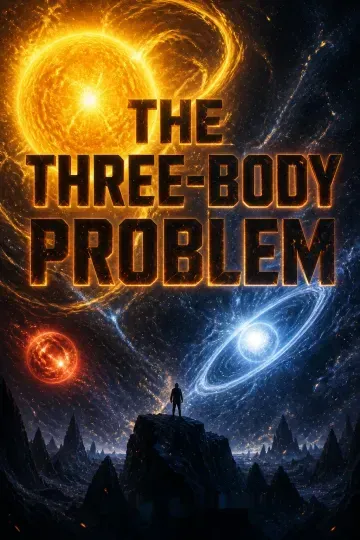
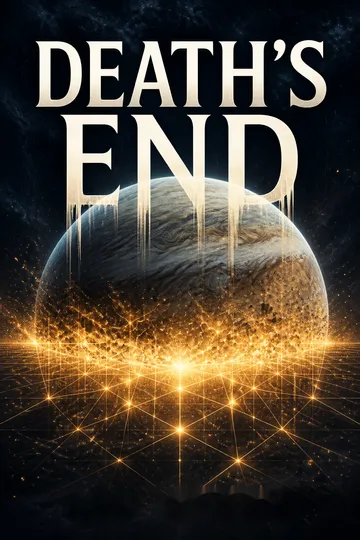
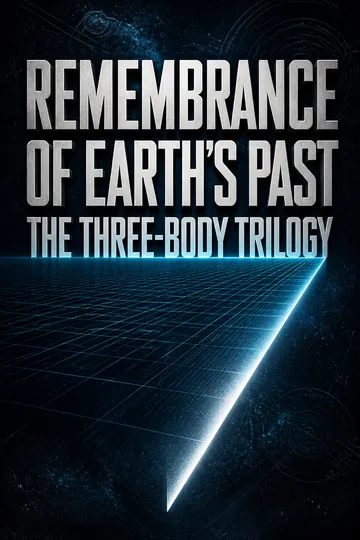
Remembrance of Earth's Past Series Series

About the Author

Download PDF
Download EPUB
.epub digital book format is ideal for reading ebooks on phones, tablets, and e-readers.








































