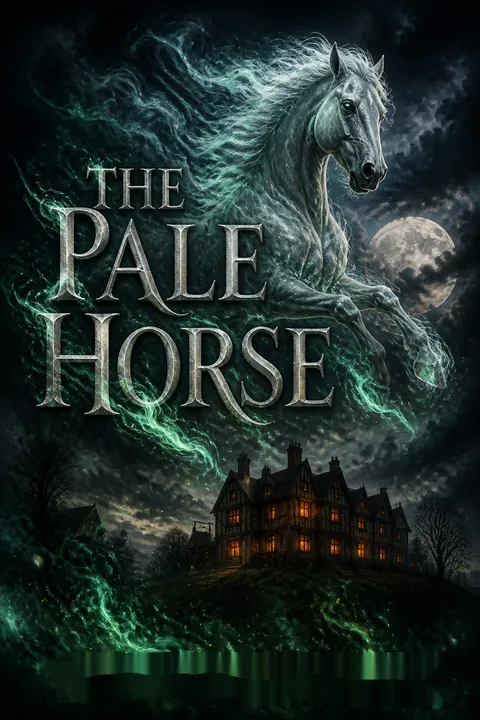

Plot Summary
Death in Everyday London
Mark Easterbrook, a historian discontented with his writings, witnesses a violent quarrel in a Chelsea coffee bar. In the midst of urban noise and youthful rebellion, he glimpses the troubled Thomasina "Tommy" Tuckerton. Days later, Tommy's death is noted in the papers—one of several recent, unremarkable deaths. At the same time, a Catholic priest named Father Gorman is summoned by a dying woman, Mrs. Davis, who, feverish and fearful, utters warnings of "wickedness." Mark, meanwhile, is drawn from his own isolation by a request from his cousin, Rhoda, and a chance meeting with Ariadne Oliver, a detective novelist. The modern world—its sinister undercurrents barely masked by ordinary life—begins to reveal a web of darkness lurking just below the surface.
A Dying Woman's Secret
Father Gorman visits a fevered, dying Mrs. Davis at a shabby London boarding house. Her ravings speak of guilt, evil, and a desperate need to confess. She barely manages to list a string of names—Ormerod, Sandford, Parkinson, Hesketh-Dubois, Shaw, Harmondsworth, Tuckerton, Corrigan, and Delafontaine—before surrendering to death. On his way home, Father Gorman is murdered in a foggy alley, a brutal blow ending his life. Police find the list of names hidden in his shoe. Detective Inspector Lejeune recognizes its possible significance. Father Gorman's dutiful honesty and Mrs. Davis's cryptic final words hint that, beneath the everyday tragedies, something organized and malicious is at work, reaching beyond mere coincidence or superstition.
The Cryptic List
The names Father Gorman wrote seem disparate until further deaths among them are investigated: Lady Hesketh-Dubois, Thomasina Tuckerton, and Mary Delafontaine all recently passed from sudden, odd illnesses. Mark's idle curiosity is kindled by connections among the dead. Alongside Dr. Corrigan, he speculates about the list's hidden meaning. Was it blackmail, a criminal ring, drug sales, or something more occult? Their probing uncovers that all the names may share involuntary passage from life to death—quiet, unremarkable passing that benefits surviving relatives or associates. The apparent accidents—or illnesses—may suggest a killer concealed not by violence, but subtlety.
Coffee Bar Encounters
Mark's world entangles with the "offbeat" youth of Chelsea, particularly Poppy Stirling, whose naive chatter drops hints about a place called the Pale Horse, where "people like us" can get rid of "someone." Poppy's fear when pressed belies the rumor's gravity. Mark's subsequent interaction with Ariadne Oliver and a foray into flower shops unearths more evasiveness: Poppy, gingerly, passes Mark to Ginger Corrigan, herself a sharp and resourceful investigator. Ginger identifies possible witnesses—Lou Ellis, Tommy's rival—and points to Tommy's wealthy but tightfisted stepmother, Mrs. Tuckerton, as a potential beneficiary of sudden death, subtly linking deaths, inheritances, and the macabre rumor behind the Pale Horse.
Wickedness Whispered
At a country fête, Mark meets Thyrza Grey, Sybil Stamfordis, and Bella—a trio referred to as witches—living at the former Pale Horse inn. The locals mutter about their powers, reading of auras and rituals, and whisper that cockerels and rituals are not just for show. Mrs. Dane Calthrop, the vicar's wife, proves a sounding board for Mark's uneasy suspicions about evil—a thing that, when genuine, rarely boasts or seeks attention. As names, rumors, and eerie stories converge, the modern and the ancient, the rational and the supernatural, blur unsettlingly. The feeling arises that something unacknowledged, both monstrous and mundane, is preying upon the vulnerable with impunity.
The Shrouded Pale Horse
Mark, drawn further into the web, visits the Pale Horse. The trio—Thyrza, Sybil, and Bella—indulge in conversations about voodoo, trances, and "sending forth the dead." Their belongings—grimoire, West African masks, and ancient charms—combine history with folklore. Thyrza, intelligent and pointed, coldly discusses manipulating the "death wish" in everyone, suggesting that, with the right ritual and stimulus, death can be willed from afar. Bella's silent intensity and Sybil's trance-tinged babble round out an unsettling atmosphere. Mark senses their confidence comes not just from superstition, but from a real, deadly technique. The promise is clear: pay, and they will arrange death invisible.
The Witches' Ritual
Mark is invited to witness what the Pale Horse offers. In a shadowy barn, Sybil falls into trance, channeling a spirit; Bella slits a white cockerel, painting symbols in its blood; Thyrza operates a mysterious "box" that hums with vague menace. Mark supplies Ginger's glove—ostensibly for "emanations" to target. The rite combines old and new, magic and modernity—a convergence of folk horror and technological dread. Thyrza intones commands to unleash death's desire, while the others perform their parts with unsettling sincerity. Mark, chilled and appalled, cannot shake the suspicion that this is more than theatre, yet feels the horror is not supernatural, but cunningly disguised.
Under Village Shadows
Tension rises as Ginger, acting as Mark's "estranged" wife for the experiment, is secreted in London under an alias. As days pass, she falls ill—fever, malaise, then more alarming symptoms. Mark and Lejeune frantically consult doctors and experts, unsure if they battle an ancient curse or a unique psychological attack. Mrs. Dane Calthrop offers fortitude—assess the worst, believe in no easy comforts, and do not discount evil's banality. As Ginger's illness intensifies, the line between rational skepticism and terrified belief fractures for all involved. The detectives can't keep up; the clock for survival ticks swiftly.
Detective Race
As Ginger's crisis escalates, clues coalesce. Mark, haunted by mention of the research firm CRC, and seeing connections between the "witches," the research visitors, and the deaths, interviews those involved. Poppy lets slip the name "Bradley," a turf commission agent in Birmingham, who is in fact the financial front for murder arrangements. Meanwhile, Mr. Osborne, a seemingly harmless retired pharmacist, acts suspiciously around Priors Court and continues to insist that Venables—the village's enigmatic, crippled millionaire—was present on the London street where Father Gorman was killed, despite medical impossibility. Meanwhile, the police inch toward the truth, seeking the elusive core of the conspiracy.
The Conspiracy Unfolds
The investigators realize that the Pale Horse rituals serve as theatrical cover. The real mechanism is the manipulation of ordinary people and the strategic substitution of poisons, aided by knowledge gleaned from CRC surveys. The ultimate murderer, having inside access, could poison without suspicion. Mark's own investigations, alongside the police, bring them to a breakthrough when Mrs. Oliver, consulting with a retired nurse, remarks on the victims' hair falling out—a crucial, overlooked symptom in all recent deaths. As Ginger worsens, Mark suddenly recalls a medical article about thallium poisoning, whose slow, subtle symptoms precisely match the mysterious deaths.
The Mask of Venables
Mark's longstanding suspicion that Venables is the engineer of evil is tested. Osborne persists in identifying Venables as the man shadowing Father Gorman on the night of his murder. Yet, the evidence doesn't match—medical records, physical limitations, and local testimony. The investigation pivots, and the detectives contemplate the possibility of a more ordinary-looking villain. Lejeune, wary and slow to trust easy solutions, begins to see that the true mastermind is skilled at disguise, manipulation, and remaining unseen—the "master criminal" is perhaps someone no one suspects, using his knowledge and ordinary appearance to his advantage.
Ginger's Peril
As Ginger nears death, Lejeune and Mark connect the dots—thallium poisoning, administered via products introduced to the victim's flat during "research surveys." The thallium, tasteless and subtle, attacks slowly and lethally, and for the first time a precise antidote can be administered since the true cause is revealed. The final pieces of the conspiracy come together: the CRC agents unknowingly provide information about victims' daily routines and products, enabling the murderer to substitute poisoned items without suspicion. Thyrza's showmanship has enabled a real, methodical poisoner to work unimpeded behind the scenes.
The Poison Unmasked
The true brilliance of the conspiracy is revealed: a murderer hiding within respectable society, using scientific knowledge—thallium for its stealth, CRC for access, the Pale Horse's reputation for misdirection. The supposed supernatural deaths distract both public and police, focusing blame on the "witches" and their so-called death rituals. In reality, a human, skilled and trusted, has manipulated every detail, leaving no direct connection to himself. It is a perfect blend of superstition and modernity—a contemporary "Borgia" hiding behind theatrics and science.
Truth at the Pale Horse
Mark and Lejeune, with evidence in hand, arrange to confront Venables at Priors Court, staging a dramatic accusation. Osborne, confident of Venables's guilt, is present, but it is he himself who is at last revealed as the true killer—a man embittered by frustration and anonymity, made bold by the impunity of his methods. Osborne's ego and craving for recognition have undone him, for his precise recollections and desperate attempt to "help" the investigation make him the object of scrutiny. The seeming alibi of Venables' paralysis proves a red herring; Osborne's own movements, and growing psychological fragility, betray him at last.
The Hand of Justice
Under Lejeune's skilled interrogation, Osborne's lies and boasts unravel; his ego, once swelling from playing God, collapses into hysteria. Justice proceeds quietly—no grand villain, no arcane society, just a solipsistic, clever, profoundly ordinary man who found power in orchestrating undetectable murders. The Pale Horse's witches are mere show-women, their rituals a distraction. Venables, viewed with suspicion for his wealth and personality, is ultimately innocent, though not himself without secrets. With the arrest of Osborne, the string of 'natural deaths' and evil behind the mundane vanishings ceases.
Evil's Human Face
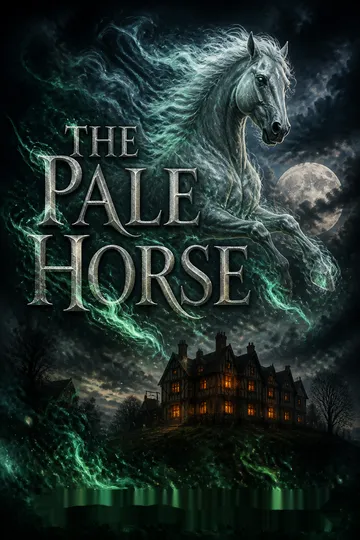
Ginger recovers and, with Mark, returns to the Pale Horse—its façade stripped, its sign showing at last a literal Death astride the pallid horse. Mrs. Dane Calthrop, the true moral voice, is proven right: evil is, at its core, neither grand nor supernatural, but petty, contemptible, and humbly human. The "trappings"—whether witchcraft, technology, or social respectability—only serve to shield the naked banality of real wickedness. Life resumes, shadowed but steadier, and in the wake of terror, Mark and Ginger find hope in companionship and recovery.
Analysis
Agatha Christie's The Pale Horse represents her most acute meditation on the interplay between superstition, modern science, and the psychology of evil. Set in the twilight world between the everyday and the uncanny, the novel uses the tropes of witchcraft and techno-crime not to invoke real magic, but to expose how evil exploits credulity, bureaucracy, and indifference. Christie asserts that the most terrible acts are often clothed in normality: poison administered through brand-name products, murder concealed behind research questionnaires, and villains hiding behind familiar respectability. Unlike the lurid "master criminals" of earlier fiction, the ultimate murderer here is a small, petty man, driven by the ordinary frustration and narcissism of not being seen. The Pale Horse itself—feared as a site of deathly supernatural power—serves as nothing more than a stalking horse, disguising human malice in theatrical trappings. The novel's enduring lesson is that evil, whether wrapped in ritual or rationalized by science, is made possible by ordinary people's willingness to look away, believe what they want, and accept the improbable over the uncomfortable truth. In an era obsessed with both magic and technology, Christie's story is a warning: the true danger is not what we fear, but what we overlook, rationalize, or refuse to believe possible.
Review Summary
The Pale Horse is widely praised for its clever mystery, atmospheric supernatural elements, and Christie's masterful misdirection. Readers appreciate the unique protagonist Mark Easterbrook, the occult themes involving three mysterious women, and the surprising twist ending that few readers anticipated. Many note Ariadne Oliver's disappointing limited presence despite the novel's categorization as part of her series. Some critics find the pacing slow and the supernatural atmosphere underdeveloped, but most agree the plot's resolution is satisfying. The novel's real-world relevance—its depiction of thallium poisoning reportedly saving a child's life in 1976—adds remarkable historical significance.
Characters
Mark Easterbrook
Mark Easterbrook is a historian, rational and reserved, who finds himself accidentally dragged into a web of inexplicable deaths. Initially detached, Mark's curiosity is piqued by small oddities—a brawl in a coffee bar, a vague rumor, a friend's request for help—which steadily lead him deeper into a conspiracy. His relationships, notably with Hermia (his "steady" but uninspiring partner) and Ginger (resourceful, lively, and emotionally open), reveal his search for meaning and connection beyond books. Mark's transformation is subtle: from passive observer to an investigator willing to risk personal safety for justice and friendship, and ultimately, love. His psychological development is rooted in his willingness to question reality, admit doubt, and persevere.
Ginger Corrigan
Katherine "Ginger" Corrigan is a young art restorer and formidable amateur detective. Quick-witted, fearless, and intuitive, Ginger becomes Mark's co-conspirator—and emotional catalyst—when they seek to expose the Pale Horse's deadly operation. Her willingness to act as the "target" in their investigation pushes her into mortal peril, transforming her from lively sidekick to literal victim and survivor. Ginger's resilience, humor, and pragmatic skepticism balance Mark's self-doubt. Their growing attraction emerges not just from romantic chemistry but shared hazard, mutual respect, and emotional honesty. Ginger's spirit and bravery serve as the emotional heart of the novel.
Thyrza Grey
Thyrza is the dominant figure among the Pale Horse's occult trio—intelligent, magnetic, and intellectually playful. As the "head witch," she uses her knowledge of folklore, psychology, and science to stage persuasive rituals that strike awe and terror into the credulous. Thyrza's true power, however, lies in her calculated ambiguity: knowing how to impress, intimidate, and misdirect, she seduces both clients and enemies into believing her capabilities. Her monologues on the "death wish" and manipulation of hidden forces echo both ancient superstition and modern pseudo-science. Ultimately, she is a show-woman, not the true killer—a reminder that the most obvious villain is not always guilty.
Sybil Stamfordis
Sybil is the willowy, exotic, and somewhat ridiculous spiritualist, constantly arrayed in saris and beads, more interested in auras and trances than reality. She genuinely believes in her powers, often entering altered states during the Pale Horse's rituals. Like Bella, Sybil is an unwitting pawn, providing the emotional intensity and occult "cover" that enables others to commit real crimes undetected. Her lack of intellectual acuity makes her vulnerable to suggestion and manipulation; her psychic performances, though eerie, are ultimately a sideshow to the real mechanisms of murder.
Bella Webb
Bella, the taciturn, slow-moving "cook" at the Pale Horse, is the embodiment of rural superstition and inherited tradition. Her malice, though likely sincere in her own mind, is limited to old rites, animal sacrifices, and the performance of cursing and "working" with death. She is a tool for atmosphere and distraction—a shadowy, slightly menacing presence, but ultimately not in control of events. Bella's strength is in being underestimated; her role is essential to the showmanship that makes the conspiracy believable, but she is not the mastermind.
Zachariah Osborne
Osborne is the true hidden murderer: bland, unremarkable, and obsessed with being noticed. A retired London pharmacist, he is skilled in toxicology, attentive to detail, and able to manipulate his environment. Osborne's vanity—his need to matter—drives his dual desire to solve the crime and simultaneously orchestrate it, confident that he will never be caught. His psychological makeup is flatteringly ordinary; insulted by his own insignificance, he finds godlike power in anonymously orchestrating deaths. When exposed, his facade collapses into hysterical self-justification. Osborne is Christie's archetype of evil as less than human—unremarkable, egoistic, and banal.
Detective Inspector Lejeune
Lejeune stands as the clear-headed force of justice: diligent, methodical, and unafraid of unconventional ideas. His French surname and reflective demeanor suggest an outsider's willingness to see through surface respectability. Lejeune refuses easy answers, persistently drilling into inconsistencies until the real murderer is found. His blend of imagination and skepticism makes him the ideal foil to both grand conspiracies and humble culprits. Lejeune's patient, skeptical approach reveals how careful police work can expose fantastic-seeming crimes as the product of very human weaknesses.
Mrs. Dane Calthrop
The vicar's wife in the village of Much Deeping, Mrs. Dane Calthrop is the novel's ethical compass. Her brisk, practical intelligence quickly cuts to the essence of evil—its essential mediocrity and petty meanness. Grounded in the realities of village life and human failing, she urges Mark and Ginger to investigate rather than rationalize atrocities away. She is unafraid to confront ugliness, confident in her judgment, and emotionally savvy—seeing through both pride and timidity in others. Calthrop's presence and advice ensure that the pursuit of truth is not just rational but also moral.
Ariadne Oliver
Ariadne Oliver, the eccentric, apple-loving mystery writer, offers comic relief and occasional wisdom. Her playful confusion and self-deprecation hide a shrewd understanding of human nature and literary artifice. While she dismisses her own intuition, it is her stray comment about victims' hair loss that leads Mark to the crucial breakthrough regarding thallium poisoning. Oliver's function is meta-literary: to highlight both the drama and absurdity of detective fiction, and to remind the reader that real evil is often less sensational and more insidious than fiction suggests.
Mr. Venables
At first glance, Venables seems the archetypal "mastermind"—wealthy, aloof, with a reputation for mystery and rumored criminal prowess. His disability (paralysis from polio) serves as both a character feature and an alibi. His charm, intelligence, and history invite suspicion and speculation, but ultimately, his role is not that of the murderer, but rather a figure for the reader's and characters' misdirection. Venables's very obscurity, carefully cultivated, provides the perfect shield from suspicion, playing into the theme that evil often hides in plain sight, behind unimpeachable respectability.
Plot Devices
List of Names
The narrative launches and returns repeatedly to a cryptic list—names carelessly left by Father Gorman after a harrowing deathbed confession. The list serves as a classic detective fiction MacGuffin: everyone's motives, suspicions, and fates spin around these doomed victims. The list's ambiguity (victims? blackmailers? accomplices?) enables misdirection and tension, simultaneously linking apparently unrelated deaths and threading together plot lines that seem at first random. The gradual revelation that every name marks a victim of subtle murder, rather than a perpetrator of some vice, upends initial assumptions.
Supernatural Misdirection
Throughout the novel, Christie skillfully manipulates the reader's—and characters'—expectations about supernatural evil. The Pale Horse's rituals, trances, and deathly chants are an elaborate form of narrative misdirection. The modern twist—references to death rays, brainwashing, and the "death wish"—creates the illusion of a supernatural or scientifically advanced crime, all the while concealing a traditional poisoning scheme. Both Mark and the authorities are led astray by believing in either ancient magic or new psychology, distracted from simpler mechanisms rooted in chemistry.
False Suspects and Red Herrings
The reader (and characters) are directed to suspect Venables, Thyrza, Sybil, and even the bumbling Dr. Corrigan, for various reasons: odd behavior, ambiguous morality, social eccentricity, or sheer narrative convention. Mark and the authorities' investigations focus time and attention on these shadowy players—removing the real killer from scrutiny until very late in the story. Christie uses stereotypes and reader expectations about "evil masterminds" to further mask the true culprit.
Modern Techniques of Murder
The novel's main plot device is its blending of the modern (thallium poisoning, mundane access via research surveys, the use of a commission agent for contracts) with the archaic (witches, trances, rituals). The murderer leverages contemporary society's trust in science and bureaucracy—as well as its attraction to the sensationalism of the occult—so that rational explanations seem implausible and straightforward clues are ignored. The "box" used in rituals and the theatre of witchcraft serve only as distractions, while the real weapon operates quietly, invisibly, and lethally.
Dual Narration and Meta-Literary Commentary
The use of Mark Easterbrook as a first-person narrator offers a lens both skeptical and emotionally invested. Ariadne Oliver, the writer-within-the-novel, serves as a meta-commentary on the conventions of detective fiction—the struggle with plausibility, the difficulty with "fitting up" motives, and the risk of false complexity. This narrative self-reflexivity encourages the reader to approach the mystery with a blend of caution and curiosity.
Ariadne Oliver Series
About the Author
Other books by Agatha Christie
Download PDF
Download EPUB
.epub digital book format is ideal for reading ebooks on phones, tablets, and e-readers.








































