


Key Takeaways
Human nature follows predictable laws you're probably ignoring
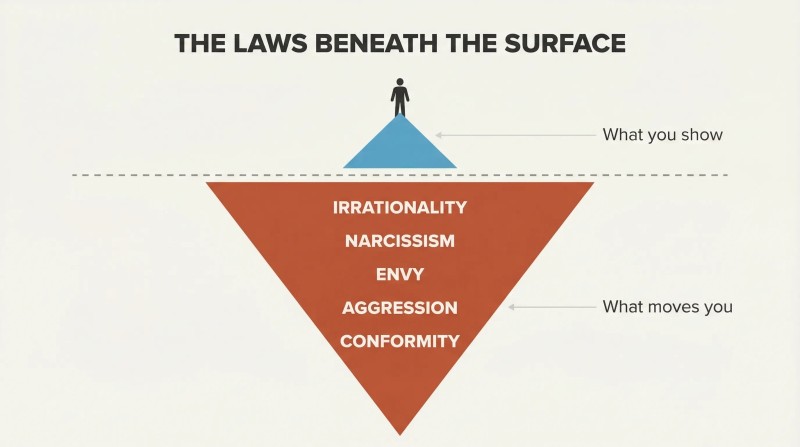
Greene's core premise is arresting. Below our polished, civilized exterior, primitive forces — irrationality, narcissism, envy, aggression, conformity — drive behavior in patterns as predictable as physical laws. Most people never decode these patterns, which is why they're perpetually blindsided by manipulation, betrayal, and their own self-sabotage. The book presents eighteen such laws, each anchored in a historical case study.
The starting point is radical self-honesty. From Pericles mastering rationality in Athens, to Rockefeller's sophisticated aggression building Standard Oil, to Flannery O'Connor transforming a death sentence into creative fuel, each story serves as a diagnostic mirror. Greene insists you share every tendency you despise in others — and until you accept that, these laws will keep governing you invisibly.
Train your rationality like a muscle — it won't come naturally
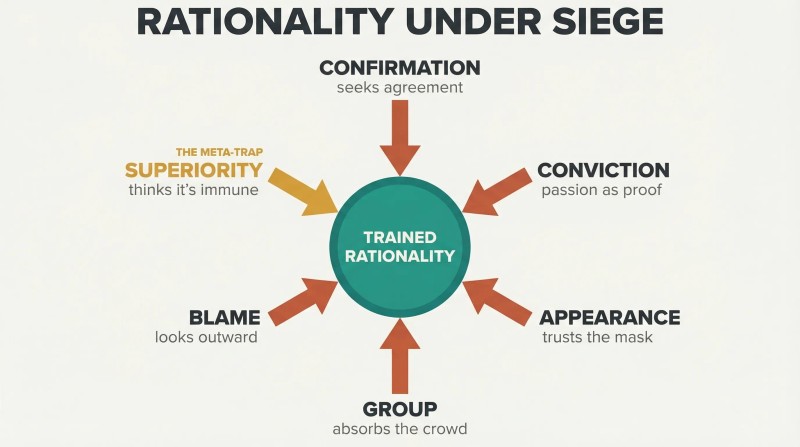
Pericles shows what trained rationality looks like. While rival Athenian leaders chased glory and power, Pericles cultivated what Greene calls his Inner Athena — never deciding under strong emotion, basing every choice on Athens's greater good. His patient, defensive war strategy against Sparta reflected decades of disciplined thinking. After his death, Athens abandoned restraint, launched the disastrous Sicilian expedition, and destroyed itself.
Six biases silently corrupt your thinking:
1. Confirmation bias — seeking evidence for what you already believe
2. Conviction bias — mistaking passionate delivery for truth
3. Appearance bias — confusing people's masks for reality
4. Group bias — absorbing opinions of those around you
5. Blame bias — looking outward for causes of failure
6. Superiority bias — assuming you're more rational than others
Master the 'second language' of cues people constantly leak
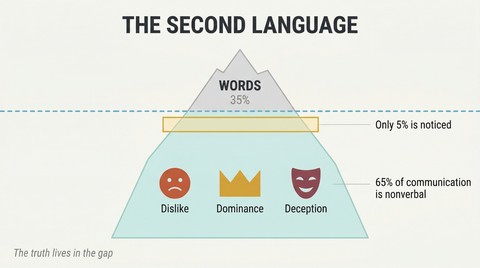
Milton Erickson cracked this code involuntarily. Paralyzed by polio at seventeen, he spent months watching his sisters from bed. Unable to speak or gesture, he noticed a world invisible to participants: a 'yes' paired with a headshake 'no,' neck veins pulsating with concealed nervousness, hair-stroking that meant impatience. He counted sixteen varieties of 'no' in a single day. This became the foundation of his revolutionary psychotherapy — reading patients through their bodies, not their words.
Three categories of cues matter most: dislike signals (microexpressions lasting under a second, forced smiles, sudden silences), dominance signals (who interrupts, who touches whom, who takes up physical space), and deception signals (one body part animated to distract while others freeze with tension). The gap between what people say and what they show is where the truth lives.
Judge people by behavioral patterns, not promises or charm
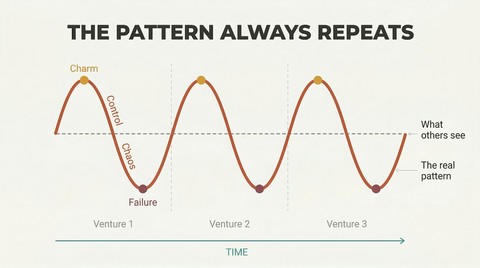
Howard Hughes proved this law ruthlessly. Every venture followed an identical arc: initial charm, micromanagement, chaos, firing everyone, failure, blame-shifting. At Hell's Angels he fired the director and took over. At Hughes Aircraft, two general managers quit within months. At RKO Pictures — same pattern, same ruin. He admitted after Hell's Angels that trying to do twelve men's work was his biggest mistake, then repeated it for forty more years.
Character is stamped early through three layers: genetic predisposition, childhood attachment patterns, and accumulated habits. A fourth layer — the cover-up — makes detection harder, as people disguise weaknesses as strengths. Greene's diagnostic: watch behavior under stress, how people handle power, and how they lose at games. Weak character neutralizes intelligence, charm, and every other positive quality a person might possess.
Lower people's defenses by confirming their self-opinion
Lyndon Johnson's Senate transformation illustrates this. Arriving as an aggressive freshman, he reinvented himself: visited senior senators, waited patiently in their offices, listened with riveting focus, then acted on their advice and credited them publicly. Within four years, he controlled committee assignments — unprecedented power gained not through force but through making everyone feel autonomous, intelligent, and noble.
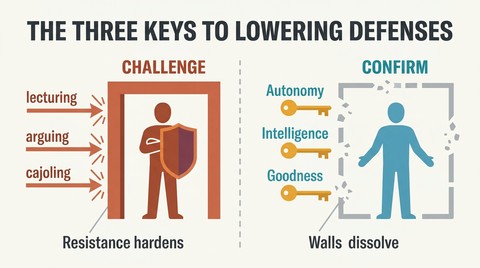
Greene identifies three universals in how people see themselves — the 'golden key' to influence:
1. Autonomy — they must feel any action is their own free choice
2. Intelligence — never make someone feel stupid, even implicitly
3. Goodness — frame requests so compliance feels altruistic
When you confirm these beliefs, walls dissolve. When you challenge them — even accidentally — resistance hardens permanently. This explains why lecturing, arguing, and cajoling almost never persuade.
Treat your attitude as your most important daily creation
Anton Chekhov was abandoned at sixteen in a dreary Russian town after his abusive father fled the family's debts. Rather than succumb to bitterness, he reframed everything: work became dignity, books became escape, the same bleak town became rich material. Most transformatively, he analyzed his violent father as a character — understanding the generations of serfdom behind the cruelty — and found he could love him. That shift freed Chekhov from the resentment destroying his siblings.
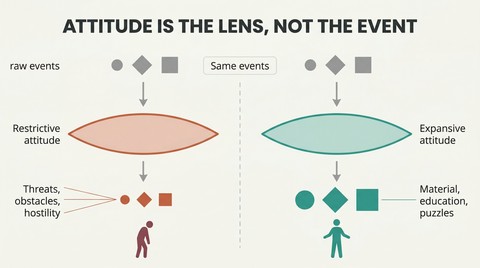
Greene defines attitude as an unconscious readiness to react in particular ways — a lens coloring every perception. A hostile attitude provokes hostility, confirming the worldview. An anxious attitude restricts experience. The expansive alternative treats everything as material, every setback as education, every person as a puzzle. This is not optimism — it's a deliberate, practiced orientation that shapes what actually happens to you.
Confront your repressed dark side before it sabotages you
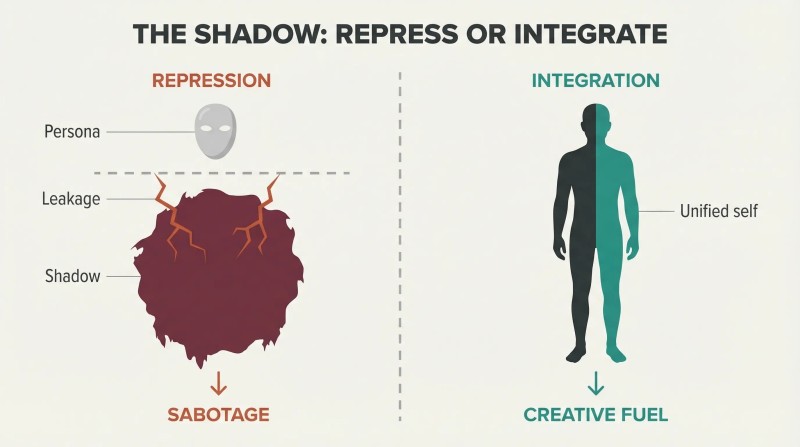
Nixon crafted 'RN' — a persona of Quaker idealism and de Gaulle-like authority — while his insecurities, vindictiveness, and paranoia festered beneath. The Shadow leaked constantly: late-night enemy lists, ethnic slurs, revenge fantasies. The taping system he installed to document his greatness became the instrument of his destruction — the hidden Nixon made audible.
Jung's Shadow concept holds that repressed qualities don't vanish — they gain power underground. Greene identifies key leakage signs: contradictory behavior (the moralist caught in scandal), emotional outbursts that seem out of character, vehement denial of qualities you obviously possess, and overidealization of causes that licenses ugly behavior. The antidote isn't more repression but integration — acknowledging your aggression, ambition, and darker impulses so they fuel creative work rather than ambush your relationships.
Spot envy early — it hides behind friendship and praise
Mary Shelley's closest friend destroyed her from within. Jane Williams befriended Mary, bonded as a fellow young mother, then systematically seduced Mary's husband Percy, spread lies that Mary had driven him to suicide, and poisoned their mutual friendships — all while wearing warmth as a mask. The mechanism: Jane's genuine attraction to Mary was inseparable from the envy that Mary's fame, talent, and illustrious parentage stirred. Closeness was both the cover and the weapon.
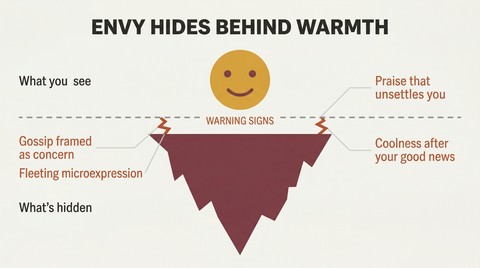
Envy is uniquely dangerous because people disguise it even from themselves, transmuting inferiority into righteous indignation. Watch for poisonous praise (compliments that leave you uneasy), sudden coolness after your good news, gossip framed as concern, and Schopenhauer's test: share some success and watch for the fleeting microexpression of disappointment before the congratulations arrive.
Success warps your self-image — the golden touch is illusion
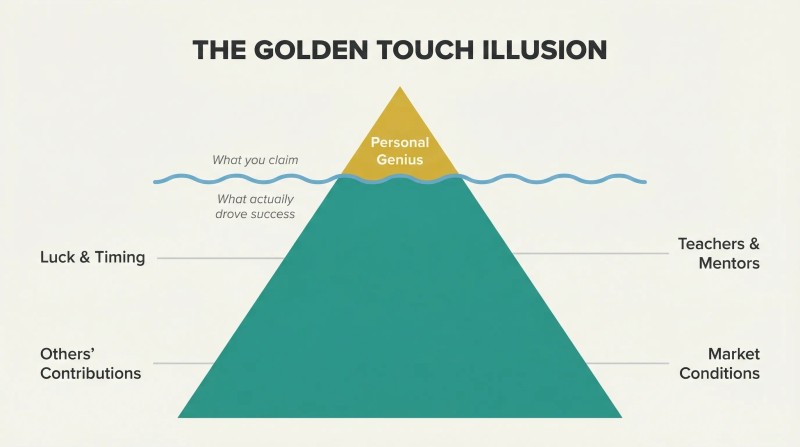
Michael Eisner's Disney arc is a textbook case. His early success at Paramount was partly luck — several films were already in production — and partly his partnership with Barry Diller. At Disney, inheriting an untapped video library during the home-video explosion, he attributed the windfall to personal genius. This fantastical grandiosity drove him to fire his most productive executive (Jeffrey Katzenberg), hemorrhage money on Euro Disney, hire then publicly humiliate Michael Ovitz, and alienate nearly every ally.
Greene's antidote is practical grandiosity: channel ambitious energy into calibrated challenges slightly above your current skill level, maintain honest dialogue with reality through feedback and criticism, and after every win, audit ruthlessly. What role did timing play? Who helped? What am I not seeing? Wipe the slate clean with each new project.
Find your specific calling or drift into false purposes
Martin Luther King Jr. wavered constantly between safe options — academia, his father's church — and the uncertain path that called him. The night before his first trial as Montgomery boycott leader, terrorized by death threats, he heard a voice during a kitchen prayer: 'Stand up for righteousness.' That voice returned whenever resolve faltered, transforming him from a reluctant figurehead into a strategic leader who orchestrated Birmingham's crisis to prick the nation's conscience.
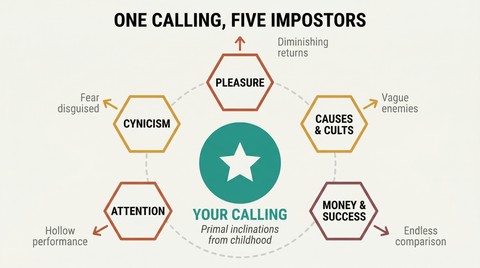
Greene identifies five false purposes that mimic meaning but deliver emptiness:
1. Pleasure — diminishing returns demand constant escalation
2. Causes and cults — vague enemies, no concrete strategy
3. Money and success — no endpoint, endless comparison
4. Attention — exhausting performance, hollow core
5. Cynicism — disguised fear of trying and failing
Your calling emerges from primal inclinations visible in childhood — what fascinated you before anyone told you what to like.
Make death a familiar presence — it sharpens everything else
Flannery O'Connor inherited lupus from her father, who died at forty-five. Diagnosed at twenty-five, she called it a second 'bullet in the side' — the first being her father's death when she was fifteen. Rather than deny or despise her fate, she weaponized it: retreating to her mother's Georgia farm, writing every morning with sacred discipline, producing some of the most searing fiction in American literature across thirteen years of deteriorating health.
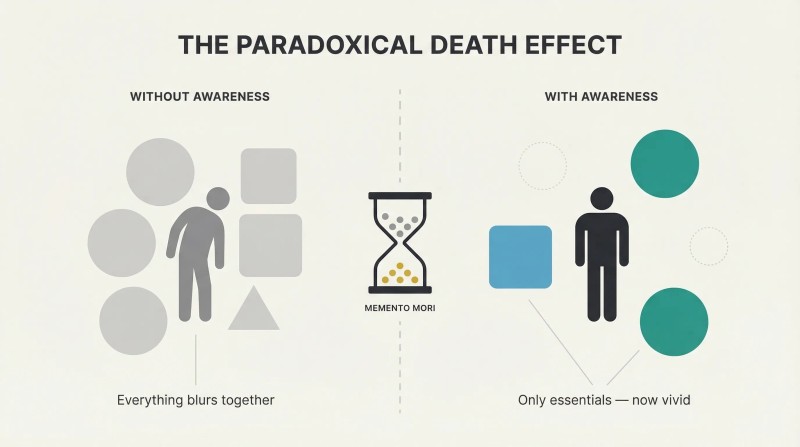
Greene calls this the paradoxical death effect: confronting mortality doesn't darken life but intensifies it. Dostoyevsky, facing a firing squad that was called off at the last second, described everything afterward as more vibrant. The prescription isn't morbid fixation but practical meditation — envisioning your death to clarify priorities, awaken urgency, and dissolve the trivial grievances that consume most people's bandwidth.
Analysis
Greene's The Laws of Human Nature represents perhaps the most ambitious attempt since Schopenhauer to synthesize psychological knowledge into a practical manual for navigating social reality. Its intellectual architecture draws from an extraordinary range — Melanie Klein's infant observation, Carl Jung's Shadow concept, John Bowlby's attachment theory, Paul Ekman's microexpression research — all filtered through Greene's signature device of extended biographical case studies that function as diagnostic parables.
What distinguishes Greene from academic psychologists is his unapologetic fusion of self-knowledge and strategic power. Where a therapist might say 'understand your narcissism to heal,' Greene says 'understand your narcissism to stop being manipulated — and to become more effective.' This dual orientation creates a productive tension throughout: the same empathy that makes you a better human also makes you a more formidable social actor. Critics may find this morally uncomfortable, but Greene would argue that squeamishness about power is itself a law of human nature — one that leaves the squeamish vulnerable to those with fewer scruples.
The book's central innovation is treating eighteen separate psychological phenomena as interconnected laws with predictable dynamics. This systematization has both strengths — a unified framework for interpreting otherwise bewildering behavior — and weaknesses. Biographical analysis inevitably involves unfalsifiable just-so stories. Did Rockefeller's need for control really originate from his con-artist father's unpredictable absences? The causal claims feel intuitively true but resist rigorous verification.
Published in 2018, the book now reads as prescient about several accelerating trends: the weaponization of social media for tribal manipulation, the rise of grandiose populist leaders, and the epidemic of purposelessness driving addiction and radicalization. Greene's insistence that technology amplifies rather than transcends human nature's primitive patterns has only become more urgent. The most radical claim — that our sophisticated modern minds are no less susceptible to ancient irrationalities than our ancestors' — remains the book's most important and most resisted insight.
Review Summary
Readers praise Greene's ability to synthesize complex ideas about human behavior into accessible "laws." Many find the historical anecdotes engaging and the practical advice valuable for personal and professional life. Some criticize the book's length and repetitiveness, while others question the scientific basis of some claims. Overall, most reviewers consider it a thought-provoking read that offers unique insights into human nature.
People Also Read









Glossary
Narcissistic Spectrum
Scale measuring self-absorption levelsGreene's model for understanding narcissism as a continuum rather than a binary. At the bottom are deep narcissists who lack a coherent self and depend entirely on external validation. In the middle are functional narcissists—most people—who have a working self-esteem thermostat. At the top are healthy narcissists who can redirect attention outward into empathic relationships and creative work.
The Second Language
Nonverbal communication people leakGreene's term for the continuous stream of information people involuntarily reveal through facial microexpressions, body language, vocal tone, breathing patterns, and gestures. This second channel often contradicts what people say verbally and reveals their true feelings, intentions, and level of comfort. Greene estimates it constitutes over 65% of all human communication, yet only about 5% is consciously registered by observers.
Shadow
Repressed dark side of personalityDrawing from Carl Jung, Greene defines the Shadow as all the qualities a person has denied and repressed since childhood—insecurities, aggressive impulses, forbidden desires, and antisocial tendencies. Because these traits are repressed rather than eliminated, they gain underground power and leak out through contradictory behavior, emotional outbursts, projection onto others, vehement denial, and self-destructive 'accidents.' Integration of the Shadow through conscious acknowledgment is Greene's recommended antidote.
Self-opinion
Core self-perception governing defensivenessGreene's term for the three-part self-image nearly all people maintain and fiercely protect: 'I am autonomous' (acting of my own free will), 'I am intelligent' (in my own way), and 'I am good' (basically decent and ethical). Confirming these beliefs is the 'golden key' to lowering people's resistance and opening them to influence. Challenging any component—even inadvertently—triggers defensive hardening that no argument can penetrate.
Practical Grandiosity
Reality-based ambition channelingGreene's framework for redirecting the natural human desire to feel enlarged and significant into concentrated work, calibrated challenges, and honest self-assessment. Contrasted with fantastical grandiosity—where success inflates self-image beyond reality—practical grandiosity ties feelings of greatness to actual achievements, maintains dialogue with feedback, and treats each new project as starting from zero regardless of past wins.
Paradoxical Death Effect
Mortality awareness heightening alivenessGreene's observation that deep confrontation with death—whether through personal illness, loss of loved ones, or near-death experiences—paradoxically intensifies sensory experience, emotional depth, empathy, and sense of purpose. Rather than darkening life, the awareness cleans away pettiness and complacency. Greene prescribes practical meditation on mortality as a way to clarify priorities and awaken urgency without waiting for an actual crisis.
Social Force
Invisible group-binding energy fieldGreene's term for the physiological and psychological force field that emerges when humans gather in groups, creating shared sensations, emotional contagion, and powerful pressure to conform. Experienced physically as goose bumps, racing heartbeat, and heightened vitality, the social force binds members through the urgent desire to belong. It operates below conscious awareness and can be channeled positively for cooperation or exploited by demagogues for manipulation.
Controlled Aggression
Productive channeling of assertive energyGreene's term for the disciplined redirection of natural aggressive energy into four productive outlets: focused ambition toward specific goals, relentless persistence through obstacles, fearlessness in standing up for yourself, and targeted anger at genuine injustice. Contrasted with chronic aggression (which harms others and creates enemies) and repressed aggression (which creates what Greene calls an 'internal saboteur' that undermines confidence and initiative from within).
FAQ
What's The Laws of Human Nature about?
- Understanding Human Behavior: The book explores the motivations and behaviors that drive human actions, emphasizing the importance of understanding both ourselves and others.
- Laws of Human Nature: Robert Greene outlines several "laws" that govern human behavior, such as the Law of Irrationality and the Law of Narcissism, providing insights into how these laws manifest in everyday life.
- Practical Strategies: Each chapter not only describes a law but also offers strategies for recognizing and navigating these behaviors in ourselves and others, aiming to enhance personal and social effectiveness.
Why should I read The Laws of Human Nature?
- Self-Improvement: The book provides tools for self-awareness and emotional intelligence, helping readers to master their own emotions and behaviors.
- Navigating Relationships: Understanding the laws of human nature can improve interpersonal relationships, making it easier to read others and respond appropriately to their actions.
- Historical and Psychological Insights: Greene draws on historical examples and psychological research, making the content both engaging and informative, appealing to those interested in human psychology and history.
What are the key takeaways of The Laws of Human Nature?
- Master Your Emotions: Recognize and control emotional responses to avoid irrational decisions.
- Empathy Over Narcissism: Transform self-love into empathy for deeper connections and reduced self-absorption.
- Character Assessment: Evaluate people's character through their actions and patterns rather than their words or appearances.
What are the best quotes from The Laws of Human Nature and what do they mean?
- "Character is destiny.": Our character shapes our actions and ultimately determines the course of our lives.
- "Trust your feelings!": Greene critiques this advice, suggesting feelings can mislead us and that rationality and self-awareness are crucial.
- "The deepest principle of Human Nature is the craving to be appreciated.": This highlights the fundamental human desire for recognition and validation.
How does Robert Greene define narcissism in The Laws of Human Nature?
- Spectrum of Narcissism: Narcissism ranges from healthy self-love to toxic behaviors that can be destructive.
- Transforming Self-Love: Emphasizes transforming self-absorption into empathy for deeper connections with others.
- Identifying Toxic Narcissists: Provides insights into recognizing and protecting oneself from manipulative narcissists.
What is the Law of Irrationality in The Laws of Human Nature?
- Emotions Dominate Decisions: Emotions often cloud judgment, leading to irrational choices based on feelings rather than facts.
- Cultivating Rationality: Develop the ability to recognize emotional influences and counteract them with rational thought.
- Practical Steps: Strategies include reflecting before reacting and analyzing the roots of our feelings.
What is the Law of Repression in The Laws of Human Nature?
- Understanding Repression: Individuals suppress darker impulses and insecurities, leading to disconnection from their true selves.
- Consequences of Repression: Repressed emotions can manifest as anxiety, depression, or destructive behavior.
- Integration of the Dark Side: Acknowledging and integrating our shadow side can lead to a more authentic and balanced personality.
How does The Laws of Human Nature address the concept of empathy?
- Empathy as a Tool: Described as the ability to understand and share the feelings of others, crucial for building strong relationships.
- Empathy's Role in Influence: Empathizing with others lowers defenses and creates a sense of connection.
- Cultivating Empathy: Encourages practicing empathy by observing others' emotions and motivations.
What is the Law of Grandiosity in The Laws of Human Nature?
- Understanding Grandiosity: Success can inflate self-opinion, leading to overconfidence and detachment from reality.
- Signs of Grandiosity: Overbearing certainty, excessive touchiness when criticized, and disdain for authority.
- Counteracting Grandiosity: Maintain realistic self-assessment and tie feelings of greatness to work and contributions.
How does The Laws of Human Nature explain the Law of Conformity?
- Influence of Groups: Individuals often conform to group beliefs and behaviors, leading to a loss of individuality.
- Awareness of Group Dynamics: Recognize how group dynamics affect personal behavior to maintain independence.
- Navigating Social Situations: Strategies for resisting conformity while engaging with others authentically.
What is the concept of generational myopia in The Laws of Human Nature?
- Definition of Generational Myopia: Tendency to be influenced by the values and beliefs of one's generation, leading to a narrow perspective.
- Impact on Behavior: Limits ability to see beyond current trends, resulting in resistance to change.
- Encouraging Broader Perspectives: Strive to adopt a more expansive view by incorporating insights from different generations.
How can I apply the lessons from The Laws of Human Nature in my daily life?
- Practice Self-Reflection: Regularly assess your thoughts, emotions, and behaviors to enhance self-awareness.
- Observe Others: Pay attention to the behaviors and motivations of those around you to improve social dynamics understanding.
- Embrace Challenges: Use awareness of mortality to motivate risk-taking and goal pursuit for personal growth.
About the Author
Other books by Robert Greene







Download PDF
Download EPUB
.epub digital book format is ideal for reading ebooks on phones, tablets, and e-readers.








































