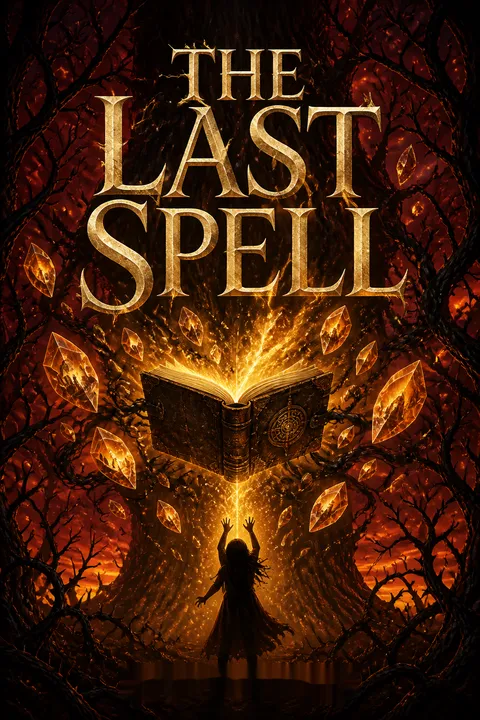

Plot Summary
Siege of Ta'men Keep
Martay, a reluctant soldier, stands guard as the Spider Queen Rygoth's monstrous army besieges Ta'men Keep, seeking a mysterious red chest rumored to contain a piece of the Vulkera—an ancient, powerful grimoire. Despite the defenders' courage, Rygoth's forces breach the keep using magic and treachery. Safi, a young seer forced to serve Rygoth, tries to betray her by stealing the grim but is caught. Rygoth's cruelty is revealed as she erases Martay's memories of his family, demonstrating her belief that love is weakness. The chest's contents—a piece of the Vulkera—fall into Rygoth's hands, setting her on a quest to unite all four pieces and unleash unimaginable power. The world's fate now hinges on who controls the grims.
Kara's Haunted Reflection
Kara Westfall, a young witch haunted by memory gaps and the burden of magic, receives a warning from Bethany, a friend hiding among Rygoth's witches. Through a magical reflection, Bethany reveals Rygoth's acquisition of the first grim and Safi's peril. Kara's guilt over doubting Safi is tempered by the realization that her friend has been bravely misleading Rygoth. The conversation underscores the cost of trust and the loneliness of those resisting darkness from within. Kara's resolve to find the remaining grims is strengthened, but the emotional toll of leadership and the uncertainty of whom to trust weigh heavily on her.
The Time-Stopping Yonstaff
Kara and her brother Taff, hiding in a farmhouse, attempt to create a magical creature—a yonstaff named Topper—capable of stopping time. Their efforts are interrupted by Grace, a former enemy, who warns of an imminent attack by Rygoth's twin witches. As the farmhouse is besieged, Kara and Taff desperately enact their spell, weaving story and memory to bring Topper into existence. Time freezes, allowing them to escape, but the spell's cost is steep: memories are lost, and the mind-bridge to Topper is fragile. The episode highlights the power of imagination, the risks of magic, and the siblings' growing reliance on each other.
Grace's Uncertain Allegiance
Grace, once Kara's tormentor, oscillates between ally and adversary. She claims to have abandoned magic, discarding her grimoire out of fear of becoming one of the Faceless. Yet her actions—warning Kara, helping in moments of crisis—are tinged with self-interest and manipulation. The group's journey is fraught with suspicion, as Kara debates whether to trust Grace's apparent transformation or brace for betrayal. Grace's internal struggle, shaped by a lifetime of abuse and the seductive pull of power, mirrors the book's central question: can anyone truly change, or are we prisoners of our past?
The Hourglass Tower's Bargain
Seeking the locations of the remaining grims, Kara and Taff enter the Hourglass Tower, home to the immortal Querin Fyndrake. To access the tower's secrets, Taff carves his name into a magical door, unwittingly binding himself as a future sacrifice to the time-gods, the Khr'nouls. The siblings witness the ancient division of the Vulkera and learn the hiding places of its pieces. The cost of knowledge is made explicit: every answer demands a price, and Taff's selfless act to help Kara casts a shadow over their victory. The chapter explores the ethics of sacrifice and the dangers of seeking power at any cost.
Through the Tunnels of Time
Kara and Taff descend through the Hourglass Tower's time tunnels, witnessing the past and risking the wrath of the cogs—guardians of the timeline. Their pursuit of deeper truths nearly ends in disaster as they are attacked by the cogs, losing precious time from their lives. The experience reveals the dangers of meddling with history and the limits of even the most powerful magic. The siblings' bond is tested as they confront the consequences of their choices, and the narrative underscores the theme that some knowledge is too costly to pursue.
The Princess's Shattered Soul
Through visions and research, Kara uncovers the origin of the Vulkera's evil: Princess Evangeline, a lonely, manipulated wexari whose memories of love were stolen by Rygoth. The grimoire, meant as a harmless gift, became a vessel for her pain and darkness, corrupting all magic that followed. Evangeline's Last Spell, intended to create friends, instead birthed the Well of Witches—a prison for countless girls. Kara's empathy for Evangeline reframes the conflict: the true enemy is not just Rygoth, but the legacy of suffering and the need to heal magic itself.
The Faenix's Lonely Vigil
At Dolrose Castle, Kara, Taff, and Lucas confront the faenix, an immortal guardian that endlessly reincarnates to protect the grim. The creature's monstrous form masks a deep loneliness; it arranges the petrified dead as companions. Kara, risking her memories, creates a companion for the faenix, trading it for the grim's pages. This act of compassion, rather than violence, resolves the conflict and reveals the transformative power of empathy. The episode deepens the theme that monsters are often victims, and that understanding can break cycles of pain.
The Museum's Treacherous Welcome
In Kutt, the group is welcomed by Xindra, curator of the Museum of Impossible Things, who promises the next grim. But it's a ruse: Xindra, under threat from Rygoth, imprisons them to save her people. The group's trust is shattered, and escape seems impossible. Grace's true nature is revealed as she reclaims her grimoire and betrays Kara, delivering the grims to Rygoth. Yet, in a moment of ambiguity, Grace also sets Kara and her friends free, torn between loyalty to Rygoth and a yearning for redemption. The chapter explores the complexity of survival, betrayal, and the cost of hope.
Grace's Betrayal Unveiled
Grace's duplicity comes to light: her apparent reformation was a calculated act to gain Kara's trust and deliver the grims to Rygoth. Yet, when faced with the consequences, Grace hesitates, torn by the bonds she's formed. Her final act—lying to Rygoth to protect Kara—costs her dearly, as Rygoth punishes her with magical suffocation. In her last moments, Grace reaches out to Kara, and the two share a fleeting connection of understanding and forgiveness. Grace's arc becomes a meditation on the possibility of change, the hunger for love, and the tragedy of self-destruction.
The Battle for Kutt
Kara, Taff, and Lucas escape the museum through ingenuity and luck, pursued by Rygoth's forces. The chaos of Kutt's evacuation, the threat of the Clinging Mist, and the loss of allies heighten the sense of peril. The group's unity is tested, and the cost of their quest becomes ever more apparent. The chapter sets the stage for the final confrontation, as the lines between friend and foe blur, and the stakes—personal and cosmic—are laid bare.
Rygoth's Gathering Storm
Rygoth, now in possession of most of the Vulkera, marshals her witches, monsters, and mercenaries for a final assault on De'Noran, where the last grim is hidden. Kara, reunited with her father and the remnants of the graycloaks, prepares for a desperate defense. Allies from across Sentium gather, inspired by Kara's legend, but the odds are grim. The narrative tightens around the inevitability of sacrifice, the exhaustion of hope, and the looming shadow of Rygoth's power.
The Last Grim's Secret
Kara learns that the last grim was hidden by the Children of the Fold beneath the Fenroot tree in De'Noran—her childhood home. The revelation brings the story full circle, as the place of her greatest suffering becomes the key to saving the world. The cost of secrecy, the burden of leadership, and the pain of memory loss converge as Kara prepares for the ultimate confrontation. The chapter is suffused with nostalgia, regret, and the fragile hope of redemption.
The Final Stand in the Thickety
Rygoth's army invades the Thickety, met by Kara's monsters, the graycloaks, and soldiers from every region. The battle is chaotic and brutal, with magic and violence on all sides. Kara and Taff execute a daring plan to steal the Vulkera from Rygoth, using decoys and the help of their friends. The cost is high—lives are lost, and Kara's memories are further eroded. The battle's outcome hinges on Kara's willingness to risk everything, including her very self, to heal the world's magic.
Kara's Sacrifice of Memory
To cleanse the Vulkera's darkness, Kara enters the mind of Princess Evangeline, sacrificing her own memories of love to restore the girl's lost humanity. The act severs the grimoire's corrupting influence, freeing all witches from its thrall and transforming the Well of Witches back into a place of learning. Kara's selflessness is both triumphant and tragic: she saves the world but loses her own past, becoming a stranger to those she loves. The chapter is a meditation on the true cost of heroism and the enduring power of compassion.
The End of the Spider Queen
With the Vulkera purified, Taff is able to use it—now free of its gendered curse—to transform Rygoth back into a powerless spider. The Spider Queen's reign ends not with vengeance, but with poetic justice. The witches, now free to choose their own paths, join with the people of Sentium to rebuild. Kara, her memories gone, is embraced by her friends and family, who vow to help her rediscover herself. The world, once fractured by fear and hatred, begins to heal.
The Price of Magic
Years later, Querin Fyndrake returns to claim Taff as payment for the Hourglass Tower's bargain. But the new community of witches, united and empowered by their shared magic, stands together to repel the Khr'nouls. Kara, now a leader and teacher, demonstrates that the true strength of magic lies in unity and love, not in individual power or sacrifice. The threat is banished, and the cycle of exploitation is broken.
A New Dawn for Witches
The Thickety is transformed into a sanctuary for witches and a new Sablethorn. Kara, though changed by her sacrifice, finds peace in the love of her family and friends. The dead are honored, the past is mourned, and the future is embraced with hope. The story ends with a celebration of life, memory, and the enduring possibility of redemption. The world, once sick with darkness, is healed by the courage and compassion of those who dared to love.
Analysis
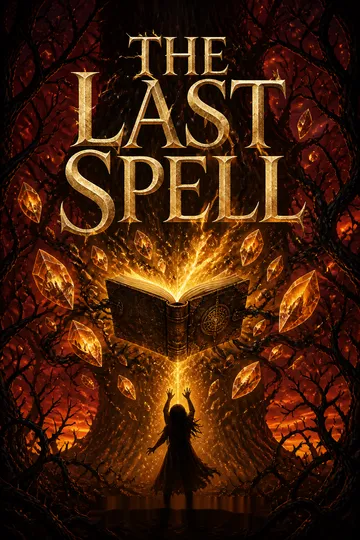
A modern fable of power, memory, and redemptionThe Last Spell is a richly layered fantasy that interrogates the nature of power, the ethics of sacrifice, and the possibility of healing a broken world. At its heart is the idea that magic—like all forms of power—demands a price, and that the true cost is often borne by the most vulnerable. The narrative's use of memory as both currency and identity literalizes the trauma of loss and the courage required to change. Through Kara's journey, the story argues that heroism is not found in violence or domination, but in empathy, self-sacrifice, and the willingness to forgive. The defeat of Rygoth and the healing of the Vulkera are not just victories over evil, but acts of restoration—of magic, of community, and of the self. The book's ultimate lesson is that the world can be remade, not by erasing the past, but by confronting it with compassion and hope. In an age of division and fear, The Last Spell offers a vision of unity, resilience, and the enduring power of love.
Review Summary
The Last Spell receives overwhelmingly positive reviews as a satisfying conclusion to the Thickety series. Readers praise the strong sibling bond between Kara and Taff, the imaginative world-building, and the series' exploration of moral complexity regarding magic and good versus evil. Many appreciate the emotional depth, character development (particularly Grace's arc), and the bittersweet yet hopeful ending. Some note the book is more action-focused and less creepy than earlier installments. Reviewers highlight themes of compassion, redemption, and the cost of magic, with several comparing it favorably to Harry Potter while noting its darker elements suitable for middle-grade readers.
People Also Read

Characters
Kara Westfall
Kara is the heart of the story—a young witch burdened by guilt, loss, and the weight of impossible choices. Her journey is one of self-discovery, as she moves from hunted outcast to legendary leader. Kara's magic is tied to her memories, and her willingness to sacrifice them for others' sake is both her greatest strength and deepest wound. She is defined by empathy, a fierce protectiveness of her brother Taff, and a refusal to accept that anyone is beyond redemption. Kara's arc is a meditation on the cost of heroism, the healing power of love, and the courage to change the world by changing oneself.
Taff Westfall
Taff is Kara's younger brother, a prodigy whose intelligence and imagination are crucial to their survival. His innocence is tempered by the traumas he endures, including the knowledge that he has traded his future to save Kara. Taff's creativity—manifested in stories, inventions, and plans—often provides hope when all seems lost. His relationship with Kara is the emotional core of the narrative, and his willingness to risk everything for her underscores the story's themes of love and sacrifice. Taff's journey is one of growing agency, as he moves from sidekick to hero in his own right.
Rygoth (The Spider Queen)
Rygoth is the primary antagonist, a once-human wexari who has traded her soul for power. Her philosophy—that love is weakness and violence is truth—drives her to seek the Vulkera and remake the world in her image. Rygoth's cruelty is matched only by her cunning; she manipulates, destroys, and consumes those around her. Yet, her own history as a victim of magic's imbalance adds complexity to her villainy. Rygoth's defeat is not just a physical victory, but a moral one: her worldview is undone by the very compassion she despises.
Grace Stone
Grace is a study in contradictions: once Kara's tormentor, she becomes both betrayer and savior. Her journey is shaped by abuse, ambition, and a desperate hunger for approval. Grace's ability to deceive is matched by her capacity for self-loathing, and her final acts—protecting Kara at the cost of her own life—suggest the possibility of redemption even for the most damaged souls. Grace's arc is a cautionary tale about the dangers of self-hatred and the redemptive power of compassion, even when it comes too late.
Safi
Safi is a young witch with the gift of prophecy, forced to serve Rygoth but secretly working to undermine her. Her courage is quiet but unyielding; she endures torture and isolation to protect her friends. Safi's visions are both a blessing and a curse, and her loyalty to Kara and Taff is unwavering. She represents the resilience of the oppressed and the power of small acts of resistance. Safi's survival and eventual freedom are a testament to the strength found in friendship and hope.
Bethany
Bethany is a witch whose magic allows her to communicate through reflections. She uses her anonymity to aid Kara, risking her life to pass information and shield Safi's mind from Rygoth. Bethany's journey is one of self-acceptance; once desperate to be noticed, she learns the value of subtlety and courage. Her friendship with Kara and Safi is a lifeline in a world of betrayal, and her survival is a quiet victory for those who fight from the shadows.
Lucas Walker
Lucas is Kara's childhood friend and eventual love interest, a former slave who finds purpose in fighting for justice. His courage is practical, his humor a balm in dark times. Lucas's willingness to risk his life for Kara and Taff is matched by his humility and self-doubt. His fall and miraculous survival serve as a reminder of the story's central theme: that love, though vulnerable, is the source of true strength. Lucas's presence grounds Kara, reminding her of what is worth saving.
Querin Fyndrake
Querin is the enigmatic master of the Hourglass Tower, offering forbidden knowledge at a terrible price. His immortality is sustained by sacrificing others to the Khr'nouls, making him both victim and villain. Querin's charm masks a deep selfishness, and his bargains force the protagonists to confront the ethics of sacrifice. His eventual defeat by the united witches signals the end of an era of exploitation and the dawn of a new, more just order.
Sordyr
Sordyr is a tragic figure, once corrupted by magic and now seeking to atone for his past. His knowledge is invaluable to Kara, and his guidance helps her understand the true nature of the Vulkera. Sordyr's arc is one of self-forgiveness; he learns that redemption is possible, not through denial of the past, but through acts of kindness and courage in the present.
Princess Evangeline
Evangeline is the original victim, her stolen memories and loneliness transforming a harmless grimoire into a source of universal corruption. Trapped within the Vulkera, her spirit is both the cause and the cure of magic's sickness. Kara's act of restoring Evangeline's sense of love and belonging is the key to healing the world. Evangeline's story is a parable about the consequences of neglect and the possibility of redemption through empathy.
Plot Devices
The Vulkera (The First Grimoire)
The Vulkera is the central MacGuffin, split into four pieces and hidden across Sentium. Its reassembly promises ultimate power, but also threatens to unleash universal darkness. The quest to find and protect its pieces drives the plot, while its history—rooted in Princess Evangeline's suffering—serves as the thematic core. The Vulkera's influence corrupts all magic, and its healing becomes synonymous with healing the world itself.
Memory as Magic's Currency
In this world, magic is fueled by personal sacrifice—often memories. The more powerful the spell, the greater the loss. This device literalizes the theme that true change requires giving up something precious. Kara's willingness to sacrifice her memories for others' sake is both her superpower and her tragedy, culminating in her ultimate act of self-erasure to heal magic's sickness.
The Hourglass Tower and Time Travel
The Hourglass Tower offers glimpses into the past at the cost of binding oneself to the Khr'nouls. The time-travel sequences provide crucial exposition, revealing the origins of the Vulkera and the true nature of magic's corruption. The device also explores the dangers of seeking knowledge without regard for consequence, and the ethical dilemmas of sacrifice.
Doppelgängers and Deception
Throughout the story, characters assume false identities, hide their true motives, or are forced to betray those they love. Grace's duplicity, Safi's feigned loyalty, and the use of decoy grimoires all serve to heighten tension and explore the theme that trust is both necessary and dangerous. The narrative structure relies on reversals and reveals, keeping both characters and readers off-balance.
The Well of Witches and the Faceless
The Well of Witches is both a literal and metaphorical prison for those consumed by magic's darkness. The threat of becoming one of the Faceless haunts Grace and others, serving as a warning about the dangers of unchecked power and the loss of self. The Well's transformation at the story's end symbolizes the possibility of redemption and the restoration of magic's original purpose.
The Khr'nouls and the Cost of Immortality
The Khr'nouls, ancient time-gods, enforce the balance of magic by demanding sacrifices from those who seek to cheat death. Querin's bargains and Taff's self-sacrifice force the protagonists to confront the morality of trading one life for another. The final defeat of the Khr'nouls by the united witches signals a new era in which power is shared, not hoarded.
The Thickety Series
Download PDF
Download EPUB
.epub digital book format is ideal for reading ebooks on phones, tablets, and e-readers.








































