
Plot Summary
Night of Accusation
Kara Westfall's life is upended when, as a young girl, she is torn from her bed and thrust into a night of terror. Her mother, Helena, is accused of witchcraft by the village of De'Noran, led by the cold Fen'de Stone. Kara is forced to witness her mother's execution, the crowd's bloodlust, and her father's helplessness. The ritualistic judgment, involving a magical beast called a nightseeker, spares Kara but not her mother. The trauma brands Kara as the witch's daughter, setting her apart from the community. The event is not just a personal loss but a public spectacle, seeding fear, shame, and rage in Kara's heart. The night's violence and betrayal become the crucible in which Kara's identity and destiny are forged.
Witch's Children Ostracized
Years pass, and Kara, now twelve, and her sickly younger brother Taff, live on the margins of De'Noran. The siblings are shunned, insulted, and cheated by villagers who see them as tainted by their mother's supposed evil. Kara shoulders adult responsibilities, working for scraps and caring for Taff and their broken father. The village's rigid adherence to the Path, a doctrine against magic and desire, suffocates any hope for acceptance. Kara's only solace comes from her bond with Taff and rare moments of kindness, like those from Constance Lamb. The children's resilience is tested daily, and Kara's longing for belonging is matched only by her determination to protect her brother from the world's cruelty.
The Forbidden Grimoire
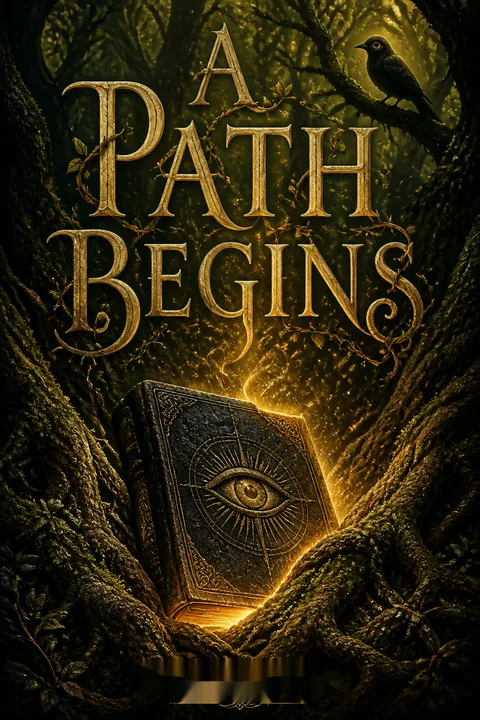
Kara's life changes when a strange, one-eyed bird lures her into the forbidden Thickety, the island's dark, magical forest. There, she discovers a black grimoire, once her mother's, hidden beneath a tortoise shell. The book is blank to most, but not to Kara. Its pages respond to her touch, and she soon realizes it is a spellbook, a source of forbidden power. The grimoire's allure is irresistible, promising answers about her mother and herself. Yet, it is also dangerous, its magic seductive and consuming. Kara's discovery is both a gift and a curse, awakening abilities she fears and desires, and setting her on a path that will test her soul.
The Weight of Magic
As Kara experiments with the grimoire, she learns she can command animals, imprinting their forms into the book. The spells come at a cost—each use leaves her weaker, and the book's hunger for more grows. Kara is both exhilarated and horrified by her abilities, especially when she uses them to defend herself and Taff from bullies. The line between self-defense and vengeance blurs. The grimoire's power isolates her further, and she fears becoming like her mother, or worse. The book's addictive pull threatens to consume her, and Kara must confront the question: can magic ever be used for good, or does it inevitably corrupt?
The Shadow Festival Begins
The annual Shadow Festival brings a brief respite to De'Noran, as villagers celebrate with costumes and games. For Kara, the festival is a reminder of her outsider status, but also a moment of hope. She finds fleeting joy with Taff and her friend Lucas, but the festival's merriment is a thin veneer over the village's fear and prejudice. Grace Stone, the fen'de's daughter, emerges as Kara's chief tormentor, her cruelty masked by beauty and privilege. The festival becomes the stage for escalating tensions, as magic stirs beneath the surface and old wounds threaten to reopen.
Grace's Cruel Games
Grace, ambitious and manipulative, covets the power she senses in Kara. She orchestrates humiliations, frames Kara for theft, and ultimately steals the grimoire. Grace's own magical potential is awakened by the book, and she quickly surpasses Kara in raw power. The rivalry between the girls becomes a battle for survival, with Grace's malice endangering Taff and the entire village. Kara's struggle is no longer just for acceptance, but for the soul of De'Noran itself. The personal becomes political, as the fate of the community hinges on the outcome of their conflict.
The Book's Temptation
Separated from the grimoire, Kara experiences withdrawal—physical pain, fever, and longing. The book's magic is revealed to be not just a tool, but a living force that feeds on its user's will. Constance Lamb intervenes, revealing her own history with Kara's mother and the dangers of the grimoire. She warns Kara of the Last Spell, a final page that dooms any witch who uses it. The book's temptation is a test of character, and Kara must decide whether to destroy it or risk everything for the chance to save those she loves.
Constance's Confession
Constance confesses her role in the tragedy that destroyed Kara's family. She reveals that Kara's mother was not evil, but a healer who tried to use magic for good. The grimoire, however, corrupted even the best intentions, driving its users to obsession and violence. Constance's scars are a reminder of magic's dangers, and her warning is clear: the grimoire cannot be controlled, only resisted. Kara learns that her mother's final act was a sacrifice to protect her children, and that the true enemy is not magic itself, but the choices made in its name.
The Power Consumes
Grace, now in possession of the grimoire, unleashes its full power on De'Noran. The village descends into chaos as Grace's spells warp reality, enslave the townspeople, and bring death and madness. Kara, desperate to save Taff and the others, is forced to use her own magic, despite the risks. The battle between the two witches escalates, each spell exacting a greater toll. The grimoire's influence grows, and the boundary between savior and destroyer blurs. Kara's struggle becomes a fight for her own soul, as well as the fate of the village.
The Grimoire Stolen
With the grimoire stolen, Kara is left powerless and wracked by guilt. Taff is gravely injured, and the village turns against her, blaming her for the calamities wrought by Grace. Kara's only hope lies in reclaiming the grimoire and confronting Grace. She is imprisoned, tortured, and forced to relive her mother's fate. The community's fear and hatred reach a fever pitch, and Kara must find the strength to resist both the villagers and the book's call. The quest to recover the grimoire becomes a journey of self-discovery and redemption.
Grace Ascendant
Grace, wielding the grimoire, crowns herself the true witch of De'Noran. She enslaves the villagers, warps their minds, and sits atop a throne of magical corruption. The village is transformed into a grotesque parody of itself, its people puppets to Grace's will. Kara, aided by Lucas and the memory of her mother, mounts a final resistance. The struggle is not just against Grace, but against the seductive promise of power itself. The cost of victory will be high, and Kara must decide what she is willing to sacrifice.
The Village Enslaved
De'Noran becomes a nightmare under Grace's rule. The villagers are trapped in endless, meaningless routines, their wills broken. The Fenroot tree, once a symbol of hope, is twisted into a throne of despair. Kara witnesses the depths of Grace's cruelty and the suffering of her people. The village's enslavement is a mirror of the grimoire's hold on its users—a warning of what happens when power is unchecked. Kara's empathy for the villagers, even after all they have done to her, becomes her greatest strength.
Duel of Witches
Kara and Grace face each other in a climactic duel, each wielding their respective grimoires. The battle is as much psychological as magical, with each girl's choices reflecting her true nature. Kara's spells are defensive, protective, and self-sacrificing, while Grace's are destructive and self-serving. The duel tests the limits of their power and the strength of their convictions. In the end, it is not raw magic, but compassion and restraint that determine the outcome. The duel is a reckoning, not just for the witches, but for the entire village.
The Last Spell Cast
As the battle reaches its zenith, both girls are forced to confront the Last Spell—the grimoire's final, irreversible magic. Grace, consumed by ambition, casts it and is dragged into a void of eternal torment, joining the ranks of witches lost to the book's hunger. Kara, in contrast, is spared, her selfless intentions recognized by the magic itself. The Last Spell is revealed to be not just a curse, but a test of character. The true cost of power is the willingness to give it up for others. Kara's survival is both a victory and a burden.
Sacrifice and Salvation
Kara's refusal to use magic for revenge or personal gain saves her from the grimoire's fate. She uses her remaining power to heal Taff and free the village from Grace's enchantment. The villagers, freed from their magical enslavement, are left to rebuild and reckon with their own complicity. Kara's sacrifice is both literal and symbolic—she gives up her power, her home, and her place in the community to ensure the safety of those she loves. The path to salvation is shown to be one of humility, forgiveness, and letting go.
The Price of Power
With the grimoires destroyed, Kara and the survivors flee De'Noran, seeking a new life in the World beyond the island. The village is left scarred, its people changed by their brush with magic. Kara's father, restored to himself, becomes the new leader, but the old prejudices linger. Kara is both celebrated and feared, her actions misunderstood by many. The price of power is isolation, and Kara must come to terms with her identity as a witch and a survivor. The story ends with the promise of new beginnings, but also the shadow of unresolved dangers.
The False Redemption
Just as Kara and her family hope for peace, a final betrayal is revealed. The spirit of Timoth Clen, the founder of the Path, possesses Kara's father, turning the village's gratitude into renewed persecution. The cycle of fear and violence begins anew, and Kara is forced to flee into the Thickety, the only place left where she might be safe. The false redemption of the village is exposed, and the story ends on a note of uncertainty. Kara's journey is not over; the path continues, deeper into the unknown.
Into the Thickety
Kara, Taff, and Shadowdancer escape into the Thickety, pursued by the villagers and graycloaks. The forest, once a place of terror, becomes a refuge and a symbol of possibility. Kara's acceptance of her power, her love for her brother, and her refusal to become what others fear mark the beginning of a new chapter. The story closes with Kara facing the unknown, her path uncertain but her resolve unbroken. The Thickety is both danger and hope—a place where the past's mistakes might be redeemed, and a new future forged.
Analysis
J.A. White's A Path Begins is a dark, emotionally resonant exploration of power, prejudice, and the struggle for selfhood in a world defined by fear. At its heart, the novel interrogates the nature of magic—not as an external force, but as a reflection of human desire, weakness, and potential for both good and evil. Through Kara's journey, the story examines how trauma and ostracism shape identity, and how the longing for acceptance can lead to both self-destruction and redemption. The grimoire, as a living artifact, embodies the seductive danger of unchecked power and the necessity of self-restraint. The narrative's refusal to offer easy answers—its insistence that even good intentions can lead to harm—gives the story a moral complexity rare in children's fantasy. Ultimately, the book argues that true strength lies not in the ability to wield power, but in the willingness to let it go, to choose compassion over vengeance, and to forge one's own path even when the world demands conformity. The ending, with its ambiguous hope and unresolved dangers, invites readers to consider the ongoing nature of the struggle between darkness and light, both within and without.
Review Summary
The Thickety: A Path Begins receives mixed reviews, averaging 3.97 stars. Many praise its dark, atmospheric storytelling about Kara, a girl whose witch mother was executed, who discovers a grimoire in the forbidden forest. Readers appreciate the complex character development, particularly Kara's struggle with magic's corrupting influence. The villain Grace earns intense reactions. However, critics note concerns about the disabled villain trope, excessive darkness for middle-grade readers, and pacing issues. Most agree the writing is strong and engaging, with surprising plot twists and a compelling cliffhanger ending that leaves readers wanting more.
People Also Read
Characters
Kara Westfall
Kara is the protagonist, a girl marked by her mother's execution for witchcraft and the village's relentless ostracism. She is fiercely protective of her younger brother Taff and burdened by the legacy of magic. Psychoanalytically, Kara is torn between the desire for acceptance and the fear of her own power. Her journey is one of self-discovery, as she grapples with the seductive pull of the grimoire and the moral cost of using magic. Kara's empathy, even for those who wrong her, is her defining trait. Her arc is a struggle to reconcile her identity as a witch with her longing to do good, ultimately choosing sacrifice over vengeance.
Taff Westfall
Taff is Kara's sickly, imaginative brother, whose well-being is her primary motivation. He is both a source of joy and a symbol of innocence threatened by the world's cruelty. Taff's intelligence and creativity shine in his drawings and inventions, and his unwavering trust in Kara grounds her. Psychologically, Taff represents hope and the possibility of redemption. His near-death and miraculous healing are pivotal, catalyzing Kara's final choices. Taff's presence humanizes Kara, reminding her—and the reader—of what is at stake beyond power and revenge.
Grace Stone
Grace is the fen'de's daughter, outwardly beautiful and admired, inwardly consumed by envy and a hunger for power. Her physical disability and rumored magical origins fuel her resentment, especially toward Kara. Grace's psychological complexity lies in her need for control and validation, which the grimoire amplifies into tyranny. Her arc is a cautionary tale of unchecked ambition and the corrupting influence of magic. Grace's ultimate fate—consumed by the Last Spell—serves as a dark mirror to Kara's path, illustrating the dangers of using power for selfish ends.
Fen'de Stone
The fen'de is the spiritual and political head of De'Noran, wielding the Path as both shield and weapon. He is a master manipulator, using fear of magic to maintain control. His relationship with Kara is one of suspicion and cruelty, but also a twisted form of mentorship, as he recognizes her potential. Psychologically, Fen'de Stone embodies the dangers of dogma and the human capacity for rationalizing cruelty. His eventual downfall and possession by Timoth Clen reveal the emptiness at the heart of his authority.
Constance Lamb
Constance is a former friend of Kara's mother, marked physically and emotionally by the past. She is both a warning and a guide, revealing the truth about magic's dangers and the cost of betrayal. Constance's psychoanalytic role is that of the wounded healer, offering Kara the wisdom of experience and the possibility of forgiveness. Her confession and sacrifice are crucial in Kara's understanding of her mother and herself. Constance's death is a reminder of the collateral damage wrought by fear and secrecy.
Lucas Walker
Lucas is Kara's closest friend and confidant, a Clearer (servant class) with his own scars and dreams. He provides emotional support and practical help, challenging Kara's self-doubt and offering a vision of a better world. Lucas's search for his family and place in the world parallels Kara's own journey. Psychologically, he represents hope, resilience, and the importance of chosen family. His willingness to risk everything for Kara underscores the story's themes of loyalty and sacrifice.
William Westfall (Father)
Kara's father is a shadow of his former self, paralyzed by grief and guilt over his wife's death and his inability to protect his children. His arc is one of gradual restoration, as he finds purpose in caring for Taff and supporting Kara. The revelation of his complicity in Helena's fate and his eventual possession by Timoth Clen add layers of tragedy and complexity. Psychologically, he embodies the struggle between love, duty, and self-preservation.
The Grimoire
The grimoire is more than a book—it is a character in its own right, shaping the destinies of those who possess it. It feeds on desire, offering power at the cost of the soul. The grimoire's blank pages reflect the user's intentions, and its Last Spell is both a promise and a trap. Psychologically, it represents addiction, temptation, and the shadow self. Its influence is pervasive, driving the plot and the characters' choices.
Sordyr (The Forest Demon)
Sordyr is the enigmatic ruler of the Thickety, embodying the wild, untamable aspect of magic. He is both tempter and judge, offering Kara power while threatening to consume her. Sordyr's interest in Kara is ambiguous—part fascination, part predation. Psychologically, he represents the unconscious, the allure of the forbidden, and the dangers of losing oneself to darkness.
The One-Eyed Bird
The one-eyed bird is a magical creature that leads Kara to the grimoire and appears at key moments. Its shifting eyes and cryptic messages make it both a guide and a symbol of fate. The bird's actions are motivated by guilt and a desire to help, but its true allegiance is uncertain. Psychologically, it represents intuition, the call to adventure, and the possibility of redemption.
Plot Devices
The Grimoire (Spellbook)
The grimoire is the central plot device, driving the narrative through its allure and danger. Its blank pages respond only to those with magical talent, and each spell cast brings the user closer to the Last Spell—a point of no return. The book's power is both a gift and a curse, offering the illusion of control while feeding on the user's will. The grimoire's sentience is revealed through its manipulation of desires and its ultimate judgment of worthiness. It serves as a metaphor for addiction, the corrupting influence of power, and the necessity of self-restraint.
Dual Narrative Structure
The story alternates between Kara's traumatic past and her present struggles, using flashbacks, confessions, and visions to reveal the truth about her mother, the village, and magic itself. This structure deepens the emotional resonance, allowing the reader to understand the roots of Kara's fears and the stakes of her choices. The narrative's layering of memory and action creates suspense and empathy, culminating in the revelation of the true nature of the Last Spell.
Foreshadowing and Symbolism
The Thickety, the one-eyed bird, and the festival rituals are recurring symbols that foreshadow key events and themes. The forest represents both danger and possibility, the bird is a harbinger of change, and the festival masks the village's underlying tensions. The use of animal spells and the transformation of the Fenroot tree mirror the characters' internal changes. These devices enrich the narrative, providing depth and cohesion.
The Last Spell
The Last Spell is the narrative's ticking clock, a final page in the grimoire that promises ultimate power but exacts a terrible price. Its presence shapes the characters' decisions, serving as both temptation and warning. The device crystallizes the story's central question: can power be used for good, or does it inevitably destroy? The resolution of the Last Spell—its different outcomes for Grace and Kara—serves as the story's moral and emotional climax.
The Thickety Series
Download PDF
Download EPUB
.epub digital book format is ideal for reading ebooks on phones, tablets, and e-readers.








































