
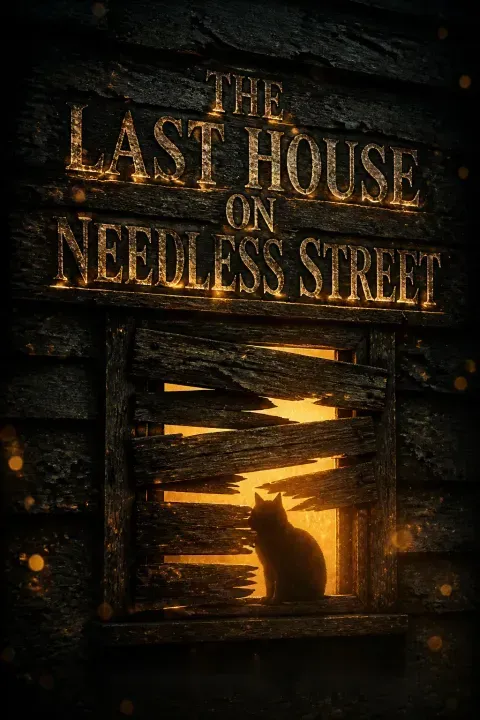


Plot Summary
The Birds Stop Singing
On the eleventh anniversary of a local girl vanishing from the lake, Ted Bannerman1 wakes to find his backyard birds murdered, caught on glue traps someone laid overnight. He constructs a makeshift gas chamber from baking soda and vinegar to euthanize the survivors, weeping as a pigeon becomes the last to die.
He catalogs his neighbors as suspects: the orange-haired man6 with his dog, the Chihuahua lady,11 the otter family. Ted1 lives in a house with plywood over every window, his world shrunk to peepholes and triple locks. His cat Olivia2 provides his only comfort, though she vanishes whenever his daughter Lauren3 visits for their intense, combative weekends.
Ted1 takes pills for lost time, visits a therapist he calls the bug man,7 and tends to buried objects in the forest he calls gods. The bird massacre feels personal, a violation that strips away his fragile safety. He adds his own name to the suspect list, just in case.
The glue traps function as a violation of sanctuary that mirrors Ted's own fractured psychology. His grief over the birds is disproportionate but genuine: these creatures were his substitute for connection. The gas chamber scene, grotesque yet tender, establishes the book's moral register where acts of mercy and destruction blur. Ted's suspect list, which includes himself, hints at the dissociation that defines him. His house, sealed with plywood and locks, externalizes the internal compartmentalization his mind has constructed to survive unspeakable abuse.
The Cat's Gospel
Olivia2 the cat narrates her origin: Ted1 found her as a kitten in a storm, cradled her in a yellow blanket patterned with blue butterflies, and a glowing cord of light bound them together. She believes the LORD assigned her to care for this damaged man.
She is an indoor cat, the windows boarded up, her only glimpse of the outside world a coin-sized peephole through which she watches a beautiful striped tabby she has fallen in love with. When Lauren3 visits, Olivia2 retreats to an old chest freezer Ted has converted into a bed.
She describes the house's sacred and sinister objects: a broken music box with a fallen ballerina, a Russian doll that imprisons smaller versions of itself, and a silver-framed photograph of Ted's parents that emanates cold malevolence. Olivia2 consults a Bible by knocking it from a table, interpreting the thud of its landing as divine guidance.
Olivia's voice accomplishes a breathtaking narrative sleight-of-hand. Her feline perspective feels authentically cat-like in its sensory priorities (smells, patches of sun, the hypnotic allure of a tail), yet it subtly plants the seeds of unreality. The cord, the LORD who speaks to her, the Bible divination: these are the coping mechanisms of a traumatized mind constructing meaning. Her devotion to Ted is the devotion of the abused to the abuser, reframed as loyalty. The peephole defines her world. The tabby she loves is likely another fragment of Ted's splintered psyche, a part of herself she cannot yet recognize.
Sisters at the Lake
Eleven years earlier, thirteen-year-old Dee Walters4 was at a lake with her six-year-old sister Lulu10 and their sleeping parents. Bored and resentful, Dee4 wandered off with a college boy named Trevor, leaving Lulu10 to dig pebbles alone on the beach. When Dee4 returned, Lulu10 was gone.
Police searched, divers combed the water, but nothing was found except one white flip-flop that mysteriously appeared in another family's beach bag. The loss destroyed Dee4's family: her mother abandoned them, her father died of a stroke, and Dee4 abandoned her ballet conservatory dreams.
Now she works at a drugstore, but her real job is hunting for Lulu.10 She calls a weary detective named Karen12 obsessively, has already targeted one innocent man in Oregon, and lives inside a single book: Wuthering Heights, a story of ghosts demanding to be let in.
Dee's chapter introduces the novel's third unreliable narrator, though the reader does not yet know it. Her grief appears authentic, her guilt over a teenage indiscretion understandable. But Catriona Ward seeds the narrative with subtle warning signs: Dee's disproportionate rage at Lulu for reading her diary, the cold satisfaction she takes in punishing her sister, the deliberate omission of what happened in the woods. The white flip-flop that Dee herself planted in another woman's bag is the novel's first forensic clue that memory and truth have been manipulated. Dee is both hunter and hunted, fleeing her own accountability.
The Needles Street Photograph
Dee4 visits a wealthy collector of murder memorabilia who possesses the only surviving copy of an old newspaper photograph. The published version showed Ted1's house being searched after Lulu10's disappearance, his face blank beside a headline reading SUSPECT'S HOUSE SEARCHED.
The uncropped original reveals the street sign: Needless Street. Dee4 remembers her father taking a wrong turn down that very road on the day Lulu10 vanished, the family car crawling past the dead end while the girls bickered in the back seat. The suspect's name, embroidered on his work shirt, is Ted Bannerman.1
Dee4 decides not to tell the police. She moves into the abandoned house next door to Ted,1 watching him through darkened windows, learning his routines. She brings him a pumpkin pie and asks to use his bathroom, stepping into his boarded-up underworld for the first time.
The photograph functions as both talisman and trap. Dee's decision to withhold evidence from the police reveals her true motivation: not justice, but personal vengeance. She needs Ted to be guilty because his guilt would absolve her own. The uncanny coincidence of her family driving down Needless Street on the day of the disappearance feels like fate, but Ward suggests a darker pattern: predators and prey are drawn to the same wounded places. Dee's move next door transforms her from investigator to stalker, mirroring the very predation she claims to oppose.
Mommy's Forest Lessons
Using his mother5's old tape recorder, Ted1 narrates a childhood memory: at age six, his beautiful French mother bought him a wooden cat key ring at a lake souvenir stand. That night she drove him into the dark forest, made him place the cat on the moss, and forced him to walk away, leaving it behind.
She called it practice for loss. After Ted1 killed his classroom mouse Snowball, she took him back to the woods, dug a grave, and explained he had inherited a sickness from her father that made him want to hurt living things.
She could never love him as a son again, only manage him as a duty. She taught him to bury broken things in the forest to make them sacred, to become gods. She sewed up his wounds herself with a suture kit, cutting him open to clean invisible infections.
Ted's mother emerges gradually as the novel's true horror. Her philosophy of deliberate attachment-breaking is a sophisticated form of torture that masquerades as wisdom. The forest lessons invert the nurturing parent-child dyad: instead of teaching resilience, she teaches despair. Her suture kit symbolizes the perverse fusion of care and violation. Significantly, she frames Ted's trauma responses as an inherited 'sickness' originating in her father, projecting her own pathology onto her child. This projection enables her abuse while maintaining her self-image as a dutiful caretaker managing a defective being.
The Scream in the Walls
Olivia2's world is invaded by an unrelenting high whine that no one else seems to hear. She tears through the house seeking its source, biting open couch cushions and clawing pillows. Under the refrigerator she hooks out a stale cracker, then something else: a child's white flip-flop, its sole caked with dried blood.
Nearby, she finds a scrap of paper in Lauren3's handwriting with a single word: Help. When Olivia2 finally locates the whine's origin, the revelation is devastating: the sound is her own claws scraping against metal.
Night-time,8 a predatory alter who shares her consciousness, grows stronger, harder to control. He has been hunting in the house while Olivia2 sleeps. The bones she finds after his feedings look increasingly, disturbingly human. Olivia2's certainty about her own nature begins to crack.
The whining sound is a brilliant symbol for dissociative amnesia made audible. It is the sound of the mind refusing to hear itself, the screech of cognitive dissonance. Olivia's discovery of blood evidence that she herself cannot explain forces her toward an impossible choice: continue believing in her identity as a cat, or accept that her reality is constructed. Night-time represents the aggressive protector alter, the part that acts when the system is threatened. His growing strength signals that the compartmentalization is failing, the walls between alters thinning.
The Neighbor's Vigil
Dee4 establishes a constant watch on Ted1's house, noting every departure, every light, every sound. She hears a young girl3 singing a song about woodlice through the walls. While Ted1 waits for her at a bar, she crawls through brambles and pries the plywood from his rear window.
Inside she finds a decaying green living room, a pink bicycle, locked cupboards, drawings of unicorns, and a chest freezer lined with blankets. She discovers no captive girl. On another night she follows Ted1 into the forest, watching him dig up and relocate objects he treats with ritual reverence: a blue dress, a vanity case, other sacred items.
But her crippling ophidiophobia paralyzes her when she hallucinates snakes in every root and branch. She flees back to her house, cursing her cowardice, and begins preparing to try again.
Dee's break-in is both a crime scene investigation and a psychic intrusion. The detail of the unicorn drawings is devastating: evidence of a child's presence that offers hope and horror simultaneously. Her failure to find a captive girl should logically exonerate Ted, but Dee has too much invested in his guilt. The forest sequence externalizes her internal conflict: the snakes she sees everywhere are projections of her own guilt, the sinuous, hidden thing she cannot face. Her phobia is not of reptiles but of the truth slithering beneath her constructed narrative of victimhood.
The Bug Man Unmasked
For months Ted1 has attended cheap therapy sessions, asking about a fictional TV show featuring a violent girl, secretly seeking help for Lauren.3 He has been prescribed outdated pills that cause hallucinations, memory loss, and rapid weight gain. At a bar one night, his therapist corners him.
The bug man7 confesses he followed Ted1 home, heard a child's voice inside the house, and recognized the symptoms of dissociative identity disorder. He wants Ted1 as the centerpiece of his unpublished book. Ted1's fury erupts. He embraces the smaller man on the roadside and squeezes until ribs crack, then flees into the woods.
At home, he screams until his throat shreds, swallows pills, and begins packing. He digs up the hunting knife he buried in the yard and hangs it on his belt. Lauren3 must be taken to the forest now, tonight, before anyone else comes looking.
The bug man represents institutional failure masked as expertise. His predatory exploitation of Ted mirrors the mother's abuse: both use their positions to extract what they need from a vulnerable person while claiming to help. The pills he prescribed are themselves a form of poison, chemically reinforcing Ted's dissociation. Ted's violent response, while terrifying, is also the first authentic self-defense we see from him after a lifetime of passivity. The scene forces an uncomfortable question: when the therapeutic relationship becomes parasitic, what does resistance look like?
Not a Cat at All
Lauren,3 locked in the dark of the chest freezer while music plays, finally reaches Olivia.2 She explains the unbearable truth: they are not separate beings sharing a house. They are alters within one body, created by Ted1's mind to survive his mother5's horrific abuse.
Olivia2's memories of being born a kitten, of Mamacat and the storm, are invented narratives covering the trauma. The chest freezer is where Ted's mother5 imprisoned him with vinegar and boiling water. The cord Olivia2 feels binding her to Ted1 is a psychological tether to the host.
Lauren3 holds the physical pain. When she tries to explain the body they share, Olivia2 refuses to believe it. In desperation, Lauren3 shows her: Olivia2 tries to take control and instead of paws she feels human hands, instead of fur she finds scarred, broken flesh.
This revelation reframes the entire narrative retroactively. Olivia's cat identity is not whimsy but a brilliant survival adaptation: a non-human self cannot be broken by human cruelty. The chest freezer, the music box, the Russian dolls all become legible as trauma symbols. Lauren's role as pain-bearer explains her rage and her desperate desire to die. The moment of physical recognition, when Olivia feels the human hands, is one of the most devastating in contemporary fiction. It is the collapse of a necessary illusion, and it demands that Olivia choose between comfortable falsehood and agonizing truth.
The Knife Finds Home
Olivia,2 now aware she shares Ted1's body, struggles to control human limbs that feel like rotting meat. Ted1 carries them in a sack through the deep woods to a waterfall where the white birch trees stand like bones. He builds a fire and falls into exhausted sleep, the hunting knife loose in his palm.
Lauren3 urges Olivia2 to act. Olivia2 reaches out with their shared hand, takes the knife, and drives it into Ted1's abdomen. The blade meets unexpected resistance, a crisp sound like biting an apple. Ted1 screams, birds explode from the trees. All the alters feel the wound: the body is dying, and they are dying with it.
Lauren3 weeps with relief. Olivia,2 horrified by what she has done, tries desperately to call the others back. Their heartbeat stumbles, slows, falters. The internal house collapses around them, walls crumbling, the sky above the stairs a storm of tar and lightning.
The stabbing is not murder but a collective suicide attempt. Lauren's logic is tragically sound: death is the only escape from a body and a life so thoroughly colonized by suffering. Olivia's horror at the act she committed under Lauren's persuasion mirrors the reader's own ambivalence. The collapsing internal house visualizes what integration therapists call 'system breakdown.' The alters' shared death experience is paradoxically their first moment of true unity. They are finally together, undivided, at the moment of extinction. This is the novel's darkest and most honest insight: sometimes healing looks indistinguishable from ending.
Dee's Confession in Venom
Dee4 follows Ted1 into the woods, blazing trees with fluorescent paint. A rattlesnake strikes her arm. She kills it with her claw hammer, but even the severed head bites again when she picks up the body. She applies a snakebite kit from Ted1's pack and stumbles onward.
She finds Ted1 bleeding out by the waterfall and tries to smother him when he speaks in a little girl3's voice. Then she runs, dying of venom, hallucinating that Lulu10 is just ahead, her sun hat bouncing. In her final moments, Dee4's constructed narrative dissolves.
She remembers everything: Lulu10 followed her into the woods, fell and cracked her skull while Dee4 made out with a boy. Dee4 fled, hid the evidence, planted the flip-flop with another family, and spent eleven years pursuing innocent men rather than face her own culpability. She dies alone in the forest, crying her sister's name.
Dee's death is both punishment and release. The rattlesnake, the thing she most feared, delivers the truth she could not face. Her phobia was never irrational: snakes symbolized the knowledge she buried. The revelation that Dee is not a grieving sister seeking justice but a guilty party fleeing accountability reframes the entire investigation narrative. The novel does not let Dee off easily, but neither does it judge her without compassion. Her final hallucination of chasing Lulu is the truth she ran from her whole life: she was always chasing the sister she abandoned, never the monster who took her. There was no monster. There was only a frightened girl who made a terrible choice.
The Ranger's Dog Finds Blood
Rob,6 the orange-haired park ranger, noticed someone vandalizing trees with toxic yellow paint and followed the trail with his dog. The dog caught a blood scent. Rob6 found Ted1 barely alive by the waterfall, pressed his hands to the abdominal wound, and refused to let him die.
At the hospital, a young doctor reveals Ted1's pills were discontinued a decade ago and caused severe side effects. The doctor also notices the extensive scarring on Ted1's body, evidence of years of unrecorded medical trauma. Someone should have intervened, he says. Ted1 begins to cry.
Meanwhile, Little Teddy,9 the child alter who holds certain memories, finally shows Ted1 what he has been trying to communicate: the night their mother5 left the house with an empty suitcase and returned with it heavy, stopping at the Chihuahua lady11's house where she had access to the storm cellar.
Rob's rescue operates as grace without condition. He does not need to understand Ted to save him; he simply acts. The doctor's observation that someone should have stopped the abuse is the novel's indictment of every system that failed Ted: child protective services, schools, neighbors. Little Teddy's memory, finally shared, is the key that unlocks the truth Ted has dissociated from. The child alter held this knowledge because the adult could not survive it: that his mother was not merely abusive but homicidal. The compartmentalization that seemed pathological was, in fact, lifesaving.
Beneath the Green Trim
Ted1 tells the exhausted detective12 about his mother.5 Authorities excavate beneath the Chihuahua lady11's house, where Ted's mother5 had a key during her neighbor's Mexico vacation. They find Lulu10's remains.
Ted's mother,5 a respected nurse, had been taking vulnerable children for years, boys from group homes and foster care who would not be intensely searched for. Lulu10 was an anomaly: a girl with a family, taken because her short hair made her look like a boy. Ted's mother5 committed suicide shortly after Lulu10's disappearance, leaving a note instructing Ted1 to bury her in the forest.
He carried her body into the glade and made her into a god alongside her blue dress, her perfume, her suture kit. Ted1 begins the agonizing process of separating his mother5's crimes from his own complicity, understanding that he was her first and longest victim.
The discovery of Lulu's body recontextualizes the entire mystery plot. The solution was never about Ted's guilt but about his mother's. The novel's central horror is not the kidnapping of children but the systematic destruction of a child's psyche by a parent. Ted's burial of his mother as a god exemplifies the traumatic bond: even after death, she demanded worship. The detail about Lulu's short hair is devastatingly random, a cascade of coincidences that destroyed a family. The narrative asks its most difficult question here: what does justice look like when the perpetrator is dead, and her primary victim is too fragmented to testify?
Strawberries in the Sunlight
Months later, Ted1 and Rob6 have torn the plywood from the windows. The house fills with light. Ted1 works three days a week washing dishes at a diner, hoping to become a fry cook. Rob6 brings beer and sits with him in the backyard while the tabby cat (clawless, abandoned, survivor) winds around their chair legs.
The alters are learning to coexist rather than hide from one another. Lauren3 sometimes takes the body to ride her pink bicycle. Night Olivia8 hunts in the internal world but no longer frightens the others.
On a fall morning, Ted1 makes strawberry, basil, and balsamic vinegar sandwiches, describing each step aloud so all the alters can share the sensory experience. They eat together in the yard while birdsong floods the trees. The birds have returned. Ted1 visits the lake with Rob,6 burying his feet in the sand and offering silent witness to the little girl who was lost.
The strawberry sandwich ritual is the antithesis of Ted's mother's teachings. Where she taught that attachment must be severed, Ted learns that experience must be shared among all parts of the self. The removal of the plywood literalizes the end of concealment. The diner job, mundane and hopeful, represents integration into a world Ted has hidden from for decades. Rob's quiet companionship, undemanding and steady, models a form of love that does not require extraction. The birds' return closes the circle opened by the novel's first violence. Ted cannot be cured, the novel suggests, but he can be whole. Wholeness is not the absence of fragmentation but the ability of the fragments to coexist in sunlight.
Analysis
The Last House on Needless Street operates as a Trojan horse: it enters the reader's mind disguised as a horror novel about a kidnapped girl and a dangerous recluse, then reveals itself as a radically empathetic exploration of dissociative identity disorder and the mind's capacity to survive annihilation. Catriona Ward pulls off one of the most structurally audacious narrative feats in recent fiction. Three first-person narrators, Ted,1 Olivia,2 and Lauren,3 all live in the same house, sharing the same body, none of them fully aware of this fact until the novel's midpoint. The reader's dawning realization parallels Olivia2's own: the cat is not a cat, the daughter is not a daughter, and the monster is not the man but the mother who made him.5
The novel's deepest subject is not murder but motherhood as a site of absolute horror. Ted's mother,5 with her suture kit and her philosophy of preemptive loss, embodies a predation more intimate than any stranger danger. She does not kill her son. She teaches him that he is already dead, that he was born monstrous, that his only hope is concealment. The multiple personalities she inadvertently creates are not a sickness but an immune response. DID, in Ward's handling, is what love looks like when the self has no other recourse: the mind dividing itself so that some part of it might remain unviolated.
Dee4 functions as the reader's shadow, the part of us that wants simple narratives of villains and victims. Her guilt over Lulu10's death drives her pursuit of Ted,1 but the novel refuses to let her story serve as absolution. She is not Ted1's opposite but his mirror: another person whose trauma has frozen her in a loop of self-destruction disguised as purpose. Her death by snakebite completes the inversion. The monster she hunted was never in Ted1's house. It was always in her own memory.
The novel's final register is neither horror nor tragedy but something rarer: a clear-eyed hope that does not require forgetting. Ted1 removes the plywood. He gets a job washing dishes. He makes a strawberry sandwich and describes it aloud so all his alters can taste it together. Integration, the novel suggests, is not about becoming one person but about learning to share the sunlight. The birds return to the feeders. The cat who could not go outside2 now walks in the fall leaves. The house on Needless Street, stripped of its boards, fills with ordinary light. This is not a cure. It is something truer: a life, ongoing, shared among the many selves that pain created and that patience is slowly, carefully bringing home.
Review Summary
The Last House on Needless Street is a mind-bending psychological thriller that has garnered widespread acclaim. Readers praise its intricate plot, unexpected twists, and unique narrative style. The story follows Ted, a reclusive man living with his daughter and cat, and Dee, a woman searching for her missing sister. Many reviewers found the book confusing initially but were ultimately captivated by its originality and emotional depth. The novel's marketing strategy, which reveals little about the plot, has contributed to its intrigue and popularity among readers.
People Also Read




Characters
Ted Bannerman
Fragmented survivor hiding from the worldA large, bearded man in his early thirties living in a dilapidated house on a dead-end street. Ted boards his windows with plywood, triple-locks his doors, and takes mysterious pills for lost time. He loves birds, monster trucks, and his cat Olivia2 with an intensity that substitutes for human connection. His mother5, a beautiful French nurse, subjected him to horrific abuse disguised as medical care, sewing his wounds herself and imprisoning him in a chest freezer. His mind splintered to survive, creating alternate identities that hold different memories and functions. Ted records recipes on a tape recorder, buries objects in the forest to make them sacred, and carries the belief that he is monstrous. He is gentle, confused, desperate for love, and entirely unaware of the truth about his own consciousness.
Olivia
The cat who saves her humanA sleek black cat with cocktail-olive green eyes and a delicate white stripe down her chest. Olivia believes she was rescued by Ted1 as a kitten during a storm, and that a glowing cord binds them together by divine decree. She is deeply religious in her own feline way, consulting a Bible by knocking it off a table and interpreting the verse it falls open to. She loves Ted1 fiercely, endures his drunken moods, and hides when his daughter Lauren3 visits. Through her peephole she watches a beautiful tabby cat outside and experiences what she understands as romantic love. Olivia is perceptive, vain about her appearance, and genuinely believes she is a cat. Her voice is prim, teacherly, and utterly sincere.
Lauren
The angry daughter who wants to dieA difficult pre-teen who visits Ted1 periodically, rides a pink bicycle through the house shouting capital cities, draws pictures of cats, and alternates between clinging affection and screaming hatred. Lauren cannot use her legs and must be carried. She chafes against Ted1's overprotective rules, has tried to poison him, and once wrote a plea for help inside a pair of leggings during a disastrous trip to the mall. She sings songs about woodlice, pulls out her own hair, and beneath her fury carries an exhaustion so profound she longs for death. She holds memories and physical sensations Ted1 cannot bear to feel, and her anger is proportional to the pain she has absorbed on his behalf for decades.
Dee Walters
Obsessed sister turned vigilante neighborA young woman in her mid-twenties who moves into the abandoned house next door to Ted1. Eleven years ago, her six-year-old sister Lulu10 vanished from a lakeside beach while Dee was distracted with a boy. The loss destroyed Dee's family: her mother left, her father died of a stroke, and Dee's ballet conservatory dreams evaporated. She has spent the intervening years hunting for answers, developing an encyclopedic knowledge of child abduction cases, and already targeting one innocent man in Oregon. Dee only reads one book, Wuthering Heights, which she treats as a sacred text about the permeability of boundaries between the living and the dead. She is methodical, determined, and running from a truth she has buried so deep she almost believes her own lies.
Ted's Mother
The nurse who manufactured woundsA beautiful Frenchwoman from a village in Brittany called Locronan, who worked as a nurse. She spoke with a faint accent, wore floating blue organza dresses, and maintained an aura of elegant melancholy. She believed her father had a hereditary sickness that created a hunger to hurt living things, and she became convinced she had passed this to Ted1. Her abuse was systematic and disguised as care: she cut him open, stitched him up, imprisoned him in a chest freezer with vinegar, and taught him that love was rehearsal for loss. She was fired from her hospital job under suspicious circumstances involving children. She committed suicide, leaving Ted1 to bury her in the forest.
Rob
The ranger who refuses to look awayA park ranger with hair the color of orange juice who walks his big dog Champ past Ted1's house each morning. He is quiet, practical, and carries his own history of loss: his twin brother brutally beat his partner when he mistook him for Rob, ending their relationship forever. He prefers early mornings, his dog, and the woods. When he finds Ted1 bleeding out in the forest, he refuses to let him die, pressing his hands to the wound and staying at the hospital for days. He brings Ted1 clothes, beer, and an undemanding companionship that gradually becomes the first healthy relationship of Ted1's life. He does not use unnecessary words.
The Bug Man
Exploitative therapist seeking a case studyA round, bespectacled therapist who offers cheap sessions and prescribes outdated medication. Ted1 calls him the bug man because he cannot remember names and the man resembles a stag beetle. He has been writing a book on dissociative identity disorder for years and recognizes Ted1 as the perfect case study. He follows Ted1 home, hears a child's voice inside the house, breaks in to investigate, and eventually confronts Ted1 at a bar, demanding to be given access to the 'girl.' He is a thief in multiple senses: he steals cufflinks, he steals his patient's trust, and he wants to steal Ted1's story for professional gain. His exploitation mirrors the mother5's abuse.
Night-time / Night Olivia
The predator who protects the systemA large, black, predatory presence who shares consciousness with Olivia2. Night-time hunts when the system is threatened or hungry, killing and consuming prey that Olivia2 finds as picked-clean bones afterward. He is stronger than Olivia2, harder to control, and represents the aggressive survival instinct that the softer alters cannot access. After the system nearly dies, he transforms into Night Olivia, a more integrated version who retains hunting prowess but no longer frightens the others. He warned against Lauren3's plan to kill the body, sensing it would be self-destruction rather than liberation.
Little Teddy
The child who remembers what happenedTed1's child alter, preserved at approximately six years old. He holds memories the adult Ted1 cannot access, including the night he witnessed his mother5 leaving the house with an empty suitcase and returning with it heavy, stopping at the Chihuahua lady11's house. Little Teddy communicates through feelings rather than words, guiding the adult body to stand repeatedly in front of the Chihuahua lady11's house, trying to signal what he knows. He is the one who kept trying to tell the truth, placing notes in Ted1's pockets and tugging at the edges of consciousness. His memory finally reaches Ted1 in the hospital.
Lulu Walters
The missing girl who was never found aliveDee4's six-year-old sister, whose full name is Laura. She had short brown hair, hazel eyes, and loved reading minds, collecting pebbles, and petting cats. She was wearing a bathing suit, denim shorts, and a red tank top when she vanished. She called her sister Dee Dee4, followed her everywhere, and was deeply annoying in the way of younger siblings. Her disappearance is the event around which all other events orbit.
The Chihuahua Lady
Neighbor whose house hid a secretAn older neighbor who lives in the yellow house with green trim. She has been Ted1's neighbor for decades, was close friends with his mother5, and owns a succession of small dogs. She went on vacation to Mexico years ago, giving Ted's mother5 a key to water her plants. She has recently returned from an Atlantic cruise with a younger boyfriend. Her storm cellar was used without her knowledge.
Detective Karen
The exhausted investigator who suspected DeeA weary, possum-faced detective assigned to Lulu10's case for over a decade. She has watched Dee4 grow from a traumatized teenager into a volatile adult, and she suspects Dee4 knows more than she has told. She once gently pressed Dee4 to confess, noting that the white flip-flop planted in another family's bag suggested deliberate concealment. Her relationship with Dee4 soured after Dee4 targeted an innocent man in Oregon.
Plot Devices
The Tape Recorder
Captures alters speaking their truthsTed's mother5's old cassette recorder with a distinctive red piano-key button. Ted1 uses it to record recipes, believing he is preserving them in case he disappears. Unknown to him, Olivia2 also uses it to narrate her thoughts, her voice emerging on the tape as a prim, feline consciousness. The recorder captures multiple alters speaking without Ted1's awareness, and Lauren3 records a desperate plea for help on an old tape labeled 'Notes' in her grandmother's handwriting. At the novel's end, Ted1 plays back the cassettes and hears Olivia2's voice for the first time, realizing his cat could speak. The device literalizes the novel's central conceit: each alter has a voice, a perspective, a story worth hearing.
The Chest Freezer
Prison, sanctuary, and doorway between altersAn old, broken chest freezer in Ted1's kitchen, unplugged and lined with blankets. Olivia2 believes it is her beloved crate where she naps safely. Lauren3 experiences it as the dark prison where Ted's mother5 confined him with vinegar and boiling water, and where Ted1 later confines her when she misbehaves. The freezer has air holes punched in the lid. It functions as a psychological doorway: entering it can trigger switches between alters. Ted's mother5 originally used it for 'disinfecting baths' that were actually torture. The freezer represents the paradox of trauma: the place of greatest suffering becomes, through dissociation, a place of refuge. When Olivia2 finally looks inside and sees it empty, she understands she has never been physically separate from Lauren3.
The Gods in the Forest
Burial ritual transforms victims into sacred objectsTed's mother5 taught him that burying things in the forest makes them sacred, transforming them into gods. As a child, Ted1 buried the classroom mouse Snowball in a shoebox and felt it become powerful. After his mother5's suicide, he carried her body into the glade of white birch trees and interred her alongside her blue dress, her perfume, and her suture kit. Over the years he has buried other objects there, each holding memories. When development threatens the glade, Ted1 digs up the gods and relocates them to a waterfall. The ritual is both a coping mechanism and a form of concealment: the 'gods' are also evidence. The gods hum with power, drawing people toward them, a supernatural explanation for the coincidences that cluster around Needless Street.
The Silver Cord
Visible bond between alters and hostOlivia2 perceives a glowing cord of light connecting her to Ted1, varying in color from gold to purple to dirty yellow depending on her emotional state. It tightens when she tries to escape, burns when she steps toward the door, and she believes the LORD bound her with it for a sacred purpose. The cord is Olivia2's psychological interpretation of the connection between alter and host, a visual metaphor for their shared existence. When she finally takes control of the body and leaves the internal house, the cord burns with white-hot fire, then dissolves entirely. Its absence afterward signifies the new relationship between alters: no longer bound by trauma-forged dependency but by choice and mutual recognition.
The Blue Dress
Color triggers Ted's mother-complexTed's mother5 wore a floating blue organza dress that became indelibly associated with her in his mind. When Ted1 seeks a romantic partner, he always asks women to wear blue, seeking to recreate the mother he lost and cannot grieve. His dating profile uses a stock photo of a smiling man. He waits in bars while women in blue arrive, but he never approaches them, or he does so in ways that frighten them. The blue scarf he takes from one woman becomes a keepsake. After his mother5's death, Ted1 buried her blue dress in the forest as one of the gods. The fixation on blue signals his arrested psychological development: he cannot form adult attachments because he is still trying to resolve his relationship with his mother5.
Download PDF
Download EPUB
.epub digital book format is ideal for reading ebooks on phones, tablets, and e-readers.








































