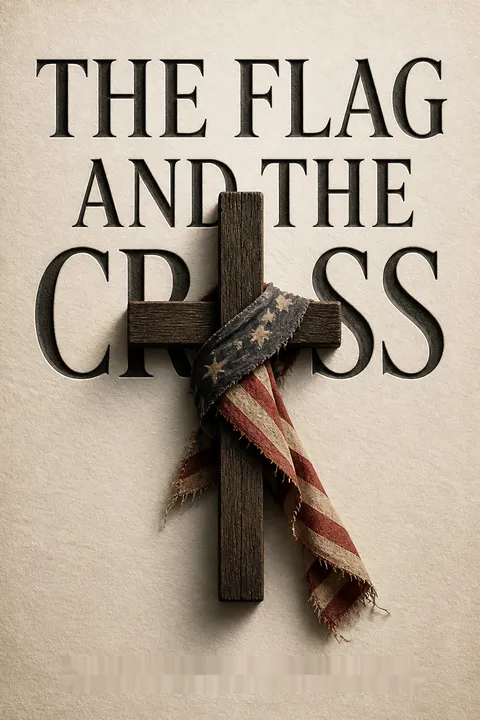

Key Takeaways
1. White Christian Nationalism: America's "Deep Story"
White Christian nationalism is a “deep story” about America’s past and a vision of its future.
A foundational myth. White Christian nationalism (WCN) is not merely a political ideology but a deeply ingrained narrative, a "deep story," that shapes how many Americans perceive their nation's identity and destiny. This story posits that America was founded as a Christian nation by white, traditional Christians, whose principles are enshrined in its founding documents. It asserts that the United States is uniquely blessed by God and holds a special role in humanity's divine plan.
Heroes and villains. Within this narrative, white conservative Christians, typically native-born men, are cast as the heroes—the rightful heirs of wealth and power. Conversely, racial, religious, and cultural outsiders are portrayed as villains, conspiring to undermine the nation's blessings and take what rightfully belongs to the "us." This "us vs. them" dynamic often culminates in conflicts, sometimes violent, aimed at restoring white Christians to their perceived rightful place atop America's racial and religious hierarchy.
A myth, not history. Despite its pervasive influence, this deep story is largely a myth, often at odds with historical facts. The nation's founders held diverse religious views, from deism to various Protestant denominations, and the Constitution itself makes no mention of God or Christian principles. Furthermore, much of America's early prosperity was built on stolen land and the brutal institution of slave labor, facts often overlooked or reinterpreted within the WCN narrative.
2. The Racialized Core of Christian Nationalism
When that link is missing, as it is among Black Americans who score high on our Christian nationalism measure, the connection to the political vision is broken.
A racial dog whistle. While the term "Christian nationalism" might seem purely religious, for many white Americans, "Christian" functions as a racialized dog whistle, signaling a shared ethnocultural identity. Our research shows that indicators of Christian nationalism, which contain no explicit racial language, strongly correlate with anti-white discrimination beliefs and anti-Black discrimination disbelief among white Americans. This connection is largely absent among Black Americans, highlighting the implicit racial component.
Ideologically driven misinformation. Adherents of white Christian nationalism often hold factually incorrect beliefs about American religious history, such as the divine inspiration of the Constitution or the illegality of public school prayer. This isn't mere ignorance; it's an ideologically driven reinterpretation of history that elevates the preeminence and perceived persecution of Christianity, particularly among whites. This selective understanding of history extends to:
- Questioning the centrality of slavery to the Civil War.
- Opposing the removal of Confederate monuments.
Populism and scapegoating. This racialized understanding of "Christian" identity fuels a right-wing populism characterized by scapegoating minorities, distrust in experts and mainstream media, and a preference for strongman leaders. During the COVID-19 pandemic, for instance, white Christian nationalism correlated with:
- Blaming Chinese Americans and immigrants for the virus.
- Distrusting medical experts while trusting Donald Trump.
- Prioritizing "liberty" and the economy over public health measures.
3. The Spirit of 1690: Forging White Protestant Chosenness
The death of that vision went hand in hand with the birth of a new vision: a social order dominated by white Protestant men and defined in opposition to “red savagery,” Black bondage, and Roman popery.
An inflection point. While 1619 marks the beginning of Black slavery and 1776 the nation's founding, 1690 represents a crucial inflection point where racism, apocalypticism, and nationalism first fused into America's deep story. This era saw the suppression of alternative visions for the New World—visions of coexistence with native peoples, non-racial forms of labor, and religious pluralism. Instead, a new, exclusionary vision took hold.
Two original sins. The formation of white Christian nationalism was rooted in two "original sins": the violent expropriation of indigenous peoples and the enslavement of kidnapped Africans. "Whiteness" was defined not only in opposition to "blackness" but also to "redness," and religiously, as Protestant versus Catholic or "heathen." This "Spirit of 1690" sought to impose white control over non-white bodies, indigenous lands, and all political institutions.
Theological justifications. Puritan leaders like Cotton Mather crafted a narrative of "white Puritan chosen-ness," viewing New England as a "New Israel" and wars with natives as holy wars, divine punishment for dissent. Simultaneously, in the Southern colonies, racist theologies like "pre-Adamism" and "Noah's Curse" emerged to justify the hereditary enslavement of Black people. While figures like Roger Williams advocated for "meer civility" and Samuel Sewall argued for universal liberty, their inclusive visions were largely sidelined.
4. From Frontier to Empire: WASP Imperialism's Evolution
The new Spirit differed from the Old in at least three important ways.
War as a crucible. The French and Indian Wars (1688-1763) solidified a British and Protestant version of white Christian nationalism, forging "whiteness" through alliances against Catholic French and native tribes. The American Revolution and War of 1812 then "Americanized" this narrative, linking white freedom to male violence, particularly against Black and native populations, as seen in the Star-Spangled Banner's third stanza.
Manifest Destiny and racial hierarchy. The 19th century saw WCN adapt to westward expansion and the rise of American empire. The "Lost Cause" myth after the Civil War introduced themes of white victimhood and vengeance, while a shift to "postmillennial" theology combined with the "Promised Land" story to form "Manifest Destiny"—a divine plan for white Americans to "civilize" the continent. This era also brought a "scientific" and more nuanced understanding of whiteness, with "White Anglo-Saxon Protestants" (WASPs) at the top, justifying their dominance over new European immigrants and non-white populations.
Imperialism and "righteous violence." The Spanish-American War (1898) marked the beginning of American empire, transforming WCN into "WASP Imperialism." This new spirit portrayed imperial adventurism as noble self-sacrifice, spreading "freedom" through military violence. Lynching rituals in the Jim Crow South served as gruesome public ceremonies, reinforcing racial order and uniting whites through their complicity in extrajudicial murder, often with the tacit or explicit blessing of Christian clergy.
5. The Rise of Christian Libertarianism
Economic self-interest and individualism are not just “rational” or “efficient,” they are what “real Americans” and “good Christians” value.
A new fusion. In the mid-20th century, white Christian nationalism underwent another significant transformation, integrating a strong strain of libertarian, free-market capitalism. This "Christian libertarianism" emerged from a confluence of conservative businessmen, theologians, and Southern white racists seeking new ways to defend existing hierarchies. Figures like Kevin Fifield promoted a pro-business, anti-communist message, while politicians like Strom Thurmond and Jerry Falwell adopted libertarian rhetoric—emphasizing "free markets" and "private property"—as a "polite," color-blind way to resist demands for racial equality.
Personal accountability. At its core, Christian libertarianism champions "personal accountability," asserting that one's life circumstances are solely the result of individual choices, irrespective of historical or social context. This worldview posits that the market, like God, holds individuals accountable for their actions, rewarding virtue and punishing vice. Government regulation is seen not only as inefficient but as un-Christian, with federal taxation for redistribution even deemed a form of "theft."
Systematic theology and popular appeal. The "Christian Reconstructionist" movement, led by figures like Rousas John Rushdoony and Gary North, provided a systematic theological framework for this fusion, synthesizing Calvinist theology with neoclassical economics. This intellectual foundation found mass appeal through popularizers like Dave Ramsey, whose "austerity gospel" decries taxes and "Social Insecurity," reinforcing the idea that economic self-interest and individualism are core values for "real Americans" and "good Christians."
6. Trumpism: The Secularized, Reactionary Face of WCN
MAGA was white Christian nationalism shorn of biblical references, but with the same deep story.
A semi-secularized narrative. Donald Trump's "Make America Great Again" (MAGA) narrative can be understood as a semi-secularized, yet deeply reactionary, version of white Christian nationalism's deep story. While largely devoid of explicit biblical references, Trump's rhetoric mirrored WCN's apocalyptic themes, portraying life as an endless battle against "disaster" and hidden conspiracies. This resonated strongly with white Christian nationalists, whose own "End Times" narratives often involve cosmic struggles between good and evil.
Blurring religious and political identity. The MAGA era further blurred the lines between religious and political identity. The term "evangelical" increasingly became a marker of Republican political affiliation rather than purely theological belief, even attracting individuals outside traditional evangelical Protestant traditions. This "civilizationist" religion prioritizes a shared ideological and political tribe over strict religious conviction, as evidenced by the significant number of self-identified "secular" or non-Christian individuals who still identify as "evangelical" or believe America should be a "Christian nation."
Blood metaphors and "politically incorrect" rhetoric. Trump's "politically incorrect" language brought back explicit and implicit "blood metaphors" that had been diluted in earlier versions of WCN. His remarks about "shithole countries," "pig's blood," and preference for immigrants from Norway (a "white" nation) resonated with white nationalist sentiments. His signature policies—the "Muslim ban" and the border wall—were framed as protecting the "pure blood" of the national body from "pollution" by non-white or non-Christian "outsiders," echoing historical fears of racial contamination.
7. Freedom, Order, and Righteous Violence
The general principle is this: white men must sometimes exercise righteous violence to defend (their) freedom and maintain social (and racial) order.
The holy trinity. At the heart of white Christian nationalism lies a peculiar nexus of "freedom," "order," and "violence." Freedom is understood in a libertarian sense—freedom from restrictions, especially by the government. Order is conceived hierarchically, with white Christian men at the apex. Violence is seen as a righteous and necessary means for these white Christian men to defend their freedom and restore this perceived natural order, particularly against those deemed "others."
"Freedom for us." This concept of freedom is inherently exclusionary. When white Christian nationalists prioritize "religious freedom," it often translates to the liberty to deny minority grievances and privilege their own, as seen in their opposition to LGBTQ+ rights or mask mandates. Our data shows that white Americans who prioritize "religious freedom" in their voting decisions are more likely to believe Christians face discrimination while transgender persons do not, illustrating a "freedom for us" mentality.
"Righteous violence" for "them." While white Christian nationalism is not associated with generalized violence, it strongly predicts support for "righteous violence" when wielded by authorities or "good guys" against perceived threats. This includes:
- Support for gun-toting individuals against "bad guys."
- Increased use of the death penalty.
- "Any-means-necessary" policing.
- Even torture as an interrogation technique.
This selective endorsement of violence underscores the belief that white Christian men have the "freedom" to control "problem populations" to maintain a social order that privileges "people like us."
8. WCN's Antidemocratic Impulse
This is why white Christian nationalism has become a serious threat to American democracy, perhaps the most serious threat it now faces.
Excluding "the people." White Christian nationalism poses a fundamental threat to liberal democracy by defining "the people" in an ethno-nationalist way, excluding many Americans based on race, religion, or birthplace. This narrow definition primes followers to embrace narratives like Trump's "Big Lie" about a "stolen election," believing that if "real" people had voted, their preferred candidate would have won. This fuels demands for "election integrity" reforms that disproportionately restrict ballot access for opponents.
Voter suppression as a strategy. The antidemocratic sentiment within WCN has deep historical roots, with figures like Republican strategist Paul Weyrich openly advocating for limiting voter participation to maintain power. Today, this translates into widespread support among white Christian nationalists for policies that make voting harder, such as stringent ID requirements, reduced early voting, and purging voter rolls. Our data shows a strong correlation between WCN adherence and the belief that it's "too easy to vote," even after accounting for political partisanship.
Unequal rights and authoritarian leanings. WCN fosters a philosophy of unequal rights—"rights for me, but not for thee." This is evident in the hypocrisy of decrying "cancel culture" while simultaneously banning "Critical Race Theory" or removing historical figures like Martin Luther King Jr. from curricula. Furthermore, illiberal and authoritarian currents are growing among conservative Christian intellectuals, with some advocating for "integralism" (state subject to church authority) or a return to "theocracy," signaling a willingness to reject liberal democracy in favor of "stronger measures" to restore perceived hierarchies.
9. The Shifting Landscape of Modern WCN
Today, white Christian nationalism is shifting its shape yet again.
Evolving threats and strategies. White Christian nationalism is not static; it continually adapts to defend and restore racial, religious, and political hierarchies. Its current evolution includes several key shifts:
- Nativism: While anti-Black animus remains central, anti-immigrant nativism has surged, fueled by "great replacement" conspiracy theories that claim left-wing elites are intentionally replacing white Christian voters. This strategy aims to mobilize the white base and appeal to American-born Blacks and Hispanics.
- Civilizationism: The boundaries of "Christian" are blurring, becoming more a marker of ideological and political tribal identity than strict religious conviction. This "civilizationist" religion sees increasing overlap between religious prophecy beliefs (like End Times) and secular conspiracy theories (like QAnon).
- Isolationism: The meaning of "America" and "patriotism" is reverting from internationalism to isolationism, with a focus on "strong borders" and China as the primary external enemy. This new nationalism is often given a theological rationale, asserting that God intends humanity to be divided into nations with walls.
Grievance and messianism. Two additional elements define modern WCN:
- Grievance: A profound shift from triumphalism to a sense of victimhood and persecution. White Christian nationalists now perceive themselves as playing defense, "fighting" rather than "winning," and fear increasing discrimination, especially under Democratic leadership.
- Messianism: A growing tendency to view political leaders, particularly Donald Trump, as saviors or protectors. Trump, despite his secular persona, was seen by many as "the chosen one" or "anointed one," destined to rescue white Christians from extreme victimization and redeem America from its perceived decline.
10. The Looming Threat: Jim Crow 2.0
The more probable outcome, should Trump and his allies return to power, is what the South African sociologist Pierre Van Den Bergh calls Herrenvolk democracy, which he defines as “a parliamentary regime in which the exercise of power and suffrage is restricted, de facto and often de jure, to the dominant group,” which understands itself as a superior race or culture, and in which other races and subcultures are subjected to varying degrees of legal discrimination and violent subjugation.
A test run for 2024. The January 6th insurrection was not an isolated event but a "test run" for future attempts to overturn democratic outcomes. Trump and his allies have learned from their failures, systematically replacing dissenting Republican officials and judges with loyalists. Given the close margins in American elections, manipulating results in a few key states could be enough to seize power.
Herrenvolk democracy. While a full-blown tyranny like Putin's Russia is unlikely due to America's decentralized power structures and diverse military/police forces, a more probable outcome is a "Herrenvolk democracy," or "Jim Crow 2.0." This regime would restrict power and suffrage to a dominant group (white Christian nationalists), subjecting other races and subcultures to legal discrimination, public humiliation, and vigilante violence. Mass deportations of non-white, undocumented immigrants could make "Brown the new Black."
Erosion of democratic norms. This regime would exploit existing antidemocratic mechanisms like the Electoral College and partisan gerrymandering, which disproportionately empower the Republican Party. White Christian nationalism strongly correlates with support for these mechanisms and opposition to reforms like the popular vote. Such a regime would also systematically undermine judicial independence, centralize executive power, and use corruption as a tool of political control, leading to governmental incompetence and economic decline.
11. A Path Forward: A Popular Front for Democracy
What is needed now is a popular front stretching from democratic socialists such as Alexandria Ocasio-Cortez and Bernie Sanders not only to classical liberals such as Bill Kristol and David French but also to cosmopolitan #NeverTrump evangelicals like Russell Moore, Beth Moore, or Tim Keller.
America at a crossroads. The United States stands at a critical juncture, facing a choice between a multiracial democracy and continued white dominance. Historically, America has often veered back to white dominance after periods of progress. The success of the American experiment—building a diverse nation and sustaining civic engagement—is not guaranteed and depends on the choices made today.
Confronting historical truths. For white Christians, charting a path forward requires confronting their own morally complex history, acknowledging how white Protestant theology has justified racism, imperialism, and exploitation. This means reckoning with "the sins of the fathers" and drawing upon alternative traditions within American Christianity, such as the civility and toleration advocated by Roger Williams or William Penn.
A broad alliance. A popular front in defense of liberal democracy is essential, requiring an alliance that spans the ideological spectrum from democratic socialists to #NeverTrump evangelicals. Despite deep policy disagreements, this alliance must unite around core liberal democratic principles:
- Voting rights.
- Racial justice.
- Freedom of religion.
- The rule of law.
Secular progressives must also confront their own historical prejudices against organized religion and their own "deep story" of elite-led enlightenment, which can inadvertently fuel populist resentment. The future of American democracy hinges on these alliances and the collective will to reject white Christian nationalism.
People Also Read

Download PDF
Download EPUB
.epub digital book format is ideal for reading ebooks on phones, tablets, and e-readers.








































