
Key Takeaways
1. The Rise of American Authoritarianism: A New Threat to Democracy
This movement—or more precisely, my investigation into this movement from a wide but necessarily limited range of experiences and perspectives—is the subject of this book.
A profound rejection. A new, distinctly American variant of authoritarianism or fascism has emerged, fundamentally rejecting the Enlightenment ideals of equality, pluralism, reason, and democratic representation upon which the American republic was founded. This movement asserts that America is dedicated to a particular religion and culture, betrayed by an insidious elite, and must be "redeemed" by any means necessary. It believes certain Americans have a right to rule, while others must obey.
Rooted in inequality. The crisis is deeply rooted in massive economic inequality over the past five decades, transforming capitalist America into a form of oligarchy where the top 0.1% doubled its wealth share while the bottom 90% lost a corresponding share. This disparity fuels unreason, status anxiety, and susceptibility to conspiracism and disinformation, creating a politics of rage and grievance that is more a pathology than a program.
A serious, direct attack. This movement is not seeking a seat at the table but aims to burn down the house of American democracy, actively promoting division and disinformation. It represents the most serious threat to American democracy since the Civil War, with its various elements thriving on growing educational, cultural, regional, racial, religious, and informational divides.
2. Dark Money Fuels the Antidemocratic Machine
The distinguishing feature of the Funders is that they have chosen to invest their fortunes in the subversion of democracy.
Billionaire benefactors. A minute number of super-rich individuals, beneficiaries of escalating wealth concentration, actively fund the antidemocratic movement, cynically believing that manipulating the masses through disinformation will enhance their prosperity. These "Funders" include figures like Betsy DeVos, the Wilks brothers, Rebekah Mercer, Tim Dunn, the Koch brothers, and secretive billionaires like Barre Seid, who made a $1.6 billion donation to a trust controlled by Leonard Leo.
Strategic investment. These immense resources are channeled through a powerful web of organizations, networks, and think tanks with anodyne names like the Federalist Society and the Heritage Foundation. This "dark money" infrastructure supports climate denial, school privatization, anti-union efforts, and judicial capture, ensuring that the movement's grievances are weaponized and hurled against established democracy. The National Christian Foundation and DonorsTrust are key intermediaries, disbursing billions to right-wing and religious causes.
Outsourcing ideology. Many Funders, often operating on simplistic, reactionary ideas, outsource their thinking to "Thinkers" – a professional class from elite institutions who craft the movement's intellectual claims. This dynamic creates a system where the wealthy buy an ideology that justifies their power and privilege, even if it means destroying democratic institutions. The ultimate goal is to replace a state that pursues the common good with one that serves private interests.
3. The War on Public Education: A Strategic Assault
Our goal is not to just throw stones. Our goal is to take down the education system as we know it today.
Undermining public trust. Groups like Moms for Liberty, backed by significant funding from figures like Julie Fancelli and organizations like the Leadership Institute, actively destabilize public education by promoting "parents' rights" and attacking curricula related to LGBT themes, sex education, and critical race theory. Their tactics involve disrupting school board meetings, challenging books, and spreading misinformation to foster "universal public school distrust."
Privatization and profit. The underlying agenda is to dismantle public education and replace it with publicly funded private academies and taxpayer-subsidized homeschooling. Entrepreneurs like Erika Donalds, wife of Congressman Byron Donalds, create for-profit companies and non-profits that stand to benefit from school privatization schemes, often aligning with institutions like Hillsdale College. This diverts public funds into private and religious entities.
Historical roots of hostility. The hostility to public education dates back to the Reconstruction era, with white supremacists opposing integrated schools and promoting voucher schemes for private, racist religious academies. Figures like Rousas J. Rushdoony and Jerry Falwell Jr. demonized public schools as "government schools" or "temples of secular humanism," a narrative that persists today to justify their destruction.
4. "Wokeism" as the Unifying Lie of the New Right
The entire Project 2025 is a plan to unite the conservative movement and American people against elite rule and woke culture warriors.
The existential enemy. The "war on woke" serves as the central, unifying lie of the New Right, framing "wokeism" as a totalitarian, existential threat to Western civilization. This amorphous enemy is depicted as a "globalist Borg" or "woke communism" that has captured elites, institutions, and even the military, seeking to "cancel" right-thinking people and impose a "blasphemous creed."
A convenient scapegoat. This narrative allows for the demonization of diverse groups—cosmopolitan, overeducated, gender-fluid, anti-Christian—and deflects from the movement's own antidemocratic goals. It's a highbrow form of identity politics, where one segment of the upper-middle class expresses deep resentment and fear towards another, projecting victimhood onto themselves while organizing oppression.
Justifying extreme measures. The perceived "permanent emergency" of "wokeism" justifies any means to "annihilate" its power, including political violence and overturning elections. Project 2025, a comprehensive plan for a conservative presidency, explicitly frames its agenda as a total war on "woke ideology," demanding the "deconstruction of the administrative state" and the imposition of a specific religious and patriarchal order.
5. The Claremont Institute: Architects of Reactionary Nihilism
The world the men of Claremont think they inhabit—as opposed to the vision they wish to promote among the public—appears to recognize no truth beyond power and no value other than victory.
Intellectual hub of reaction. The Claremont Institute, funded by figures like Thomas D. Klingenstein, serves as a key intellectual center for the New Right, providing a platform for figures like Michael Anton, Christopher Rufo, and John Eastman. Once known for high-toned discourses on America's founders, it now legitimizes violence and illiberalism, embracing a worldview where "natural right" often translates to "the right to do whatever nature does not prevent you from doing."
Schmittian influence. Claremont's intellectual trajectory reveals a deep, if often unacknowledged, influence from Carl Schmitt, a Nazi political theorist who emphasized the "friend/enemy" distinction and the sovereign's right to act in a "state of exception." This framework justifies extreme measures against perceived domestic enemies ("the woke") and views the modern administrative state as a tyrannical force suppressing genuine politics.
Manliness and misogyny. The institute's publications, like the American Mind, are rife with misogynistic and racist content, promoting figures like "Raw Egg Nationalist" and Scott Yenor, who advocate for male dominance and blame feminism for societal ills. This "manliness" agenda, often dressed in pseudoclassical rhetoric, serves to dehumanize opponents and justify a return to patriarchal hierarchies, even fantasizing about "warlords" and "Red Caesars."
6. Spirit Warriors: Weaponizing Faith for Political Power
This is a strategy that is executable … this is doable and it is so strategic in its nature that county by county … across America this can be done.
A surging religious style. A hotter, more reactionary style of religion, often Pentecostal and charismatic, is surging in America, cutting across traditional denominational divides. This "spirit warrior" movement, exemplified by figures like Julie Green, Sean Feucht, and Lance Wallnau, thrives on political and economic instability, demonizing opponents as "demonic" and engaging in "spiritual warfare" for political ends.
Dominionism and conspiracy. Central to this movement is the ideology of Seven Mountains Dominionism, which asserts that Christians should dominate all aspects of culture—government, business, media, education, entertainment, family, and religion. This is often fused with QAnon-like conspiracy theories, claiming that "globalist billionaires" or "Satan's minions" are behind societal problems, and that figures like Donald Trump are "anointed" by God to fight these evils.
Political exploitation. Republican leaders, including Ron DeSantis and Mike Johnson, have adopted the language and tropes of the spirit warriors, framing political battles as spiritual conflicts against "the Left's schemes" or "woke mind viruses." This religious fervor is exploited to mobilize a base of non-college-educated middle-class voters, who, driven by economic and racial anxieties, are persuaded to support antidemocratic actions and leaders.
7. Exporting the Counterrevolution: A Global Alliance Against Liberalism
Today, however, sectors of the American right have become exporters of the antidemocratic counterrevolution.
From democracy to reaction. Once an exporter of democratic revolution, the U.S. is now exporting antidemocratic counterrevolution, with its Christian nationalists and New Right culture warriors pushing ideas and agendas globally. This is evident in the alliance between a dominant wing of the Republican Party and Vladimir Putin's Russia, built on shared hatred of secularism, non-traditional gender roles, and modernity.
Global "pro-family" networks. Organizations like the World Congress of Families (WCF) and the Political Network for Values (PNfV), established with American and Russian collaboration, promote a "natural family" agenda worldwide. These networks, supported by groups like the ADF and CitizenGO, actively campaign against women's and LGBT rights, framing human rights progress as a threat to "religious freedoms" and traditional values.
Strategic influence and funding. U.S. Christian-right groups have spent hundreds of millions globally to advance their agenda, influencing policy in countries like Poland, Ireland, and Costa Rica. This cross-border activism is mutually reinforcing, with American tactics (e.g., anti-abortion protests, crisis pregnancy centers) being adopted abroad, and foreign successes (e.g., Poland's abortion ban) inspiring the U.S. movement.
8. The Path Forward: Reclaiming Democracy
In the long run, it can be hoped, the MAGA movement and its defenders won’t look that different from Patrick Buchanan and the America Firsters.
Mobilize the majority. Despite the alarming rise of antidemocratic forces, those who believe in democracy remain the majority. The path forward requires building a broad, inclusive pro-democracy coalition, learning from the right's ability to unite disparate groups, and prioritizing democratic commitment over policy differences.
Address systemic vulnerabilities. The U.S. Constitution's countermajoritarian elements, such as the Electoral College and the Supreme Court's partisan capture, must be reformed through enforceable ethics guidelines, term limits, and protections for voting rights. These structural changes are crucial to prevent a militant minority from dominating the nation.
Tackle inequality and disinformation. Extreme economic inequality fuels the antidemocratic reaction, making progressive taxation and shining a light on dark money essential. Simultaneously, combating disinformation requires strengthening public education and fostering a media system accountable to truth, recognizing that the right-wing ecosystem is particularly adept at pushing manufactured untruths into mainstream discourse.
Reclaim the separation of church and state. The weaponization of religion for political ends, with tax-exempt organizations acting as partisan political cells, demands reform in campaign finance and taxation. True religious freedom means freedom from funding others' religions and from religious coercion in public life, requiring both legal reforms and a renewed commitment within faith communities to justice and democracy.
Review Summary
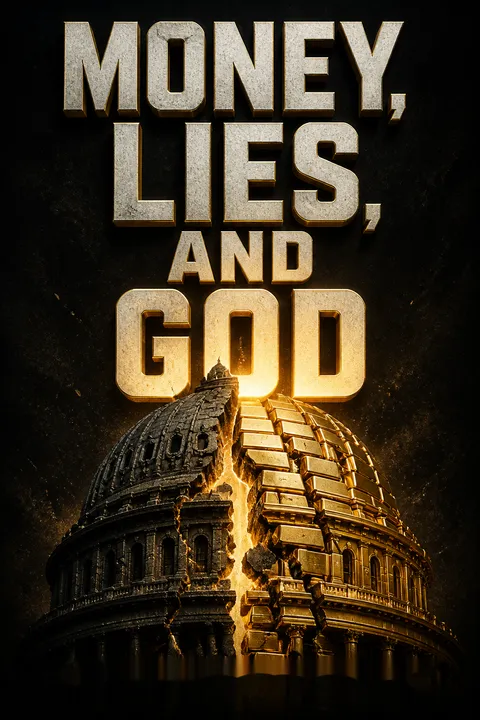
Money, Lies, and God examines how Christian nationalism, wealthy billionaires, and right-wing movements collaborate to undermine American democracy. Reviewers praise Katherine Stewart's meticulous research, extensive documentation, and firsthand reporting from conferences and rallies. The book exposes the vast financial networks funding anti-democratic forces and explains how diverse groups—including religious fundamentalists, white nationalists, and oligarchs—unite despite differing goals. Most find it terrifying yet essential reading, though some note it's depressing and dense. Critics appreciate Stewart's journalism but worry she preaches to the converted. Several question her hopeful conclusion given the movement's success.
People Also Read






About the Author
Other books by Katherine Stewart
Download PDF
Download EPUB
.epub digital book format is ideal for reading ebooks on phones, tablets, and e-readers.








































