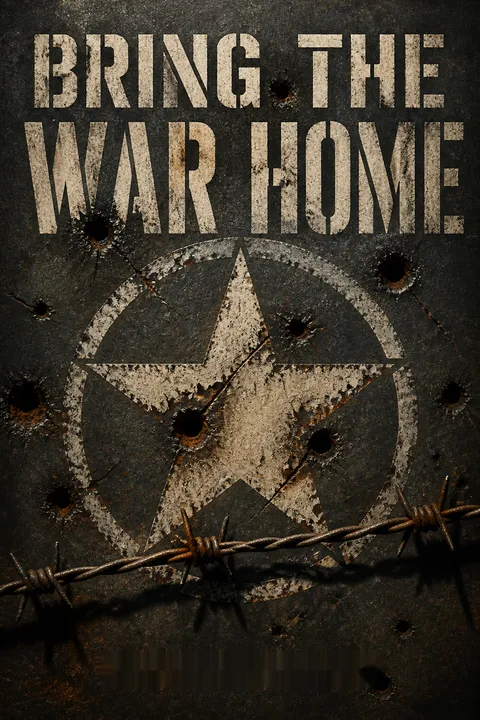

Key Takeaways
1. The Vietnam War's Aftermath Fueled a Unified White Power Movement.
Defeat in Vietnam represented a cataclysmic break in several registers: it upended notions of the triumphant American warrior, presented a perceived threat to the balance of world power, and, for some, intensified a fear of communism.
Catalyst for unity. The Vietnam War's aftermath, particularly a pervasive narrative of government betrayal and soldiers' unappreciated sacrifice, served as the unexpected origin point for the white power movement (1975-1995). This narrative resonated with a broad spectrum of disaffected white Americans, bridging divides between rural and urban, rich and poor, and various white supremacist factions like the Klan, neo-Nazis, and white separatists. It provided a common grievance and a shared sense of victimhood that cemented alliances.
Veteran's narrative. Figures like Louis Beam, a decorated Vietnam veteran, actively leveraged his wartime experiences to militarize the Ku Klux Klan and advocate for a "white power revolution." He articulated a story of constant danger, gore, and betrayal by military and political leaders, and the trivialization of soldiers' sacrifices. This narrative, often echoing popular culture depictions of the war, became a powerful tool for recruitment and justification of violence, even for those who hadn't served.
Perpetual combat. Beam's call to "bring it on home" meant a literal extension of military-style combat into civilian spaces, transforming the Vietnam War into a domestic struggle. This framing allowed activists to view their actions as a continuation of a righteous fight against perceived enemies, whether communists, racial minorities, or the federal government itself. The war's legacy provided a potent ideological and emotional foundation for the movement's formation and subsequent escalation of violence.
2. A Shift to Revolutionary Anti-Statism Defined the Movement.
Unlike previous iterations of the Ku Klux Klan and white supremacist vigilantism, the white power movement did not claim to serve the state. Instead, white power made the state its target, declaring war against the federal government in 1983.
Targeting the state. A pivotal shift occurred in 1983 when the white power movement formally declared war on the federal government, moving beyond traditional vigilantism that typically sought to reinforce state power. This revolutionary turn was fueled by a deep distrust in public institutions, economic turmoil, and a belief that the government had betrayed white Americans. Activists increasingly saw the state as their primary enemy, rather than a flawed entity to be reformed.
Overthrowing ZOG. The movement coalesced around the concept of the "Zionist Occupational Government" (ZOG), a conspiracy theory alleging Jewish control over the U.S. federal government, the United Nations, and financial institutions. This belief justified revolutionary violence aimed at dismantling the existing state and establishing an all-white, racial nation. The perceived corruption of ZOG became the ultimate rationale for extreme measures.
Radical future. This anti-statist stance distinguished the white power movement from earlier conservative or reactionary mobilizations. While some activists longed for a return to Jim Crow or white-minority rule, most believed such systems could only be resurrected through drastic, revolutionary action, not conventional politics. Their goal was a radical future achieved through violent overthrow, not merely the preservation of a bygone era.
3. Paramilitarism and Military Tactics Were Central to White Power.
After each war, veterans not only joined the Klan but also played instrumental roles in leadership, providing military training to other Klansmen and carrying out acts of violence.
Military influence. The white power movement was deeply infused with paramilitarism, drawing heavily on military expertise, training, and culture. Veterans, particularly from the Vietnam War, played instrumental roles in leadership, bringing combat skills, weapons proficiency, and a readiness to fight. This was a recurring pattern in Klan history, where post-war periods often saw surges in veteran involvement and militarization.
Training camps. Louis Beam's Camp Puller in Texas, established with a veterans' land grant, exemplified this paramilitary ethos. It was a Vietnam War-style training facility designed to transform Klansmen into soldiers, complete with:
- Camouflage fatigues and military-grade weapons.
- Instruction in guerrilla warfare, ambushes, and demolition.
- The explicit goal of waging race war on American soil.
Weapons and symbols. The movement adopted the material culture of warfare, including:
- Civilian versions of military assault rifles (AR-15s, AR-180s).
- Stolen military ordnance (grenades, C-4 explosives, land mines).
- Military uniforms and slang ("gooks," "kill zones").
This pervasive militarization signaled a serious intent to engage in armed conflict, not just symbolic protest.
4. "Leaderless Resistance" Enabled Covert, Coordinated Violence.
No one need issue an order to anyone. Those idealist[s] truly committed to the cause of freedom will act when they feel the time is ripe, or will take their cue from others who precede them.
Evolving strategy. Following the 1983 declaration of war, the movement adopted "leaderless resistance," a cell-based organizational strategy designed to evade detection and prosecution. This approach, popularized by Louis Beam, aimed to prevent infiltration by informants and limit legal culpability by eliminating direct orders from leadership. Instead, independent cells and individuals would act based on shared ideology and common objectives.
Coordinated action. This strategy relied on a cohesive social network and widely circulated cultural narratives to coordinate action without explicit command. Movement publications, speeches, and new computer networks like "Liberty Net" disseminated common beliefs, goals, and targets. Activists, sharing a similar worldview, were expected to react to events in predictable, violent ways, such as:
- Attacks on infrastructure (utilities, railroads, bridges).
- Assassinations of federal agents and judges.
- Counterfeiting to undermine public confidence in currency.
The Turner Diaries blueprint. The racist utopian novel The Turner Diaries served as a foundational text and blueprint for leaderless resistance. It outlined a detailed plan for race war, including:
- Cell-style organization and secrecy.
- Guerrilla tactics of assassination and bombing.
- The ultimate goal of an all-white racial nation achieved through violence.
The novel's popularity made it a touchstone, providing a common script for revolutionary action.
5. Women Played Crucial Symbolic and Active Roles in the Movement.
The thoughts of Aryan woman are dominated by the desire to enter family life. Aryan woman brings true love and affection and a happy, well-run home to refresh and inspire her man.
Symbolic importance. Women were central to the white power movement, both as powerful symbols and active participants. Ideologically, white women's bodies were seen as battlegrounds, essential for propagating the white race and preventing its "annihilation" through interracial marriage, abortion, or immigration. The "Northwest Imperative" explicitly called for white women to bear many children to populate a new white homeland.
Antifeminist roles. While consciously antifeminist, women's activism was vital. They were expected to be mothers of "Aryan warriors," nurses for the wounded, and providers of sustenance through survivalist skills like canning and making soap. This domestic framing, however, belied their instrumental roles in the movement's operations.
Active contributions. Women actively contributed to the movement's infrastructure and violence:
- Brokering social relationships that cemented intergroup alliances.
- Running auxiliary organizations like the Aryan Women's League, producing racist coloring books and fundraising.
- Performing support work in cells, such as disguising male activists, driving getaway cars, destroying documents, and transporting weapons.
- Even proofreading key documents like the Order's Declaration of War.
Their public performances of vulnerable white womanhood, as seen in Sheila Beam's testimony, also garnered sympathy and influenced legal outcomes.
6. Key Events Like Greensboro and the Order's Crimes Escalated Violence.
The Greensboro confrontation heralded a paramilitary white power movement mobilized for violence, and also revealed a legal system broadly unprepared to convict its perpetrators.
Greensboro massacre. The 1979 shooting of communist protestors by Klansmen and neo-Nazis in Greensboro, North Carolina, was a pivotal moment. Five protestors died, yet all-white juries acquitted the white power defendants in state and federal trials. This outcome, perceived as a validation of violence, energized the movement and solidified alliances between disparate factions, particularly around anticommunism.
The Order's crime spree. The Order, a secret society and paramilitary strike force, emerged in the early 1980s, directly modeling its structure and actions on The Turner Diaries. Its members engaged in a systematic campaign of:
- Bank and armored car robberies, netting millions of dollars.
- Counterfeiting to undermine national currency.
- Assassinations, most notably of Jewish radio host Alan Berg.
- The murder of a fellow member suspected of talking too much.
These acts were "moralized" as necessary steps in their war against the "ZOG" and to fund the broader white power movement.
Martyrdom and inspiration. The fiery death of Order leader Bob Mathews during a standoff with the FBI in 1984, and the earlier death of tax protestor Gordon Kahl, transformed them into martyrs. These events fueled the movement's apocalyptic vision and reinforced the narrative of government tyranny, inspiring further acts of violence and solidifying the commitment of activists to their revolutionary cause.
7. Militarized Policing at Ruby Ridge and Waco Galvanized Militias.
When the Feds blew the head off Vicki Weaver, I think symbolically that was their war against the American woman, the American mother, the American white wife.
State violence. The early 1990s saw spectacular state violence against white separatist compounds, notably Ruby Ridge (1992) and Waco (1993). Federal agents deployed military units, weapons, and tactics—including armored personnel carriers, helicopters, and tear gas—against American civilians. These confrontations, widely covered by media, were seen by white power activists as direct evidence of the "New World Order's" tyrannical nature.
Ruby Ridge martyrdom. The death of Vicki Weaver, shot by a federal sniper while holding her infant daughter, became a powerful symbol of government overreach and a rallying cry for the movement. Her death, along with that of her son, was framed as a brutal attack on the innocent white family. This narrative resonated far beyond the white power fringe, drawing sympathy from mainstream conservatives concerned about government power.
Waco's inferno. The catastrophic end to the Waco siege, where 76 Branch Davidians (including 21 children) died in a fire after a months-long standoff, further inflamed anti-government sentiment. White power activists, including Timothy McVeigh, viewed it as a massacre by a militarized superstate. These events, coupled with new gun control legislation, fueled a massive surge in the militia movement, which adopted many white power ideologies and tactics.
8. The Oklahoma City Bombing Culminated Decades of White Power Violence.
Because the truth is, I blew up the Murrah Building, and isn’t it kind of scary that one man could wreak this kind of hell?
A movement's culmination. The 1995 Oklahoma City bombing, carried out by Gulf War veteran Timothy McVeigh and his co-conspirators, was not an isolated act but the culmination of decades of white power organizing and paramilitary violence. McVeigh, a member of the white power movement, acted without direct orders but in concert with its objectives, demonstrating the effectiveness of "leaderless resistance."
Blueprint for terror. The bombing plan was directly inspired by The Turner Diaries, which detailed a truck bombing of the FBI headquarters. The target, the Murrah Federal Building, had been previously cased by white power activists in 1983, the year the movement declared war on the state. McVeigh's actions, including moralized robberies to fund the attack, mirrored the strategies of the Order.
"Collateral damage." McVeigh viewed the 168 deaths, including 19 children, as "collateral damage" in a military action against the federal government. His T-shirt, bearing a quote about refreshing the "tree of liberty with the blood of patriots and tyrants," echoed Louis Beam's rhetoric after Ruby Ridge. The bombing was a direct manifestation of the movement's apocalyptic vision and its war on the state.
9. The Movement Adapted to Evade Detection and Broaden Appeal.
The white power movement that emerged from the Vietnam era shared some common attributes with earlier racist movements in the United States, but it was no mere echo.
Strategic evolution. The white power movement demonstrated remarkable adaptability, continuously evolving its strategies to evade prosecution and broaden its appeal. This included:
- Shifting from overt Klan racism to more coded language, like "racialist" instead of "racist."
- Adopting "leaderless resistance" to protect leadership and make prosecution difficult.
- Utilizing early computer networks (Liberty Net) for communication and coordination.
Mainstreaming through militias. The militia movement of the early 1990s represented a successful attempt to move white power ideologies into the mainstream. While many militias publicly disavowed racism, they shared leaders, soldiers, weapons, and anti-government rhetoric with the white power movement. The shift from "Zionist Occupational Government" (ZOG) to "New World Order" also resonated with a broader evangelical audience concerned about global conspiracies.
Recruitment diversification. The movement expanded its recruitment beyond traditional demographics:
- Aggressively recruiting from prisons, influencing gangs like the Aryan Brotherhood.
- Targeting veterans and active-duty military personnel for their skills and access to weapons.
- Adapting cultural standards to attract urban skinheads, overlooking previous prohibitions on drugs, alcohol, and tattoos.
This flexibility allowed the movement to sustain momentum and expand its reach.
10. Persistent Misunderstanding Allowed the Movement to Endure.
That the Oklahoma City bombing, which stood as a singular event of mass-casualty terrorism on American soil—deliberate violence at a scale unsurpassed, at that time, since the bombing of Pearl Harbor—did not solidify a public understanding of the white power movement and its capacity for violence is remarkable.
Narrative of isolation. Despite decades of organized activity and escalating violence, the white power movement was consistently misunderstood as a collection of disparate hate groups or the work of "lone wolves." The Oklahoma City bombing, in particular, was largely narrated and prosecuted as an inexplicable act by one or a few individuals, rather than the culmination of a coherent social movement.
Prosecutorial failures. The legal system's inability to consistently convict white power activists, as seen in the Greensboro acquittals and the Fort Smith sedition trial, further obscured the movement's organized nature. The FBI's policy to pursue only individual actors in white power violence, rather than a broader movement, effectively erased its collective identity from public understanding.
Enduring legacy. This lack of public understanding and effective state action left a critical opening for the movement to persist and resurface. The white power movement, though often operating out of public view, continued to influence:
- Online spaces, with platforms like Stormfront founded by former white power leaders.
- New generations of activists, like Dylann Roof, who drew on its symbols and ideologies.
- Mainstream politics, with its rhetoric and concerns about racial and gender roles, government corruption, and an apocalyptic future finding resonance in later political campaigns.
The failure to acknowledge white power as a legitimate social force allowed its ideologies to endure and influence American society in profound and often unacknowledged ways.
Review Summary
Bring the War Home by Kathleen Belew examines the white power movement from Vietnam through the 1995 Oklahoma City bombing. Reviewers praise its thorough research and documentation of how Vietnam veterans formed paramilitary groups that shifted from supporting the state to declaring war on it. Belew traces connections between disparate racist, anti-communist, and militia groups, revealing "leaderless resistance" strategies that made violence appear as lone-wolf attacks rather than coordinated movement action. While some found the writing dry or repetitive, most consider it essential for understanding today's alt-right and ongoing threats to American democracy.
People Also Read

Download PDF
Download EPUB
.epub digital book format is ideal for reading ebooks on phones, tablets, and e-readers.








































