
Key Takeaways
1. The New Apostolic Reformation: A Covert Power in American Christianity
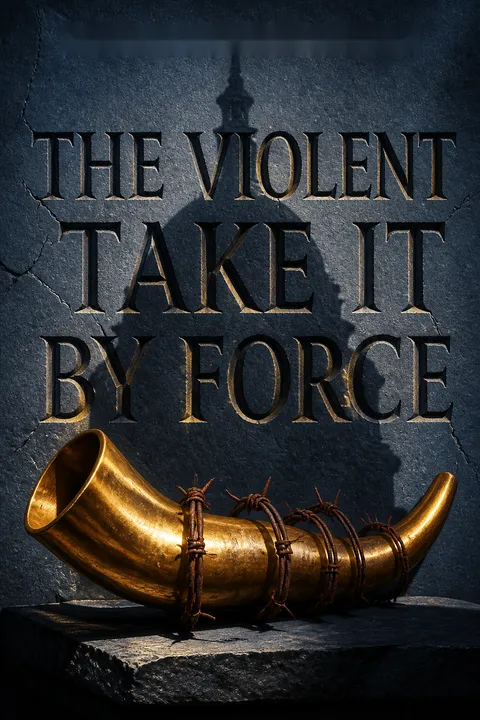
In The Violent Take It by Force, you’ll read about a particular form of American Christianity whose escalating radicalization poses a real and imminent threat to pluralism and democracy.
Christianity's radical fringe. The New Apostolic Reformation (NAR) is a rapidly growing, yet often overlooked, movement within American Christianity that played a pivotal role in the January 6th insurrection. Its leaders believe they are divinely appointed apostles and prophets, tasked with recreating the power and vitality of the early Christian church. They aim to conquer societal influence through "spiritual warfare" and build God's kingdom on Earth.
Distinctive characteristics. Unlike traditional evangelicalism, the NAR is highly multiethnic, transnational, and exhibits surprising egalitarianism in its leadership, with women holding prominent roles. It operates largely outside conventional denominational structures, thriving in the "Wild West" of nondenominational charismatic Christianity. This unique structure allows for rapid growth and the spread of its distinctive theological ideas.
Threat to democracy. The book argues that the NAR's radicalization, fueled by its "theologies of violence" and aggressive political ambitions, poses a significant threat to American pluralism and democracy. By examining key figures and their theological frameworks, the book uncovers how this once-fringe movement moved into the mainstream of conservative American politics, particularly through its alliance with Donald Trump.
2. Paula White: The Televangelist Who Bridged Charismatic Fervor to Trump
Paula White is the fulcrum on which an epochal shift in American religious politics tilted.
From trauma to televangelism. Paula White's journey began with a traumatic childhood, leading to a transformative conversion to Pentecostalism. She rose to prominence as a megachurch pastor and televangelist, known for her therapeutic preaching style, multiethnic appeal, and embrace of the prosperity gospel. Her unique blend of charisma and media savvy positioned her as a significant voice in the Independent Charismatic world.
Trump's spiritual confidante. White's long-standing relationship with Donald Trump, serving as his personal pastor for over two decades, proved instrumental in his political ascent. She played a crucial role in convening a diverse group of Independent Charismatic leaders for Trump's 2016 campaign, effectively becoming his "evangelical translator" and a gatekeeper for religious access to his inner circle. This strategy bypassed traditional evangelical elites who were initially wary of Trump.
White House influence. Her influence culminated in an official White House role in 2019, where she launched the "One Voice Prayer Movement." This initiative, and her invocation at the January 6th rally, symbolized the unprecedented charismaticization of the religious right. White's trajectory highlights how a once-marginalized segment of Christianity gained direct access to the highest levels of American political power.
3. C. Peter Wagner: The Architect of the New Apostolic Reformation's Ideology
When you seek out the underlying leaders and the theologies that spurred thousands of Christians to pursue the illegitimate reinstatement of Donald Trump, you inevitably come to the people mentored and the ideas propagated by a renegade evangelical seminary professor, C. Peter Wagner, the “intellectual godfather” of the NAR.
Academic rebel. C. Peter Wagner, a former missionary and Fuller Seminary professor, became a pivotal figure in shaping the NAR. Initially a cessationist, his pragmatic pursuit of church growth led him to embrace charismatic practices, notably through his controversial "Signs, Wonders, and Church Growth" course with John Wimber, which was ultimately canceled by Fuller. This experience solidified his disillusionment with "mainstream evangelicalism" and fueled his search for "new wineskins" for the church.
Spiritual warfare pioneer. Wagner's encounter with Cindy Jacobs in 1989 introduced him to "strategic-level spiritual warfare," a concept he developed to involve battling "territorial spirits" controlling geographical regions and institutions. This framework, applied in campaigns like the "10/40 Window" and "Operation Ice Castle" (an expedition to Mt. Everest), became the first ideological pillar of the NAR. In 1996, his "postdenominational church" concept was rebranded as the "New Apostolic Reformation."
Building a spiritual oligarchy. Wagner meticulously built an infrastructure for the NAR, including the Wagner Leadership Institute (WLI), the International Coalition of Apostles (ICA), and the Apostolic Council of Prophetic Elders (ACPE). His inner circle, the Eagles' Vision Apostolic Team (EVAT), comprised his closest mentees. Wagner's late-life endorsement of Donald Trump in 2016, influenced by Lance Wallnau's "Cyrus Anointing," cemented the NAR's political alignment, with his mentees becoming key mobilizers for the January 6th events.
4. Cindy Jacobs: The Prophetic General Orchestrating Spiritual Warfare
I would contend that no Christian woman living today has capitalized more on this experiential point of access to authority or attained greater spiritual renown than Cindy Jacobs.
Prophetic calling. Cindy Jacobs's life began with childhood prophetic insights, leading her from a Baptist background to embrace charismatic Christianity. Mentored by figures like Fred Price and Bill Hamon, she founded Generals of Intercession in 1985, dedicated to "healing nations" and "discipling nations" through strategic prayer battle plans. Her unique authority stemmed from direct, personal revelations from God, bypassing traditional male-dominated hierarchies.
Co-architect of NAR. Jacobs played a crucial role in C. Peter Wagner's spiritual development, introducing him to strategic-level spiritual warfare and modern-day prophets. Together, they built the US Strategic Prayer Network (USSPN) and the Apostolic Council of Prophetic Elders (ACPE), solidifying the NAR's infrastructure. Her prophecy of Wagner as an "apostle of prayer" was instrumental in his acceptance of his own apostolic identity.
Jan 6th mobilization. Jacobs's influence grew, earning her recognition as a leading global prophet. She mobilized prayer networks like the "As One" coalition for Trump's 2016 campaign and was deeply involved in the "spiritual warfare presidency." On January 6th, 2021, she was physically present at the Capitol, leading spiritual warfare prayers against "territorial spirits" and advocating for an "audit" of the election, embodying the NAR's aggressive, politicized spirituality.
5. Ché Ahn: Building a Global Apostolic Empire for Societal Transformation
If he has his druthers, the apostles and prophets’ spiritual oligarchy will continue to expand, and one day all of America—indeed, all of the world—will submit to Christians, under the lordship of Jesus Christ.
From immigrant to apostle. Ché Ahn's journey began as a Korean immigrant, shaped by his father's escape from communism. After a rebellious youth, he embraced charismatic Christianity, mentored by Larry Tomczak in the People of Destiny International (PDI) apostolic network. His transformative experience with the Toronto Blessing and subsequent disillusionment with traditional church structures led him to C. Peter Wagner, becoming one of his closest mentees.
Global apostolic network. Ahn became a leading implementer of Wagner's "spiritual oligarchy" model, founding Harvest International Ministry (HIM) in 1996. HIM grew into a vast global network of over 25,000 churches and ministries, demonstrating the explosive potential of the apostolic governance model. Ahn also co-led "The Call DC" in 2000, a mass gathering on the National Mall that showcased "charismatic revival fury" and a vision for national transformation.
Political decrees. Ahn's Harvest Rock Church famously battled California's COVID-19 restrictions, a fight that reached the Supreme Court and was influenced by the appointment of Amy Coney Barrett. On January 5th, 2021, at the "Rally to Revival," Ahn delivered a speech invoking Matthew 16 to "bind the spirit of Jezebel" and ensure Trump's victory, explicitly linking his apostolic authority to political outcomes. His vision extends to Christian supremacy, aiming for global societal submission to Christian rule.
6. Lance Wallnau: The Prophet Who Theologized Christian Trumpism with the Seven Mountains
No evangelical leader has done more to theologically backstop the presidency of Donald Trump than Lance Wallnau.
The Seven Mountain Mandate. Lance Wallnau, an obscure charismatic pastor, rose to prominence by creating the "Seven Mountain Mandate" (7M) prophetic meme. He combined Loren Cunningham's "seven spheres of influence" with a "seven mountains" vision, advocating for Christians to conquer the "high places" of seven societal sectors:
- Home
- Church
- Schools
- Government
- Media
- Arts, Entertainment, Sports
- Commerce, Science, Technology
This framework provided a pragmatic program for dominion theology, aiming for top-down cultural transformation.
Cyrus Anointing. Wallnau's influence soared with his "Cyrus Anointing" prophecy in 2015, declaring Donald Trump a heathen king (like the Persian emperor Cyrus in Isaiah 45) chosen by God to deliver Christians from "cultural exile." This meme, along with the 7M, provided a theological rationale for evangelicals to support Trump, despite his moral failings, by framing him as God's instrument for political conquest. C. Peter Wagner's endorsement further amplified Wallnau's ideas.
Prophet punditry. Wallnau became a leading "prophet pundit" on Kenneth Copeland's "FlashPoint" show, blending politics and prophecy to defend Trump and spread election denialism. His presence at the December 12, 2020, Jericho March and his planned participation in the January 6th Capitol rally solidified his role as a key mobilizer of Christian Trumpism. Wallnau's ideas have become a battle anthem for the religious right, making him a significant, albeit controversial, political theologian.
7. Sean Feucht: Weaponizing Worship and Persecution for Political Mobilization
Sean Feucht is a Goliath with a David complex.
Worship as activism. Sean Feucht, a millennial charismatic worship leader, transformed from a standard recording artist into a national right-wing provocateur. His "prophetic journey" began with a vision at "The Call DC" in 2000, fostering a deep anti-abortion commitment and a desire for global revival. After a failed congressional bid, he launched "Let Us Worship" in 2020, a series of defiant, unmasked worship concerts protesting COVID-19 restrictions.
"Riots to Revival." Feucht expanded "Let Us Worship" into "Riots to Revival," targeting cities experiencing racial unrest like Portland and Seattle. He explicitly framed these events as declaring "Jesus's lordship over occupied territory," often leading to confrontations. His rhetoric, steeped in NAR and Bethel Church teachings (like the Seven Mountain Mandate), positioned worship as a "weapon" to "expand spiritual territory" and instigate revival.
Political celebrity. Post-January 6th, Feucht's celebrity surged, attracting Republican politicians like Ron DeSantis and Josh Hawley. He established "Camp Elah" on Capitol Hill for spiritual lobbying and launched "Kingdom to the Capitol" to bring worship events to every state capitol, targeting "giants of human trafficking, abortion, perversion, [and] Satanic ideology." Feucht embodies a new archetype of religious right leadership, blending charismatic worship with aggressive political mobilization and a narrative of Christian persecution.
8. "Ekklesia" and "Appeal to Heaven": Prophetic Memes Fueling Christian Political Action
If your political opponents are, literally, inspired by demons, then there’s no negotiating with them. Demons are not meant to be negotiated with; they are meant to be battled, exorcised, and expelled.
The governing "Ekklesia." Dutch Sheets, a prominent NAR prophet-apostle, developed a radical reinterpretation of the Greek word "ekklesia" (often translated as "church"). He argues that Jesus intended "ekklesia" to mean "my governing body in the earth," advocating for a "congressional mindset" where apostles and prophets "legislate in the spirit" to directly influence the natural realm. This theology positions the church as God's appointed spiritual government, an "invading force" to restore the dominion mandate.
A national totem. Sheets also popularized the "Appeal to Heaven" flag, a Revolutionary War banner, transforming it into a powerful Christian nationalist totem. He presented it as a symbol of spiritual warfare, signifying a divine mandate to fight for America's destiny and to "wake up the body of Christ." This flag, along with Sheets's "Give Him 15" daily devotionals, became central to mobilizing Christians for political action, particularly during the 2016 and 2020 elections.
Justifying spiritual warfare. These prophetic memes provided a theological framework for Christians to believe the 2020 election was a demonic plot, justifying aggressive spiritual warfare and political intervention. Sheets's rhetoric, full of military metaphors and calls to "get your sword bloody," fueled a sense of righteous indignation and a belief that God relies on human prayers and decrees to achieve His will, making political opponents literal agents of demonic forces.
9. The January 6th Insurrection: A Climax of Charismatic Revival Fury
If one was immersed in charismatic media or social media in the period from November 2020 to January 2021, the markers and themes of this mustering of spiritual warfare to see Trump reinstated were inescapable.
Unprecedented mobilization. Following the 2020 election, NAR leaders orchestrated one of the most massive spiritual warfare campaigns in American history. This included the "Global Prayer for Election Integrity" calls, widespread "Jericho Marches" (featuring shofars and spiritual warfare prayers), and Dutch Sheets's intensive contested-state prophecy tour. These efforts were designed to mobilize an "army of Christian prayer warriors" to see Trump reinstated.
Cultivated by the White House. This campaign was, in part, coordinated with individuals within the Trump administration, who invited NAR leaders like Dutch Sheets to the White House for strategic meetings. These officials sought to harness the prophetic insights and spiritual warfare capabilities of the NAR to bolster Trump's election denial efforts, blurring the lines between spiritual and civil government.
On-site spiritual battle. On January 6th, NAR leaders like Cindy Jacobs, Ché Ahn, and Lance Wallnau were present in Washington, D.C., with Jacobs and Becca Greenwood leading spiritual warfare near the Capitol. Dutch Sheets, directing remotely, even called into their on-site PA system. The pervasive "Appeal to Heaven" flags, charismatic worship, and declarations against "territorial spirits" underscored how NAR's distinctive, prophecy-driven spirituality provided the Christian stage-setting for the insurrection, transforming it into a perceived "Riot to Revival" scenario.
10. Christian Supremacy: The Global Ambition Beyond American Nationalism
Christian supremacy is much more organized and ideological than Christian nationalism, and it’s more comprehensive in scope too.
Beyond nationalism. While often labeled "Christian nationalism," the NAR's ideology is more accurately described as "Christian supremacy." Unlike sentimental Christian nationalism, which is often domestically focused, Christian supremacy is a highly organized and ideological movement with a global ambition. It asserts that Christians, by divine right, should occupy authoritative and privileged positions across all domains of public life, not just within a single nation.
Global dominion. Leaders like Ché Ahn exemplify this transnational vision, building vast apostolic networks across continents. They aim to "disciple nations" and "rule and reign" in every societal sphere, believing that Christians are morally elevated and empowered by God to govern civil society worldwide. This worldview transcends parochial national concerns, envisioning a global realignment under Christian control.
Manichaean worldview. Christian supremacy operates on stark binaries: the kingdom of God versus the kingdom of Satan, Christians versus demon-plagued humanity. This Manichaean perspective justifies aggressive tactics to impose a Christian agenda, viewing political opponents as literally inspired by demons. This comprehensive, top-down approach to societal transformation poses a profound threat to pluralism and democratic values, both in the United States and globally.
11. The Peril of Politicized Prophecy and Charismatic Experience
Charismatic experiences can be wonderful, life-affirming, cathartic, transformative parts of an individual’s spiritual life; they can also be a political Achilles’s heel for evangelicalism.
Epistemic crisis. Charismatic experiences, such as speaking in tongues, divine healing, or receiving direct revelation, are central to evangelical epistemology, often bypassing rational filters. When these experiences are politicized, they contribute to an "epistemic crisis," where belief in prophecy overrides factual evidence, as seen in the widespread evangelical conviction that the 2020 election was stolen (60% of white evangelicals).
Accelerant for extremism. Studies reveal a strong correlation between belief in modern prophecy and support for extreme political views or violence. This indicates that charismatic theology, when projected onto political conflicts, acts as an accelerant for radicalization. The "epistemic confidence" derived from perceived divine revelation makes individuals less amenable to compromise or democratic deliberation.
Destabilizing democracy. When charismatic experiences are publicly leveraged for political mobilization, they introduce non-negotiable, divinely sanctioned claims into public discourse. This destabilizes democracy by making rational debate and compromise impossible, as opponents are viewed not merely as political adversaries but as agents of demonic forces. The fusion of spiritual conviction with political action creates a dangerous "us vs. them" mentality that undermines civic life.
12. The Network Effect: How NAR Leaders Radicalized Each Other and American Politics
I think a more accurate rendering of events would be to say that they all radicalized each other.
Beyond conspiracy. The mass mobilization of charismatic Christians for January 6th was not a coincidence or a grand conspiracy, but rather a "network effect." C. Peter Wagner skillfully wove disparate charismatic leaders—eccentric Latter Rain adherents, hawkish dominion theology proponents, and ambitious spiritual warriors—into a cohesive, self-amplifying mesh of networks. This infrastructure provided a shared purpose and identity, fostering mutual radicalization.
Deinstitutionalization's impact. The decline of centrally organized religion created a marketplace that rewarded entrepreneurial leaders and self-promoting celebrities, leading to a new, less accountable religious elite. This environment allowed NAR leaders to collectively amplify their messages, such as the Seven Mountain Mandate and the Cyrus Anointing, and inject their "charismatic revival fury" directly into the heart of American politics.
A self-fulfilling prophecy. The NAR's shared theology and ideology drew its apostles and prophets toward political confrontation, seeing Donald Trump as an unprecedented opportunity to achieve their visions of revival and societal reformation. This collective radicalization, fueled by prophetic certainty and a sense of divine mandate, continues to shape the religious right, posing a persistent threat to pluralistic democracy as their "Christian supremacist revival" unfolds.
Review Summary
The Violent Take It by Force examines the New Apostolic Reformation (NAR), an independent charismatic Christian movement, and its role in supporting Donald Trump and the January 6th Capitol riot. Reviewers praise Taylor's thorough research into obscure but influential leaders like C. Peter Wagner, Lance Wallnau, and Paula White, who developed concepts like the Seven Mountains Mandate and spiritual warfare theology. The book explains how these leaders view Trump as a divinely anointed "Cyrus" figure and promotes Christian supremacy over democracy. Readers found it essential, alarming, and eye-opening for understanding this fast-growing, under-reported movement's dangerous political influence.
People Also Read
Download PDF
Download EPUB
.epub digital book format is ideal for reading ebooks on phones, tablets, and e-readers.








































