


Plot Summary
Prologue
Fifty years before Willow's1 birth, Lucifer the Morningstar2 stalks Loralei Hecate through the halls of the witch university. She clutches a useless onyx crystal as he corners her and slashes her chest open with clawed fingers.
As she falls, an apparition materializes beside her: a younger woman with mismatched purple and amber eyes, dark hair tipped in burgundy. It is Willow,1 Loralei's niece, not yet born but somehow present through ancestral magic. Lucifer2 freezes. His centuries of planning evaporate.
He drags his nose through her hair, inhaling her scent, then rakes his claws across her shoulder, marking her. Loralei, dying, screams at Willow1 to wake. The apparition vanishes before hitting the floor. Lucifer2 licks her blood from his fingers, tasting his future.
The prologue establishes the cosmic stakes of the romance: Lucifer's obsession predates Willow's birth, making her fate feel both predestined and violently seized. The time-bending apparition positions the Hecate bloodline as uniquely powerful, able to blur past, present, and future. Lucifer's instant fixation rewrites his utilitarian plan; she was meant to be used, but now he wants to own her utterly. The marking, three claw marks on her shoulder, is both wound and claim, introducing the novel's central tension: Willow has been someone's puppet since before she existed, and reclaiming her agency will require confronting forces older than her own life.
Snapped Neck, Bound Souls
Willow1 wakes to find Gray2 in his true body, golden eyes and searing skin replacing the cold Vessel she knew. She tries to leave, declaring her usefulness ended. Gray's2 fury ignites when she says she wants to leave him.
As she backs toward the door, Beelzebub3 grips her head from behind and snaps her neck. She crumples, dead before she hits the floor. Gray2 catches her, horrified, slams his hand into her chest, and uses dark magic to cage her fleeing soul. He cuts his own forearm from wrist to elbow, presses the wound to her lips, and pours immortal blood into her.
Her neck cracks back into place. She breathes again. But the resurrection binds their lives together, a connection Gray2 does not disclose as he carries her from the room, ignoring the archdemons' questions.
This is the true inciting incident. Willow's death and resurrection transform the power dynamic: Gray can no longer pretend he merely uses her. His desperation reveals an attachment he did not plan for, while the secret binding becomes the plot's crucial hidden lever. Willow's violation, the neck-snapping by Beelzebub, adds psychological horror to the romantic framework and gives her legitimate grounds for revenge that she must reconcile with her growing feelings. The scene also establishes Gray's willingness to pay any price for her, foreshadowing the moral calculus that defines their relationship.
The Woods Chase Consummation
Willow1 attempts escape through the window, but Beelzebub3 intercepts her. Gray2 arrives and makes an offer. He cuts into her chest and pulls out her magic, green and black mist coiling in his palm, leaving her hollow and terrified.
He will return it only if she makes a deal: she runs through the woods, and if she reaches freedom, she may leave. If he catches her, she consummates their marriage with his true body. She agrees, desperate to keep her magic. Willow1 runs, cleverly crafting a decoy from branches and grass animated with her blood.
It fools Gray2 briefly, but he catches her just before the treeline. They fight, then have sex on the forest floor. At climax, her magic brands his chest with Hecate's maze. The marital bond snaps into place.
The chase scene is a psychosexual negotiation disguised as a hunt. Willow's decoy strategy reveals her cunning; she is not passive prey. Gray's need for her to fight reframes his desire as craving an equal, not a puppet. The branding of his chest reverses ownership: she marks him as much as he marks her. The consummation on her terms, where she eventually climbs on top, gives her an illusion of agency within a coerced framework, mirroring the novel's central ethical tension between fate and choice.
From Cursed to Familiar
In the woods after consummation, a Cursed attacks Gray.2 Willow's1 bone necklace rattles, the necromancy within her demanding blood. Gray2 holds the wolfman still and tells her to follow the magic. Willow1 places her palm on its chest.
Black tendrils spread from her fingers, and the creature's fur falls away, skin melting, bones cracking, until a naked human man named Jonathan Hatt12 kneels before her. He nuzzles her hand and declares himself hers. Gray2 growls possessively. Willow,1 sensing the magic is not finished, touches Jonathan12 again.
His body shrinks and reshapes into a small black cat with violet eyes. He bites her hand, drawing blood, sealing the familiar bond. Gray2 is furious about another male near his wife, but Willow1 insists she takes care of what is hers.
This scene demonstrates Willow's unprecedented power: she combines necromancy and earth magic in ways no witch before her has achieved, creating life from cursed death. Jonathan's history, later revealed as one of the men who accused Charlotte of witchcraft, adds moral complexity; his servitude is a form of penance. The familiar bond establishes Willow's growing autonomy despite her captivity. Even trapped in Gray's world, she builds her own alliances, and Gray's jealousy over a cat highlights his possessiveness while also humanizing his vulnerability.
Margot's Secret, Willow's Vow
Gray2 permits Willow's1 roommates Della,7 Nova,8 Margot,4 and the Vessel Juliet10 to visit. Willow1 breaks down, apologizing for her role in the Coven's decimation. To her shock, they forgive her: she was manipulated by the master of deception.2 Nova8 challenges her to rule while plotting Gray's2 downfall.
But the visit's darkest turn comes when Margot,4 the quiet Red witch who flinches from touch, reveals that Itan Bray, a Tribunal member and Iban's5 uncle, raped her when she was fourteen. Willow's1 fury crystallizes into cold purpose. She vows that Itan's last sight will be a woman he considers beneath him, and that she will make him suffer for every day Margot4 endured his presence. The friends pledge their loyalty.
This scene is the emotional turning point where Willow gains genuine allies rather than pawns. Their forgiveness models a grace Gray has not offered her, creating an alternative relational template. Margot's disclosure transforms the political into the personal and gives Willow a righteous target for her rage, redirecting it away from Gray. The sisterhood pact also introduces the novel's feminist undercurrent: justice for sexual violence becomes a moral lodestone that distinguishes Willow from the previous corrupt Covenant and justifies her claim to power.
A Throne of Bone and Vine
Gray2 dresses Willow1 in a black gown and leads her to the Tribunal room, where the Coven has gathered in chaos. Itan Bray immediately calls her a whore decorated in stolen bones. Willow1 drips blood onto the abandoned Hecate throne; the bones assemble into a skeleton.
She stomps her foot, summoning the Madizza throne's vines. The two thrones merge into a single seat of bone and flowering life, and Willow1 takes it. Itan attacks, slicing her chest, but golden light heals the wound.
Willow's1 vines bind him, and she forces him to confess: he raped Margot,4 and the old Tribunal conspired to starve the Source to kill the Vessels while sacrificing their own witches. She snaps his neck. The Coven turns on the remaining Tribunal members and slaughters them.
Willow's assumption of power is both theatrical and substantive. The merging of thrones visually unifies the warring houses under her hybrid identity. Her use of public confession before execution establishes a new, transparent justice replacing the old Covenant's secret corruption. The golden healing confirms her transformation: she carries Gray's immortality within her, yet uses it to serve the Coven's interests, not his. This is the chapter where she stops being a weapon aimed by others and becomes the one who decides who dies, claiming authority through righteous violence rather than inherited title.
Resurrection's Cruel Price
Willow1 goes to the cemetery where witches were buried in boxes, denied their elemental rites. The dead's cries overwhelm her. Gray2 finds her, cuts both their arms, and together they channel blood into the earth. Willow1 breathes life into death. Fifty corpses claw from the ground, flesh knitting over bones, fully resurrected, including her aunt Loralai.
But Gray's2 face is grim: the balance cannot tolerate such theft. Willow1 must return every witch to death. House by house, she lays them to rest properly: Whites on crystals, Purples under stars, Greens in earth, Grays to wind, Blues to tide, Reds to flame, Yellows to fire. She takes Loralai's finger bone for her chain and walks away alone.
This sequence is the novel's emotional crucible. Willow discovers the exhilarating scope of her power, then immediately learns its brutal limits. Playing God carries a price she cannot escape. Her willingness to return the dead establishes her moral core: she will not sacrifice innocents to keep what she loves, unlike Gray. This separates her from both the old Covenant's selfishness and Gray's ruthlessness. Taking Loralai's bone symbolizes integrating loss into identity rather than denying death. The solitary walk back underscores her isolation even in power.
Forging the Devil Killer
Willow1 gathers Della,7 Nova,8 and Iban,5 asking for a way to send the demons back. Iban5 leads them to a forbidden library, revealing he had cataloged it for the old Covenant in exchange for first courting rights to Willow.1
He finds a book describing the Diabolus Interfectorem, a dagger that can kill Lucifer.2 Willow1 also discovers Charlotte's11 journal, learning Jonathan12 was one of the men who accused her ancestor of witchcraft. Representatives from each legacy house gather to spell the blade with their blood and magic.
Willow1 places it in flames, burning her hand as the dagger absorbs all their power. She takes it, though her heart resists. Iban5 kisses her afterward; she feels nothing, confirming Gray's2 compulsion is gone and her feelings are real.
The library scene layers betrayal upon betrayal. Iban's admission about courting rights reveals he has always seen Willow as a prize to be negotiated for, not a person. This mirrors Gray's initial manipulation but without the authenticity of confessed love. The dagger represents collective hope and fear: the witches pool their power because individually they are helpless. Willow's burned hand is a physical manifestation of the emotional cost of what she is agreeing to do. The failed kiss confirms that her love for Gray, however complicated, is genuinely her own.
A Blade to His Heart
Willow1 goes to Gray's2 classroom and tells him she hates that he made her love him. He says he loves her too, for everything she is and is not. It is the first time he has spoken those words. Later, Willow1 initiates sex in their rooms, straddling him on the sofa, kissing him deeply. She reaches into her bag for the spelled dagger.
With tears streaming down her face, she plunges the blade into his heart and twists it. He gasps, blood soaking the cushions. She sobs apologies while still seated on him. But then the blood stops flowing. The wound heals over. Gray2 rises, fury and hurt in his golden eyes, demanding to know why she would throw them away after everything.
The assassination attempt is structured as an emotional ambush: Willow weaponizes Gray's love language, physical intimacy, to strike where he is most vulnerable. Her tears are real, not performative, making the betrayal psychologically complex. The knife in the heart literalizes what she has already done emotionally: stabbed the one person who sees all of her. Gray's survival transforms the scene from tragedy to reckoning. The 'I love you' exchanged moments before the stabbing makes the violence an act of self-protection against her own vulnerability rather than pure hatred.
You Are My Weakness
Gray,2 bloodied but alive, explains that the blade was never meant to kill him. It was designed for her. When he resurrected Willow,1 he bound their lives together: if she dies, he follows. The conspirators sent her to her own death, knowing this. Gray2 picks up the knife and presses it to Willow's1 chest, telling her this is how she dies. He asks if she truly wants him dead.
She looks at the weapon, then at him, realizing that everyone else was willing to sacrifice her, but Gray2 would never let her go, even at the cost of his own existence. He tells her nothing here has any value without her. She drops the knife. He pulls her into his arms and carries her to bed, their coupling an act of reclamation rather than destruction.
This is the novel's philosophical pivot. The bound lives reveal reframes every choice: Gray's possessiveness is also a covenant of mutual destruction that makes him her ultimate protector. The revelation that her allies sent her to die recasts Willow's entire moral calculus. Her decision to drop the knife is not submission but agency: she finally chooses for herself, rejecting both the martyrdom her father trained her for and the Coven's willingness to spend her life. She chooses the devil who would burn the world rather than lose her, and in doing so, finally owns her desire.
Four Heads for Treason
Gray2 summons the Coven to the Tribunal room. He presents Willow1 on the throne, both of them still covered in his blood from the failed assassination. He tortures Iban5 for the names of those who spelled the dagger. Four witches are called into the circle. Gray2 pulls their magic from their throats, the mist swirling into Willow's1 chest, adding their power to her own.
Then he beheads all four with a sweep of air. Willow1 addresses the Coven, declaring that if any Vessel or demon wrongs a witch, she will demand equal justice. The surviving witches kneel. Della7 and Nova8 are spared because they acted out of loyalty to Willow,1 not hatred of Gray.2 The message is clear: the new regime protects its own.
The execution scene establishes the new regime's brutal justice. Gray's method, stripping magic and then killing, ensures the punishment fits the crime: they tried to use their power against him, so he takes it permanently. Willow's demand for reciprocity models the kind of leader she intends to be, one who protects her people even from her own husband. The sparing of Della and Nova demonstrates that intention matters more than action in this new order, distinguishing targeted justice from indiscriminate vengeance.
Michael's Midnight Demand
That night, Willow1 dreams of a man with white feathered wings and a face eerily similar to Gray's.2 It is Michael,6 the archangel, Gray's2 twin brother. He tells Willow1 she is an abomination who will never enter Heaven; her use of the Source has tainted her soul beyond redemption. He demands she reopen the Hellgate and send all witches, Vessels, and demons back where they belong.
When she asks what she would get in return, he scoffs: God does not deal with the damned. Willow1 laughs in his face, tells him his refusal to offer salvation means she has no reason not to do whatever she wants. She shoves him out of her dream. When she wakes, the rose on her nightstand crumbles to ash.
Michael's visit externalizes the theological stakes. His refusal to offer redemption, even hypothetically, reveals Heaven's corruption: damnation is predetermined, not earned. Willow's response transforms her from a character seeking forgiveness into one who embraces her condemned identity. If she is already damned, moral constraints lose their power, freeing her to act without guilt. The crumbling rose suggests her touch now carries death as well as life, a consequence of the stolen magic she has absorbed and a foreshadowing of the destructive power building within her.
The Maiden, Mother, Crone
In the gardens, Willow1 immerses herself in magic, touching all elements of the Source simultaneously. The Cursed approach her submissively. When she touches one, the Source transforms all eleven into a hedge maze, their severed heads mounted on pillars. Willow1 enters. At the center, Charlotte11 appears from a thorned path representing the Crone.
She explains the prophecy: three women will change everything. Charlotte11 was the Crone, who struck the bargain that freed Lucifer.2 Willow1 is the Mother. Her future daughter will be the Maiden, destined to lead an army against God's angels and tear Him from Heaven. Charlotte11 touches Willow's1 stomach. The maze trembles under attack; Willow1 flees as it collapses around her.
The prophecy recontextualizes the entire series. Willow's romance with Gray is not merely personal but cosmological, producing the weapon that will end heavenly tyranny. The triple goddess structure ties the narrative to ancient feminine power archetypes, positioning women as the agents of cosmic change. Charlotte's touch on Willow's stomach, though she is not yet pregnant, makes her body a site of future warfare. The maze's collapse under external attack foreshadows that this knowledge makes Willow a target and that Michael's forces are already moving against her.
Iban's Second Knife
Willow1 exits the maze trance to find six witches beating her unconscious body. She fights them off, killing several and letting the risen dead finish the rest. In the Tribunal room, Michael6 waits with Iban.5 Before Willow1 can react, Iban5 stabs her stomach with the same spelled dagger she used on Gray.2
Michael6 holds Margot,4 bound and gagged. Iban5 forces Willow's1 bleeding hands onto the Hellgate seal; her blood shatters the glass, opening the gate. Margot4 falls into the pit. Beelzebub3 dives after her. Jonathan,12 shifting to his Cursed wolf form, leaps in at Willow's1 desperate plea.
Gray2 arrives, bleeding from a matching wound, and fights Michael.6 Willow1 pulls the dagger free, slashes Iban's5 throat, and shoves his body at Michael.6 Both tumble toward the seal. Iban's5 body explodes as the sacrifice. The gate closes, trapping Margot,4 Beelzebub,3 and Jonathan12 in Hell.
The climax delivers on every setup: the dagger, the bound lives, Michael's threat, and Iban's jealousy all converge. Willow is literally stabbed in the back by someone she trusted, mirroring her own betrayal of Gray but with far more devastating consequences. Her loss of Margot, Beelzebub, and Jonathan to Hell is the price of her earlier naivety in trusting Iban. Yet her immediate violent response, slashing Iban's throat and using his body to close the gate, shows she has internalized the ruthlessness necessary to survive in this world. The matching wound bleeding from Gray's stomach visually confirms their bond is real and reciprocal.
The Goddess Blesses
The next day, Willow1 and Gray2 stand before the Coven in the Tribunal room. Gray2 wears a forest green tie for her; Willow's1 black gown fades into emerald. The Goddess herself, Gray's2 sister, steps through the window in a blaze of golden light. The Tribunal houses lay offerings at their feet: crystals, starlight, water, flame, wind, flowers, and bone. Juliet10 enters, leading a small boy.
It is Ash,13 Willow's1 little brother, brought to Crystal Hollow by Gray2 as a wedding gift. Willow1 drops to her knees, sobbing into his suit. The Goddess asks what Gray2 offers. He says she can have anything she wants, as long as he can have Willow.1 The Goddess asks only for her brother's happiness. They kiss, sealing the final bargain for an eternity together.
The wedding completes the novel's movement from coercion to consent. Every tradition, witch and celestial, is honored, integrating Gray's dual identity as both devil and angel. Ash's arrival fulfills Willow's deepest longing: to protect her brother and have family again. It is Gray's most persuasive act of love, restoring what she sacrificed. The Goddess's blessing, asking only for happiness, contrasts sharply with Michael's condemnation and suggests that divine love does not require damnation. The final bargain for eternity closes the loop opened by the prologue's murder, transforming a forced fate into a chosen covenant.
Epilogue
Margot4 watches through the closing seal as Willow1 claws desperately at the stone. Around her, demons fight. Beelzebub,3 his wing torn and bleeding, scoops her up. Asmodeus shouts for him to get her out. Beelzebub3 flies her across the red plains of Limbo, past wandering souls, to a dark palace of onyx and stained glass.
Inside, he sets her down gently and orders a healer for Jonathan,12 who is bleeding from three slash marks. Beelzebub3 insists Margot4 will tend his torn wing instead. When she protests she is no healer, he calls her Songbird, the nickname he gave her the first day he heard her humming. She freezes, secretly convinced her Red magic has ensnared him against his will and that she has stripped his free choice entirely.
The epilogue shifts to Margot's point of view, opening the next book's central conflict. Her fear that she has enchanted Beelzebub mirrors the novel's core question: can love exist without coercion when power imbalances are so extreme? Beelzebub's tenderness, carrying her through Hell with a torn wing, suggests devotion that transcends spellwork. The Songbird nickname ties her magic to her deepest shame, framing her arc as learning to trust that desire can be freely given rather than magically compelled. Hell itself becomes a space for potential redemption rather than mere punishment.
Analysis
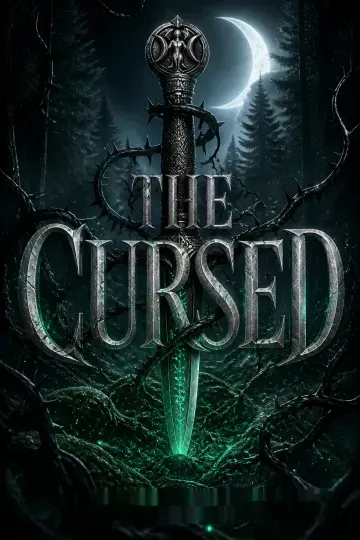
The Cursed operates at the volatile intersection of dark romance and theological fantasy, using the devil-as-lover trope to interrogate questions of consent, predestination, and moral agency. Willow's1 arc is a slow-motion escape from the martyrdom her abusive father programmed into her. Every institution that claims to protect her, the Coven, her friends, even Heaven's angels via Michael,6 ultimately treats her as a disposable tool. Only Gray,2 the literal Devil, refuses to sacrifice her, and his refusal is terrifying precisely because it is absolute: he would let the world burn. The novel's treatment of choice is deliberately uncomfortable. Gray2 coerces, manipulates, and imprisons Willow,1 yet the story argues that his honesty about what he is makes him more trustworthy than those who mask exploitation as virtue. When Iban5 kisses Willow1 and she feels nothing, the text confirms Gray's2 compulsion is gone; her growing love is real, which does not excuse his prior actions but reframes their dynamic as mutually chosen by the end. The Maiden/Mother/Crone prophecy expands the scope beyond a single couple's drama into generational warfare against Heaven itself. Michael's6 visit reveals the divine order as a tyranny of predestination: witches are damned regardless of their choices, which makes rebellion not just permissible but necessary. Willow's1 daughter is prophesied to tear God from Heaven, positioning the series' endpoint as nothing less than deicide. Margot's4 parallel story in Hell, begun in the epilogue, mirrors Willow's1 central dilemma: she fears her magic has ensnared Beelzebub's3 will, replicating the coercion she suffered from her rapist. The novel thus asks whether love can exist without manipulation when one partner holds vastly more power, and answers with a tentative, blood-soaked yes. The recurring imagery of bones, blood, and blooming things ties the romance to cycles of death and renewal, suggesting that even the devil might be redeemed through a love that chooses him freely.
Review Summary
People Also Read
Characters
Willow Morningstar
Hybrid witch, reluctant CovenantThe last living Hecate and Madizza witch, raised by an abusive father who trained her in cage fights and buried her alive as punishment. She arrived at Crystal Hollow seeking revenge for her aunt's murder, only to become Lucifer's2 wife and the new Covenant. Mismatched purple and amber eyes reflect her dual heritage. Fiercely combative yet terrified of her own capacity to love, she has spent her life as a weapon for others. Her magic uniquely combines necromancy and earth power, and after her resurrection, she gains access to all elemental magics through Gray's2 blood. Her deepest loyalty is to her younger brother Ash13.
Gray (Lucifer the Morningstar)
The Devil, Willow's husbandCast out of Heaven for wanting to strip humans of free will to prevent sin, Lucifer spent centuries trapped in a Vessel body, orchestrating his escape. In his true form, he has golden eyes, sharper features, and skin that radiates heat. He manipulated Willow's1 entire lineage to free himself, then fell genuinely in love with her when her apparition appeared during a murder fifty years before her birth. Possessive, ruthless, and capable of great cruelty, he is also unexpectedly tender with Willow1, craving the family his own denied him. His sister is the Goddess the witches worship.
Beelzebub
Archdemon, Margot's protectorThe archdemon who snapped Willow's1 neck under mistaken orders from Lucifer2. Massive and intimidating, with leathery bat-like wings and bronze skin tattooed with glowing Enochian runes. Despite his violence, he shows unexpected gentleness toward Margot4, calling her Songbird after hearing her hum. When she falls into Hell, he dives after her without hesitation, tearing his wing in the process. His devotion challenges Willow's1 assumption that all archdemons are irredeemable monsters.
Margot
Red witch, trauma survivorA quiet Red witch and Willow's1 roommate, deeply touch-averse due to being raped at fourteen by Itan Bray. Her singing voice carries her Red magic, unintentionally ensnaring those who hear it, which makes her fear she has stripped Beelzebub3 of his free will. She finds unexpected safety in the archdemon's presence, despite her history with men. Her fall into Hell at the climax separates her from her friends and traps her in a realm where her magic marks her as both powerful and vulnerable.
Iban Bray
Magicless ally, jealous betrayerA Bray witch who gave up his magic through The Choice, hoping to have a family. He made a secret deal with the old Covenant for first courting rights to Willow1 before she even arrived. Bookish and intelligent, he discovered the forbidden library and the Devil Killer dagger. His growing jealousy of Gray2 and his inability to accept Willow's1 rejection drive him to ally with Michael6, stabbing Willow1 with the spelled dagger to force open the Hellgate. His death, throat slashed by Willow1, closes the seal.
Michael
Archangel, Gray's twinLucifer's2 identical twin brother, an archangel with white feathered wings and righteous fury. He views witches as abominations who have corrupted the Source and insists they can never be redeemed. He visits Willow's1 dreams demanding she return all demons to Hell, offering nothing in return. When she refuses, he conspires with Iban5 to force open the Hellgate. His moral absolutism, condemning souls without possibility of salvation, makes him arguably more cruel than his fallen brother.
Della
Water witch, loyal friendA Water witch and Willow's1 steadfast roommate. In a secret romantic relationship with the Vessel Juliet10. She kneels first to pledge allegiance to Willow1 as Covenant and participates in the dagger spelling out of loyalty to her friend rather than hatred of Gray2.
Nova
Air witch, strategic friendAn Air witch and Willow's1 calm, observant friend. She challenges Willow1 to rule the Coven while plotting against Gray2, offering pragmatic strategy rather than emotional reaction. Her quiet strength provides balance to the group's dynamics.
Leviathan
Archdemon, gentle guardianThe tallest archdemon, with iridescent scales on his forearms and Caribbean-blue eyes. He guards Willow1 on Gray's2 orders but shows her unexpected kindness, staying with her when she needs to lay the dead to rest and fetching Gray2 when she attempts it alone.
Juliet
Vessel, Della's loverA female Vessel and Della's7 secret partner. She remembers what love felt like before becoming a Vessel and advises Gray2 on how to court Willow1. She brings Ash13 to Crystal Hollow as a wedding gift.
Charlotte Hecate
First Witch, the CroneWillow's1 ancestor who struck the original bargain with Lucifer2, creating the witch bloodlines. She appears in visions and the Source maze as the Crone figure of prophecy. She killed Willow's1 abusive father by burying him alive, mirroring his punishment of Willow1.
Jonathan Hatt
Cursed turned familiarA man cursed to wolf form for centuries after accusing Charlotte11 and other women of witchcraft, leading to their executions. Willow1 transforms him first into a human, then into a black cat familiar with violet eyes. He follows Margot4 into Hell at Willow's1 plea.
Ash
Willow's younger brotherWillow's1 powerless younger brother, the person she loves most. Gray2 brings him to Crystal Hollow as a wedding gift, reuniting the siblings and giving Willow1 the family she thought she had lost forever.
Plot Devices
The Hecate Bones
Ancestral necromancy conduitA chain of ancestral finger bones worn at Willow's1 waist that channels necromantic magic. Each bone connects to a past Hecate witch, allowing Willow1 to raise the dead, control skeletons, and access ancestral memories. The bones rattle when dark magic calls, demanding blood sacrifice. Willow1 adds her aunt Loralai's finger bone to the chain after laying her to rest, strengthening the connection. The bones represent the weight of lineage and the inescapable pull of destiny across generations.
The Diabolus Interfectorem Dagger
Devil-killing spelled bladeA bone-handled dagger that requires blood from all seven legacy houses to activate its power. Found in the forbidden library and spelled by Willow1 and six other witches, it was believed to be capable of killing Lucifer2. However, because Gray2 bound their lives together during Willow's1 resurrection, the blade actually channels death through her. Iban's5 knowledge of this makes him a traitor twice over: he let Willow1 believe she was assassinating Gray2 when she was really stabbing herself. The dagger is used first by Willow1 on Gray2, then by Iban5 on Willow1 to force open the Hellgate.
The Hellgate Seal
Portal between Earth and HellA mirror-like portal set into the floor of the Tribunal room that connects Earth to Hell's First Circle, Limbo. It can only be opened by Willow's1 blood and magic, making her the literal key to both freeing and imprisoning demons. Opened twice in the story: first when Willow1 completes Charlotte's11 bargain and returns Gray2 to his true body, and second when Iban5 forces her bleeding hands onto it, opening it from the other side. Closing the gate requires a sacrificial death. The seal represents the thin boundary between worlds that Willow1 straddles as a being of both life and death magic.
The Source
Primal magic of all existenceThe underlying magical force from which all witch power derives, accessible through maintaining balance with nature. Willow1 touches it directly and physically enters its heart, a living hedge maze where she meets Charlotte11 and learns the Maiden/Mother/Crone prophecy. The Source sustains Willow1 when she is mortally wounded by the dagger, flowing through Gray2 to keep her alive. It responds to her uniquely because she embodies both life and death magic simultaneously. Michael's6 father (God) once stole part of the Source's power, weakening it, and the prophecy foretells that Willow's1 daughter will reclaim that stolen power.
The Marital Bond
Life-binding magical marriageA magical connection formed when Lucifer2 marked Willow's1 shoulder in a dream fifty years before her birth and later consummated the marriage in his true body. The bond binds their lives irrevocably: if one dies, the other follows. It also allows them to feel each other's physical pain and emotional states. When Iban5 stabs Willow1, Gray2 begins bleeding from an identical wound. The bond means that any attempt to kill Gray2 by killing Willow1 would succeed, making her his greatest weakness and his ultimate protection simultaneously.
Coven of Bones Series

About the Author


Download PDF
Download EPUB
.epub digital book format is ideal for reading ebooks on phones, tablets, and e-readers.








































