
Plot Summary
Demon's Song, Witch's Curse
Beelzebub, an archdemon, prowls the cold halls of Hollow's Grove, resentful of Lucifer's new alliance with witches. He stumbles upon Margot, a Red witch whose song is both beautiful and dangerous, ensnaring him in a spell of desire. Margot, haunted by trauma and cursed with uncontrollable magic, is terrified of her own power. Their first meeting is charged with tension, attraction, and mutual distrust, setting the stage for a relationship that will challenge both their natures and destinies.
Margot's Secret Burden
Margot's life is shaped by her mother's expectations and the legacy of her house. She is burdened by a dark past—childhood abuse dismissed as nightmares—and a magic that isolates her from her peers. Her mother sees Margot's accidental ensnarement of Beelzebub as an opportunity for power, but Margot recoils at the idea of using her magic to control others. The weight of her trauma and the pressure to conform leave her feeling numb and alone, desperate for escape.
Dangerous Attraction Ignites
Drawn together by the spell, Beelzebub and Margot's interactions are fraught with danger and vulnerability. Margot's fear of touch and Beelzebub's struggle against the compulsion create a volatile dynamic. Despite their mutual wariness, they begin to see glimpses of each other's pain and strength. Their banter and confrontations in the library and halls of Hollow's Grove reveal a growing fascination, even as both resist the pull of magic and emotion.
Tribunal Reckoning
The Tribunal convenes, and secrets come to light. Willow, Margot's friend, claims her power and exposes the corruption of the Coven's leaders. Margot is forced to confront her abuser, Itan, in front of the entire community. With Willow's support, Margot demands a confession, finally breaking the silence around her abuse. The Tribunal's violent downfall is both cathartic and traumatic, leaving Margot shaken but no longer voiceless.
Truths and Betrayals Unveiled
Margot overhears her mother and other heirs discussing the binding ritual that has cut her off from the Source of magic. She confronts her mother, learning that her abuse was the price paid for power and that she is not alone—other heirs have suffered the same fate. The revelation of her magical binding and the betrayal by those meant to protect her deepen Margot's resolve to seek freedom and justice, even as she grapples with rage and grief.
Beelzebub's Reluctant Protection
Despite his resentment and the spell's compulsion, Beelzebub finds himself protecting Margot from threats both external and internal. Their relationship shifts as he witnesses her vulnerability and strength, and she begins to rely on his presence for safety. The lines between captor and protector blur, and Beelzebub's feelings become more complicated, driven by something deeper than magic.
Shattered Bonds, New Resolve
Margot asserts her independence, breaking off her arranged engagement and rejecting the expectations of her house. Beelzebub intervenes when Keane, her betrothed, refuses to accept her decision. Margot's confrontation with her mother and the heirs reveals the extent of the Coven's manipulation. She chooses to trust Beelzebub, not out of compulsion, but necessity, as they prepare to face the dangers ahead together.
The Descent into Hell
A violent confrontation with Michael, the archangel, results in Margot being thrown through the gateway to Hell. Beelzebub follows, risking everything to save her. They land in the First Circle, Limbo, surrounded by demons and lost souls. The journey through Hell's circles begins, each one testing their resolve, their relationship, and their ability to survive in a world designed to punish.
Surviving the Circles
Margot and Beelzebub traverse the circles of Hell, each representing a deadly sin. They encounter old enemies, new allies, and the lords of each circle, who demand a price for passage. Margot's magic and trauma are both weapon and weakness, while Beelzebub's reputation and power offer protection. Their bond is tested by temptation, violence, and the ever-present threat of damnation.
Siren's Power Unleashed
In the Circle of Lust, Margot's siren heritage is awakened. She learns that her magic is not just about lust, but also love—a power long suppressed by her binding. With the help of her ancestor Amelia, Margot begins to understand the duality of her nature and the importance of embracing both light and dark. Her struggle to control her magic becomes a fight for self-acceptance and agency.
The Price of Survival
Margot and Beelzebub's relationship deepens as they face mortal danger. Margot is forced to use her magic to heal Beelzebub, risking her own sanity and safety. Their intimacy becomes both a source of strength and a reminder of the boundaries imposed by trauma and magic. The cost of survival is high, and both must confront what they are willing to sacrifice for each other.
Facing the Past
In the Circle of Violence, Margot is forced to relive her childhood trauma, facing a vision of her younger self and the pain she has tried to bury. The trial is brutal, but she emerges with a new sense of self-forgiveness and determination. Beelzebub, witnessing her ordeal, realizes the depth of his feelings and the importance of supporting her healing, not just her survival.
The Circle of Lust
Margot must prove control over her sin to pass through Lust. She refuses to use her magic to enthrall others, instead finding a way to satisfy the circle's demands without violating her own boundaries. Beelzebub's immunity to her magic is revealed, and their mutual attraction is finally acknowledged as genuine, not just a product of compulsion. Their relationship shifts from one of necessity to choice.
Gluttony's Temptations
In Gluttony, Margot resists the temptations of overindulgence, passing the test with Beelzebub's support. They encounter old rivals and jealousies, but Margot's newfound confidence and control over her magic allow her to assert herself. The journey through Gluttony is a lesson in moderation, self-worth, and the importance of choosing what to consume—both literally and metaphorically.
Greed and Jealousy
The Circle of Greed tests Margot's ability to let go. Jealousy and possessiveness threaten to tear her and Beelzebub apart, but they confront these feelings head-on. Margot's willingness to walk away rather than be owned proves her growth, and Beelzebub's realization that love is not possession cements their partnership. Together, they reject the toxic patterns of their pasts.
Wrath and Sacrifice
Wrath is a crucible of violence and rage. Margot and Beelzebub are separated and forced to fight for their lives. Margot's refusal to give in to vengeance, even against those who have wronged her, marks a turning point. Beelzebub's willingness to risk everything for her safety is both a declaration of love and a sacrifice that nearly costs him his life.
Violence Within and Without
Margot faces the violence she has internalized, reliving her abuse and the self-hatred it spawned. The trial is harrowing, but she chooses to break the cycle, refusing to become a monster or end her own life. Her victory is not just survival, but the reclamation of her agency and the decision to live fully, despite the scars.
The Mirror of Self
Emerging from Violence, Margot is changed. She forgives herself and embraces her power, no longer defined by her trauma or the expectations of others. Beelzebub, witnessing her transformation, reaffirms his love and commitment. Together, they prepare to face the final circles, armed with a new understanding of themselves and each other.
Fraud's Deceptions
In Fraud, Margot must confess her deepest truth to pass. Legion, the demon of the circle, forces her to admit her love for Beelzebub, threatening to sever their bond if she lies. The confession is painful but liberating, solidifying their relationship as one of mutual choice and honesty. The power of truth becomes their greatest weapon against the deceptions of Hell.
Treachery's Final Test
The final circle, Treachery, demands the ultimate price. Margot is betrayed by Satanus, who exploits the bargain she made to save Beelzebub. She is stabbed and left to die, her sacrifice a testament to the depth of her love. As she bleeds out, Margot reflects on her journey, her choices, and the meaning of love and agency in a world built on pain.
Love, Death, and Rebirth
Margot's death is not the end, but a transformation. Her journey through Hell has stripped her of illusions, bindings, and fear. Beelzebub, having risked everything to save her, is changed as well. Together, they face the possibility of rebirth—of returning to the world above, not as victims or monsters, but as survivors who have claimed their power, their love, and their future.
Analysis
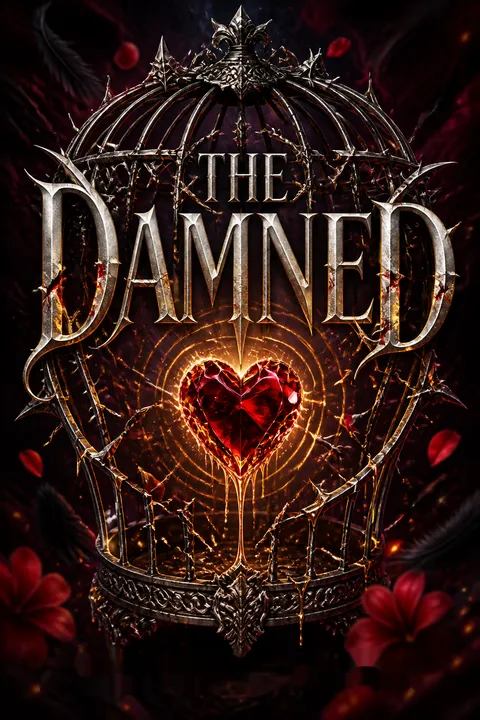
Harper L. Woods' The Damned is a dark, emotionally charged exploration of trauma, agency, and the redemptive power of love set against a lushly imagined underworld. At its core, the novel is about reclaiming one's voice and autonomy in the aftermath of abuse and betrayal. Margot's journey—from a silenced, isolated survivor to a woman who confronts her abuser, exposes systemic corruption, and ultimately chooses to live and love on her own terms—is both harrowing and inspiring. The use of Hell's circles as both physical and psychological trials allows the narrative to externalize internal struggles, making the process of healing visceral and mythic. The romance between Margot and Beelzebub, initially fraught with compulsion and mistrust, evolves into a partnership grounded in consent, vulnerability, and mutual respect. The novel does not shy away from the complexities of trauma, the messiness of recovery, or the cost of survival, but it also offers hope: that even in the darkest places, love, truth, and self-acceptance can lead to rebirth. For modern readers, The Damned is a testament to the resilience of the human (and inhuman) spirit, the necessity of confronting the past, and the transformative power of choosing one's own destiny.
Review Summary
Characters
Margot Erotes
Margot is a Red witch marked by trauma, magical power, and a legacy of betrayal. Abused as a child and dismissed by her family, she grows up isolated, numb, and fearful of her own magic. Her siren song is both a curse and a weapon, capable of ensnaring even archdemons. Margot's journey is one of reclaiming agency: she confronts her abuser, exposes the Coven's corruption, and faces the violence within herself. Her relationship with Beelzebub evolves from compulsion to genuine love, challenging her to trust, heal, and accept both her light and darkness. Margot's arc is a testament to survival, self-forgiveness, and the power of choice.
Beelzebub
Beelzebub is Lucifer's second-in-command, a powerful archdemon shaped by centuries of resentment and abandonment. Initially viewing witches as enemies, he is ensnared by Margot's song and forced into a role of protector. His struggle against compulsion gives way to genuine affection as he witnesses Margot's pain and resilience. Beelzebub's journey is one of vulnerability: he learns to care, to sacrifice, and to love without possession. His immunity to Margot's magic reveals the authenticity of his feelings, and his willingness to risk everything for her marks his transformation from monster to partner.
Fritha Erotes (Margot's Mother)
Fritha is a product of the Coven's toxic legacy, prioritizing power and reputation over her daughter's well-being. She orchestrates Margot's binding and turns a blind eye to abuse, justifying cruelty for the greater good. Her relationship with Margot is fraught with manipulation, disappointment, and conditional love. Fritha embodies the generational trauma and complicity that Margot must overcome to break free.
Willow
Willow is Margot's closest friend and a Green witch with a gift for restoring balance. Her defiance of tradition and willingness to confront authority inspire Margot to find her own voice. Willow's relationship with Lucifer and her role in exposing the Tribunal's corruption are pivotal to the story's upheaval. She represents hope, solidarity, and the possibility of a better future.
Itan
Itan is a Tribunal member and Margot's abuser, protected by the Coven's silence and complicity. His eventual public confession and execution are a turning point, forcing the community to confront its darkest secrets. Itan's legacy is one of pain, but his downfall marks the beginning of Margot's healing and the Coven's reckoning.
Amelia Erotes
Amelia is Margot's ancestor and the original Red witch, residing in the Circle of Lust. She helps Margot understand the true nature of her magic—its capacity for both lust and love. Amelia's wisdom and history provide context for Margot's struggle, offering a path toward self-acceptance and balance.
Satanus
Satanus is an archdemon whose motivations are rooted in power and manipulation. He saves Beelzebub at a price, exploiting Margot's desperation and ultimately betraying her in the final circle. Satanus embodies the dangers of bargains and the cost of survival in a world where trust is scarce.
Legion
Legion is the demon of Fraud, compelling Margot to confess her deepest truth. She is both judge and catalyst, forcing Margot to confront her feelings for Beelzebub and the consequences of deception. Legion's role is pivotal in transforming Margot's relationship from one of compulsion to one of choice and honesty.
Belphegor
Belphegor is Beelzebub's brother and the ruler of Heresy. His relationship with Beelzebub is marked by camaraderie, rivalry, and shared history. Belphegor's presence offers insight into the complexities of demon kinship and the longing for belonging, even among the damned.
Keane
Keane is Margot's betrothed, chosen by the Covenant for political reasons. His inability to accept Margot's autonomy and his entitlement to her affection highlight the pressures of tradition and the importance of self-determination. Keane's role is to contrast genuine love with obligation and control.
Plot Devices
Dual Narrative Structure
The story alternates between Margot and Beelzebub's points of view, allowing readers to experience both the internal struggles of trauma and the external dangers of Hell. This structure creates intimacy, tension, and a fuller understanding of the evolving relationship, as each character's vulnerabilities and motivations are revealed in turn.
The Circles of Hell
The journey through Hell's circles is both literal and metaphorical, with each sin representing a challenge that forces Margot and Beelzebub to confront aspects of themselves and their relationship. The circles serve as stages of transformation, with foreshadowing and callbacks to earlier traumas and choices. The progression from Limbo to Treachery mirrors the arc from survival to self-acceptance and love.
Magical Binding and Release
Margot's magical binding is both a plot obstacle and a symbol of her trauma—cut off from the Source, she is denied her full power and capacity for love. The breaking of the binding, achieved through sacrifice and self-forgiveness, marks her transition from victim to survivor. The device is used to explore themes of consent, autonomy, and the reclamation of self.
Confession and Truth as Salvation
In the Circle of Fraud, Margot's forced confession is the climax of her emotional journey. The device of magical compulsion to tell the truth externalizes the internal struggle to be vulnerable and honest, both with herself and with Beelzebub. The act of confession transforms their relationship and allows for genuine connection.
Foreshadowing and Symbolism
Songs, mirrors, and the color red recur throughout the narrative, symbolizing power, self-reflection, and both danger and vitality. Early warnings about the cost of magic and the dangers of bargains foreshadow later betrayals and sacrifices. The journey's structure, with each circle demanding a price, reinforces the theme that healing and love require facing pain and making difficult choices.
Coven of Bones Series
About the Author
Other books by Harper L. Woods


Download PDF
Download EPUB
.epub digital book format is ideal for reading ebooks on phones, tablets, and e-readers.








































