


Plot Summary
Prologue
In 1753, Lord Adderly, a British naval commodore, rows toward Dracadia Island to find it burned to ash, flocks of ravens circling overhead. A dying acolyte boy stumbles from the charred trees, his robes soaked in blood, speaking of black worms spilling from the mouths of madness — creatures that commanded flames.
Before the boy expires, he delivers a chilling revelation: Adderly and his men never arrived by boat. They came days ago with the priests and are dreaming. When they wake, they will find themselves tied to stakes, their flesh already searing. Adderly closes his eyes, and the first screams pierce the air. The ancient horror of Noctisoma on Dracadia Island predates the university by centuries.
The Worms Were Real
When Lilia1 was sixteen, her mother tried to drown her younger sister Bee10 in their Covington apartment bathtub. Lilia1 fought her off, but her mother then submerged herself — and long, black worms began pouring from her mouth and nose. Lilia1 passed out. She was told her mother committed suicide by slitting her wrists, that the worms were trauma-induced hallucinations.
Four years later, a microbiology professor reads the fictional case study Lilia1 wrote about those worms and tells her they are real — a parasite called Noctisoma, studied exclusively at Dracadia University. He hands her a black envelope sealed in gold wax: a full scholarship to the only place that can explain what killed her mother.
Doctor Death's Island
Lilia1 boards the midnight train out of Covington with one suitcase holding everything she owns. After a ferry ride through fog to the dragon-shaped island, she arrives at a campus of weathered stone buildings, vine-covered towers, and gargoyles perched above manicured gardens.
She's assigned to Crixson House — the dorm where, twenty years earlier, six women in a clinical study drowned themselves in a lake. Her new RA, Mel,6 warns her about Professor Bramwell,2 called Doctor Death by the student body: a pathologist whose father ran the botched study, who was the last person to see a missing student named Jenny Harrick alive, and who was attacked with sulfuric acid by her boyfriend. When Lilia1 first locks eyes with those copper irises, something other than fear takes root.
Worms Beneath the University
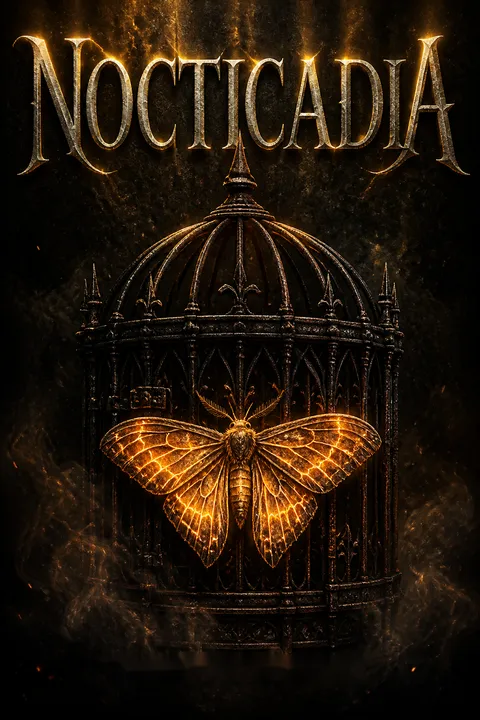
At midnight, a campus shuttle delivers students to Nocticadia — Bramwell's2 candlelit laboratory where infected purple moths flutter in glass domes and black worms squirm in bioluminescent tanks. Lilia1 recognizes the creatures instantly: the same parasites that slithered from her mother's mouth.
Floors below, Bramwell2 keeps a secret no student suspects. He has kidnapped a criminal named Barletta,12 infected him with Noctisoma eggs hidden in whiskey, and locked him in an ancient cell beneath the building.
Bramwell2 suffers from Voneric's Disease — a rare condition destroying his nervous system — and needs the toxin these parasites produce to survive. Human hosts yield the most potent version. As Lilia1 watches the worms through glass, Bramwell2 watches her, intrigued by how much she already knows.
Mother in the Photograph
Mel6 leads Lilia1 through a hidden door in her dormitory closet, down into tunnels once used to hide children from raids. In an underground room lit by candles, Mel's6 group Anon Amos keeps boxes of documents stolen from the university — files from the Crixson Project that were supposed to be destroyed. Lilia1 opens a folder and finds the faces of the eight study participants.
Third from the right stands a woman she would know anywhere. Her mother — listed as Vanessa Corbin, a Dracadia native. Everything unravels: the mother she loved had been someone else entirely, from a place she never mentioned, carrying secrets she took to the bathtub. The girl who came to Dracadia seeking answers about a parasite now faces a far more personal mystery.
Blackmailing Doctor Death
At a charity gala, Bramwell2 tells Lilia1 the wealthy stare because she is the only thing worth staring at — then publicly humiliates a donor who gropes her thigh under the table. Hours later, someone laces her drink with noxberries, a potent hallucinogenic native to the island.
She collapses in the gardens. Bramwell2 carries her unconscious body to his car and down to a cell in his lab's catacombs, where she wakes handcuffed to a bed. Security cameras caught him carrying her — footage that could destroy his reputation.
Lilia1 seizes the leverage: she will clear his name if he makes her his lab assistant. He offers money instead. She refuses. He threatens to lock her in the cell forever. She holds her ground. He agrees, furious, and their arrangement begins.
The Numbness Breaks
Working nights in Bramwell's2 underground lab, Lilia1 pours agar, sterilizes instruments, and absorbs fragments of knowledge about the toxin he is developing. One evening, she accidentally locks herself in a secondary autopsy room with a mutilated corpse — a man with gouged-out eye sockets.
Her screams bring Bramwell2 crashing through the door. She throws herself into his arms, and something impossible happens: his hands register the texture of her damp hair, the warmth of her skin. For years, Voneric's Disease has robbed all sensation from his body.
Now, holding Lilia,1 every nerve fires to life. He strokes her cheek, runs his fingers through her hair, and presses his lips to hers. Then he pulls away, says his work is too important, and fires her — slipping a five-thousand-dollar check into her lab coat.
Needles and Confessions
Lilia1 returns for her forgotten bag and catches Bramwell2 shirtless at his desk, tourniquet around his bicep, pushing a syringe of purple Noctisoma toxin into his own vein. She hides, but he finds her.
Stranded by a downpour, they spend the night in his office — she cuffed to the foldout bed for sleepwalking, he in his desk chair. Over whiskey and candlelight, Bramwell2 reveals his twin Caedmon8 was kidnapped at seventeen and presumed murdered. He speaks of his father14 locking him in a closet with corpses as punishment, and the word impervious that Caedmon8 taught him to ward off death.
By morning, the distance between them has collapsed into the desperate arithmetic of two people who should not want each other this badly. They cross the line they swore they never would.
A Prisoner Names Angelo
Deep in the catacombs, Barletta12 deteriorates — his liver consumed, his spine curling, hallucinations tormenting him with visions of the son he battered comatose. Bramwell2 has been visiting regularly, telling the story of his childhood in installments — each chapter a slow unveiling of why this man was chosen.
Barletta12 was the driver who transported Caedmon8 to his captors. With a fake antidote as bait, Bramwell2 demands the name of the man who received his brother. Barletta12 chokes it out: Angelo DeLuca.7
Crooked nose, scar at his eye. The same man who corners Lilia1 in her apartment, who threatens her with sexual violence, who lurks at the edges of her stepfather Conner's9 criminal dealings. Bramwell's2 revenge and Lilia's1 danger converge on a single name.
Lippincott's Daughter
Gilchrist5 visits Lilia's1 dorm with a bargaining chip: a computer chip containing the complete Crixson files, including how her mother became infected. In exchange, she wants names from Mel's6 underground group — and for Lilia1 to leave Dracadia.
Lilia1 trades a name and asks who her father is. The answer lands like a fist: Provost Lippincott,3 who got her mother pregnant during the study and demanded she abort. Later, Lilia1 discovers a letter her mother hid inside a painting's canvas, written two weeks before her death.
It confirms everything — her real name was Vanessa Corbin, she fled Dracadia pregnant, and the married doctor she loved was dangerous. Her mother begged Lilia1 never to seek him out. The man who signed her scholarship also ordered her erasure.
Forbidden in the Rotunda
Stolen glances harden into addiction. They meet after hours in the library rotunda's upper floor — a forgotten storage room behind walls of historical texts, where Lilia1 has noticed a connection between ancient black stones and Noctisoma resistance. But research yields to hunger.
Against the wall, watching their tangled reflection in an ornate mirror, Bramwell2 traces her body with the desperation of a man who spent decades unable to feel. He warns her he will destroy anyone who touches her — then proceeds to destroy her himself, with a thoroughness that explains why Gilchrist5 cannot let him go.
They make love while strangers browse shelves one floor below. Each encounter deepens the entanglement neither can afford. Exposure means expulsion for her, disgrace for him, and the death of his research.
Black Rock Saves Bramwell
At Amorisse Cove, where Lilia1 dips her feet in the ocean for the first time in her life, Bramwell2 collapses beside his car. The toxin has stopped working — his muscles lock, his heart strains toward arrest. Lilia1 finds his last syringe in his coat pocket and, hands shaking, pushes the needle into his vein.
He stops seizing but burns with fever. She drives to an Emberwick apothecary, where a woman named Francesca administers black rock tea brewed from minerals harvested in the island's underwater caves. Bramwell's2 sensation returns within hours.
The element — casteyon, a newly discovered metal in the black rock — appears to sustain the toxin's effects indefinitely. Lilia1 has unknowingly handed her professor the missing piece of his life's work. His test moths, Patroclus and Achilles, take flight again.
Expelled and Exposed
Mel6 publishes two scoops on her campus blog: that Lilia1 is Lippincott's3 illegitimate daughter, and that she has been sleeping with Doctor Death2 — supported by a photograph of a steamed-up car window bearing Lilia's1 distinctive forearm tattoo. Dean Langmore arrives at her dorm with security guards. She has minutes to pack everything back into the same suitcase she arrived with.
On her way out, she passes Mel's6 door and drives her fist into the girl's face. The ferry carries her back across the water she crossed with such hope weeks earlier. She returns to Covington, to Conner's9 filthy apartment above the theater, and curls up on a bed that no longer feels like hers. Bramwell2 is away on business. Her phone is dead. She is completely alone.
Angelo's Blade and Truth
Angelo7 materializes in the dark apartment with a gun and a pocketknife. He drugs Lilia,1 pins her to the floor, and carves a gash from her eye to her jaw while promising to rape and dismember her.
Between blows, he forces open the memory she buried for four years: it was Lilia1 who held her mother underwater that night, trying to stop her from drowning Bee.10 Angelo7 arrived afterward, found the mother barely alive, slit her wrists to stage a suicide, and sent the worms down the drain.
Someone at Dracadia hired him to finish what the parasite started — and now to eliminate Lilia1 herself. She smashes Angelo's7 skull with a track trophy. Bramwell,2 who raced from Maine after learning of her expulsion, crashes through the door. Angelo's7 screams echo as Bramwell2 exacts a revenge that will not be quick.
The Dead Twin Walks
At the Bramwell Estate, where Devryck2 has hidden Lilia1 to recover, a second version of him appears in the doorway — identical face, but scarred hands, tattooed torso, and eyes carrying a feral darkness. Caedmon Bramwell8 survived his kidnapping.
He was never incinerated; Angelo7 faked the execution video. Instead, Caedmon8 was sold to a sadist who brainwashed him into a killer over years, feeding him lies that Devryck2 had conspired against him. Caedmon8 has been the plague mask figure haunting campus, hunting Angelo7 and Lippincott3 for revenge.
He takes Lilia1 to the university on his motorcycle and hands her Gilchrist's5 stolen data chip. He tells her that Devryck2 has lied about The Rooks — a secret society whose ceremonial garb includes the very plague mask she was told was a hallucination.
The Golden Cage Vote
The Rooks seize Lilia1 and lock her in a golden cage within their underground tribunal, where hooded members in plague masks decide fates. Because Devryck's2 research is too valuable to lose, Lilia1 stands trial in his place — accused of complicity in his alleged crimes.
Devryck2 presents video proof that Mel6 struck Jenny Harrick with a shovel and Lippincott3 burned the unconscious girl alive in the campus incinerator, clearing his own name at last. He offers his personal endorsement to make Lilia1 a Rook member, staking his own life on hers.
Standing barefoot in the cage, Lilia1 negotiates: a full four-year scholarship with a master's degree, and her grandmother's cottage on the island. All seven members lay their voting pins gold-side up. She is branded with their emblem and walks out alive.
Brothers' Blood and Embrace
Devryck2 finds Caedmon8 in the foyer of the estate he swore never to revisit. His twin is hostile — brainwashed into believing Devryck2 betrayed him by joining The Rooks, seething with years of captivity and torture. The conversation detonates into a brawl across the marble floor, Caedmon's8 blade at Devryck's2 throat. Devryck2 whispers the word they shared as boys: impervious.
The armor cracks. Caedmon's8 fists give way to shaking hands and grief that has been sealed for sixteen years. He reveals he was sold into slavery, unmade into someone he does not recognize. He needs to leave Dracadia, to find a reason to keep living. Devryck2 begs him to stay. Caedmon8 whispers to Lilia1 to look after his brother, then walks into the dark.
Epilogue
Seven weeks later, Lilia1 works beside Bramwell2 as his Associate Researcher. The black rock casteyon has stabilized the Noctisoma toxin — their test moths fly, and Bramwell2 has not seized in weeks. Clinical trials approach. Her grandmother's cottage is being renovated into a home for her and Bee.10
They are in love, stealing moments between science and each other in his candlelit laboratory. Then Bee10 texts a photograph of her boarding school's handsome new English teacher, gushing about his motorcycle and smoky appeal.
Lilia1 enlarges the image and freezes. The face staring back is identical to Devryck's2 — but scarred differently. Mr. Caed, Bee10 types, adding that she plans to ask him for coffee. Lilia1 stares at the screen, her heart hammering. Caedmon Bramwell8 has surfaced at her sister's school.
Analysis
Nocticadia operates as a sustained meditation on how parasitism functions not only biologically but psychologically and institutionally. The Noctisoma worm is the novel's central metaphor, but the true parasites are the systems of power — academic, patriarchal, economic — that feed on their hosts while offering just enough benefit to prevent rejection. Lippincott3 feeds on Bramwell's2 research while sabotaging it. The Rooks feed on Bramwell's2 genius while caging him. Angelo7 feeds on Conner's9 loyalty while destroying his family. Even Bramwell2 feeds on his test subjects while convincing himself the ends justify the means.
Lilia's1 arc inverts the parasitic relationship. She arrives at Dracadia as someone the system should consume — impoverished, unconnected, vulnerable — and instead becomes the element that stabilizes the very organism threatening to kill her professor. The black rock casteyon, sourced from indigenous knowledge that colonial science dismissed as superstition, literalizes the novel's argument that the cure often exists in the places power refuses to look. Lilia's1 contribution is not a laboratory breakthrough but an act of desperate love — giving tea to a dying man — which succeeds precisely because it bypasses institutional gatekeeping.
The dual narration exposes how intimacy requires mutual vulnerability between two people whose survival strategies are diametrically opposed. Lilia1 protects herself through hypervigilance and emotional armor; Bramwell2 protects himself through numbness and control. Their relationship works because each supplies what the other lacks — she gives him sensation, he gives her safety — but the novel refuses to romanticize this codependency uncritically. The power imbalance between professor and student is never fully resolved, only renegotiated through Lilia's1 admission to The Rooks, which grants her institutional leverage to match his. The story argues that love in corrupt systems requires not innocence but strategic ruthlessness — a willingness to blackmail, bargain, and fight with the same weapons used against you.
Review Summary
Nocticadia receives mostly positive reviews, with readers praising its dark academia setting, gothic atmosphere, and intriguing plot. Many appreciate the slow-burn romance between Professor Devryck and student Lilia, as well as the author's attention to scientific detail. Some readers found the book too long or slow-paced, while others were captivated throughout. The novel's spooky and mysterious elements, combined with its exploration of a fictional disease, resonated with fans of gothic romance and dark academia. Overall, readers found the book atmospheric, engaging, and unique.
People Also Read

Characters
Lilia Vespertine
Resilient scholar seeking truthA twenty-year-old from Covington who lost her mother to a mysterious illness and has spent four years believing she hallucinated the parasitic worms that emerged from the dying woman's body. Lilia carries the weight of being her family's sole functional adult since age sixteen—paying her half-sister's10 boarding school tuition while working janitorial night shifts and attending community college. She wears her dead mother's ashes in a vial around her neck and restrains her own wrist to the bed frame each night to prevent sleepwalking. Beneath her anxious exterior lives a formidable intellect and a stubborn defiance that refuses to crumble under poverty, grief, or intimidation. Her deepest wound is self-blame, and her greatest strength is the same ferocity she directs at protecting those she loves.
Devryck Bramwell
Tormented professor and researcherA pathologist in his early thirties who teaches neuroparasitology at Dracadia University and carries the moniker Doctor Death with grim indifference. Devryck suffers from Voneric's Disease, a rare congenital condition triggered by childhood abuse that has stripped virtually all physical sensation from his body and threatens cardiac arrest with every seizure. He inherited both his father's14 disgraced research and an ancestral membership in The Rooks, a centuries-old secret society. His emotional architecture is a fortress built from trauma—an abusive father14 who locked him in closets with corpses, and the apparent murder of his twin brother8. He channels grief into obsessive scientific precision and a rigid emotional detachment that masks a desperate yearning to feel something, anything, again. His moral compass spins between brilliance and brutality.
Edward Lippincott
Corrupt provost with secretsThe Provost of Dracadia University, a first-generation Rook who married into wealth and clawed his way to power through political maneuvering. Lippincott projects authority and respectability while concealing a history of betrayal that spans two decades. He is obsessively protective of his position, terrified of his wife's financial leverage, and willing to eliminate threats with surgical ruthlessness. His relationship to Lilia's1 past drives much of the novel's central mystery, and his paranoia about exposure makes him increasingly dangerous.
Spencer Lippincott
Charming provost's conflicted sonThe provost's3 son, a blond, blue-eyed junior who befriends Lilia1 on her first day and persistently inserts himself into her life with a blend of genuine kindness and troubling manipulation. Spencer carries the burden of a father who treats him with contempt and a mother whose secrets weigh on him. He is caught between wanting to be decent and being weaponized by those more powerful than him. His relationship with Lilia1 oscillates between protective friendship and an attraction she does not reciprocate.
Loretta Gilchrist
Jealous department chairThe entomology professor and Department Chair who petitioned Lilia's1 admission to Dracadia, ostensibly impressed by her case study but driven by deeper motives connected to the Crixson Project. Gilchrist is a woman of considerable intelligence undermined by obsessive jealousy and a desperate need for romantic validation. She wields her academic authority as both shield and weapon, capable of vindictive grade sabotage and strategic information trading in equal measure.
Melisandre
Underground blogger and RALilia's1 resident advisor at Crixson House, an eclectic goth with pierced brows and red lipstick who leads Anon Amos, an underground campus blog dedicated to exposing Dracadia's buried truths. Mel is driven by the disappearance of her roommate Jenny Harrick and harbors deep animosity toward Bramwell2. Her loyalty is conditional and her capacity for vindictiveness runs as deep as her capacity for investigation. She is the daughter of the chairman of The Rooks, a fact that carries consequences neither she nor Lilia1 anticipate.
Angelo DeLuca
Predatory criminal enforcerConner's9 associate and a figure of menacing omnipresence in Lilia's1 life—a man with beady eyes, a crooked nose, and an odor like freshly churned dirt. Angelo embodies predatory masculinity at its most naked and repulsive. He makes sexual threats casually, treats women as objects to be consumed, and operates within a network of violence that extends far beyond petty crime. His connection to Dracadia's past is deeper and more consequential than anyone in Lilia's1 Covington apartment suspects.
Caedmon Bramwell
Devryck's lost twin brotherDevryck's2 identical twin, three minutes older, who was kidnapped at seventeen from boarding school. In childhood, Caedmon served as Devryck's2 protector and emotional anchor—the bold half of a pair where one was fearless and the other fragile. He taught Devryck2 the word impervious as a talisman against their father's14 cruelty. His absence haunts every decision Devryck2 makes, and the guilt of having been unable to save him shapes the man Devryck2 becomes.
Conner
Bee's well-meaning fatherBee's10 biological father and Lilia's1 stepfather figure, a blue-collar mechanic who moved back in after Lilia's1 mother died to prevent the girls from entering foster care. Conner is not malicious but is chronically irresponsible—he drinks too much, associates with dangerous men, and lacks the emotional vocabulary to parent effectively. He represents the ceiling of what loyalty without competence can offer.
Bee (Beatrix)
Lilia's vulnerable half-sisterLilia's1 twelve-year-old half-sister at the story's start, four years younger, who found their mother dead in the bathtub and retreated into severe anxiety and depression afterward. Bee attends a boarding school for mental health where she is thriving, but her tuition is the financial millstone around Lilia's1 neck. She is the emotional engine driving many of Lilia's1 most desperate decisions.
Jayda
Lilia's bold hospital friendLilia's1 coworker at the Covington hospital, a twenty-three-year-old pregnant woman whose blunt counsel and spiritual encouragement push Lilia1 toward Dracadia. Jayda rallies the hospital staff to fund Lilia's1 departure and serves as her most reliable confidante throughout the story—the one person who tells her the truth without agenda.
Barletta
Bramwell's kidnapped test subjectA homeless alcoholic and child abuser whom Bramwell2 lures from an alley and infects with Noctisoma. He serves as both a test subject for the toxin and a narrative vessel through which Bramwell2 reveals his childhood trauma and the identity of the men who took Caedmon8.
Briceson
Lilia's chemistry-major friendA sophomore chemistry student who befriends Lilia1 on the ferry to Dracadia. His research on black rock casteyon inadvertently contributes to the scientific breakthrough that stabilizes the Noctisoma toxin.
Warren Bramwell
Devryck's abusive dead fatherThe deceased patriarch of the Bramwell family, a former Dracadia professor who led the Crixson Project. His cruelty toward his sons and his disgraced legacy cast a long shadow over Devryck's2 career and identity.
Plot Devices
Noctisoma
Parasite driving all conflictA long, black parasitic worm native to Dracadia Island whose natural host is the Sominyx moth. Noctisoma produces a powerful toxin that hijacks the host's brain and body—suppressing competing pathogens, reversing organ damage, and manipulating behavior to drive the host toward water for the parasite's reproductive cycle. In humans, infection progresses through light sensitivity, raw meat cravings, hallucinations, spinal distortion, and glowing eyes before culminating in death and expulsion of the worms. The toxin's therapeutic potential—curing autoimmune diseases, regenerating tissue—is the basis of Bramwell's2 research and the reason powerful men kill to control it. The organism connects every plotline: Lilia's1 mother's death, Bramwell's2 self-experimentation, the Crixson Project murders, and the story's resolution.
The Seven Rook Society
Secret society controlling powerA centuries-old secret society headquartered in a cathedral called The Roost, near Dracadia University. Members include former CIA directors, presidents, and inventors, all branded with an emblem of two crossed medical canes and a seven. They fund Bramwell's2 research, execute traitors in gas-filled golden cages, and operate entirely outside conventional law. The Rooks serve as both protector and prison for Bramwell2—insulating his work from outside interference while demanding results and obedience. Their ceremonial plague masks, inherited from the institution's origins as a monastery for the mentally ill, create the terrifying apparition that haunts Lilia1 throughout the story. The society represents how concentrated power can corrupt science, erase inconvenient truths, and decide who lives or dies without consequence.
Black Rock Casteyon
Missing scientific catalystA newly discovered metallic element found in the black rock formations of Dracadia's underwater caves, particularly at Devil's Perch beneath Bone Bay. The indigenous Cu'unotchke tribe used sharpened black stones as teeth and consumed the mineral in tea for centuries, inadvertently protecting themselves from Noctisoma infection. Seagulls and ravens that ingest black rock gastroliths similarly resist the parasite. When Lilia1 gives Bramwell2 black rock tea from a local apothecary during a medical emergency, the element stabilizes the Noctisoma toxin in his body—sustaining its healing effects indefinitely rather than letting them metabolize within days. This accidental discovery provides the key breakthrough that transforms Bramwell's2 stalled research into a viable treatment, and its origin in folk medicine and indigenous knowledge counterpoints the university's clinical approach.
The Plague Mask Figure
Recurring omen and mysteryA figure in a long black cloak and a beaked plague doctor's mask who appears repeatedly to Lilia1—near her dorm, in the courtyard, at the gala, and at the Bramwell Estate. Lilia1 initially reports the sightings, but Bramwell2 convinces her they are hallucinations caused by exhaustion and her reading about Dr. Stirling, the historical plague doctor of the monastery. The mask is actually ceremonial garb belonging to The Rooks, and the figure's identity drives a central mystery. The device exploits Lilia's1 history of trauma-induced hallucinations to gaslight her about a real threat, blurring the line between psychological fragility and genuine danger throughout the narrative.
The Painting's Hidden Letter
Mother's posthumous confessionA seascape painting Lilia's1 mother created years before her illness, depicting a cliffside oak tree with a swing overlooking the ocean—a place Lilia1 always assumed was fictional. The painting is one of the few possessions Lilia1 carries to Dracadia and back. Hidden behind the canvas backing is a letter written by her mother two weeks before her death, confessing her true identity as Vanessa Corbin, a Dracadia native who fled the island pregnant after a married doctor3 demanded she terminate the pregnancy. The letter serves as the mother's final act of protection: it confirms paternity without naming the father, warns Lilia1 to stay away from him, and reveals that every foundational story Lilia1 believed about her family was a lie constructed out of love.
FAQ
Synopsis & Basic Details
What is Nocticadia about?
- Gothic academia romance: The story follows Lilia Vespertine, a young woman haunted by her mother's death, as she receives an unexpected scholarship to Dracadia University, a prestigious institution with a dark history.
- Unraveling family secrets: Lilia's pursuit of answers leads her to Professor Devryck Bramwell and a dangerous world of secret societies, forbidden knowledge, and a parasitic organism called Noctisoma.
- Quest for truth and identity: Lilia must confront her past, navigate complex relationships, and make difficult choices as she uncovers the truth about her mother's illness and her own identity.
Why should I read Nocticadia?
- Atmospheric and suspenseful: Keri Lake creates a captivating gothic setting with subtle supernatural elements, a slow-burn romance, and a Byronic/morally gray male lead.
- Intriguing mystery: The story offers a compelling blend of mystery, psychological suspense, and dark romance, keeping readers engaged with unexpected twists and turns.
- Exploration of complex themes: Nocticadia delves into themes of trauma, guilt, identity, power, and the ethical implications of scientific research, providing thought-provoking insights.
What is the background of Nocticadia?
- Fictional island setting: The story takes place on Dracadia Island, a small, isolated location off the coast of Massachusetts with a history of colonial conflict, witch trials, and unexplained misfortunes.
- Gothic academic environment: Dracadia University, a centuries-old institution with a dark past as a monastery and asylum, serves as the backdrop for the story's mysteries and power struggles.
- Parasitology and medical research: The study of Noctisoma, a parasitic worm found only on Dracadia Island, plays a central role in the plot, exploring themes of scientific curiosity, ethical boundaries, and the potential dangers of unchecked ambition.
What are the most memorable quotes in Nocticadia?
- "Blackness. The sky … turned to blackness. All of them burned.": This quote from the prologue foreshadows the horrors associated with Noctisoma and the destruction it brings.
- "Memento mori.": Angelo's reading of Lilia's tattoo highlights the story's themes of death, mortality, and the characters' struggles with their pasts.
- "What separates monsters from good men is only a matter of perspective.": Professor Bramwell's words reflect the moral ambiguity of the characters and the blurred lines between good and evil in the story.
What writing style, narrative choices, and literary techniques does Keri Lake use?
- Dark and atmospheric prose: Lake employs vivid descriptions and sensory details to create a gothic atmosphere, immersing readers in the eerie setting of Dracadia Island and the characters' psychological states.
- First-person perspective: The story is primarily told from Lilia's point of view, allowing readers to intimately experience her thoughts, emotions, and perceptions as she navigates the mysteries and dangers of her world.
- Foreshadowing and symbolism: Lake uses subtle foreshadowing and recurring symbols (e.g., black worms, glowing eyes, the sea) to hint at future events and deepen the story's thematic resonance.
Hidden Details & Subtle Connections
What are some minor details that add significant meaning?
- The rosary and ashes: Lilia's wearing of her mother's rosary with her ashes symbolizes her connection to her past and her attempt to ward off evil, highlighting themes of grief, faith, and protection.
- The painting of the swing: The painting in Lilia's room represents a longing for escape and a better life, foreshadowing her eventual journey to Dracadia and her search for answers.
- The name "Vespertine": Lilia's last name, meaning "of or relating to the evening," hints at her connection to darkness, secrets, and the nocturnal world of Nocticadia.
What are some subtle foreshadowing and callbacks?
- The homeless woman's attack: The news article about Andrea Kepling's attack on Provost Lippincott foreshadows Lilia's own struggles with paranoia, hallucinations, and the potential for violence.
- The mention of Stirlic Acid: The reference to Dr. Stirling's antiseptic foreshadows the gruesome experiments and ethical dilemmas that Lilia will encounter at Dracadia University.
- The recurring dream of the sea: Lilia's nightmares about the sea and her mother's presence in the water foreshadow her connection to Dracadia Island and the dark secrets buried beneath its surface.
What are some unexpected character connections?
- Lilia and Professor Wilkins: The professor's personal endorsement and knowledge of Noctisoma suggest a deeper connection to Dracadia University and its research, hinting at a hidden agenda or past involvement.
- Conner and Angelo: The step-father's friendship with Angelo and their involvement in covert business activities create a sense of unease and foreshadow the dangers that Lilia and Bee face.
- Lilia and Vanessa Corbin: The recurring comments about Lilia's resemblance to Vanessa Corbin foreshadow the revelation of their familial connection and the secrets surrounding Vanessa's disappearance.
Who are the most significant supporting characters?
- Jayda: Lilia's coworker and friend provides emotional support, practical advice, and a sense of normalcy amidst the darkness and mystery of her life.
- Professor Wilkins: Lilia's microbiology professor serves as a mentor and catalyst, recognizing her potential and facilitating her admission to Dracadia University.
- Melisandre: The RA and Anon Amos provides Lilia with information about the university's history, secret societies, and the darker aspects of its past, while also serving as a source of conflict and suspicion.
Psychological, Emotional, & Relational Analysis
What are some unspoken motivations of the characters?
- Professor Bramwell's guilt: Bramwell's aloofness and dedication to his research may stem from a deep-seated guilt over his father's actions and a desire to atone for the harm caused by Noctisoma.
- Lippincott's ambition: The provost's eagerness to control the narrative surrounding Noctisoma and his attempts to manipulate Lilia suggest a desire to protect his reputation and maintain his position of power.
- Melisandre's obsession: Melisandre's fascination with Dracadia's dark history and her animosity towards Professor Bramwell may be driven by a personal connection to the events and a need for justice or closure.
What psychological complexities do the characters exhibit?
- Lilia's trauma and guilt: Lilia grapples with the trauma of her mother's death, survivor's guilt, and a distorted sense of self-worth, leading to self-destructive behaviors and difficulty forming meaningful connections.
- Professor Bramwell's emotional detachment: Bramwell's aloofness and difficulty expressing emotions may be a defense mechanism against the pain and loss in his past, as well as a symptom of his medical condition.
- Angelo's sociopathic tendencies: Angelo exhibits a lack of empathy, a disregard for the well-being of others, and a propensity for violence, suggesting underlying sociopathic traits.
What are the major emotional turning points?
- Lilia's discovery of the worms: The moment Lilia witnesses the black worms emerging from her mother's mouth shatters her perception of reality and sets her on a path to uncover the truth.
- Lilia's acceptance into Dracadia: The unexpected scholarship offers Lilia a glimmer of hope and a chance to escape her troubled past, but also creates new challenges and responsibilities.
- Lilia and Bramwell's first kiss: The forbidden encounter between Lilia and Bramwell marks a significant shift in their relationship, igniting a passionate connection that challenges their moral boundaries.
How do relationship dynamics evolve?
- Lilia and Conner: Their relationship evolves from a strained co-existence to a more supportive dynamic, as Conner acknowledges Lilia's contributions and allows her to pursue her own goals.
- Lilia and Jayda: Their friendship deepens as Jayda provides unwavering support and encouragement, helping Lilia to overcome her self-doubt and pursue her dreams.
- Lilia and Professor Bramwell: Their relationship evolves from a student-professor dynamic to a complex and passionate connection, marked by intellectual stimulation, emotional vulnerability, and forbidden desires.
Interpretation & Debate
Which parts of the story remain ambiguous or open-ended?
- The true nature of the supernatural elements: The extent to which supernatural forces influence the events of the story remains ambiguous, leaving room for interpretation and debate about the nature of reality.
- The ultimate fate of Dracadia University: The ending does not explicitly state whether the university will be reformed or continue to be plagued by its dark history, leaving the future of the institution uncertain.
- The long-term impact of Lilia's choices: The story concludes with Lilia embarking on a new path, but the long-term consequences of her choices and the challenges she will face remain open-ended.
What are some debatable, controversial scenes or moments in Nocticadia?
- The power dynamics between Lilia and Professor Bramwell: The age gap and power imbalance in their relationship raise ethical questions and spark debate about the nature of consent and exploitation.
- The graphic violence and sexual content: The explicit scenes in the story may be disturbing or triggering for some readers, leading to discussions about the appropriateness and necessity of such content.
- The moral ambiguity of the characters' actions: The characters' choices, particularly Lilia's and Bramwell's, often blur the lines between right and wrong, prompting debate about their motivations and justifications.
Nocticadia Ending Explained: How It Ends & What It Means
- Lilia's acceptance of her past: The ending sees Lilia embracing her identity and finding strength in her experiences, suggesting that healing and growth are possible even in the face of trauma.
- The power of love and connection: Lilia and Bramwell's relationship provides a sense of hope and redemption, demonstrating the transformative power of love to overcome darkness and create a better future.
- The cyclical nature of history: The story's conclusion hints at the cyclical nature of history, suggesting that the secrets and power struggles of Dracadia may continue to resurface in new forms, challenging future generations to confront the past and fight for justice.
About the Author
Other books by Keri Lake





Download PDF
Download EPUB
.epub digital book format is ideal for reading ebooks on phones, tablets, and e-readers.








































