
Key Takeaways
1. Craftsmanship: The Enduring Human Impulse for Quality
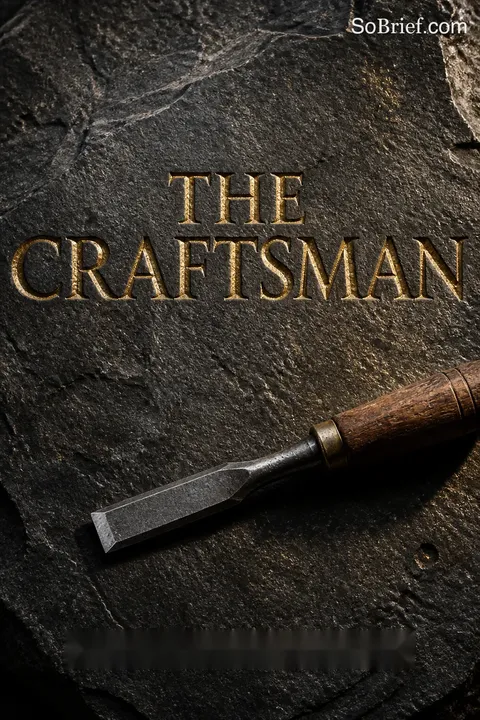
Craftsmanship names an enduring, basic human impulse, the desire to do a job well for its own sake.
Beyond manual labor. Craftsmanship extends far beyond traditional manual trades like carpentry, encompassing diverse fields such as computer programming, medicine, and art. It signifies a fundamental human dedication to excellence, where the intrinsic satisfaction of good work is its primary reward, rather than external incentives like speed or profit. This dedication anchors individuals in tangible reality and fosters a sense of pride.
Modern challenges. Despite its inherent value, this impulse often faces significant obstacles in contemporary society. Educational systems may fail to equip individuals with the necessary tools for quality work, and workplaces frequently undervalue the pursuit of excellence. This can lead to demoralization, as seen in contrasting examples like the low-quality Soviet construction or the high-quality Japanese manufacturing, where collective commitment or its absence profoundly impacts output.
Ethical dimensions. The pursuit of craftsmanship is not without its ethical ambiguities. While it can instill pride, it can also lead to obsessive perfectionism that deforms the work itself, or, as in the case of the atomic bomb's creators, result in profound moral distress over unintended consequences. True craftsmanship involves a dialogue between problem-solving and problem-finding, allowing curiosity to ask "why" as well as "how," thus offering a path to a more humane material life.
2. The Perilous Divide: When Hand and Head Separate
If the craftsman is special because he or she is an engaged human being, still the craftsman’s aspirations and trials hold up a mirror to these larger issues past and present.
Impaired understanding. The historical and ongoing separation of practical activity from intellectual pursuits, or "hand from head," diminishes both understanding and expression. When technique is divorced from imagination, and tangible reality is doubted, the mind suffers. This division is evident in modern practices where conceptual work is prioritized over hands-on engagement, leading to a superficial grasp of processes.
Misuse of technology. Modern technology, particularly computer-assisted design (CAD), exemplifies this divide. While CAD offers speed and precision, its misuse can prevent designers from developing a deep, embodied understanding of materials and scale. Architects who rely solely on screen-based models may lose the tactile and relational insights gained through physical drawing, leading to designs that are technically correct but lack "character" or adaptability.
Social implications. This intellectual separation often mirrors a social one, where those with "embodied knowledge" (manual laborers) are excluded from design and planning processes. Their practical insights, crucial for identifying and correcting flaws, are overlooked, leading to suboptimal outcomes. The consequence is not just impaired work, but also demoralized workers who feel their expertise is undervalued and invisible, highlighting a fundamental flaw in how modern society organizes skill and rewards.
3. The Workshop: A Crucible for Skill, Authority, and Community
The successful workshop will establish legitimate authority in the flesh, not in rights or duties set down on paper.
Beyond romantic ideals. The traditional workshop, often romanticized as a humane space of labor, was fundamentally a productive environment where authority was negotiated face-to-face. Unlike modern bureaucratic structures, legitimacy in medieval guilds stemmed from the master's demonstrable skill and the reciprocal obligation to transfer knowledge to apprentices. This system fostered a strong sense of community and honor, even if it was not based on modern notions of love or equality.
Knowledge transfer challenges. The workshop's effectiveness hinged on the transmission of skills, often through imitation and ritual. However, the rise of individual artistic genius, exemplified by Cellini, introduced a new challenge: originality. When a master's expertise became unique and tacit, as with Stradivari, knowledge transfer became difficult, leading to the "death" of workshops and the loss of invaluable skills. This highlights the tension between individual brilliance and collective sustainability.
Authority and autonomy. The workshop inherently involves inequalities of skill and experience, making the exercise of authority a central concern. While autonomy is appealing, skilled work necessitates a superior who sets standards and trains. The medieval "in loco parentis" system, though hierarchical, provided a clear role for the master in developing a child's horizons beyond birth. This historical model offers insights into how legitimate authority, grounded in skill and mentorship, can bind people together through work rituals and shared purpose.
4. Machines: Tools for Enlightenment or Instruments of Demoralization?
The enlightened way to use a machine is to judge its powers, fashion its uses, in light of our own limits rather than the machine’s potential.
Anxiety of abundance. The advent of machines in the eighteenth century, following a "flood tide of things," intensified anxieties about material abundance and its impact on human experience. While machines promised improved quality of life, Enlightenment thinkers like Diderot worried about their influence on the act of making, particularly the potential for machines to diminish human skill and engagement.
Replicants vs. robots. Early automata like Vaucanson's Flute Player (a replicant mimicking human action) initially inspired wonder. However, the subsequent development of industrial looms (robots enlarging human capacity) quickly led to worker displacement and demoralization, illustrating the machine's potential to threaten human labor. This dichotomy framed the debate: could machines be benign tools or would they become enemies?
Enlightened use. Diderot's Encyclopedia championed manual labor, arguing that machines should aid human frailty, not supplant human judgment. He advocated for a "salutary failure" approach, where machines highlight human limits, prompting reflection and innovation rather than despair. Ruskin, a century later, vehemently opposed industrial machines, seeing them as dehumanizing and advocating for a return to handmade imperfections. The core challenge remains: to use technology to enlighten us about ourselves, embracing our imperfections rather than striving for mechanical perfection.
5. Material Consciousness: Engaging with the World Through Change and Presence
We become particularly interested in the things we can change.
Curiosity and transformation. Material consciousness, the craftsman's deep engagement with the qualities of materials, is sparked by the potential for change. This curiosity revolves around three key aspects: metamorphosis, presence, and anthropomorphosis. It's not merely about utility, but about the intrinsic interest materials hold when they can be altered, marked, or imbued with human qualities.
Metamorphosis in craft. Metamorphosis, the transformation of materials, is a fundamental aspect of craft.
- Type-form evolution: Like the potter's wheel slowly changing how pots are made, or the PT Cruiser evolving a car's aesthetic.
- Combination and synthesis: Joining unlike elements, such as glassmakers adding materials to achieve clarity.
- Domain shifts: Applying principles from one craft to another, like weaving's right-angle logic influencing shipbuilding and urban planning.
These changes, often slow and distilled by practice, reveal the craftsman's active mind, constantly adapting and innovating.
Presence and anthropomorphosis. Craftsmen leave their "mark" on objects, asserting their presence, even anonymously, as seen in Roman brick stamps. This "I exist" declaration imbues inert materials with meaning. Anthropomorphosis further deepens material consciousness by investing inanimate objects with human qualities, such as "honest" brick or "friendly" walls. This humanizing language, often metaphorical, highlights the interplay between naturalness and artifice, demonstrating how craft skills can heighten the perceived value and character of objects.
6. The Intelligent Hand: Cultivating Skill Through Touch, Grip, and Rhythm
The hand is the window on to the mind.
Evolution of grip and touch. The human hand, with its unique thumb opposition and varied grips (pinch, cradle, cupping), is central to our species' ability to make tools and culture. Developing advanced hand technique involves learning not just how to grip securely, but also how to "let go" – a physical and cognitive skill crucial for fluidity and mental release. Calluses, far from dulling touch, sensitize the hand to minute physical spaces, enhancing localized touch.
Prehension and truthfulness. "Prehension," the body's anticipation of action, is fundamental to skilled handwork, from a conductor's gesture to a pilot's imagined turn. It involves anticipating, contacting, naming, and reflecting. In music, the "truthfulness" of a note is found at the fingertip, where constant feedback between touch and ear refines accuracy. This process, exemplified by removing Suzuki tapes, requires a willingness to "dwell in error" and learn from mistakes, transforming "fit-for-purpose" into an achieved, rather than preconceived, state.
Coordination and minimum force. Hand skills develop through coordinating unequal members, as seen in jazz piano where weaker fingers are supported by stronger ones, and thumbs learn to cooperate. This challenges the "part-to-whole" approach, emphasizing integrated movement from the start. The "lesson of minimum force," exemplified by the Chinese cleaver chef learning to "cleave a grain of boiled rice," teaches precision through controlled power and release, fostering self-control and ease rather than aggression.
7. Expressive Instructions: Showing, Not Just Telling, How to Craft
The physical display conveys more than the label.
Beyond dead denotation. Written instructions often fail because they "tell" rather than "show," using specific but inoperative verbs that don't convey the nuances of physical action. This "dead denotation" is particularly problematic for tacit knowledge, which is difficult to articulate. The challenge is to create "expressive instructions" that bridge the gap between language and bodily action, making complex procedures comprehensible to the novice.
Imaginative guidance. Effective expressive instructions employ imaginative tools to guide the learner.
- Sympathetic illustration: Julia Child's recipes anticipate the novice's difficulties, using loose analogies and forebodings to build confidence and guide through danger points.
- Scene narrative: Elizabeth David's recipes immerse the reader in a cultural context, using a story-like structure to convey technique indirectly, like an "uncle logic" that provokes thought without explicit commands.
- Metaphorical instruction: Madame Benshaw's Persian recipes use rich metaphors ("Your dead child," "golden coat") to imbue each physical action with symbolic weight, clarifying the objective and engaging the cook's imagination.
Language and imagination. These approaches demonstrate how language can transcend mere description to become a powerful tool for learning and skill development. By recovering the sentiment of insecurity, adopting a narrative frame, or employing evocative metaphors, instructors can unpack tacit knowledge and make the craft process more accessible and engaging, fostering a deeper connection between technical skill and imagination.
8. Arousing Tools: Imperfection and Ambiguity as Catalysts for Imagination
The very incompleteness of the tool has taught us something.
Learning from limitations. Tools, whether imperfect or puzzling, can stimulate imagination and expand competence. Early scientific instruments like telescopes and microscopes, despite their flaws, pushed scientists to think beyond what they could see, leading to new understandings of the universe and life. The scalpel, a simple yet precise tool, challenged anatomists to develop virtuoso hand techniques, revealing the body's intricate fabric.
Dynamic repair and reformatting. Repair is a crucial aspect of craftsmanship, often revealing how things work. "Dynamic repair" goes beyond mere restoration, changing an object's form or function. This process often involves "reformatting," where established technical skills are adapted to new uses, as Christopher Wren used drawing conventions to "repair" the defects in microscopic images. This willingness to see if a tool or practice can be changed in use is the first stage of an intuitive leap.
Intuitive leaps and the sublime. Intuitive leaps, often sparked by frustration or untested possibilities, involve a sequence of imaginative stages:
- Reformatting: Willingness to change a tool's use.
- Adjacency: Bringing unlike domains close together (e.g., Leyden jar and human body).
- Surprise: Discovering unexpected depth in familiar procedures.
- Gravity: Recognizing that the leap doesn't defy unresolved problems.
These leaps, exemplified by Mary Shelley's Frankenstein contemplating galvanism, transform tools into "sublime" instruments that push the boundaries of understanding, even if they carry the risk of "Pandoric suffering."
9. Working with Resistance: The Art of Patience and Reconfiguration
When something takes longer than you expect, stop fighting it.
Found and made resistances. Resistance, whether encountered (like knots in wood) or self-imposed (like a painter starting over), is integral to craftsmanship. The engineering dictum "follow the path of least resistance" is rooted in the hand's ability to combine minimum force with release. However, sometimes resistance must be actively engaged with, not just avoided.
Beyond frustration-aggression. While resistance can lead to frustration, it doesn't necessarily lead to aggression. Craftsmen develop skills to productively dwell in frustration:
- Recasting the problem: Reimagining the task with different protagonists, as Barlow envisioned himself swimming the Thames to design a better tunnel.
- Patience: Temporarily suspending the desire for closure, adjusting expectations when a task takes longer than anticipated.
- Identifying with the resistance: Finding the most forgiving element in a difficult situation, focusing on small, yielding details rather than fighting the larger challenge.
These skills transform obstacles into opportunities for deeper understanding and innovation, as seen in the shift from Brunel's aggressive tunneling to Greathead's cooperative approach with mud and water.
Ambiguity as a design tool. Deliberately planning for ambiguity can also foster skill. Aldo van Eyck's playgrounds, with their blurred boundaries between sand and grass or street and play space, taught children to anticipate and manage ambiguous transitions. This "uncle logic" in design, like the strategic use of ellipsis in writing, encourages users to develop their own rules and engage more deeply with their environment, transforming inert boundaries into active, porous borders.
10. The Janus Face of Obsession: Driving Quality Without Deforming Work
The pursuit of quality entails learning how to use obsessional energy well.
Obsession's dark side. Obsessional energy, while driving the pursuit of quality, can also be destructive. "Perfectionism," a form of obsessive-compulsive disorder, leads to relentless self-criticism and an inability to find satisfaction, often serving as a shield against external judgment. Max Weber's "worldly asceticism" describes a similar drive, where achievement feels empty the moment it's attained, leading to unhappiness.
Wittgenstein's cautionary tale. Ludwig Wittgenstein's design of his sister's house in Vienna exemplifies the negative face of obsession. His relentless pursuit of an ideal, generic perfection, unconstrained by practical or financial limitations, resulted in a building he later deemed "sick" and "lacking primordial life." His insistence on exact proportions and pristine surfaces, erasing all traces of the work's production, rendered the object lifeless and devoid of relational character.
Loos's healthy obsession. In contrast, Adolf Loos, Wittgenstein's mentor, demonstrated a positive form of obsession in his Villa Moller. Faced with financial constraints and construction errors, Loos engaged in a creative dialogue between form and materials, adapting his designs to "facts on the ground." His work, characterized by:
- Embracing the sketch: Preventing premature closure.
- Valuing contingency: Seeing problems as opportunities.
- Allowing incompleteness: Preserving relational character.
- Avoiding self-conscious demonstration: Focusing on the object's function over the maker's prowess.
- Knowing when to stop: Preserving the narrative of making.
Loos's approach shows how a healthy obsession interrogates its own driving convictions, leading to a vibrant, adaptable, and high-quality outcome.
11. Universal Abilities: Craftsmanship as a Foundation for Self-Governance
The capacity to work well is shared fairly equally among human beings.
Beyond innate inequality. Modern society often sorts people by ability, creating a strict gradient. However, craftsmanship challenges this framework, suggesting that the innate abilities underpinning good work are widely shared. While neurology maps the brain's complex processing of skills, the concern that humans are genetically programmed for inequality (akin to predestination) is contested by the idea of "capabilities" activated or repressed by culture.
Core craft abilities. Craftsmanship relies on three fundamental, widely shared abilities:
- Localize: The power to specify where something important is happening, whether a musician's fingertip, a glassblower's pipe, or a surgeon's scalpel. This "focal attention" can be stimulated by sensory input or the absence of it.
- Question: The capacity to investigate a locale, suspending resolution to probe deeper. This involves dwelling in an incipient state, considering circuit options, and allowing curiosity to drive further inquiry, transforming problem-solving into problem-finding.
- Open up: The ability to make intuitive leaps, drawing unlike domains close together and preserving tacit knowledge in the transfer. This involves shifting habits and comparing them, preventing boredom and stimulating fresh thinking.
Critique of IQ tests. Standardized intelligence tests, like Stanford-Binet, often fail to capture these craft abilities. By focusing on correct answers, separating groups into a bell curve, and emphasizing biological potential over cultural formation, they penalize problematizing, reflection, and associative thinking. Craft abilities, focused on depth of understanding and the capacity to switch and alter habits, stand in stark contrast to the superficial management of many problems often prized in modern economic regimes.
12. The Craft of Experience: Bridging the Physical and the Social
The capacities our bodies have to shape physical things are the same capacities we draw on in social relations.
Pragmatism's core. Pragmatism, a philosophical movement focused on making sense of concrete experience, finds a natural home for craftsmanship. John Dewey, a key pragmatist, argued for a socialism based on improving the quality of people's work experience, seeing work and play as intrinsically motivated activities that, when permeated with a "play attitude," become art. This perspective emphasizes "Erfahrung" (outward-turned, skilled experience) over "Erlebnis" (inner emotional impress).
Techniques of experience. The "craft of experience" implies focusing on techniques that shape our interactions with others. Just as craftsmen work with materials, we can apply similar principles to human relationships:
- Managing resistance and ambiguity: Understanding and navigating interpersonal obstacles and uncertain boundaries.
- Practicing relations: Learning skills of anticipation and revision to improve interactions, much like refining a physical technique.
- Making knowledge transparent: Shaping personal knowledge to be intelligible to others, fostering connection rather than isolation.
This approach contests subjective dwelling in feeling, asserting that our physical capacities for shaping things are mirrored in our social capabilities.
Craftsmanship and citizenship. The universality of play and the basic human capacities to localize, question, and open up problems form the foundation of craftsmanship and, by extension, good citizenship. This Enlightenment faith, that learning to work well enables self-governance and connection to others, suggests that modern democracy often demands too little, failing to draw on and develop the competences most people evince in work. The enduring ambivalence about man-made things, symbolized by Hephaestus and Pandora, highlights that craft skills, though natural, are never innocent, requiring ethical reflection on means and ends throughout the work process.
Review Summary
Reviews of The Craftsman are mixed, averaging 3.84/5. Admirers praise its philosophical depth, broad synthesis across history, economics, and craft disciplines, and its inspiring treatment of skilled labor's intrinsic value. Critics find the book structurally unfocused, prone to tangents, and overly academic, with Sennett accused of inadequately engaging with actual physical craft. Some challenge his scientific claims and socialist conclusions as unsupported. Several readers note an ironic tension: a book celebrating craftsmanship that itself feels poorly crafted in its argumentation and, in some editions, its editing.
People Also Read






About the Author
Other books by Richard Sennett







Download PDF
Download EPUB
.epub digital book format is ideal for reading ebooks on phones, tablets, and e-readers.








































