
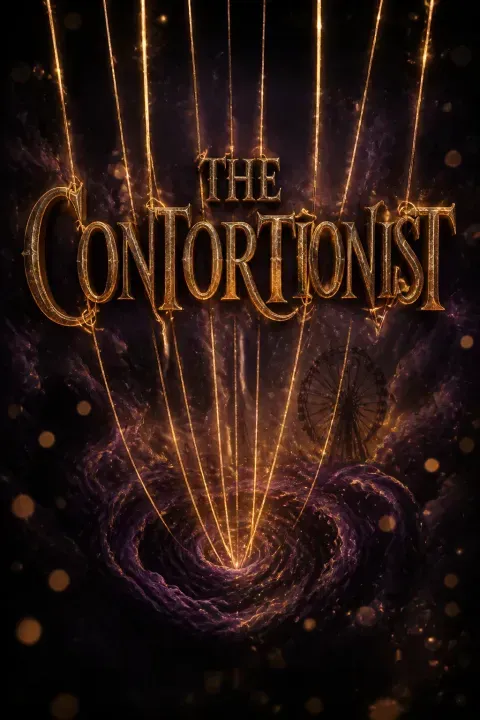


Plot Summary
Prologue
M. L. Harrow addresses the reader directly, declaring that human souls are worthless currency. What holds true value is seity: individuality, memories, the uniqueness of personality. The smell of a grandmother's cookies, the order of putting on socks in the morning, the memory of wedding vows exchanged at an altar.
These are what people discard thoughtlessly, never realizing what they possessed. Harrow welcomes the reader to his Faire with a predator's geniality. The admission fee will not be high, he promises. Visitors will not even notice what has been taken from them. The tone is casual, almost affectionate, but the threat is absolute: this place consumes what makes you human.
Harrow's opening monologue functions as both invitation and confession, laying bare the Faire's predation while cloaking it in philosophical musing. The distinction between soul and seity is the novel's central metaphysical innovation: a soul is generic, but seity is the specific texture of a life. This reframes consumption not as damnation but as theft of the particular. The rhetorical strategy is insidious: Harrow positions himself as a truth-teller in a world of denial, making the victim complicit in their own erasure. His gentleness is more terrifying than threats would be, because it suggests the Faire's feeding is as natural and inevitable as breathing.
The Faire That Shouldn't Exist
On her morning commute through Glendale, New Hampshire, Cora Glass1 notices something impossible: Harrow Faire, the skeletal ruin she has passed a thousand times since childhood, is no longer abandoned. The rusted gates gleam with fresh paint.
Lightbulbs glow in sockets that held only broken glass the day before. A banner announces a grand reopening. Cora1 pulls over and meets Jack,6 a broad-shouldered man in suspenders who is hanging the sign. He tells her Mr. Harrow's estate funded the restoration.
Cora1 knows this cannot be true: there were no construction crews, no news articles, no explanation for how decades of decay vanished overnight. She texts her friends to visit that evening. At her bank teller job, she researches the Faire and finds nothing. The mystery lodges in her mind like a splinter.
The Faire's overnight restoration is not merely a supernatural event but a breach in Cora's carefully maintained ordinary world. Her life of chronic pain and small-town tedium has been a coping mechanism for lost dreams (photography, ambition, love). The impossible carnival is the first crack in that fortress of routine. That she passes it daily without noticing any work being done is crucial: the Faire exists in a space between realities, and its reappearance signals that Cora has been noticed. Her instinct to research and recruit friends shows her rational mind grappling with the irrational, a pattern that will define her arc.
What's Your Favorite Color?
At the ticket booth that evening, Cora1 meets Aaron,5 a slick carnival barker with a pencil mustache and a transatlantic accent. He offers two entrances: pay cash, or walk through the skull-faced Dark Path where the Faire takes a small piece of individuality as payment.
Cora,1 certain this is interactive theatre, mocks his warnings and enters the skull gate. Total darkness swallows her. Something cold reaches into her chest and pulls, unraveling a thread inside her. A tall stranger with a British accent2 whispers in her ear, asking what she would trade to make her chronic pain disappear.
She flees, dislocates her ankle, and stumbles out the exit. Aaron5 is waiting. He asks her favorite color. She opens her mouth to answer, and nothing comes. She has always had one, always. The knowledge is simply gone. The Barker5 smiles.
This is the true inciting incident: Cora's loss of her favorite color (red, though she no longer knows it) is the first tangible proof that the supernatural is real and predatory. The Dark Path functions as a contract signed in ignorance, its terms hidden in plain sight. The stranger's question about trading for pain relief seeds the entire central bargain. Cora's skepticism, which she wielded as armor, becomes the very thing that ensnares her. The psychological horror is surgically precise: losing something you remember having but cannot recall is a violation of the self more intimate than physical harm.
The Painter's Inverted Eyes
That night, Cora1 dreams she stands in a sunlit field where a tall, beautiful man2 paints at an easel. His dark curls frame sharp features; his sky-blue eyes focus intently on the canvas. When she steps closer to admire his work, the painting is not a landscape but a sheet of dripping blood. The man looks up. His eyes shift: pupils white, irises red, sclera black.
He grins and calls her cupcake, then speaks her name. She falls backward into grass that has become a pool of warm gore. He offers his blood-soaked hand, promising he can make all this go away if she takes it. She screams herself awake, soaked in sweat, her shoulder dislocated from thrashing in sleep. The fortune teller8's parting words echo: May your dreams be quiet.
The dream invasion establishes Simon as simultaneously seductive and horrifying, a predator whose beauty masks monstrosity. The blood replacing paint on his canvas symbolizes his central perversion: he transforms life into death and calls it art. The inverted eyes are a literal signal that his nature is the reverse of normal humanity. For Cora, who has carefully controlled her waking life to manage pain, this invasion of her last sanctuary (sleep) is a profound violation. Yet she called him tall and sexy before the horror began, and that attraction will prove as inescapable as the fear.
The Soothsayer's Cards Fall
Cora1 returns to the Faire the next evening with her friends. After the Strongman show, where Trent3 becomes openly smitten with the giant performer Ludwig,9 Cora1 encounters Maggie the Soothsayer8 outside a small purple tent. The old woman knows both Cora1's and Emily12's names without introduction.
Cora1 accepts a free reading. Inside the incense-choked tent, Maggie8 shuffles a worn deck and lays five cards face-up. The Contortionist: a new journey beginning, full of hope but a hard road. The Puppeteer:2 manipulators will tempt her with things she wants at terrible cost.
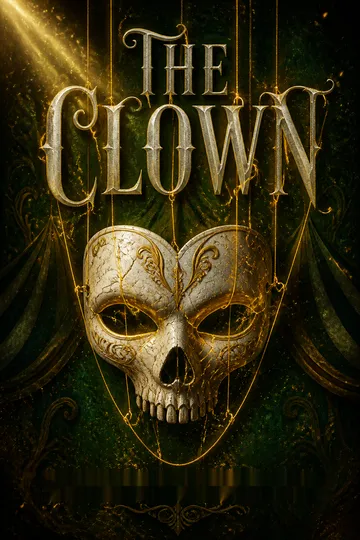
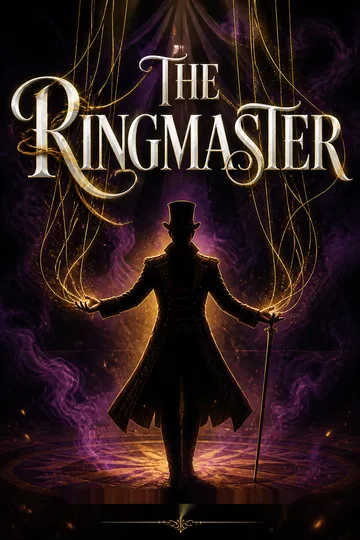
The Clown, painted as a skull-faced figure with a bloody knife: a great loss that must be accepted as transformation. The Ringmaster,4 inverted: a tyrant whose rusted shackles must be shattered. The Faire: the cycle ends and begins again. Maggie8 dismisses her with an ominous benediction: May your dreams be quiet.
The tarot reading functions as the novel's thematic blueprint, naming every major force in the coming conflict before the reader fully understands their significance. Maggie's role as Soothsayer is not to change fate but to witness its announcement; her clear sympathy for Cora is genuine but powerless. Each card maps to a character or arc: Simon the manipulator, Ringmaster the tyrant, the Clown as death and transformation. Most crucially, the Contortionist card drawn first marks Cora's fate as already sealed. The reading's true horror is not prediction but predestination: the cards do not warn, they describe what is already in motion.
Photos She Never Took
Seeking rational explanations, Cora1 visits the library and finds a 1934 newspaper article about a previous Faire reopening. The article includes a morbid poem by Mr. Lazarus Harrow that mentions mirrored lanes revealing hidden truths.
When Cora1 checks her camera, the photos from the previous night show the Faire as it truly is: abandoned ruins, rusted rides, shattered bulbs, yet crowded with oblivious patrons. Then images appear that she never took: a hall of mirrors entrance with a sign reading Come find the truth of your soul!
The photos revert to normal moments later. The Faire is communicating directly through her camera. The poem's line echoes in her mind. She knows she must return and enter that hall, even if it means crossing paths with Simon2 again.
The camera serves as a liminal device, bridging Cora's former identity as photographer and her new reality as the Faire's chosen. That the Faire speaks through photographs is psychologically precise: it addresses her in a language she understands intimately. The ghostly images of the abandoned Faire reveal its dual nature, simultaneously restored and ruined, existing in overlapping states of being. The murdered-Trent photos, which will come later, escalate the stakes from personal curiosity to mortal threat. At this stage, the Faire is merely beckoning, an intelligent entity choosing its messenger with care.
A Contortionist in the Mirror
Inside the hall of mirrors, the Faire shows Cora1 photos of Trent3 murdered in increasingly gruesome ways: his skull split open, his eyes gouged out, his entrails spread across the dirt. She begs the empty air to tell her how to stop it.
Three new photos appear: the final mirror labeled See into your soul!, Simon2's red-and-black tent, and a vintage boxcar painted with a gold zero. Cora1 steps before the mirror. Her reflection wears a white and black lace bodysuit with striped leggings, stage makeup bright on her face.
The reflection smiles without her, poses, then bends backward at an impossible angle like a contortionist. When it straightens, blood covers the costume, and her reflection's smile is triumphant. Simon2's living shadow grins from a nearby wall. She flees, dislocating her shoulder against a mirrored wall.
The mirror vision is the novel's most psychologically complex moment. Cora sees herself not as victim but as performer, complicit in bloodshed and smiling with genuine joy. The contortionist's bend suggests physical transformation, but also moral flexibility: she will be reshaped to fit a role that horrifies her. The blood on her hands echoes Lady Macbeth, the stain of an irreversible action. Most disturbing is the smile: it is the first time Cora has seen herself looking truly happy, which collapses the distinction between liberation and damnation. The self she fears becoming is also, perhaps, a self freed from pain.
The Whip Splits His Face
Simon2 finds Cora1 collapsed in the mirror maze and helps relocate her dislocated shoulder with unexpected gentleness, kneeling behind her and following her precise instructions. Then, when she describes the boxcar with the zero, he becomes frantic and drags her toward the staff area.
At boxcar twenty-one, Ringmaster Turk4 waits with Aaron5 and Jack,6 their hostility toward Simon2 palpable. Simon2 snarls that Cora1 belongs to him, wrapping her in invisible strings that control her limbs. Ringmaster4 swings his bullwhip. The first strike splits Simon2's face from forehead to chin, exposing bone.
Jack6 kicks Simon2 while he is on his knees. Simon2 laughs through the blood, still claiming ownership. Ringmaster4 questions Cora1 about why she came. She admits the Faire speaks to her through her camera but hides the contortionist vision from her account. Ringmaster4 tells her to leave and never return.
This confrontation establishes the Faire's internal politics: Ringmaster as authoritarian enforcer, Simon as the dangerous outlier whom others despise and fear. Simon's claim of ownership over Cora reveals his fundamental view of people as possessions to be collected, consumed, or hoarded. Yet his gentleness moments earlier, when he helped with her shoulder, complicates his villainy: he is capable of care, however twisted. Ringmaster's violence is equally brutal, leaving Cora with no safe harbor, only different flavors of coercion. Her decision to hide the full truth of her vision shows her learning to navigate this world strategically.
He Paints With His Blood
That night, in a shared dream, Cora1 finds Simon2 in a sunlit manor frantically painting a woman's portrait using blood from a gash he keeps reopening on his thigh. He is weeping. The woman was Suzanna, someone he loved and lost to the Faire long ago.
Her face fades from his memory over the centuries; only pain brings it back clearly enough to paint. Cora,1 against her better judgment, helps him to a sofa. He admits the Faire wants her for its own purposes, that becoming his doll would protect her from a worse fate, though he refuses to name it.
Then he cages her against the cushions and kisses her with slow, possessive intensity. The embrace leaves her trembling. He whispers that he wants her in every way she will let him have her, retreating only when she begs him to stop.
Simon's vulnerability here is manipulative but also genuine. The lost Suzanna represents everything the Faire has stolen from him across a century and a half, and his obsession with Cora is partly repetition compulsion: consume the new beloved to prevent losing her as he lost the old one. The blood-painting literalizes his tragic paradox: he creates through destruction, preserves through consumption. Cora's conflicted attraction to her would-be murderer speaks to the dark romance at the novel's core, where desire and danger are inseparable. Simon's offer of protection through ownership reframes predation as caretaking.
Breakfast Goodbye to Trent
Cora1 wakes knowing she will return to the Faire and accept whatever fate awaits to save her best friend. She calls Trent,3 listening to his cheerful voice as he gushes about Ludwig,9 about how the strongman9 has something important to tell him tonight.
She suggests dinner, trying to steal one more evening, but Trent3 is already committed to the Faire. As they banter about her supposed attraction to Simon,2 she almost tells him the truth but cannot find words. When she hangs up, she weeps at her kitchen table.
She feeds her fish for what may be the last time, puts on family jewelry, and shoulders her camera. The drive to the Faire feels like a funeral procession. At the gate, Aaron5 silently lets her through the service entrance, his expression telling her he understands what she has come to do.
Cora's decision crystallizes her central trait: fierce loyalty that overrides self-preservation. The phone call with Trent is an exercise in dramatic irony; his happiness about Ludwig (whom the Faire may weaponize against him) contrasts with her silent grief. Her choice to sacrifice herself has two simultaneous layers: the conscious, noble one (saving Trent) and the unconscious one (escape from chronic pain). She is both hero and willing victim, her agency exercised in choosing which cage to enter. Aaron's silent complicity at the gate suggests the Family has seen this ritual before: someone walking in to trade their life for another's.
The Porcelain Cora Waits
Simon2's performance tent is dark and empty when Cora1 enters. He appears behind her, delighted. When she demands to know what he plans, he reveals his children: a dozen life-sized marionettes lining the stage, each one a preserved human whose seity he consumed slowly over decades.
Some are porcelain, some wood, some fabric. One missing an arm still speaks, its painted face immobile. Simon2 pulls a sheet from a chair to reveal a new doll with Cora1's face replicated in painted mirror eyes, her dark hair cascading over its shoulders.
He explains he will drink her seity slowly, sip by sip, over centuries. When she bolts for the exit, his invisible strings stop her cold. He bends her body backward into a painful arch and leans in to seal the deal with a kiss, murmuring that he has decided not to give her a choice after all.
The dolls represent the horror of eternal preservation without life, a fate more grotesque than death. Each one sought Simon's help for a problem (aging, disease, guilt) and paid with everything they were. Simon's craftsmanship reveals his artistic soul twisted to monstrous purpose. The mirror eyes on Cora's doll are his attempt to capture her essence even as he plans to destroy what gives it meaning. His admission that he normally does not take unwilling victims, but will make an exception for her, marks the moment persuasion becomes predation, and his desire collapses into simple theft.
Bound by His Own Seity
Ringmaster Turk4 enters the tent just as Simon2's lips touch Cora1 's. The interruption breaks Simon2's concentration; his strings release her. Turk announces that Mr. Harrow has decreed Cora1 will fill the vacant Contortionist role, the zero slot that Simon2 created when he turned the previous Contortionist, Hernandez, into one of his dolls thirty-eight years ago.
Simon2 howls that he will consume her just as he did Hernandez. But Turk has a weapon Simon2 never anticipated: he can force a Sponsorship. Reaching into Simon2's chest, Turk pulls free a portion of his seity and thrusts it into Cora.1
The pain is blinding: Cora1's body remakes itself into something immortal. Simon2 screams as part of himself is torn away. When Cora1 collapses, unconscious, Turk tells Simon2 she is now his responsibility. Harm her, and he maims himself. Then he leaves her with the madman.
The Sponsorship scene is the novel's most crucial reversal. Cora came to surrender her humanity; instead, Simon is forced to surrender part of his own. The binding is both curse and protection: Simon cannot hurt Cora without self-harm, which his extreme selfishness renders unthinkable. The violation is mutual. Simon loses part of his carefully hoarded self; Cora loses her mortal life and freedom. Turk's action, framed as rescue, is also assault: he transforms Cora without consent, using her body as a tool to punish Simon. No one in the Faire is innocent.
Erased at the Exit
Cora1 wakes on the grass outside. Aaron5 and Jack6 explain she is Family now, the new Contortionist. Disbelieving, she staggers through the carnival and encounters Trent3 leaving Ludwig9's tent. She rushes to him, desperate to escape together.
He shoves her away, his face twisted in confusion and fear. He does not know her. Cora Glass1 no longer exists in the outside world: her mother would not recognize her, her apartment is no longer hers, every trace of her life has been erased from memory and record.
At the exit gate, Cora1 slams into an invisible barrier that other patrons walk through without obstacle. She throws herself against it for hours until her nose bleeds and her body gives out. The crowd parts around her hysterical form. Then the rain begins.
Erasure is the novel's most devastating horror, surpassing even physical violence. Chronic pain, Cora's constant companion, is replaced by existential annihilation. Trent's rejection is particularly cruel because it weaponizes the love that motivated her sacrifice: the person she came to save cannot remember her sacrifice, her name, or her existence. The invisible barrier literalizes her new condition: she can see freedom but cannot reach it. The patrons passing through represent the world she has been severed from, going about its business while she becomes increasingly hysterical, now invisible in a different and more terrible way.
The Zero on Her Door
Cora1 sits in the downpour, too exhausted to move, when the rain suddenly stops falling on her. Simon2 stands over her with an umbrella, his expression uncharacteristically subdued. He drapes a towel over her head, calls her pathetic for sobbing at the gate, and tells her to heel.
When she tries to flee, his strings gently guide her back under the umbrella. They walk through the darkened, rain-slicked carnival to the staff area where the boxcar with the gold zero now looks freshly painted, the weeds cleared away as if it has been waiting for decades.
Simon2 gestures at the stairs and tells her she is the Contortionist now, that things will look better in the morning. Then he walks away into the rain, whistling. Inside, Cora1 finds a cozy apartment with clothes in the closet and a large bed. She locks every door and window, then surrenders to exhaustion.
Simon's gesture with the umbrella is the novel's most perplexing moment because it serves no obvious selfish purpose. He cannot consume her now; the Sponsorship has made her his equal in vulnerability. The act suggests either genuine, if twisted, care or a possessiveness that has shifted from predation to something resembling protection. His parting line acknowledges her new identity without gloating. For Cora, the boxcar represents both prison and sanctuary: a space that is hers within a world she cannot leave, prepared for her arrival long before she knew she would need it.
No Pain at Dawn
Cora1 wakes to sunlight streaming through the boxcar windows and realizes she feels nothing: no ache in her shoulders, no grinding in her hips, no tender joints. She stretches experimentally, waiting for the familiar stab of pain that never comes. Her body is whole, healed and stronger than she can remember.
Before she can process this miracle, two women burst through her door: Amanda the Aerialist10 and Donna the Flyer,11 bearing breakfast and eager explanations. They tell her about the Family's twenty-two roles and the Sponsorship that bound her to Simon.2
Amanda cheerfully offers to break Cora1's neck to prove she is immortal now. Cora1 bolts from the boxcar and collides with Simon2 outside, who freezes her with strings, then releases her with a shrug, telling her to go ahead and try to escape. She runs, still refusing to accept the cage.
The absence of pain after years of constant suffering is Cora's first experience of the Faire's gifts rather than its thefts, complicating her victimhood: the place that imprisoned her has also healed her in a way modern medicine never could. Amanda's casual offer of neck-breaking demonstrates how thoroughly the Family has normalized violence and immortality. Simon's release of Cora signals a shift in their dynamic: he no longer needs to force her to stay (the Faire does that), so he can afford to let her exhaust herself against the barriers. Her final flight is both defiance and denial of a truth her body already knows: she belongs to the Faire now, whether she accepts it or not.
Epilogue
Mr. Harrow closes the book with a meditation on mortality. He argues that the worst thing anyone can be denied is not love but death itself. Death is a mercy, the greatest gift any god has ever given mankind. To deny death is a curse, and humanity, like children, perpetually scrambles to achieve this terrible end.
Those who become immortal forfeit their humanity. Without mortality, the laws of the universe still demand balance: more death must be caused to sustain the deathless. Harrow concludes that if we are denied death, we cease to be human and become instruments of death instead. An inhuman creature, in the absence of its own demise, must bring demise to others.
This closing monologue reframes the entire novel as a meditation on what immortality costs. The Family members are not enviable; they are tragic figures who have traded their humanity for endless existence and must now feed on others to persist. Harrow's clinical tone, absent of remorse, positions him as a philosopher of predation. The epilogue also foreshadows Cora's trajectory: she has been given freedom from pain and the slow death her disease promised, but the price is her identity and her place in the human world. The question the book leaves open is whether she will become an instrument of death like the others, or whether she will find some third path between consumption and oblivion.
Analysis
The Contortionist operates as a dark fable about the cost of desire and the horror of being chosen by a system that will reshape you to fit its needs. Cora1's chronic illness functions as both genuine suffering and metaphor: her hypermobile joints make her physically vulnerable to being bent into new shapes, which the Faire literalizes by transforming her into a contortionist. The novel asks what a person would trade to escape pain and answers with brutal clarity: everything. Every character's bargain with the supernatural is a Faustian deal where the contract's fine print erases the signatory.
Simon2 embodies the predator as artist archetype. He creates dolls to preserve what he loves, but preservation requires destruction, making love and consumption identical processes. His madness is both his villainy and his tragedy: centuries of immortality have eroded his humanity into something that performs human emotion (desire, grief, tenderness) without fully inhabiting it. His obsessive pursuit of Cora1 is the closest he comes to genuine feeling, but it expresses itself through the only language he retains: possession and consumption. When he brings her an umbrella in the rain, it is unclear whether this is care or simply a possessiveness that now serves protective ends.
The Faire itself is the novel's true antagonist, a system that feeds on individuality and repurposes human beings as components in its eternal machine. The twenty-two roles suggest a closed ecology where newcomers replace the consumed, and the distinction between predator and prey collapses over time. Cora1's arc from independent woman to trapped performer mirrors the universal human fear of losing oneself to larger systems: career, illness, relationships, institutions. The most disturbing revelation is that her reflection in the funhouse mirror, covered in blood and smiling, looked happy for the first time in years.
The novel's gender politics are deliberately uncomfortable. Cora1's agency is systematically stripped by male characters (Simon2's possession, Ringmaster4's forced Sponsorship ), yet her resistance never fully extinguishes. The final image of her running, still fighting, suggests that defiance persists even when freedom is impossible. This is the novel's bleakest and most honest note: sometimes survival means learning to struggle within the cage rather than escaping it. But the absence of her chronic pain also introduces moral ambiguity: the cage has gifts. What will she become when the thing that imprisoned her is also the thing that finally healed her body?
Review Summary
The Contortionist receives mixed reactions, with readers praising its unique premise of a sinister carnival that feeds on people's essence and the creative worldbuilding. Many enjoy the dark, atmospheric setting and Simon the Puppeteer as a compelling villain love interest, though some find him genuinely disturbing rather than romantic. Cora's chronic pain representation resonates with some readers. Common criticisms include repetitive writing, overexplanation, and romanticization of abusive behavior. The slow-burn villain romance polarizes readers—fans appreciate the creepy tension, while others find Simon's boundary violations uncomfortable. Most agree it's an intriguing series start despite pacing issues.
People Also Read

Characters
Cora Glass
Reluctant new ContortionistA young woman in her twenties living in Glendale, New Hampshire, Cora Glass suffers from Ehlers-Danlos Syndrome, which makes her joints hypermobile and causes chronic pain and frequent dislocations. She gave up her dream career as a photographer due to her condition and now works a monotonous bank teller job. Cora is fiercely sarcastic, stubborn, and loyal to the point of self-destruction: she would rather sacrifice herself than let harm come to those she loves, particularly her best friend Trent3. Her sharp tongue masks deep wells of grief, loneliness, and physical exhaustion. She is attracted to Simon2 despite her terror of him, a conflict that disturbs her profoundly. Her defining trait is resilience: she has learned to live with pain, and that same endurance now serves her in the Faire.
Simon Waite
The Puppeteer, obsessive villainSimon is a 166-year-old immortal, a former English artist who was taken by the Faire against his will in 1885. He controls invisible silver strings that can manipulate objects and people like marionettes. He wears mismatched antique sunglasses (one red lens, one black) to hide his inverted eyes: black sclera, white pupils, red irises. He is genuinely insane, swinging between theatrical charm, childlike curiosity about modern technology, and sadistic cruelty. His living shadow acts as his subconscious. Simon consumes human seity to sustain himself and preserves his victims as life-sized dolls, which he calls his children. He lost a woman named Suzanna to the Faire long ago, and his obsession with Cora1 is partly a desperate attempt to possess someone before the Faire can take them, too. He is both predator and prisoner.
Trent
Cora's best friendTrent has been Cora1's closest friend since childhood, when they bonded as misfits: he was bullied for being gay, she was ostracized for loving books. He is flamboyant, impulsive, and relentlessly upbeat, working as an event coordinator at the Castle in the Clouds. He falls hard and fast for Ludwig the Strongman9, pursuing him with shameless enthusiasm. His life represents everything Cora1 is willing to sacrifice herself to preserve: he has a career, romantic prospects, and a future. He is oblivious to the supernatural danger surrounding him and cannot recognize Cora1 after her transformation into a Family member.
Ringmaster Turk
The Faire's authoritarian leaderTurk is the oldest Family member at 210 years, serving as the Faire's enforcer and Mr. Harrow's sole intermediary. A massive man of Middle Eastern or Mediterranean descent, he wears a green, gold, and cream striped tailcoat with a top hat and wields a leather bullwhip with brutal precision. He is weary and morally pragmatic: he enforces the Faire's rules without cruelty but without sentiment either. The other Family members fear and respect him. He is the only one who communicates with Mr. Harrow, passing notes under the door of boxcar twenty-one. His decision to force Simon2 to Sponsor Cora1 is simultaneously punishment for Simon2 and protection for Cora1, though he shows her little warmth in the process.
Aaron the Barker
Slick ticket-booth operatorAaron is the carnival barker who mans the ticket booth, dressed in a striped suit with a straw hat and sporting a pencil mustache and heavily pomaded hair. He speaks with a practiced transatlantic accent designed to charm and disarm. He is the one who offers patrons the choice between paying cash and walking the Dark Path, making him complicit in every seity theft the Faire commits. Despite this, he is not malicious: he genuinely warns Cora1 about Simon2 and expresses concern for her welfare. He seems to view his role as simply the messenger of the Faire's terms, not the architect of the trap. He has a history with the previous Contortionist, Hernandez.
Jack the Rigger
Sympathetic strongman of the crewJack is the first person Cora1 meets at the Faire when she discovers it reopened. A broad-shouldered man who runs the rigging for the big top tent, he is friendly, warm, and openly protective of Cora1. He was brought to the Faire unwillingly himself and empathizes with her terror at being trapped. He despises Simon2 and is quick to violence when Simon2 threatens Cora1, though his hatred of the Puppeteer2 is tinged with genuine fear. He serves as one of the moral anchors among the Family, along with Aaron5 and Bertha7.
Bertha the Bearded Lady
Maternal freakshow performerBertha is a large woman covered in tattoos with a full beard and generous cleavage, both proudly displayed. She is warm, maternal, and pragmatic, offering Cora1 gin and stern advice to stay away from Simon2. She tells Cora1 that everyone in the Freakshow chose to be there, using their unusual bodies to make a living without shame.
Maggie the Soothsayer
Prophetic fortune tellerAn elderly Eastern European woman dressed in scarves and gold coins, Maggie gives Cora1 a tarot reading that foreshadows the entire novel's events. Her five cards (Contortionist, Puppeteer2, Clown, Ringmaster4, Faire) name every major force Cora1 will encounter. She is sympathetic but powerless to alter fate, describing herself as the lightning that warns of fire, not the fire itself.
Ludwig the Strongman
Fading immortal performerAn immense, muscle-bound man who performs feats of strength in a lion-pelt costume. Ludwig has been with the Faire since 1826 and is slowly fading away, having Sponsored too many new members and given away too much of himself. He speaks little and radiates a gentle, quiet sadness. He becomes Trent3's lover, and his declining condition provides a glimpse of what immortality ultimately costs.
Amanda the Aerialist
Enthusiastic hoop performerA beautiful blonde who performs on a metal hoop suspended from the rigging. Amanda has been with the Faire since 1859 and is genuinely excited to have Cora1 as the new Contortionist. Her cheerful offer to break Cora1's neck to prove her immortality reveals how completely the Family has normalized violence and deathlessness.
Donna the Flyer
Reluctant trapeze artistA short, athletic woman with dark hair who joined the Family in 1977 against her will, much like Cora1. She understands Cora1's desperation and tries to comfort her while also delivering hard truths about the impossibility of escape. Her sympathetic perspective represents the possibility of eventual acceptance.
Emily
Cora's shy friendA mousy, intelligent woman who works with Trent3 at Castle in the Clouds and has been hopelessly in love with him since childhood. She accompanies Cora1 to the Faire on the first two nights. Her unrequited devotion to Trent3 mirrors Cora1's own complicated feelings for Simon2 in subtle ways.
Plot Devices
Simon's Invisible Strings
Psychic manipulation and controlSimon2 can manifest thin silver threads from his fingers that are nearly invisible except when they catch the light at certain angles. These strings can manipulate physical objects, restrain people, or control their bodies entirely like marionettes. He uses them to disarm Cora1 of her gun, to freeze her in place when she tries to flee, and to bend her body into painful positions. The strings are unbreakable by normal means and respond to his finger movements with precision. They represent his need for absolute control and his inability to relate to others except as objects to be positioned and played. The strings are also how he would have consumed Cora1's seity if Ringmaster4 had not intervened.
The Faire's Sentience
Predatory consciousness of the carnivalHarrow Faire is not merely a location but a living entity that feeds on human seity. It communicates with Cora1 through her digital camera, planting photographs she did not take: images of the Faire in its true abandoned state, prophetic visions of Trent3's murder, and clues directing her toward the hall of mirrors and the Contortionist's boxcar. The Faire chooses who fills vacant roles among the twenty-two Family members, and it has selected Cora1 to become the new Contortionist independent of Mr. Harrow's usual process. Its motives are opaque but predatory, and it exists in a state of 'Inversion' where it phases between reality and some other dimension, explaining why it appears abandoned for decades before suddenly reopening.
Seity
Currency of identity and powerSeity is the substance of individuality: memories, personality traits, preferences, skills, and everything that makes a person unique. Unlike souls, which the Faire considers worthless and abundant, seity is rare and valuable. The Faire harvests seity from patrons who enter through the Dark Path, taking small pieces (a favorite color, a childhood memory) and feeding them to Family members to sustain their immortality. Simon2 planned to consume all of Cora1's seity slowly over decades, transferring it from her living body into a porcelain doll until nothing of her remained. Sponsorship involves permanently giving a significant portion of one's own seity to another person, binding them together. Losing too much seity causes Family members to fade away into empty shells.
Sponsorship
Forced bond between immortal and newcomerSponsorship is the ritual by which a new member is initiated into the Family. An existing member gives a significant portion of their own seity to the recipient, transforming the recipient into an immortal being like themselves. Normally this is voluntary, but Ringmaster4 demonstrates he can force a Sponsorship when he tears part of Simon2's seity from his chest and implants it in Cora1. The ritual creates a permanent bond: if the Sponsor harms the new member, they harm themselves in equal measure. This is why Cora1 is now safe from Simon2: his extreme self-preservation will prevent him from ever hurting her. The Sponsorship also erases the new member from the outside world: their loved ones forget them, their records disappear, and they cannot leave the Faire's boundaries.
The Contortionist's Role
Vacant position Cora is forced to fillThe Faire's Family consists of exactly twenty-two members, each filling a numbered role with a specific title and function. The zero slot, the Contortionist, has been vacant for thirty-eight years since the previous Contortionist, a man named Hernandez, begged Simon2 to end his suffering by turning him into one of his dolls. The role remained unfilled because part of Hernandez's seity still lingered in Simon2's doll, preventing a replacement from being chosen. When Simon2 finally consumed the last of Hernandez, the vacancy opened, and the Faire immediately began drawing Cora1 toward it. The Contortionist's boxcar (number zero) has stood overgrown and abandoned for decades, its stairs covered in vines, until Cora1's Sponsorship causes it to restore itself and welcome its new occupant.
Harrow Faire Series
About the Author
Other books by Kathryn Ann Kingsley
Download PDF
Download EPUB
.epub digital book format is ideal for reading ebooks on phones, tablets, and e-readers.








































