
Plot Summary
Sister's Death, Sister's Secrets
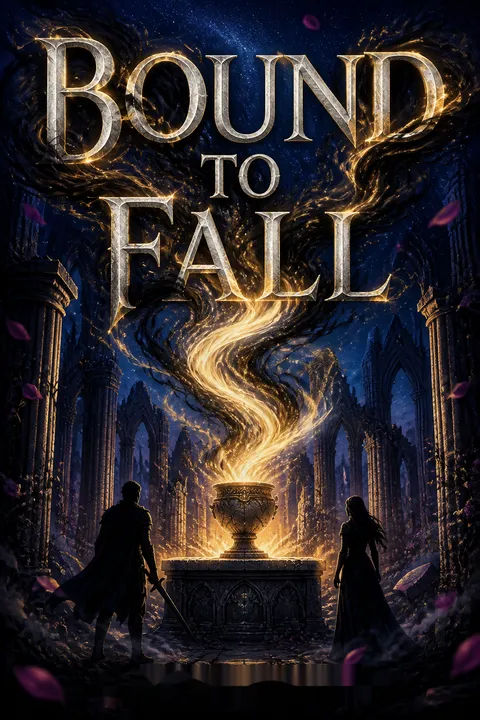
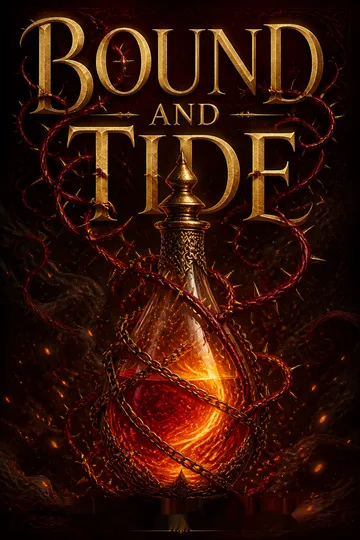
Celeste Delacroix, haunted and uncertain, returns to the ruined temple where her sister Delphine has died. The message Delphine left is cold, manipulative, and full of demands—even in death, Delphine expects Celeste to resurrect her. The temple is a place of old wounds and dark magic, and Celeste's grief is tangled with guilt and relief. She discovers Delphine's body, a pit of child-sized bones, and a list of necromancers—proof of her sister's relentless ambition. In the sepulcher, Celeste finds an urn containing a mysterious, imprisoned entity. When she releases it, she's left with a chilling sense of both liberation and foreboding, as if the past refuses to stay buried.
Return to Briarwyke
Alone in the temple, Celeste buries the dead, cleans blood and bones, and tries to restore some order. She finds a lone wyvern, Plum, and names him, forging a small bond in the emptiness. Venturing into Briarwyke, she meets wary villagers and the innkeeper Halfrida, who offers her food and a place in the community—if she's willing to work. The town is battered by years of misfortune, and Celeste feels both out of place and strangely hopeful. Her presence is met with suspicion, but also the first hints of acceptance, as she tries to find her footing in a world that has always kept her at its margins.
The Holy Knight Arrives
Reeve, a Holy Knight of Valcord, arrives in Briarwyke, following a prophecy that led him to this cursed place. He is earnest, good-hearted, and a little lost, carrying a talking sword, Sid, and a sense of duty that is both a comfort and a burden. The temple's desecration and the village's malaise weigh on him. He is drawn to Celeste, though he sees her as a possible threat. Their first encounter is a collision of suspicion and misunderstanding, as Reeve's divine magic clashes with Celeste's noxscura. The stage is set for conflict, but also for something more.
Clash of Light and Shadow
In Delphine's old chamber, Reeve and Celeste's powers collide. He attacks, believing her a witch and a desecrator, while she defends herself with shadows she barely controls. The fight is chaotic, ending with Celeste imprisoning Reeve in a noxscura barrier, echoing the cruelty once inflicted on others in this very room. Both are shaken—Reeve by his failure, Celeste by her own capacity for harm. The lines between villain and victim blur, and both are left to question their roles in this haunted place.
Prisoner and Protector
Guilt-ridden, Celeste tries to care for her captive, bringing him food and books, and seeking advice from the enigmatic Kori. She learns that not all holy people are cruel, and that trust must be earned. Reeve, meanwhile, wrestles with his own doubts and the growing realization that Celeste is not the evil he expected. Their uneasy truce is tested by the arrival of a greater threat: the entity from the urn, now loose and feeding on the village's arcane infrastructure.
The Village and Its Wounds
As Celeste and Reeve navigate the village, they encounter its people—Halfrida, Baylen, Ima'riel, and the children—each bearing scars from Briarwyke's cursed history. The arcane lights begin to fail, and the villagers' resilience is tested. Celeste's attempts to help are met with both gratitude and fear. Reeve's sense of duty deepens, and he begins to see Celeste's kindness and vulnerability. Together, they start to uncover the truth behind the village's misfortunes and the nature of the unleashed entity.
The Sieve Unleashed
Geezer, the forgetful village mage, helps identify the entity as a "sieve"—a magical being that absorbs and distills arcana. Syphon, as it calls itself, is more than a mindless force; it is sentient, manipulative, and hungry for power. As Syphon consumes the village's arcane sources, Celeste and Reeve realize they must work together to stop it. They forge a pact: no more attacks on each other until the greater evil is contained. Their alliance is uneasy, but necessity breeds trust.
A Bargain in Darkness
Celeste and Reeve descend into the village's depths, seeking Syphon's nest. Their journey is fraught with peril—arcane traps, memories of trauma, and the ever-present threat of Syphon's manipulation. In the darkness, they confront their own fears and the legacy of the past. Celeste's history as a nox-touched survivor of magical experimentation comes to light, and Reeve's faith is tested. Together, they face Syphon, but the battle is costly, and the lines between savior and sacrifice blur.
Forging Trust, Facing Truth
After a harrowing escape, Celeste tends to Reeve's wounds, and their emotional barriers begin to fall. They share stories of loss, survival, and the longing for belonging. The village's troubles deepen, but so does their bond. As they work side by side—restoring the temple, helping the villagers, and piecing together the mystery of the sieves—they discover that trust is not given, but built, and that love can grow even in the shadow of old wounds.
The Sins of the Past
The truth of Briarwyke's curse is revealed: centuries ago, priests experimented with noxscura and sieves, unleashing a legacy of suffering. Celeste's own trauma—her transformation, Delphine's cruelty, and the horrors of the Osurehm temple—comes to the fore. Reeve listens, offering compassion instead of judgment. Together, they confront the reality that the past cannot be undone, but its power can be lessened through understanding and forgiveness.
The Sieve's Hunger
As the sweetbriar festival approaches, Syphon absorbs more sieves, growing stronger and more dangerous. The village is ensnared by living vines, and the people are trapped in a magical sleep. Celeste realizes that only she can stop Syphon, but the cost may be her own life. She confesses her love to Reeve, then betrays him—binding him with noxscura and diving into the darkness to face Syphon alone. The final confrontation is a test of will, sacrifice, and the meaning of freedom.
Nightmares and Confessions
In the well's depths, Celeste confronts Syphon and the pure noxscura. The battle is both physical and psychological, as Syphon preys on her deepest fears and self-loathing. Celeste's strength is not in her magic, but in her refusal to surrender her agency. She uses the hairpin Reeve carved for her—a symbol of love and belonging—to shatter Syphon's power and free the trapped sieves. The victory is pyrrhic: Celeste collapses, her life hanging by a thread.
The Festival and the Trap
Above, Reeve and the villagers awaken as the curse is broken. The sweetbriars bloom, and the village is bathed in new light. Reeve, desperate and grieving, refuses to give up on Celeste. He pleads with the gods, but it is love—not divinity—that brings her back. Celeste awakens, changed but alive, and the village begins to heal. The past is not erased, but its hold is loosened, and new beginnings are possible.
Sacrifice in the Well
The aftermath is a time of reckoning. Celeste is celebrated as a hero, but she is haunted by what she endured and what she became. Reeve stands by her, offering steadfast support and the promise of a future together. The villagers, once suspicious, now embrace her as one of their own. The temple is restored, not as a place of old power, but as a home for the lost and the hopeful.
The Price of Freedom
As Celeste recovers, she and Reeve confront the question of what comes next. The temple is no longer a prison, but it is not truly home. Together, they choose to build a life beyond the shadows of the past. The noxscura, once a curse, becomes a part of Celeste's strength—a reminder that healing is not erasure, but integration. Love, trust, and the courage to stay become the foundation of their new beginning.
Awakening and Belonging
In the epilogue, Celeste and Reeve have made a home together, surrounded by friends, laughter, and the ordinary magic of daily life. Their love is playful, passionate, and enduring—a testament to the power of choosing one another, again and again. The past lingers, but it no longer defines them. In the end, they are not bound to fall, but free to rise.
Analysis
Bound to Fall is a fantasy romance that deftly weaves together themes of trauma, healing, and the search for belonging. At its heart, the novel is about the courage to face the darkness within and without, and the transformative power of love—not as a cure-all, but as a foundation for growth and self-acceptance. Celeste's journey from self-loathing and isolation to trust and intimacy is mirrored by Reeve's evolution from rigid duty to compassionate partnership. The novel interrogates the legacy of abuse, the seductive pull of self-erasure, and the difficulty of believing oneself worthy of happiness. Through its magical metaphors and richly drawn characters, Bound to Fall argues that freedom is not the absence of scars, but the willingness to live—and love—despite them. The story's ultimate message is one of hope: that even those "bound to fall" can rise, not by denying their wounds, but by embracing the messy, beautiful work of healing together.
Review Summary
People Also Read

Characters
Celeste Delacroix
Celeste is a nox-touched woman shaped by trauma, abuse, and the manipulations of her sister Delphine. Marked by her ability to wield noxscura, she is both powerful and deeply insecure, carrying scars from magical experimentation and emotional neglect. Her relationship with Delphine is fraught—love and resentment entwined. Celeste's journey is one of self-forgiveness, learning to trust, and discovering her own worth. Her bond with Reeve is transformative, offering her the possibility of love and home. She is defined by her empathy, resilience, and the quiet courage to face her fears, even when it means risking everything.
Reeve Dawn
Reeve is a Holy Knight of Valcord, earnest, loyal, and sometimes naïve. Guided by prophecy and a strong moral code, he struggles with the weight of duty and the ambiguity of good and evil. His talking sword, Sid, is both companion and conscience. Reeve's initial suspicion of Celeste gives way to admiration and love as he witnesses her vulnerability and strength. He is shaped by loss—an orphan raised in the temple, haunted by the death of his brother-in-arms—and by a longing for connection. Reeve's arc is one of opening his heart, questioning dogma, and choosing love over rigid duty.
Delphine Delacroix
Delphine is a forceful presence even in death, her voice echoing in Celeste's mind. Ambitious, cruel, and brilliant, she is both protector and tormentor to Celeste. Her legacy is one of control, secrecy, and the pursuit of power at any cost. Delphine's death is the catalyst for Celeste's journey, but her influence lingers, a reminder of the dangers of love twisted by fear and pain.
Syphon
Syphon is the unleashed "sieve," a magical being that absorbs and distills arcana. Intelligent, seductive, and predatory, Syphon preys on Celeste's insecurities, offering her the illusion of freedom while seeking to consume her. He is both a metaphor for trauma and a literal threat, embodying the dangers of unchecked power and the seductive pull of self-erasure. His defeat is not just a magical victory, but a reclamation of agency and self-worth.
Sid (The Obsidian Widow Maker)
Sid is Reeve's talking sword, once cursed to manipulate its wielder's darkest desires. Now cleansed, Sid serves as both weapon and companion, offering advice, sarcasm, and occasional wisdom. Sid's presence is a reminder of the thin line between power and corruption, and the importance of choice.
Halfrida
Halfrida is the heart of Briarwyke, offering food, shelter, and tough love to all who need it. She is practical, resilient, and fiercely protective of the village's children. Her acceptance of Celeste is a turning point, signaling the possibility of forgiveness and belonging.
Kori
Kori is a dagger-wielding woman with a sharp tongue and a hidden heart. She is skeptical of both Celeste and Reeve, but her pragmatism and loyalty make her a valuable friend. Kori's relationship with Ima'riel reveals her capacity for tenderness beneath a gruff exterior.
Ima'riel
Ima'riel is the village's healer, wise and serene, yet marked by her own losses. She tends to both physical and emotional wounds, offering guidance and acceptance. Her presence is a balm, and her garden a symbol of hope and renewal.
Geezer / Soren Darkmore
Geezer is the village's eccentric mage, his memory addled by self-inflicted magic. In truth, he is Soren Darkmore, a blood mage seeking redemption for past sins. His journey is one of atonement, and his aid is crucial in identifying and combating Syphon.
Fitz (Edwin Fitzroy)
Fitz is the last of the Fitzroy line, tied to the village's history and the secrets buried in his family's manor. He is both a reminder of the dangers of isolation and a symbol of the village's resilience.
Plot Devices
Dual Protagonists and Alternating Perspectives
The novel alternates between Celeste's and Reeve's points of view, allowing readers to experience both the internal struggles of trauma and the external challenges of duty. This structure deepens empathy and highlights the misunderstandings and gradual trust that develop between them.
Magical Realism and Symbolic Arcana
The use of noxscura, sieves, and arcane artifacts is both literal and symbolic. Magic represents the scars of abuse, the temptation of self-erasure, and the possibility of transformation. The talking sword, the urn, and the hairpin are all plot devices that carry emotional weight and drive character growth.
Foreshadowing and Prophecy
Reeve's prophecy and Celeste's recurring nightmares foreshadow the coming conflict and the necessity of sacrifice. The narrative plays with the tension between fate and free will, ultimately affirming the power of agency and love.
Found Family and Community
The village of Briarwyke, with its cast of wounded but resilient characters, serves as both setting and symbol. The restoration of the temple, the blooming of the sweetbriars, and the communal celebrations all reinforce the theme that healing is a collective endeavor.
Trauma, Recovery, and Self-Acceptance
The plot is driven as much by Celeste's journey toward self-acceptance as by the battle against Syphon. The climax in the well is both a magical confrontation and a psychological reckoning, where victory is measured not just by survival, but by the reclamation of self.
Villains & Virtues Series
About the Author


Download PDF
Download EPUB
.epub digital book format is ideal for reading ebooks on phones, tablets, and e-readers.








































