
Plot Summary
Bookshop Shadows and Strangers
In a small German town, Anne Hoffman's life is shaped by her family's bookshop, a haven of stories and memory amid growing anti-Semitic hostility. When two strangers—Yute, an albino librarian, and Kerrol, a towering canith—arrive, Anne's world tilts. Their presence unsettles the local order, drawing the attention of both the authorities and the town's prejudices. The bookshop, once endless in Anne's childhood imagination, now feels both a sanctuary and a trap. The strangers' search for a book "that won't burn" hints at deeper mysteries, and Anne's sense of belonging is tested as violence simmers outside and the boundaries between worlds begin to blur.
Portals of Blood and Memory
In the infinite library, a violent confrontation leaves blood on the floor and three portals open. Each group—Livira, Evar, and their companions—must choose a path, splitting their destinies. The portals, born from sacrifice, lead to different times and places, scattering friends and lovers. The library's war, a cosmic struggle between preservation and destruction, intensifies. The Mechanism, a device that lets one live stories, and the Exchange, a place of possibility, become battlegrounds for memory and fate. The cost of escape is high, and the wounds—physical and emotional—will shape the journey ahead.
Ghosts in the Dust
Livira and her group fall through time, becoming ghosts in her childhood settlement. Unable to touch or be seen, they witness lost loved ones and the lives that might have been. The pain of memory is raw—Livira's mother, friends, and the simple joys of the past are out of reach. Yolanda, wise beyond her years, warns that not all memories should be revisited. The group must choose: remain trapped in longing, or push forward through time, risking further loss. The library's war is not just for books, but for the right to remember and to move on.
The Library's War Unfolds
As the groups are scattered, alliances fracture. Mayland, once thought dead, emerges as a key player, determined to destroy the library. Evar, wounded and changed by the library's blood, struggles with his new nature. Clovis, Starval, and Kerrol each wrestle with loyalty, vengeance, and the scars of survival. The Mechanism's power to make stories real becomes a weapon, and Livira's book—a patchwork of her life and imagination—gains dangerous significance. The library's war is fought not just with swords, but with stories, memories, and the choices of those who hold them.
Prisoners, Cannibals, and Kings
Arpix, Livira's friend, is captured by King Oanold's soldiers, who have turned to cannibalism in their desperation. The king, obsessed with power, seeks to use Livira's book to escape the library's confines. Arpix's ordeal is brutal, but he clings to hope and the memory of his friends. The Mechanism's illusions blur reality, and the line between victim and survivor grows thin. The cost of knowledge and the hunger for escape drive everyone to the brink, and the library's sanctity is threatened from within and without.
Anne's World on Fire
In Anne's town, anti-Semitic violence erupts into Kristallnacht—the night of broken glass. Bookshops and homes are attacked, families torn apart. Anne, Yute, and Kerrol are swept into the chaos, forced to confront the limits of magic and memory in the face of real-world evil. The library's blood, manifesting as a monstrous Escape, is shaped by collective fear and hatred. Anne's courage and compassion become a beacon, but the cost is high. The boundaries between worlds thin, and the lessons of history are written in blood and fire.
Encounters in the Exchange
The Exchange, a place between worlds, becomes a crossroads for Livira, Evar, and their companions. Here, time and possibility blur—ghosts, memories, and alternate selves mingle. The rules of reality are rewritten, and the consequences of every choice ripple outward. The library's blood, the Mechanism, and Livira's book all become tools and threats. The struggle to reunite, to save friends, and to find meaning in chaos drives each character to confront their deepest fears and hopes.
Statues and Stories
In a city lost to time, Livira and her companions discover a statue of Carlotte, their friend, now a queen. The past and present collide as they unravel how Carlotte's knowledge and ghostly presence have shaped history. The dangers of meddling with time become clear—every action, every story, has consequences. The city's fate, the rise of the skeer, and the cycles of oppression and resistance are all written in the stories people tell and the monuments they leave behind.
Reunion and Betrayal
Livira and Evar's paths cross and diverge, their love tested by war, time, and the demands of destiny. Friends are reunited, but betrayal lurks—Mayland's ambition, Starval's assassin's code, and the wounds of the past threaten to tear them apart. The Mechanism's illusions, the power of Livira's book, and the library's unraveling force each character to choose: save themselves, or risk everything for others. The cost of love and loyalty is measured in sacrifice and sorrow.
The Vaults Beneath
Evar, Clovis, and their siblings fall into the vaults beneath the library—a graveyard of lost books and dead stories. Here, reality is mutable, and the dangers are both physical and psychological. The vaults are haunted by Escapes, rogue fictions, and the ghosts of choices not made. Mayland's quest to destroy the library collides with Evar's determination to save Livira and Arpix. The vaults test the limits of courage, memory, and the bonds of family.
The Book That Breaks
Livira's book, a patchwork of her life and imagination, becomes the key to the library's fate. In the hands of Oanold, it is a weapon that can break reality, open impossible doors, and scatter friends across worlds. The Mechanism's power, the blood of the library, and the cycles of violence and forgetting all converge. The struggle to control the book is a struggle for the soul of the library—and for the right to remember, to forgive, and to hope.
The Sins of Power
In New Kraff, the potentate's regime mirrors the worst of human history—scapegoating, book-burning, and the machinery of oppression. Livira, Carlotte, and the rebels fight to save the Amacar, the persecuted minority, and to topple the tyrant. The skeer, bred for war, become both threat and symbol. The lines between savior and oppressor blur, and the cost of resistance is measured in blood and broken dreams. The library's lessons are written in the lives of those who dare to remember.
Night of Broken Glass
Anne's world, scarred by hatred and violence, becomes a mirror for the library's war. The burning of books, the persecution of the innocent, and the struggle to preserve memory are all echoed in the fates of Livira, Evar, and their friends. The library's blood, shaped by fear and hope, becomes both monster and miracle. The cost of forgetting is high, and the promise of remembrance is fragile.
Skeer and Sacrifice
The skeer, monstrous creations of the ganar, descend upon the city. Clovis's heroism, Arpix's wisdom, and the courage of ordinary people are tested in the crucible of battle. Sacrifice becomes the currency of survival—Yute's final act, the loss of friends, and the choices that shape the future. The library's fate hangs in the balance, and the cost of victory is measured in what is lost and what is saved.
The Mechanism's Cataclysm
The Mechanism, Livira's book, and the blood of the library converge in a cataclysm that shatters reality. Portals open, worlds collide, and the boundaries between story and truth dissolve. Friends are scattered, enemies become allies, and the library's centre becomes both goal and battleground. The cost of power is revealed, and the hope for renewal is born from the ashes of destruction.
The Chosen and the Lost
At the library's centre, Livira, Yolanda, and Mayland must choose: destroy, preserve, or transform. The lessons of history, the scars of oppression, and the bonds of love and memory all shape their decision. The library's magic is scattered, diluted, and reborn—not as a monolith, but as a thousand small sanctuaries. The cost is high—Evar is lost, friends are changed, and the world is remade. But hope endures, written in the stories people tell and the lives they live.
The Centre Cannot Hold
In the aftermath, the survivors find peace in the town of Tru—a place where humans, canith, ganar, and others live together, and the magic of the library lingers in every bookshop and library. Livira, now old, tends her shop, surrounded by friends and memories. The blood of the library runs in the stories people share, the kindness they show, and the hope they nurture. The cost of memory is high, but the promise of renewal endures.
The End and the Beginning
In the quiet of her bookshop, Livira reads her favorite story—the one she wrote with Evar, the one that held her heart. The library's magic, scattered and gentle, weaves through every page, every life. Friends visit, memories linger, and the promise of reunion is kept in dreams and stories. The end is not an ending, but a beginning—a blank page, waiting to be written.
Analysis
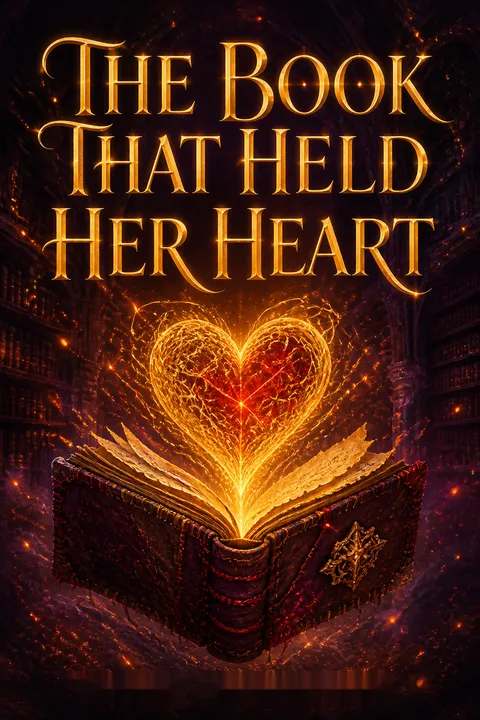
Mark Lawrence's The Book That Held Her Heart is a meditation on memory, trauma, and the redemptive power of stories. Through the infinite library—a metaphor for both the collective memory of civilization and the personal archives of grief and hope—the novel explores the cycles of violence, forgetting, and renewal that shape individuals and societies. The characters' journeys—across worlds, through time, and into the heart of their own stories—mirror the struggles of real-world history: the dangers of tyranny, the cost of scapegoating, and the necessity of remembering even the darkest chapters. The book's central device, Livira's patchwork manuscript, becomes both weapon and hope, a reminder that the stories we tell can destroy or heal. The novel's resolution, in which the library's magic is scattered and diluted, suggests that salvation lies not in monolithic institutions or perfect memory, but in the messy, diverse, and resilient communities that nurture stories, kindness, and hope. The lesson is clear: memory is both burden and blessing, and the future is written not by the victors, but by those who dare to remember, to forgive, and to begin again.
Review Summary
The Book That Held Her Heart by Mark Lawrence concludes the Library Trilogy with divisive results. Reviewers praise the emotional depth, philosophical themes about knowledge and memory, and Lawrence's masterful prose. Many found the ending devastatingly beautiful. However, critics cite fragmented storytelling, excessive jumping between timelines and characters, and heavy-handed incorporation of Nazi Germany. The new POV character Anne Hoffman proved controversial. While some called it a stunning, thought-provoking finale and ode to books, others felt disappointed after the acclaimed first book, finding the conclusion convoluted and overstuffed with underdeveloped plot threads.
People Also Read
Characters
Livira
Livira is the heart of the story—a human girl from the Dust, orphaned and scarred by violence, who becomes a librarian and the author of a book that can change worlds. Her journey is one of loss, longing, and fierce hope. Trapped for centuries in the body of an assistant, she raises canith children, learns the cost of memory, and becomes both weapon and healer in the library's war. Her love for Evar, her loyalty to friends, and her refusal to forget or surrender shape the fate of the library and all who dwell within it. Livira's arc is one of transformation—from victim to creator, from lost child to the architect of renewal.
Evar
Evar is a canith, raised in the library's confines, shaped by trauma and the burden of survival. His love for Livira is both anchor and torment, driving him to defy fate and family. Changed by the library's blood, Evar becomes both more and less than himself—capable of miracles, haunted by the cost. His struggle with Mayland, Starval, and his own nature is a battle for identity and redemption. Evar's journey is one of sacrifice, courage, and the hope that love can outlast even the end of stories.
Arpix
Arpix is Livira's friend and confidant—a librarian whose wisdom and compassion are tested by captivity, violence, and the demands of war. His ordeal at the hands of Oanold's soldiers, his loyalty to Clovis, and his role in the Mechanism's cataclysm reveal a quiet strength. Arpix's arc is one of growth—from timid scholar to a man willing to risk everything for those he loves. His relationship with Clovis, his struggle with hate and forgiveness, and his commitment to memory make him a vital thread in the tapestry of the story.
Clovis
Clovis, a canith raised as Evar's sister, is defined by loss, rage, and the search for belonging. Her hatred of humans, born from the slaughter of her people, is challenged by her bond with Arpix and the demands of survival. Clovis's arc is one of transformation—from vengeance to love, from isolation to connection. Her prowess in battle, her loyalty to family, and her willingness to change make her both a force of nature and a symbol of hope.
Mayland
Mayland, Evar's brother, is a master of history and manipulation. His desire to destroy the library, to break the cycles of oppression and forgetting, drives much of the conflict. Mayland's arc is one of hubris and regret—his actions unleash chaos, but his journey with Yute and Anne forces him to confront the cost of certainty and the value of compromise. Mayland embodies the dangers of knowledge without compassion, and the possibility of redemption through understanding.
Starval
Starval, another of Evar's siblings, is trained in stealth and violence, but haunted by the emptiness of his code. His loyalty to family is tested by Mayland's schemes and his own nihilism. Starval's arc is one of self-discovery—his betrayal of Evar, his struggle with guilt, and his eventual embrace of connection reveal the possibility of change. Starval is both weapon and wounded soul, a reminder that even the most hardened can find grace.
Kerrol
Kerrol, the last of Evar's siblings, specializes in understanding and influencing others. His journey with Yute and Anne, his role as peacemaker, and his willingness to seek compromise make him a stabilizing force. Kerrol's arc is one of growth—from detached observer to active participant, from cynicism to hope. His relationship with Anne, his insights into power and memory, and his commitment to healing old wounds are central to the story's resolution.
Yute
Yute, once an assistant, now deputy head librarian, is a figure of wisdom, compassion, and sorrow. His marriage, his loss, and his role as mentor to Livira and others shape the moral core of the story. Yute's final sacrifice, creating the portal to the centre, is an act of love and hope. His belief in memory, his refusal to choose between extremes, and his faith in the possibility of renewal make him a quiet hero.
Carlotte
Carlotte, once a house-reader, becomes a queen in a lost city, a ghost who shapes history. Her wit, courage, and hunger for life are both shield and sword. Carlotte's arc is one of adaptation—her friendship with Livira, her willingness to risk everything for love and loyalty, and her embrace of change make her a symbol of resilience.
Anne
Anne, the bookshop girl, is both observer and participant in the story's grand tapestry. Her world, scarred by hatred and violence, becomes a mirror for the library's war. Anne's courage, her commitment to memory, and her refusal to surrender to despair make her a beacon of hope. Her survival, her role as teacher, and her wisdom in old age are testaments to the power of stories and the necessity of remembering.
Plot Devices
The Infinite Library
The library is both setting and symbol—a place where all stories, all histories, and all possibilities are preserved. Its chambers, portals, and Mechanism allow for journeys through time, space, and imagination. The library's war—between Irad (preservation) and Jaspeth (forgetting)—is a cosmic struggle mirrored in every character's choices. The library's blood, manifesting as Escapes, is shaped by fear, hope, and the stories people tell. The destruction and rebirth of the library are both literal and metaphorical, reflecting the cycles of history, oppression, and renewal.
The Book That Holds Her Heart
Livira's book, a patchwork of memory and imagination, becomes the key to the library's fate. In the hands of Oanold, it is a weapon that can break reality; in Livira's hands, it is a tool for healing and transformation. The book's power is shaped by the stories it contains, the memories it preserves, and the choices of those who wield it. Its blank pages at the end symbolize both loss and the possibility of new beginnings.
The Mechanism and the Exchange
The Mechanism allows characters to live stories, blurring the line between fiction and reality. The Exchange is a place of possibility, where time and space are mutable, and choices multiply. Both devices are used to explore the consequences of memory, the cost of forgetting, and the power of stories to shape lives and worlds.
Foreshadowing and Cycles
The story is structured around cycles—of violence, oppression, forgetting, and renewal. Foreshadowing is used to hint at the costs of memory and the dangers of certainty. The fates of characters, cities, and worlds are all shaped by the stories they tell and the choices they make. The library's destruction and rebirth are both warning and promise.
Multiplicity and Possibility
The scattering of characters across maybes and might-have-beens explores the idea that identity, fate, and morality are shaped by chance and choice. The reunion at the centre, the joining of books, and the scattering of the library's magic into the world all reflect the theme that hope endures not in monoliths, but in multiplicity, diversity, and the stories people share.
The Library Trilogy Series
Download PDF
Download EPUB
.epub digital book format is ideal for reading ebooks on phones, tablets, and e-readers.








































