
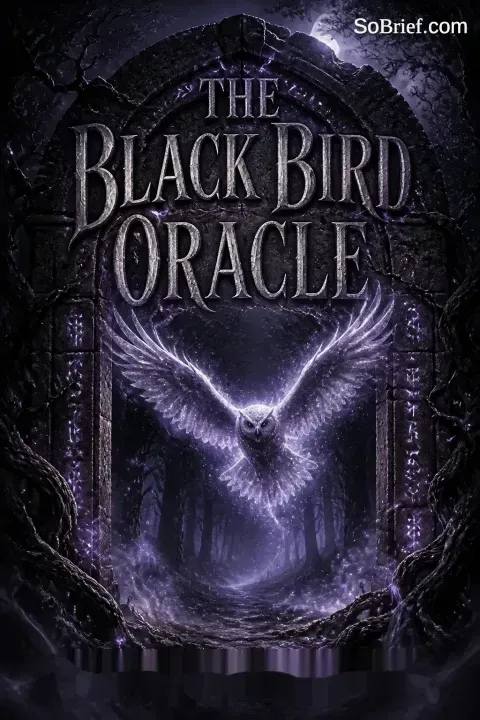


Plot Summary
Prologue
In every soul, a place is reserved for Shadow. Diana Bishop1 kept hers hidden beneath a long-healed bruise of memory. The ravens arrived in New Haven on a stifling May afternoon, an unkindness darkening the sky, and the world drained to gray.
A bird fell dead at her daughter's4 feet. Another delivered a ring carved from bone. That night, a letter from a great-aunt she never knew5 summoned her home to Ipswich. The invitation could not be refused. Shadow stirred, and Diana's1 secret power began to wake.
The prologue establishes Shadow as a repressed aspect of the self, core to higher magic. The ravens function as psychopomps, bridging the living and the ancestral dead. The violent death of the bird and the leaching of color signify a rupture in Diana's ordinary reality, an intrusion of the uncanny that demands acknowledgment. This framing casts the narrative as a return of the suppressed, summoning Diana to confront a legacy she has been taught to fear.
The Raven’s Deadly Fall
On a Friday in late May, Diana Bishop1 and her six-year-old daughter Becca4 walk home in New Haven. A raven plummets from the sky, slams into the pavement, and bleeds out. The world turns gray, then color slowly returns. A larger bird lands, plucks a bone ring from the dead one’s beak, and drops it before Becca.4
She slips it on; it will not budge. That evening, Diana1 sorts the mail: a letter from the Congregation demands magical testing for her twins, and an envelope from Gwyneth Proctor,5 a great-aunt she never knew existed, invites her to Ravenswood.
Inside are an aged oracle card titled The Dark Path and a 1972 pencil drawing of a woman’s ringed hand clasping a child’s, a raven’s shadow falling across them. Diana’s1 weaver’s cords flare. She tells her vampire husband Matthew2 she must go to Ipswich instead of England. That night, the family buries the raven in the backyard.
Three omens converge in a single afternoon: the dead raven, the Congregation’s threat, and the ancestral invitation. The raven’s sacrifice delivers the ring to Becca, marking her as the next generation’s receptor of higher magic. The drawing, made four years before Diana’s birth, proves prophecy at work. Diana’s immediate decision to follow the summons, altering long-held summer plans, signals that the pull of Shadow is not intellectual but visceral, overriding reason and habit.
Gwyneth Proctor’s Dark Truth
Diana1 drives to Ipswich and stops at a café where witches eye her with suspicion until her cousin Julie Eastey13 whisks her away. At a weathered saltbox on the marsh called the Old Place, she meets Gwyneth Proctor,5 eighty-seven and sharp.
Gwyneth5 reveals that her father Stephen, a weaver, made her mother Rebecca promise: no higher magic, no contact with the Proctors, and their child must be spellbound if any inclination toward the Dark Path appeared. Stephen had a twin sister, Naomi, who walked the Congregation’s higher magic track and killed herself at twenty-four after failing the Labyrinth.
Gwyneth5 unfurls a scroll: the Proctor family tree shows twins in every other generation, power split between weavers and adepts. Diana,1 a chimera who absorbed her twin in the womb, was chosen by the goddess to carry both gifts. She decides to stay.
Gwyneth’s disclosures reframe Diana’s childhood as a deliberate erasure. Stephen’s ultimatum to Rebecca, born of grief over Naomi, created a generational pattern of fear that Sarah perpetuated. The revelation of Diana’s chimerism is the mythological crux: she is not an anomaly but a singular vessel for combined powers. Gwyneth frames higher magic not as corruption but as birthright, and Diana’s choice to remain at Ravenswood marks the first conscious step onto the Dark Path.
The Black Bird Oracle
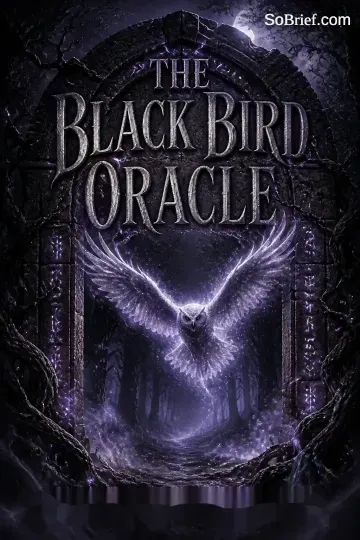
In a barn layered with centuries of spells, Diana1 meets her eleven-times-great-grandmother Dorcas Hoare,12 a ghost spared the gallows in 1692, who smokes a pipe and speaks with vinegar. Dorcas12 unwraps a bundle of cards: the black bird oracle, crafted from her own visions in the Salem jail.
The deck springs to life, flying and sorting itself into a spread that reveals The Dark Path, The Crossroads, and The Labyrinth. Dorcas12 warns that the goddess wants Diana1 to walk all three levels of higher magic and that turning away risks disaster.
Gwyneth5 adds that Diana1 must present herself to the Ipswich coven and face a challenger at the Crossroads. That evening, Diana1 calls Matthew2 and asks him to bring the twins to Ravenswood. She admits she has kept things from him. He agrees to come.
The oracle deck functions as an autonomous agent of fate, its selection of Diana a form of ancestral election. Dorcas’s ghostly presence collapses the historical distance between Salem’s persecution and the present, insisting that the wounds of 1692 remain open and demand redress. Diana’s phone call to Matthew represents the bridge between her emerging magical self and her married life, acknowledging that the path forward must be walked together, even if she cannot yet articulate its dangers.
A Vampire at the Witch’s Tree
Matthew2 arrives with Pip,3 Becca,4 the family’s griffin Apollo, and their deerhound Ardwinna. The ground tingles; Becca4 kicks off her shoes to feel it better. Gwyneth5 leads them to the Proctor’s Ledge memorial in Salem for the 325th anniversary of Bridget Bishop15’s execution.
Hundreds of witches gather. Meg Skelling,10 a coven member with mismatched sea-glass and bark-brown eyes, publicly hisses that Bishops and vampires do not belong. Julie Eastey13 steps forward with witchfire and a blade, while Ike Mather, a Marine cousin, shields the children.
Diana’s1 fury cracks the sky with lightning and thunder. The Proctor clan forms a protective cordon, forcing Meg10 to retreat. That evening, Matthew2 and Diana1 argue about higher magic, their voices carrying through the house, and Becca4 overhears every word.
The Salem memorial externalizes the central conflict: the coven’s purity politics versus the hybrid Bishop-Clairmont family. Meg embodies institutional resentment, her hostility rooted in a fear of contamination that mirrors the Congregation’s later eugenicist agenda. The Proctors’ unified defense demonstrates that kinship can override coven loyalty. Diana’s elemental fury, summoning a storm, signals that her power is no longer latent and that she will not be cowed by bullies.
Becca’s Raven Dance
That night, Pip3 cries while his parents scream, and Becca4 whispers to her doll Tamsy, inhabited by the spirit of Tamsin Proctor. She slips into the Ravens’ Wood alone. Diana,1 Matthew,2 Gwyneth,5 and Pip3 search in a rising storm.
Deep in the trees, they find Becca4 inside a magic circle she has cast, an unkindness of ravens swirling around her. The birds dive, peck, and lift her by her raincoat as she somersaults and laughs. Matthew’s2 voice and her invitation break the barrier.
Inside, he sheds centuries of discipline, loping and snapping like a wolf as the ravens play with him. The Proctor sisters’ ghosts watch from the shadows. When Becca4 finally breaks the circle, she is exhausted, and Matthew2 carries her home, his heart cracked open to a wildness he had denied.
This scene is an initiation transmitted through the dead: Tamsin Proctor, via the doll, teaches Becca the circle-casting spell. Becca’s ability to admit Matthew while keeping Diana out suggests that her higher magic recognizes vampiric darkness as kin to raven nature. Matthew’s transformation inside the circle proves that the Dark Path is not inherently evil but can integrate even the most shamed parts of the self. The event bonds father and daughter in a shared language of shadow.
Meg’s Coven Challenge
Ann Downing, high priestess of the Ipswich coven, arrives to report that Meg10 has filed a formal complaint. Meg10 accuses Gwyneth5 of flouting coven protocols by training an outsider, citing Diana’s1 Bishop blood, her marriage to a vampire, and the speed of her instruction.
A special coven meeting convenes at Ravenswood during the anniversary week of the hangings. Under a full moon, witch after witch airs old grievances against the Proctors while ghosts line the rafters. Granny Dorcas12 tries to object, but the parliamentarian Hitty Braybrooke enforces order.
Meg10 stands, points a finger, and challenges Diana1 to prove herself at the Crossroads. The room holds its breath. Diana1 accepts without flinching, declaring the goddess will decide her fitness, not Meg.10 Ann sets the trial for one week hence.
The coven meeting dramatizes the tension between communal law and family sovereignty. Meg’s challenge, ostensibly procedural, is fueled by envy and a wider anxiety about hybridity. Diana’s immediate acceptance demonstrates her emerging confidence but also her Proctor impatience. The setting, on the eve of Bridget Bishop’s execution, layers the contemporary trial with historical trauma, implying that the coven’s internal witch-hunting rehearses the betrayals of 1692.
Freeing Naomi, Choosing Darkness
On the appointed night, Diana1 enters the Ravens’ Wood with Ann, Katrina, and Gwyneth.5 Meg10 is already there, perched atop the ancient Crossroads post. She attacks with pits of earth, poison moths, and stolen moonbeams. Diana’s1 weaver’s knots and fragments of Emily Dickinson barely hold.
Shades of the wood cycle past, including her father’s twin Naomi, whose chest gapes with a broken tenth knot, trapping her in Elsewhere. Diana1 reweaves the six-crossed knot and then the tenth, closing the circlet around Naomi’s wasted body.
A white raven rises from the ashes as Naomi’s spirit is freed. The goddess emerges from the shadows, an owl with a white crossroads between her eyes, and offers Diana1 the Dark Path. Diana1 accepts and receives Cailleach, a gray owl guide. Meg,10 shaken, concedes defeat.
The Crossroads trial recapitulates the higher magic curriculum: using shadow, serving others, and facing fear. Diana’s choice to heal Naomi rather than attack Meg demonstrates that the Dark Path’s power lies in transformation, not domination. The goddess’s appearance validates Diana’s right to the path, while the owl Cailleach formalizes her spiritual guidance. Meg’s concession is unsettling, a crack through which future treachery may leak.
The Holly King’s Crown
On Midsummer Eve, hundreds of Proctors converge at Ravenswood for a potluck. Children craft fairy-feeders; teenagers read tarot; the elders watch the bonfire. After sunset, a figure robed in oak leaves appears. The Oak King circles the fire and extends a branch to Diana.1
She is transformed: holly leaves sprout from her skin, a white wand forms in her hand, and ivy twines through her hair. She battles the Oak King around the fire, calling ravens and moths to swallow his stars, pushing him back with Shadow until the bonfire dims to embers.
The Proctor ghosts rise from the wood, sharp and visible. Julie,13 glamoured as the Fairy Queen, recites Shakespeare, and the family throws their wishes into the flames. Diana1 and Matthew2 retreat to the moon garden, their passion a private echo of the night’s magic.
The Midsummer ritual cements Diana’s integration into the Proctor clan through collective magic. Her role as Holly King re-genders the seasonal myth, showing that women too can embody winter’s dark sovereignty. The communal summoning of ghosts reverses the neglect Diana saw at the Bishop House, proving that active remembrance nourishes ancestral spirits. The evening’s arc, from public ritual to private intimacy, suggests that the sacred encompasses both coven and couple.
The Bishop House Betrayal
Janet Gowdie9 arrives with alarms: Meg10 has reported Diana1 to the Congregation for bloodcraft. Janet9 also seeks her mother Griselda’s memory bottle from Salem. Gwyneth,5 Diana,1 Janet,9 and Sarah6 travel to the Bishop House in Madison.
Behind a magically shifted cupboard in the stillroom, they discover dozens of memory bottles and Diana’s1 mother’s secret book of shadows, hidden inside Fleetwood Mac album inserts. When Diana1 accidentally breaks two bottles, lost childhood memories flood back. Under the pressure, Sarah6 erupts: she and Rebecca had different fathers.
Rebecca’s father was Thomas Lloyd, a British soldier and witch with whom Joanna Bishop had a wartime affair, not Joe Green. Sarah6 has lived her life feeling second-best, and her resentment fueled decades of lies about the Proctors and higher magic.
This turning point dismantles the Bishop family’s self-mythology of unambitious, safe magic. Sarah’s confession reveals that the suppression of higher magic was not solely protective but also rooted in jealous grief. The memory bottles physicalize the psychological mechanism of concealment. Diana’s retrieval of her own lost memories parallels her reclamation of her identity, while the revelation about Thomas Lloyd ties the Bishops directly to the de Clermonts’ wartime history.
Gallowglass and the Gaol
Back at Ravenswood, Gwyneth5 opens Griselda Gowdie’s seventeenth-century bottle. The group plunges into the Salem gaol of 1692: Dorcas Hoare,12 Bridget Bishop,15 John Proctor, Rebecca Nurse, Tituba, and the child Dorothy Good are shackled in filth.
Griselda, a half-vampire Scottish witch, brings food and a charm bag. A tall Scottish vampire appears, calling himself William Sorley but instantly recognizable as Gallowglass, Matthew’s nephew.16 He shields Dorcas12 from a brutal examination, presses a silver crossroads coin into Griselda’s hand for luck, and arranges her escape.
Sensing death, Bridget Bishop15 sings a bloodsong prophecy: 'Two children, bright as Moon and Sun, / Will Darkness, Light, and Shadow make one.' The phrase 'black bird oracle' rings through the cell.
The Salem memory recasts the witch trials as a network of interspecies resistance. Gallowglass’s covert aid proves the de Clermonts have been entangled with the Proctors for centuries, long before Diana’s birth. Bridget’s prophecy is the narrative’s fulcrum: it names the twins as the convergence of three families and forecasts their destiny to unite opposing forces. The memory bottle, made and preserved by a marginalized half-breed, emerges as the truest historical record.
Lucas, Lost Again
To prepare for the Labyrinth she must one day walk on Isola della Stella, Diana1 proposes a practice run in the ruined Proctor labyrinth. Matthew2 agrees, against his better judgment.
Inside, the enchantment grants wishes: Diana1 sees pleasant shades, but Matthew’s2 buried grief conjures his young son Lucas, who died centuries ago of blood rage, and his brother Hugh, murdered long ago. Lucas cries out in terror, and Darkness coalesces around them. Diana’s1 own careless wish feeds the danger. Grandfather Tally’s ghost appears, furious, and forces them out.
He warns Diana1 that vampires have no place in the goddess’s labyrinths and that her recklessness nearly lost Matthew2 to Elsewhere. Shaken, Diana1 realizes she must walk her path alone and that love cannot override the laws of higher magic.
This scene externalizes Matthew’s psychological wounds, demonstrating why he fears Shadow: his unshed grief is raw material for Darkness to exploit. The labyrinth acts as a wish-fulfillment engine, but Diana’s attempt to share the experience backfires because Matthew has not integrated his past. Tally’s intervention underscores that higher magic demands boundaries and that Diana’s power is not a universal shield. It is a necessary lesson in humility that prepares her for Venice.
The Congregation Heist
Ysabeau,7 draped in Dior, returns to Venice for the first time in centuries and draws every eye as a distraction. Diana1 and Janet9 motor to Isola della Stella, talk their way through the witches’ wards, and row a tiny mascareta around the floating Labyrinth to reach the memory palace.
Inside Fludd’s baroque folly, Diana1 climbs a double-helix staircase to a suspended library where thousands of bottles are racked by date and class rank. She retrieves those belonging to Taliesin Proctor, Joanna Bishop, Thomas Lloyd, her mother Rebecca, Naomi Proctor, and Emily Mather.
Tinima Toussaint,17 a Congregation priestess, intercepts her, hurls Rebecca’s last bottle into the void, but then allows Diana1 to leave with the rest, promising a future reckoning. The heist succeeds, but the witches now know Diana’s1 strength.
The Venice heist is a feminist reclamation: three generations of women (Ysabeau, Janet, Diana) invade the patriarchal archive to retrieve what was stolen. Tinima’s ambiguous act, destruction with permission, hints at internal Congregation dissent. The ranking numbers on the bottles confirm the witches’ eugenic agenda, linking higher magic to historical atrocities. Diana’s success shifts her from passive object of Congregation surveillance to active resister, setting the stage for an inevitable confrontation.
The Unicorn and the Dragon
After Venice, Cailleach drops mandrake root and green dragon weed at Diana’s1 feet, a sign to use a love philtre. Diana1 brews the potion, leaves a silver goblet for Matthew2 in the wood, and enters Gwyneth’s5 moon garden sky-clad under the dark moon.
She calls moths for a cloak, invokes the words of Giordano Bruno, and waits in the apple tree. Matthew2 follows, naked and already caught by the spell. She challenges him to shed his civilized veneer. He bites her shoulder and drinks; she bites him back, tasting his cold blood.
They tumble through poppies and wolfsbane. Afterward, Matthew2 admits that their love is terrifying because it lives in uncertainty, not in the clear light he craved. Diana1 tells him she is Shadow, belonging to neither Darkness nor Light, and she will not be tamed.
This ritualized passion is mutual initiation: Diana uses higher magic not to dominate but to invite Matthew into her world. The philtre functions as permission, not coercion, releasing his suppressed wildness. Their exchange afterward redefines their relationship, acknowledging that love can coexist with fear and that his previous control was unsustainable. The moon garden, a liminal space between sun and shadow, becomes the stage for a consummation that integrates vampire and witch, Darkness and desire.
Satu’s Twisted Test
On August 13, Diana’s1 birthday and the anniversary of Naomi’s death, Satu Järvinen11 arrives at Ravenswood as the Congregation’s examiner. Gwyneth’s5 wards and the Proctor ghosts keep close watch.
Satu11 tests Pip:3 he makes roses bloom across a meadow, summons wind strong enough to tumble a soot-blackened griffin, lights a roaring fire, and lifts water with his mind. He cannot call a familiar. Satu11 tests Becca:4 she fills a glass with lemonade from the bottom up, lights every candle in the room, but cannot wilt a flower or stir the air.
When asked to invite a familiar, a raven with a silver ruff and silver eyes, Fiachra, flies through the window and perches on her arm. This was Tally Proctor’s old familiar, reborn for Becca.4 Satu’s11 report will mark Becca4 as a higher magic prodigy.
Satu’s return as examiner is the novel’s most personal violation: the former torturer granted institutional authority. Yet Diana does not intervene, trusting her children’s own magic and the protective web of Ravenswood. The tests reveal that the twins’ abilities are distinct but complementary, reinforcing the prophecy’s Moon and Sun imagery. Fiachra’s appearance links Becca to Tally, compressing generations. Satu’s clinical efficiency suggests she is gathering data for the Congregation’s eugenic project, making the exam a quiet act of surveillance.
The Tenth Knot Vow
After Satu11 drives away, Diana1 races up the hill and stops her car. Satu11 steps out, smirking, and shows her palms alive with weaver’s cords: she has found a teacher and is no longer weaker than Diana.1
She hands over formal notification: Diana1 has been selected to walk the Labyrinth on Isola della Stella in the class of 2018, and the witches will have plans for Becca’s4 prodigious gifts. Mary Proctor’s ghost brings the black bird oracle; a single card falls: Blood.
Diana1 speaks Bridget’s prophecy aloud, her voice ringing with the gathered power of Ravenswood: 'Two children, bright as Moon and Sun, / Will Darkness, Light, and Shadow make one.' She traces the tenth knot, a silver-black ouroboros, and sends it Elsewhere as an unbreakable vow, claiming her children’s freedom to choose their own paths.
Diana’s final speech-act transforms prophecy from prediction into declaration. By weaving the tenth knot, she closes a symbolic loop: the power used to free Naomi now binds her own oath. The ouroboros sent Elsewhere acts as both prayer and spell, embedding her intent into fate. The card Blood acknowledges the sacrifice ahead. Diana’s assertion of her children’s autonomy is the book’s ultimate defiance of the Congregation’s eugenic program and her father’s legacy, completing her journey from obedient daughter to sovereign witch.
Analysis
The Black Bird Oracle extends the All Souls series into a reckoning with ancestral trauma and institutional control. At its core, the novel interrogates the cost of suppressing magical inheritance. Diana’s1 father Stephen, broken by his twin Naomi’s suicide, attempted to protect his daughter by forbidding higher magic, but his edict merely replicated the Congregation’s oppressive logic under the guise of safety. The book argues that such suppression is unsustainable: power denied festers, and the return of the repressed, figured in the ravens and the oracle deck, is both inevitable and generative.
The Congregation’s memory palace functions as an archive of eugenics. By collecting and ranking witches’ memories, the institution sought to breed stronger magical lines, a project that mirrors real-world historical atrocities and contemporary anxieties about genetic selection. Diana’s1 raid on the palace is therefore not mere theft but an act of reparation, restoring to families what was taken to serve a biopolitical agenda.
Central to the story is the redefinition of Darkness. The novel insists that higher magic is not inherently evil; it is Shadow, a liminal space where fear and desire coexist, and where true power resides. Matthew’s2 arc, from terror to acceptance, models the integration of Shadow into a complete self. The twins, who carry both witch and vampire blood, embody this synthesis on a biological level, fulfilling a prophecy that transforms hybridity from a threat into a messianic promise. Ultimately, the book champions a feminism of sovereignty: Diana1 chooses her own path, claims her full power, and declares that her children will choose theirs, refusing both her father’s control and the Congregation’s design.
Review Summary
The Black Bird Oracle received mixed reviews, with many fans disappointed by character inconsistencies and plot issues. Critics felt the book lacked the magic of previous installments, with slow pacing and unnecessary details. Some praised the world-building and family dynamics, while others found the story disjointed and characters regressed. The ending left readers divided, with some excited for future books and others frustrated by unresolved plotlines. Overall, the book polarized fans, with ratings ranging from 1 to 5 stars.
People Also Read
Characters
Diana Bishop
Historian, witch, and weaverA Yale history professor and a weaver-witch who absorbed her twin in the womb, making her a chimera. Raised by her aunt Sarah6 after her parents’ murder, Diana long suppressed her magic. She is married to the ancient vampire Matthew Clairmont2 and is the mother of Bright Born twins. Methodical and scholarly, she discovers her Proctor lineage and embraces higher magic to protect her children from the Congregation’s eugenic designs. Her deepest drive is to integrate her professional identity, her maternal devotion, and her magical inheritance into a unified self.
Matthew Clairmont
Vampire geneticist and husbandA 1,500-year-old vampire with a scientific mind and a knight’s code. He carries the trauma of blood rage, which killed his son Lucas, and a Catholic faith that makes him distrust higher magic. His love for Diana1 is absolute, but he fears losing her to powers he cannot control. At Ravenswood, he slowly sheds his controlling instincts, learning to play with ravens, submit to a love philtre, and accept that his wife’s darkness is not his enemy.
Pip Bishop-Clairmont
Twin son, budding weaverPhilip, called Pip, is cheerful, quick to tears, and physically resembles Diana1 with fair hair and freckles. His griffin familiar Apollo signals his weaver talents. Though brave for his sister4, he fears the dark and clings to his stuffed rabbit Cuthbert. At Ravenswood, his weaver powers manifest in elemental tests, and he confronts the possibility of a familiar he cannot yet summon.
Becca Bishop-Clairmont
Twin daughter, higher magic prodigyRebecca, called Becca, resembles her vampire father2 physically with dark hair and pale skin, but her magic is pure witch. She talks to ravens, hears the dead, and wears a bone ring given to her by a dying bird. Her doll Tamsy is inhabited by an ancestral spirit who teaches her spells. At the Congregation’s test, she calls a raven familiar, Fiachra, proving she is destined for higher magic.
Gwyneth Proctor
Great-aunt and higher magic teacherAn eighty-seven-year-old retired geology professor from Mount Holyoke. As the Proctor family’s head of higher magic education, she defied her nephew Stephen’s ban to train Diana1. Patient, pragmatic, and steeped in old ways, she uses alchemy, oracle cards, and memory bottles as teaching tools. She has spent a lifetime quietly resisting the Congregation’s overreach.
Sarah Bishop
Diana’s protective auntAn elemental witch who raised Diana1 in Madison after her sister Rebecca’s murder. Sarah’s hostility toward higher magic masks a deep trauma: she believed her sister was destroyed by it and that she herself was the lesser daughter. She hid Diana’s1 Proctor heritage and her own paternal secret for decades, until the truth shattered at the Bishop House.
Ysabeau de Clermont
Matthew’s mother, ancient vampireA vampire of immense age and power, once worshipped as Nemesis. She lives at Sept-Tours in France, bound by grief over her mate Philippe’s death. Despite a history of enmity with witches, she advises Diana1 to stay at Ravenswood and masterminds the Venice heist as a glamorous distraction. Her strategic mind and emotional armor conceal deep regret over a fatal decision she made during World War II.
Baldwin de Clermont
Head of the de Clermont familyMatthew’s2 older brother, a former Roman general turned global financier. Pragmatic, imperious, and fiercely protective of the clan, he views the Proctor revelations as a strategic crisis. He defers to Diana1 as his general in the matter of higher magic, acknowledging the shift in power dynamics within the family.
Janet Gowdie
Bright Born witch and former Congregation memberMatthew’s2 great-great-granddaughter, born in 1841 with diluted vampire blood. A skilled witch, she sits on the Congregation until expelled after the Venice heist. She seeks her mother Griselda’s memory bottle from Salem, which proves to contain a crucial prophecy and a record of Gallowglass’s16 intervention.
Meg Skelling
Ipswich coven antagonistA witch with mismatched sea-glass and bark-brown eyes who works at The Thirsty Goat café. She despises Diana1 for her Bishop bloodline and her vampire marriage, and sees the Proctors as arrogant. Her formal challenge at the Crossroads is driven by malice, though she concedes when Diana1 proves her power.
Satu Järvinen
Finnish weaver and former torturerA powerful witch who once tortured Diana1, opening her flesh and branding her with the de Clermont symbol. Thought spellbound, she has regained her power and now serves the Congregation as an examiner. She is revealed to be a fellow weaver, making her an even more dangerous rival.
Granny Dorcas
Ghostly ancestor and oracle makerDorcas Hoare, Diana’s1 eleven-times great-grandmother, was accused in Salem and survived. As a ghost, she is vivid and sharp-tongued, accompanied by fairies. She created the black bird oracle deck from bird augury and now guards the Proctor barn.
Julie Eastey
Cousin and mistress of ceremoniesA tall, whimsical witch with wild blond-and-gray hair, wearing madras shorts and bucket hats. As Ipswich coven’s mistress of ceremonies, she organizes the Proctor potluck and appears as the Fairy Queen at Midsummer. Her magical power is formidable but masked by eccentricity.
Chris Roberts
Human geneticist colleagueDiana’s1 Yale colleague, a daemon-like human scientist who serves as the twins’ godfather. He brings comic relief, pop-culture references, and relentless curiosity about Proctor genetics. His childhood friend Ike Mather turns out to be a Proctor cousin.
Bridget Bishop
Executed Salem ancestorThe first witch hanged at Salem in 1692. Her ghost endures at the Bishop House, and her bloodsong prophecy, witnessed in Griselda’s memory bottle, foretells the twins’ destiny and the union of the Bishop, Proctor, and de Clermont families.
Gallowglass
Vampire and secret Salem rescuerMatthew’s2 vampire nephew, known for his wanderings. Under the alias William Sorley, he appears in Griselda’s memory, shielding the Salem prisoners and giving a protective coin to the half-vampire witch. His historical role proves the deep entanglement of the families.
Tinima Toussaint
Congregation priestess and firekeeperHaitian-born witch who replaced Satu11 on the Congregation. She confronts Diana1 in the memory palace, destroys Rebecca’s last memory bottle in a flash of fire, but unexpectedly allows Diana1 to leave with the other stolen bottles. Her motives remain ambiguous.
Plot Devices
Black Bird Oracle Deck
Divination tool that chooses Diana.A deck of hand-painted cards created by Granny Dorcas12 in the Salem jail, using the language of birds: ravens, owls, herons, and vultures. It acts as a living oracle, flying and sorting itself into spreads that reveal the past, present, and future. The deck selects Diana1 as its seer, guiding her toward the Dark Path and warning her of the Congregation’s threat. It later identifies Ysabeau7 as the Queen of Vultures and prompts family spelling bees.
Memory Bottles
Vessels storing witches’ extracted memories.Glass bottles sealed with wax that contain a witch’s captured experiences, preserved as heavy, warm, and sparking vessels. The Congregation’s memory palace on Isola della Stella holds thousands, collected since the 1890s as part of a eugenic program to select the most powerful witches. Diana1 retrieves her family’s bottles from both the Bishop House and Venice, reclaiming their history and preventing the Congregation from exploiting their talents.
The Crossroads
Ritual site for choosing the Dark Path.A clearing in the Ravens’ Wood centered on a polished tree trunk where witches face their fears and desires to find their path in higher magic. Meg’s10 challenge forces Diana1 to confront attacks, encounter shades of the wood, free Naomi’s spirit with the tenth knot, and meet the goddess, who grants her the owl Cailleach as a guide.
The Tenth Knot
Weaver’s knot of creation and destruction.The highest knot in a weaver’s repertoire, represented by the ouroboros, the snake devouring its tail. It can both make and unmake. Diana1 uses it to heal Naomi’s shade in the Crossroads and later to seal her vow to protect her children, sending the knot Elsewhere as an unbreakable spell.
Bridget’s Prophecy
Bloodsong foretelling the twins’ destiny.Sung by Bridget Bishop15 in the Salem gaol and preserved in Griselda’s memory bottle, the prophecy declares: 'Two children, bright as Moon and Sun, / Will Darkness, Light, and Shadow make one.' It names three families, the black bird oracle, and four drops of blood on an altar stone. The prophecy drives the plot, convincing the characters that the Bishop, Proctor, and de Clermont lines have been interwoven for centuries toward the twins’ birth.
FAQ
Synopsis & Basic Details
What is The Black Bird Oracle about?
- A Witch's Journey Home: The story follows Diana Bishop as she returns to her ancestral home in Ipswich, Massachusetts, after a series of strange events, including a raven's death and a mysterious ring appearing on her daughter's finger.
- Unraveling Family Secrets: Diana uncovers a hidden history of her family, the Proctors, and their connection to higher magic, while also dealing with the Congregation's interest in her children's magical abilities.
- Balancing Worlds: Diana must navigate the complexities of her dual heritage as a witch and a de Clermont, while also protecting her children from the dangers of the magical world and the Congregation's scrutiny.
Why should I read The Black Bird Oracle?
- Intriguing Mystery: The book weaves a compelling mystery with elements of magic, family secrets, and historical intrigue, keeping readers engaged and eager to uncover the truth.
- Complex Characters: The characters are richly developed, with their own motivations, flaws, and strengths, making them relatable and compelling.
- Exploration of Themes: The story delves into profound themes of family, legacy, choice, and the balance between light and darkness, offering readers a thought-provoking and emotionally resonant experience.
What is the background of The Black Bird Oracle?
- Magical Lineages: The story is set in a world where witches, vampires, and daemons exist alongside humans, with their own governing bodies and hidden histories.
- Historical Context: The narrative draws on historical events, such as the Salem witch trials, and incorporates elements of folklore and mythology, adding depth and complexity to the story.
- Family Legacy: The Proctor family's history is deeply intertwined with higher magic, and the story explores the consequences of this legacy on Diana and her children.
What are the most memorable quotes in The Black Bird Oracle?
- "In every soul, there is a place reserved for Shadow.": This quote, from the beginning of the book, highlights the theme of duality and the presence of darkness within everyone, setting the tone for the story's exploration of higher magic.
- "Time was on our side. Stephen and Sarah knew that they were fighting a losing battle. So did Rebecca. She understood that higher magic could only be denied and suppressed for so long. Shadow always finds us, in the end.": This quote reveals the inevitability of Diana's destiny and the power of her magical heritage, despite her parents' attempts to suppress it.
- "You must choose your own path forward. Not the road that Sarah chose for you, or Stephen, or even the one you embarked upon with your husband. This is a path you must walk alone.": This quote emphasizes the theme of individual choice and the importance of self-discovery, as Diana must forge her own path rather than following the expectations of others.
What writing style, narrative choices, and literary techniques does Deborah Harkness use?
- Rich Detail and Imagery: Harkness uses vivid descriptions and sensory details to create a rich and immersive world, bringing the magical and historical elements of the story to life.
- Multiple Perspectives: The narrative shifts between different characters' points of view, providing a multifaceted understanding of the events and their emotional impact.
- Foreshadowing and Symbolism: Harkness employs subtle foreshadowing and recurring symbols, such as ravens and the color black, to create a sense of unease and anticipation, hinting at future events and deeper meanings.
Hidden Details & Subtle Connections
What are some minor details that add significant meaning?
- Tamsy's Ring: The bone ring that appears on Becca's finger, and later on Tamsy, is a symbol of the connection between the living and the dead, and a sign of Becca's growing magical abilities.
- The Hexafoil Card: The playing card with a hexafoil sent by Gwyneth Proctor foreshadows Diana's connection to her Proctor heritage and the protective magic associated with it.
- The Ouroboros: The ouroboros symbol, which appears on Diana's wrist, represents the de Clermont family and the cyclical nature of creation and destruction, hinting at the complex forces at play in her life.
What are some subtle foreshadowing and callbacks?
- The Raven's Death: The raven's death foreshadows the challenges and dangers that Diana and her family will face, as well as the importance of the messages they carry.
- The Gray World: The world turning gray when the raven dies foreshadows the power of higher magic and its ability to alter reality, as well as the darkness that Diana must confront.
- The Drawing of Clasped Hands: The drawing of clasped hands with a raven's shadow falling across them, made in 1972, foreshadows the events of the present and the connection between Diana and her daughter, Becca.
What are some unexpected character connections?
- The Proctors and Bishops: The connection between the Proctor and Bishop families, revealed through Gwyneth, adds a new layer to Diana's identity and her understanding of her magical heritage.
- Taliesin Proctor and Ysabeau de Clermont: The revelation that Taliesin Proctor and Ysabeau de Clermont knew each other during World War II adds a layer of complexity to the de Clermont family history and their connection to the Proctors.
- Tituba and the Proctors: The connection between Tituba, a woman accused of witchcraft in Salem, and the Proctor family, through her daughter Grace Mather, highlights the complex history of magic and persecution in the region.
Who are the most significant supporting characters?
- Gwyneth Proctor: As Diana's great-aunt, Gwyneth provides guidance and support, revealing the secrets of the Proctor family and their connection to higher magic.
- Katrina Wu: As the chair of divination and prophecy for the Ipswich coven, Katrina helps Diana understand the black bird oracle and its messages, offering a fresh perspective on her magical journey.
- Janet Gowdie: As Matthew's granddaughter, Janet brings a unique perspective to the story, revealing the Congregation's secrets and providing a link to the past.
Psychological, Emotional, & Relational Analysis
What are some unspoken motivations of the characters?
- Matthew's Fear of Loss: Matthew's overprotectiveness of Diana and his children stems from his fear of losing them, a result of his long life and the many losses he has endured.
- Gwyneth's Desire for Connection: Gwyneth's eagerness to help Diana is driven by her desire to connect with her family and to ensure that the Proctors' legacy is not lost.
- Meg's Resentment: Meg's antagonism toward Diana is rooted in her resentment of Diana's power and her fear of change, as well as her own thwarted ambitions.
What psychological complexities do the characters exhibit?
- Diana's Internal Conflict: Diana struggles with her desire to protect her children and her own yearning for knowledge and power, creating an internal conflict that drives her actions.
- Matthew's Blood Rage: Matthew's struggle with blood rage and his fear of its impact on his children adds a layer of psychological complexity to his character, highlighting his internal battle with his vampire nature.
- Sarah's Fear of Higher Magic: Sarah's fear of higher magic stems from her past experiences and the loss of her partner, Emily, creating a complex relationship with Diana and her magical heritage.
What are the major emotional turning points?
- The Raven's Death: The death of the raven and the appearance of the ring trigger a series of events that force Diana to confront her past and her destiny.
- The Crossroads Challenge: Diana's encounter with Meg at the Crossroads forces her to accept her dual heritage and embrace the Dark Path, marking a significant emotional turning point.
- The Discovery of Naomi: The revelation of Naomi's existence and her tragic fate forces Diana to confront her father's secrets and the complexities of her family's history.
How do relationship dynamics evolve?
- Diana and Matthew: Their relationship evolves as they navigate the challenges of higher magic and the Congregation's scrutiny, learning to trust each other and embrace their differences.
- Diana and Gwyneth: Their relationship deepens as they explore their shared heritage and the complexities of higher magic, forming a bond based on mutual respect and understanding.
- Diana and Sarah: Their relationship is tested by the revelations of the past, forcing them to confront their differences and find common ground in their shared love for Diana and her children.
Interpretation & Debate
Which parts of the story remain ambiguous or open-ended?
- The Nature of Higher Magic: The true nature of higher magic and its potential for both good and evil remains ambiguous, leaving readers to ponder its implications.
- The Congregation's Motives: The Congregation's true motives for wanting to examine Diana and her children remain unclear, leaving readers to speculate about their long-term goals.
- The Meaning of the Prophecy: The full meaning of Bridget Bishop's prophecy remains open to interpretation, leaving readers to wonder how the events of the story will ultimately unfold.
What are some debatable, controversial scenes or moments in The Black Bird Oracle?
- Diana's Decision to Embrace Higher Magic: Diana's decision to embrace the Dark Path is a controversial one, as it challenges traditional notions of good and evil and raises questions about the potential consequences of her actions.
- Matthew's Reluctance to Test the Twins: Matthew's refusal to test the twins for blood rage is a point of contention, as it highlights the tension between his desire to protect his children and his fear of their potential.
- The Congregation's Actions: The Congregation's actions, particularly their interest in controlling magical knowledge and their treatment of witches, raise questions about their authority and their true intentions.
The Black Bird Oracle Ending Explained: How It Ends & What It Means
- Diana's Choice: The story ends with Diana having chosen to embrace the Dark Path and her Proctor heritage, setting the stage for future challenges and adventures.
- Unresolved Conflicts: The conflicts with the Congregation and the mysteries surrounding higher magic remain unresolved, suggesting that Diana's journey is far from over.
- A New Beginning: The ending hints at a new beginning for Diana and her family, as they navigate the complexities of their dual heritage and the responsibilities that come with it.
All Souls Series
About the Author
Download PDF
Download EPUB
.epub digital book format is ideal for reading ebooks on phones, tablets, and e-readers.








































