
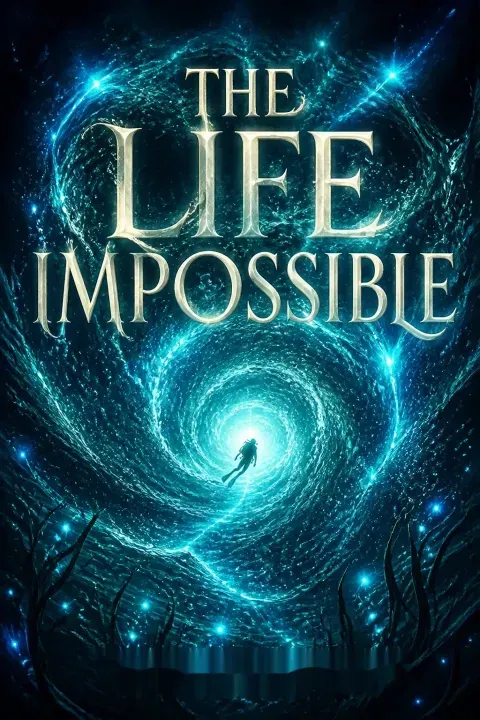


Plot Summary
Prologue
Grace Winters,1 a 72-year-old retired mathematics teacher, receives an email from her former student Maurice Augustine.6 He is 22, grieving his mother's death, struggling with alcohol and despair, and feels trapped in a predictable pattern from which he cannot escape. He asks his old teacher for any wisdom she can offer.
Grace1 replies that she has a story to tell, one she has been meaning to write down. It is a story she admits sounds impossible, about how she went from a numb, lonely widow in Lincoln to finding the greatest purpose she has ever known on the Spanish island of Ibiza. She attaches the manuscript that follows, warning Maurice6 that he need not believe every word, only keep his mind open to possibility.
The epistolary frame serves a dual purpose: it establishes Grace's voice as authoritative yet confessional, and it positions Maurice as a stand-in for the reader, someone in need of hope who must suspend disbelief. Grace's admission that the story sounds impossible mirrors the book's central thesis, that our understanding of reality is always incomplete. The email also economically sketches Grace's pre-story condition: isolated, grieving, stuck in patterns she cannot break. This frame creates an intimacy that makes the fantastical events to come feel personal rather than abstract, grounding magical realism in the urgency of one human being reaching out to another.
The Stranger's Bequest
Grace1 receives a solicitor's letter informing her that Christina van der Berg,3 née Papadakis, has died and left her a house in Ibiza. Christina3 was a music teacher Grace1 worked with briefly in 1979.
Grace1 remembers inviting her for Christmas when Christina3 was struggling with a broken engagement, encouraging her to pursue singing in Ibiza, and giving her a St Christopher necklace as a talisman for travel. The solicitor mentions Christina3 died at sea under circumstances the Spanish authorities are still investigating. Grace,1 undergoing varicose vein surgery, finds herself tilted upside down on the operating table.
In that inverted moment, she decides impulsively to fly to Ibiza with an open return ticket, just to see the house. Before leaving, she visits her son Daniel's8 grave and her husband Karl's7 grave, whispering apologies and goodbyes to the dead.
The inheritance functions as both plot catalyst and thematic key. Christina's gift echoes across four decades, proving that small kindnesses ripple through time in ways we cannot predict. Grace's decision, made while literally inverted on a surgery bed, suggests that transformation requires a disorienting shift in perspective. The graveside scene establishes the emotional weight Grace carries: guilt over Daniel's death in a bicycle accident and unresolved grief for Karl. The parallel between her son's fatal ride and her own impending journey suggests she is seeking not just property but a way back to life itself.
The Impossible Olive Jar
Grace1 arrives at the house: a shabby white box on a busy road, nothing like the villa she imagined. Inside she finds photos of Christina3's Ibiza life, including one with a wild-bearded man later identified as Alberto Ribas.2
Christina3's letter thanks Grace1 for saving her life that Christmas and recommends visiting the island's beautiful places, especially the seagrass meadow at Cala d'Hort. Grace1 empties an olive jar of briny water onto the parched ground outside. The next morning, the jar is inexplicably a third full again. More startling, a tall yellow flower blooms precisely where she poured the water.
Grace1 photographs it and sends it to her sister-in-law in Australia; a botanist identifies it as Nolletia chrysocomoides, a species officially extinct in Europe for a decade. Grace1's rational mathematical mind scrambles for explanations and finds none.
The refilling jar and resurrected flower introduce the book's magical-realist grammar: the impossible arrives not with fanfare but through humble domestic objects. Grace, the mathematician, confronts phenomena that defy her training. The extinct flower's reappearance specifically where the jar's contents were poured creates a causal link that Grace cannot yet interpret but the reader begins to intuit: this water carries life-giving properties. The house itself, shabby and unwelcoming, undermines any fantasy of a dream inheritance, grounding the story in disappointment before wonder can enter.
The Madman's Invitation
Following Christina3's trail and a tip from Rosella at the grocery store, Grace1 drives to Cala d'Hort and finds Alberto Ribas2's diving shack. Inside she meets his misanthropic goat Nostradamus, then Alberto2 himself, who enters carrying a Montpellier snake coiled around his arm.
Alberto,2 a former marine biologist disgraced for publishing about extraterrestrial phenomena in the Mediterranean, talks about invasive snakes, ecological destruction, and Ibiza's unique magnetic energy. He knows who Grace1 is before she introduces herself. When Grace1 asks about Christina3's death, Alberto2 tells her Christina3 knew she would be killed and made arrangements.
He offers to take Grace1 diving at midnight, insisting that some things cannot be told but only shown. Despite every instinct warning her away, Grace1 notices a photograph on the Atlantis Scuba website showing her St Christopher necklace lying amid the seagrass, and she knows she cannot leave without answers.
Alberto embodies the archetype of the shaman or trickster mentor: wise but chaotic, repulsive yet magnetic. His comfort with the snake and goat signals his fundamental alignment with the non-human world, a crucial trait for someone who serves as intermediary to La Presencia. The necklace photograph functions as Christina's deliberate bait, a breadcrumb in a trail designed to overcome Grace's skepticism. Grace's decision to accept the midnight dive invitation marks her crossing from passive observer to active participant in the mystery, even as the Guardia Civil officer's warning to stay away from Alberto echoes in her mind.
The Blue Light Below
At midnight, Alberto2 takes Grace1 miles offshore in his rickety boat, the Neptuno. Grace,1 struggling into a wetsuit at 72, questions her sanity. They dive. In the darkness, their headlamps flicker and die. Then a phosphorescent blue light appears: a shape-shifting entity oscillating between cloud and geometrically perfect sphere.
Grace1 watches it extend a tendril of light to heal an injured grouper. Then the light reaches toward her. When it touches her, the ocean dissolves. Grace1 finds herself on an orange beach beside a glowing blue sea, beneath trees with white leaves.
She sees vapor-like humanoid figures in the distance and an emerald ring on the sand. She is swept up in luminescent water and loses consciousness. She wakes in a hospital bed, Alberto2 at her side, having been unconscious for three hours.
The dive sequence enacts a symbolic death and rebirth. The malfunctioning headlamps, the absolute darkness, the alien light, all strip away Grace's ordinary perceptual framework before transformation can occur. La Presencia's dual nature, both cloud and sphere, both formless and geometrically perfect, suggests an intelligence operating beyond human categories. The healing of the fish establishes benevolence before Grace herself is touched. The orange beach vision, which Grace will later understand as the planet Salacia, plants an image of paradise that will resonate throughout the rest of her journey.
Orange Juice Epiphany
Grace1's powers manifest rapidly over the following days. She knows a doctor's name without being told. The olive jar glows at night. Orange juice tastes transcendent, curing her lifelong anhedonia in a single gulp.
She can read the thoughts of passersby, predict which car will appear next around a corner, and understand Spanish and Catalan as easily as English. A Fleetwood Mac song becomes a symphony of color and texture. She discovers telekinesis, making a book float off the shelf and circle the room. She cannot sleep more than an hour a night.
Alberto2 explains that La Presencia's bioluminescent photons have unlocked dormant human capacities: telepathy, precognition, clairvoyance. Everyone possesses these abilities latently, he insists, but La Presencia activates them to an extraordinary degree, especially in Grace,1 whose contact was unusually prolonged.
The powers sequence is carefully structured to move from receptive abilities (taste, hearing, mind-reading) to active ones (telekinesis), mirroring a developmental awakening. The orange juice epiphany is particularly significant: after decades of self-imposed numbness, Grace can finally feel pleasure. This is not merely sensory enhancement but emotional healing, the reversal of the cauterization she described earlier. Alberto's scientific framework, citing biophotons and quantum physics, attempts to domesticate the inexplicable, reflecting both his character as a disgraced academic seeking legitimacy and the book's larger argument that the paranormal is simply science not yet understood.
The Priest's Manuscript
Alberto2 takes Grace1 to a church in Es Cubells, where she performs psychometry on an 1855 manuscript by Francisco Palau, a priest who lived as a hermit on Es Vedrà. Touching the pages, Grace1 is thrust into Palau's consciousness.
She experiences him witnessing a blue sphere fall from the sky into the sea, and later, during a moonless night, seeing the light again underwater. Falling from a cliff path, Palau splashes into the ocean and swims toward the light, which opens into a tunnel. He emerges onto an orange beach with white-leaved trees and vapor-like beings who welcome him, creatures he believes are angels delivering salvation.
Alberto,2 elated, realizes La Presencia arrived in 1855 and is not just a presence but a portal, a wormhole connecting Earth to the planet Salacia. Christina,3 he declares, must have passed through it rather than dying.
The psychometry sequence literalizes the book's preoccupation with time and connection. Grace does not merely read about Palau; she becomes him, dissolving the boundary between past and present, self and other. The device reveals La Presencia's history while reinforcing the novel's core idea that all things are connected beneath the surface. Palau's religious framework (angels, salvation) and Alberto's scientific one (wormholes, biophotons) describe the same phenomenon in different vocabularies, suggesting that truth transcends the language we use to capture it.
Christina's Long Game
Alberto2 plays Grace1 a video Christina3 recorded before her disappearance. Speaking directly to Grace,1 Christina3 reveals she knew someone was trying to kill her and planned to escape through La Presencia's portal to Salacia.
She explains that she deliberately laid a trail of breadcrumbs: the house, the note with recommendations, her mention of Grace1 to Rosella and Sabine, and the necklace photograph posted on the Atlantis Scuba website, all designed to bring Grace1 to this moment. Christina3 chose Grace1 because La Presencia itself indicated Grace1 had the greatest potential to become a protector of the island.
Grace,1 furious at being manipulated, drives toward the airport intending to leave, but a vision of Alberto2 receiving a terminal pancreatic cancer diagnosis in a hospital corridor stops her. She realizes she cannot abandon these people who need her.
Christina's video transforms the narrative from mystery to mission. The revelation reframes everything that preceded it: the accidental inheritance was a calculated recruitment. This moment crystallizes the book's central tension between free will and destiny. Grace's initial fury is understandable; she has been maneuvered into a role she never sought. Yet her choice to stay, prompted by glimpsing Alberto's mortality, marks her first genuinely autonomous decision as a person with powers. She stays not because she was chosen but because she chooses connection over escape, life over the safety of numbness.
The Developer's Dark Power
At Marta4's finca in the north of the island, Grace1 learns about Art Butler,5 the British hotel developer behind Eighth Wonder Resorts, who plans to build a luxury resort on Es Vedrà.
As they discuss him, Marta4's wine glass cracks spontaneously, the radio switches itself to Elvis Presley's Heartbreak Hotel with sinister timing, and Marta4 receives a threatening text message from the mathematical constant e, ordering her to cancel the protest. Later, in Ibiza Town, Grace1 reads the mind of politician Sofía Torres10 and witnesses a memory: Art Butler5 threatening Sofía,10 revealing with a gesture that he killed another politician who opposed his developments.
Grace1 realizes Art5 was also touched by La Presencia, as a boy who nearly drowned at Cala d'Hort decades earlier, but his gifts corrupted into weapons of domination and murder.
Art Butler serves as a dark mirror to Grace, demonstrating that La Presencia's gifts amplify what is already within a person. Where Grace's powers express as heightened empathy and connection, Art's manifest as domination and harm. The threatening signs at the finca create a horror-movie atmosphere that raises the stakes dramatically. Sofía's complicity, born of fear, illustrates how power corrupts not just the powerful but those who accommodate them. Art's backstory provides psychological depth without excusing his actions, suggesting that trauma can either open us to compassion or harden into cruelty.
Casino and Nightclub
Grace,1 Alberto,2 and Marta4 go to Amnesia nightclub, where Grace1 uses her powers to help Christina3's estranged daughter Lieke9 access buried memories of maternal love. Lieke9 spontaneously grabs the microphone and announces the Es Vedrà protest to the crowd of thousands, reclaiming her mother3's legacy.
After dancing, they head to the casino to win the 80,000 euros Sofía10 demanded as a condition for withdrawing support. Grace1's precognition makes roulette profitable; at poker, she faces Art Butler5 himself. She wins repeatedly, breaching his mental defenses to glimpse his childhood trauma.
But Art5 counterattacks, using his powers to choke Marta4 in the adjacent room. Alberto2 drops a vial of La Presencia water; Grace1 smashes it telekinetically, and the glowing liquid revives Marta,4 simultaneously gifting her with powers. Art5 retreats, promising destruction the next day.
The Amnesia sequence celebrates the collective joy Grace has been missing for decades. Lieke's speech, prompted by Grace's gentle mental nudge, demonstrates a more ethical use of telepathic influence: not control but the revelation of what is already present. The casino scenes return Grace to her mathematical comfort zone while forcing direct confrontation with the antagonist. Marta's near-death and revival via La Presencia water serves as a kind of baptism, bringing her into the circle of the gifted just before the climax. Art's ability to nearly kill while seated in another room establishes the terrifying scale of his threat and his complete lack of restraint.
The Beach of Truth
The next day, Grace1 and Alberto2 confront Art5 and Sofía10 at the Cala d'Hort press conference, where the Es Vedrà deal is to be announced. Art5 uses his power to attack Grace,1 sending her into a collapse on the sand. She finds herself back on the orange-beached Salacia, too weak to move.
Following small footprints, she enters the white-leaved forest and finds her son Daniel,8 still 11 years old, sitting cross-legged. He tells her it was never her fault: he went out on his bike in the rain because he wanted to be alone, and she had no chance to stop him.
He asks her to let go of the guilt, to remember him as a person rather than a tragedy, and to live fully. A bluebird flies overhead. Grace1 wakes on the beach, the tide lapping at her hair, finally free of the weight she has carried for 32 years.
This is the book's emotional climax, the healing of the wound that has defined Grace for decades. Daniel's words are not saccharine comfort but practical truth: Grace's guilt was always a distortion of memory, a way of maintaining connection through self-punishment that ironically prevented her from truly remembering her son. The bluebird echoes Daniel's Mother's Day drawing, a symbol of creativity and freedom that will later become Grace's tattoo. The vision's setting in Salacia suggests that La Presencia's ultimate gift is not power but reconciliation: the ability to see clearly what was always true but obscured by accumulated pain.
The Animal Signal
Awake and guilt-free, Grace1 experiences a profound expansion of consciousness. She feels connected to every living thing on Ibiza. Remembering the story of Joan Bonanova, the fisherman who summoned animals against fascist soldiers in 1936, she sends out a signal.
The sky fills with cormorants, flamingos, kestrels, and gulls. On the sand, Nostradamus the goat arrives, followed by rabbits, lizards, snakes, and lobsters bursting from the restaurant tank. A dolphin leaps offshore. The animals converge on Art,5 who fights back, killing a cormorant with his mind.
But a Portuguese man o' war jellyfish, unseen in Ibiza's waters for seven years, wraps its stinging tentacles around his legs. La Presencia's blue light visibly drains from Art5's body through the wounds as he collapses face-down in the water. Despite Alberto2's attempt at resuscitation, Art5 dies on the beach.
The animal signal sequence is both spectacular and thematically precise. Grace's ability to summon non-human life is the logical culmination of her journey from isolation to interconnection. Each creature arrives not as a weapon but as a participant in collective self-defense. Art's death by jellyfish, a creature without a central nervous system, is poetically just: the most diffuse, decentralized form of life defeats the man who sought to centralize power and control nature. La Presencia's withdrawal from Art confirms that its gifts are not unconditional; they can be revoked when used against life itself rather than in service of it.
Living for the Dead
In the weeks following Art5's death, Alberto2's cancer progresses. On his boat, he records a final message, intending to pass through La Presencia's portal to Salacia for possible healing. But mid-speech he stops. He chooses to remain on Earth, declaring that a single day here is worth more than a lifetime elsewhere.
He dies in hospital with Marta4 and Grace1 holding his hands, telling them vive por mí, live for me. Grace1 scatters his ashes at sea, where La Presencia glows softly below.
She transforms the Ibiza house into a home, plants a garden where the once-extinct flowers multiply across the tiles, gets a bluebird tattoo on her wrist in memory of Daniel,8 and learns to play Blackbird on Christina3's old piano. She gifts her Lincoln bungalow to Maurice,6 passing forward the chain of generosity that Christina3 began.
Alberto's choice to stay on Earth is the novel's most radical affirmation of mortal life. Faced with the possibility of healing on another world, he selects finitude, presence, and the people he loves. This inverts the typical fantasy narrative in which transcendence is the goal. Grace's new life on Ibiza, grounded in gardening, music, and friendship, demonstrates that transformation does not require escape from the ordinary but a renewed capacity to inhabit it fully. The gift of the bungalow to Maurice closes the frame, turning Grace from recipient into giver and extending the chain of kindness that began with a Christmas invitation in 1979.
Epilogue
Grace1 writes her final reflections to Maurice:6 in Ibiza, she has learned that the ordinary is miraculous. Fresh orange juice, a fig from a tree, a cool breeze on a hot day, each is as wondrous as any alien phenomenon. She urges Maurice6 to see life through the eyes of a visitor from another planet, where everything would be astonishing.
She informs him she is gifting him her Lincoln bungalow, just as Christina3's gift changed her life. In his reply, Maurice6 thanks Grace,1 reports that the bungalow has sold and will help him support his sister, and announces he is coming to visit Ibiza in September. He dreams of the glowing sea.
The epilogue completes the novel's epistolary circle. Grace's meditation on the miraculous ordinary distills the book's philosophy into practical wisdom: transformation is not about escaping reality but seeing it clearly. Her gift of the bungalow enacts the story's moral logic, that gifts must be passed forward, completing the circuit from Christina to Grace to Maurice. Maurice's decision to visit Ibiza, and his dream of the glowing sea, suggest that Grace's story has indeed broken his pattern as she hoped. The final image is open-ended: we do not know if La Presencia will call Maurice as it called Grace, but the possibility itself is the point. Life, the book insists, is possibility.
Analysis
Matt Haig's The Life Impossible uses the framework of magical realism to explore a profoundly psychological truth: that the walls between ourselves and the world, between past and present, between the living and the dead, are largely of our own construction. Grace Winters1 begins the novel in a state of emotional suspended animation, punishing herself with guilt over her son8's death three decades earlier. Her anhedonia, her inability to feel pleasure, is a self-imposed sentence for the crime of surviving. La Presencia, for all its extraterrestrial trappings, functions as a metaphor for what becomes possible when we release the narratives that imprison us. The entity does not give Grace1 new capabilities so much as remove the blockages that prevented her from accessing what was always latent: empathy, connection, joy, purpose. The novel insists, through Alberto2's scientific explanations, that telepathy and precognition are not supernatural but natural, mere extensions of abilities humans already possess in diminished form. The ecological dimension is equally central. Art Butler5 represents the logic of extraction and domination that treats the natural world as resource rather than relation. Grace1's climactic ability to summon animals is not about control but about asking for help from a community she has finally recognized as her own. The goats, flamingos, lobsters, and jellyfish are not her weapons; they are her allies. The book's emotional architecture rests on forgiveness: Grace1 must forgive herself before she can truly live. Her Salacian vision of Daniel,8 in which he releases her from blame, is not a supernatural event but a psychological one made visible. The dead cannot absolve us; we must absolve ourselves. Grace1's eventual peace, grounded in gardening, music, and friendship, proposes that a meaningful life is built not from extraordinary experiences but from the capacity to experience the ordinary as extraordinary. The taste of orange juice, properly attended to, contains the infinite.
Review Summary
The Life Impossible by Matt Haig has received mixed reviews. Some readers praise its life-affirming message and captivating storytelling, while others find it boring and overly fantastical. The book follows Grace Winters, a 72-year-old retired math teacher who inherits a house in Ibiza and embarks on a transformative journey. Critics appreciate Haig's beautiful writing and exploration of themes like grief and second chances. However, some readers feel the plot becomes too convoluted and the magical realism elements are excessive.
People Also Read






Characters
Grace Winters
Grieving widow turned island protectorA 72-year-old retired mathematics teacher from Lincoln. Since her son Daniel8 died in a bicycle accident in 1992 and her husband Karl7 passed four years before the story begins, Grace has existed in a state of emotional suspended animation, numbed by guilt and anhedonia. She is skeptical, rational, and stubborn, with a sharp, self-deprecating wit. Her guilt over Daniel8's death (she believes she should have prevented him from riding in the rain) and a secret affair with a colleague decades ago have convinced her she is fundamentally undeserving of happiness. La Presencia's contact reawakens her capacity for joy, connection, and purpose. She moves from isolation to deep friendship with Alberto2 and Marta4, discovers she can read minds and influence matter, and ultimately becomes the protector of Ibiza's natural world that Christina3 foresaw.
Alberto Ribas
Disgraced marine biologist turned mysticA 79-year-old former professor of marine biology at the University of the Balearic Islands, expelled from academia for publishing a book claiming extraterrestrial life exists in Ibiza's waters. He is eccentric and unkempt, with a wild beard, gap-toothed smile, and a preference for denim shorts and open Hawaiian shirts. He lives in a shack at Cala d'Hort with his goat Nostradamus, communicates with animals, and carries a vial of La Presencia-infused seawater that helped him overcome alcoholism after his wife Julia's death. Beneath his chaotic exterior lies deep wisdom, profound love for his daughter Marta4, and a sentimental philosophy that embraces life's mystery. He serves as Grace1's mentor, irritant, and eventually beloved friend, teaching her to accept her gifts and her capacity for joy.
Christina van der Berg
Gifted psychic and Grace's benefactorBorn Christina Papadakis to a Greek immigrant family in London, she worked briefly as a music teacher at Grace1's school in 1979. A beautiful, shy woman with a voice compared to Karen Carpenter, she was struggling with depression when Grace1 invited her for Christmas and encouraged her to pursue singing in Ibiza. There she married a Dutch hippy named Johan, had a daughter Lieke9, and eventually encountered La Presencia while diving. The entity granted her precognitive abilities so strong she could see people's futures by looking into their eyes. Before her death she ran a psychic stall at Las Dalias hippy market and organized environmental protests. Knowing someone would kill her for interfering with development plans, she engineered Grace1's recruitment as her successor protector through a carefully laid trail of clues.
Marta Ribas
Astrophysicist and eco-activistAlberto2's brilliant daughter, an astrophysicist who teaches remotely at the University of Navarra and leads environmental protests across Ibiza. She has her father's wide smile and passionate convictions but channels them through scientific rigor and organizational skill. Initially unchosen by La Presencia, she has long felt overlooked, a minor key running beneath her confident surface. She lives on a finca in the north with her architect partner Lina and a three-legged cat named Sancho. When Art Butler5 nearly kills her at the casino, La Presencia water revives her and finally grants her powers, bringing her into full belonging with her father and Grace1. Her courage in organizing the Es Vedrà protest, despite direct threats on her life, drives the novel's third act.
Art Butler
Corrupted hotel mogul with dark powersA British billionaire developer behind Eighth Wonder Resorts, a chain of luxury eco-hotels that consistently destroy the delicate habitats they claim to protect. As a boy on holiday at Cala d'Hort, he nearly drowned and was saved by La Presencia, which granted him the same paranormal gifts as Grace1. But where her powers express as empathy and connection, his have twisted into weapons of control: he can stop hearts, crush windpipes, and manipulate minds from a distance. His psychology is shaped by his father's suicide after the near-drowning, leaving him with a compulsion to dominate nature as he could not dominate his childhood trauma. He has killed at least one politician who opposed his developments and would have killed Christina3 had she not escaped through the portal.
Maurice Augustine
Grace's despairing former studentA 22-year-old university mathematics student who was taught by Grace1 at Hollybrook. He reached out to her while struggling with grief after his mother's death, alcohol dependence, and a sense that his life is a predictable Fibonacci sequence leading nowhere. His email catalyzes Grace1's decision to write her story. By the novel's end, her gift of the Lincoln bungalow and the inspiration of her tale have transformed his circumstances and outlook, leading him to plan his own journey to Ibiza.
Karl Winters
Grace's imperfect, beloved late husbandGrace1's husband of over 40 years, a civil engineer who loved Black Sabbath but was fundamentally quiet and stoic. He proposed twice: first with an emerald ring when they were students, which Grace1 refused, and later with a ruby in a library during a rainstorm, which she accepted. Their marriage survived the devastating loss of their son Daniel8 but was marked by mutual emotional retreat. He had affairs early in their relationship, as Grace1 did later with a colleague, but their love endured. He died in his greenhouse four years before the story begins. In Grace1's Salacian vision, the young Karl appears to offer her forgiveness, release, and the imperative to live fully again.
Daniel Winters
Grace's son, lost too youngGrace1 and Karl7's only child, killed at age 11 on April 2, 1992, when a Royal Mail lorry struck his bicycle on a rainy Lincoln road. He was bright, funny, creative, and honest, a boy who made triple-decker peanut butter and Marmite sandwiches, drew comic strips about a time-traveling dog, and loved Choose Your Own Adventure novels. For Mother's Day when he was 11, he drew a bluebird that Grace1 would treasure for decades. His death became the defining wound of Grace1's life, the event around which she constructed a fortress of guilt. He appears to her in the Salacian vision to release her from that guilt and ask her to remember him as a person, not a tragedy.
Lieke van der Berg
Christina's estranged superstar DJ daughterChristina3's only child, now a world-famous techno DJ with a residency at Amnesia nightclub. She was raised primarily by her father Johan in Amsterdam after her parents' divorce and grew to resent her mother3's mystical preoccupations. Tough and guarded, with bleached hair and a neck tattoo reading Silence, she carries deep unresolved grief beneath her professional success. When Grace1 gently surfaces her buried memories of maternal love, Lieke spontaneously uses her Amnesia platform to promote the Es Vedrà protest, reclaiming her mother3's legacy in a moment of public reconciliation.
Sofía Torres
Compromised Ibiza politicianThe most powerful politician on Ibiza, who once marched shoulder to shoulder with environmentalists in the 1990s but has since approved Art Butler5's Es Vedrà development under threat and bribery. She dines at El Pescador restaurant every night and maintains a facade of confidence while privately consumed by guilt and fear. Grace1 reads her mind and witnesses the memory of Art5 threatening her life and her family. When 27,000 protesters march and Grace1 produces the demanded €80,000, Sofía honors her public promise and withdraws support for the development, finding a path back to her younger, more principled self.
Plot Devices
La Presencia
Extraterrestrial presence and portalA bioluminescent entity that arrived from the planet Salacia in 1855, witnessed by the priest Francisco Palau as a blue sphere falling from the sky into the Mediterranean near Es Vedrà. It appears as a shape-shifting cloud-sphere of impossible blue light that hovers above the ancient Posidonia seagrass meadow. La Presencia heals injured sea creatures, unlocks latent paranormal abilities in select humans it touches, and functions as a one-way wormhole to Salacia. It is a benevolent, life-preserving force sent to Earth to help protect threatened ecosystems. Its photonic energy can be captured in seawater, which retains healing and empowering properties when bottled. La Presencia is selective: it only bestows gifts on those with the potential to use them for good, and it can withdraw its power from those who corrupt it.
The Olive Jar
Container of transformative seawaterA humble jar, originally for green pimento-stuffed olives, that Christina3 filled with seawater infused with La Presencia's essence. The water glows with soft blue light, especially at night, and possesses remarkable properties: it refills itself when emptied, revives extinct plant species when poured on barren ground, heals dying plants, and restores life to those near death. Alberto2 carries a miniature version in a rum bottle as a sobriety talisman that helped him overcome alcoholism. When smashed near the dying Marta4 at the casino, the water revives her and simultaneously gifts her with paranormal abilities. The jar serves as a domestic, portable connection to La Presencia's power, making the cosmic intimate and the miraculous accessible.
St Christopher Necklace
Breadcrumb trail and connection tokenA pendant of St Christopher, patron saint of travelers, that Grace1 gave to Christina3 at Christmas 1979 as a gesture of protection for her journey to Ibiza. Christina3 wore it for decades, visible in every photograph of her island life. Before her disappearance, she deliberately dropped the necklace in the seagrass meadow near La Presencia and had Marta4 photograph it for the Atlantis Scuba website. The photograph was the final breadcrumb in Christina3's carefully laid trail, designed to overcome Grace1's skepticism and draw her to Alberto2. The necklace later returns to Grace1 in a Salacian vision, handed back by Christina3 herself as a symbol that the circle of kindness has completed and a new one must begin.
Psychometry
Object-based consciousness readingA paranormal ability activated by La Presencia that allows the gifted to access the memories, emotions, and full sensory experience of a person by touching an object that person once handled. More than mind-reading, psychometry enables complete immersion in another consciousness across time, effectively functioning as a form of time travel. Grace1 uses it on Francisco Palau's 1855 manuscript to witness La Presencia's arrival and his journey through the portal. Christina3 used it on the St Christopher necklace to gain deep knowledge of Grace1's character and potential. The ability literalizes the novel's central metaphor: that all minds, all times, and all lives are connected beneath the surface, and that separation is an illusion maintained by limited perception.
The Animal Signal
Universal interspecies communicationThe most powerful gift La Presencia can bestow, previously granted only to the fisherman Joan Bonanova, who used it in 1936 to summon Ibiza's animals against Franco's invading fascist soldiers. The signal allows the gifted person to send a telepathic call to every animal within range, who respond with unified purpose. It requires the sender to be free of internal blockages, particularly guilt, to function at full strength. Alberto2's book La vida imposible documents Bonanova's account of blue light running through his veins and animals acting as one. The signal represents the ultimate realization of interconnectedness: not just perceiving the web of life but actively participating in it, asking the non-human world for help and receiving it.
FAQ
Synopsis & Basic Details
What is The Life Impossible about?
- Unexpected Inheritance, New Path: A retired math teacher, Grace Winters, inherits a house in Ibiza from a former colleague, leading her on a journey of self-discovery and uncovering hidden truths about her past and the island's mysteries.
- Mystical Forces, Hidden Talents: Grace encounters a mysterious force called "La Presencia" that awakens latent abilities within her, including telepathy and precognition, challenging her understanding of reality.
- Protecting Life, Embracing Change: Grace must learn to harness her newfound powers to protect the island and its inhabitants from those who seek to exploit its natural beauty and mystical forces, while also confronting her own grief and guilt.
Why should I read The Life Impossible?
- Unique Blend of Genres: The novel seamlessly blends elements of mystery, fantasy, and self-discovery, offering a thought-provoking and emotionally resonant reading experience.
- Exploration of Complex Themes: It delves into profound themes of grief, guilt, loss, and the search for meaning, while also exploring the nature of reality, perception, and the interconnectedness of all things.
- Compelling Character Development: Grace's transformation from a grieving widow to a powerful protector is both inspiring and relatable, making her a compelling protagonist to follow on her journey.
What is the background of The Life Impossible?
- Ibiza's Mystical Allure: The story is set against the backdrop of Ibiza, a Spanish island known for its natural beauty, vibrant culture, and mystical reputation, which serves as a catalyst for Grace's transformation.
- Historical and Cultural References: The narrative incorporates historical and cultural references, including the island's past as a haven for hippies and artists, as well as its connection to ancient myths and legends.
- Scientific and Mathematical Concepts: The novel weaves in scientific and mathematical concepts, such as quantum physics, set theory, and the Fibonacci sequence, to explore the nature of reality and the interconnectedness of all things.
What are the most memorable quotes in The Life Impossible?
- "Not everything has to make sense.": This quote, spoken by Grace to Christina, encapsulates a central theme of the novel, encouraging readers to embrace the unknown and accept the mysteries of life.
- "The point of desperation is often the point of truth.": This quote highlights the idea that moments of crisis can lead to profound self-discovery and a deeper understanding of reality.
- "To be alive is to be a life.": This quote emphasizes the interconnectedness of all living things and the importance of cherishing and protecting the natural world.
What writing style, narrative choices, and literary techniques does Matt Haig use?
- First-Person Perspective: The story is told from Grace's first-person perspective, allowing readers to intimately experience her thoughts, emotions, and transformation.
- Conversational Tone: Haig employs a conversational and accessible tone, making complex themes and ideas relatable and engaging for a wide audience.
- Blending of Genres: The novel seamlessly blends elements of mystery, fantasy, and self-discovery, creating a unique and captivating reading experience.
Hidden Details & Subtle Connections
What are some minor details that add significant meaning?
- The Olive Jar: The seemingly ordinary olive jar that refills itself with seawater becomes a symbol of the mysterious force, La Presencia, and its connection to the island's secrets.
- The Red Bicycle: The recurring image of a red bicycle serves as a poignant reminder of Grace's son, Daniel, and the grief she carries, highlighting the emotional core of the story.
- The St Christopher Necklace: The necklace Grace gives to Christina becomes a symbol of their connection and a key to understanding Christina's fate, as it reappears in a photograph at the bottom of the sea.
What are some subtle foreshadowing and callbacks?
- The Taxi Driver's Warnings: The taxi driver's cryptic comments about the house and the strange people who visited it foreshadow the mysteries and dangers that Grace will encounter on the island.
- The Description of Es Vedrà: The initial description of Es Vedrà as a place of both dread and wonder foreshadows its significance as a site of both danger and transformation.
- The Mention of the Seagrass: The early mention of the seagrass meadow foreshadows its importance as a site of connection to La Presencia and the key to understanding the island's mysteries.
What are some unexpected character connections?
- Grace and Christina's Shared Past: The revelation that Grace and Christina were colleagues, and that Grace's kindness had a profound impact on Christina's life, adds a layer of depth to their connection.
- Alberto and Christina's Relationship: The reveal that Alberto and Christina were more than just acquaintances, and that they shared a deep understanding of La Presencia, adds complexity to their individual stories.
- Marta and Christina's Shared Activism: The fact that Marta and Christina were both involved in environmental protests highlights their shared values and their commitment to protecting the island.
Who are the most significant supporting characters?
- Alberto Ribas: As Grace's guide and confidant, Alberto plays a crucial role in helping her understand her newfound abilities and the mysteries of La Presencia, while also grappling with his own mortality.
- Marta Ribas: Alberto's daughter, an astrophysicist and environmental activist, provides a scientific perspective on the island's mysteries and becomes a close friend and ally to Grace.
- Lieke van der Berg: Christina's estranged daughter, a successful DJ, offers a different perspective on her mother's life and motivations, adding depth to the exploration of family and legacy.
Psychological, Emotional, & Relational Analysis
What are some unspoken motivations of the characters?
- Grace's Self-Punishment: Grace's deep-seated guilt over her son's death and her infidelity leads her to subconsciously seek out situations that reinforce her belief that she is undeserving of happiness.
- Alberto's Search for Meaning: Alberto's fascination with La Presencia stems from his desire to find meaning and purpose in life after the loss of his wife and his disillusionment with the scientific community.
- Christina's Desire for Legacy: Christina's decision to leave her house to Grace and her detailed instructions reveal her desire to leave a lasting impact on the world and to ensure that her work would continue.
What psychological complexities do the characters exhibit?
- Grace's Anhedonia: Grace's inability to feel pleasure, a symptom of her deep-seated grief and guilt, highlights the psychological toll of loss and the challenges of finding joy again.
- Alberto's Contradictions: Alberto's blend of scientific knowledge and mystical beliefs, as well as his outward confidence and inner vulnerability, reveals the complexities of his character.
- Marta's Internal Conflict: Marta's struggle to reconcile her scientific mind with her father's unconventional beliefs, as well as her desire to protect the environment, highlights her internal conflicts.
What are the major emotional turning points?
- Grace's Encounter with La Presencia: Grace's experience with the glowing light in the ocean marks a turning point in her emotional journey, as it awakens her latent abilities and challenges her understanding of reality.
- Grace's Conversation with Karl: Grace's dream-like conversation with her deceased husband, Karl, allows her to confront her guilt and begin to forgive herself, marking a significant step towards healing.
- Grace's Acceptance of Her Abilities: Grace's decision to embrace her newfound powers and use them to protect the island and its inhabitants marks a shift from self-doubt to self-acceptance and purpose.
How do relationship dynamics evolve?
- Grace and Alberto's Partnership: The relationship between Grace and Alberto evolves from a reluctant alliance to a deep friendship based on mutual respect and shared experiences.
- Grace and Christina's Connection: The relationship between Grace and Christina, though mostly through letters and memories, deepens as Grace uncovers the truth about her former colleague's life and motivations.
- Marta and Alberto's Father-Daughter Bond: The complex relationship between Marta and Alberto, marked by both love and frustration, highlights the challenges of family dynamics and the importance of acceptance.
Interpretation & Debate
Which parts of the story remain ambiguous or open-ended?
- The Nature of Salacia: The true nature of Salacia, the planet where Christina has gone, remains ambiguous, leaving readers to wonder about the possibilities of life beyond Earth.
- The Extent of La Presencia's Power: The full extent of La Presencia's power and its influence on the world remains open to interpretation, raising questions about the limits of human understanding.
- The Future of Grace's Abilities: The long-term implications of Grace's newfound abilities and her role as a protector of the island are left open-ended, inviting readers to imagine her future.
What are some debatable, controversial scenes or moments in The Life Impossible?
- Grace's Unfaithfulness: Grace's past infidelity to her husband, Karl, is a controversial moment that challenges readers to consider the complexities of human relationships and the nature of forgiveness.
- Alberto's Use of La Presencia: Alberto's use of La Presencia for his own purposes, including his attempts to manipulate events and people, raises questions about the ethics of power and the potential for corruption.
- The Nature of Art Butler's Powers: The ambiguity surrounding Art Butler's powers and his connection to La Presencia leaves readers to debate whether he is a purely human antagonist or something more sinister.
The Life Impossible Ending Explained: How It Ends & What It Means
- Grace's Transformation: The ending sees Grace fully embrace her new identity as a protector of life, using her abilities to save the island and its inhabitants from Art Butler's destructive plans.
- Alberto's Acceptance: Alberto's decision to stay on Earth and embrace his mortality, rather than seeking a cure in Salacia, highlights the importance of living fully in the present moment.
- A Message of Hope and Connection: The ending emphasizes the interconnectedness of all living things and the power of love, forgiveness, and acceptance to overcome even the most challenging circumstances.
About the Author
Other books by Matt Haig





Download PDF
Download EPUB
.epub digital book format is ideal for reading ebooks on phones, tablets, and e-readers.








































