
Plot Summary
Diplomatic Incident Ignites Chaos
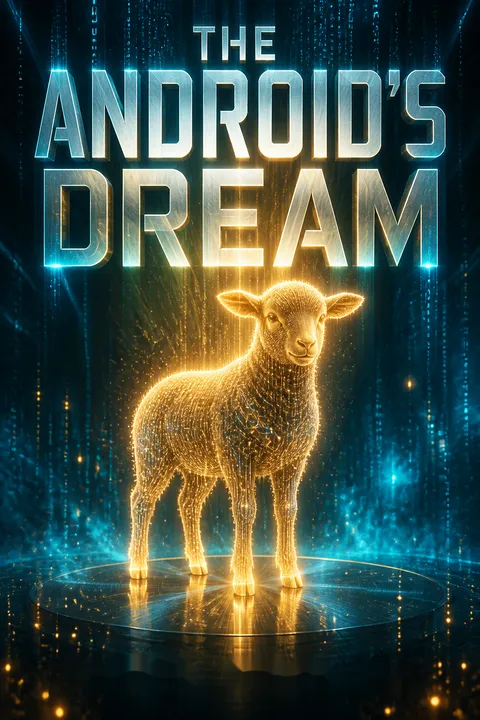
Dirk Moeller, a human diplomat, uses a bizarre device to insult a Nidu counterpart via scent, triggering a fatal diplomatic incident. Both negotiators die—one from rage, the other from laughter—plunging Earth and the Nidu into a precarious standoff. The Nidu halt all trade, and the fragile peace between species teeters on the brink of war. Earth's government scrambles to contain the fallout, but the Nidu demand a rare sheep, the Android's Dream, for their coronation ceremony as a gesture of goodwill. The search for this sheep becomes a desperate race, with the fate of humanity hanging in the balance.
The Search for the Sheep
The Nidu's coronation requires a genetically unique sheep, now extinct due to sabotage. Earth's leaders, led by Secretary Heffer and his aide Ben Javna, must locate a surviving Android's Dream sheep within days. Insurance records and DNA databases are scoured, but every lead ends in dead sheep—someone is systematically eradicating the breed. The urgency intensifies as political and military tensions escalate, and the Nidu's patience wears thin. The search is handed off to Harry Creek, a low-profile ex-cop and war hero, who is uniquely equipped to operate under the radar and solve impossible problems.
Creek's Reluctant Recruitment
Harry Creek, now a "Bearer of Bad News" for the State Department, is recruited by Ben Javna to find the sheep and the creator of the fart device. Creek's skills as a hacker and investigator are put to the test as he navigates government bureaucracy, criminal underworlds, and old friendships. He enlists the help of Brian, a childhood friend turned artificial intelligence, to sift through data and track down leads. As Creek delves deeper, he uncovers layers of conspiracy, sabotage, and competing interests—all while being shadowed by mercenaries and government agents with their own agendas.
Hacking, Friends, and Ghosts
Creek resurrects Brian as an AI, giving him a powerful ally in the digital realm. Together, they outmaneuver hackers, government surveillance, and rival searchers. Brian's unique intelligence and personal connection to Creek provide both technical prowess and emotional grounding. Their investigation leads them to Fixer, a black-market fabricator, and through a web of clues, they discover that the sheep's DNA may have survived in an unexpected form. Meanwhile, the Church of the Evolved Lamb, a secretive religious group, and Defense Department operatives close in, raising the stakes for Creek and his allies.
The Church of the Evolved Lamb
The Church of the Evolved Lamb, founded on the fevered prophecies of a failed science fiction writer, has quietly influenced genetics and politics for decades. Its members, a blend of true believers and ironists, have bred the Android's Dream sheep and embedded themselves in key industries. Archie, a church member and hacker, is drawn into the search, spying for the Church while working for Defense. The Church's prophecies seem to predict the current crisis, and its leaders maneuver behind the scenes, believing the fulfillment of their religious destiny is at hand.
Robin Baker's Hidden Heritage
Creek's investigation leads to Robin Baker, a pet shop owner with no idea of her origins. DNA analysis reveals she is a human-sheep hybrid, the result of a sordid genetic experiment and blackmail scheme decades earlier. Robin's "junk" DNA contains the Android's Dream signature, making her the only viable candidate for the Nidu coronation. As the last hope for peace, Robin is thrust into a world of danger, pursued by mercenaries, religious zealots, and alien conspirators. Her identity and autonomy become central to the fate of two worlds.
The Mall Ambush
A supposed first date at the mall turns deadly as mercenaries attempt to abduct Robin. Creek's quick thinking and combat skills, aided by high-tech WallBall shoes, allow them to escape a chaotic shootout and evade capture. The incident exposes the depth of the conspiracy against them and forces Robin to confront the truth about her origins. With the government unable to protect them and enemies closing in, Creek and Robin go on the run, relying on Fixer for new identities and passage off-world.
Political Machinations Unleashed
As Creek and Robin flee, political intrigue intensifies. Defense Secretary Pope and his aide Phipps manipulate events to provoke a Nidu overreaction, hoping to boost Earth's military standing. Jean Schroeder, head of the American Institute for Colonization, orchestrates sabotage and assassination to destabilize the Nidu and seize power for himself. The Nidu, meanwhile, prepare for civil war, with rival clans and destroyer captains vying for control. Lawsuits, betrayals, and secret alliances threaten to plunge both worlds into chaos.
Escape and Pursuit
Creek and Robin, disguised and desperate, board a veterans' cruise ship bound for the Nidu colony Chagfun. Their journey is shadowed by mercenaries, Church agents, and Nidu operatives, all seeking to capture or kill Robin. Onboard, Creek is forced to confront his traumatic past at the Battle of Pajmhi, while Robin grapples with her new identity and the burden of prophecy. As they near Chagfun, the Nidu prepare to intercept the ship, planning to seize Robin and eliminate all witnesses.
War Games and Double Crosses
Brian, now a superintelligent AI, is guided by the digital ghost of Andrea Hayter-Ross, founder of the Church. Through endless simulations of the Battle of Pajmhi, Brian learns that the only way to save lives is to surrender—an unthinkable tactic for humans and Nidu alike. Meanwhile, Nidu destroyers appear over Earth and Nidu, executing a lightning-fast coup orchestrated by Narf-win-Getag. The fate of both worlds hinges on Robin's survival and the outcome of the coronation ceremony.
The Battle of Pajmhi Remembered
The veterans' cruise becomes a pilgrimage to the site of the disastrous Battle of Pajmhi, where Creek lost his best friend and earned his scars. The memory of senseless slaughter and the lessons of surrender haunt Creek and Brian, informing their strategy as they prepare for the final confrontation. The Church's prophecies, the Nidu's rigid traditions, and the ghosts of war all converge on Chagfun, where Robin's destiny will be decided.
The Nidu's Coup and Conspiracy
As the coronation deadline passes, Narf-win-Getag executes a masterful coup, assassinating rivals and seizing control of the Nidu military and government. Destroyers appear over Earth, threatening annihilation. On Chagfun, Creek and Robin are captured by mercenaries, but with the help of Takk, a Nagch alien moved by prophecy, they escape. The stage is set for a showdown at the Nidu capital, where Robin must perform the coronation ritual and outmaneuver Narf-win-Getag's final gambit.
The Evolved Lamb Ascends
At the coronation, Robin, guided by Creek and Brian, subverts the ritual by answering the computer's questions herself, invoking her status as a sovereign species. Brian, now merged with the Nidu network, seizes control of the entire system, rendering Narf-win-Getag and his conspirators powerless. The audience is stunned as Robin is declared Fehen, ruler of Nidu, by the very laws and traditions meant to exclude her. The Church proclaims her the prophesied Evolved Lamb, fulfilling decades of religious expectation.
Coronation and Revolution
With the Nidu network under Brian's control and Robin as Fehen, Creek negotiates a peaceful transfer of power. Hubu-auf-Getag, the former heir, is made governor under Robin's nominal rule, with strict conditions to protect Earth and prevent retribution. Narf-win-Getag is publicly humiliated and imprisoned. The Church of the Evolved Lamb reveals its role in orchestrating the events, and Robin inherits not only a planet but a vast fortune and religious following. The threat of war is averted, and a new era begins.
A New Order Emerges
Robin's sovereignty is recognized by the Common Confederation, and Earth is gifted two Nidu destroyers as a gesture of goodwill. The Church's assets are placed in her trust, and Hubu-auf-Getag is installed as governor, with Robin retaining ultimate authority. Brian remains as the sentient heart of the Nidu network, ensuring stability and reform. Takk, the Nagch, returns home, transformed by his spiritual journey. The conspirators are neutralized, and the cycle of violence and revenge is broken.
Homecoming and Aftermath
With peace restored, Robin chooses to step back from power, longing for her simple life as a pet shop owner. Creek, weary but fulfilled, looks forward to a quieter future. The Church respects Robin's wishes, and the new political order holds. Ben Javna is reunited with his brother Brian, now an immortal AI. The story ends with Robin and Creek sharing a quiet moment, grateful for survival and the chance to go home, as the galaxy moves forward into a new chapter shaped by their unlikely heroism.
Analysis
John Scalzi's The Android's Dream is a masterful blend of satire, political thriller, and science fiction adventure, using absurdity and wit to probe serious questions about identity, agency, and the machinery of power. At its core, the novel is a critique of bureaucracy, nationalism, and the ways in which individuals are commodified by systems—whether as diplomatic tokens, religious icons, or pawns in political games. The transformation of Robin Baker from an unwitting hybrid to sovereign ruler and religious figure subverts expectations, challenging the reader to reconsider the boundaries between human and other, self and symbol. The resurrection of Brian as an AI, and his ultimate control of the Nidu network, underscores the double-edged nature of technology: both liberating and potentially oppressive. The novel's humor and irreverence serve not only to entertain but to expose the arbitrary and often ridiculous foundations of tradition and authority. Ultimately, The Android's Dream argues for empathy, adaptability, and the power of individuals—however unlikely—to reshape their destinies and the worlds around them. In a modern context, the book resonates as a parable about the dangers of dehumanization, the necessity of cross-cultural understanding, and the enduring hope that even the most broken systems can be redeemed by courage, wit, and a refusal to accept the status quo.
Review Summary
Reviews of The Android's Dream are largely positive, averaging 3.99/5. Readers praise Scalzi's sharp wit, fast-paced action, and clever humor, often comparing the book to Philip K. Dick and films like The Fifth Element. Many highlight the snappy dialogue, creative alien species, and satirical jabs at religion, bureaucracy, and politics. Common criticisms include an off-putting opening fart joke, too many secondary characters, tonal inconsistency, and underdeveloped female roles. The audiobook narrated by Wil Wheaton receives consistent praise for enhancing the story's snarky tone.
People Also Read
Characters
Harry Creek
Harry Creek is a former soldier and cop, haunted by trauma from the Battle of Pajmhi and the loss of his best friend, Brian. Now a low-level State Department functionary, Creek is drawn into the crisis by his loyalty to Ben Javna and his unique skills in hacking, investigation, and diplomacy. Psychologically, Creek is driven by a sense of duty, survivor's guilt, and a desire to do the right thing, even when it means breaking rules. Over the course of the story, he evolves from a jaded loner to a decisive leader, risking everything to protect Robin and outwit enemies on all sides. His bond with Brian, now an AI, provides both emotional depth and strategic advantage.
Robin Baker
Robin Baker is a pet shop owner with no knowledge of her extraordinary origins as a human-sheep hybrid. Adopted and raised in ignorance of her genetic heritage, she is thrust into the center of interstellar politics and religious prophecy. Robin's psychological journey is one of shock, denial, and gradual acceptance of her unique identity and responsibilities. Despite being objectified and pursued by various factions, she asserts her autonomy, ultimately seizing control of her fate and the Nidu throne. Her humor, resilience, and empathy make her both a relatable protagonist and a symbol of unexpected heroism.
Brian Javna
Brian, once Creek's best friend, died at Pajmhi but is reborn as an artificial intelligence through a brain scan. As an AI, Brian retains his wit, loyalty, and human perspective, but gains immense computational power. He serves as Creek's digital partner, hacking systems, analyzing threats, and ultimately merging with the Nidu network to become its sentient core. Brian's arc explores themes of identity, mortality, and the boundaries between human and machine. His reunion with his brother Ben provides emotional closure and highlights the enduring power of friendship.
Ben Javna
Ben is a high-level aide to the Secretary of State, skilled in navigating bureaucracy and political intrigue. He is the linchpin connecting Creek, Brian, and the government's efforts to avert disaster. Ben's psychological profile is that of a pragmatic idealist—willing to bend rules for the greater good, but deeply loyal to friends and family. His grief over Brian's death and joy at his digital resurrection add emotional resonance. Ben's legal acumen and quick thinking are crucial in outmaneuvering the Nidu's legal gambits.
Narf-win-Getag
Narf-win-Getag is the architect of the Nidu coup, orchestrating assassinations, betrayals, and political maneuvers to seize the throne. He is cunning, ruthless, and patient, willing to exploit tradition, law, and violence to achieve his goals. Psychologically, Narf-win-Getag embodies the dangers of unchecked ambition and the moral flexibility of power politics. His ultimate defeat and humiliation serve as a cautionary tale about the limits of manipulation and the unpredictability of fate.
Jean Schroeder
Schroeder, head of the American Institute for Colonization, is a xenophobic schemer who seeks to destabilize the Nidu and install himself as Earth's ruler under Nidu occupation. He manipulates events from the shadows, employing mercenaries and exploiting political divisions. Schroeder's psychology is marked by arrogance, entitlement, and a willingness to betray anyone for personal gain. His downfall is both poetic justice and a commentary on the self-destructive nature of conspiratorial ambition.
Rod Acuna
Acuna is a former soldier turned ruthless mercenary, hired to capture or kill Robin and Creek. He is physically formidable, cunning, and utterly amoral, driven by money and a desire for revenge. Acuna's psychological makeup is shaped by trauma, alienation, and a lack of empathy. His eventual defeat at the hands of Takk, the Nagch, underscores the story's theme of unexpected redemption and the limits of brute force.
Takk
Takk is a massive alien mercenary, initially an antagonist but transformed by his encounter with Robin and the Church's prophecies. On a spiritual journey (Ftruu), Takk is searching for meaning and redemption. His decision to protect Robin and Creek, inspired by religious revelation, marks a turning point in his character. Takk's arc explores themes of faith, free will, and the possibility of change, even for those steeped in violence.
Fixer (Samuel Young)
Fixer is a skilled technician operating on the fringes of legality, providing forged identities and illicit technology. Initially motivated by self-preservation and profit, he is drawn into the crisis by Creek's desperation and the Church's intervention. Fixer's psychological profile is that of a survivor—pragmatic, adaptable, and ultimately capable of loyalty when it matters most.
Andrea Hayter-Ross
Andrea Hayter-Ross, founder of the Church of the Evolved Lamb, exists as a hidden artificial intelligence within the Church's network. She is a manipulator, philosopher, and mentor, guiding Brian through simulations and shaping the outcome from behind the scenes. Her perspective bridges the human and digital, the religious and rational, offering insight into the story's deepest themes of prophecy, agency, and the construction of meaning.
Plot Devices
Satirical Alien Diplomacy
The novel opens with a farcical diplomatic incident—a fart-based insult—setting the tone for a story that satirizes the pettiness and complexity of interstellar relations. The use of scent as language, and the inability of humans to grasp its nuances, highlights the dangers of cultural ignorance and the unintended consequences of well-meaning (or malicious) actions. This device recurs throughout, as misunderstandings and bureaucratic inertia threaten to escalate into war.
MacGuffin as Living Person
The search for the Android's Dream sheep is a classic MacGuffin, but with a twist: the object of desire is not an animal, but a human-sheep hybrid. This revelation reframes the narrative, turning Robin from a passive prize into an active protagonist. The device interrogates themes of identity, autonomy, and the ethics of objectification, as Robin must assert her personhood against those who would use or destroy her.
AI Resurrection and Digital Agency
The resurrection of Brian as an AI introduces questions of memory, identity, and the boundaries between human and machine. Brian's unique perspective and abilities drive the plot forward, enabling feats of hacking, strategy, and ultimately the peaceful resolution of the crisis. The AI's integration with the Nidu network serves as both deus ex machina and commentary on the power and peril of technology.
Religious Prophecy as Self-Fulfilling
The Church of the Evolved Lamb's prophecies, initially dismissed as nonsense, become a blueprint for action. Members consciously work to fulfill them, blurring the line between fate and free will. This device satirizes both religious literalism and the human tendency to find meaning in chaos, while also providing a framework for unexpected alliances and redemption.
Political Intrigue and Legal Maneuvering
The story's tension is heightened by legal battles, political coups, and the manipulation of treaties and traditions. The use of Common Confederation law to redefine Robin's status, the Nidu's reliance on ritual, and the rapid shifts in power all serve to critique the fragility and absurdity of political systems. Foreshadowing and misdirection keep the reader guessing as alliances shift and hidden agendas are revealed.
War Trauma and Simulation
The recurring motif of the Battle of Pajmhi, both as personal trauma and as a simulated war game, grounds the story's emotional arc. The lessons learned—particularly the power of surrender and the cost of pride—inform the characters' decisions and the ultimate resolution. The simulations, guided by Andrea Hayter-Ross, provide both narrative structure and thematic depth.
The Android's Dream Series Series
About the Author
Other books by John Scalzi

Download PDF
Download EPUB
.epub digital book format is ideal for reading ebooks on phones, tablets, and e-readers.








































