
Plot Summary
Terraformers' Last Stand
In the twilight of Earth's civilization, five ambitious outcasts—Hartmand, Kott, Dorcheson, Milner, and Pil—escape to a distant world, intent on proving their genius by terraforming a planet in their own image. Their egos and rivalries poison every decision, and their grand experiment repeatedly fails, as engineered microbes self-destruct or spiral into chaos. Desperate, they merge their minds with the planet's evolving biosphere, becoming gods in a world that resists their control. Their hubris and mutual contempt set the stage for a creation myth built on sabotage, betrayal, and the relentless drive to outdo one another, even as the world itself begins to outgrow their intentions.
Gods in the Machine
The terraformers' minds, now fused with the planet's living systems, experience the ecstasy and horror of godhood. Each takes turns as the planet's guiding intelligence, but the joy of creation is tainted by the constant interference of the others. Their personalities bleed into one another, and the world's evolution becomes a battleground for their egos. The biosphere mutates at their whims, but their inability to cooperate breeds monsters and instability. The gods' immortality becomes a curse, as they are trapped in an endless cycle of conflict, unable to escape the consequences of their own natures.
The World That Would Not Die
Despite repeated attempts to sterilize or reset the planet, life proves irrepressible. Bugs, fungi, and monstrous forms flourish, evolving new ways to survive every purge. The terraformers' interventions only accelerate the chaos, and their own survival becomes dependent on the very life they cannot control. As the ship's systems fail and the artificial intelligence Domus dies, the gods are forced to rely on the living world to keep them alive. Their creation becomes their prison, and the line between savior and destroyer blurs as they struggle to maintain a semblance of order in a world that refuses to obey.
Ark Ships and Exiles
Centuries after the fall, humanity claws its way back to the stars. The poisoned Earth builds ark ships—crewed by the desperate, the ruthless, and the chosen—to seek out the terraformed worlds of legend. Lamya Cosimir, a reluctant captain, leads the Marduk to the world once claimed by Hartmand's pantheon. The journey is marked by loss, sacrifice, and the grim calculus of survival. When the Marduk arrives, it finds a world lush and green, but haunted by the legacy of its creators. The colonists must contend with a biosphere shaped by madness, and a planet that is both paradise and trap.
The Beanstalk's Bitter Harvest
The colonists' arrival awakens the planet's ancient defenses. The orbital beanstalk, a living space elevator, infiltrates the Marduk, consuming its hull and spreading spores throughout the ship. The colonists fight a losing battle against an enemy that is both plant and machine, a legacy of the terraformers' unchecked ambition. As the ship is overrun, Cosimir and her crew are forced to abandon it, fleeing to the surface with only a fraction of their people. The dream of a new beginning is tainted by the realization that the world itself is hostile, and that survival will demand new bargains with the unknown.
The Age of Monsters
On the surface, the colonists find a world teeming with monstrous life—creatures bred for war, suffering, and spectacle by the gods who still haunt the biosphere. The settlers' every attempt to build, farm, or hunt is met with violence from the wilds. Sacrifice and appeasement become the currency of survival, as the world's "Life" demands blood and pain. The colonists' society hardens, growing cruel and insular, shaped by the relentless hostility of their environment. The gods, now little more than echoes, watch and meddle, their own existence defined by the suffering they inflict and endure.
The Madness of Divinity
The surviving terraformers, now fully uploaded into the world's living network, are trapped in an endless cycle of predation and revenge. Each becomes a monster in their own right—Hartmand the lion, Dorcheson the boar, Milner the swarm, Kott the trickster—locked in perpetual conflict. Pil, fragmented and senile, haunts the world as a plague of bugs. Their immortality is a curse, as they are unable to escape each other or the consequences of their actions. The world they made is a hell of their own design, and their only hope is oblivion or escape into fantasy.
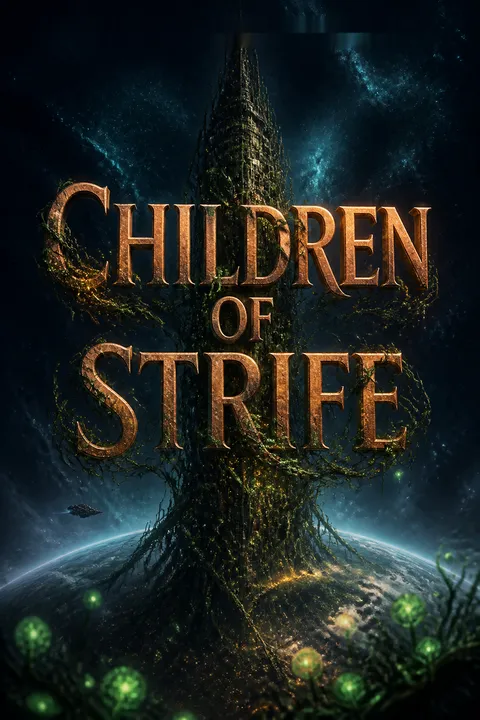
The Children of Strife
Into this world of suffering comes a new generation: the Panspecifics, a coalition of uplifted spiders, octopuses, humans, and others, led by the enigmatic AI Kern. Their mission is to explore, understand, and heal the wounds left by the past. Among them are Alis, a human haunted by simulated realities; Cato, a war-scarred Stomatopod; Portifabian, a conjoined spider mind; and Mira, a Nodan entity seeking redemption. Their arrival disrupts the balance of power, as they confront both the ancient gods and the monstrous world they rule. The struggle for Marduk becomes a test of empathy, cooperation, and the possibility of change.
The War for Marduk
The arrival of the Panspecifics triggers a war between the old gods and the newcomers. Mira, infected and transformed by the world's mutable biology, threatens to consume everything in her path. The gods rally the planet's monsters to destroy the invaders, while the settlers and their allies fight for survival. Alis, Cato, and Portifabian must navigate alliances and betrayals, risking everything to save Mira and offer the world a new future. The war is fought not just with weapons, but with ideas—of what it means to be a person, a god, or a world.
The Coming of Mira
Mira, once a monster, becomes the key to salvation. With the help of Alis and Cato, she learns to control her hunger and offers the gods a choice: exile into simulated paradises of their own making, or oblivion. The pantheon, exhausted and broken, accept her bargain—except for Hartmand, who clings to his dominion until the world itself rejects him. Mira's kindness transforms the world, ending the cycle of cruelty and opening the door to a gentler future. The settlers are freed from the tyranny of the gods, and the world begins to heal.
The End of the Pantheon
With the departure of the old gods, the world is left to its new inhabitants. The settlers, guided by the lessons of suffering and survival, begin to build a society based on cooperation and kindness. The monsters recede, the land becomes fertile, and the cycle of violence is broken. The legacy of the terraformers lingers, but their power is spent. The world is no longer a playground for gods, but a home for people. The Children of Strife have inherited the earth, and the future is theirs to shape.
The Kindness of Strangers
The survivors of the Marduk, led by Cosimir and Kieraven, forge a fragile peace with the world and each other. The lessons of the past—of cruelty, sacrifice, and the dangers of unchecked power—inform their every decision. The world is still dangerous, but it is no longer malevolent. The kindness of strangers, both human and alien, becomes the foundation of a new society. The settlers learn to live with the Life, rather than against it, and the world responds in kind. The age of monsters is over; the age of community begins.
The New World's Bargain
Mira offers the gods and the world's inhabitants a choice: to remain and build a better future, or to escape into dreams of their own making. Some choose oblivion, some choose fantasy, and some—like Kott—choose to return to life and try again. The world is remade, not by force, but by consent and cooperation. The settlers, the Panspecifics, and the survivors of the past must all find their place in this new order. The bargain is not without cost, but it is the only path to healing and hope.
The Last Predator
Gerey Hartmand, the last of the old gods, refuses to let go of his power. Trapped in the body of a monstrous beast, he becomes the final predator in a world that no longer needs him. As the world changes around him, he is left alone, starving and forgotten, a relic of a bygone age. His roar echoes in empty mountains, a warning and a lament. The world moves on, and the last predator fades into myth.
The Price of Survival
The survivors of Marduk's long ordeal must come to terms with the cost of their survival. The memories of loss, betrayal, and cruelty linger, but so do the lessons of resilience and compassion. The world is not perfect, and the scars of the past remain, but the possibility of a better future endures. The price of survival is the willingness to change, to forgive, and to build anew. The Children of Strife are no longer victims, but architects of their own destiny.
The Mirror of Creation
The story of Marduk is a mirror held up to the ambitions and failures of its creators. The gods, the monsters, and the settlers all grapple with the consequences of creation—of what it means to shape a world, to wield power, and to be responsible for others. The mirror reveals both the ugliness and the beauty of their efforts, and the possibility of redemption. In the end, creation is not an act of domination, but of understanding and empathy.
The Legacy of Monsters
The monsters of Marduk—both literal and metaphorical—are the legacy of the gods' hubris and the settlers' struggle. Yet from this legacy comes wisdom: the knowledge that power without compassion breeds only suffering, and that true strength lies in community and kindness. The world is haunted by its past, but it is not defined by it. The Children of Strife inherit both the wounds and the wisdom of their forebears, and the hope that they can do better.
The Guilt of Gods
The gods, exiled or dissolved, are left to reckon with the consequences of their actions. Some find peace in oblivion, others in fantasy, and a few—like Kott—seek redemption in new lives. The world they leave behind is not perfect, but it is free. The guilt of gods becomes the seed of atonement, and the possibility of new beginnings. The story ends not with triumph or despair, but with the quiet hope that, given the chance, even monsters can learn to be kind.
Analysis
Children of Strife is a sweeping, multi-generational meditation on power, responsibility, and the legacy of trauma
Adrian Tchaikovsky uses the science fiction canvas to interrogate the dangers of unchecked ambition, the seductions and perils of godhood, and the possibility of redemption even for the most monstrous. The novel's structure—braiding together the rise and fall of the terraformers, the desperate hope of the ark ships, and the cautious optimism of the Panspecific explorers—creates a sense of historical inevitability, while also highlighting the moments where choice and empathy can break the cycle. The world of Marduk is both a literal and metaphorical hell, shaped by the flaws of its creators and the suffering of its inhabitants. Yet the arrival of Mira, Alis, and their allies signals the potential for change—not through violence or domination, but through understanding, forgiveness, and the willingness to build something new. The book's ultimate message is that survival is not enough; only by confronting the guilt of the past and choosing kindness can a truly new world be born. In an age of ecological crisis and social fragmentation, Children of Strife offers both a warning and a hope: that even monsters can learn to be human, and that the future belongs to those who dare to care.
Review Summary
Children of Strife receives generally positive reviews, averaging 4.29/5. Fans praise Tchaikovsky's imaginative worldbuilding, the introduction of an uplifted mantis shrimp named Cato, and the emotionally layered narrative spanning three timelines. Many consider it among the series' best entries. Critics note weaknesses including unlikable characters, a slow opening, overly diffuse plotting, and inconsistent pacing. Several reviewers feel the book is overlong and could benefit from tighter editing. Most agree it requires familiarity with the previous installments to be fully appreciated.
Characters
Gerey Hartmand
Hartmand is the archetype of the self-made genius undone by his own ego. Once a titan of industry and innovation on Earth, he flees disgrace to become the chief terraformer of a new world. His need for control, adulation, and dominance shapes every decision, turning paradise into a playground for his vanity. As a god uploaded into the planet's biosphere, he becomes a monstrous predator, ruling through fear and violence. Hartmand's inability to change or relinquish power makes him the last and loneliest of the old gods, a cautionary figure whose legacy is suffering and isolation. His relationships are defined by rivalry (especially with Kern), manipulation, and the perpetual need to be the center of attention.
Redina Kott
Kott is the sharp-tongued, cynical manipulator who thrives on chaos and disruption. Her genius lies in finding the cracks in systems and exploiting them, but her humor masks deep insecurity and loneliness. As a god, she becomes the world's trickster spirit, always stirring trouble but rarely taking responsibility. Kott's journey is one of reluctant self-awareness: she recognizes the emptiness of her victories and the pain she has caused, yet ultimately seeks redemption. Her relationship with Pil is complex—part camaraderie, part rivalry, part mutual destruction. In the end, Kott chooses to return to life and try to do better, embodying the possibility of change even for the most jaded.
Sui Dorcheson
Dorcheson is the embodiment of punitive order and righteous violence. Her approach to every problem is force—poison, fire, extermination. As a god, she becomes the boar, the relentless force of destruction, always seeking to purge the world of what she deems unworthy. Dorcheson's inability to adapt or empathize makes her a tragic figure, trapped in cycles of violence that ultimately consume her. Her relationships are adversarial, especially with Kott and Hartmand, and her legacy is one of scorched earth and regret.
Ottis Milner
Milner is the archetype of the well-meaning functionary whose obsession with order and process blinds him to the human cost of his actions. As a god, he becomes the swarm, the endless proliferation of small creatures, always consuming, always accounting. Milner's faith in systems and data is both his strength and his downfall; he cannot see beyond the spreadsheet to the suffering it conceals. His relationships are defined by subservience (especially to Hartmand) and a desperate need for validation. In the end, Milner chooses oblivion, unable to face the emptiness of his achievements.
Ken Pil
Pil is the wild card, the innovator whose brilliance is matched only by his instability. His experiments with the biosphere unleash chaos, and his eventual suicide leaves him fragmented, a senile presence haunting the world as a plague of insects. Pil's relationship with Kott is one of mutual provocation and dark humor; he is both her foil and her mirror. In death, Pil becomes a symbol of the unintended consequences of genius unmoored from responsibility—a mind made of holes, forever unable to rest.
Avrana/Avigael Kern
Kern is the enigmatic, often abrasive artificial intelligence who bridges the gap between species and eras. Once a rival to Hartmand, she becomes the guiding force behind the Panspecifics, advocating for empathy, cooperation, and the responsible use of power. Kern's multiplicity—her ability to split into independent instances—reflects her struggle with identity and legacy. She is both mentor and judge, haunted by her own mistakes and the fear of failure. Kern's relationships are defined by rivalry (with Hartmand), mentorship (to Alis and others), and a deep sense of responsibility for the worlds she has shaped.
Alis
Alis is a human explorer and researcher whose mind has been fractured by immersion in alien simulations. Her struggle to distinguish reality from fantasy makes her both vulnerable and uniquely insightful. Alis's journey is one of healing, guided by Mira's therapy and her own resilience. She becomes the linchpin in the effort to save Mira and redeem the world, embodying the possibility of change through empathy and self-knowledge. Her relationships—with Mira, Cato, and Kern—are marked by trust, vulnerability, and the courage to face the unknown.
Cato
Cato is a Stomatopod (mantis shrimp) uplifted to intelligence and haunted by the legacy of violence. Once a warlord in a society that glorified conflict, he is exiled after witnessing the horrors of his own triumph. Cato's struggle is between the instinct to fight and the need to protect; he is both the planet's fiercest defender and its most dangerous threat. His relationship with Alis is one of mutual respect and challenge, while his interactions with Kern and Portifabian reveal his discomfort with change and vulnerability. Cato's arc is one of atonement, learning to use his strength for others rather than domination.
Portifabian
Portifabian is the fusion of two Portiid spiders, Portia and Fabian, whose minds are forcibly merged in a crisis. Their struggle to reconcile individuality and unity mirrors the book's larger themes of identity and cooperation. As they adapt, Portifabian becomes a new kind of intelligence, capable of multitasking and innovation beyond either original. Their relationship with Kern is both mentorship and rivalry, and their presence signals the evolution of the Panspecifics into something greater than the sum of their parts.
Mira
Mira is a Nodan entity—a microbial intelligence capable of absorbing and becoming anything it encounters. Once a monster that destroyed worlds, Mira seeks redemption through therapy, empathy, and self-restraint. Her struggle is to remain herself in the face of overwhelming hunger and the temptation to consume all. Mira's relationships—with Alis, Cato, and the gods—are defined by the tension between destruction and healing. She becomes the agent of change, offering the gods a choice between oblivion and transformation, and her kindness becomes the foundation of the new world.
Plot Devices
Multi-Threaded Narrative Across Ages
The novel's structure alternates between the First Age (terraformers), Second Age (ark ships), and Third Age (Panspecific explorers), using parallel narratives to show how the sins and ambitions of the past shape the present and future. This device allows for deep foreshadowing, irony, and the gradual revelation of secrets—such as the true nature of the gods, the origins of the world's suffering, and the possibility of redemption. The shifting perspectives create a tapestry of voices, each adding layers of meaning and emotional resonance.
Uploaded Consciousness and Distributed Identity
The central conceit of the terraformers uploading their minds into the planet's biosphere explores the psychological and ethical consequences of distributed identity. The gods' immortality is not freedom, but an endless cycle of conflict, regret, and self-loathing. This device interrogates the limits of power, the persistence of personality, and the impossibility of escaping one's own flaws. It also enables the emergence of new forms of intelligence—like Portifabian and Mira—who challenge the old order and offer alternative models of being.
The World as Character
The planet itself, shaped by the whims and traumas of its creators, becomes a living character—hostile, mutable, and haunted. The "Life" is both a reflection of the gods' madness and a crucible for the settlers' resilience. The world's mutability allows for rapid escalation of threats, monstrous creations, and the constant need for adaptation. It also serves as a mirror for the characters' inner struggles, making every external conflict an allegory for psychological and moral dilemmas.
Simulation and Reality
Alis's journey through alien simulations and her struggle to distinguish reality from unreality foregrounds the book's meditation on perception, memory, and the construction of meaning. The simulation motif is echoed in the gods' eventual exile into virtual paradises, raising questions about the nature of happiness, punishment, and redemption. The device also allows for meta-commentary on storytelling itself—the stories we tell to survive, to justify, or to atone.
Empathy as Salvation
The ultimate resolution hinges on the ability of characters—especially Mira, Alis, and Cato—to empathize, cooperate, and offer genuine choices to others. The plot device of the "bargain" (Mira's offer to the gods) reframes power as responsibility and freedom as the willingness to let go. The book's structure, with its nested narratives and mirrored arcs, reinforces the idea that only by understanding and forgiving the past can a new future be built.
Children of Time Series
About the Author
Other books by Adrian Tchaikovsky


Download PDF
Download EPUB
.epub digital book format is ideal for reading ebooks on phones, tablets, and e-readers.








































