
Key Takeaways
1. Effective Leadership Demands Multidimensionality, Not Just Strengths.
The one-dimensional leader sticks with what he or she knows and avoids using those dimensions that feel less comfortable.
Beyond comfort zones. In today's volatile economic and political landscape, effective leadership requires more than just excelling in a single area. Leaders who cling solely to their natural talents and "outsource" less comfortable dimensions often fail to adapt to rapidly fluctuating circumstances. The ability to stretch beyond one's default style is crucial for navigating complex challenges.
Flexibility is power. Multidimensional leaders, unlike their one-dimensional counterparts, possess a wide range of competencies and relationship skills. They understand that while a natural strength might land them a role, sustained success demands flexibility to respond to diverse situations. This means being adept with numbers, rallying troops, making tough decisions, and fostering collaboration, often simultaneously.
Avoid inadequacy. When faced with complex problems, a one-dimensional leader might choose a response that is comfortable but ultimately inadequate for the situation. The goal is not to become a completely different person, but to expand one's conceptual framework of leadership, moving beyond comfort zones in thought, feeling, and action to lead more effectively.
2. The 8 Dimensions Model: A Compass for Leadership Styles.
Our research consistently finds eight dimensions of leadership behavior that organize the large collection of priorities, actions, and attitudes that people demonstrate as they provide effective leadership.
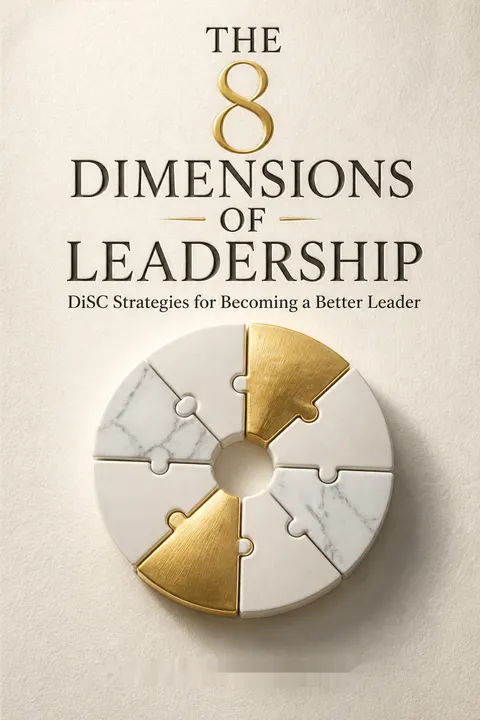
A comprehensive framework. The 8 Dimensions of Leadership Model, rooted in the DiSC® model of human behavior, provides a systematic way to understand the psychological forces driving leaders. It categorizes leadership styles into eight distinct, yet interconnected, dimensions: Pioneering, Energizing, Affirming, Inclusive, Humble, Deliberate, Resolute, and Commanding.
Circular and dynamic. These eight dimensions form a nonhierarchical, nonsequential circle, illustrating that a leader has a natural "home" but can fluidly move to adjacent or even opposite styles as situations demand. This circular relationship highlights the interconnectedness of leadership traits, where each dimension offers unique value and insights.
Expand your perspective. The model serves as a powerful tool to broaden your definition of effective leadership, revealing legitimate alternatives to your default setting. By understanding these dimensions, leaders can reduce biases, improve judgment, and consciously shape their style to match current organizational needs and personal goals.
3. Uncover Your Default Style: Know Your Drivers and Blind Spots.
Unless we understand the nature of these psychological influences on our work as leaders, we remain captive to our own beliefs, attitudes, and priorities, which can all too often blind us to the reality of a situation and the needs of our organizations.
Self-awareness is foundational. Every leader approaches their role from a unique starting point, a blend of psychological makeup, intelligence, training, and experience. Identifying your primary leadership dimension—your "default setting"—is the first step toward conscious leadership development. This involves understanding the deeper motivations, needs, and assumptions that drive your actions.
Beyond strengths. While your default style brings significant strengths, it also comes with inherent "blind spots"—tendencies that, when overused, can limit your effectiveness. For instance, a highly driven leader might overlook the emotional needs of their team, or a cautious leader might miss critical opportunities due to over-analysis.
Conscious control. By delving into the psychological underpinnings of your style, you gain a balanced view of both your assets and challenges. This awareness empowers you to consciously control and shape your leadership behaviors, preventing your natural inclinations from inadvertently hindering your ability to lead effectively in diverse situations.
4. Pioneering Leaders: Inspire Bold Action and Seek New Horizons.
Pioneering leaders cut through the brush and inspire the group to venture into uncharted territory.
Embrace adventure. Pioneering leaders are adventurous, dynamic, and charismatic, driven by a natural passion to grow, expand, and explore. They excel at identifying and seizing new opportunities, often inspiring others to join their ambitious endeavors through their optimistic and persuasive style. Their high energy and need for excitement make them natural risk-takers.
Bias for action. These leaders possess a strong bias toward action, preferring quick decisions and new breakthroughs over repetitive tasks or methodical work. They trust their instincts and are comfortable improvising, often seeing problems as opportunities. However, this drive can sometimes lead to impulsiveness, overlooking details or the needs of others in their haste to move forward.
Challenge the status quo. Pioneering leaders are adept at bucking conformity and stretching boundaries, which can revitalize stagnant organizations. They are confident in their vision and skilled at persuading others, but must guard against overconfidence and an egocentric viewpoint that expects others to simply adapt to their quest without considering evolving group needs.
5. Energizing Leaders: Ignite Enthusiasm and Forge Connections.
Of all of the leaders we will discuss in this book, Energizing leaders have the easiest time generating enthusiasm for an idea.
Contagious optimism. Energizing leaders are spontaneous, outgoing, and encouraging, possessing a contagious sense of optimism that readily engages people. They excel at building and maintaining invaluable networks of connections, bringing passion and conviction to their work, and celebrating successes to boost morale.
People-focused drive. These leaders are drawn to high-energy environments and new opportunities, often generating more ideas than they can implement due to their strong need for variety. They prioritize positive emotions like fun and excitement, making them less inclined to get bogged down in mundane details or systematic analysis, which they may perceive as tedious.
Avoidance of tension. While highly expressive and sociable, Energizing leaders have a low tolerance for negative emotions and conflict, often taking criticism personally. Their desire to keep things pleasant can lead them to avoid confronting problems or delivering tough feedback, potentially sacrificing consistency and follow-through for harmony and popularity.
6. Affirming Leaders: Build Morale and Foster a Positive Environment.
Affirming leaders excel at building morale and creating a supportive environment.
Relationship-first approach. Affirming leaders are friendly, approachable, and positive, making a point to acknowledge contributions and foster loyalty. Their high need for harmony drives them to create peaceful, respectful environments where everyone feels valued, often embracing a "do-no-harm" philosophy.
Openness and empathy. These leaders exhibit an open posture, demonstrating infinite patience and tolerance, and are adept at balancing personal and professional obligations. They are highly empathic, genuinely interested in others, and strive to make people feel comfortable, often leading to an open-door policy.
Challenges with accountability. While their warmth fosters strong connections, Affirming leaders may struggle to deliver tough feedback or hold others accountable, fearing conflict or being disliked. Their tendency to give the benefit of the doubt and avoid complex analysis can sometimes lead to overlooking inefficiencies or being perceived as indirect or indecisive.
7. Inclusive Leaders: Cultivate Collaboration and Patient Understanding.
Inclusive leaders have a heightened awareness of the needs of the people around them.
Deep listening and collaboration. Inclusive leaders are diplomatic, accepting, and patient, possessing a rare gift for listening that allows them to tap into their team's talents and ideas. They create collaborative, understanding environments, preferring to work methodically toward goals and ensuring everyone is included in meaningful dialogue before major decisions.
Preference for stability. These leaders are most comfortable in stable environments and are wary of rapid change, valuing predictability and building routines to avoid chaos. Their desire to be dependable often leads them to a methodical pace, ensuring specifics are addressed, though this can sometimes make timely decisions challenging.
Lower ego needs. Inclusive leaders have lower achievement-orientation and status needs, deriving self-esteem from pleasing others and being accepted. They tend to downplay their own authority, often giving away power and avoiding confrontation, which can sometimes lead to being seen as timid or overly trusting, potentially hindering their ability to set high expectations.
8. Humble Leaders: Provide Stability and Fair-Minded Reliability.
Humble leaders are able to recognize their mistakes, learn from others, give credit where credit is due, maintain their composure, and keep their personal egos in check.
Reliability and composure. Humble leaders are soft-spoken, modest, and precise, modeling diligence and consistency. They are conscientious about getting things right, planning thoroughly to avoid mistakes, and maintaining composure even under stress, which is highly correlated with being respected as a good leader.
Security over expansion. Their primary goal is security and stability, preferring comfortable environments and predictable tasks over chaos or surprises. This leads them to be cautious, often seeing potential negative consequences more readily than positive possibilities, and relying on established methods rather than radical innovations.
Self-restraint and fairness. Humble leaders are cautious about expressing feelings and slow to open up, often muting internal emotions to maintain an even keel. They strive to be fair-minded, taking their egos out of the equation and often underplaying their own rights and opinions, which can sometimes restrict their action or lead to a reactive rather than proactive stance.
9. Deliberate Leaders: Ensure Accuracy Through Analysis and Clear Communication.
Deliberate leaders do their homework. They get to the bottom of problems before they propose solutions.
Commitment to accuracy. Deliberate leaders are systematic, cautious, and analytical, prioritizing accuracy and high standards in their work. They are driven to be seen as experts, meticulously shaping processes and preferring to work independently to ensure quality outcomes.
Skepticism and objectivity. These leaders bring innate skepticism to ideas, especially those that seem illogical, and value objective processes over emotional considerations. They find deep satisfaction in problem-solving and bringing order to chaos, but their strong reliance on their own logic can make them stubborn and slow to acknowledge alternative valid conclusions.
Privacy and control. Deliberate leaders tend to be private and reserved, maintaining personal space and avoiding emotional displays. Their fear of vulnerability and being wrong can lead to a high threshold for certainty before acting, causing them to avoid risks or opportunities that involve too many unpredictable variables, potentially isolating themselves from broader organizational dynamics.
10. Resolute & Commanding Leaders: Drive Results with Determination and Authority.
Resolute leaders are highly determined. Their strong-willed persistence and their inner strength give people the courage to get though tough times.
Forceful and results-driven. Resolute and Commanding leaders are competitive, driven, and assertive, naturally taking charge and creating a sense of urgency to achieve ambitious goals. They are decisive, direct, and focused on bottom-line results, often pushing through obstacles with tenacity and a "win-at-all-costs" instinct.
High standards and accountability. These leaders set high standards for themselves and others, having little patience for inefficiency or perceived incompetence. They are adept at identifying weaknesses in plans and speaking up about problems, often confronting issues head-on and holding people accountable to ensure quality outcomes.
Tough-minded objectivity. Resolute and Commanding leaders pride themselves on tough-mindedness and objectivity, often separating emotions from facts in decision-making. While this allows them to make unpopular but necessary decisions, their bluntness and intensity can sometimes be perceived as insensitive or intimidating, potentially eroding loyalty if not balanced with empathy and warmth.
People Also Read










Download PDF
Download EPUB
.epub digital book format is ideal for reading ebooks on phones, tablets, and e-readers.








































